 SJX Watches
Louis Erard Introduces the Regulator by Alain Silberstein (With Live Photos)
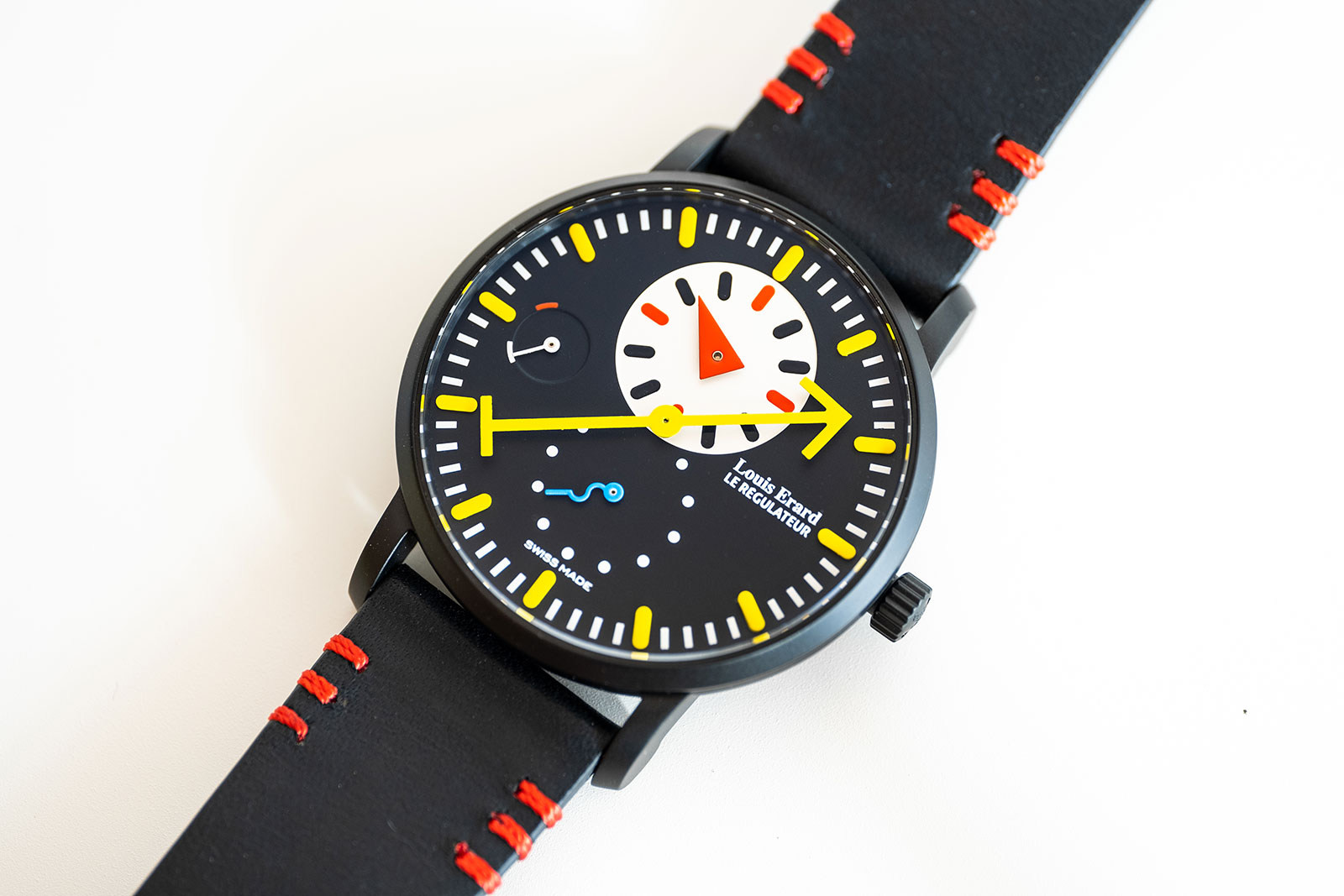
Louis Erard has been around for some 90 years, but for much of that time the brand produced watches for other labels. A decade ago, shortly after new owners took over, Louis Erard began to move slightly upmarket with mechanical watches featuring proprietary modules. But most of its designs were plain or derivative. And so Louis Erard could have been just another brand making mostly anonymous looking watches. But recently Louis Erard recruited the talented Manuel Emch – best known for reviving Jaquet Droz and then running RJ-Romain Jerome until 2017 – as an advisor and suddenly things have brightened up – literally. Louis Erard has just announced the Alain Silberstein Regulator, a surprisingly affordable wristwatch created by the watch designer famed for his whimsical, Bauhaus-inspired style – captured here in photos taken by a Swiss collector for SJX (scroll to the bottom to read my thoughts on the watch after seeing them shortly after this was published). Since Mr Silberstein’s eponymous company went bust in 2012, he has created watches for MB&F; and RJ-Romain Jerome. Despite the diversity of the brands he has worked with, Mr Silberstein versatile yet distinctive style manages to ease into each brand’s house style. Illustrating the magic of Mr Silberstein’s creativity, the new watch is based on one of Louis Erard’s signature models, the Excellence Regulator, which is ordinarily available with a grained or guilloche silver dial featuring Roman numera...