Complicated Collectors: Gerd Ahrens
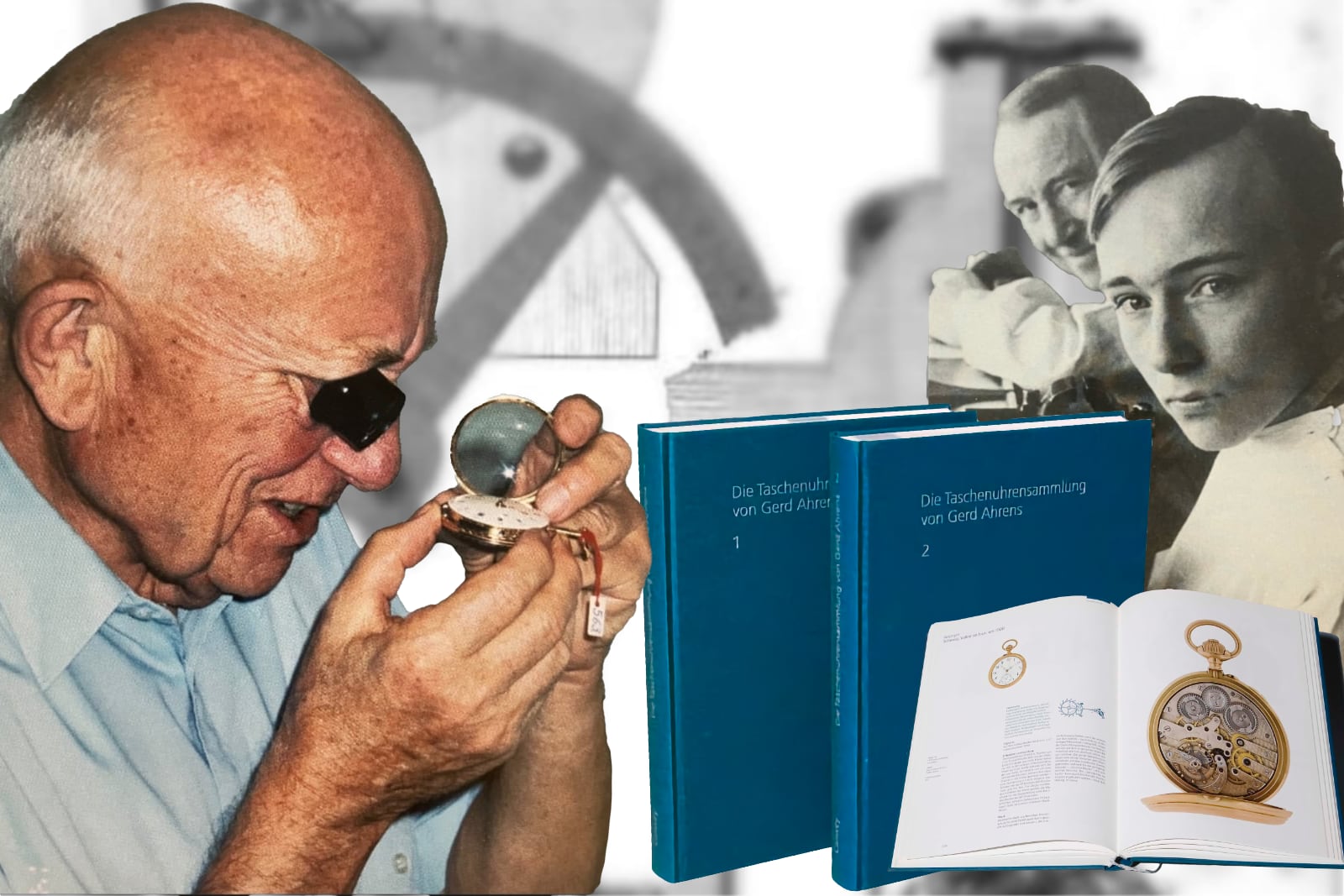
In the autumn of 1948, at Galerie Fischer’s auction house in Lucerne, a young Swiss watchmaker secured Lot 155, a Breguet pocket watch, No. 4763, circa 1848, with a straight-line club-tooth lever escapement. The case, fitted later by E. Brown at George Daniels’s suggestion to employ original movements and parts held in stock, aligned with his purpose. For most collectors, such a purchase might not have represented a pure Breguet. But for Gerd Ahrens, it was something altogether different: the first sentence in what would become a four-century narrative of mechanical ingenuity. Gerd Ahrens in his shop office on Schwanenplatz 7 around 1955. Image – Gerd Ahrens Foundation: a life built on wheels and springs Gerd Ahrens was born on September 18, 1920, in Hamburg, Germany, at a time when mechanical watches represented the pinnacle of portable precision. His father, Otto Ahrens, born in 1877, had already established himself as a highly respected watchmaker. Otto’s path, however, would be marked by the upheavals of the twentieth century. Before World War I, he had operated a successful shop in Paris and had built connections throughout the watchmaking centres of Inner Switzerland. The evidence of his skill was tangible: Otto personally built ten pocket watches, demonstrating not just commercial acumen but genuine mastery of the craft. Then the war came. Otto was forced to close his Paris shop in 1914, and the conflict left him penniless. A trained craftsman of the highest...
 Monochrome