Watch brandsWatch wikiWatch videosVariousWatch calendarSaved articles
PopularRolexOmegaPatek PhilippeAudemars PiguetTudorGrand SeikoCartierSeikoIWCTAG HeuerBreitlingJaeger-LeCoultreA. Lange & SohneZenith

Results for Balance Wheel

622 articles · 14 videos found · page 2 of 22

Related pages

Wiki · Guide
Balance Wheel

The oscillating wheel at the heart of every mechanical watch.

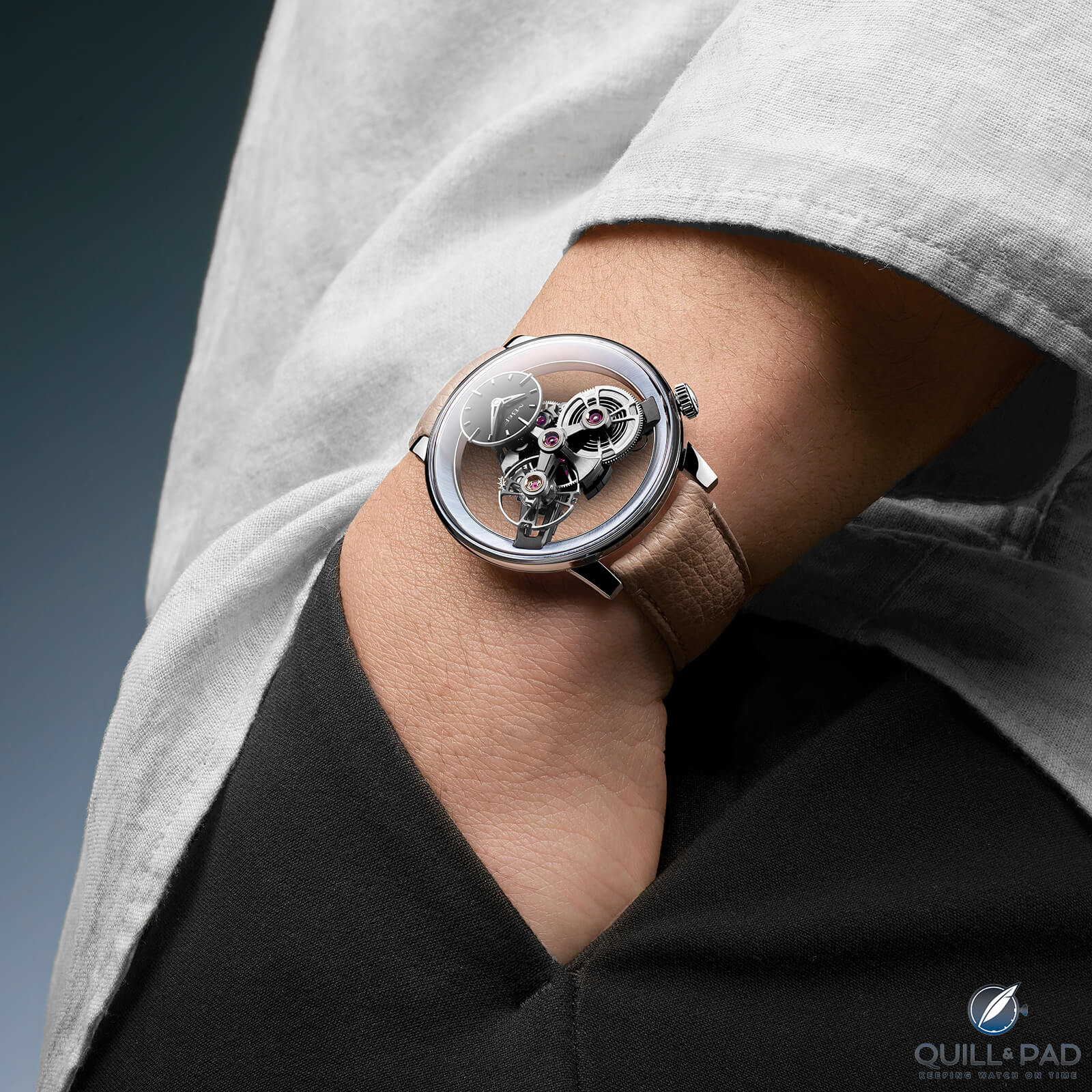
Anton Suhanov Returns with the Flamingo SJX Watches
Greubel Forsey s watches Apr 7, 2026

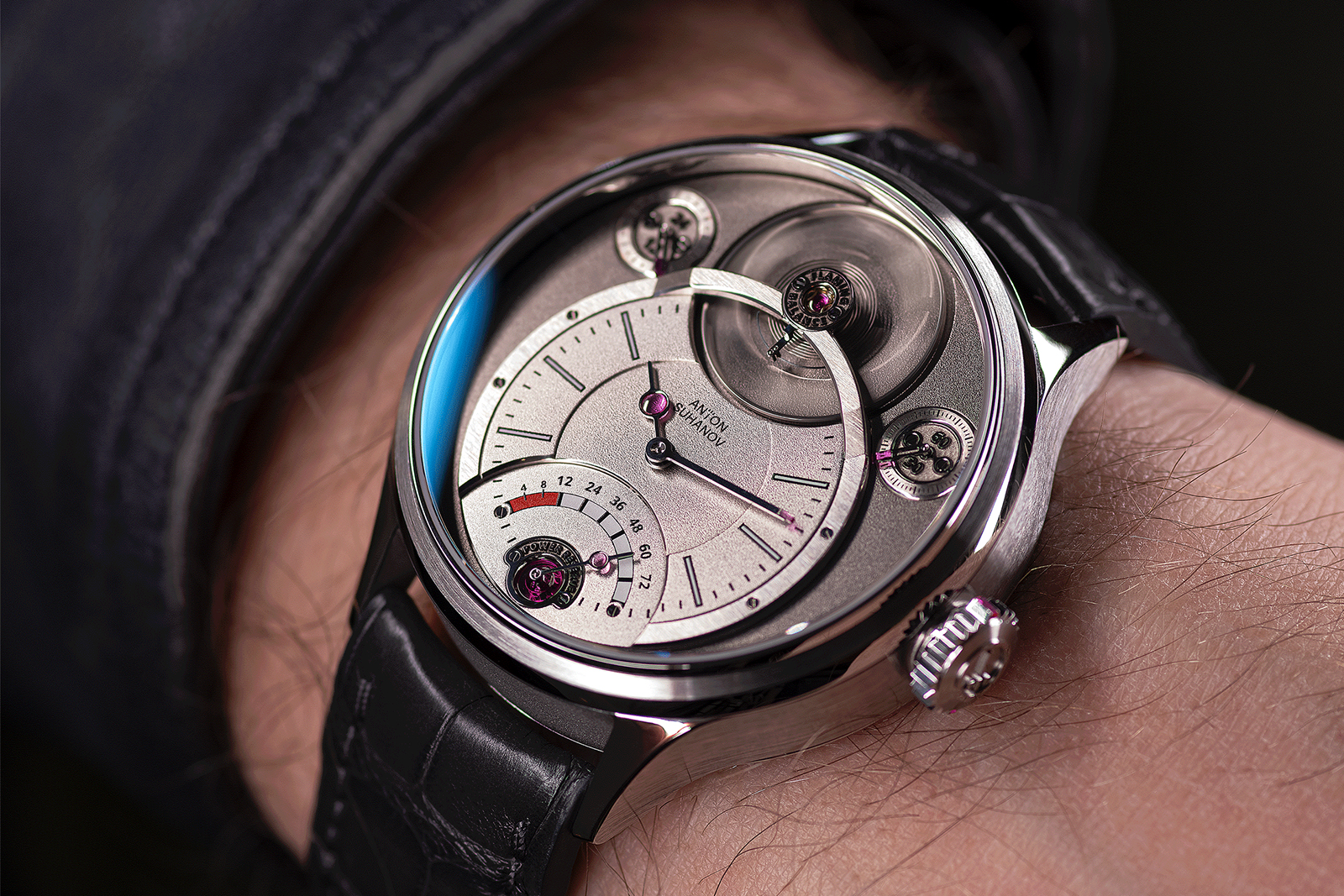
Anton Suhanov Returns with the Flamingo

Russian independent watchmaker and ACHI member Anton Suhanov returns with his third wristwatch, the dynamic Flamingo. Featuring Mr Suhanov’s first in-house movement, the Flamingo positions its massive balance wheel dial-side, and has a few other tricks up its sleeve as well.  Initial thoughts Anton Suhanov made a name for himself for his inventive clocks, but more recently has turned his attention toward the more lucrative wristwatch market. Mr Suhanov’s first two wristwatches were modular constructions piggybacked on stock movements. Despite this common approach, his modifications were transformative, making his movements feel more personal and “in-house” than some truly in-house movements that are more traditional in concept. This evident commitment to the craft quickly gained Mr Suhanov a good reputation.    After about four years of development, Mr Suhanov has unveiled a calibre he can truly call his own, the cal. Su26.1L. He built the movement from scratch, which gave him complete freedom both in terms of design and functionality. The result is a movement that possesses a number of unique and charming traits, both technical and aesthetic in nature.  While the design of the Flamingo as a whole is deeply original (especially the use of non-functional ruby pallets for the hands), some elements on the dial side remind me of similar features of Greubel Forsey’s watches. For example, the two small sub-dials - a 24-hour indicator and small seconds - are rem...
First Look - A Champagne Dial for the Louis Moinet 1816 Chronograph Monochrome
Louis Moinet 1816 Chronograph Louis Moinet’s Apr 3, 2026

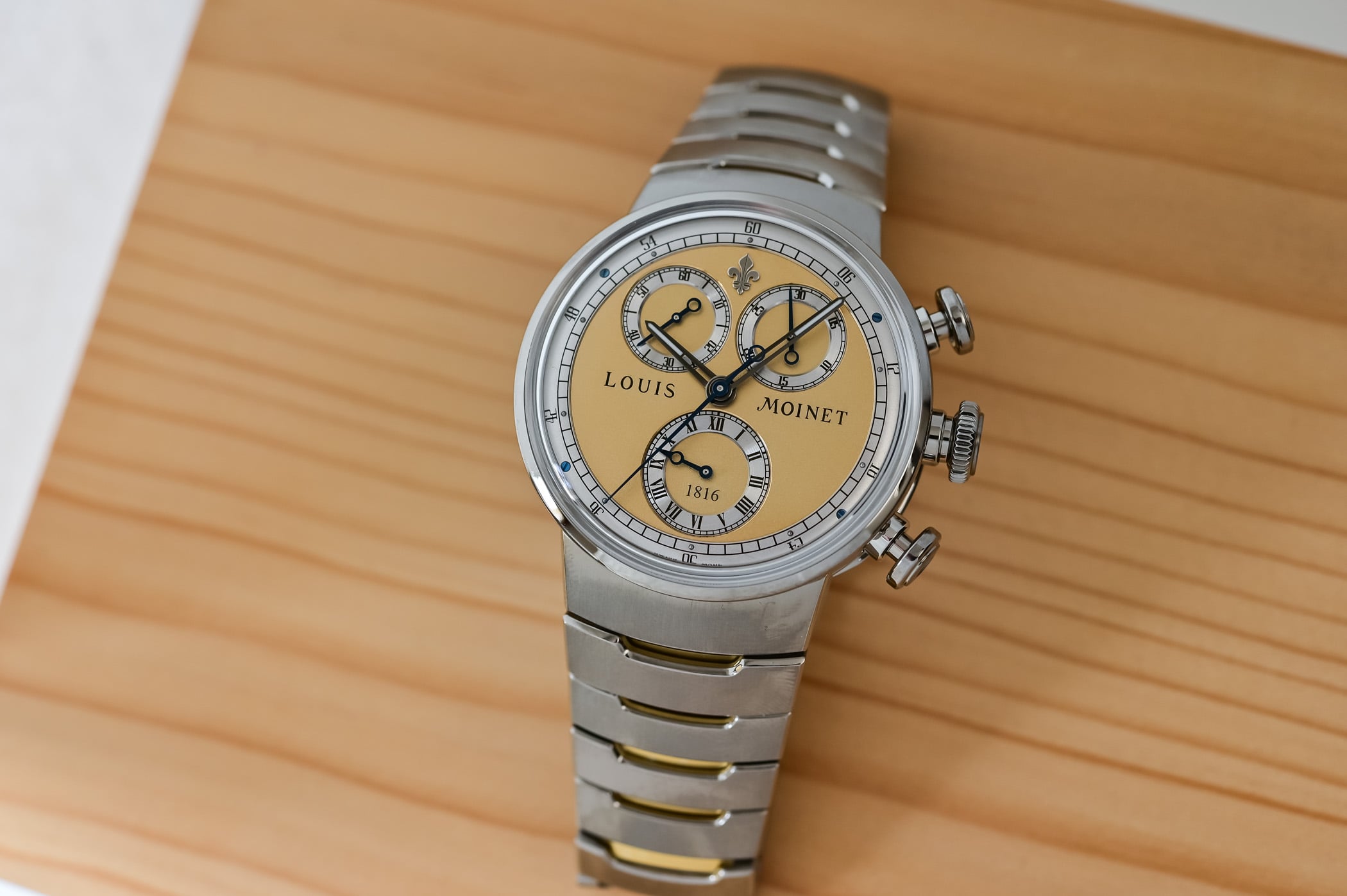
First Look - A Champagne Dial for the Louis Moinet 1816 Chronograph

Louis Moinet’s 1816 Compteur de Tierces, or “thirds counter”, was originally designed to measure the speed of moving stars. Endowed with a start, stop and reset function and a balance wheel beating at an impressive high frequency of 30Hz or 216,000 vibrations per hour, his novel stopwatch could time events to the 60th of a […]

Greubel Forsey Bids Farewell to the Balancier Convexe S² SJX Watches
Greubel Forsey Bids Farewell Mar 17, 2026

Greubel Forsey Bids Farewell to the Balancier Convexe S²

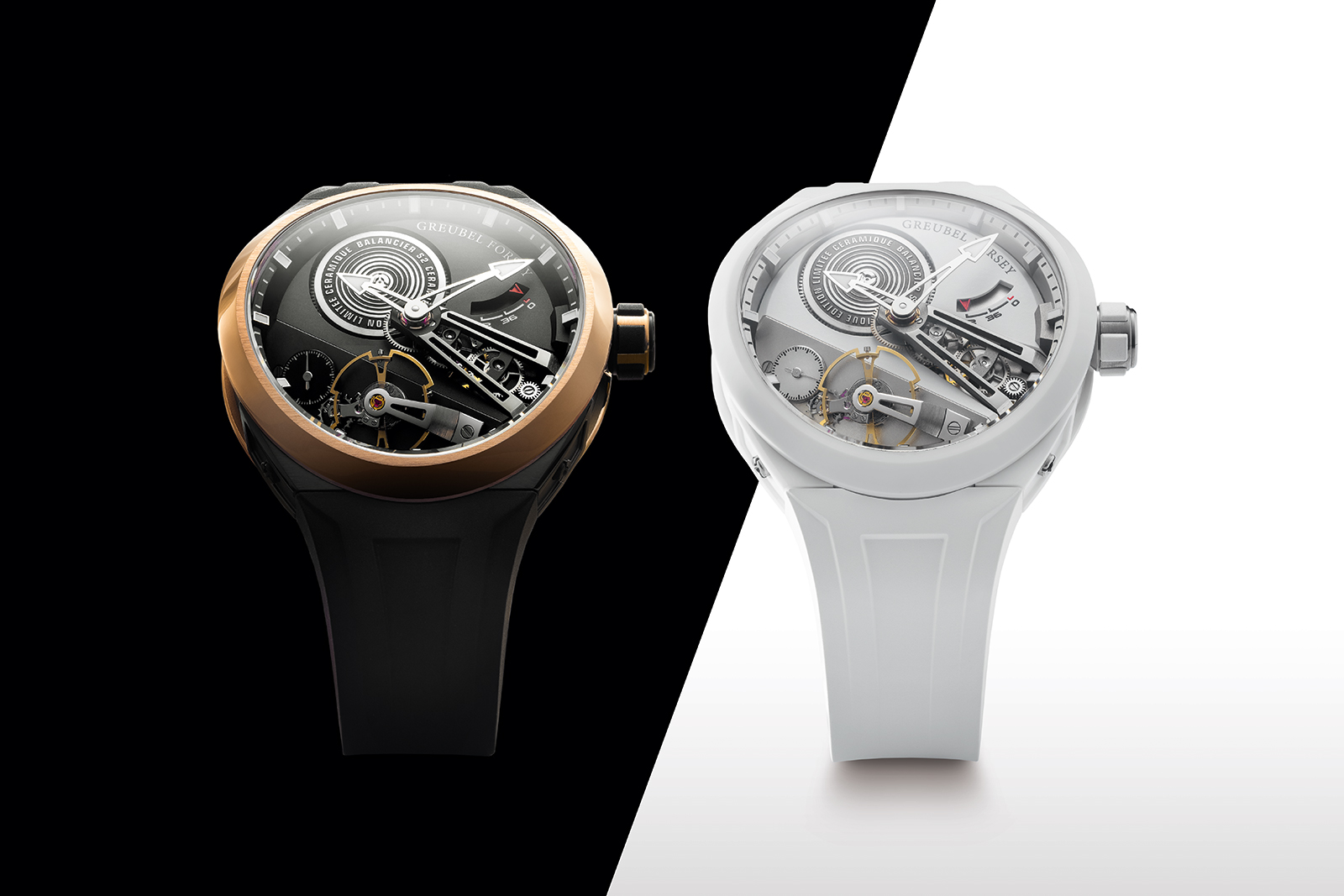
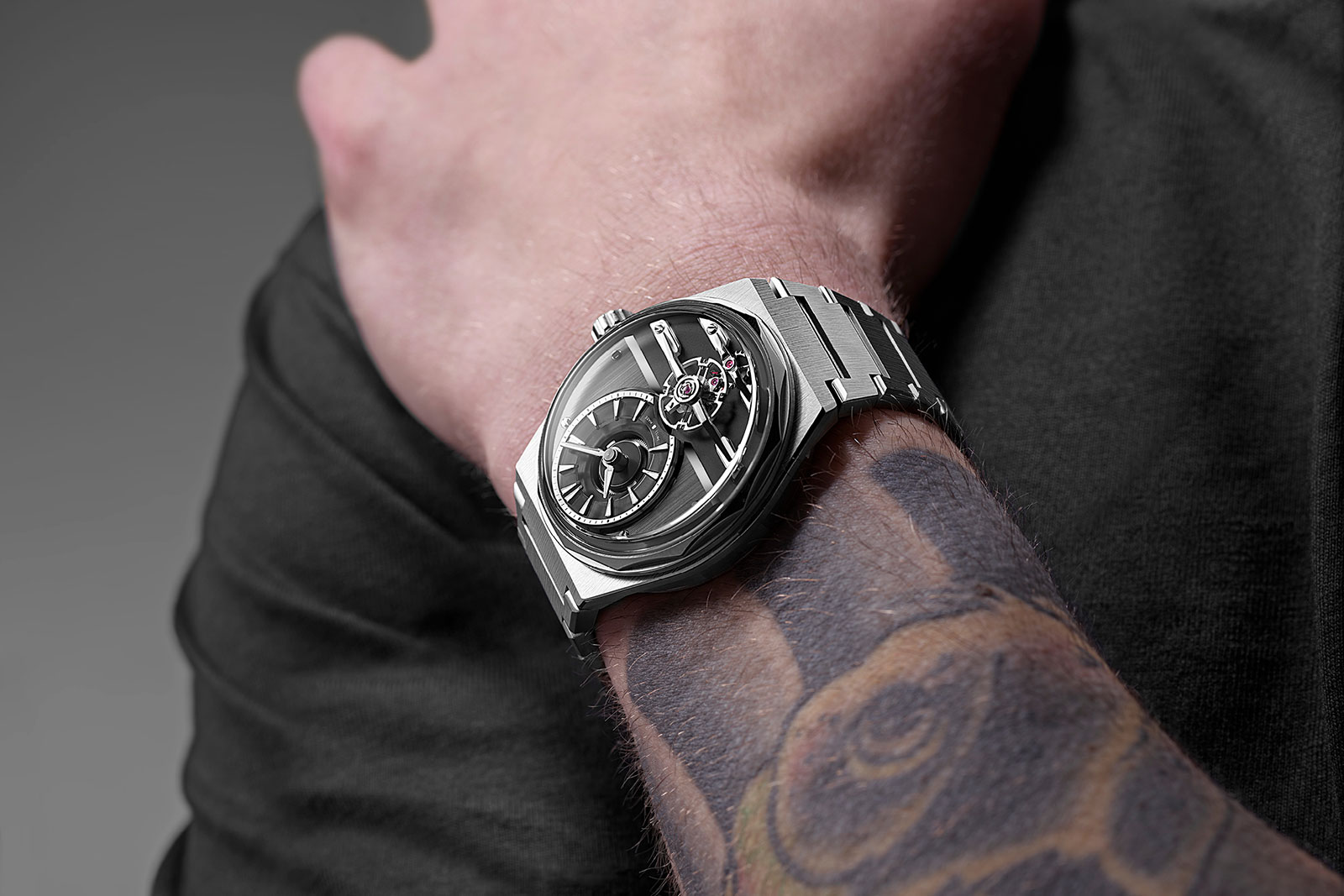
Greubel Forsey’s entry-level sports watch has been in production for five years and is now at an end. The brand is saying goodbye with a pair of final editions, the Balancier Convexe S² in ceramic. The first version is entirely in white ceramic, and the second is black ceramic with the bezel and case back in 18k red gold. Each limited to 11 pieces, the two editions share the same movement, but decorated differently to match the case. It’s manual wind, time-only calibre that is anything but simple; the movement is equipped with the brand’s trademark inclined balance wheel as well as titanium bridges and plates. Initial thoughts A bestseller for Greubel Forsey when sports watches were all the rage, the Convexe line (and related sports models) is gradually being reduced. The Balancier Convexe S² is one of the few sports models that Greubel Forsey has launched since the change in management resulted in the pivot towards more classical watches, exemplified by last year’s Nano Foudroyante. It might be also one of the last: Greubel Forsey notes besides the end of the model’s production, “[this year] also marks the beginning of a gradual transition toward an almost entirely new collection”. While this change in direction has been welcomed by many enthusiasts who appreciate Greubel Forsey returning to its root, the Convexe watches do have their charm. The Balancier Convexe S² illustrates this – the case is large but ergonomic and wearable, and the sporty constru...

The Best Skeleton Watches For 2026 Teddy Baldassarre
Audemars Piguet more Mar 2, 2026

The Best Skeleton Watches For 2026

The skeleton watch or skeletonized watch is a style of timepiece that is almost exclusively the domain of watches with mechanical movements. The process of skeletonizing a watch is simple - in theory. By opening up the dial and caseback and stripping out some large areas of movement parts, the maker of a skeleton watch reveals the "bones" beneath the surface. In practical terms, skeletonizing a watch can be done minimally or it can be done to an extreme level, and in both case the result can often be polarizing. Whether you love or hate the style, skeleton watches are nearly always a reliable conversation starter among enthusiasts of mechanical wristwatches. To keep those conversations going, we've compiled this list of some of the best skeleton watches on the market today. Before diving into the list, let's clear up some of the jargon you can expect to come across. First off, there are two other terms that tend to be lumped in with the subject of skeleton watches, namely “open heart” and "openworked." "Open heart" tends to describe a type of dial aperture that reveals usually just the balance wheel beating away but very little else. ”Openworked” is a term that is commonly used as an alternative to "skeletonized" since being popularized by Audemars Piguet (more on that below). Essentially, openworked and skeletonized are interchangeable in describing the same aesthetic. So, on this list there will be skeleton(ized) and openworked watches but not open-heart w...

In-Depth: Understanding Resonance in Watches SJX Watches
F.P. Journe s Chronomètre à Résonance Feb 19, 2026

In-Depth: Understanding Resonance in Watches

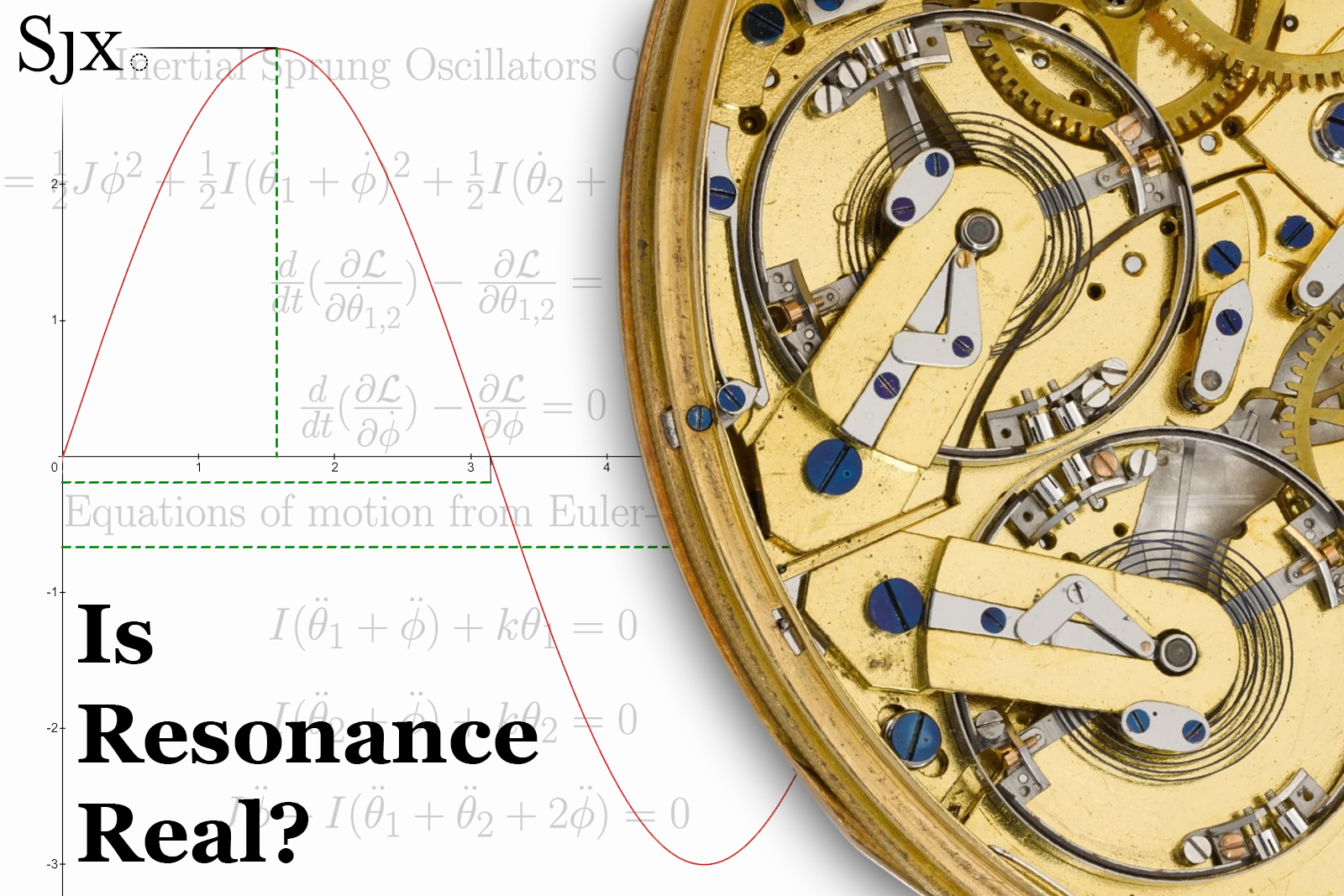
Resonance watches are among the most elusive machines in modern watchmaking. Creations such as F.P. Journe’s Chronomètre à Résonance perform well at auctions, commanding high prices. While their rarity and appeal are undeniable, watches that purport to harness resonance tend to be viewed with a degree of skepticism. A measure of skepticism is understandable - the concept of sprung balances becoming almost magically coupled is anything but straightforward and requires a profound understanding of oscillators in general.   This story seeks to shed some light on the concept of coupled oscillators by explaining the two models of coupling and explore the nuances of each system. Before exploring resonance, the reader is encouraged to review the basics of sprung oscillators and isochronism in order to become more familiar with the hairspring and balance wheel model.  The F.P. Journe Chronomètre à Résonance Souscription No. 2 sold for more than CHF3 million in November 2025. A confusion of terms First, the term resonance itself requires definition. In classical physics (mechanics, electrical engineering, signal processing, etc.) resonance is a phenomenon where a system vibrates under the influence of an external driving force that matches the system’s eigenfrequency (natural frequency). This is to say that a system at rest, which includes mass and spring elements, can be excited into a state of resonance by an external force when particular conditions are met. An imp...

The 9 Most Accurate Watches for the Precision-Obsessed Teddy Baldassarre
Feb 2, 2026

The 9 Most Accurate Watches for the Precision-Obsessed

Fundamentally, mechanical and quartz movements do the same thing: they both tell thetime. But the ways in which they both do it couldn’t be more different. Not to get into acomparison guide here, but in a nutshell: a mechanical watch is powered by a mainspringthat’s either wound by hand or automatically through wrist movement. Energy is releasedthrough a complex system of gears, an escapement, and a balance wheel that beats steadily back and forth. There’s no battery, just centuries-old engineering refined to an art form. These watches aren’t the most accurate, but accuracy isn’t really the point. Craftsmanship, tradition, and the emotional connection are. Quartz watches, on the other hand, are powered by a battery and use an electrical current to make a quartz crystal vibrate at 32,768 times per second. That vibration is incredibly stable, which is why quartz watches are vastly more accurate and require far less maintenance. They’re practical, reliable, and often more durable for everyday use, as well as being notably more affordable. Neither system is inherently “better,” though. Mechanical watches speak to passion and heritage, while quartz prioritizes precision and convenience. Ultimately, it’s less about the movement inside and more about what you want your watch to represent on your wrist. [toc-section heading="Next-Level Accuracy"] Some watches measure accuracy in seconds per day, others by seconds per month. Butthere also exists a small group of t...

Introducing - Chinese Indie Watchmaker Qian GuoBiao Launches a Split-Seconds Chronograph Monochrome
Jan 26, 2026

Introducing - Chinese Indie Watchmaker Qian GuoBiao Launches a Split-Seconds Chronograph

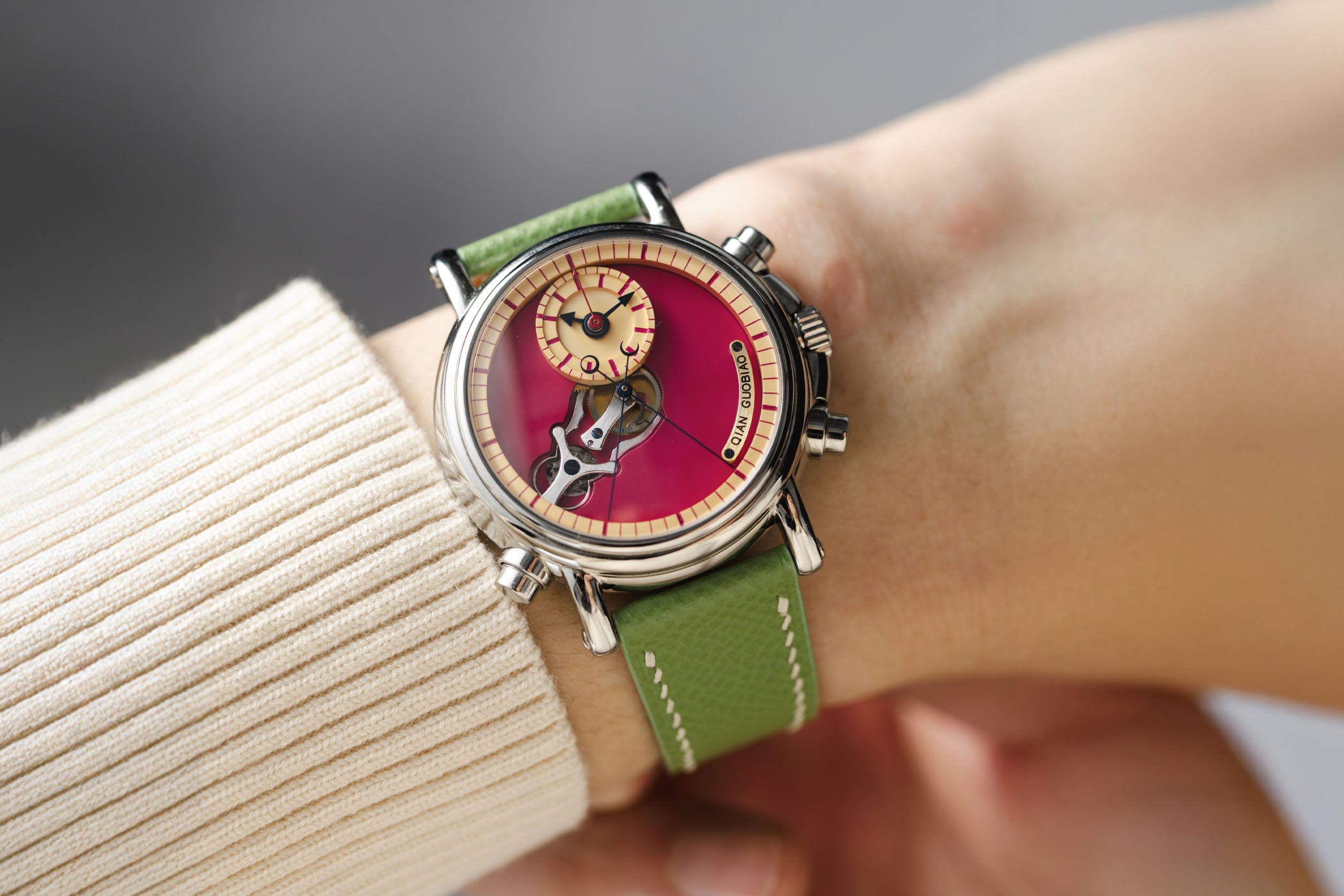
Independent watchmaker Qian GuoBiao continues to expand the horizons and appreciation of indie horology from China, building on the foundations laid by earlier pieces like the Facing the Sky 2.0 and Double Balance Wheel. His latest creation, the Split-Seconds Chronograph, is another step forward. While the Double Balance Wheel explored harmony through the synchrony of […]

Down to the Wire: De Bethune’s In-House Hairsprings SJX Watches
De Bethune s In-House Hairsprings De Dec 10, 2025

Down to the Wire: De Bethune’s In-House Hairsprings

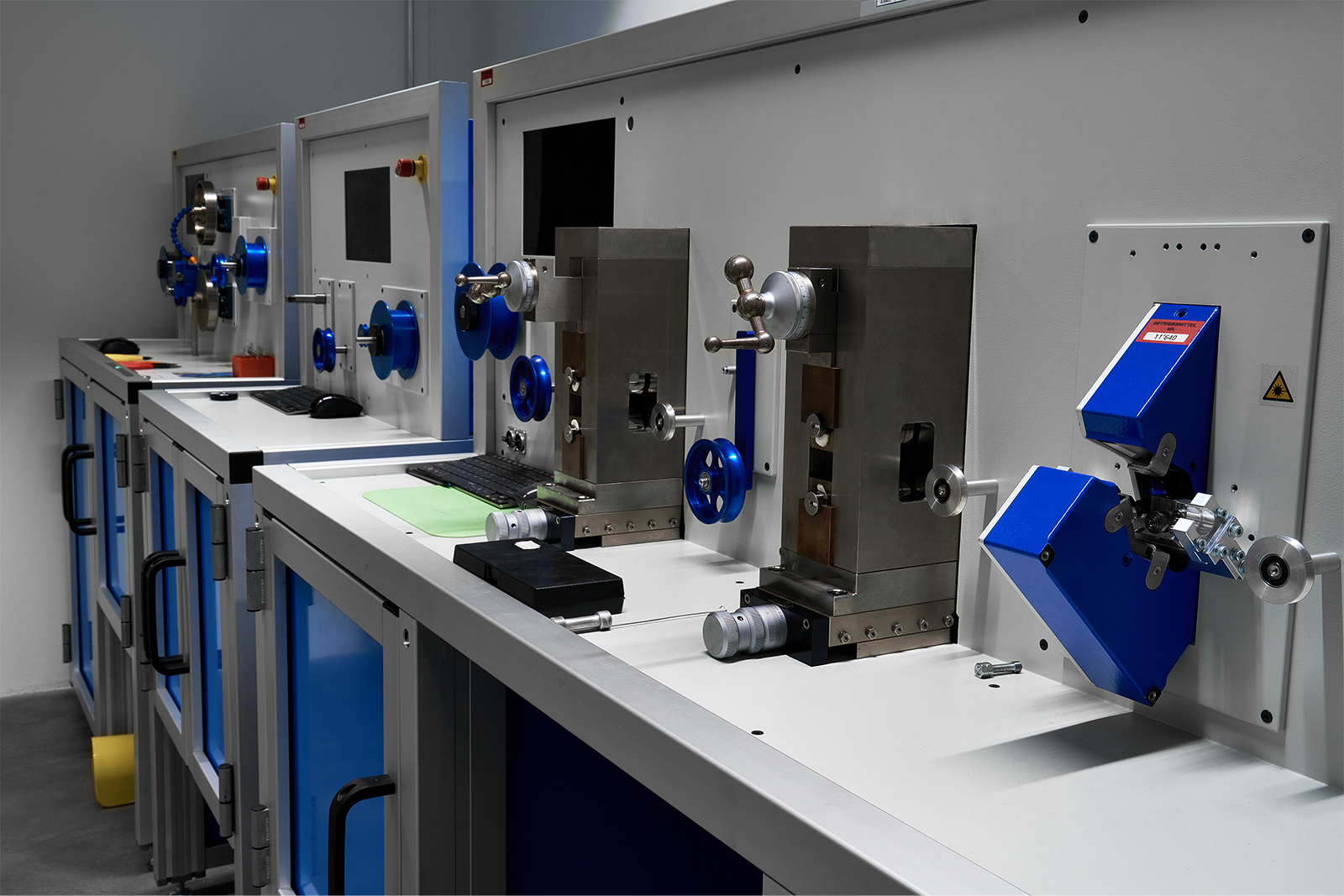
De Bethune plans to bring hairspring production in house, aiming to become one of the very few firms able to process alloy wire into a finished balance hairspring. This requires De Bethune’s new hairspring workshop to master wire drawing, rolling, cutting, heat treatment, and assembly. The rationale? “Externally produced hairsprings meet standards based on averages that do not enable fine adjustment of the dimensions to suit a particular balance wheel or its specific positioning in a calibre,” according to De Bethune. De Bethune’s “flat end curve” mated to a hairspring sourced from a supplier. Initial thoughts As De Bethune explains it, making its own hairsprings will allow the brand to tailor its hairspring to a specific balance or movement. Since its founding in 2002, De Bethune has presented itself as being on the cutting edge of chronometry, debuting a new balance design every year from 2004 to 2010. The brand was also quick to embrace silicon, and even briefly attempted a kilohertz magnetic oscillator system, Résonique. A new year, a new balance. Sometimes two new balances. Given De Bethune’s focus on chronometry, making its own hairsprings seems like a natural next step. However, there is a reason so few brands make their own hairsprings: the process is a difficult and demanding one that benefits greatly from economies of scale. For example, H. Moser & Cie. makes less than 4,000 watches per year, however, its sister company Precision Engineering claims...

In-Depth: Understanding Isochronism and Oscillators SJX Watches
Breguet overcoils Dec 10, 2025

In-Depth: Understanding Isochronism and Oscillators

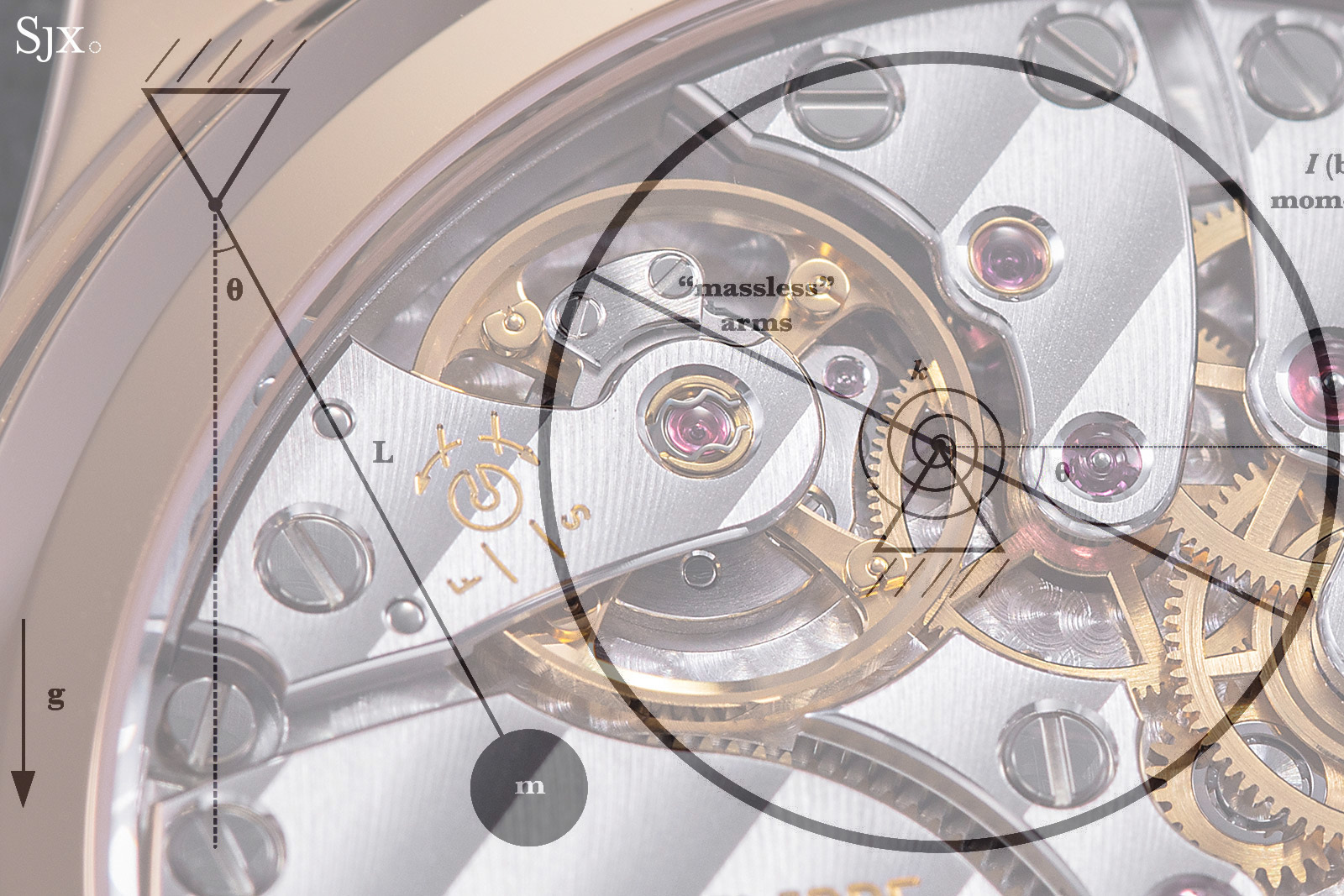
The beginning of 2025 marked the 350th anniversary of the hairspring, the invention that made portable precision timekeeping possible. To commemorate the occasion, we published a series of deep dives covering the disputes around its invention, the evolution of spring materials over the years and the finer rules of forming Breguet overcoils. This final instalment examines isochronism. Some initial definitions and considerations A proper and universal definition of isochronism is: the property of an oscillatory system to maintain the same period of vibration despite variation in environmental factors. This implies that a vibrational system’s behaviour is inherent and external factors should not influence its frequency.  A few basic terms help frame the discussion. The period, measured in seconds, is the time taken for the oscillator to travel from one extreme position, through equilibrium, and back again. Frequency, measured in Hertz, is the inverse of the period; a system with a constant period can serve as a stable timebase. The amplitude is the distance swept by the oscillator from the equilibrium point to its extreme position. In practical terms, when saying that a sprung balance has an amplitude of 330°, it means the balance wheel rotates a full 330° in one direction from its equilibrium point before swinging back.  Figure I. Anatomy of a sinusoidal wave. In watchmaking parlance, isochronism means that an oscillator keeps the same period, regardless of its amplit...

Do Rolex Watches Tick? It's All In The Beat Teddy Baldassarre
Rolex Watches Tick? It's All Dec 8, 2025

Do Rolex Watches Tick? It's All In The Beat

“Do Rolex watches tick?”  This is, apparently, a frequent question and a common concern of newbie Rolex owners, but the premise of the question is actually driven by a misconception. Virtually all Rolex watches - in fact, all watches equipped, as most Rolexes are, with a mechanical movement - are  indeed ticking while they are running. If your ear is not perceiving it, that is only because the ticking is so rapid - nowadays, at least eight times per second - that the watch’s seconds hand appears to be moving in a smooth, sweeping motion. This can be quite noticeable if you have experienced only the much more visible, (and easily perceptible) one-tick-per-second movement common to the seconds hand of a quartz watch. In fact, if your Rolex watch is ticking once per second, it might be worth taking a moment to authenticate whether or not it is real or counterfeit. Allow us to explain. [toc-section heading="The Difference Between Mechanical and Quartz Movements"] A mechanical movement is the oldest type of movement in horology. It uses a coiled metal spring, called a mainspring, that releases energy as it uncoils through a series of gears to drive a weighted, oscillating wheel called a balance wheel. The balance wheel’s oscillations are linked to an escapement, which periodically releases the gear train to move the hands forward to record the passing of hours, minutes, and seconds. Originally, the mainspring needed to be wound periodically by hand, first by a...

Breguet Reverses Polarity with the Classique 7225 SJX Watches
Breguet Reverses Polarity Oct 23, 2025

Breguet Reverses Polarity with the Classique 7225

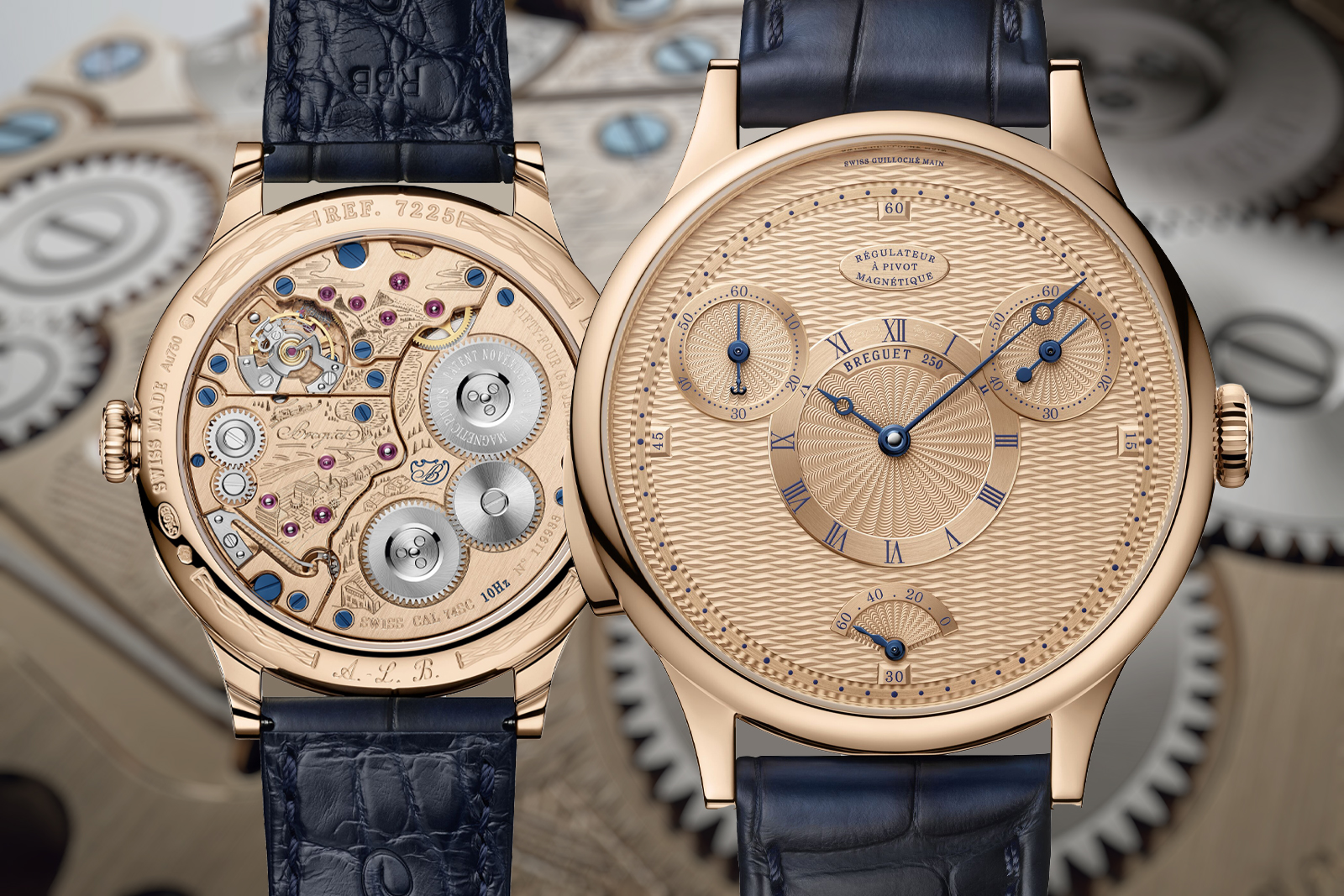
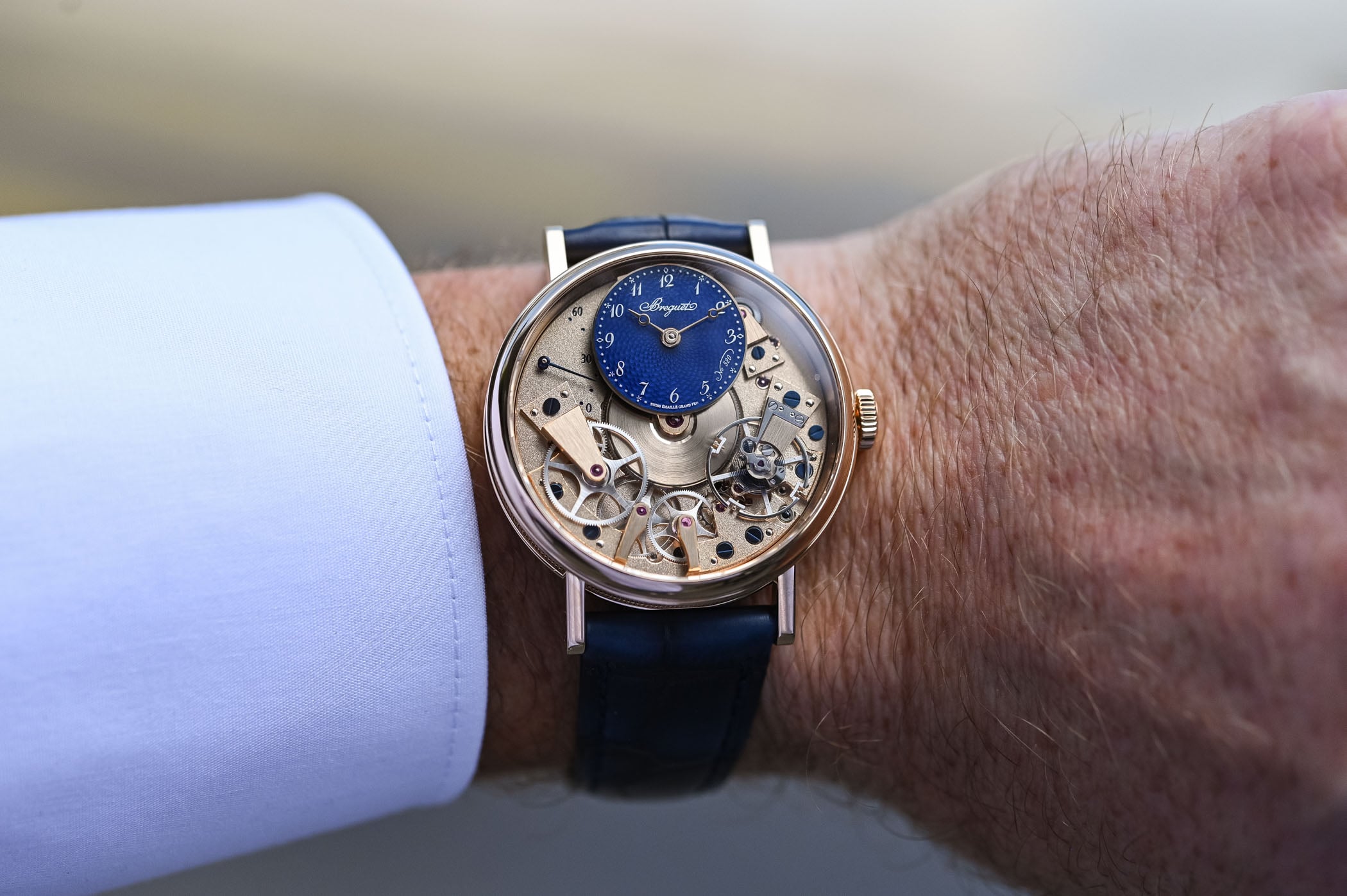
Breguet’s 250th anniversary got off to a good start and the momentum continues with the Classique 7225, another take on one of the brand’s most inventive movements. Guaranteed to run within an impressive one second a day, the Classique 7225 contains the cal. 74SC that boasts a high-frequency balance wheel running at an uncommonly rapid 10 Hz, or 72,000 beats per hour. To achieve that without overwhelming friction, the balance pivot is magnetic, allowing it to “float” as it oscillates. The 10 Hz balance was launched some 15 years ago, but its predecessor, the Classique 7727, did not enjoy particularly attractive aesthetics. The Classique 7225 solves the problem with a striking dial modelled on an important series of tourbillon pocket watches from the early 19th century. To accommodate the dial layout, the cal. 74SC incorporates an additional constant seconds that can be instantaneously reset. Notably, the 7225 is not a limited edition, unlike its compatriot, the Classique 7235 launched at the same time. Initial thoughts The 7225 shows that Breguet’s revival is certainly well underway, stewarded by Gregory Kissling, who has been in the top job for slightly over a year. The 7225 isn’t a major revamp of the 7727, but it is far, far more appealing watch. The magnetic-pivot movement was ingenious at launch, and still is, but the 7727 was under-designed and over-logo’ed. With the 7225, Breguet’s ultra-chronometer finally has visual and tactile appeal. And it keeps...

Zenith Defies Gravity (Again) to Mark 160 Years SJX Watches
Zenith Defies Gravity Again Oct 14, 2025

Zenith Defies Gravity (Again) to Mark 160 Years

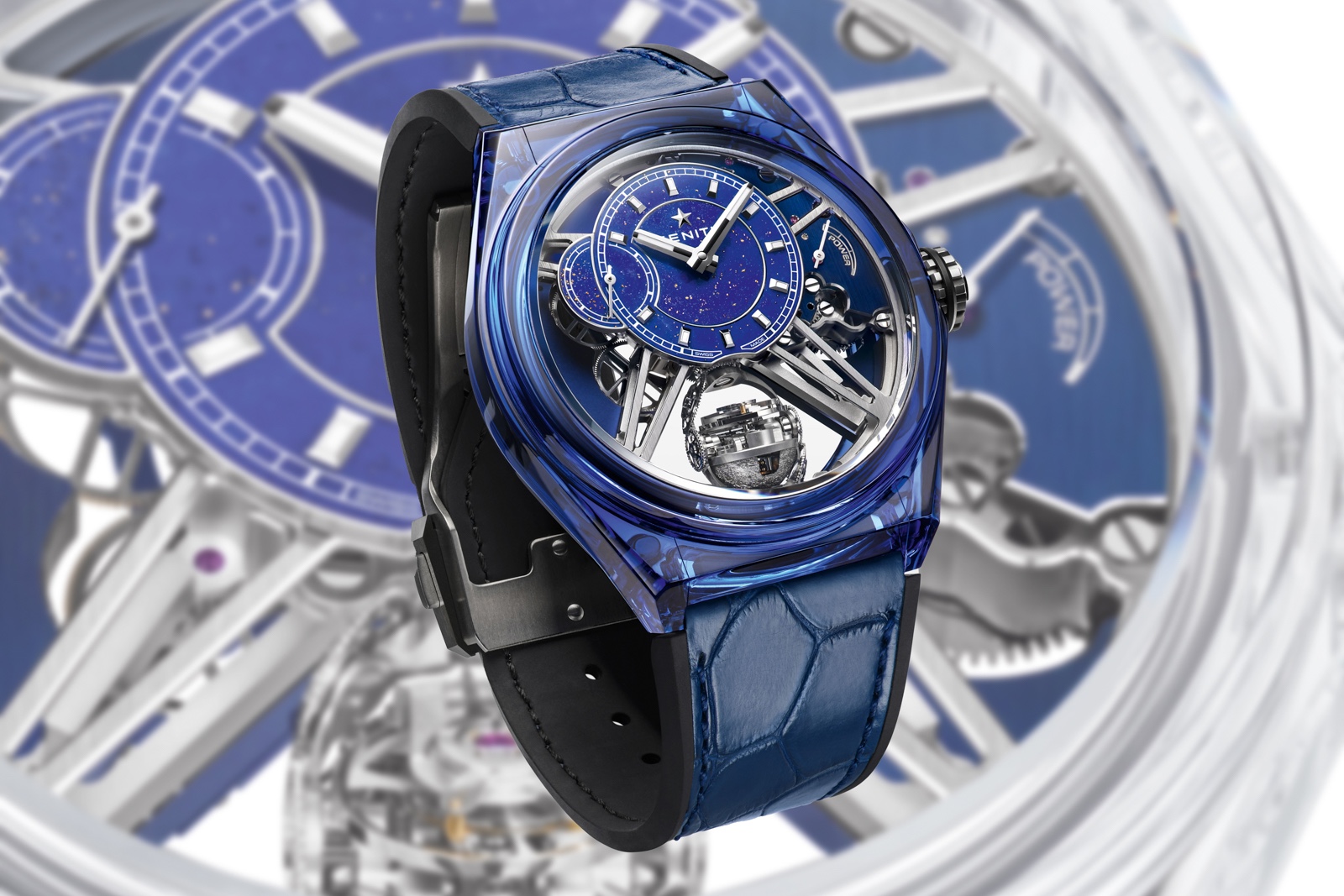
Zenith’s 160th anniversary celebration continues with the Defy Zero G, a sapphire-cased watch equipped with the brand’s latest generation, gimbal-like “Gravity Control” escapement module. Available in either clear or deep blue sapphire – both with a lapis lazuli dial – the 46 mm anniversary model is a literal showcase for the innovative cal. 8812 S, which features a gimballed escapement platform that keeps the balance wheel in a horizontal position at all times. Originally developed in 2008 and refined in 2018, the Zero G mechanism is a modern homage to Zenith’s legacy in competitive chronometry and marine navigation. Initial thoughts Today, the Zenith brand is synonymous with the El Primero chronograph movement, launched back in 1969. But outside of that, the manufacture has always been a major force in Swiss precision watchmaking. For decades the brand regularly took home the top prizes at chronometry trials from Neuchâtel and Teddington. Zenith already paid tribute to its past success in competitive chronometry with the G.F.J. cal. 135, which also features a lapis lazuli dial, but it’s reassuring to see the brand made time to bring out one of its more recent developments for its anniversary year. While the days of chronometry trials are long past, Zenith has still managed to make a name for itself when it comes to the accuracy of wrist-worn timepieces - at least theoretically. Back in 2008 the brand unveiled a curious mechanism, with the escapement fu...

First Look - The New and (Very) Opulent Montblanc Star Legacy Suspended Exo Tourbillon Versailles Monochrome
Montblanc Star Legacy Suspended Exo Oct 2, 2025

First Look - The New and (Very) Opulent Montblanc Star Legacy Suspended Exo Tourbillon Versailles

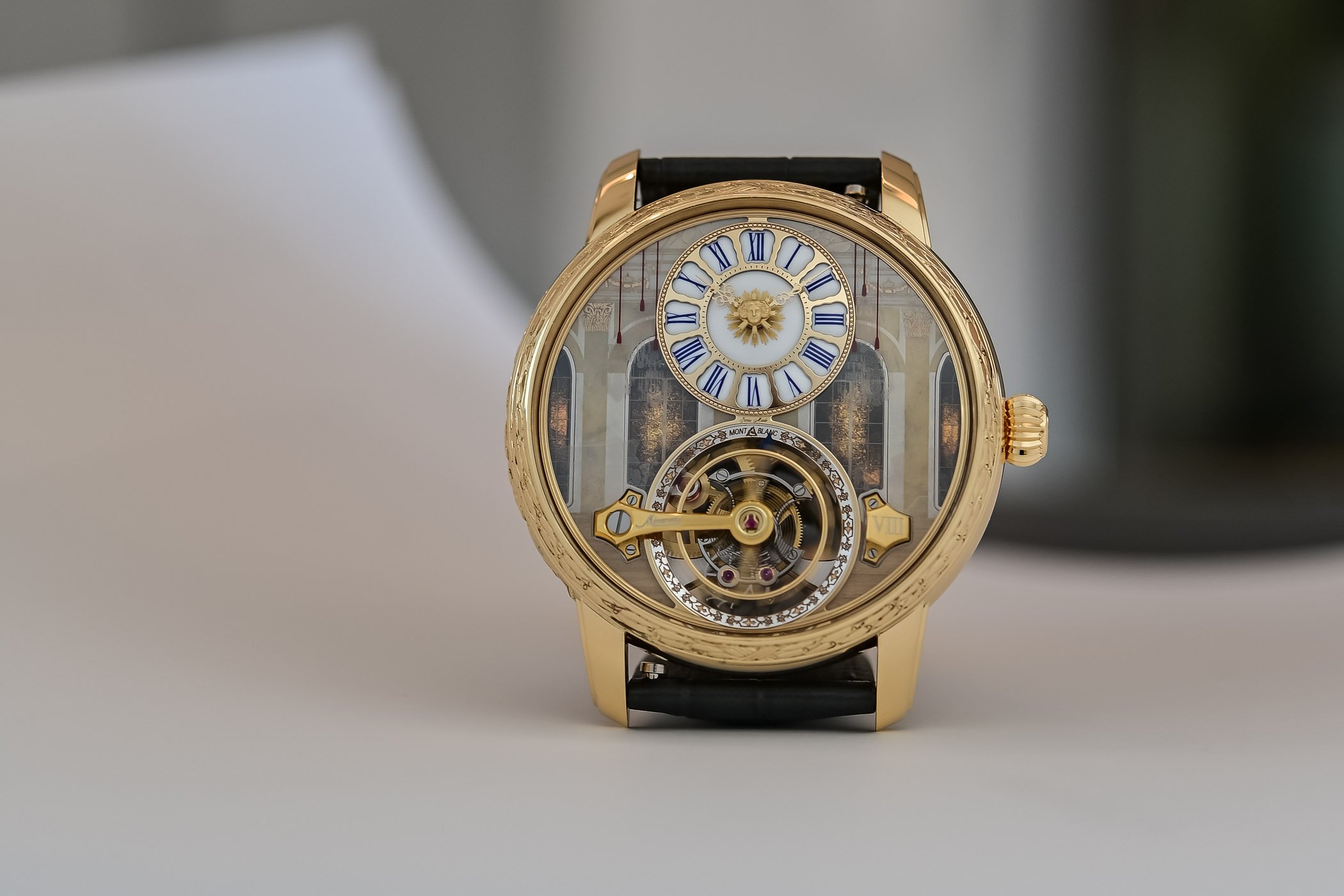
Montblanc’s mastery of métiers d’art and mechanical innovation comes together once more in its most opulent creation yet, the Star Legacy Suspended Exo Tourbillon Château de Versailles. Since introducing the Exo Tourbillon in 2010, a patented construction that positions the balance wheel outside and above the tourbillon cage, Montblanc has revisited this remarkable regulator in […]

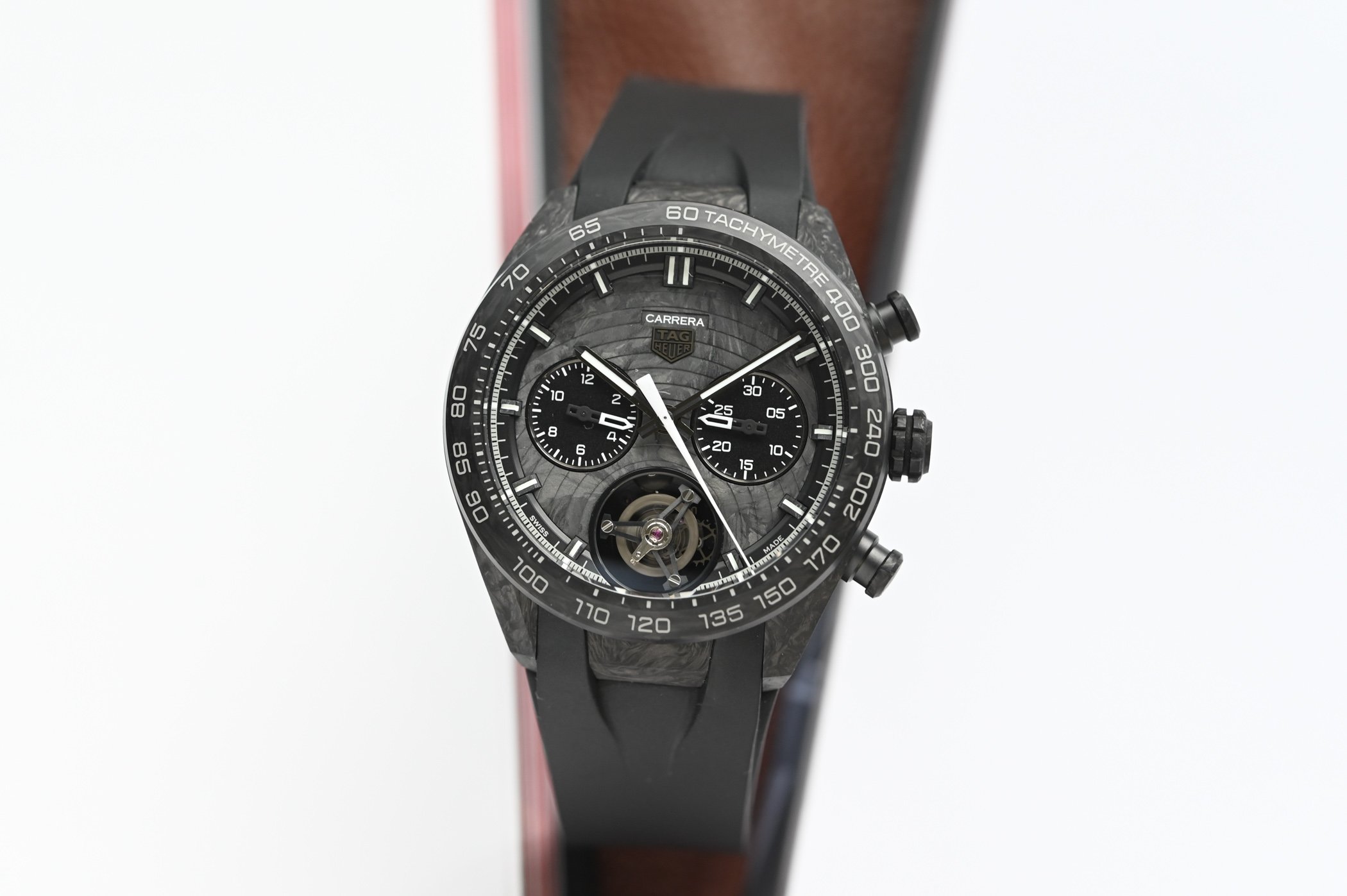
In-Depth - The Return of the TAG Heuer TH-Carbonspring Oscillator, Inside new Carbon Monaco and Carrera Models Monochrome
TAG Heuer TH-Carbonspring Oscillator Inside new Sep 4, 2025

In-Depth - The Return of the TAG Heuer TH-Carbonspring Oscillator, Inside new Carbon Monaco and Carrera Models

Since Christiaan Huygens paired a balance wheel and spiral spring in 1675, the hairspring has been the beating heart of every mechanical watch. Its material has always dictated chronometric performance. Steel, used for centuries, suffered from magnetism and temperature drift. Special alloys developed in the 20th century improved reliability – from Elinvar to Nivarox/Nivachron, made […]

Mechanical vs. Automatic Watch Movements Explained Teddy Baldassarre
Nomos DUW caliber below uses Jul 12, 2025

Mechanical vs. Automatic Watch Movements Explained

Among the many questions a novice watch enthusiast is faced with, “Mechanical vs. Automatic Movement?” is one of the most basic, yet one whose answer is a bit more complex than a simple A-or-B explanation. In fact, “mechanical or automatic” isn’t even really framing the choice correctly. In the article below, we attempt to clarify the subject and answer the most pressing questions about these tiny engines inside your watch. What is a Mechanical Movement? A mechanical movement, like the Nomos DUW caliber below, uses a coiled metal spring, called a mainspring, that releases energy as it uncoils through a series of gears to drive a weighted, oscillating wheel called a balance wheel. The balance wheel’s oscillations are linked to an escapement, which periodically releases the gear train to move the hands forward to record the passing of hours, minutes, and seconds. In short, a mechanical movement in a watch is any type of movement that uses no batteries or electronic components to function - which makes them different from more modern inventions, like quartz, Spring Drive, and solar movements. Technical developments over the centuries are what led to the two types of mechanical movements we’re discussing here. Originally, the movement’s mainspring needed to be wound periodically by hand - first by a key, then by a small knob called a crown that was attached via a stem to the movement. Later, a type of movement was developed that could be wound “automatica...

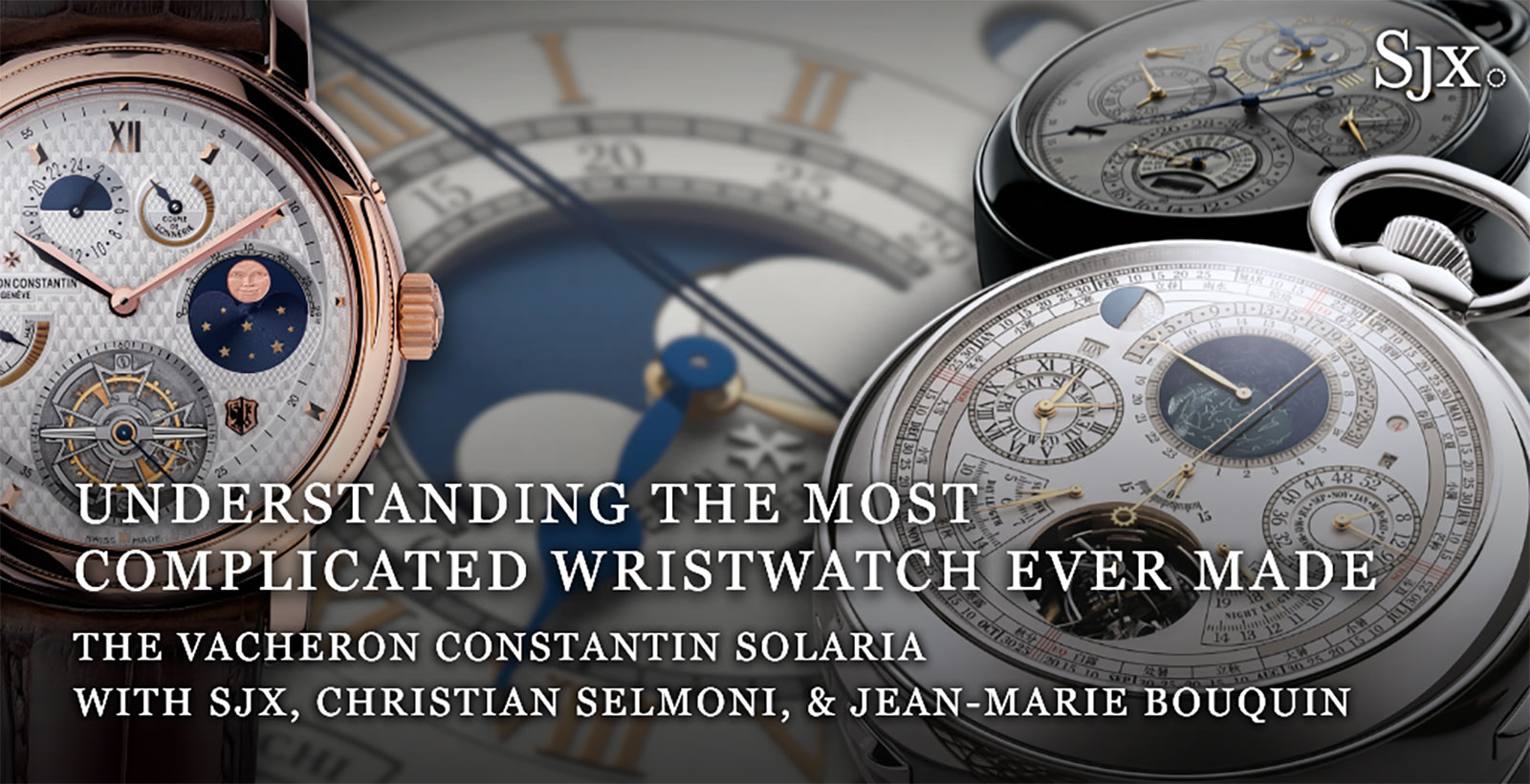
Understanding the Vacheron Constantin Solaria with Christian Selmoni and Jean-Marie Bouquin SJX Watches
Vacheron Constantin Solaria Jun 9, 2025

Understanding the Vacheron Constantin Solaria with Christian Selmoni and Jean-Marie Bouquin

SJX recently visited Vacheron Constantin  and sat down with Christian Selmoni, style and heritage director, and head of speciality watchmaking, Jean-Marie Bouquin, to discuss the Les Cabinotiers Solaria Ultra Grand Complication, the most complicated wristwatch yet made. Mr Bouquin led the development of Solaria, and assembled it, creating a wristwatch that’s a worthy follow-up to the most complicated portable timepiece ever, the Berkley Grand Complication that was launched just last year. That in turn broke the record set by Vacheron Constantin in 2015 with the ref. 57260 “Tivoli”. They discussed the intricacies and innovation in the Solaria, including its modular “plug and play” perpetual calendar, and the implications for future Les Cabinotiers projects, as well as the novel star-tracking chronograph, and the benefits of using silicon for the spokes of the balance wheel. They also touched on the absence of a grande et petite sonnerie.  

Watch Movements: A Comprehensive Guide and FAQ Teddy Baldassarre
May 8, 2025

Watch Movements: A Comprehensive Guide and FAQ

Watch movements, like the engines in cars, are the mechanisms that make the whole thing run, and if you're new to the world of avid watch enthusiasm, there's more to learn about them, and how they work, than you think. In this comprehensive guide to watch movements, we will attempt to answer every question that you might have about movements - their different types, their important parts, who makes them, and even a bit of history and trivia.  What is a Mechanical Movement? A mechanical movement, the oldest type of movement in horology, uses a coiled metal spring, called a mainspring, that releases energy as it uncoils through a series of gears to drive a weighted, oscillating wheel called a balance wheel. The balance wheel’s oscillations are linked to an escapement, which periodically releases the gear train to move the hands forward to record the passing of hours, minutes, and seconds. Originally, the mainspring needed to be wound periodically by hand, first by a key, then by a winding crown attached via a stem to the movement. Later, a type of movement was developed that could be wound “automatically,” through the motions of the wearer’s wrist. What is the difference between a mechanical movement and an automatic movement? It isn’t really a question of difference: the latter is simply a specific type of the former, à la a Cognac and a brandy. The two main types of mechanical movements are manually wound (or “hand-winding”), in which the user needs to p...

SJX Podcast: Geneva Auctions and Breguet SJX Watches
Christopher Ward s daring new C12 May 6, 2025

SJX Podcast: Geneva Auctions and Breguet

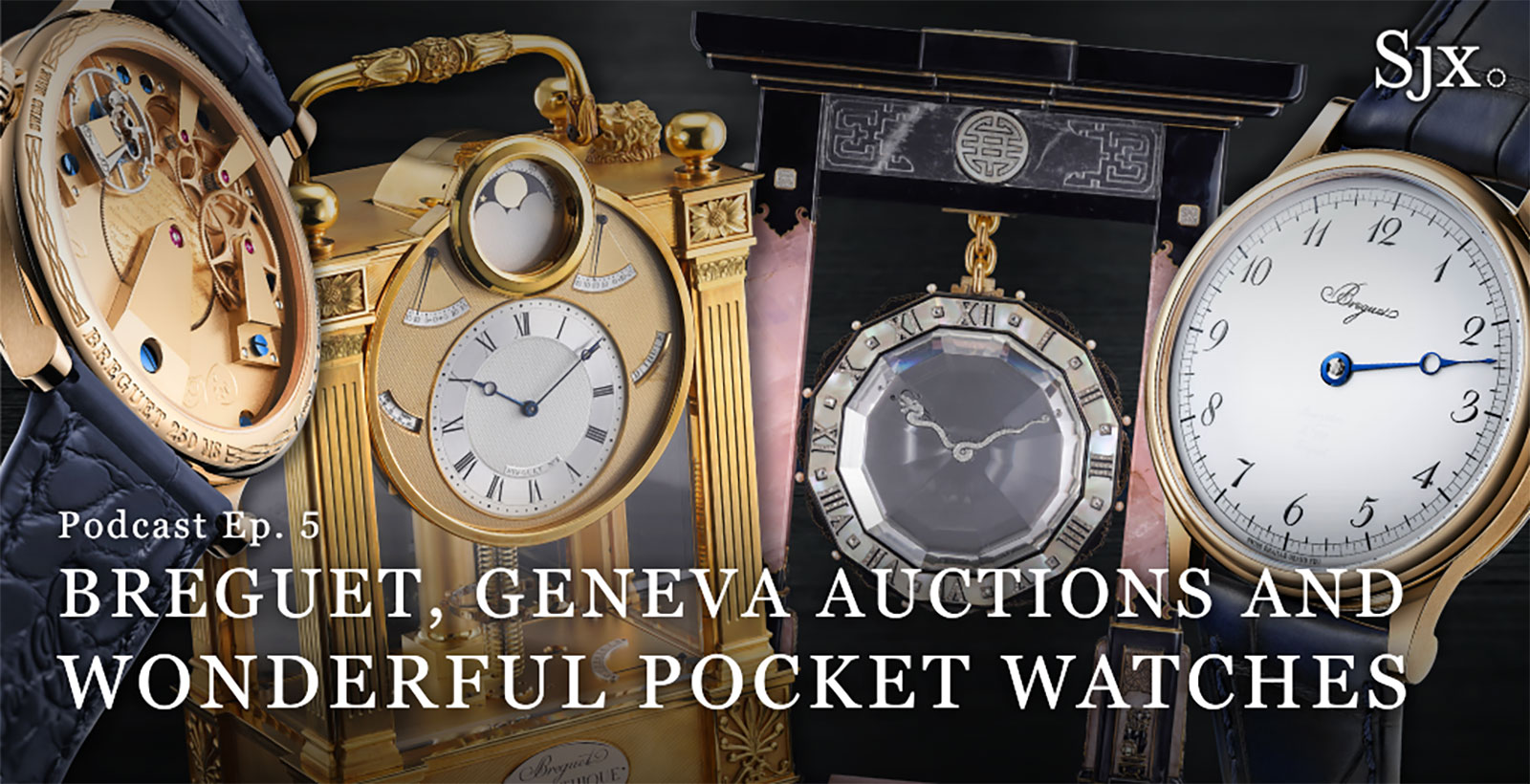
In the fifth episode of the SJX Podcast, Brandon Moore and SJX discuss Breguet’s reinterpretation of the Souscription for its 250th anniversary, as well as a historical Breguet watches coming up for auction, including a pocket watch owned by Napoleon’s sister and the very first modern-day Breguet Sympathique. We also talk about Christopher Ward’s daring new C12 with a dial-side balance wheel and very contemporary styling, before moving on to antique watches and clocks coming up for auction at Phillips in Geneva, including a 1920s portico mystery clock by Cartier in the “orientalist” style. Lastly, we finish some complicated pocket watches, which are perhaps under appreciated but magnificent examples of horology. Listen on Apple Podcasts, Spotify, and YouTube.  

Record Breaking Konstantin Chaykin ThinKing Debuts at Auction SJX Watches
Patek Philippe Calibre 89 ref 989J May 2, 2025

Record Breaking Konstantin Chaykin ThinKing Debuts at Auction

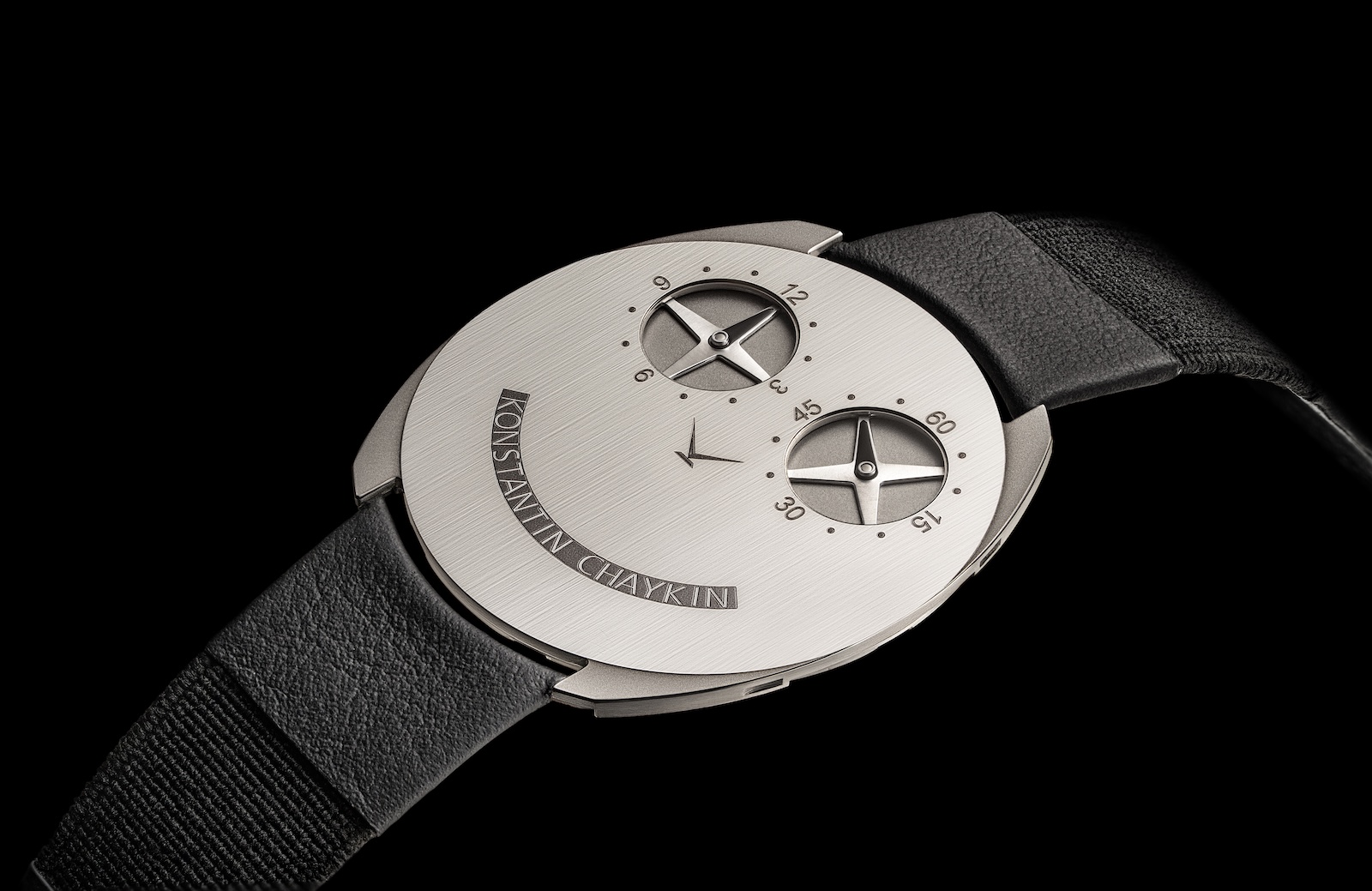
If you want to own the world’s thinnest mechanical watch, the Konstantin Chaykin ThinKing, you’ll have to fight for it at The Geneva Watch Auction: XXI, which will see the first production example go under the hammer. The 1.65 mm stature of the ThinKing is even more impressive coming from a small Russian independent watchmaker, considering previous records were set by big Swiss brands ranging from Piaget to Richard Mille. Notably, this is not the first time a landmark release has been trusted to an auction that isn’t linked to a charity. The most famous example of this was the Patek Philippe Calibre 89 (ref. 989J) back in 1989 at Antiquorum’s thematic sale. The ThinKing will be sold in the first session of the auction, which starts on May 10, 2025, at 2 pm. The ThinKing in profile. Image – Phillips Mr Chaykin achieved the record-setting height with clever construction, including a “double balance wheel” system that places an intermediate wheel between the balance and escapement, allowing both to sit on the same plane. Another notable technical feature is a barrel that is open on both sides, and no thicker than the mainspring itself. And unlike most serially-produced Konstantin Chaykin watches, each ThinKing is made, finished, and assembled by Mr Chaykin himself. Wearability is enhanced by the bolt-on protective shroud in titanium christened “PalanKing”. This increases the height to 5.4 mm, but adds key-less setting and winding, and automatic winding by a...

Christopher Ward Introduces the C12 Loco SJX Watches
Christopher Ward Introduces Apr 23, 2025

Christopher Ward Introduces the C12 Loco

Out to replicate the success of the Bel Canto and prove it’s not a one-hit wonder, Christopher Ward has introduced the C12 Loco. While the integrated bracelet look is now commonplace, the Loco breaks new ground for the British brand in terms of its differentiated movement architecture, and features an inverted free-sprung balance on the dial side of the watch. Spiritual successor to the Bel Canto, the C12 Loco paints a picture of Christopher Ward’s ambitions as a brand. Like Louis Erard, which is on a similar mission to make traditional craft and independent design more accessible, Christopher Ward is looking to redefine what collectors should expect from entry level watchmaking. Initial thoughts The Twelve is Christopher Ward’s foray into integrated bracelet sport watches. Its launch in 2023 was not without some controversy, being seen as too similar to the Czapek Antarctique; it turned out both designs came from the mind of designer Adrian Buchmann. Despite the rocky start, the collection has been a commercial success and the brand has done a commendable job developing the line-up and keeping prices in check. The Loco is the most ambitious Twelve to-date, with an off-center time display that opens up space at six o’clock for an exposed balance wheel and escapement. Like the Bel Canto, the watch does not feature the Christopher Ward brand name on the dial. In an era when attention is the name of the game, it’s nice to see a small brand with the confidence to let...

Audemars Piguet’s New Ceramic is the Same Hue as the Royal Oak 5402 SJX Watches
Audemars Piguet s New Ceramic Apr 16, 2025

Audemars Piguet’s New Ceramic is the Same Hue as the Royal Oak 5402

“Bleu Nuit, Nuage 50” was the colour code for the original Royal Oak “Jumbo” ref. 5402 ST of 1972, and now Audemars Piguet has translated the dark blue shade into its latest ceramic. Making its debut in three Royal Oak models, including the Royal Oak Double Balance Wheel Openworked, the “Bleu Nuit, Nuage 50” ceramic is restrained and a departure from the bright, almost electric blue of the brand’s earlier blue ceramic. Initial thoughts Ceramic is a material that lends itself well to the Royal Oak design; the brushed and polished surfaces that are the trademark Royal Oak surface finishing look good with the hardness and glossiness of ceramic. The earlier bright blue ceramic used by AP was too bright in my opinion. The new dark blue hue, on the other hand, feels just nice. The downside of an all-ceramic Royal Oak is the price. The Royal Oak Offshore Chronograph with a matching ceramic bracelet costs almost US$90,000, double the price of the steel equivalent and almost as much as the gold model. According to AP, the cost is primarily due to the difficult in finishing the ceramic – every element of the case and bracelet is brushed or polished by hand – which is true, but it’s still expensive. The most affordable model with the new ceramic only has its bezel and pushers in ceramic ” Night blue” According to AP, “Bleu Nuit, Nuage 50” (which translates as “night blue, cloud 50”) was the code for the dark blue, almost grey, in the catalogue of Stern...