 SJX Watches
Hands On: Patek Philippe Calatrava 24-Hour Alarm 5322G
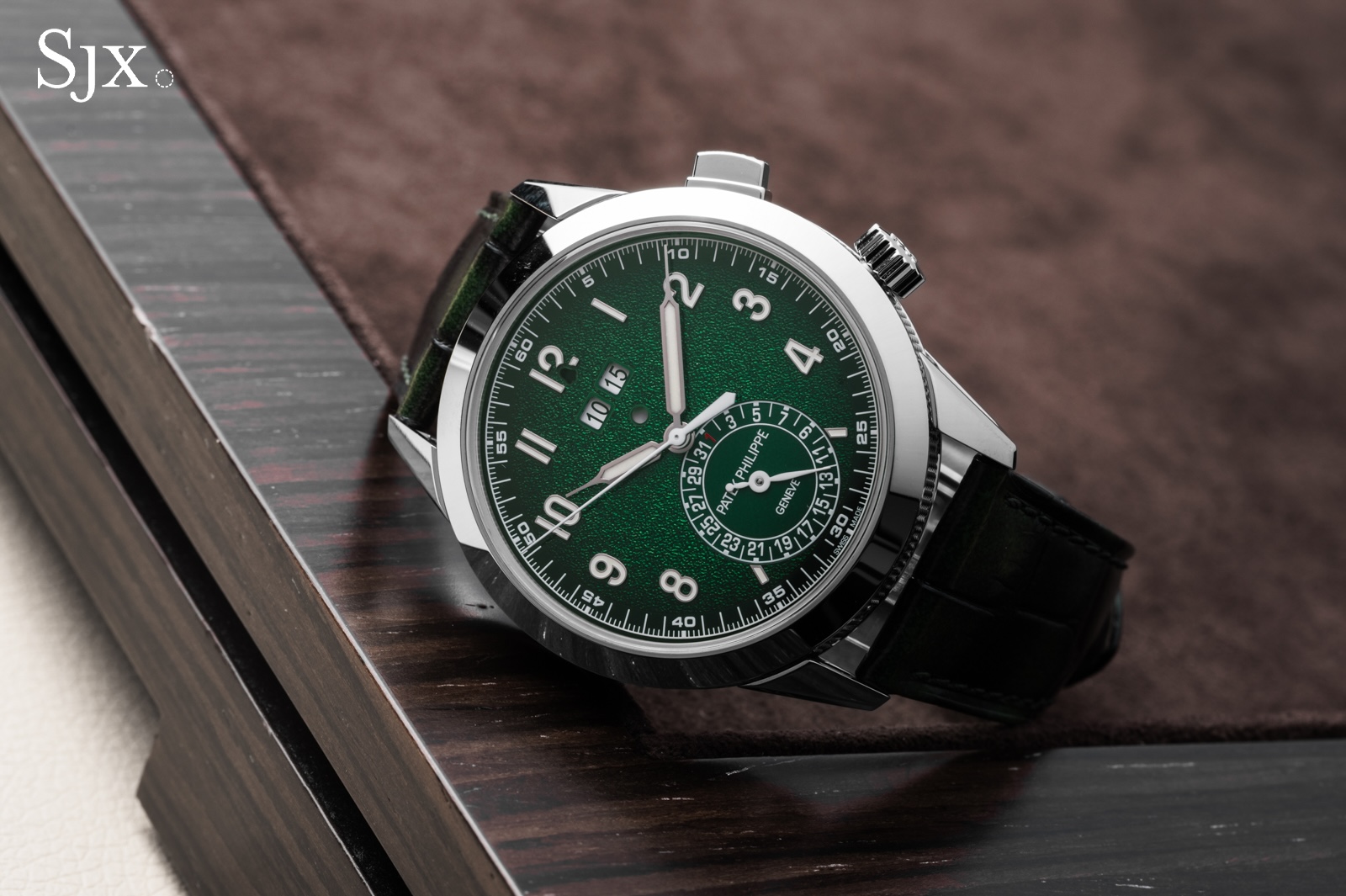
Patek Philippe’s mastery of complications is evident at all levels. The brand’s ability to elevate even simple complications is on full display in the Calatrava 24-Hour Alarm 5322G, a smaller and more focused take on the alarm watch than the discontinued spider-like Alarm Travel Time 5520P from 2019. This puts the most refined alarm movement on the market in the popular hobnail-flanked Calatrava case, capped with punchy green and blue fumé dials. Initial thoughts Launched in 2019, Patek Philippe’s Alarm Travel Time ref. 5520 was a polarising design from the start, with the appearance of four crowns - three of which were actually screw-locked pushers - when combined with the four lugs giving the watch an octopoid appearance. Looks aside, it was Patek Philippe’s first wristwatch with an alarm, and introduced a refined new calibre. This year Patek Philippe builds on that foundation without the travel time functionality and streamlined looks, eliminating the appearance of an awkward double crown setting system. There is no actual change to the base movement’s functionality - save the deletion of the travel time module. Perhaps a decade ago this bright green dial, or even the blue, would feel out of place in a high-grade watch, but today it fits right into the brand’s extremely colourful and contemporary catalogue. Even so, the dial design is sure to be polarising, especially the conflict between the 12 o’clock marker and alarm indicator, which the latter s...