Watch brandsWatch wikiWatch videosVariousWatch calendarSaved articles
PopularRolexOmegaPatek PhilippeAudemars PiguetTudorGrand SeikoCartierSeikoIWCTAG HeuerBreitlingJaeger-LeCoultreA. Lange & SohneZenith

Results for Jaeger-LeCoultre chronometre

1,282 articles · 151 videos found · page 43 of 48

View Jaeger-LeCoultre brand page
Auction Watch: A Single-Owner Collection of F.P. Journe at Phillips SJX Watches
F.P. Journe Jan 13, 2023

Auction Watch: A Single-Owner Collection of F.P. Journe at Phillips

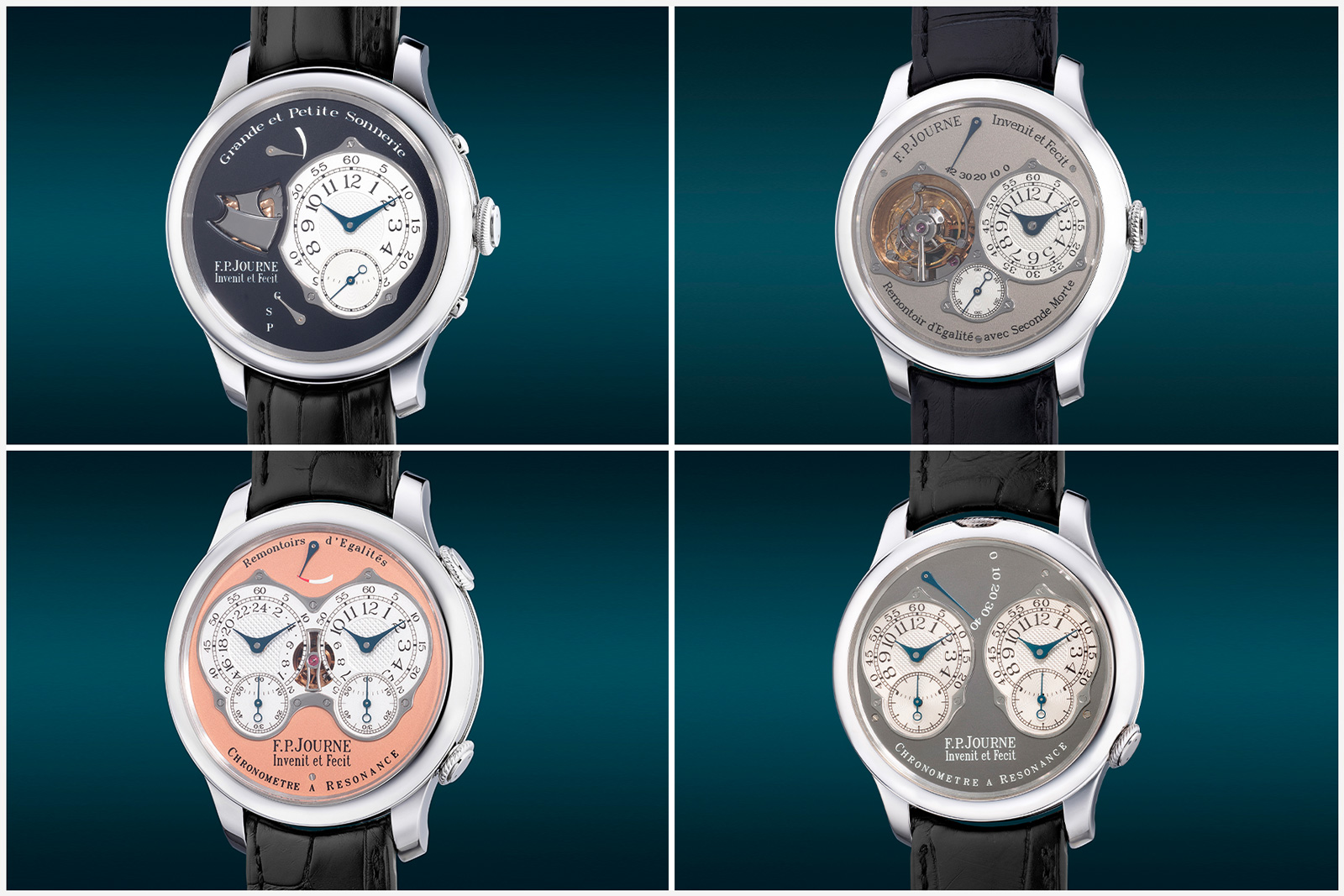
Le Concours de Complexité is probably the smallest watch auction ever conducted by Phillips. Taking place online from January 13-20, the sale comprises just 11 watches. But all 11 are F.P. Journe watches, including important models like a Sonnerie Souveraine, Chronomètre à Résonance Ruthenium, and Centigraphe Anniversaire. So while the quantity is modest, the quality and value are high. And the watches all come with impeccable provenance. The former owner is a prominent businessman from Southeast Asia who is active real estate development. He purchased most of them brand new and has clearly kept them in immaculate condition. Le Concours de Complexité begins on January 13 and will run until January 20. Bidding and the catalogue can be accessed on Phillips.com. Below we round up a trio of highlights from the sale. The Sonnerie Souveraine Lot 8001 – Chronomètre à Résonance Ruthenium Synonymous with the independent watchmaker, the Resonance is correctly regarded as one of the most ingenious creations in contemporary watchmaking. Francois-Paul Journe was the first to implement the concept in a wristwatch, having been inspired by 18th century clocks operating on the principle of resonance. This example is one of the Ruthenium series that was launched in 2001. The name comes from the fact that the dial and brass movement bridges are plated in ruthenium, giving them a dark grey finish. Notably, the Ruthenium editions are the last F.P. Journe models to utilise brass m...

Only Watch 2021: Independent Watchmaking Highlights SJX Watches
F.P. Journe FFC Blue Nov 3, 2021

Only Watch 2021: Independent Watchmaking Highlights

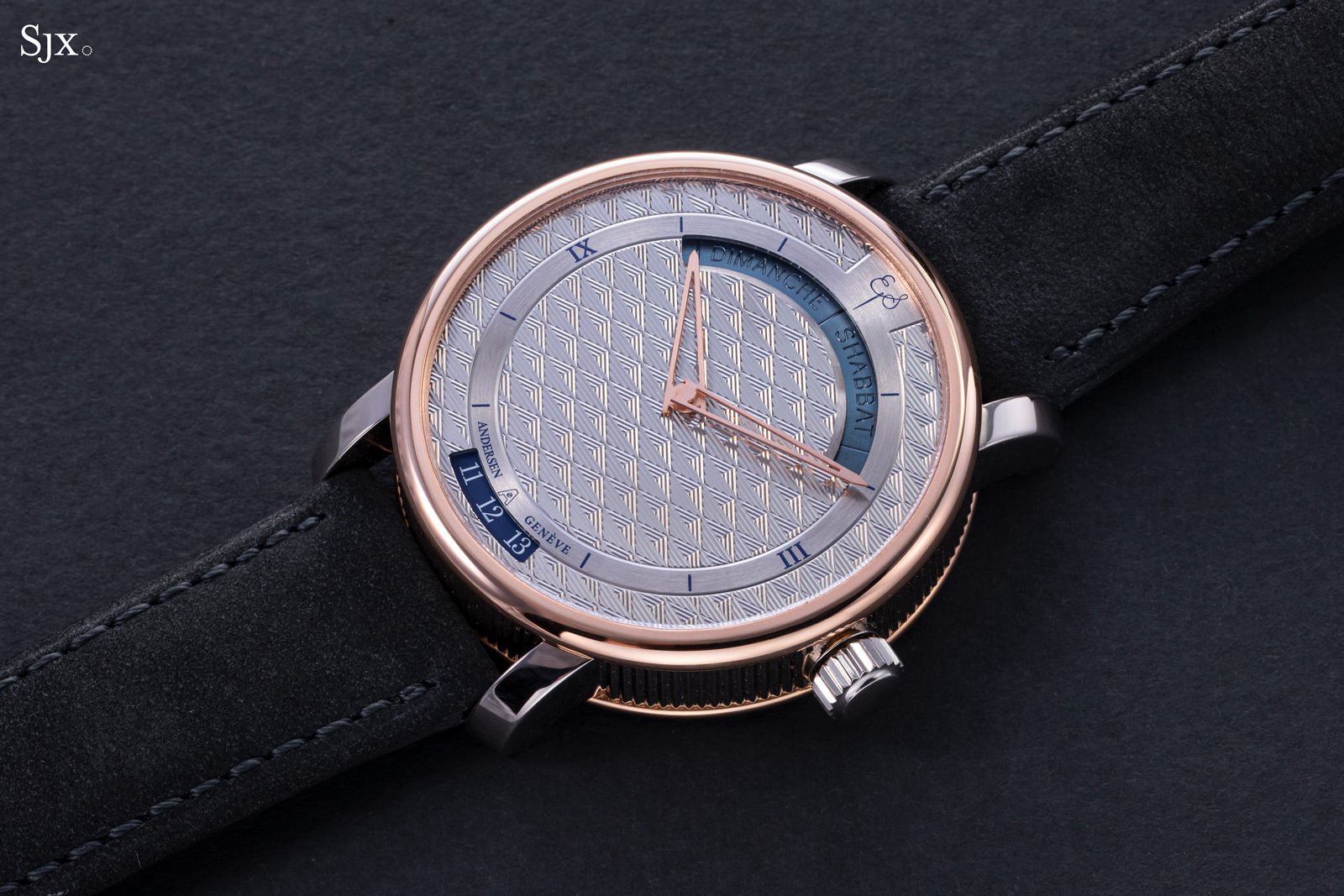
The top lots amongst independent watchmakers at Only Watch 2021 are no doubt the F.P. Journe FFC Blue and Rexhep Rexhepi Chronomètre Contemporain II, but they will cost six or seven figures. But half of the participants at Only Watch are independent watchmakers, so there are a few more interesting examples of the genre, which might possibly be reasonably affordable. We round up five notable watches amongst the “indies”, ranging from the quirky and fascinating Urwerk that’s an upgraded example of the brand’s earliest watch to the stunningly engine-turned Andersen Genève Quotidiana. Urwerk UR-102 “Gaïa” Perhaps the avant-garde independent watchmaker, Urwerk is best known for revolutionising the presentation of time, having invented time displays using satellite cubes on a carousel and prisms in cylinders. But the brand’s creation for Only Watch 2021 looks nothing like its recent work, because it’s a quarter-century old, an artefact from the brand’s start-up days. The UR-102 “Gaïa” is a prototype of one of the brand’s earliest models – it is actually a vintage Urwerk – but dressed up smartly for the occasion, with a special case back decoration that signifies the brand’s success. The platinum case back is adorned with a sparkling, deep blue emblem that alludes to the Gaïa Prize, which Urwerk’s founders won in 2020 That said, being an Urwerk, the time display is far from rudimentary. While neither a cube nor a prism, it is still a wond...

In-Depth: Ferdinand Berthoud FB RS Régulateur Squelette SJX Watches
Ferdinand Berthoud Oct 6, 2021

In-Depth: Ferdinand Berthoud FB RS Régulateur Squelette

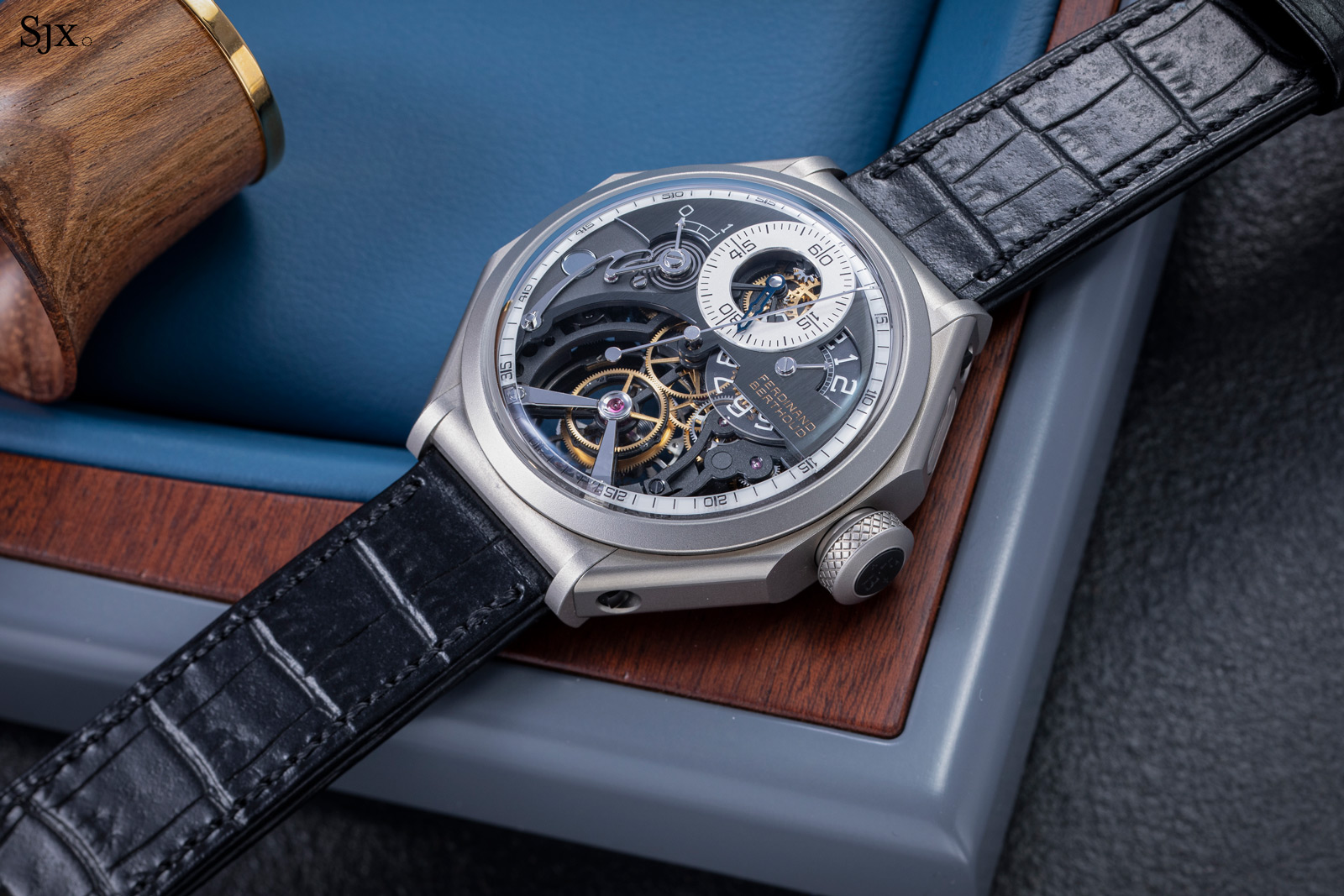
Having launched one of the best watches of 2020 with the spectacularly decorated Chronomètre FB 2RE, Ferdinand Berthoud (FB) returned to its very first model this year, remaking the FB 1 by bestowing upon it an open-worked movement accompanied by more contemporary styling. The result is the Ferdinand Berthoud FB RS – short for Régulateur Squelette, or “regulator skeleton”, which tidily sums up the time display format as well as the movement. Like the original FB 1, the new model has both a tourbillon as well as a chain and fusée. Notably, the FB RS is actually two models but equipped with the same movement, the FB-T.FC-RS. One is an octagonal case in sandblasted steel, the decidedly modern FB 1RS.6, while the other is the more conventional FB 2RS.2 in a round case of polished 18k rose gold. The FB-T.FC-RS While the two versions are quite different in terms of style, both share a similarly large diameter – resulting from the calibre within that boasts exemplary construction and finishing. The FB 1RS.6 in steel The FB 2RS.2 in gold Initial thoughts FB’s watches are best described as big and chunky – too big mostly – with equipped with exceptional movements. And the models with a tourbillon are especially big. Because of the their size, FB tourbillons tended to have a wide, empty expanse on the dial (which was dressed up with italic script in recent models). In contrast, the FB RS does away with all that empty real estate by uncovering the mechanics b...

Only Watch 2021: F.P. Journe FFC Blue “Francis Ford Coppola” SJX Watches
F.P. Journe FFC Blue “Francis Ford Jul 1, 2021

Only Watch 2021: F.P. Journe FFC Blue “Francis Ford Coppola”

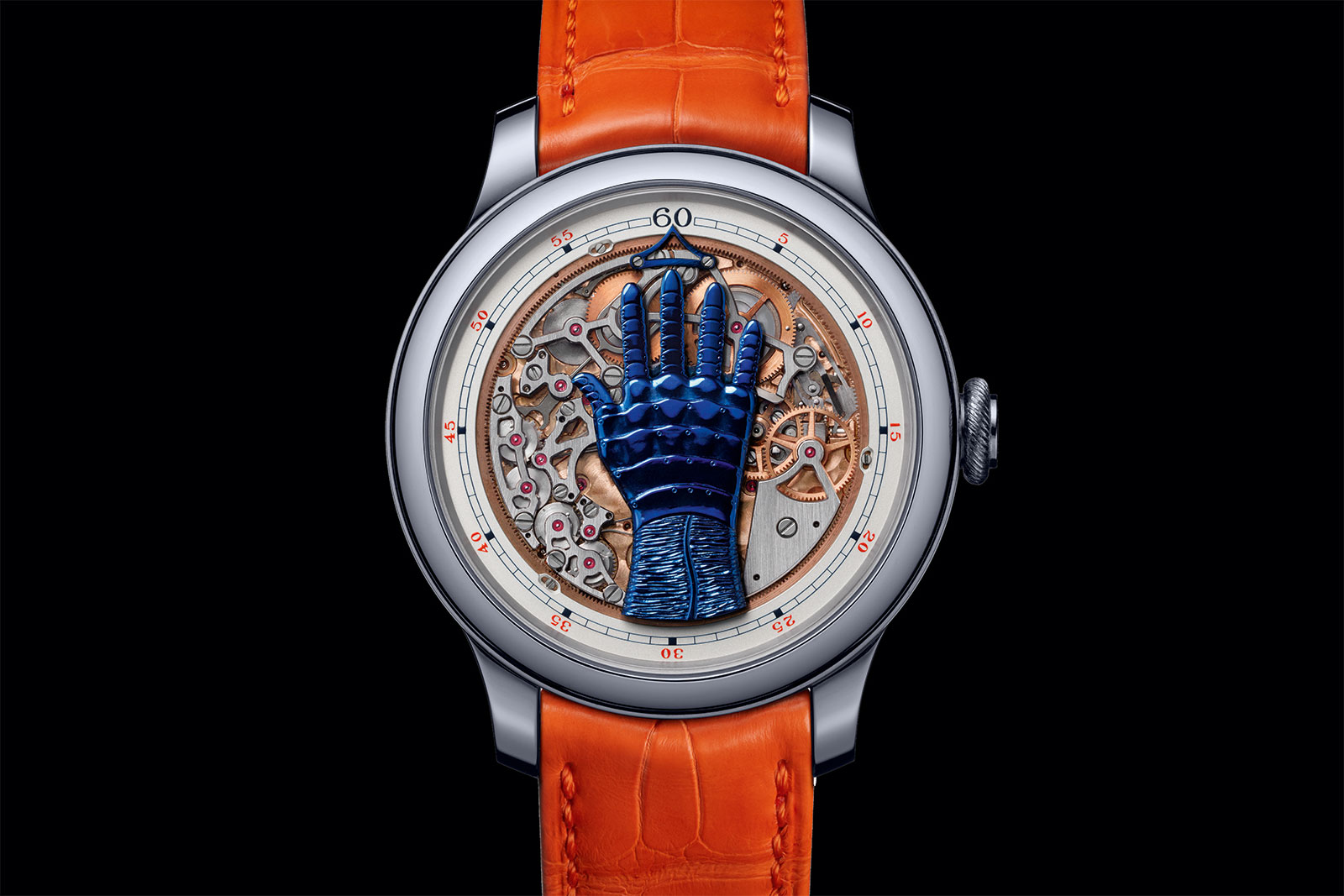
F.P. Journe’s creation for Only Watch 2021 is an interesting one – the FFC Blue, characterised by a hand on the dial that displays the hours. Like F.P. Journe’s past contributions to Only Watch, the FFC Blue is powered by a prototype movement – rough around the edges and lots of character – and features a case of tantalum, the grey-blue metal synonymous with the bestselling Chronometre Bleu. Named after the initials of Francis Ford Coppola, the film director best known for The Godfather, the FFC Blue originated in a 2012 visit to Mr Coppola’s residence. The director asked Mr Journe a seemingly innocuous question over dinner, wondering whether it was possible to tell the time with a human hand. Mr Journe mulled it over and over several years devised a mechanism with the help of Mr Coppola, who sent sketches of the desired finger positions for each hour. The unveiling of the FFC Blue also marks the 20th anniversary of the F.P. Journe Octa and its automatic cal. 1300 (it’s the second watch to mark the occasion in fact), which is the base movement of the FFC Blue. Initial Impressions At first glance, the FFC Blue is bizarre for F.P. Journe. The hand sculpture on the dial is unlike most of the brand’s other designs, which are mostly conservative and often Breguet-inspired. Upon closer examination, indeed a bizarre watch it is – in a good way. The mechanism is an impressive example of an automaton, a complex answer to a simple question: how can the human hand...

A barn find to give you hope – the story of a very special NOS vintage Gruen Ocean Chief Time+Tide
Aug 12, 2020

A barn find to give you hope – the story of a very special NOS vintage Gruen Ocean Chief

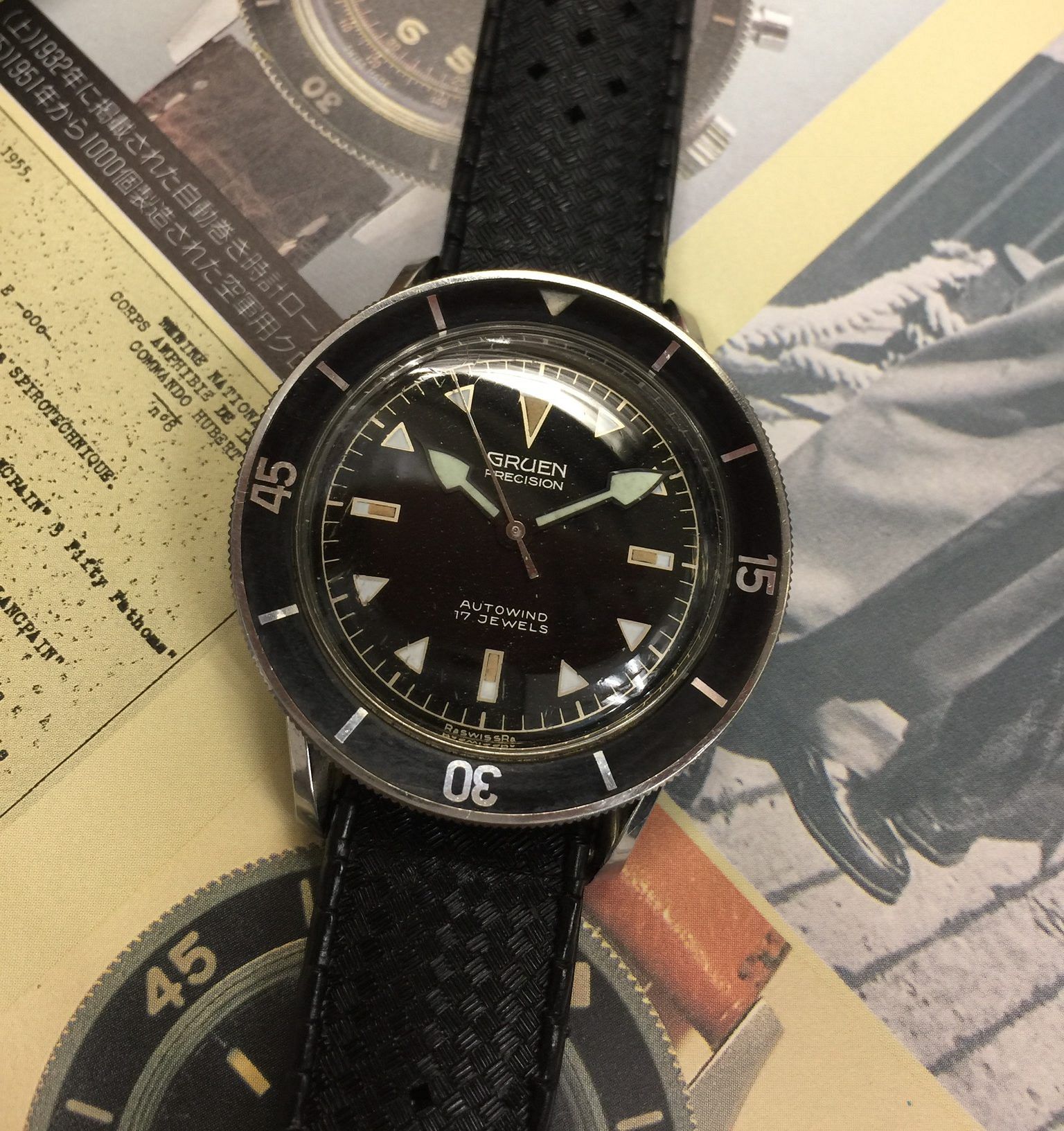
Editor’s note: This week, Eric Ku, vintage watch dealer and friend of Time+Tide, posted about five years having passed since the remarkable watch barn find story involving a LeCoultre Deep Sea Alarm. A man by the name of Zach Norris came across an interesting-looking watch at a local Goodwill store, featuring a price tag of … ContinuedThe post A barn find to give you hope – the story of a very special NOS vintage Gruen Ocean Chief appeared first on Time+Tide Watches.

Recap: Instagram Live with Rexhep Rexhepi SJX Watches
Rexhep Rexhepi May 29, 2020

Recap: Instagram Live with Rexhep Rexhepi

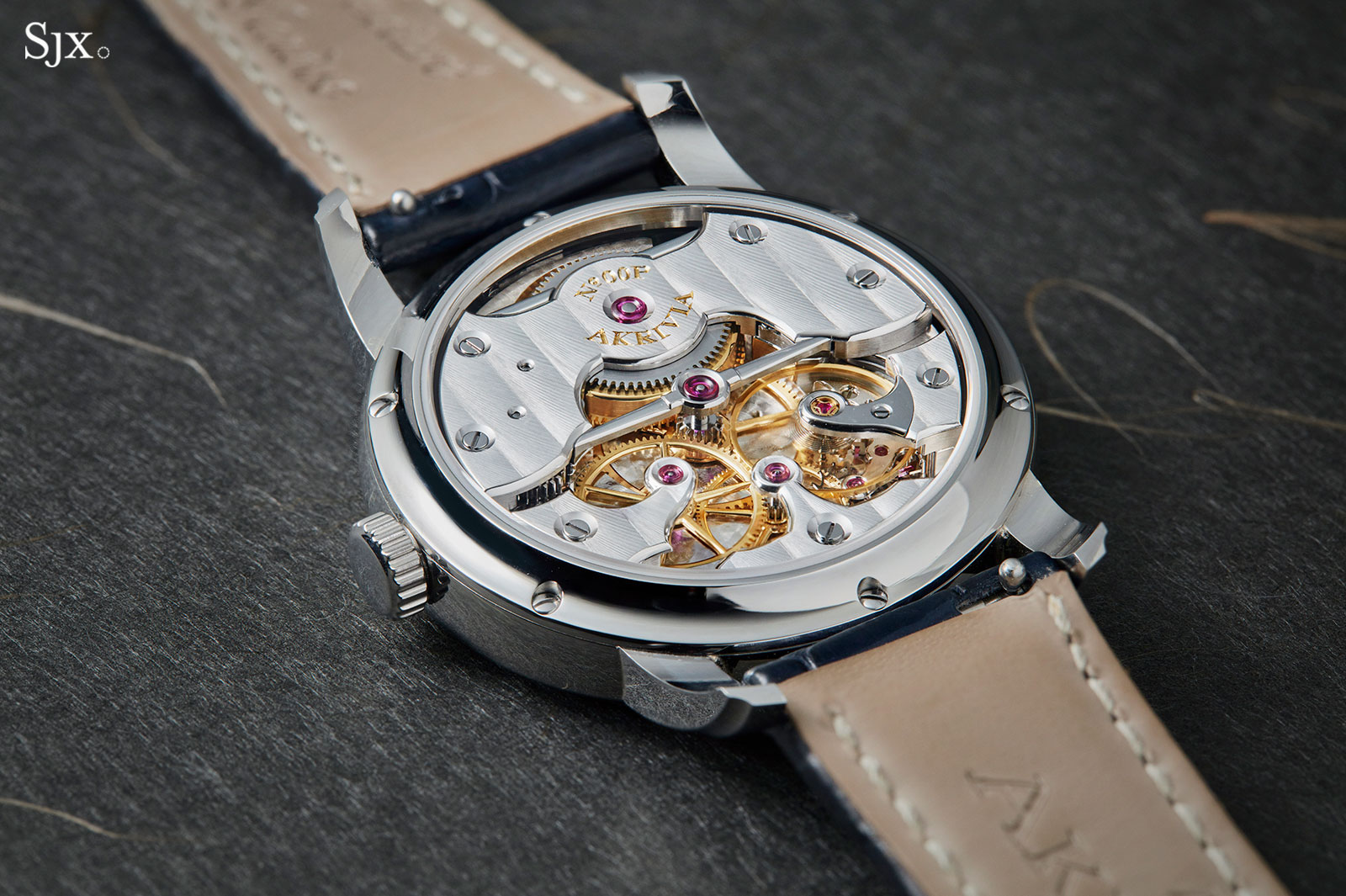
Rexhep Rexhepi of Akrivia was the guest on our first-ever Instagram Live, where he spoke with our founder SJX. Lighthearted and insightful, the session centred on the growth of Akrivia’s in-house capabilities, as well as the future of the Chronomètre Contemporain series. Here’s a recap of the highlights from the session. Ambitions for integration Rexhep has big dreams for Akrivia as a true manufacture, from production to even testing. This stems from an explicit desire to control every element of production, and to ensure his high standards at met every step of the way. Much of the progress made in vertical integration will be reflected in the second series of the Chronomètre Contemporain. While the series one cases were produced by a Geneva specialist, the second series will have its cases made in-house by master case maker Jean-Pierre Hagmann, who joined Akrivia last year. At the same time, Rexhep said the movement will have a greater share of parts made in-house. While the exactly proportion was unsaid, he made clear that his goal was to eventually make all key parts – bridges, base plates, wheels and pinions – in the Akrivia workshop. Beyond production timepieces, such vertical integration will be advantageous as it would allow Akrivia to prototype ideas far more quickly. Rexhep Rexhepi with Jean-Pierre Hagmann. Photo – Akrivia Interestingly, Rexhep also touched on chronometer testing and certification. The first series Chronomètre Contemporain is te...

Pandemic Truths – Rexhep Rexhepi SJX Watches
Rexhep Rexhepi Apr 23, 2020

Pandemic Truths – Rexhep Rexhepi

Amongst independent watchmakers, Rexhep Rexhepi has found swift and significant success since he founded Akrivia, now one of the hottest niche brands. After his Chronomètre Contemporain took the prize of best men’s watch at the 2018 Grand Prix d’Horlogerie de Genève (GPHG), collectors have been eagerly anticipating his next creation – which is on track despite the pandemic-induced disruptions. How has the COVID-19 coronavirus affected Akrivia? Now still crafting watches in his workshop at the heart of Geneva’s Old Town, Rexhep answers. Rexhep, still at the workshop in Geneva’s Old Town. Photo – Rexhep Rexhepi What impact has the crisis has on your business? The first impact was human. A month ago, when social distancing was first implemented in Switzerland, the atmosphere was grim. I could feel employees’ morale was affected; their motivation was low. I offered them the choice to stay home with partial unemployment or keep coming to the atelier, while respecting all health and hygiene measures, of course. Most of them opted to keep working, so we are still open at the moment and working almost normally. Even my partner [Jean-Pierre] Hagmann is back now. Production-wise, we feared for some of our subcontractors, like the [specialist that does] rhodium plating for example, but they are also working, even if only part time, for one week out of every two. But since we have [vertically] integrated a lot of our production, like making our own cases, and we have...

Up Close: Akrivia AK-06 SJX Watches
Akrivia Apr 3, 2020

Up Close: Akrivia AK-06

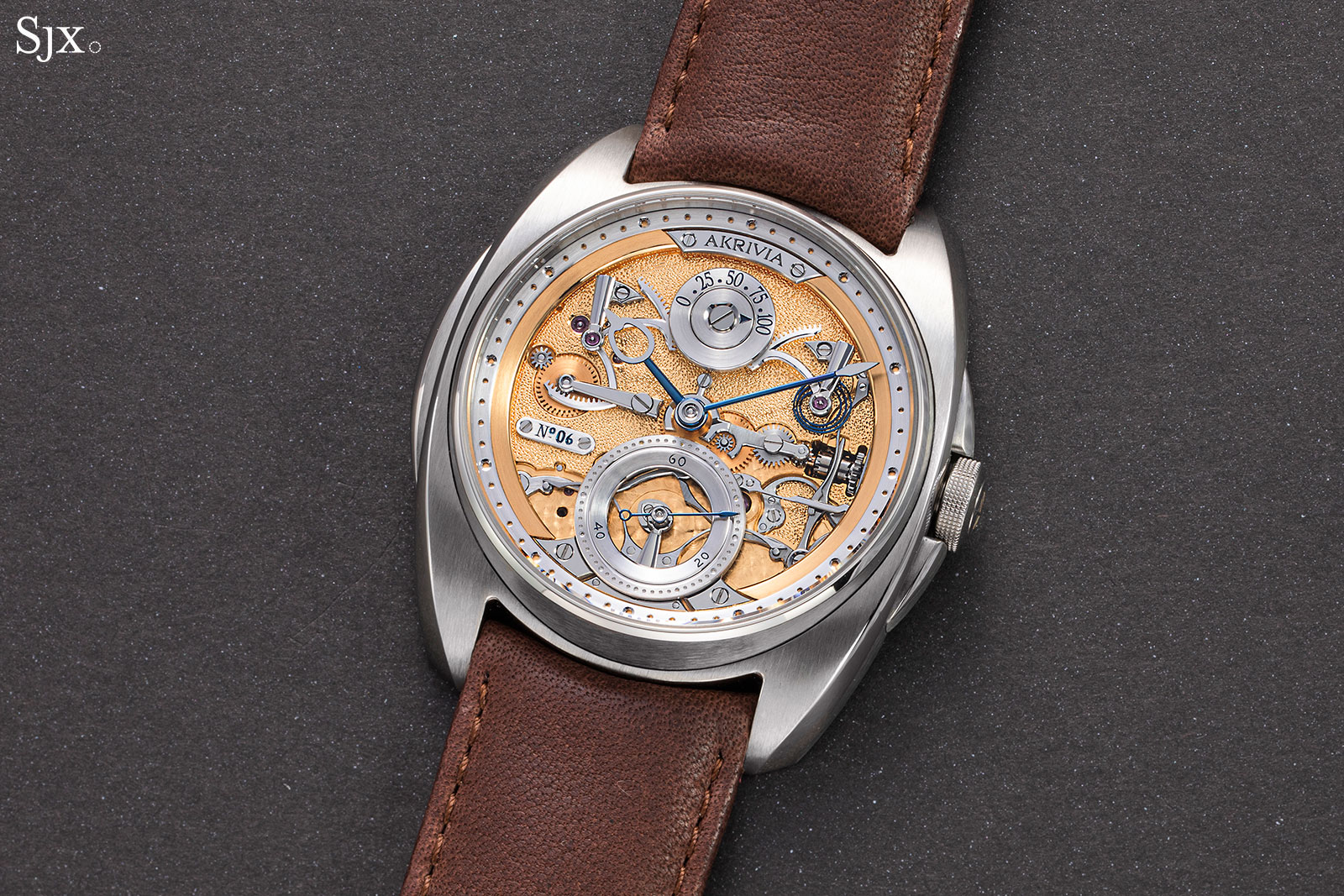
Akrivia, and by extension its founder Rexhep Rexhepi, became a star in independent watchmaking with the launch of the Chronometre Contemporain in 2018, a unique version of which went on to sell for 360,000 Swiss francs at charity auction Only Watch. While its success was recent, the brand was actually founded in 2012, having made its debut with the AK series, characterised by a wholly-different aesthetic, one that Rexhep himself describes as a startup’s attempt to make an impression. The bridge between the twin collections of Akrivia – the contemporary AK series and the classical Chronometre Contemporain – is the AK-06. It’s powered by a variant of the movement found in the Chronometre Contemporain, but enhanced by doing away with the dial to reveal the under-dial mechanics, but installed inside an AK-style case, albeit one that’s been redesigned and streamlined. The AK-06 in titanium (left) and steel Beyond being a blend of both Akrivia styles – the best of both worlds if you like the case design – the AK-06 is perhaps historically significant, being the last of the first-generation Akrivia models, since Rexhep has indicated the AK series will eventually feature a wholly new case design. But whatever you think of the case, the movement of the AK-06 is absolutely marvellous. In fact, it is arguably more compelling than the similar calibre in the Chronometre Contemporain, because with the AK-06 all of its engaging mechanics are revealed on the front. AK case...

Face-Off: Seiko Credor Eichi II 7R14 vs. Grand Seiko Spring Drive 9R02 SJX Watches
Grand Seiko Spring Drive 9R02 When Feb 6, 2020

Face-Off: Seiko Credor Eichi II 7R14 vs. Grand Seiko Spring Drive 9R02

When it comes to finely-finished, time-only movements, the ultimate Seiko offerings are the Credor Eichi II and Grand Seiko Spring Drive 20th Anniversary. The Japanese equivalent of watches like the Akrivia Chronometre Contemporain and Philippe Dufour Simplicity, the pair are the work of the Micro Artist Studio and finished to the same magnificent level, broadly speaking. (The Grand Seiko 8 Day is of the same quality, but it is a much larger and more complex watch.) Because the movements, the 7R14 in the Eichi II and 9R02 in Grand Seiko SBGZ001 and SBGZ003, are fundamentally identical, comparing the finer details of the two – an enlightened, obsessive nitpicking – makes for some interesting conclusions. The 7R14 in the Eichi II (left) and the 9R02 of the Grand Seiko SBGZ001 The sampled are both finished examples that were purchased in stores, and not prototypes, so both are representative of their respective model and movement. Though both were made in the Seiko-Epson’s Micro Artist Studio, probably by the very same craftsmen, the Eichi II was produced in 2015, while the Grand Seiko SBGZ001 dates to 2019, which is the year of its launch, and is the property of Mark Cho, founder of menswear retailer The Armoury. Same but different Both movements share the same architecture and layout, with the key functional difference being the power reserve, in both duration and display. The Eichi II’s 7R14 has a single barrel and a 60-hour power reserve, indicated on a fan-sha...

Up Close: Akrivia AK-02 Tourbillon Hour Minute SJX Watches
Casio nally titanium it Jul 9, 2019

Up Close: Akrivia AK-02 Tourbillon Hour Minute

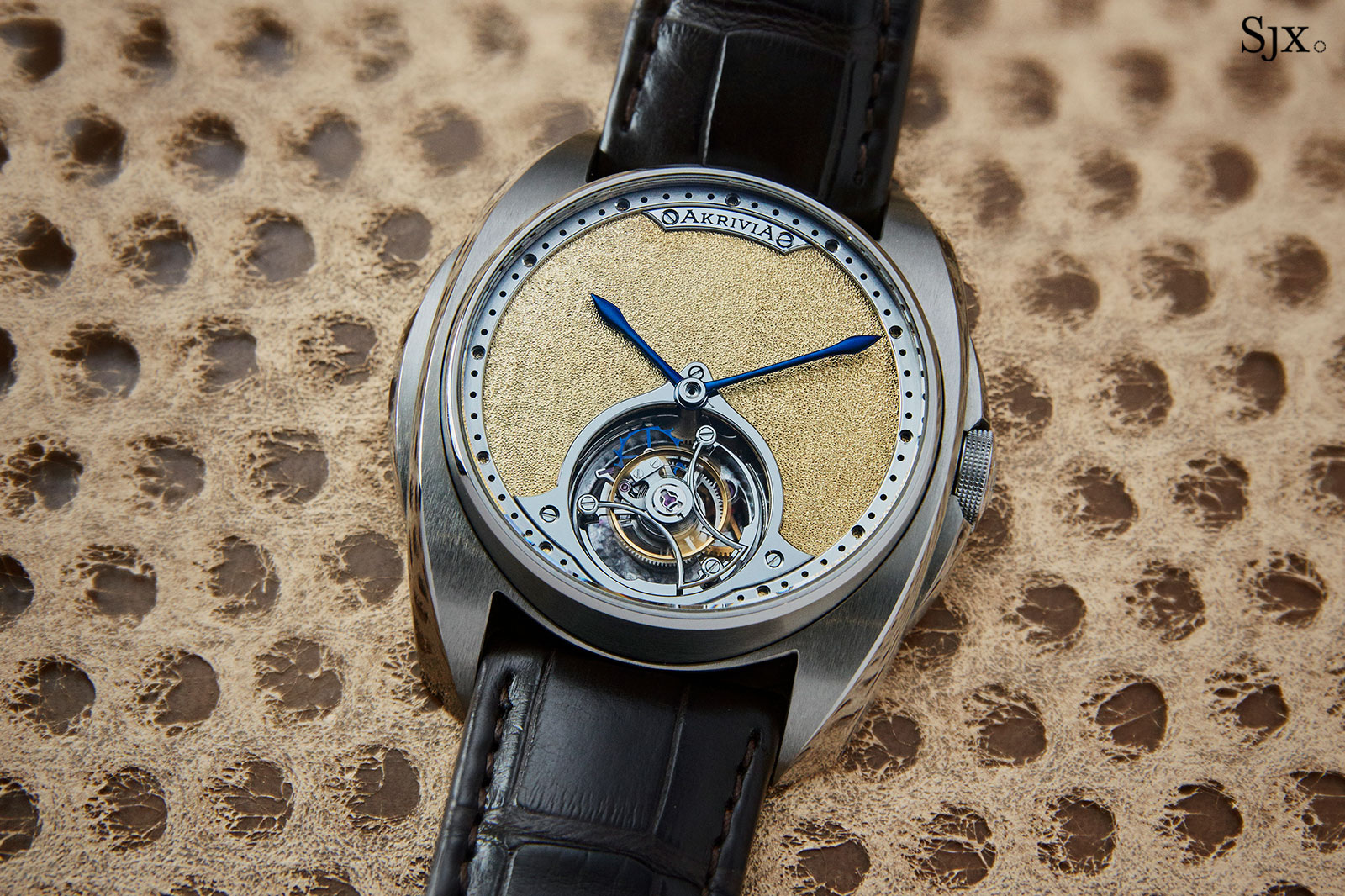
Last year’s Akrivia Chronomètre Contemporain made its young creator, Rexhep Rexhepi, a star, but the brand’s foundational watch is actually the “AK” series. Chunky and slightly sporty, the AK watches are a world away from the classical styling of the Chronomètre Contemporain, but boast the same level of movement finishing, along with a bonus of elaborately hand-hammered dials. The second model in the AK series was the AK-02 Tourbillon Heure Minute, or “Hour Minute” – a time-only watch with a tourbillon regulator. The AK-02 is probably the finest finished tourbillon wristwatch in its price segment, and in the price segments above it as well. The AK case It’s a fairly large watch, with the case measuring 43.0mm with and 12.9mm high. But the lugs are short so it feels fairly compact on the wrist. And because the AK-02 is typically found in a steel case, as is pictured here, or occasionally titanium, it is usually lightweight. Gold cases are available for a modest premium, though rarely requested. The case feels like it’s trying too hard, and consequently feels overly built, with thick lugs and a high case band. It’s too chunky for my taste, and doesn’t quite suit the refined movement inside. That being said, the AK-style case has it fans for several reason. The design is distinctive, more distinctive than the old school Chronomètre Contemporain case. And it is also finished to a high degree, with contrasting polished and brushed surfaces; the...

HANDS-ON: Ulysse Nardin’s surprise sailing watch – the Marine Regatta Time+Tide
Ulysse Nardin s surprise sailing watch May 17, 2017

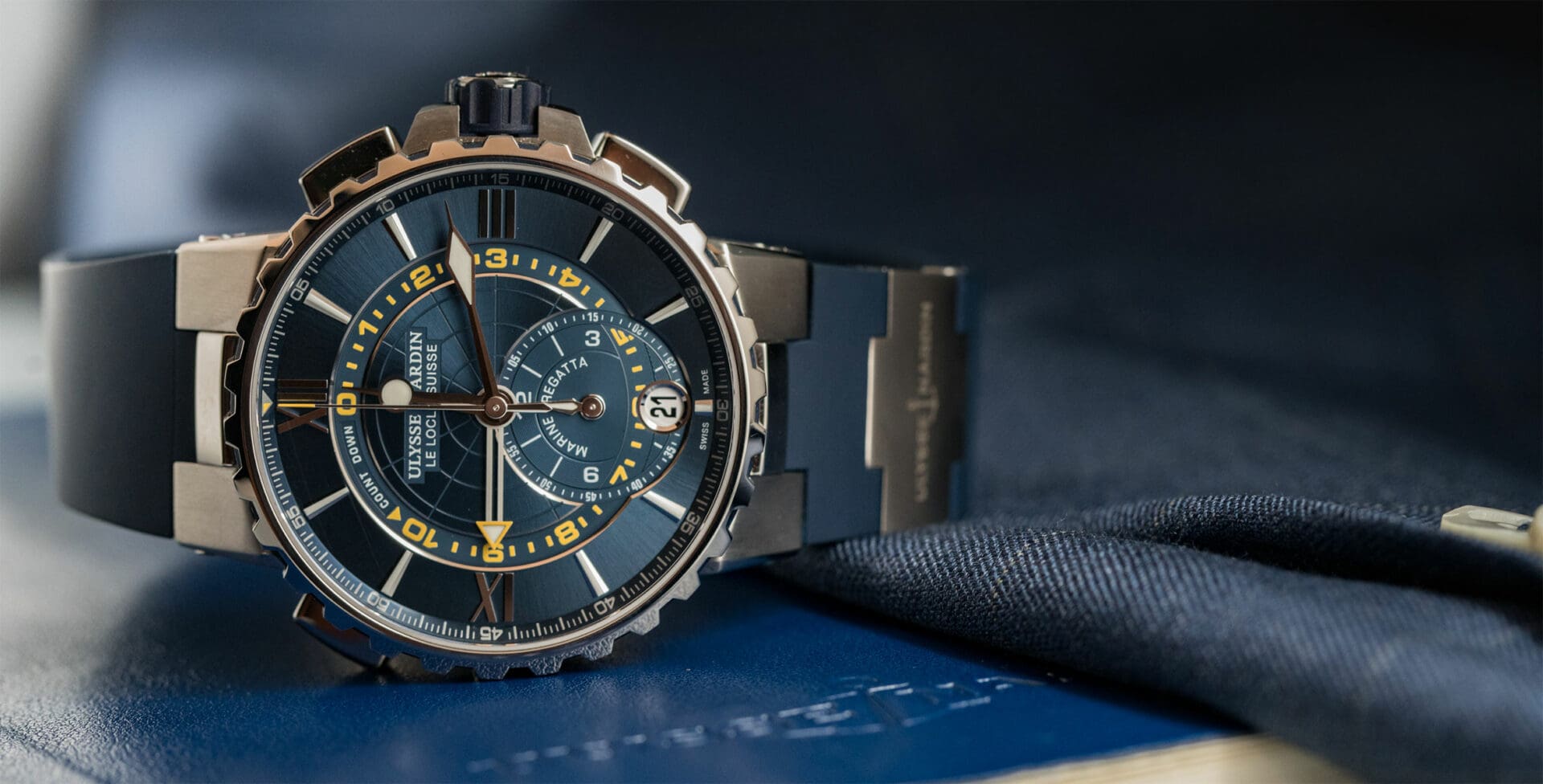
HANDS-ON: Ulysse Nardin’s surprise sailing watch – the Marine Regatta

Ulysse Nardin made their name way back in 1846 making marine chronometres – highly accurate ship’s clocks that were an essential navigational tool in the times before radio and GPS. These days the Le Locle-based brand still makes chronometre-style timepeices, but as a celebration of heritage rather than a practical tool. This isn’t to say that … ContinuedThe post HANDS-ON: Ulysse Nardin’s surprise sailing watch – the Marine Regatta appeared first on Time+Tide Watches.

First Look – Chapter Two in the Revival of L. Leroy with the New Elyor Flying Tourbillon Monochrome
Apr 24, 2026

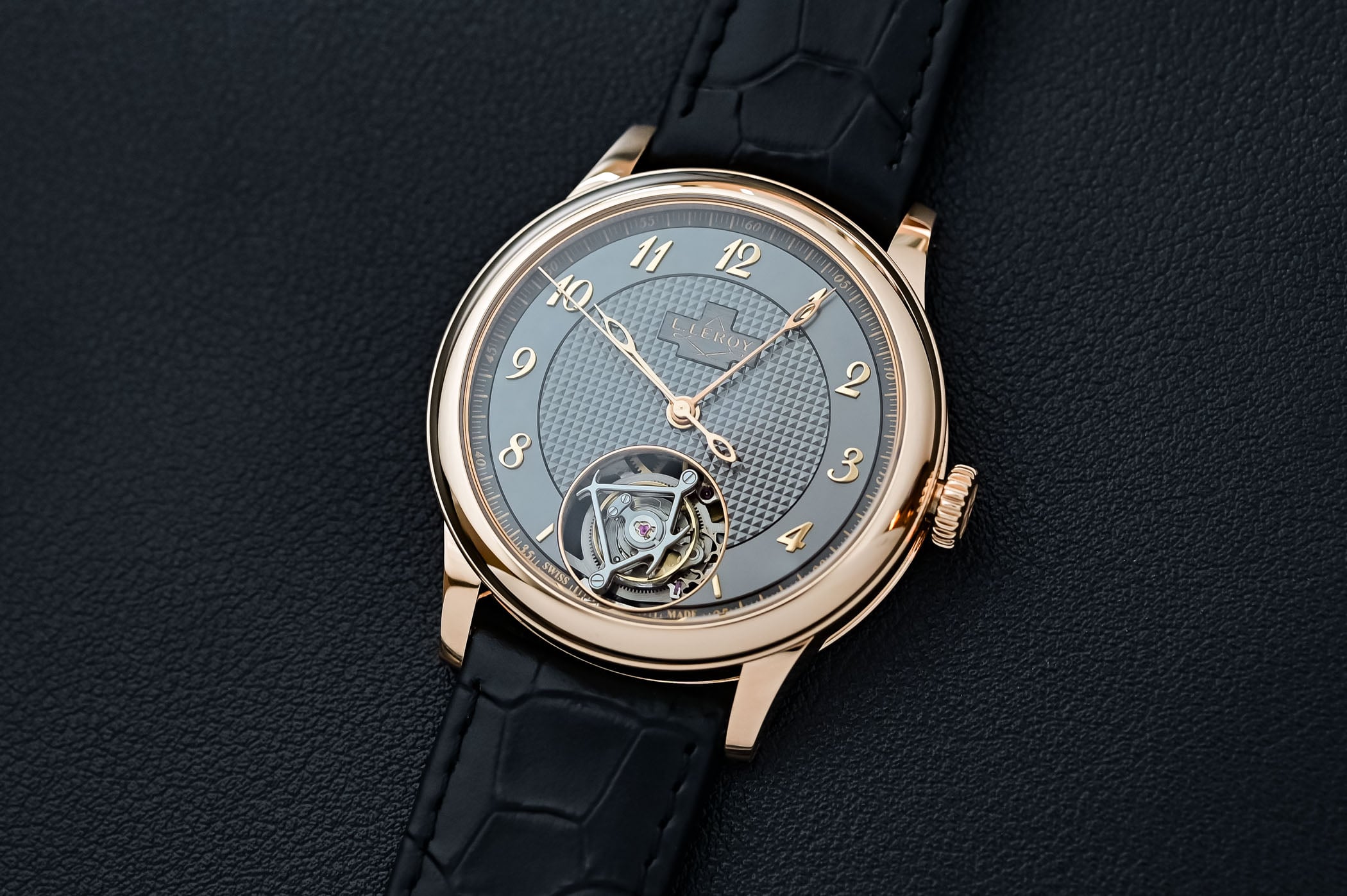
First Look – Chapter Two in the Revival of L. Leroy with the New Elyor Flying Tourbillon

Parisian watchmaking maison L. Leroy was founded by Basile-Charles Le Roy in 1785 and became the official watchmaker to King Louis XVI and later to Napoleon I and Queen Victoria. Expanding operations to Switzerland, L. Leroy produced marine chronometers for the French Navy and amassed 384 gold medals in chronometry competitions. Iconic masterpieces like the […]

First Look – The New Zenith G.F.J. in Tantalum and Yellow Gold, Continuing the Legacy of the Calibre 135 Monochrome
Zenith G.F.J Apr 15, 2026

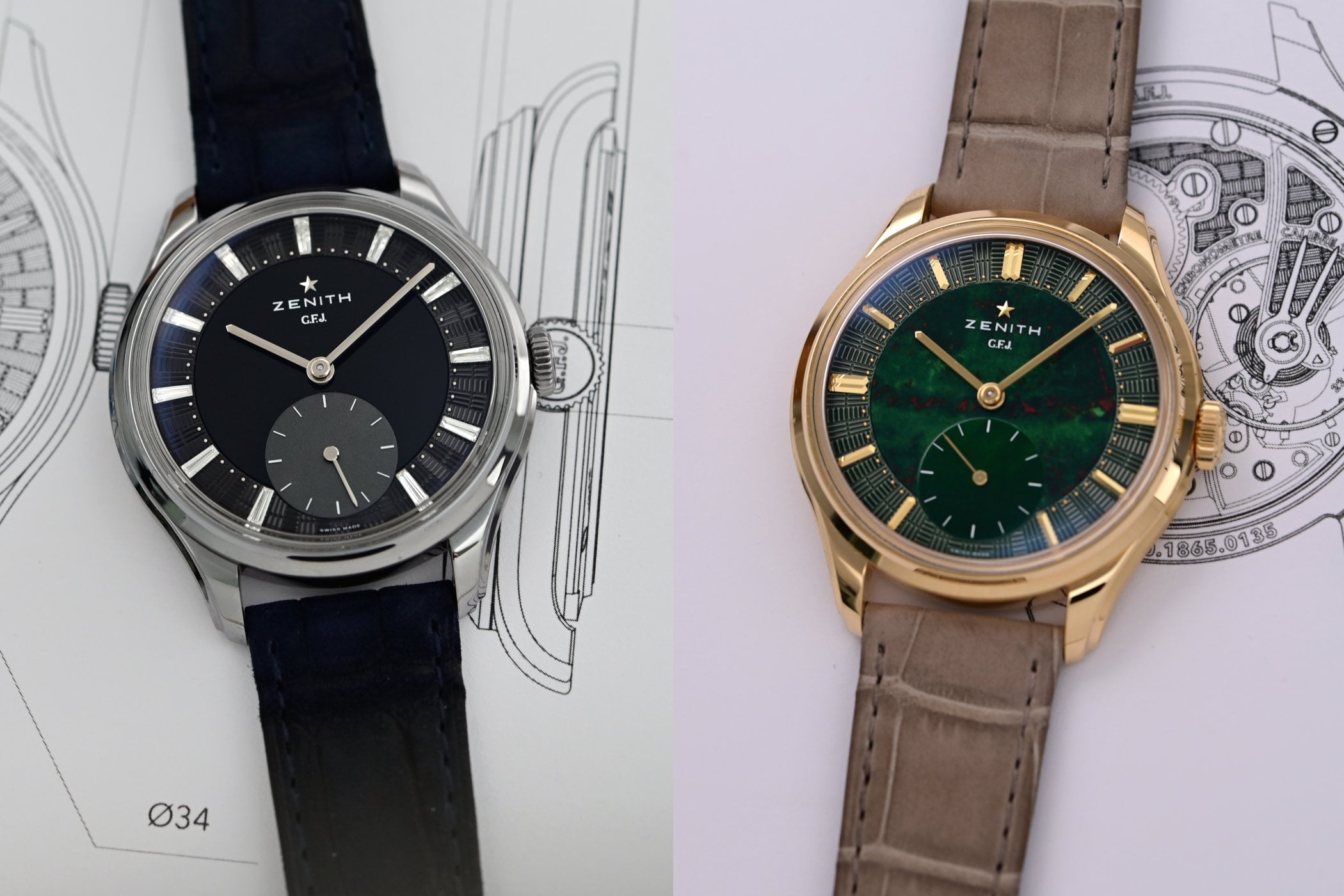
First Look – The New Zenith G.F.J. in Tantalum and Yellow Gold, Continuing the Legacy of the Calibre 135

When Zenith brought back the legendary Calibre 135 last year in the G.F.J. collection, it was a tribute to its 160-year history. Also, it signalled the return of one of the most celebrated chronometer movements. Now, the brand expands the collection with two new G.F.J interpretations: a tantalum edition with an onyx dial and diamonds, […]

In Depth: Laboratoire de Précision SJX Watches
Omega Constellation Observatory we were Apr 9, 2026

In Depth: Laboratoire de Précision

Alongside the launch of the Omega Constellation Observatory, we were among the first members of the public granted access to the Swatch Group’s Laboratoire de Précision (LP), a new independent chronometer testing institute with facilities in Omega’s native Biel/Bienne and Villeret. The new organisation does not redefine chronometer norms, but it has developed a new acoustic certification process that is more automated and provides client brands with a richer performance data set - a unique capability that has implications beyond mere certification. Laboratoire de Précision. Image – Omega Initial thoughts The debut of the Constellation Observatory, the first watch certified by LP and the first-ever two-handed Master Chronometer, was greeted with a mixed feedback from both collectors and the press. Some found the choice to launch a chronometer without a seconds hand heretical, viewing it as a gimmick to promote LP’s new testing process. The Omega Constellation Observatory is the first watch to complete chronometer certification at LP. Regardless of how one feels about the two-handed aspect of the watch - I found the design balanced and appealing, even if the concept is a bit quirky - the launch placed a renewed focus on the way official chronometers are tested and certified. Many were confused by the claimed novelty of acoustic testing, given the universal presence of Witschi machines on watchmakers’ benches. Indeed, the method is not new. What is new is t...

World’s Oldest Watch Store Acquired by Patek Philippe SJX Watches
Patek Philippe Mar 31, 2026

World’s Oldest Watch Store Acquired by Patek Philippe

With a history dating back 266 years, Beyer Chronometrie is the world’s oldest watch store, but not for much longer: the store has been sold to Patek Philippe and will close at the end of the year. This turn of events echoes the sale of Bucherer to Rolex three years ago. Come next year, the store with its prime location on Zurich’s posh Bahnhofstrasse will be replaced by an enlarged Patek Philippe boutique. The news was first reported by Swiss newspapers including Neue Zürcher Zeitung (NZZ) and Tages-Anzeiger. The sale is perhaps not that surprising given the store’s longtime owner, René Beyer, passed away in 2025 without an heir. The business was passed onto Beyer’s sister, Muriel Zahn-Beyer, who has no children of her own either. According to Ms Zahn-Beyer, speaking to the NZZ, the late René Beyer already planned for the sale prior to his death, having sold a minority stake in the business to Patek Philippe in 2024. Patek Philippe and Beyer have long been partners; in fact, Beyer is also the world’s oldest Patek Philippe retailer, having started carrying the brand around 1842, just a few years after the watchmaker was established in 1839. As a consequence, Beyer was perhaps one of the watchmaker’s most significant retailers, despite having only one store. With the takeover, the multi-brand section of the Beyer store will close, while its existing Patek Philippe boutique will be enlarged. This also means a third of Beyer’s current employees will be kept o...

Hands On: Omega Constellation Observatory SJX Watches
Omega Constellation Observatory Mar 30, 2026

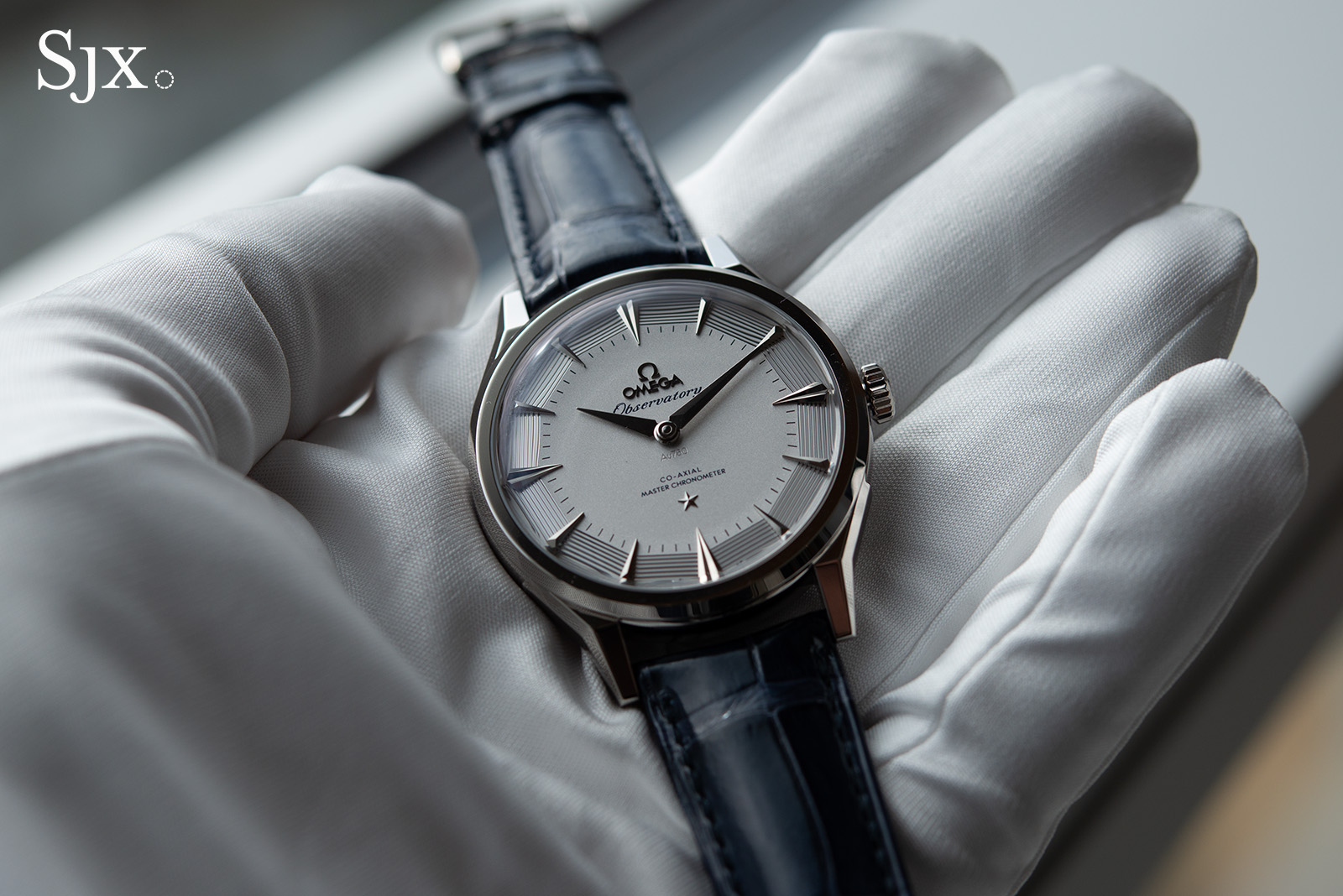
Hands On: Omega Constellation Observatory

At long last, Omega has unveiled the spiritual successor to the beloved ‘Pie Pan’ Constellation, complete with its signature domed dial, observatory medallion, and ‘dog leg’ lugs, the Constellation Observatory. First teased on the wrist of actor Delroy Lindo at the Academy Awards, the Observatory debuts in an expansive range of case materials and dial treatments. The collection also marks the commercial debut of Swatch Group’s Laboratoire de Précision, which has developed a new chronometer testing process capable of certifying two-handed watches. As a result, the Observatory carries the unexpected distinction of being the first Master Chronometer that displays only the hours and minutes. The Observatory in 18k Sedna gold, the brand’s trade name for its proprietary rose gold alloy. Initial thoughts The Observatory embodies Omega’s strengths, capitalising on the brand’s historical pedigree and proprietary materials and technologies, including its own durable alloys and the co-axial escapement. The Observatory in steel. On the other hand, the Observatory suffers somewhat on account of its thickness, relying on a movement platform developed at a time when the trend toward large watches appeared to have no end in sight. That said, the case design does a decent job of reducing the perceived thickness, and it looks and feels thinner than many other watches that share its dimensions on paper. It also demonstrates the immense capabilities of the broader Swatch Grou...

COSC Upgrades Standards to Certify More Than Timekeeping SJX Watches
Rolex Feb 13, 2026

COSC Upgrades Standards to Certify More Than Timekeeping

Interesting news just out of Contrôle Officiel Suisse des Chronomètres (COSC), the venerable Swiss chronometer testing body, which has just announced a major revamp to its testing to honour the COSC’s standard’s 50th anniversary. Excellence Chronometer, COSC’s new and improved certification program, goes beyond the ISO 3159 norm that has defined its tests for decades. Instead of just testing movements, Excellence Chronometer will require completed, cased watches to run within -2/+4 seconds a day, as well as pass wear simulation and magnetism tests. Initial thoughts While COSC remains the primary chronometer testing body in Switzerland, thanks largely to Rolex, its protocols have been due for an update for some time now. With the rise of alternative and in-house precision testing programs, the standard chronometer certification can sometimes feel left behind. Rolex’s own Superlative Chronometer certification first requires a COSC certificate, but then makes sure the watches run at -2/+2 seconds per day after further in-house testing. The METAS Chronometer program also requires the standard COSC certificate, but guarantees a regulation of 0/+5 seconds per day and a great resistance to magnetic fields. Seeing that COSC slowly updates and imposes more stringent criteria is a good sign, but it may still not be good enough. With the rise of advanced internal certification programs, it looks like some brands submit their models to COSC testing just to make sure they can...

Affordable Vintage: the Longines Grand Prize Worn & Wound
Longines Grand Prize Longines Feb 4, 2026

Affordable Vintage: the Longines Grand Prize

Longines is a storied and well-respected Swiss watch manufacture that formed in 1832 and has continued uninterrupted to this day. From the first wrist chronometer in 1911, to groundbreaking flyback chronographs in the 1930s, to the world’s first hi-beat wrist chronometer in 1959, Longines holds their own in the watchmaking world.  My favorite period for watches is the 1950s through the 1970s and Longines was one of the top accessible brands during that time. In 1954 Longines began a marketing strategy of product families, launching the Conquest line of watches. In 1957 they introduced the Flagship line, adding to what would become a large group of watch families, many of which are still made today. Other lines that came later include the Admiral, the Ultra-Chron and the Grand Prize. The Grand Prize line was named in honor of the multitude of watchmaking awards and honors that Longines had accumulated over the decades. It was a relatively short-lived family, produced from about 1958 to 1964 according to my research. I have found that the majority of Longines watches produced during these decades were all fairly equal in quality and craftsmanship, with most of the differences in the families being design related. The Conquests were rugged and sporty, on par with the early non-diver Omega Seamaster watches. The Flagship series were dress watches, while the Admiral line was a mixture of both. The Grand Prize family were pretty much all thin, elegant everyday type dressier w...

Hands On: Chopard L.U.C. Grand Strike SJX Watches
Chopard L.U.C Grand Strike Dec 11, 2025

Hands On: Chopard L.U.C. Grand Strike

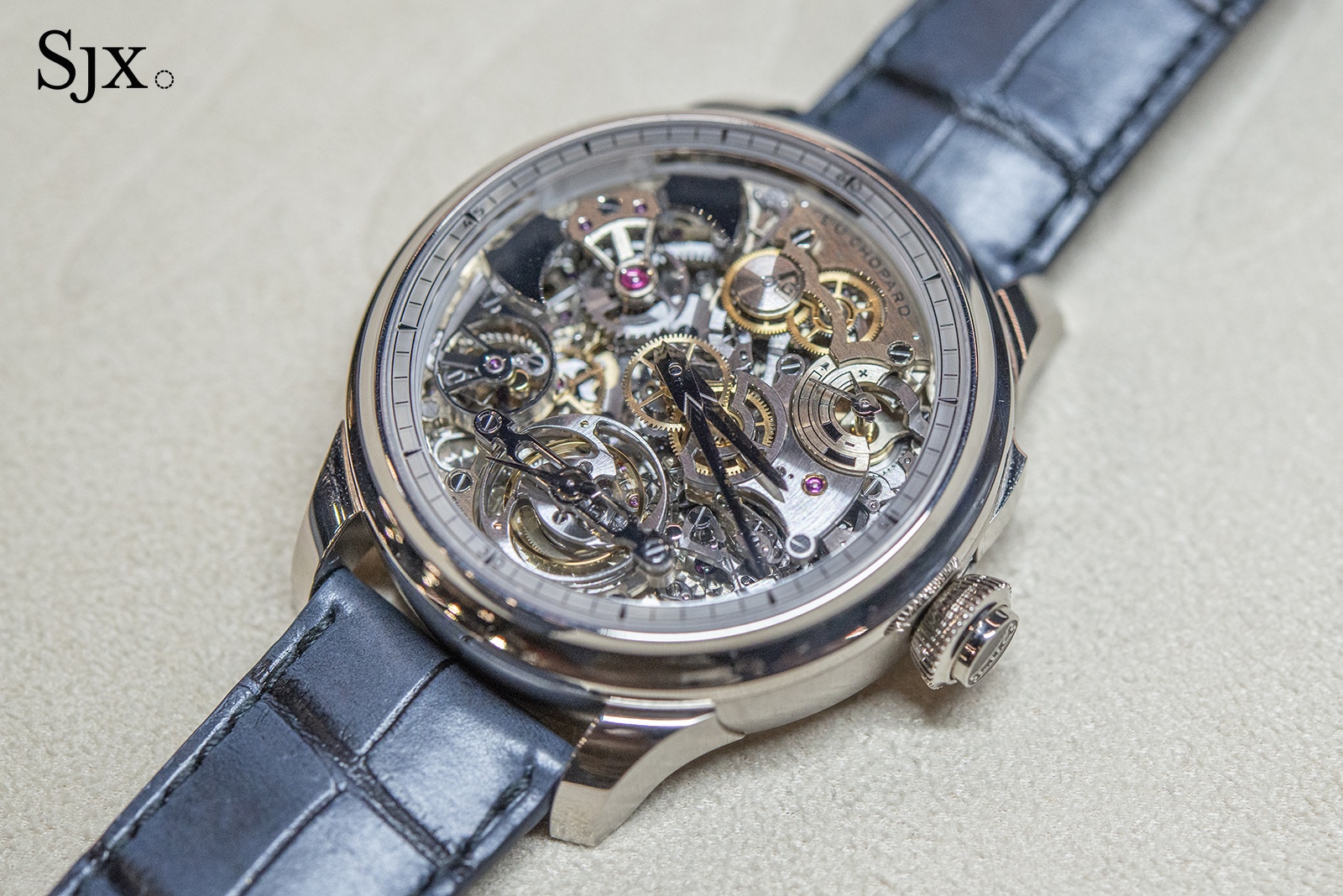
The 30th anniversary of the Chopard L.U.C. manufacture was one anniversary among many this year, but it will likely be remembered thanks to the Grand Strike, the most complicated watch in Chopard’s history and its first grande sonnerie. Building on the successful Full Strike minute repeater architecture and making full use of the brand’s patented sapphire gongs, the Grand Strike is a chronometer-certified two-train clock watch with a push-button minute repeater. In this context, the presence of the tourbillon is almost a footnote. Initial thoughts I can count on one hand the number of brands that have created their own grande sonnerie wristwatch. It’s one of the few things in watchmaking that’s proven challenging enough to still be rare, even in the days of computer-aided design (CAD) and advanced manufacturing technology like wire erosion. For this reason, the grande sonnerie has a towering cultural presence among watchmakers and collectors, looming above all other complications. For Chopard, the Grand Strike represents the culmination of 30 years of the L.U.C. manufacture, the brand’s haute horlogerie division. The first impression of the Grand Strike is one of extraordinary depth. There’s not much of a dial, save for the minutes scale etched on the inside of the sapphire crystal, and the small concentric sub-dials for the dual power reserve displays. This depth shrinks the watch visually, and it feels dense and compact despite its rather large 43 mm size and...

In-Depth: Breguet’s Constant-Force Magnetic Escapement SJX Watches
Breguet s Constant-Force Magnetic Escapement Dec 4, 2025

In-Depth: Breguet’s Constant-Force Magnetic Escapement

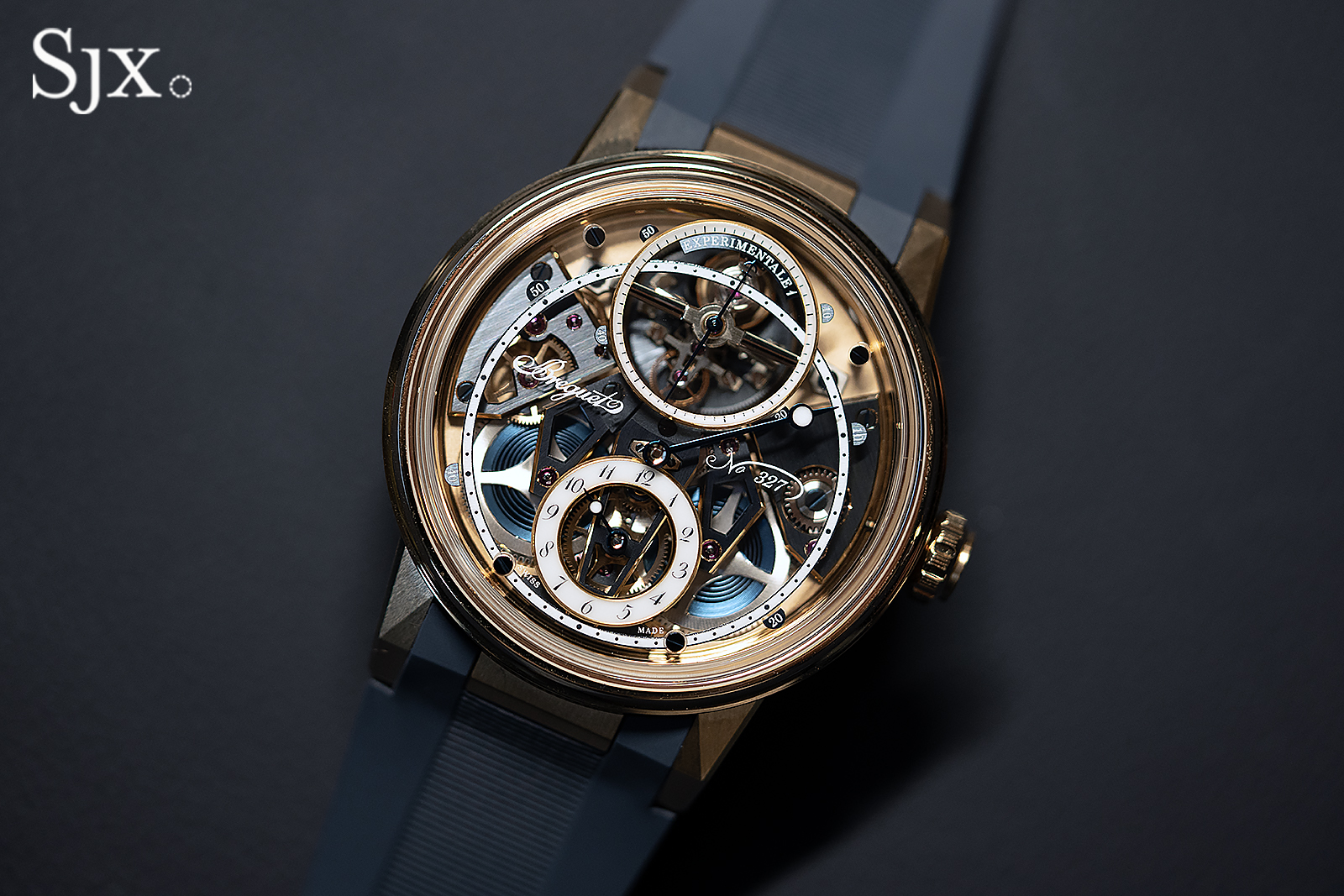
Earlier this week, Breguet rounded off its grandiose 250th anniversary with the unexpected launch of the Expérimentale 1 chronometer in Paris. Showcasing modern Breguet’s most impressive innovation to date - a magnetic constant-force escapement - the watch left many scratching their heads simply because the novel invention defies easy explanation. Here we explain the actual functioning of this remarkable invention, and why it represents such a significant step forward in terms of chronometry and escapement technology. The origins of the concept Before turning to the decidedly modern and futuristic Expérimentale 1, we must first take a short trip to the past and consider how the idea of using magnets in mechanical escapements first came to life. For that we must turn to the late 1930s, when Cecil Frank Clifford, Fellow of the British Horological Institute (BHI), started experimenting with oscillators maintained by magnetic rails or escape wheels.  He was granted a British patent in 1954 for a variety of magnetised escape wheels paired with elastic vibrating magnetic blades. The device would operate silently and Clifford envisioned it being used for naval underwater torpedoes, so the lack of ticking would be harder to pick up by sonars.  Iterations of Clifford magnetic escapements. His designs were rudimentary. The principle was that the escape wheel would be braked by a vibrating pair of magnetised blades (in several possible configurations), while simultaneously ...

Breguet’s Magnificent Magnetic Expérimentale 1 SJX Watches
Breguet s Magnificent Magnetic Expérimentale Dec 1, 2025

Breguet’s Magnificent Magnetic Expérimentale 1

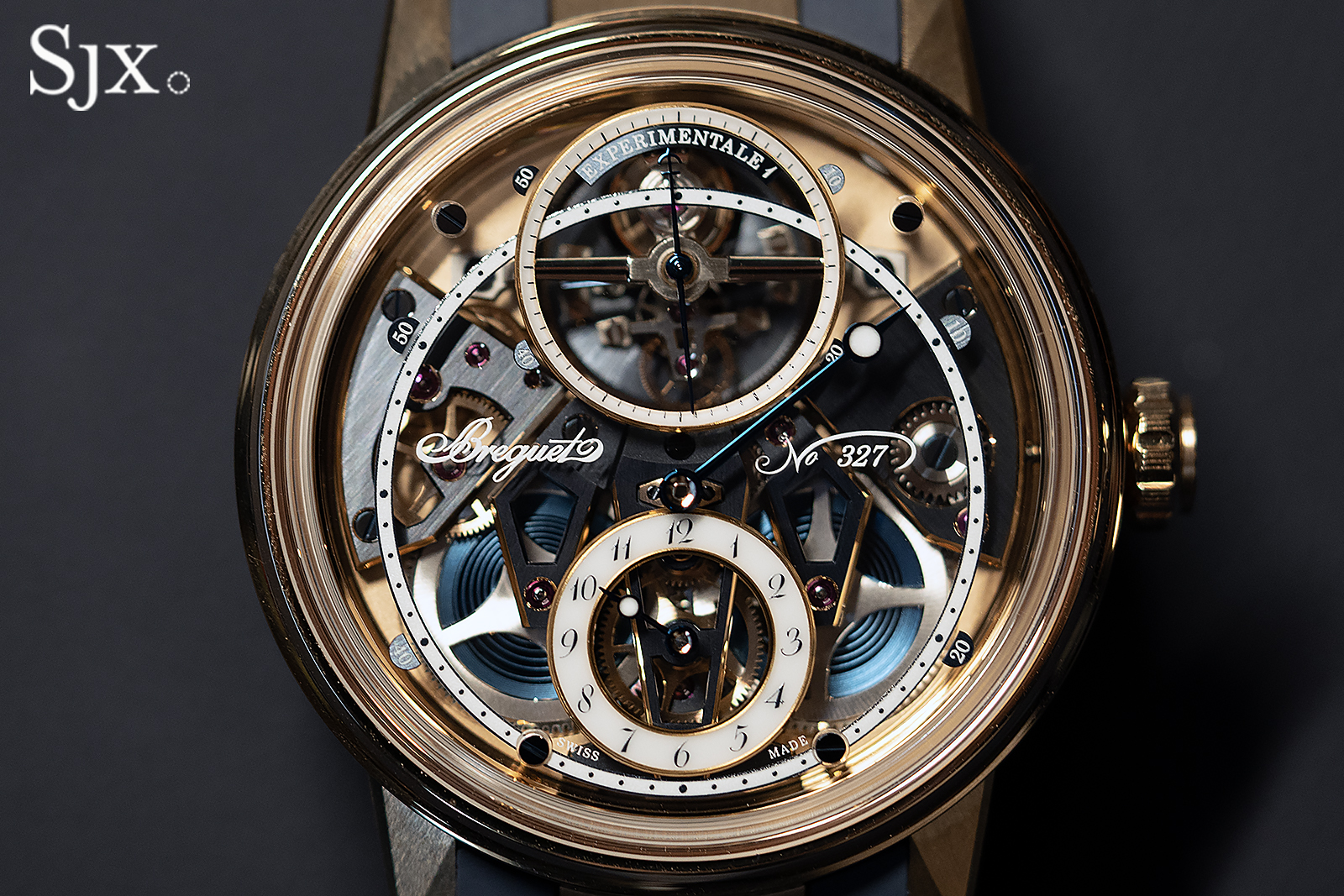
Breguet concludes its 250th anniversary with the brand’s most forward-thinking watch, the Expérimentale 1 that boasts a magnetic, true constant force escapement. Equipped with a frictionless escape wheel and pallet lever driven by magnetic forces, the movement runs at 72,000 beats per hour, or 10 Hz – arguably making the Expérimentale 1 the ultimate Breguet chronometer. Impressively innovative with its use of silicon, magnets, and clever teeth geometry, the limited edition watch also marks the start of the Expérimentale line, a collection that will serve as a platform to debut new complications, technology, and designs. Initial thoughts While some might have been expecting an updated Sympathique, Breguet instead surprised with perhaps the most advanced wrist-borne mechanical chronometer in modern watchmaking. Taking cues from Abraham-Louis Breguet’s own “constant force” escapements, Breguet today harnessed the power of permanent magnets and unique teeth geometry to built a genuinely friction-less, constant torque escapement. In fact, the new escapement appears to be the only truly frictionless and constant force escapement on the market today.  Magnets have been employed in escapements in the past, but this approach was historically unreliable. Breguet appears to have discovered the right formula for a magnetic escapement. Several functioning prototypes were on show at the launch event. Moreover, Breguet chief executive Gregory Kissling explained that the ma...

In-Depth – The Superb Breguet Classique 7225, and the Refinement of the Magnetic Pivot Monochrome
Breguet Classique 7225 Nov 26, 2025

In-Depth – The Superb Breguet Classique 7225, and the Refinement of the Magnetic Pivot

Until recently, for those who have followed Breguet‘s exploits in modern chronometry, one watch has long occupied a special place: the Classique Chronométrie 7727, from 2013. The 7727 demonstrated what high frequency could achieve when combined with silicon components and, quite provocatively, when magnetism, a force that watchmaking usually fears, was not only controlled but […]

Highlights: Pocket Watches at Phillips Hong Kong SJX Watches
Patek Philippe Nov 14, 2025

Highlights: Pocket Watches at Phillips Hong Kong

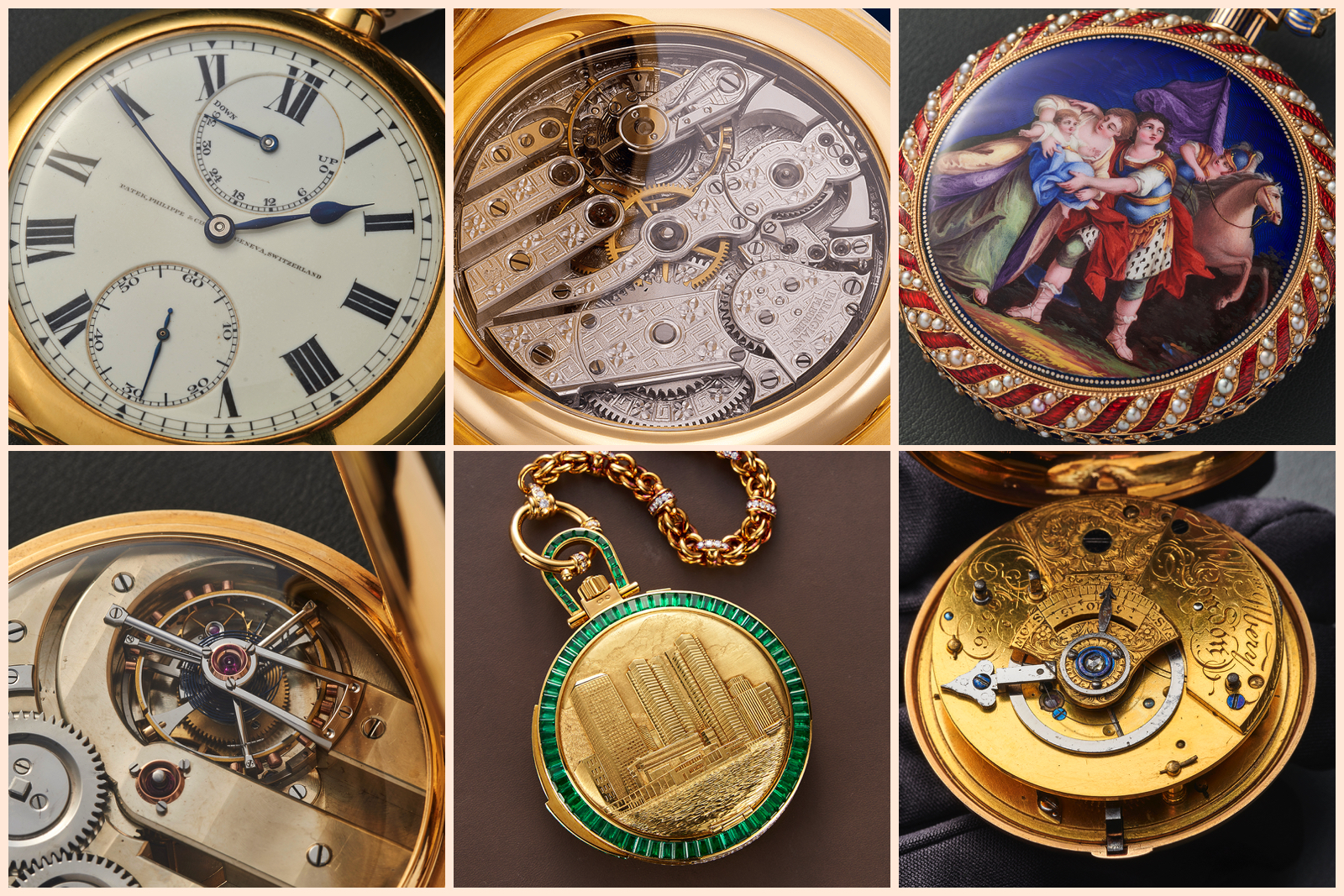
The upcoming Phillips Hong Kong auction includes a diverse and spectacular selection of pocket watches spanning two centuries. From early 19th‑century enamel masterpieces crafted for the Chinese market to 20th‑century tourbillon chronometers that triumphed at observatory trials, the lots on offer demonstrate the technical and aesthetic evolution of the watch over the last two hundred years. Lot 1086 – S. Smith and Son No. 1899-1 Tourbillon Chronometer with Kew Class A Certificate Albert Pellaton-Favre constructed the first of two tourbillons in the auction, which was later retailed by S. Smith & Son. The other, by Patek Philippe, is the work of his son, Jämes-César Pellaton. Both are depicted in Reinhard Meis’s famous Das Tourbillon. The English and Swiss disagreed on what constitutes a chronometer. The English argued that a chronometer must use a chronometer (detent) escapement, while the Swiss considered any watch a chronometer if performed well enough – which the English would call a “Half-Chronometer”. As the Willis enamel dial boasts, the first is a chronometer by both English and Swiss reckoning, with a spring detent escapement and “Especially Good” certificate from the Kew Observatory. While S. Smith and Son retailed quite a number of tourbillons, including others with detent escapements, most were sourced locally, while the present lot uses a Swiss movement. The London branch of Baume Frères ordered six tourbillon chronometers from Albert Pella...

The Greatest Horological Masterpieces of All Time: the Harrison H4 – A Groundbreaking Timepiece That Solved The Longitude Problem Worn & Wound
Oct 27, 2025

The Greatest Horological Masterpieces of All Time: the Harrison H4 – A Groundbreaking Timepiece That Solved The Longitude Problem

A series of features identifying the most extraordinary mechanical masterpieces in history, blending precision, innovation, and craftsmanship. We all have our favourite timepieces either in our collection or those incredible horological masterpieces that have been invented or created through the ages. This series will showcase examples from the previous centuries up to the present day and look at the importance and impact on modern day timekeeping.  John Harrison’s H4 Chronometer was a groundbreaking timepiece that solved the longitude problem, a major challenge for navigation during the 18th century. Before Harrison’s work, sailors had no reliable way to determine their precise east-west position at sea, leading to deadly navigation errors. The British government, through the Longitude Act of 1714, offered a large prize to anyone who could develop a practical solution. Sir Cloudesley Shovell, by Michael Dahl, about 1702-5 (L); The Association with the Eagle, Rumney and the Firebrand, Lost on the Rocks of Scilly, October 22, 1707 (R). Image courtesy of the © National Maritime Museum, Greenwich, London The Catalyst for the Longitude Act In the early 18th century, determining longitude at sea was one of the greatest challenges in navigation. While sailors could measure latitude using the position of the sun or stars, longitude required precise timekeeping-something that was nearly impossible with the unreliable clocks of the time. The inability to determ...

Behind the DIN 8330 Standard for Pilot’s Watches Worn & Wound
Sinn lead Oct 3, 2025

Behind the DIN 8330 Standard for Pilot’s Watches

Standards and certifications in watchmaking were primarily developed for chronometry, as well as to reassure the buyer that their watch had been thoroughly tested to a certain level of accuracy. The standards we see most often in the technical specifications are COSC, METAS, and other company or regional chronometry certifications. In modern watchmaking, other key standards like the ISO 6425 dive watch standard, which was developed in the 1990s and followed by watch companies, also come into play. These standards were largely based on various military set standards for watches; however, since each military set their own requirements, there was not one universally followed standard. The International Organization for Standardization (ISO) published specific requirements and testing procedures for a watch to be officially designated a “Diver’s watch”. While there is no ISO standard for pilot’s watches, there are specific requirements set by militaries around the world. One of the most well-known standards is from the WWII German pilot’s watch known as the “Beobachtungsuhren” or “B-Uhren.” B-Uhren pilot’s watch standards are well documented and are still followed by many watch companies to this day. In March 2012, Sinn lead an initiative in collaboration with the Faculty of Aerospace Technology at the Aachen University of Applied Sciences to create TESTAF – Technical Standard for Pilot Watches. TESTAF was developed so that a pilot’s watch meets all mod...