 Revolution
Results for Nautilus
299 articles · 1 video found · page 6 of 10
Related pages
Reference · Guide
All Patek Philippe Nautilus References Patek Philippe
Every Patek Nautilus: 3700/1A Jumbo Genta, 5711/1A, 5712 moonphase, 5980 chrono, 5990 Travel Time, 5811/1G white gold, 5740 perpetual.
Icon · Guide
Nautilus Patek Philippe
Gérald Genta's 1976 Patek sports watch. Sketched on a restaurant napkin at Baselworld 1974.
Wiki · Guide
Integrated Bracelet
Bracelet that flows directly from the case without separate end-links. Genta\'s 1972 Royal Oak innovation.
Wiki · Guide
Curved Fitted Rubber Strap
Vulcanised rubber straps moulded to integrated luxury sport watch lug geometry. Zealande, Rubber B, OEM AP and Patek.
Revolution
 Revolution
Christie’s Announces Nautilus-Only Auction
 SJX Watches
Off the Cuff: Audemars Piguet and Konstantin Chaykin Think Beyond the Watch
Watchmakers regularly turn familiar design cues into accessories, but Audemars Piguet and Konstantin Chaykin have taken notably different approaches to the genre with their latest offerings. The Audemars Piguet Royal Oak Joaillerie Collection recasts the Royal Oak as an extensive range of elaborate jewellery, while Konstantin Chaykin’s Master of Days cufflinks incorporate a tiny mechanical calibre that provides a day-of-the-week display. Both draw on the design and manufacturing specialties of their makers, but at vastly different price points and with different audiences in mind. Both approaches, however, lend themselves to gift-giving, which might explain the timing of the releases in the lead up to the holiday season. Initial thoughts Some of the biggest names in series watchmaking dabble in accessories on the side. The most obvious is probably Rolex, which made headlines when it formally launched a line of cufflinks — and a desk clock — late last year. Patek Philippe, too, has a long history of making jewellery and accessories. Today the brand offers cufflinks that match the Golden Ellipse, Nautilus, and Cubitus, and jewellery that takes after the Aquanaut and the Twenty-4. Even smaller-scale independent watchmakers evidently see value in the category. F.P. Journe offers a set of cufflinks in a choice of platinum or 18 pink gold — to match the brand’s watches — as does Biver. Franck Muller goes even further, with a full collection of Crazy Hours-inspired ne...
 Hodinkee
Hands-On: The Patek Philippe Celestial Ref. 6105G (Plus Technical In-Depth)
We're on the eve of one of Patek Philippe's biggest events every few years: the October 2nd to the 18th presentation of the brand's Watch Art Grand Exhibition in Milan. On Monday, I'll be flying there for a preview of the exhibition, so stay tuned for stories from that trip coming in the near future. Another story, which has been waiting in the wings and in progress for some time now, was a hands-on look at two of the most surprising (and potentially divisive) releases from Patek this year: the Cubitus perpetual calendar and the Celestial ref. 6105G. While all eyes were on the Nautilus's 50th anniversary, I thought Patek Philippe had a very interesting Watches & Wonders, at least from the perspective of bold releases and brand strategy. Truthfully, they could have done just about anything with the Nautilus, and those lucky enough to get a watch would have been happy. The Celestial alone was a wristwatch with a complication only four other brands have created. But just take a look at the two watches above and the two below. While I didn't get to see the ref. 7047G in person, it raised eyebrows for the very unusual blue tire tread-style dial (à la ref. 6007G) and remarkably strong orange accents and luminous hands and dial placed on a minute repeater that retails north of $570,000. It was perhaps so aesthetically surprising that it distracted people from the fact that Patek was honoring its past with a Calatrava-cased minute repeater reminiscent of the unique ref. 3652 and ...
 Monochrome
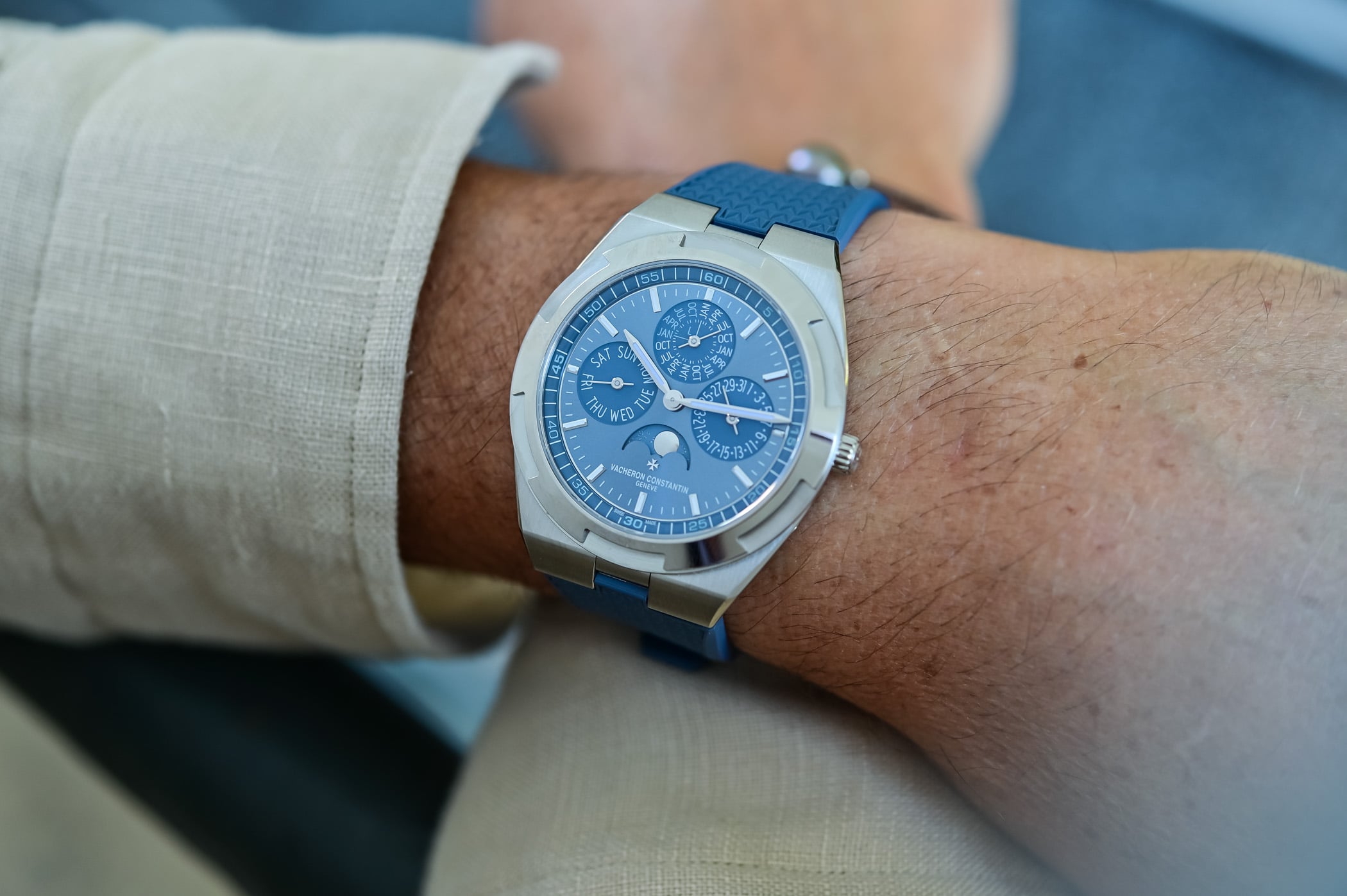
First Look - Vacheron Constantin Celebrates 30 Years of Overseas Special Edition Perpetual Calendar Ultra-Thin
The story of the Overseas begins in 1977 with the sporty-chic integrated 222, Vacheron Constantin’s bold response to a new generation of luxury sports watches represented by the Royal Oak and the Nautilus. Inheriting certain traits of the 222 but amplified and beefed up, the first-generation Overseas debuted in 1996. Now in its third phase, […]
 Monochrome
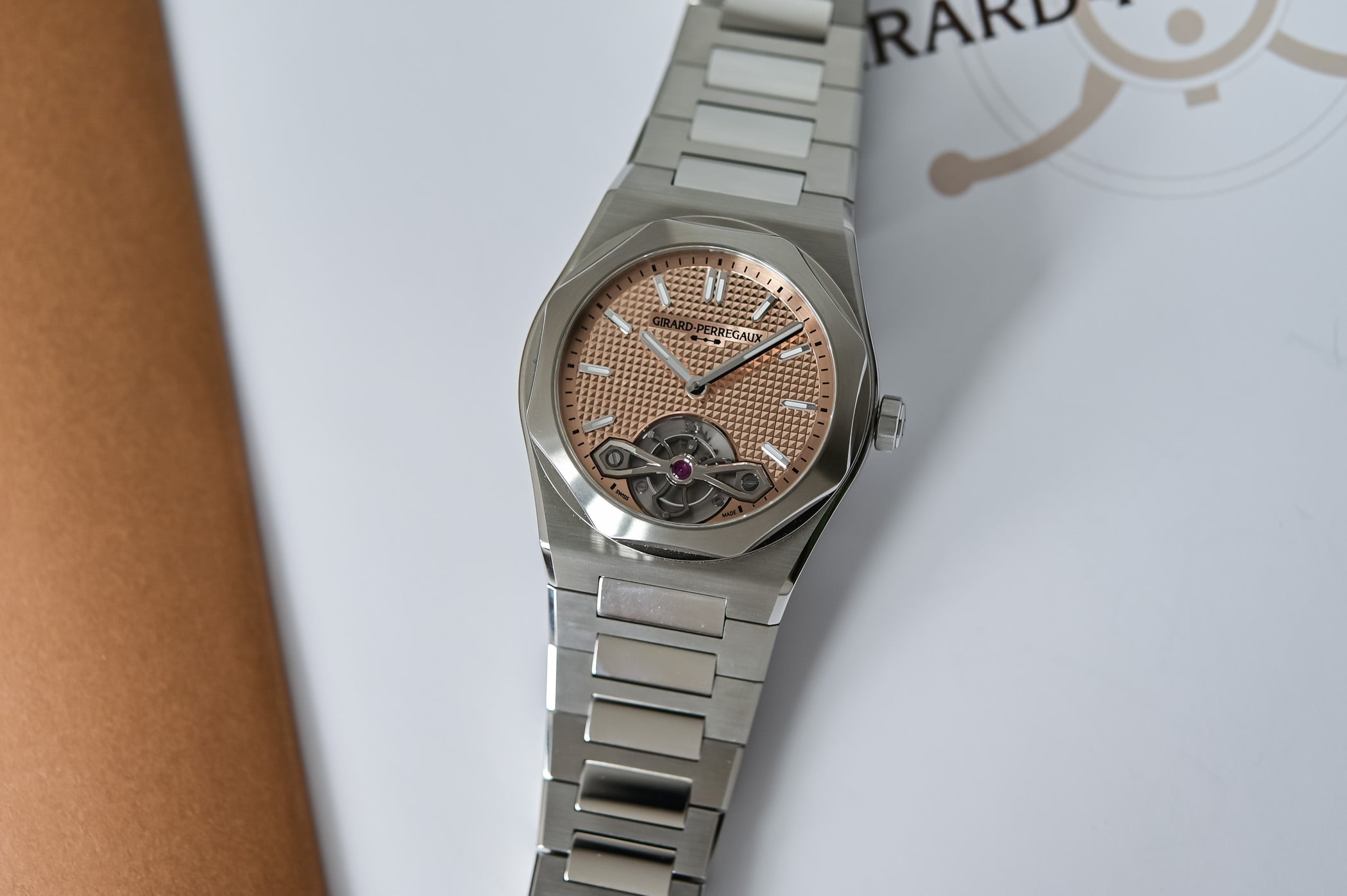
First Look - The New Girard-Perregaux Laureato Fifty Tourbillon Micro-Rotor 39mm
Girard-Perregaux writes the next chapter in the Laureato’s long and storied history. Launched in 1975, just three years after the Royal Oak and a year before the Nautilus, the Laureato is considered an honorary member of the luxury integrated sports watch genre. The Laureato underwent its fifth evolution in 2016, becoming a contemporary, fully-fledged luxury […]
 Hodinkee
Hands-On: The Sylvain Pinaud Tourbillon
Earlier in April, right before the kickoff of Watches and Wonders, Swiss independent Sylvain Pinaud announced his third major creation since the founding of his workshop in 2018. First came his Monopoussoir Chronograph, then arguably the more recognizable time-only Origine series. This third entry in the collection is the pragmatically named Sylvain Pinaud Tourbillon—any guesses what complication this watch holds? I kid, but the new watches are an absolute treat to see and handle in person. Even though the intense wave of new releases from dozens of brands in Geneva may have quickly steered the online conversation away from these new watches toward Jubilee dials and Nautilus desk clocks, these watches did not go unnoticed by collectors. Thirty of them, to be precise. The Sylvain Pinaud Tourbillon was announced in three limited editions of ten pieces each, priced at CHF 180,000, and all three variants sold out within days. But before we get to the new watches, you might be asking what the situation is with the watchmaker these days, given that every decently well-known high-end independent watchmaker seems never to struggle with demand. That's pretty much the case here, too. Long story short, Pinaud and his team of 8 produce around 25 watches per year, and the Origine series has been fully allocated through its planned run through 2027. Given the sell-out of the Tourbillon and the sunsetting of the Origine, it kind of sounds like there isn't much to offer a prospective ...
 SJX Watches
Hands On: Patek Philippe Calatrava Ref. 5227G-015 “Rose Gilt”
Patek Philippe’s headline launches this year included the surprising Celestial ref. 6105G and Nautilus 50th anniversary editions, but also more classical, yet under-the-radar, watches, like the Calatrava ref. 5227G-015 with a “rose-gilt” dial and hinged case back. Though the Calatrava ref. 5227 with its distinctive “officer’s case” has been in the catalogue for well over a decade, the latest iteration is the best yet. The combination is somewhat formulaic – “salmon” dial and white gold case – but it is good looking and evocative of old-school Patek Philippe dress watches. At the same time, this new variant of the ref. 5227 contains a latest-generation automatic movement. Initial thoughts Ironically two of the standout launches by Patek Philippe during Watches & Wonders were fairly basic, essentially facelifts of references that have been in the catalogue for decades. One was the ref. 5396R-016 Annual Calendar, and the other is this, the Calatrava ref. 5227G-015. Though both are entirely different in function and price, they are similar in style. The designs are both restrained and evocative of vintage Patek Philippe watches; both also have dials in popular shades. “Salmon” is definitely overdone as a dial colour, but it doesn’t stop this Calatrava from being really appealing. The ref. 5227 is typical Patek Philippe in form. Even though it’s at the larger end of the range for Calatrava models, it still feels elegant. The case is thin and sits fla...
 Worn & Wound
Hands-On: the Raymond Weil A.R.T. Collection
Raymond Weil celebrates its 50th anniversary this year, Weil founding his eponymous brand in 1976. And the brand’s first integrated-bracelet watch is a nod to the seventies era of experimentation: where, in the face of impending quartz dominance, watchmakers produced bold designs like they had nothing to lose. This was the era of the Patek Philippe Nautilus and Audemars Piguet Royal Oak, both launching the concept of the luxury sports watch—in essence, a classier and far pricier interpretation of the Go Anywhere, Do Anything ethos that once took its inspiration from military and field watches. Only this time, going anywhere is to Monaco or St. Moritz, and doing anything is jumping off the back of a yacht into the waters of Bali. Fifty years later, the integrated bracelet watch has never been more popular. Perhaps it’s the trickle-down effect from the cachet of those two OGs, which have taken off so much that people are willing to snap up an anniversary Nautilus desk clock, or storm your nearest Swatch store for a plastic Royal Oak. Or it’s the promise of a certain inherent and integrated toughness, eschewing the notion that we won’t ever reach 1,000-ft deep-water depths and still make it back to the boardroom. In fact, skip the beach-to-boardroom mentality. This category is all upscale by comparison, and the A.R.T. series — which, according to Raymond Weil, stands for “art, refinement, and timekeeping,” with the latter perhaps seeming redundant — captur...
 Worn & Wound
BA111OD Introduces a New Version of their Chapter 7 Skeleton Integrated Bracelet Sports Watch
Swiss indie BA111OD has introduced a new version of their Chapter 7 integrated bracelet sports watch featuring a skeleton dial. BA111OD has quietly been building a reputation these last few years for challenging long held conventions about value and what can be expected at certain price points (they make tourbillons starting at around $10,000). While the brand was founded in 2019, the family behind it has a watchmaking lineage that goes all the way back to the 18th century, so their perspective is shaped by both traditional Swiss watchmaking values and modern design sensibilities. I’ll be honest, my first reaction to the core Chapter 7 watches when they were initially introduced was essentially a shrug of the shoulders. Certainly there was nothing wrong with it, but it seemed to me to be yet another integrated bracelet design, an idea that has quickly become generic in these years following the Royal Oak and Nautilus boom. Somehow, though, with the skeleton version of the Chapter 7, first seen with an anthracite PVD treatment, the watch seemed to come together for me. I’m a sucker for a well executed skeleton treatment on a sports watch, and BA111OD’s approach, with cantilevered indices over a solid rehaut surrounding the open dial, makes for a legible and easy to digest presentation. Last week, BA111OD unveiled a new version of the Chapter 7 Skeleton with a natural steel finish that they say is inspired by the summer light in Neuchâtel, where the brand is based. ...
 Hodinkee
Watch Spotting: The Wild Watches Of World Cup 2026
Watch Spotting sports is hard. Unless you're trawling through Instagram accounts and wire photo feeds looking, you're not going to see a lot of watches at the World Cup. FIFA rules prohibit jewelry on the field during play. But then again, any footballer worth their salt has tens of millions of Instagram followers, so it's easier to see what they're wearing during the tournament. Erling Haaland of Norway, a Breitling ambassador, of course, was wearing his Chronomat B01 Erling Haaland Limited Edition. Getty Images. Like tens of millions of others, I've been drawn in by the World Cup. It's been massively exciting, especially this year. And through it all, yes, I've been glancing at the wrists. My first Watch Spotting during the World Cup came while watching the match between Türkiye and the US at a small-town bar in Wisconsin (where it just so happened that a lot of the bar staff were from Türkiye, so shout out to Bayside in Fish Creek and the team, Omer, Ruki, and the rest). But the first thing I noticed was that the Turkish team's Italian manager, Vincenzo Montella, was wearing a Patek 5905R. After cruising Getty, I also saw that, like any good Italian, he owns a Nautilus and a Daytona. So down the rabbit hole I went. Türkiye's manager, Vincenzo Montella, flashing his Patek Philippe 5905R. Getty Images. Unsurprisingly, the teams that have stuck around the longest give us the most chances to see some different watches. There's Kylian Mbappé, a Hublot ambassador, whose l...
 Monochrome
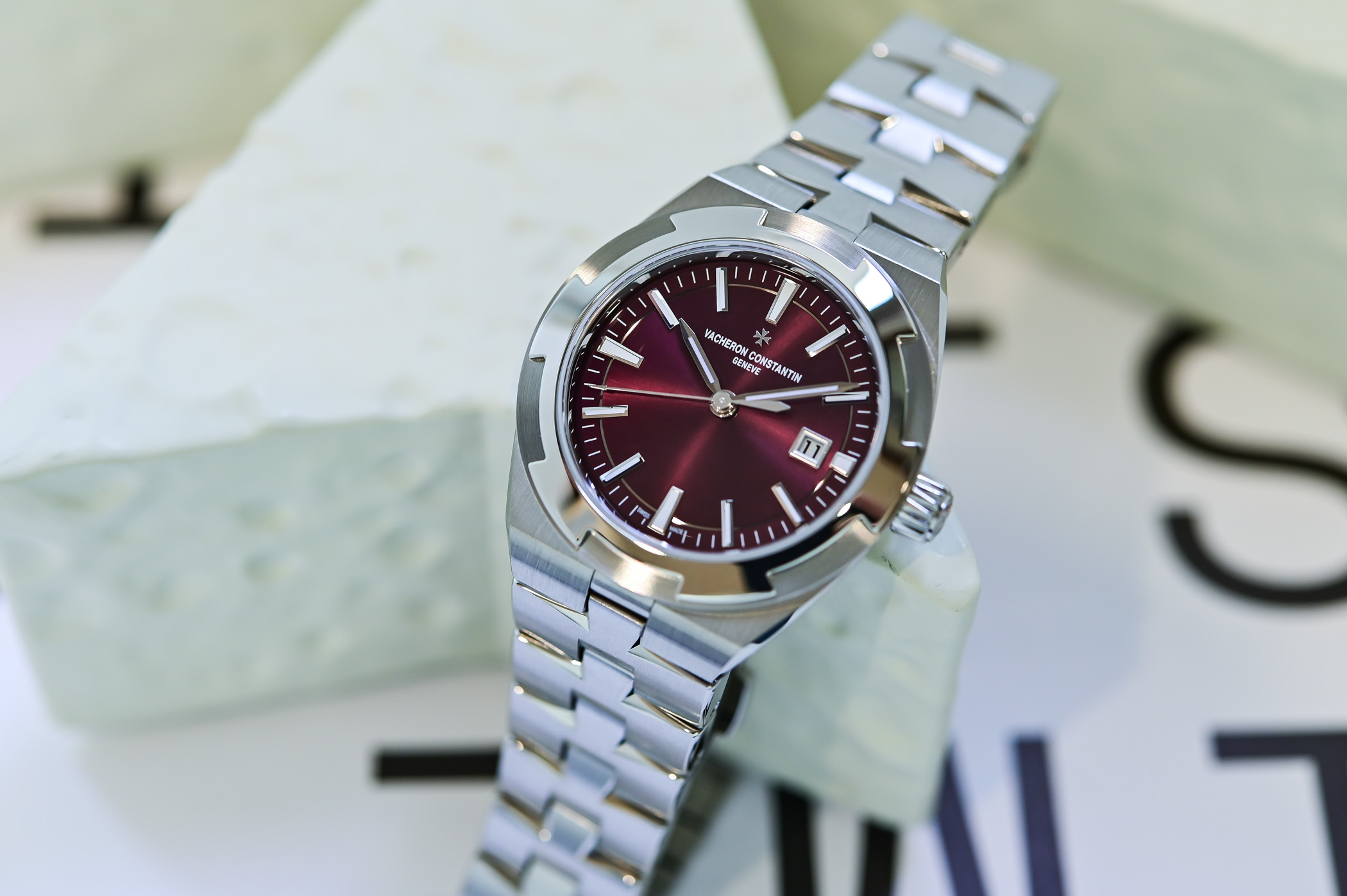
First Look - New Iterations of the Vacheron Constantin Overseas Self-Winding 34.5mm, in Burgundy and Gold
Vacheron Constantin’s Overseas collection traces its origins to the 222 of 1977, one of the key icons of the slim, integrated luxury sports watch genre alongside the Royal Oak and Nautilus. Ever evolving, the collection was relaunched as the Overseas in 1996 and entered its third phase in 2016. Now a well-established family of sporty, […]
 Monochrome
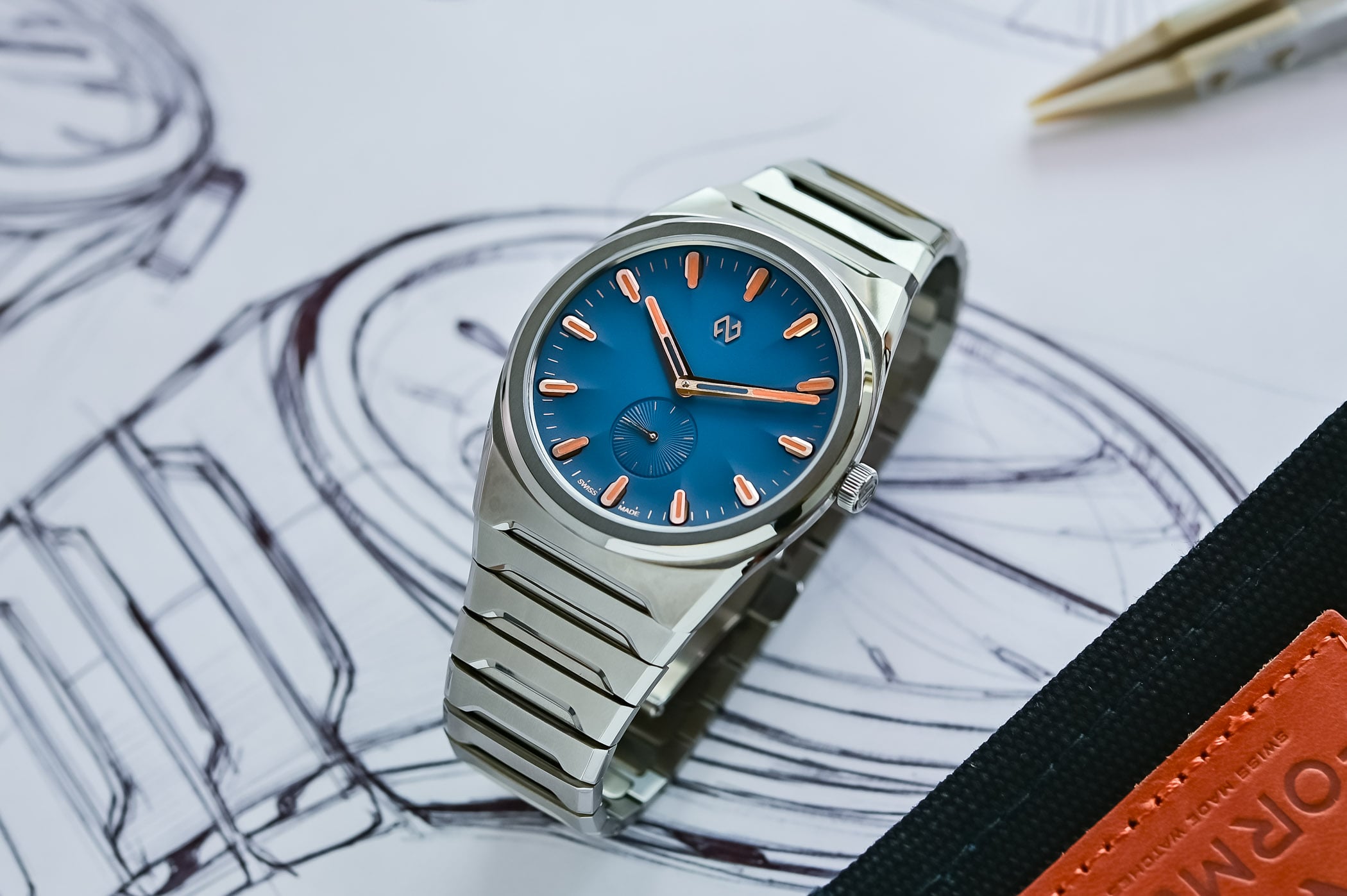
Buying Guide - Six Of Today’s Finest Integrated Sports Watches Below 10k
It’s long been confirmed that the integrated sports watch segment of the industry is a very crowded place and not easy to enter, and even tougher to make a true big impact. Every new entry is directly compared to some of the blueprint models of the concept, such as the Royal Oak, Nautilus, Overseas and […]
 Hodinkee
Honorary Patek Philippe President Philippe Stern Passes Away: 1938-2026
Philippe Stern, the visionary executive who led Patek Philippe through the end of the quartz crisis, kept the family company independent and secured its position at the top of Swiss mechanical high horology, died on June 14th at the age of 88. The Geneva-based company announced Philippe Stern's passing in a statement calling the Patek Philippe Honorary President a "pioneering and visionary spirit" who "left an indelible mark on the history of the family manufacture, preserving its independence and establishing its global stature." Philippe Stern. Photo courtesy Patek Philippe. Stern led Patek Philippe as President from 1993 to 2009. During his tenure, he consolidated Patek Philippe's manufacturing at a new flagship manufacture in Plan-les-Ouates, Geneva. He integrated its production capabilities to bring as much as possible in-house. He also oversaw the launch of the Nautilus sport watch in the 1970s, the multi-year project to build the Caliber 89, the most complicated portable mechanical watch at the time, boasting 33 complications. In 2001, he inaugurated the Patek Philippe museum in Geneva, an unparalleled exhibition of not only Patek Philippe but of the entire history of horology. Philippe Stern was born in 1938 into a family already at the center of Swiss watchmaking: his grandfather, Charles Stern, had recently acquired the Patek Philippe manufacture in 1932, and his father, Henri Stern, had just joined the company. After studying economics and commerce, Philippe Ste...
![Photo Report: Watch Spotting At The Hodinkee Happy Hour [May 2026]](https://hodinkee.imgix.net/uploads/images/16891390-a790-4ec8-9293-1e162cd07990/1C2A0782.jpg?ixlib=rails-1.1.0&fm=jpg&q=55&auto=format&usm=12&w=2000) Hodinkee
Hodinkee
Photo Report: Watch Spotting At The Hodinkee Happy Hour [May 2026]
Last week, we brought back the second edition of what will start to become a regular fixture on the calendar—Hodinkee Happy Hour. Watches of Switzerland SoHo was once again the venue, and Editor-in-Chief James Stacey hosted a very fun evening. Great conversations, great company, and no shortage of great watches to look at—a few of which you'll see below. If you made it out, thank you for coming. If not, we'll be doing it again at the end of June. Follow us on Instagram to be the first to know when RSVPs open. Patek Philippe 5940J. Zenith Sporto. Hodinkee Editor TanTan Wang with his Rolex Land-Dweller 36. Casio G-Shock x Hender Scheme DW-5900UD-1. Patek Philippe Complications ref. 5180/1R-001 18K Skeleton. C by Romain Gauthier and a A. Lange & Söhne Odysseus in White Gold. Jaeger-LeCoultre Master Control Rolex Land-Dweller 36 A nice variety of local beverages were on offer from Grotta. Patek Philippe Aquanaut ref. 5167A. Tudor Black Bay 58 and a Rolex-GMT Master II "Batman". Timex Ironman, Tudor Pelagos, Breitling Aerospace. Patek Philippe Nautilus Annual Calendar ref. 5726A. Dennison Dual Time. Jaeger-LeCoultre Reverso Tribute Duoface, Univeral Genève FS, Rolex Cosmograph Daytona. Sinn T50. Hodinkee's Editor-in-Chief James Stacey serving pizza and talking watches. Rolex Oyster Perpetual. Vacheron Constantin Overseas ref. 4500V. Rolex Explorer II ref. 226570. Hodinkee's TanTan Wang and Pedro Vidal. Thanks to Upside Pizza for the pizza. Rolex Submariner, Jaeger-L...
 SJX Watches
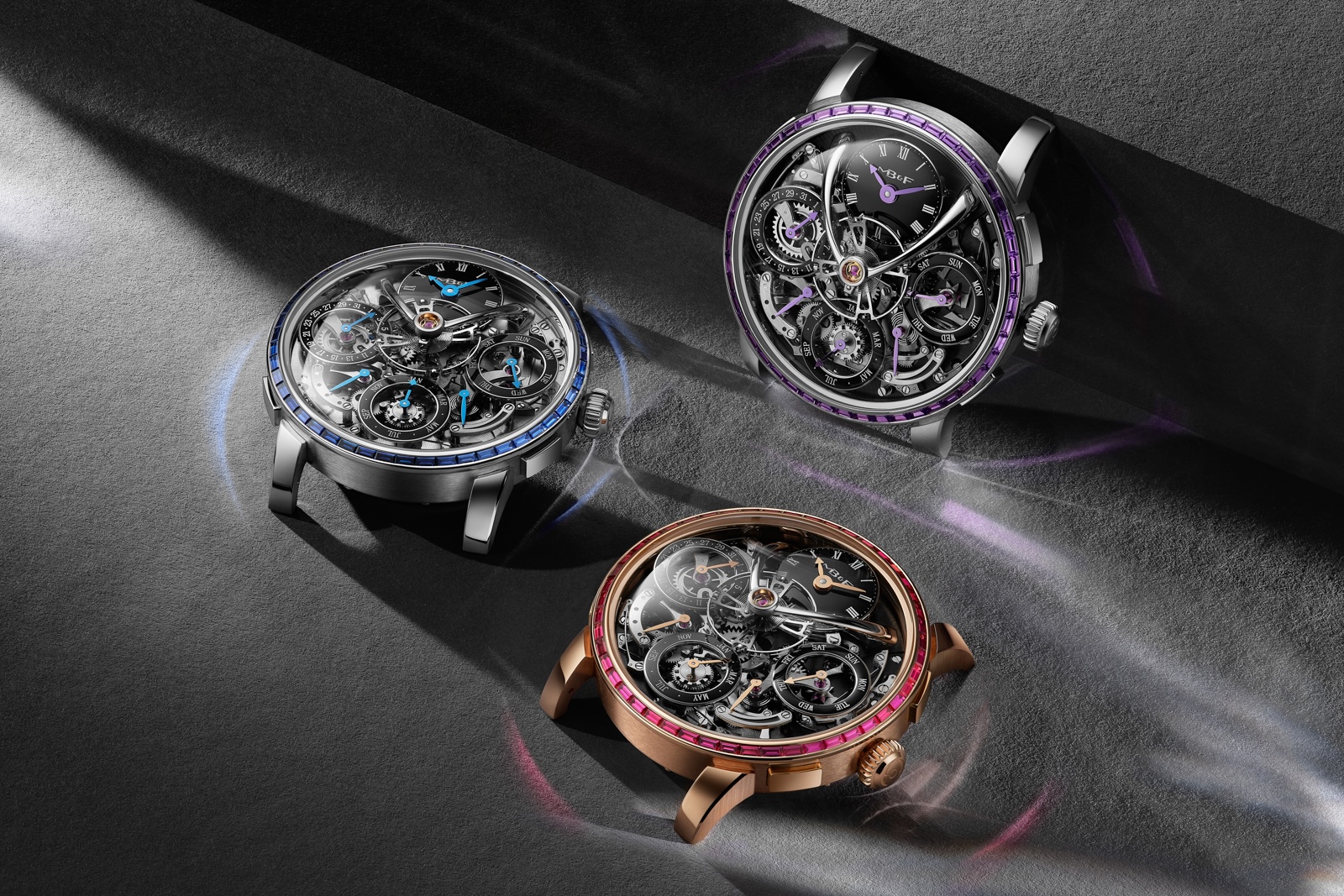
Chromatic and Dramatic: MB&F; Debuts Coloured Gems for the LM Perpetual
Having launched the first Legacy Machine (LM) Perpetual with a gem-set bezel last year — to mark the 75th anniversary of the brand’s UAE-based retailer Ahmed Seddiqi — MB&F; returns with three new LM Perpetual Chromatic Editions set with coloured stones. Initial thoughts Last year’s Seddiqi edition featured a bezel set with baguette-cut diamonds. The choice of stone was appropriately dignified for the moment, but coloured stones seem to be something of a trend within a trend. Jaeger-LeCoultre debuted a trio of Reversos set with coloured gems only yesterday, and Patek Philippe has gone so far as to add its formerly off-catalogue seven-figure sapphire, ruby, and emerald-set Nautilus collection to its website for all to see. MB&F;’s move to embellish its highly technical watches in this way reflects the premiumisation of the broader industry, as collectors seek out the rarest and most exclusive ‘trophy’ variants of sought-after watches. This trio of LM Perpetuals is notable in another way — the black lacquer dials are unusual, similar to those used for the Longhorn and sporty EVO editions. Illustrating the brand’s continued independence — despite Chanel’s 25% stake — the dials are made by Hermès. Gems of many colours At launch, three colours of stones are available — red, blue, and purple — and each watch is limited to just eight pieces. The rubies are sourced from Mozambique, the purple sapphires are sourced from Madagascar, and the blue stones co...
 Hodinkee
Video: Patek Philippe CEO Thierry Stern Sits Down With Ben Clymer To Discuss The 2026 Novelties
Thierry Stern sat down with Ben Clymer at Watches & Wonders 2026 to walk through Patek Philippe's novelties, and his passion for the product comes through immediately. Nowhere is that more evident than with the Nautilus's 50th anniversary pieces. Compared to the 40th, this is an exercise in restraint. "My idea is to do the counter-steps," Stern said. The three limited-edition anniversary Nautiluses are stripped to hours and minutes only—no date, no seconds—perhaps the most compelling of which is a 38mm platinum case recalling the medium-size Nautilus models of the 1980s, powered by the 2.53mm Calibre 240, its micro-rotor engraved with "50 1976–2026". The wildcard—a personal highlight for Ben—was something genuinely unexpected: Patek's first-ever Nautilus desk clock, the ref. 958G, limited to just 100 pieces. Its white gold case translates the porthole-inspired Nautilus design to 50.65mm, with a hinged caseback that doubles as a stand. Technically a pocket watch, yet perhaps it's better suited to the table. Mr. Stern gives us a peek behind the curtain on how it came to be—and the story behind it is one you'll definitely want to hear. Thierry also walked Ben through the 5840P—the Cubitus's first grand complication, a skeletonized perpetual calendar he'd conceived early in the collection's development but deliberately held back, wanting the design language to land before the mechanics got complicated. The vintage Patek market is certainly booming, with the ref. ...
 Fratello
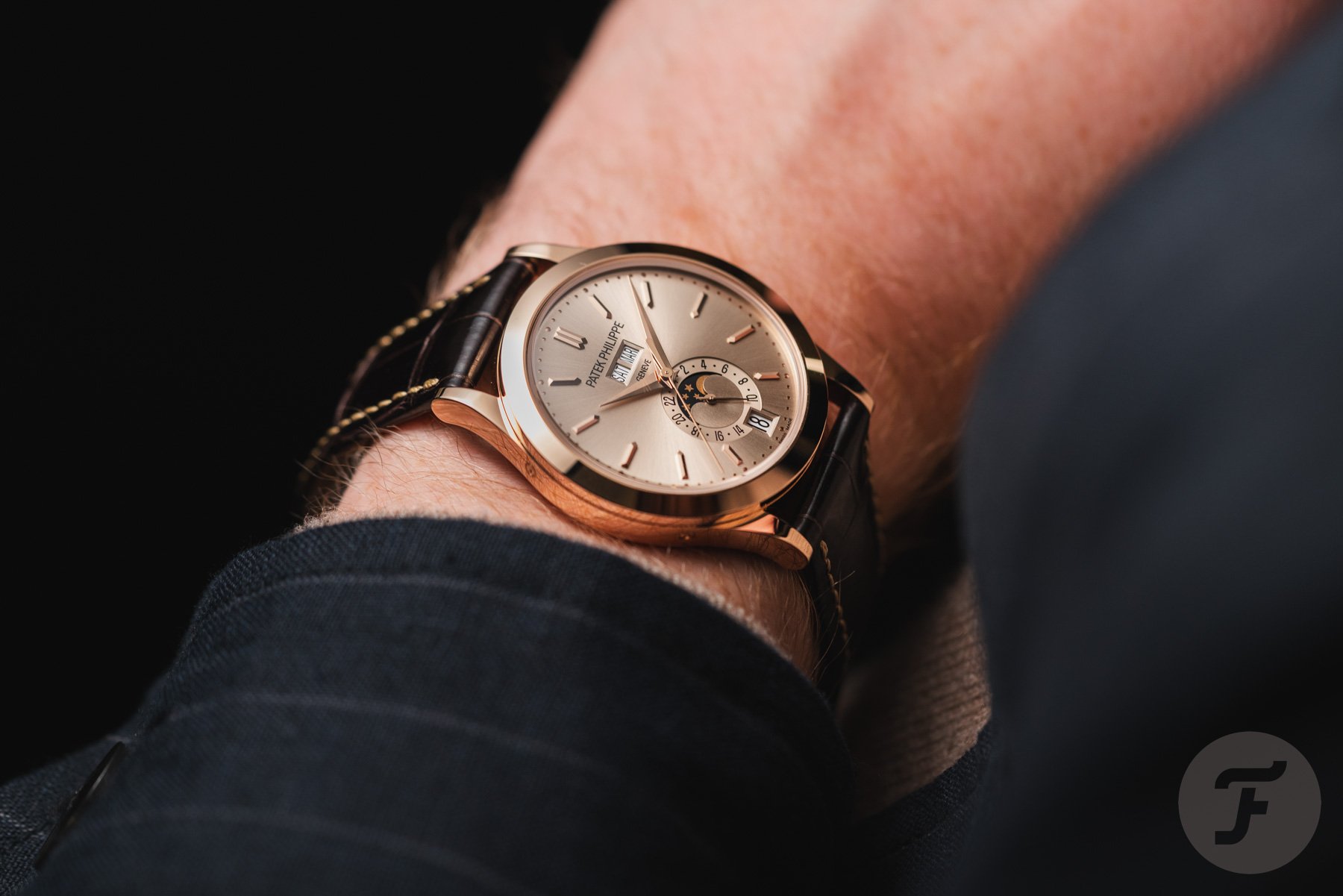
Hands-On With The Stylish And Practical Patek Philippe Calatrava Ref. 5396R-016 Annual Calendar Moon Phase
In 1996, Patek Philippe launched a watch to bridge the gap between its dress watches and perpetual calendars. The brand needed more sales; the Nautilus was not a hype watch yet, so what did Patek do? It launched a classic calendar watch that looked like a perpetual calendar, but it actually was a watch with […] Visit Hands-On With The Stylish And Practical Patek Philippe Calatrava Ref. 5396R-016 Annual Calendar Moon Phase to read the full article.
 SJX Watches
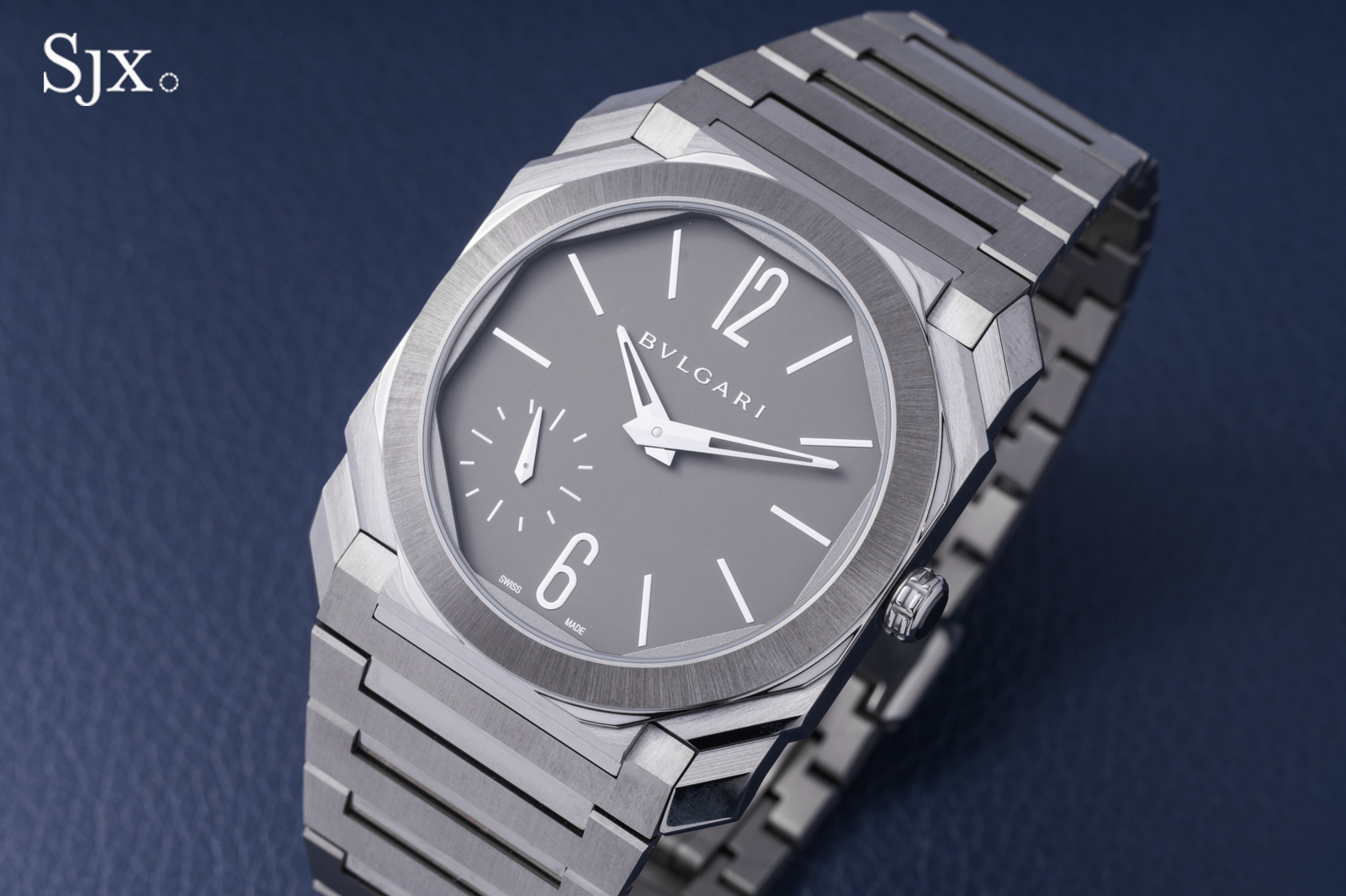
Hands On: Bulgari Octo Finissimo Automatic 37 MM
One of the quieter hits from Watches & Wonders was Bulgari’s Octo Finissimo Automatic 37 mm, a watch that would probably have grabbed more headlines were it not for its visual similarity to the well-known 40 mm model. In pictures, it’s difficult to tell the sizes apart, but on the wrist the difference could not be more stark. Available in three versions in two different case materials — all regular production models — the 37 mm Octo Finissimo is powered by a new micro-rotor calibre that, while smaller than its sibling, manages to stretch the power reserve to 72 hours. Initial thoughts I’ve always appreciated the unique aesthetic of the Octo Finissimo, especially the matte titanium look that debuted in 2017. In some ways, it feels like the Royal Oak or Nautilus of my generation — an elegant sports watch with a distinctive voice. It’s a contemporary design that feels like it has staying power. This aspect of the Octo Finissimo should not be understated. The deluge of generic-looking integrated bracelet sports watches we’ve witnessed over the past five years proves that it’s very difficult to create a differentiated design within this format. For Bulgari, the development of the Octo Finissimo — with its wide bracelet and short-pitched links — was like capturing magic in a bottle. Unfortunately, the square shoulders of the 40 mm case ride up over my ulnar styloid (wrist bone) causing the case to sit at an odd angle — never flat and straight as intended ...
 Monochrome
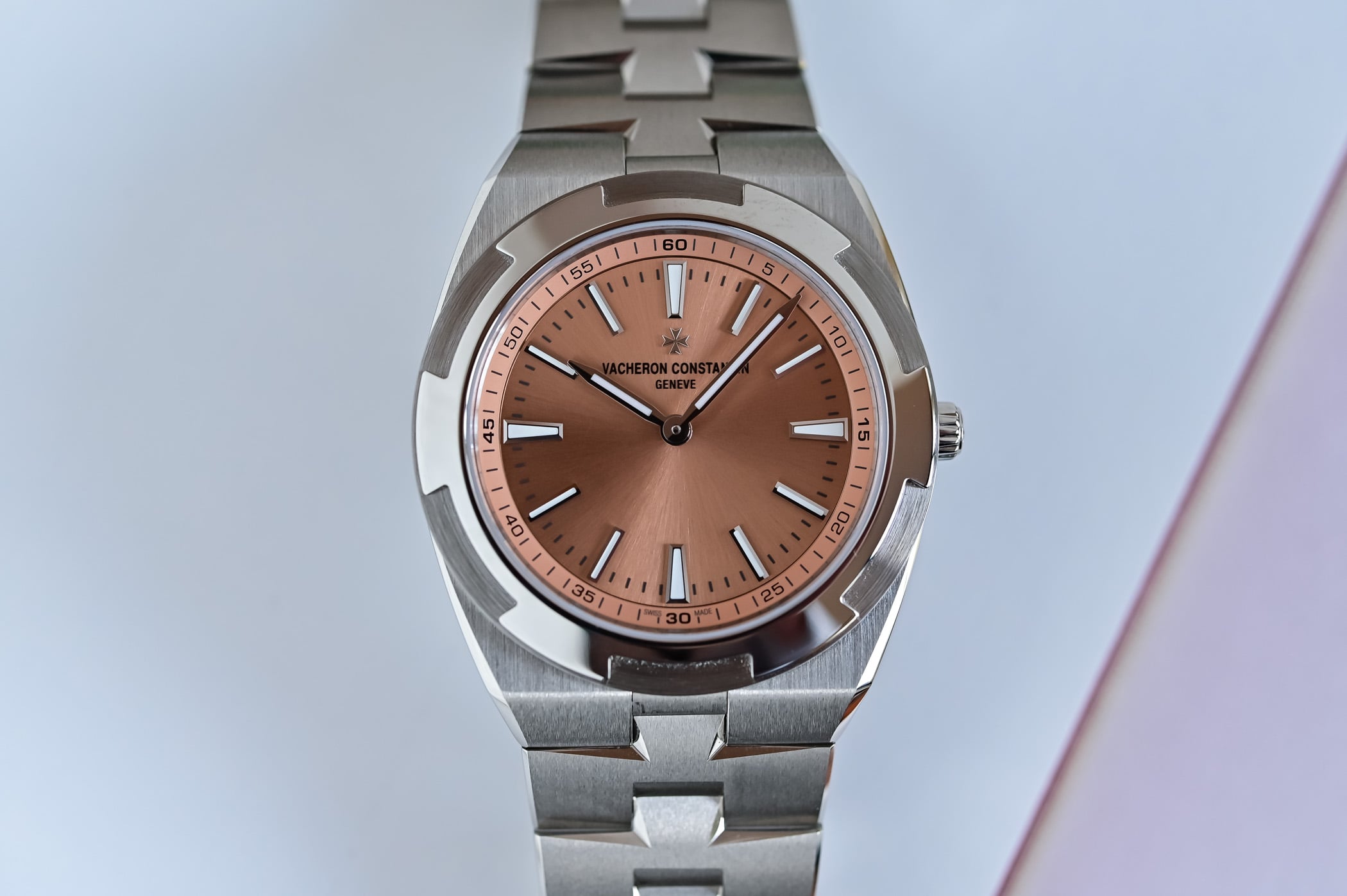
Recap - The Integrated Bracelet Watch Trend Keeps Going Strong, With Tons of New Models Presented at Watches & Wonders 2026
A category defined during the 1970s by a handful of models that all became proper icons of the industry – AP Royal Oak, PP Nautilus, VC 222, IWC Ingenieur, GP Laureato, to name a few – the luxury sports watch or integrated bracelet trend made a strong comeback about 10 years ago. Not only did […]
 SJX Watches
SJX Podcast: Watches & Wonders Recap
Episode 37 of the SJX Podcast recaps the biggest releases from the brands officially exhibiting at Watches & Wonders 2026. Rolex marked a century of the Oyster case with an enamel-dialled Daytona and new Oyster Perpetuals, but also revised the ugly duckling of the catalogue — the Yacht-Master II — transforming it into an appealing and interesting chronograph. Patek Philippe arguably overshadowed the 50th anniversary of the Nautilus with a new Celestial that’s capable of tracking sunrise and sunset year-round (at least in Geneva). Vacheron Constantin and Grand Seiko introduced titanium sports watches many had been waiting for, and TAG Heuer reinvented the chronograph with a fascinating compliant mechanism. Highlights from the independent brands exhibiting around town will be covered in our next episode. Listen now on Apple Podcasts, Spotify, and YouTube.
 SJX Watches
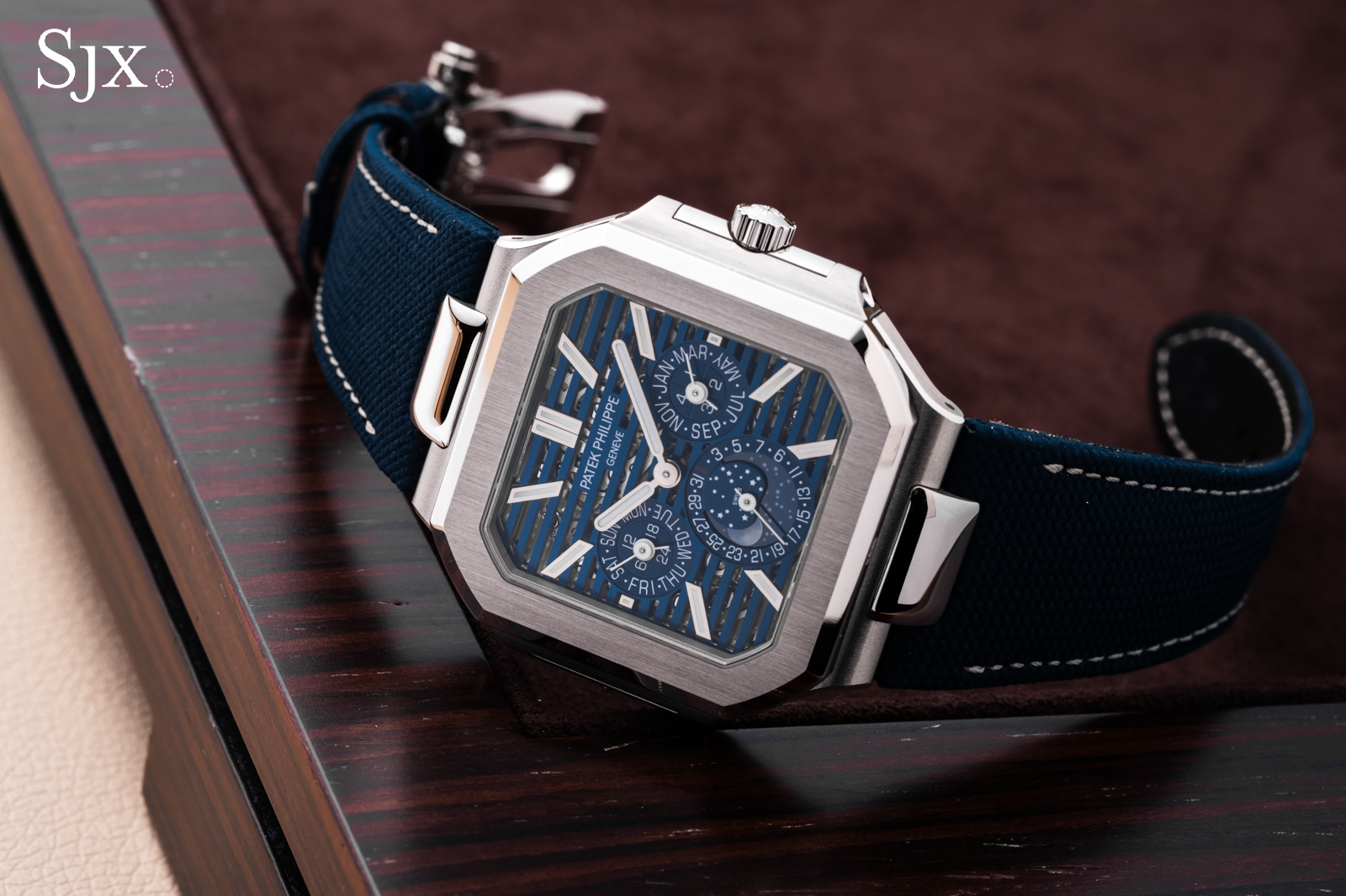
Hands On: Patek Philippe Cubitus 5840 Perpetual Calendar
Patek Philippe’s divisive Cubitus collection enters its third year with the firm’s first truly skeletonised perpetual calendar wristwatch, the Cubitus ref. 5840p-001 Perpetual Calendar Skeleton. As the first member of its clan with a shaped movement, it also welcomes a contemporary aesthetic that breaks with the brand’s established codes of movement decoration, though it’s built on a decades-old foundation. In short, the ref. 5840P is an ideal ambassador for what the Cubitus line can be when it steps out from its brother’s shadow. Initial thoughts The most complicated — and most expensive — Cubitus yet is also arguably the best model in the collection to date, as it probably should be. While on paper it sounds derivative of the Nautilus perpetual calendar, this watch may have the strongest identity of any Cubitus launched so far by fully leaning into the bolder, more contemporary aesthetic that Patek Philippe has, until recently, hesitated to explore. Several details allow the ref. 5840P to have its own identity. The first is the use of a strap, rather than the typical Nautilus-style bracelet. The reshaped movement is another differentiator, as is the new finishing style, which makes it more than just a square Nautilus. Yet the teak deck motif remains central, integrated seamlessly into the skeletonised design. Two other details that stand out are the use of a baguette-cut diamond to denote the platinum case, rather than the usual brilliant-cut stone, and the...
 Monochrome
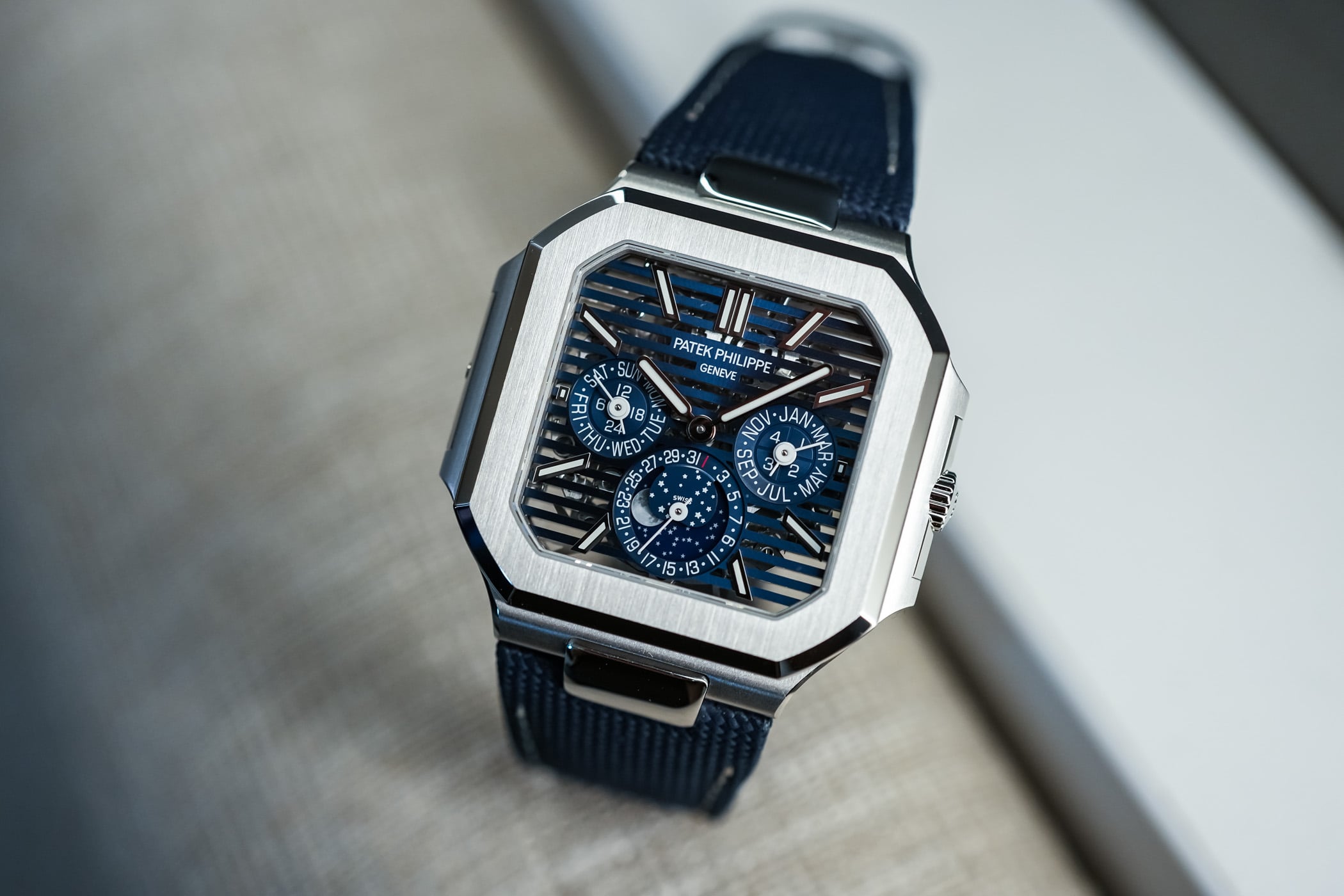
Hands-on - The Patek Philippe Cubitus Perpetual Calendar Skeleton 5840P
When Patek Philippe introduced the Cubitus collection in 2024, it drew fierce scrutiny. A square-shaped, angular evolution of the Nautilus concept, it challenged expectations. Yet, over successive releases, from the time-and-date references to the instantaneous grand date 5822P and the more compact 7128 models, the collection has settled into its role as Patek Philippe‘s modern sporty-chic […]
 Teddy Baldassarre
Our Favorite Complicated Watches From Watches & Wonders 2026
Our editors might still be reorienting themselves to their local timezone after being on Geneva time the past week, but the challenges of Watches & Wonders Editors' Picks must continue while the show is fresh in their minds. For this edition, we tasked our editors with selecting the watch complication that has stuck with them most from this year's lineup. From the sophisticated to the decidedly playful, down below, you'll find the watch complications that have risen above the pack, as decided by our editorial team. Explore our full editorial coverage of this year's show here. D.C. Hannay: Jaeger-LeCoultre Master Control Chronometre Perpetual Calendar Another luxury watch pick, another slam dunk for Jaeger-LeCoultre. Whichever way the wind is blowing in the Vallée de Joux, it’s been doing wonders for JLC of late, exemplified by the new Master Control Chronometre series. The brand has finally gone and made a modern, real-deal integrated luxury model, and enthusiasts are pricking up their ears. Along with the sleek Chronometre Date and the symmetrically gifted Chronometre Date Power Reserve, they’ve come up with a truly breathtaking riff on one of the most complicated complications, the Chronometre Perpetual Calendar. Absent of the hype surrounding the Royal Oak or the Nautilus, we’re presented with a beautifully balanced dial and cohesive design, packaged in a startlingly svelte 39mm case just 9.2mm thin. Also available in a glowing pink gold with a complementary br...
 Fratello
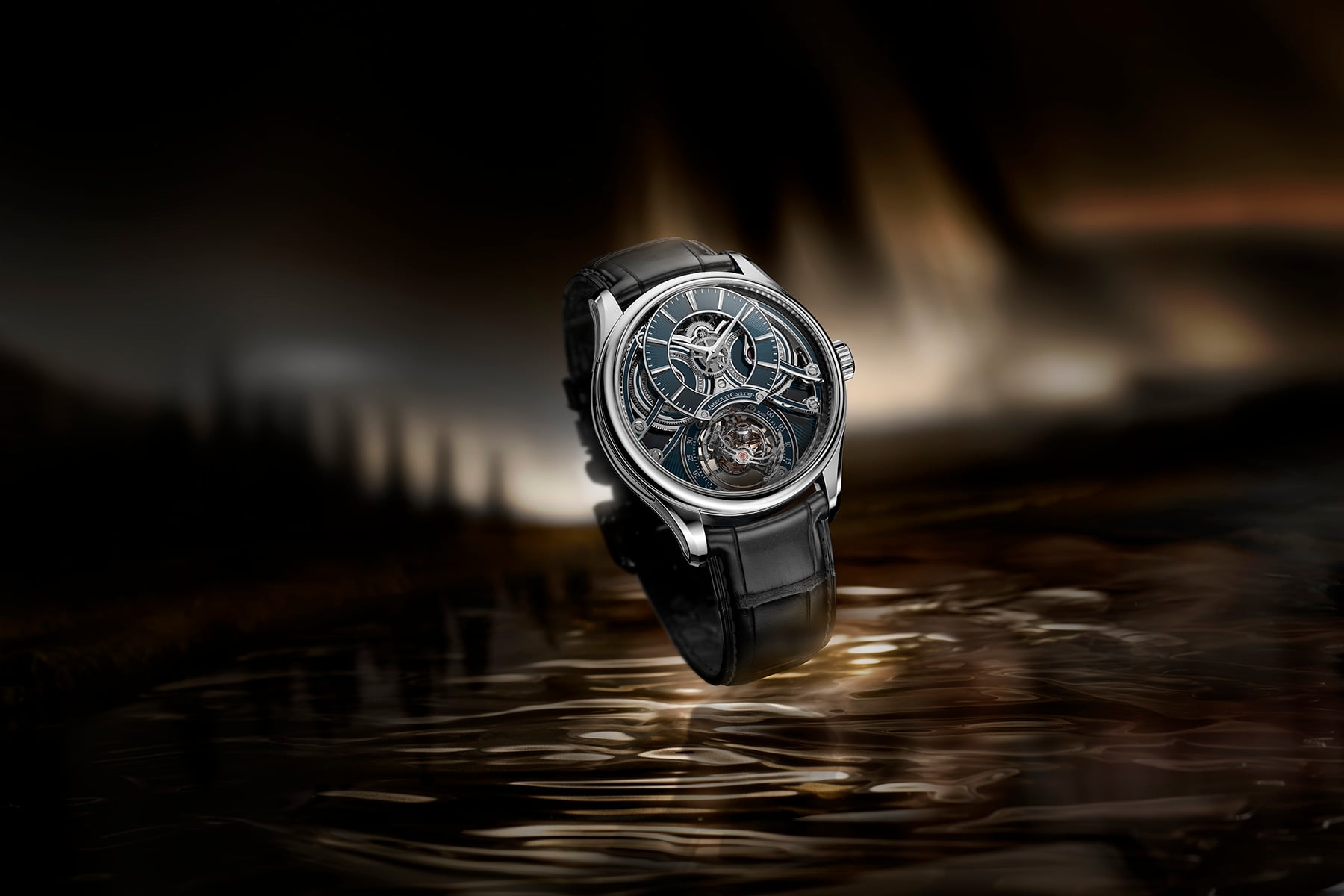
Introducing: Three New Jaeger-LeCoultre Master Grand Complications
Just as Stevie Wonder is the musician’s musician, Jaeger-LeCoultre is the watchmaker’s watchmaker. But what is meant by this? Well, for starters, Jaeger-LeCoultre is a prolific movement manufacturer that supplies other high-end brands. Famously, Jaeger-LeCoultre’s ultra-thin caliber 920 powered the big three ’70s sports watches - Patek Philippe’s Nautilus, AP’s Royal Oak, and Vacheron Constantin’s […] Visit Introducing: Three New Jaeger-LeCoultre Master Grand Complications to read the full article.
 Monochrome
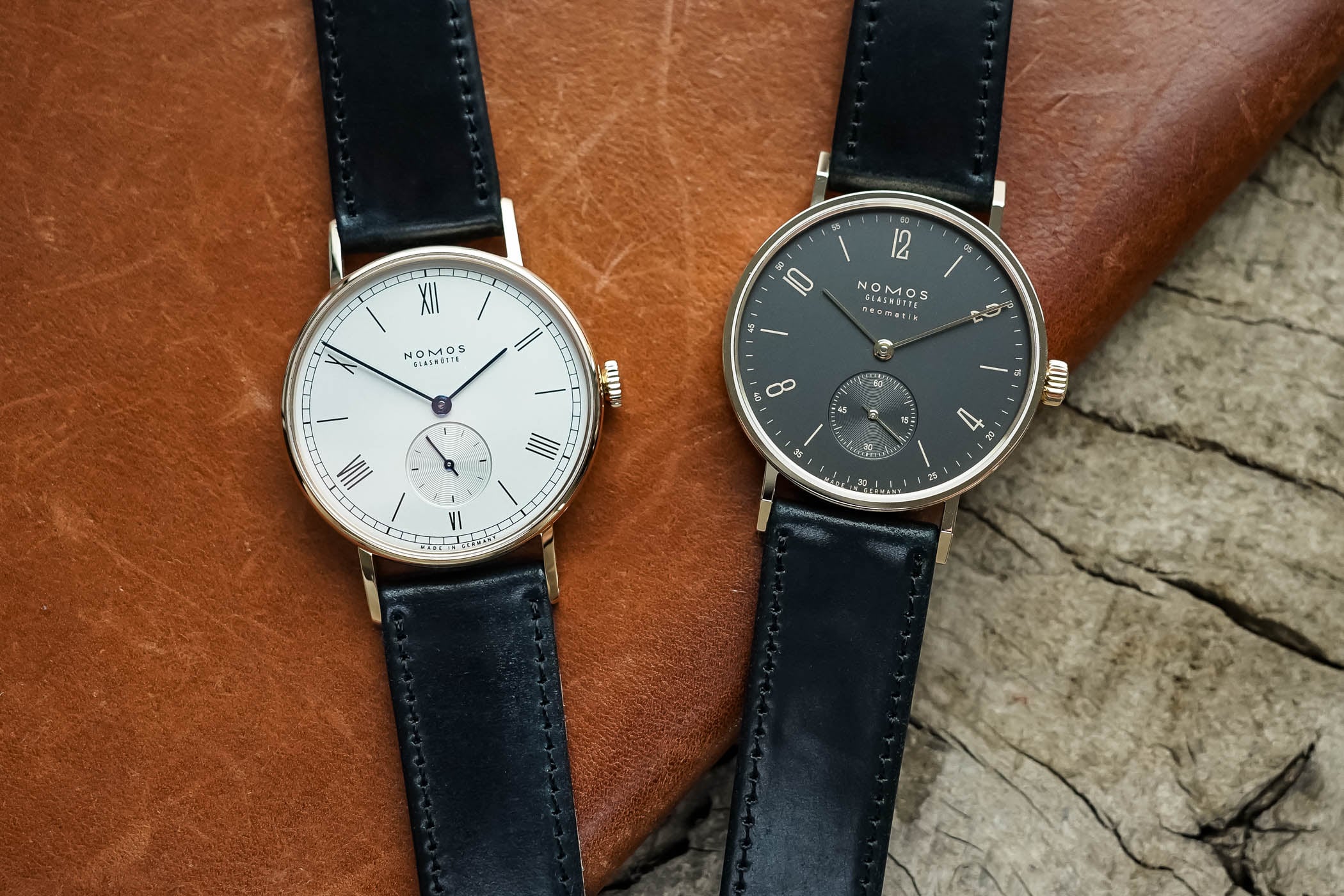
Hands-on - Nomos Goes Precious, with the Elegant Tangente Gold and Ludwig Gold (Incl. Video)
Every brand at one point dreamt of having an icon on their hands. A cornerstone model that stands the test of time, design trends, and, more importantly, captures the hearts of fans and collectors worldwide, indefinitely. Watches like the Lange 1, the Submariner, the Nautilus, the Speedmaster or the Royal Oak. For Nomos, even though […]
 SJX Watches
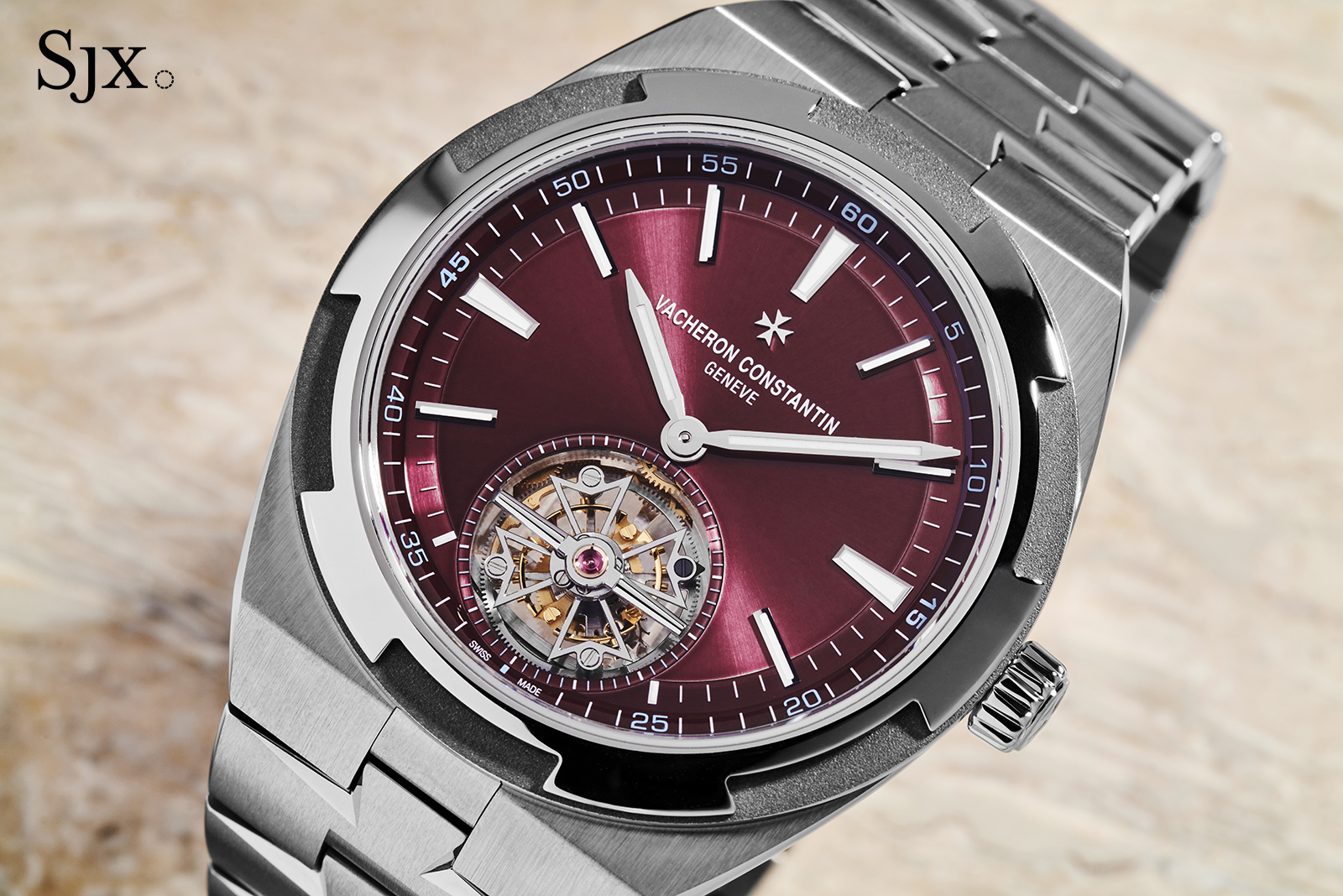
Hands On: Vacheron Constantin’s Overseas Tourbillon Titanium Red Dial
Vacheron Constantin’s latest Overseas Tourbillon pairs a titanium case with a deep red dial, recalling last year’s perpetual calendar, showcasing the cal. 2160 with peripheral rotor, refined finishing, and a slow beating one minute tourbillon. It represents the finest of industrial fine watchmaking with high-end construction inside and out. Initial Thoughts Last August Vacheron Constantin launched a pair of new Overseas Perpetual Calendars, one in burgundy and the other pink-on-pink. I felt the “deep red” dial – as Vacheron Constantin calls it – works particularly well against the white gold case, and the light blue accents were a nice touch. Nothing has changed on that front, the colour pallette looks just as good now as it did then, but is now lighter, thanks to the titanium case, and equipped more impressive movement. While the Overseas Perpetual’s movement somewhat lags behind its competition, the Overseas Tourbillon has a more competitive calibre, which holds its own against the Royal Oak Tourbillons, and wins by default against the non-existent Nautilus Tourbillon. That said, it is hardly a value within its segment, with estimated pricing comparable to Audemars Piguet’s blue-chip Royal Oak Tourbillons, though that is more than fair when you put aside brand caché and focus purely on the product. Case and Bracelet The Overseas case is well made and well finished by any standard, though not quite as complex as its counterparts from Audemars Piguet and P...
 SJX Watches
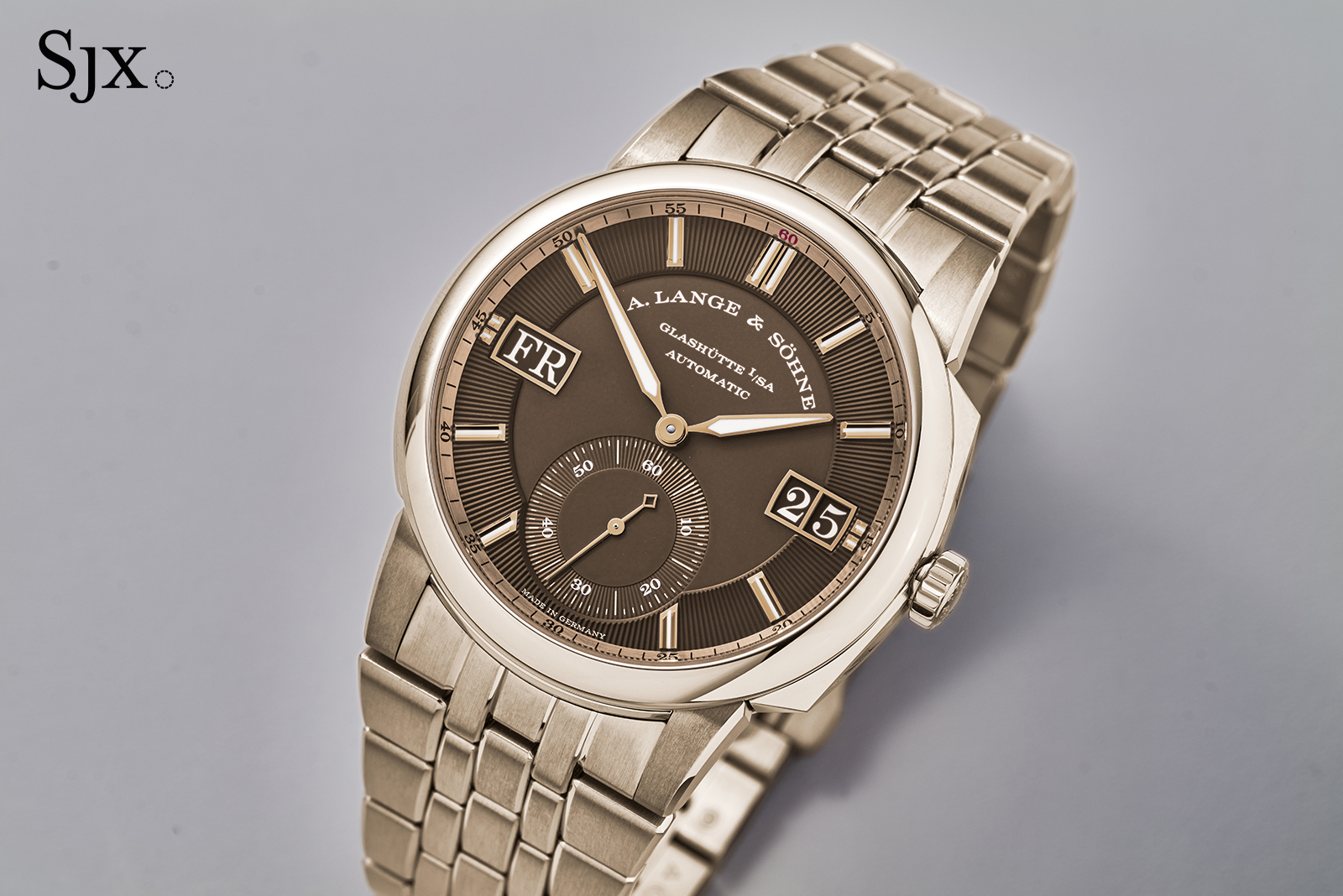
Hands On: A. Lange & Söhne Odysseus Honeygold
A. Lange & Söhne launched the Odysseus Honeygold last year and it’s easily the brand’s most luxe sports watch. Presented end to end in 18k Honeygold, this Odysseus is impressively well made, impressively heavy, and impressively expensive. I recently got the chance to spend some time with one of the 100 pieces made, and it was certainly a good experience. Initial thoughts The Odysseus was never a pretty watch, and this isn’t more visually appealing than the titanium or steel version. The design doesn’t have the finesse of its rivals, most notably the Royal Oak or Nautilus. But the Odysseus does have tactile and intellectual appeal, and that translates into physical attraction. The Odysseus is impressive like many Lange watches are thanks to its build quality. In Honeygold it looks and feels even more luxurious. The warmth and weight of the metal give it greater appeal, in fact Honeygold gives this a large-yacht-on-the-Mediterranean type of feel that its counterparts in more common metals lack. Look and feel aside, this has all of the strengths and weakness of the earlier versions. Strengths include the quality of course, as well as good ergonomics, which matter more here because of the weight. One of the weaknesses is the clasp, which is practical and easy to operate, but a little too large for a sports watch that is also supposed to be elegant. With a price tag of US$110,000, the Odysseus Honeygold is very expensive for what it is, even by Lange standards. But wha...
 SJX Watches
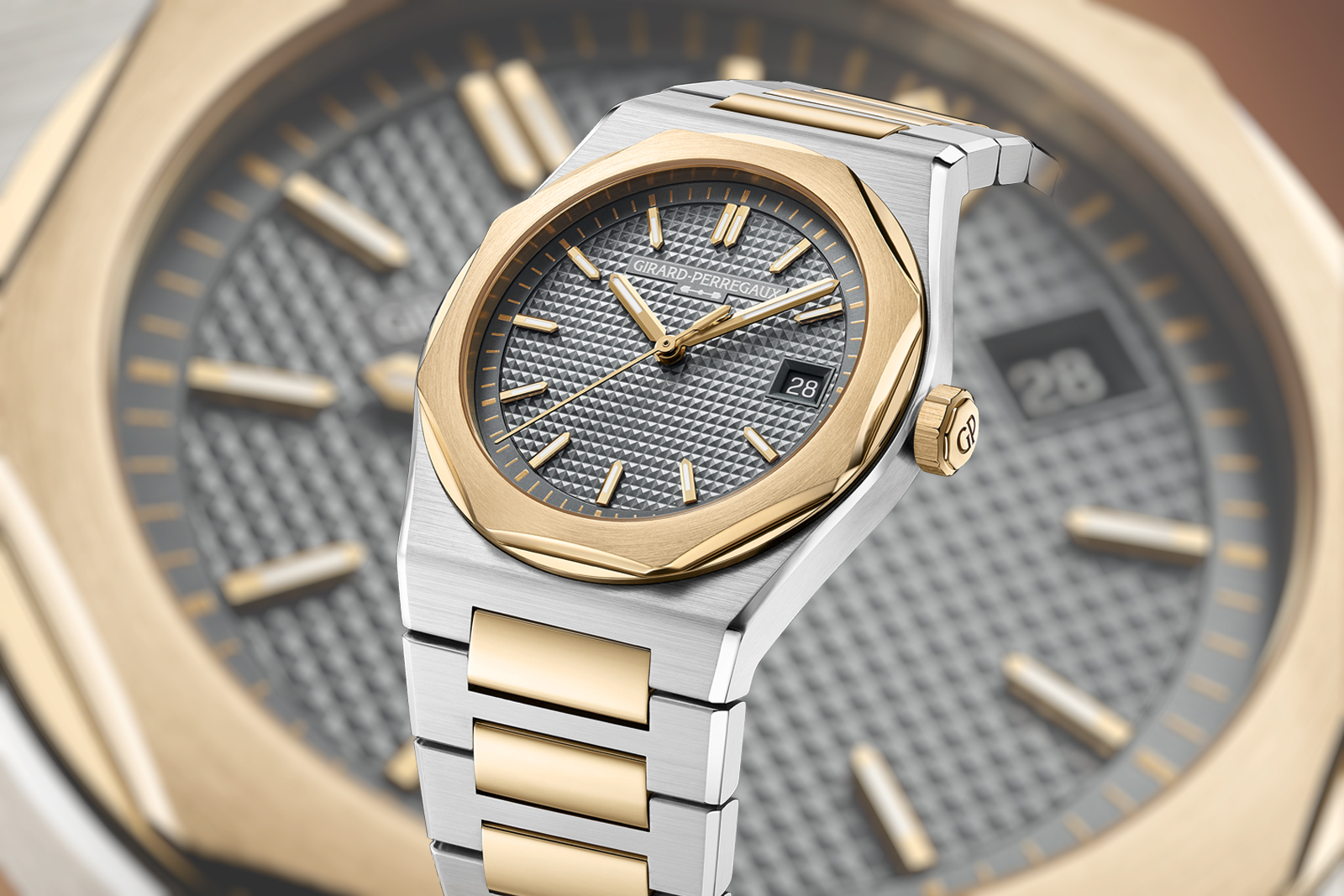
The Laureato Fifty is a Milestone for Girard-Perregaux
To celebrate the 50th anniversary of its most enduring wristwatch design, Girard-Perregaux (GP) has just unveiled the Laureato Fifty, a watch that highlights the brand’s storied history, while asserting the manufacture‘s place in the current competitive market. As expected, the watch is powered by the brand’s new workhorse calibre GP4800, which makes its official debut here. A limited edition of just 200 pieces, the Laureato Fifty is dressed in a two-tone case of steel and yellow gold, echoing the 1975 original. Though this is a one-off limited edition, it is more than likely that this revised Laureato styling will be implemented across the Laureato line in the coming year. Initial thoughts To understand the Laureato Fifty, we must first consider the era to which it pays tribute. The original design of the Laureato, presented to the world in 1975, appeared right between Gerald Genta’s iconic duo of the Audemars Piguet Royal Oak and Patek Philippe Nautilus, launched in 1972 and 1976, respectively. Compared to these designs, which would come to define the category, the Laureato was different in a few respects. First, the original design is credited to one of GP’s in-house designers, whose name has been lost to time. Second, the original Laureato was cutting edge at the time with its proprietary, chronometer-certified quartz movement, compared to the ultra-thin automatic Jaeger-LeCoultre-derived calibre found in the Royal Oak (and later, the Nautilus). Turning to...
 Monochrome
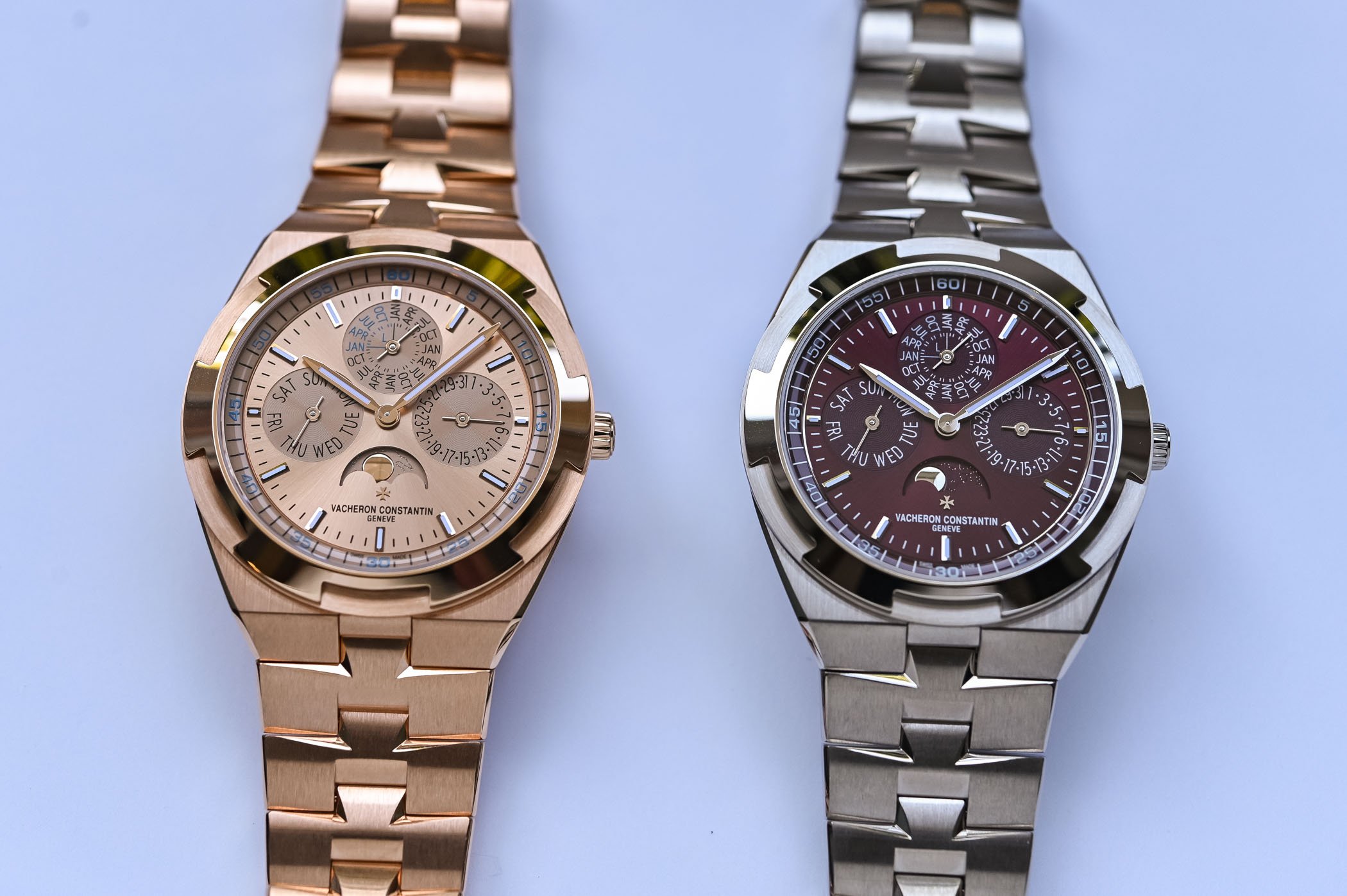
First Look - Two New Editions of the Vacheron Constantin Overseas Perpetual Calendar Ultra-Thin
The worthy successor of the 222 model (which is still made by the brand as part of the Historiques Collection), the Overseas has been Vacheron Constantin‘s vision of the luxury sports watch, a model made to compete with the two other icons of the genre, the Royal Oak and the Nautilus. The current Overseas, which […]