 Time+Tide
Raymond Weil celebrates turning 50 in our London Studio
To mark this major milestone in the independent brand's story, we brought together the watch community in London.
42,590 articles · 173 videos found · page 932 of 1426
Time+Tide
To mark this major milestone in the independent brand's story, we brought together the watch community in London.
 SJX Watches
Making its debut in Shanghai, Oyster Story is an all-encompassing, immersive exhibition to mark the centenary of the Rolex Oyster water-resistant watch case, arguably the foundational achievement of the world’s largest luxury watch brand. Oyster Story takes place at June 10-28 at the West Bund Dome Art Center, a former cement factory in a district that was once an industrial area but is now being transformed into an arts and culture hub. The large, domed-shaped building on the banks of the Huangpu River covers almost 100,000 square feet, allowing for a comprehensive journey into the Oyster and Rolex history. The exhibition includes historical Rolex watches, including the actual timepieces worn by explorers and adventurers on landmark expeditions. The watches on show comprise those owned by Rolex “as well as privately owned watches kindly loaned for the event” according to the brand. Also on show is an in-depth look at modern-day Rolex watchmaking. “Cases, bezels, bracelets, dials, materials, movements: every stage of watchmaking is showcased here”, allowing a look into arguably the most advanced high-end-industrial watch manufacturing in Switzerland. The brand’s advances in timekeeping are also illustrated by the atomic clock developed by Rolex. Amongst other things it serves as a reference clock for Rolex watchmaking. Oyster Story is free to enter and open to the public.
 SJX Watches
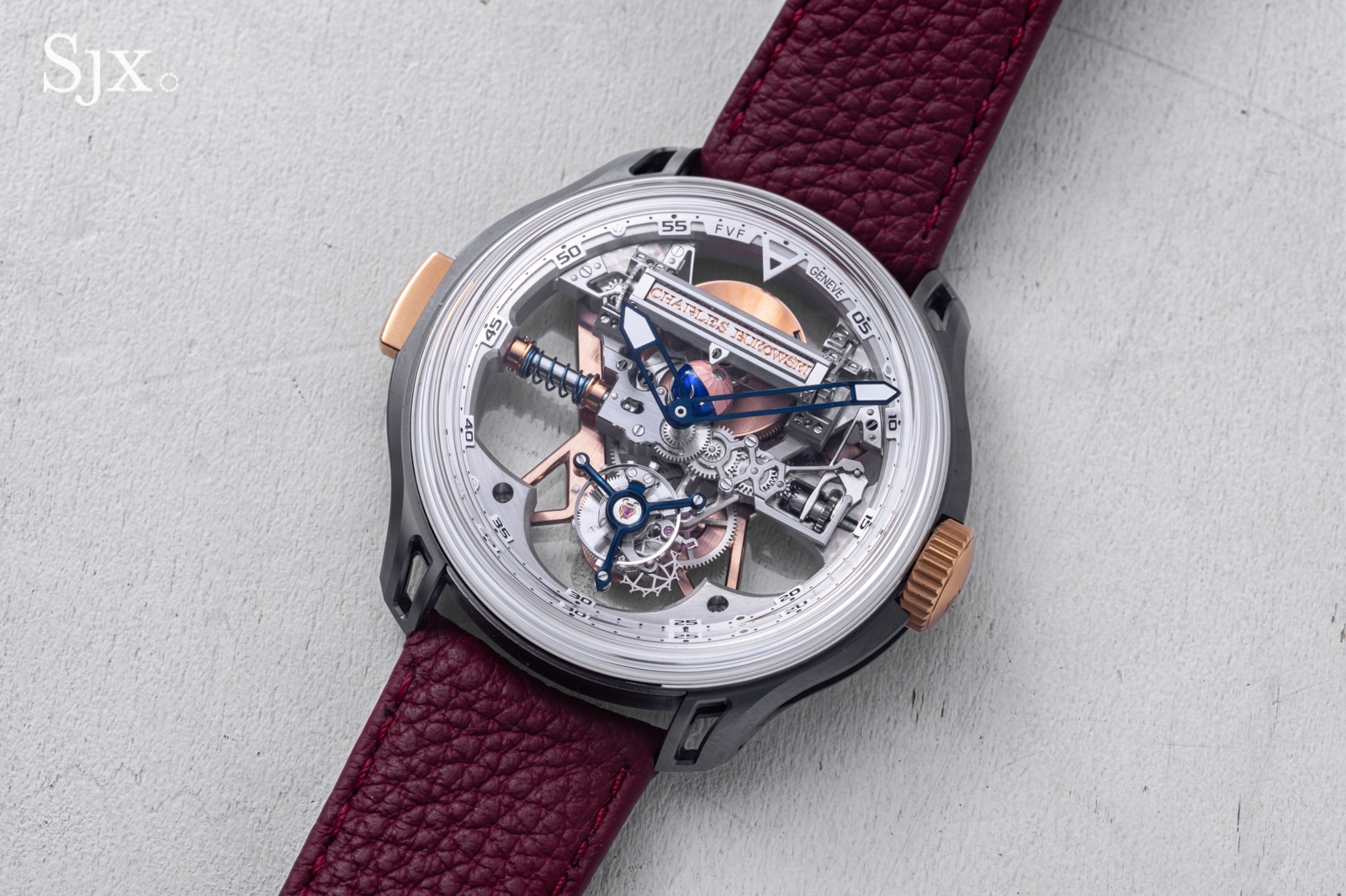
FVF Genève founder Franc Vila has created a unique piece of his flagship tourbillon for a noted European collector of independent and complicated watches who goes by @thedeadwatchsociety on Instagram. The FVF1 Tourbillon “Seven Poets” is a romantic twist on the day complication that assigns a daily reading from one of seven historical poets. Initial thoughts Franc Vila is a man of many passions. His atelier in central Geneva is packed with art, and each piece has a story — I can’t think of anyone better to create a poetry-themed watch. Neither, it seems, could the lucky owner who commissioned the Seven Poets. The watch is fundamentally similar to the standard FVF1 C2 Tourbillon Superligero, with its 42.5 mm case, titanium monocoque construction, seven-sided day roller, and flying tourbillon architecture. Even in its basic configuration, the FVF1 is a distinctive offering that relaunched Mr Vila’s career after he parted ways with his eponymous brand. But the Seven Poets is anything but basic. Like the “Today” edition reviewed last year, the Seven Poets deviates from the norms of traditional watchmaking. Instead of indicating the day of the week, the day roller has been repurposed to feature the hand-engraved names of seven poets that are personally meaningful to the owner who commissioned the watch. I liked the conceptual, philosophical statement made by the “Today” edition, and the Seven Poets takes it one step further. This simple change to an indicat...
 Hodinkee
What We Know Awake is launching three new watches today, along with a new visual identity for the young brand. The three references—"Sunset," "Alba," and "Borealis"—take their names and color palettes from celestial phenomena: an ocean sunset, an incandescent dawn, and the Northern Lights, respectively. "Alba" The dials are the story here, and the story behind them is quite fascinating. The process begins in Hanoi, Vietnam, where master lacquerers apply multiple ultra-thin layers of Sơn Mài lacquer—derived from the sap of the Rhus Verniciflua tree—then meticulously polish each coat to build up the dial's color. Sunset gets pink, violet, and blue. Alba gets red, yellow, and orange. Borealis gets green and yellow. Once the lacquer work is complete, the dials travel to Italy, where they're handed to the Renzetti family—one of the last workshops in Europe still practicing hand guilloché—who work them on traditional rose and straight-line engine lathes, entirely by hand, for approximately 15 hours per dial. Each groove is unique to the individual artisan and the individual piece. "Sunset" The hands and indices are constructed with a steel cap system finished in polished, brushed, and engraved textures, filled with Super-LumiNova BGW9. The result is a lume solution that's discreet in daylight but comes alive in the dark, casting a soft halo over the lacquer and guilloché beneath. All of this sits inside a new 38mm stainless steel case, a first for Awake. It fea...
 Hodinkee
There's no shortage of watches this auction season—more than 1,200 lots across the major houses—but volume isn't really the story. At Christie's and Sotheby's, the focus feels different this time around, moving past the hype-driven pieces of the early 2020s and back to some genuinely compelling and surprising watches. Last week, we published part one of our preview—today, we're finishing it up with part two. Christie’s I would argue that Christie's always has one of the more subtle and yet impressive catalogs. There are some truly fantastic pieces here and, as always, we'll start at the top. Lot 134, a unique and absolutely stunningly gorgeous (add all the superlatives you want) two-tone 14k pink gold and steel Audemars Piguet "Observatory-style" watch. Photo courtesy Christie's. If you're looking for a watch that my friend and current "Bring a Loupe" writer Weston Cutter called an "immediate knee-weakener," you need to sit down for this one. Lot 134 is a unique and absolutely stunningly gorgeous (add all the superlatives you want) two-tone 14k pink gold and steel Audemars Piguet "Observatory-style" watch. The watch is powered by a 13-ligne 13VZAS movement that was highly modified for precision as a time-only watch, with a large subsidiary seconds at 9 o'clock and a blank subdial at 3 o'clock. Bold numerals, bold design, it's the kind of thing you dream about if you collect early watches, and the estimate is a hilarious CHF 50,000 to 100,000. It should go for way m...
 Teddy Baldassarre
Grand Seiko has done something remarkable at Watches and Wonders for 2026. The headline story is the launch of the new Spring Drive UFA Ushio 300 divers, and on top of that, a new smaller case size. The new divers are available in two dial variations, the blue SLGB023 and the green SLGB025. Of course, the main attracti
 Monochrome
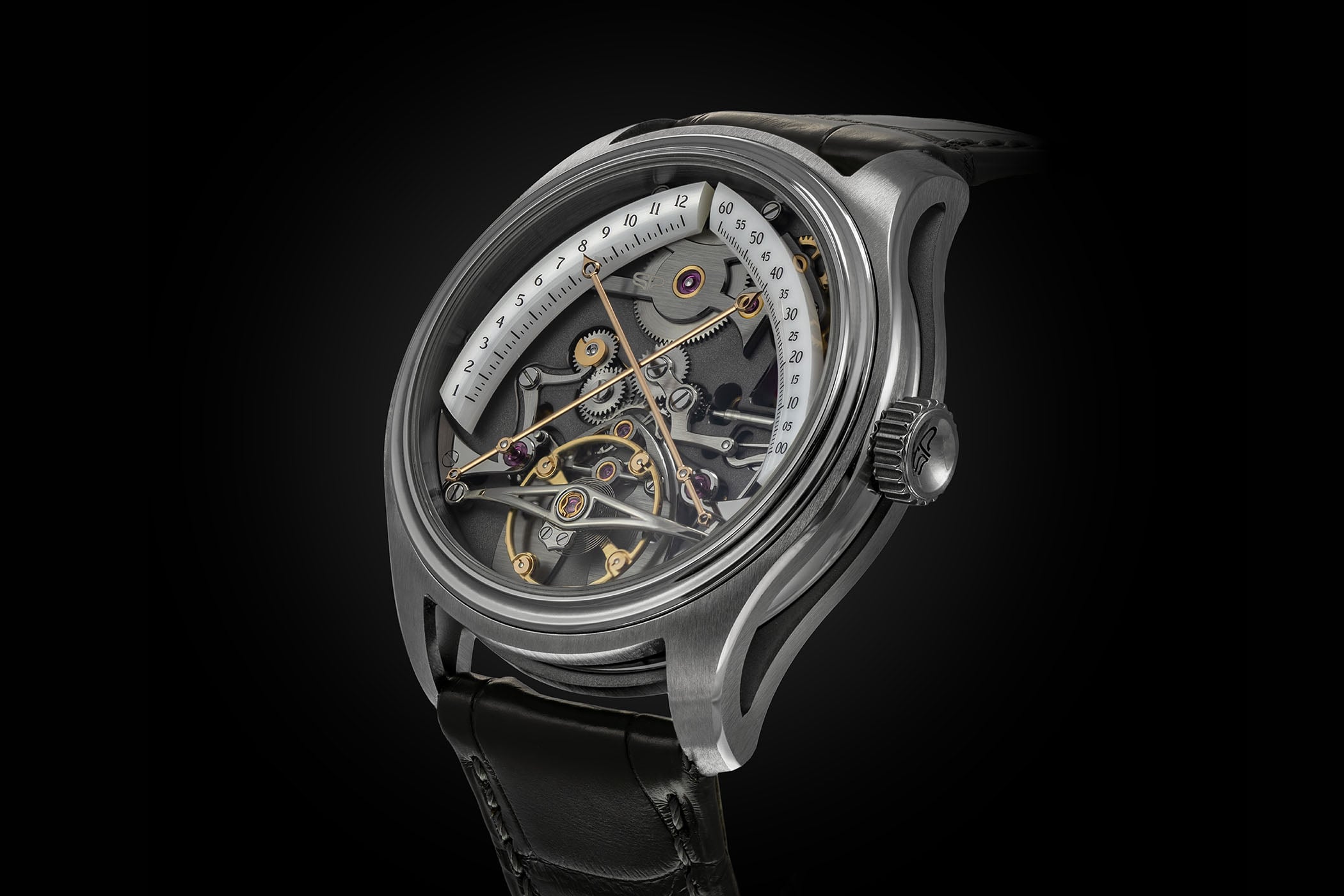
There’s a new indie brand in town… Stéphane Pierre enters the independent watchmaking scene with a strong personal story and vision. Based in Annecy and trained as a micro-mechanical engineer, he brings a background shaped by traditional watchmaking and the demanding environment of the naval and military sector, as he spent several years in the […]
 Teddy Baldassarre
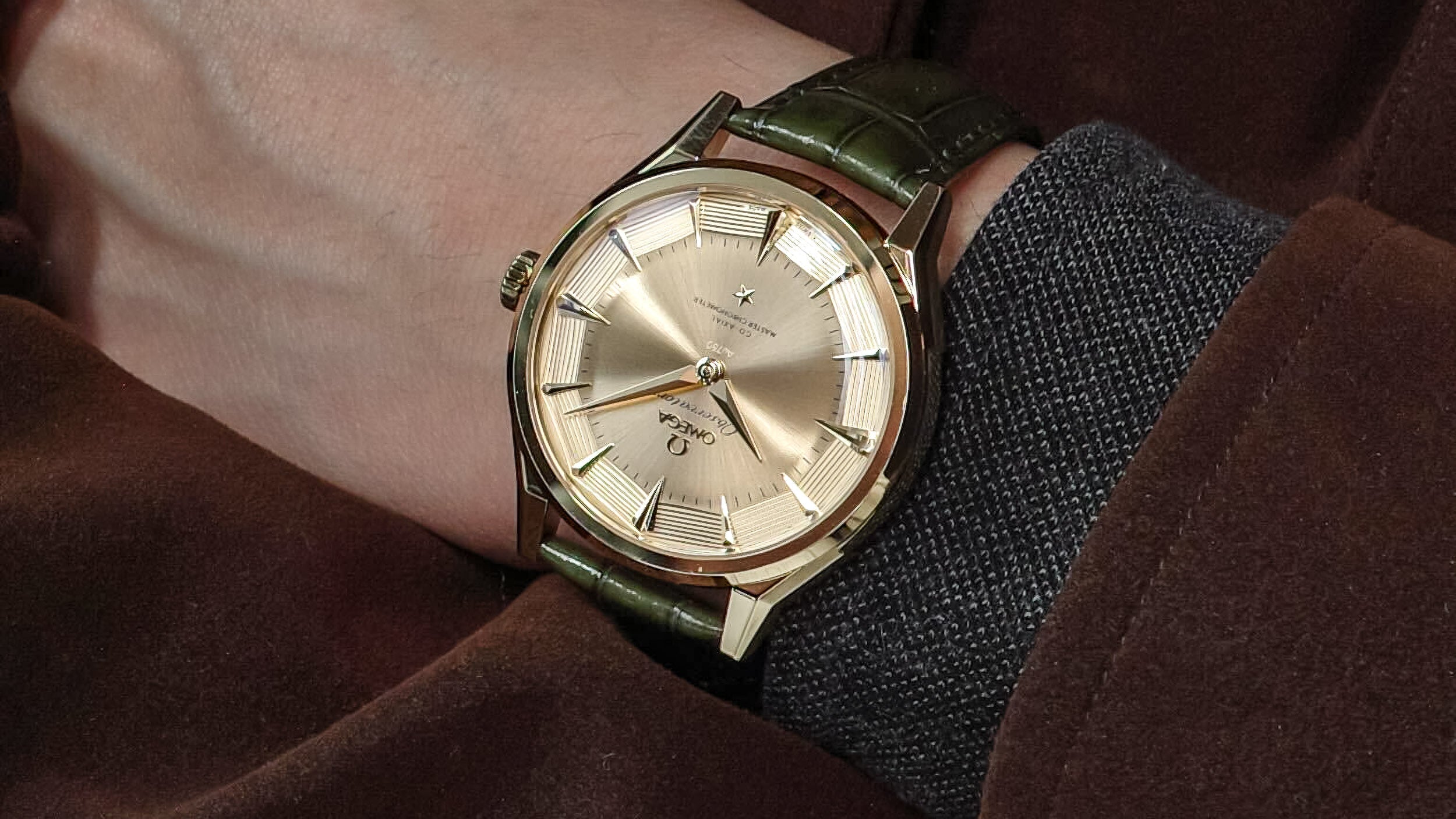
I am here in Biel, Switzerland, to witness the unveiling of a brand new Constellation line from Omega – only this fact has proven to be just half the story. While there are nine new references in this new line of watches, Omega has also taken the next step since it launched its neutral accuracy testing program, the Laboratoire de Précision (LDP). While I continue slowly burying the lede here, let’s at least introduce the audience to the new Omega Constellation Observatory, a 39.4mm fresh approach to a classic design format that sees overt nods to the “pie-pan” dial layout as well as a mid-century construction of the case and lugs. The TLDR of this release is as follows: 9 new watches (4 in gold, 4 in steel, and one in platinum gold), two new movements (two done in precious metal, and one rhodium plated), and a new breakthrough in chronometric excellence which allows for both Chronometer and Master Chronometer certification to be done acoustically obviating the need for a seconds hand in the certification process. But don’t worry, we will break down everything about this new collection and new technological feat in the (many) words below. These watches offer a decidedly dressy take on the Constellation format in that they are two-hand watches, meaning there is no visible running seconds hand to be seen anywhere on the dial. This visual marker (or rather, lack thereof) is the key to bridging the external design with the internal significance and connection to the ...
 Teddy Baldassarre
[toc-section heading="Squale Overview"] Squale is a historic manufacture with a particular specialty in the realm of dive watches. The company’s heritage is deeper than you may realize, as it extends beyond its own footprint, touching an extensive list of partners that helped to shape the dive-watch genre as we know it today. The story of Squale is one of intrigue, and while it became a well known case supplier through the ‘60s and ‘70s, the Swiss brand also boasted a collection of its own designs that hold as well today as they did then. Understanding Squale means taking a step back into the era that birthed it, an era defined by the burgeoning sport of recreational diving as well as the advent of military diving operations. If you’re a fan of dive watches and the history of their use, Squale is a brand that should be on your radar thanks to its plentiful contributions. Beyond that, collectors will find a vast array of designs in the brand’s modern catalog that both break new ground and preserve the best portions of its history. In this overview, we’ll connect all the dots from then to now. [toc-section heading="History and Heritage"] Squale was founded by Charles von Büren in 1959 in the beautiful lakeside town of Neuchâtel, Switzerland. While that’s the official date, von Büren had been assembling watches under his own name for the prior decade, meaning he brought some pedigree to the name from the get-go. The modern dive watch genre was in its ...
 Fratello
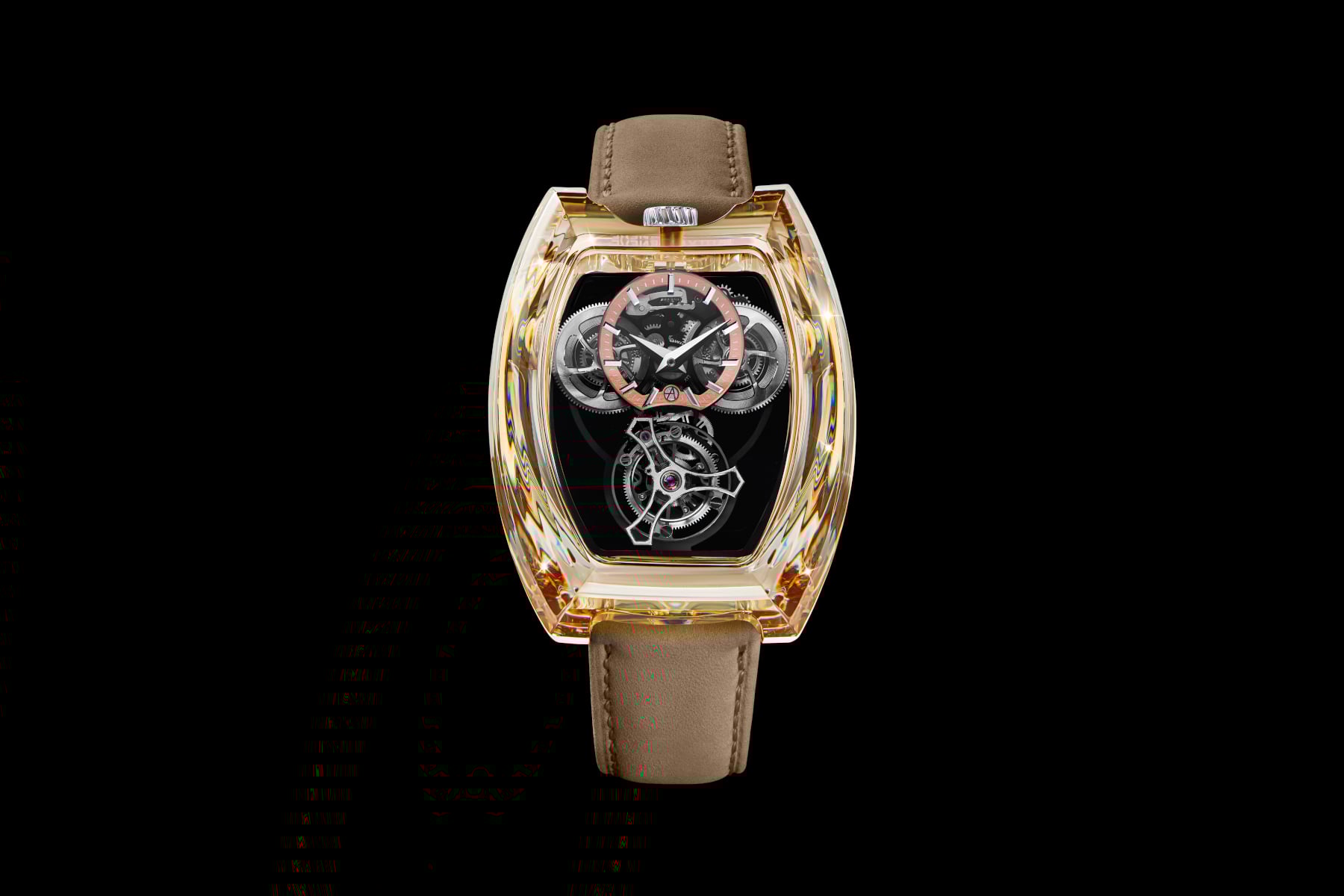
One of the things I’ve learned over the years is that ArtyA watches tend to reward the experience of seeing them in person. Photographs rarely tell us the full story. The brand’s fascination with unusual materials and unconventional case designs often produces pieces that behave very differently in person. Rest assured, the new Purity Moissanite […] Visit ArtyA’s Curvy Tourbillon Gets A Cosmic Twist In Moissanite to read the full article.
 Teddy Baldassarre
When we look back to mid-century watchmaking, some of the industry’s most iconic designs were originally conceived as essential, life-saving instruments. The Rolex Submariner, for example, was originally created for professional divers working in cold, deep waters while breathing compressed air. The Omega Speedmaster was a vital analog calculator for astronauts traveling through the vacuum of space. The Rolex Explorer is another example, forged to survive the brutal, oxygen-deprived ascent of the Himalayas. These tool watches were designed with a clear purpose and were built to endure knocks, scrapes, and harsh conditions without missing a beat. Fast forward to today, and while modern iterations are undeniably better engineered than their vintage ancestors, boasting superior metallurgy and tighter tolerances, their exorbitant price tags have put some collectors off regular, daily use. A modern steel sports watch can easily demand anywhere from $6,000 to well over $15,000 at retail, and that’s assuming you have the willpower to ensure the waitlists to acquire one. And while some collectors are happy to invest that kind of money, others are on the lookout for something more accessible. Enter Traska watches. This psychological friction has spawned a new enthusiast community for the ultimate Everyday Carry (EDC) watch, or the “go-anywhere, do-anything” (GADA) watch. Many collectors today are looking for a watch that slides effortlessly under a tailored cuff during a hi...
 Time+Tide
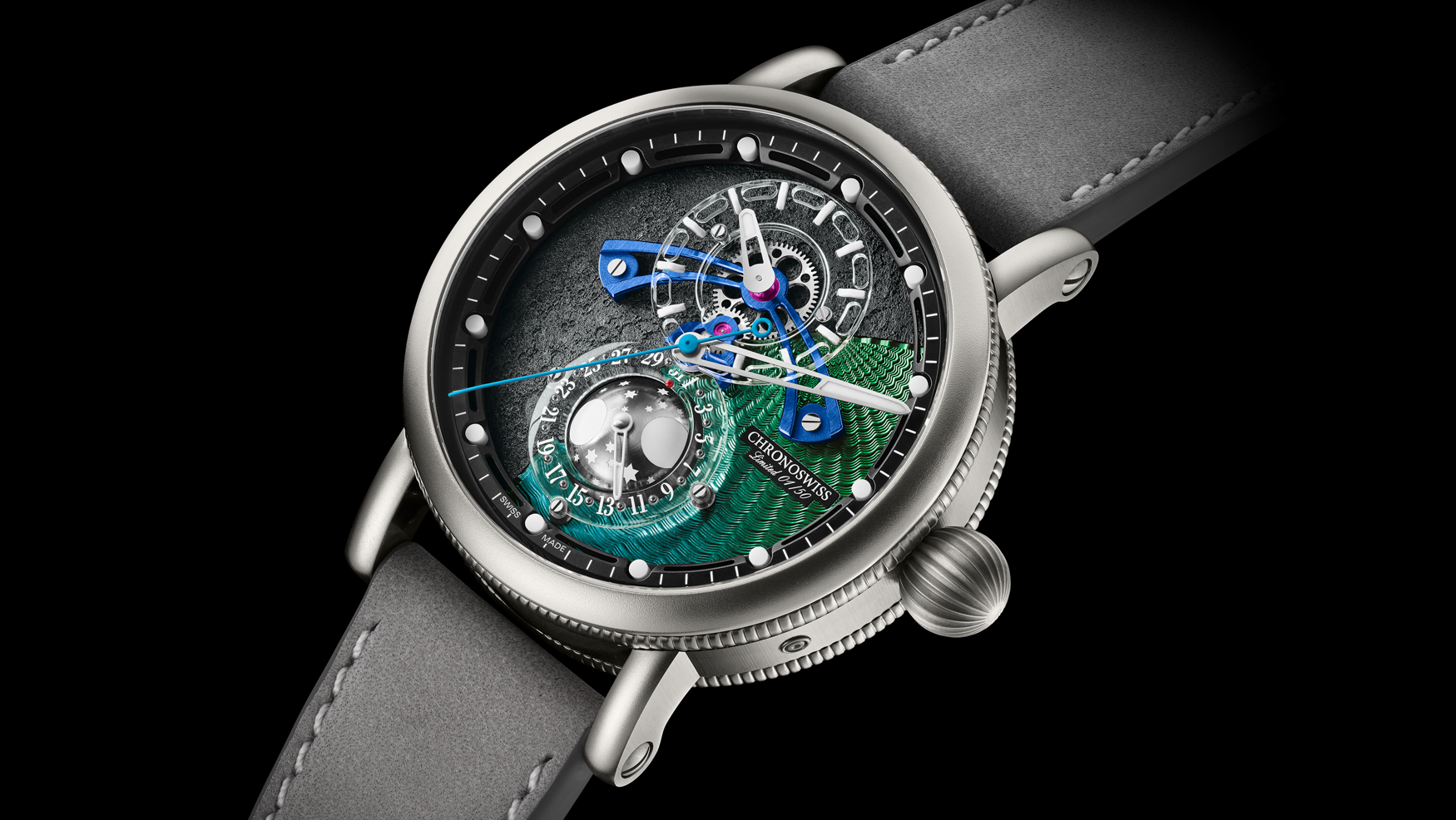
Both lean on colour‑shifting CVD finishes, both keep the moon in the story, and both are unmistakably Chronoswiss at a glance.The post Chronoswiss doubles down on light and depth with Space Timer Gravity and Lunar Chronograph Aurora appeared first on Time+Tide Watches.
 SJX Watches
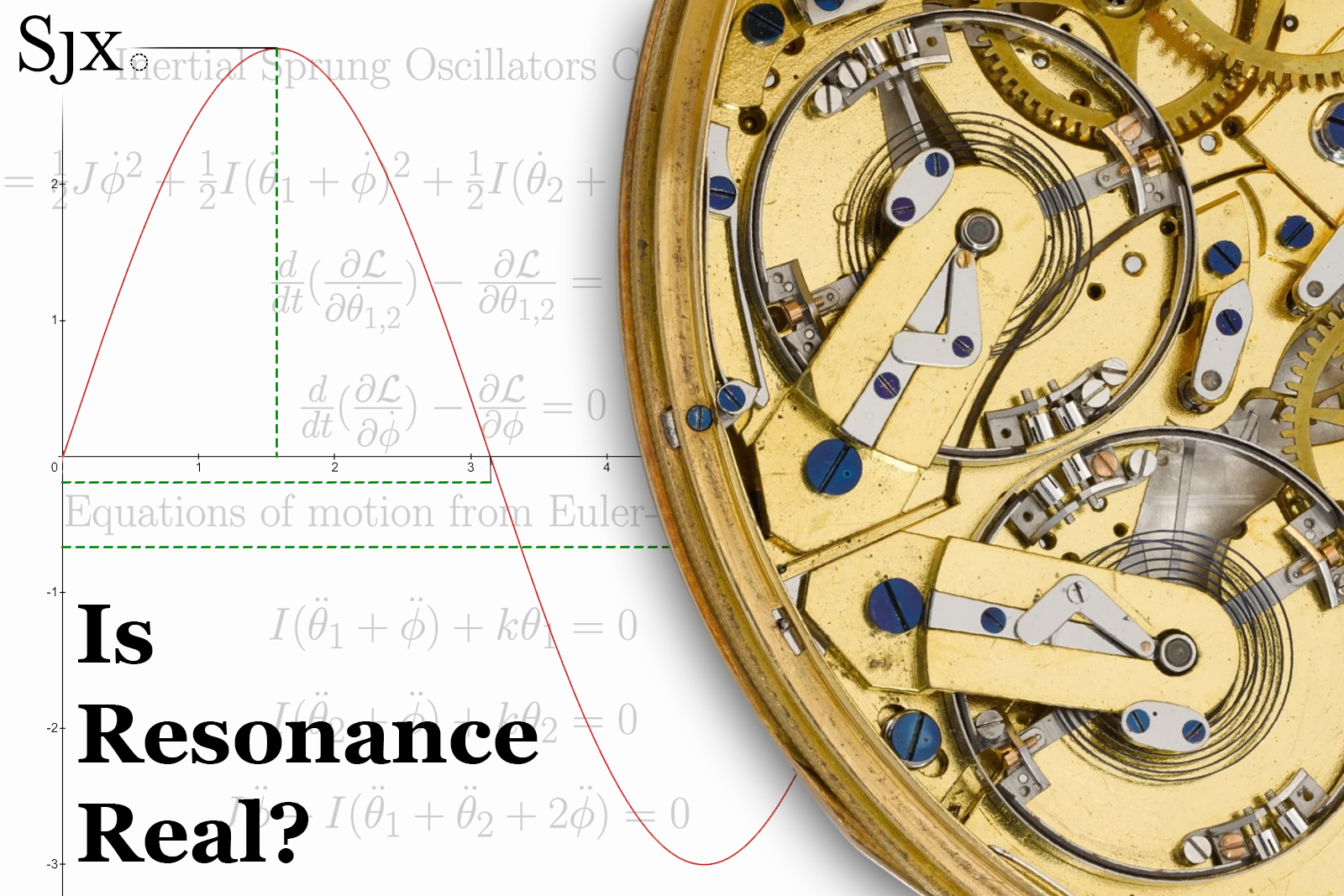
Resonance watches are among the most elusive machines in modern watchmaking. Creations such as F.P. Journe’s Chronomètre à Résonance perform well at auctions, commanding high prices. While their rarity and appeal are undeniable, watches that purport to harness resonance tend to be viewed with a degree of skepticism. A measure of skepticism is understandable - the concept of sprung balances becoming almost magically coupled is anything but straightforward and requires a profound understanding of oscillators in general. This story seeks to shed some light on the concept of coupled oscillators by explaining the two models of coupling and explore the nuances of each system. Before exploring resonance, the reader is encouraged to review the basics of sprung oscillators and isochronism in order to become more familiar with the hairspring and balance wheel model. The F.P. Journe Chronomètre à Résonance Souscription No. 2 sold for more than CHF3 million in November 2025. A confusion of terms First, the term resonance itself requires definition. In classical physics (mechanics, electrical engineering, signal processing, etc.) resonance is a phenomenon where a system vibrates under the influence of an external driving force that matches the system’s eigenfrequency (natural frequency). This is to say that a system at rest, which includes mass and spring elements, can be excited into a state of resonance by an external force when particular conditions are met. An imp...
 SJX Watches
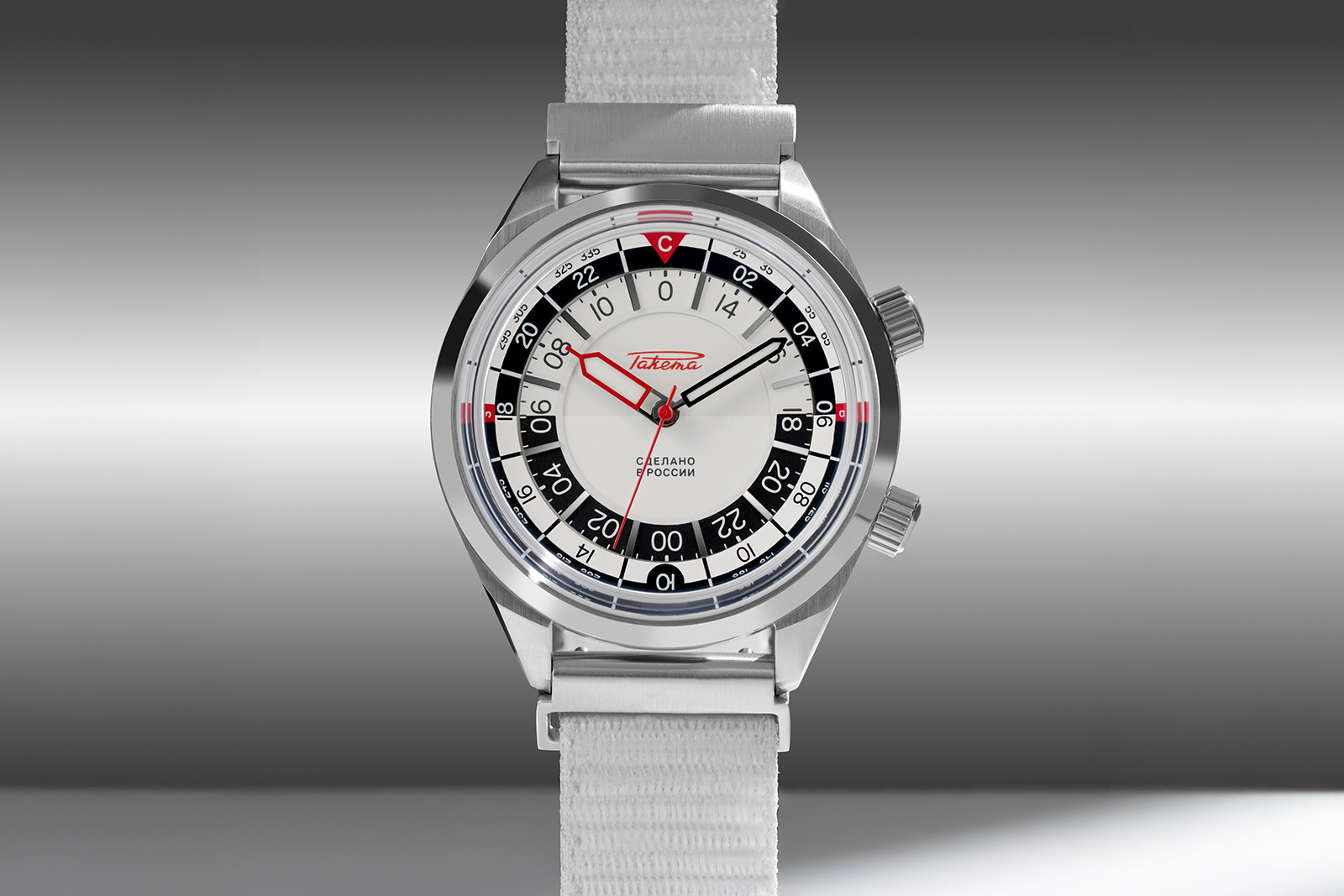
Space-themed watches represent a sizable proportion of the luxury watch industry. In fact, there are so many that at times it seems like the Space Race itself might have been contrived solely as a marketing concept for luxury watches. But with a story this good, who can say no? Of course, it helps that the Raketa Baikonur is an appealing watch in its own right with convenient dual-time functionality and an attractive instrument-like 24-hour dial. Initial thoughts “They’ve got a man up there! It’s Gagarin!” Even though this imagined line was written for the 1983 film adaptation of Tom Wolfe’s The Right Stuff, it sums up the tension that underpinned the Space Race between the United States and the Soviet Union. The statement refers to Soviet Cosmonaut Yuri Gagarin, who became the first human in space in 1961, orbiting the Earth in 108 minutes. It’s a suitably dramatic event to commemorate with a wristwatch, especially from Raketa, a brand named in honour of Gagarin’s flight. Instrument-like dials can be boring, but the designers at Raketa did just enough to keep it interesting, referencing the brand’s emblematic Big Zero at noon and midnight, without taking it too far. An internal rotating flange offers an auxiliary 24-hour scale, adjustable by the second crown. This facilitates keeping track of two time zones with full AM/PM resolution, something that’s actually quite rare. The dial also positions noon at the traditional 12 o’clock position, which is wel...
 Time+Tide
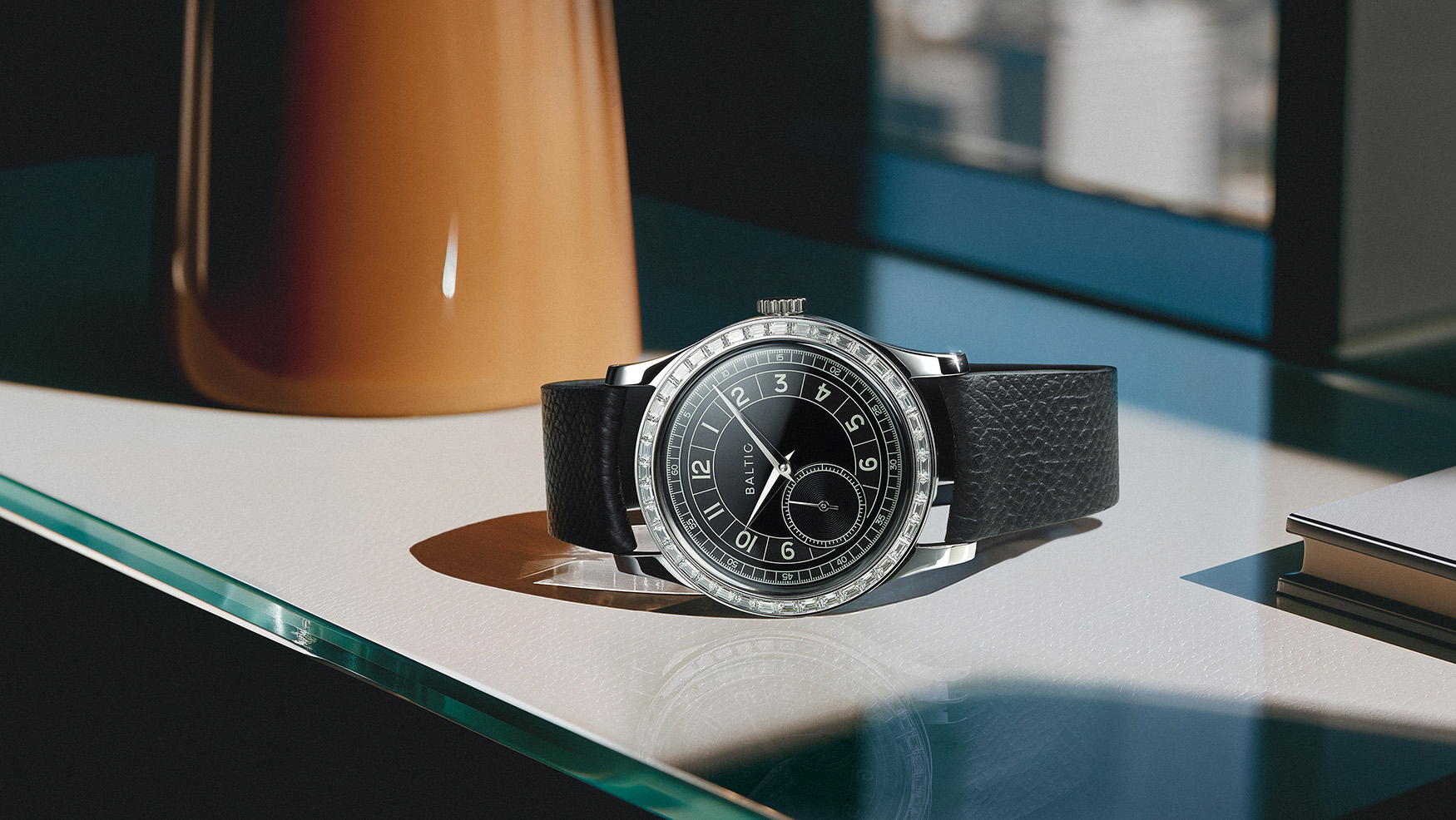
Independent brands have to write their own story, and every one of them approaches it differently, as these past seven days have shown.The post New releases from Sartory Billard, Venezianico, Baltic and more appeared first on Time+Tide Watches.
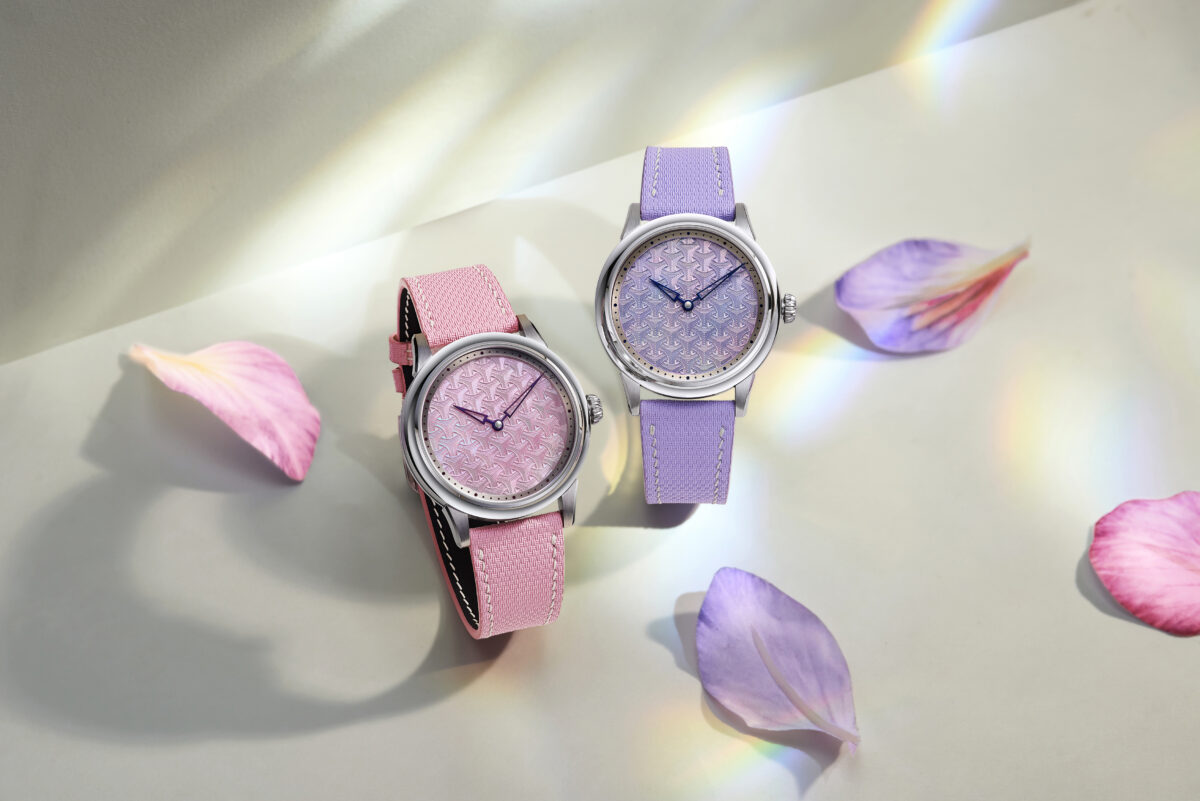 Deployant
Following the success of the Watch Ho & Co. × Selten's Jui, they reunite once again to unveil the next chapter of the Jui story, the Jui Bauhinia.
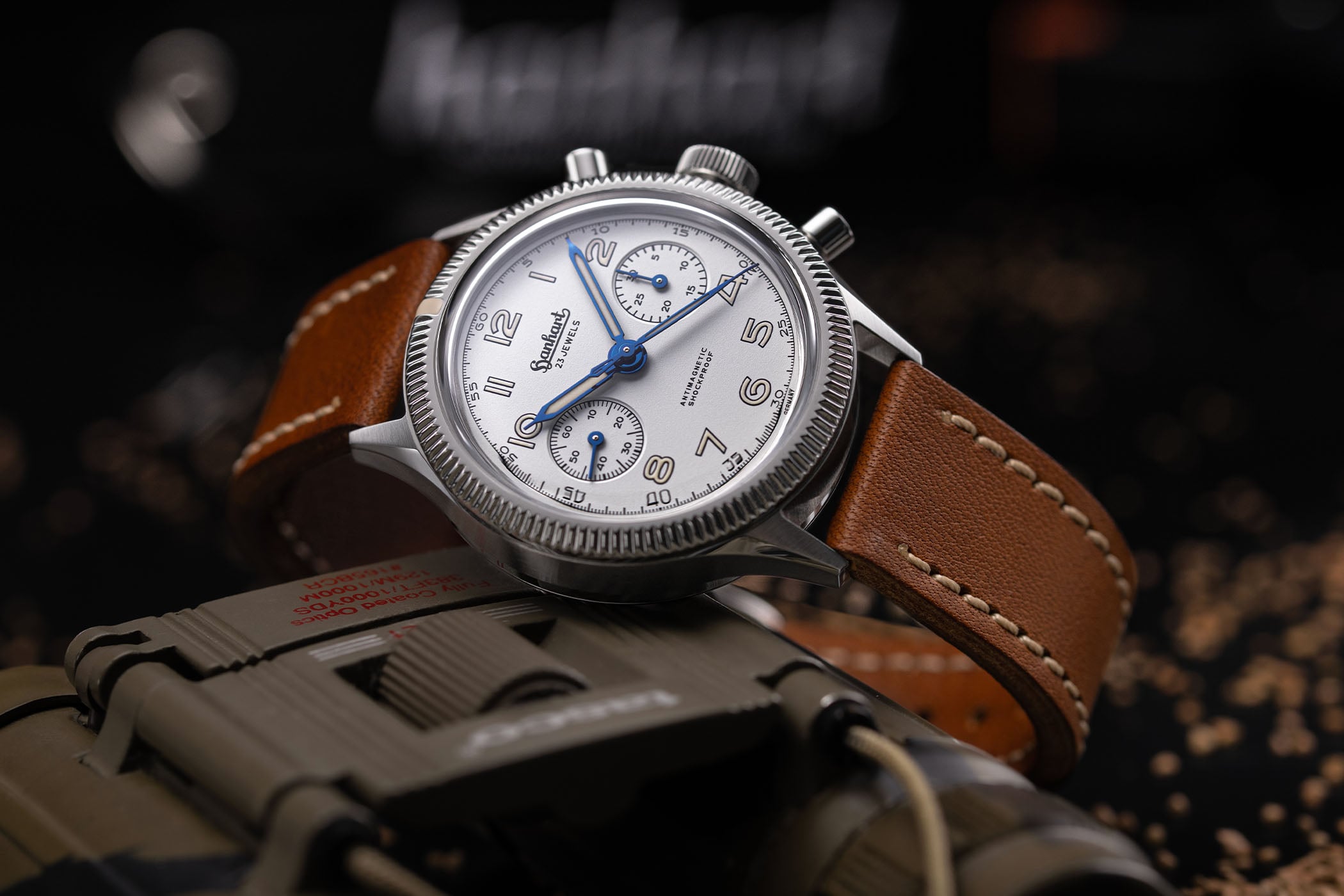 Monochrome
Hanhart’s history is tied to pilots’ chronographs, and the so-called “Moby Dick” occupies a special place in the brand’s story. Most vintage 417 chronographs came with dark dials, but a very small number were produced with white dials for civilian use. Over time, fans adopted the nickname “Moby Dick” because of their appearance and rarity. […]
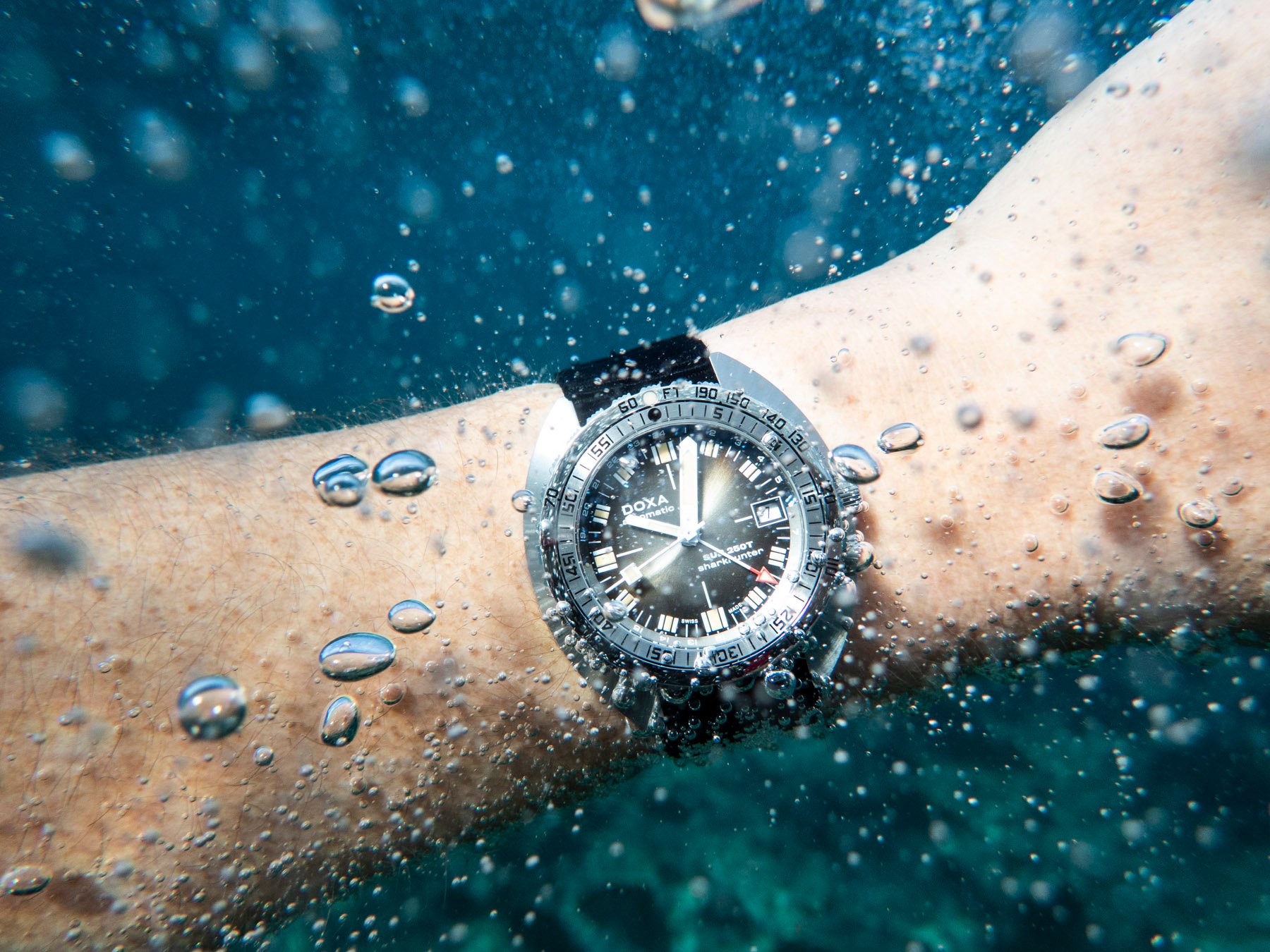 Fratello
Certain watches feel immediately familiar the moment you strap them on - not because you’ve worn them before but, rather, because their story has been written so clearly over the decades that slipping one on is like stepping into a well-loved pair of boots. That’s the sensation I had when the Doxa Sub 250T GMT […] Visit Hands-on With Doxa’s Sub 250T GMT Sharkhunter Vintage to read the full article.
 Teddy Baldassarre
Glashütte Original is a luxury watchmaker founded in 1994, in the wake of the Cold War and at the dawn of German reunification. However, it traces its roots back much further, to the mid-19th Century during the inception of German watchmaking in the eastern German state of Saxony. Here is the story of how Glashütte Original, and the horological pioneers who laid its foundation, persevered through war, social and political upheaval, and economic turmoil to become one of today's most innovative and admired watch brands, along with an introduction to each of its five 21st-Century product families. Saxon Watchmaking’s Founding Fathers The little town of Glashütte, in the Ore Mountains of the German state of Saxony, had fallen on hard times when a watchmaker from nearby Dresden named Ferdinand Adolph Lange set up a watchmaking shop there in 1845. The silver-mining industry that had sustained the region’s inhabitants, and that had given the town its name (“Glass Hut” or “Shiny Hut”), was on the decline after years of war and industrial competition from the New World. The inhabitants of the town were facing poverty and eager for new opportunities to make a living, and Lange, along with others who shared his passion for horology and entrepreneurship, were the visionaries to provide them. In cooperation with the Royal Saxon government, who had funded the venture, Adolph Lange established A. Lange & Cie. (later A. Lange & Söhne), a manufacturing hub for watchmakin...
 Teddy Baldassarre
For a category often seen as a safe harbor for demure and conservative design, the dress watch regularly delivers some of the year’s most memorable releases and 2025 was no different. In fact, we had to do things a little different here by not having any honorable mentions altogether just because all of these pieces really shone. And one of my favorite decisions from our editorial team came together for this story when we decided to award two watches for their awe-inspiring executions of a gold Milanese bracelet. So, without further ado, here are our favorite dress watches of 2025: [toc-section heading="Raymond Weil Toccata Heritage"] Raymond Weil’s Toccata Heritage Seconde/Seconde edition is the fruits of a collaboration between the independent Swiss watchmaker and designer Romaric Andre, known for his playful customization of watch dials. This latest iteration of the brand’s oval-cased dress watch - its name drawn from the world of classical music, a passion of the brand’s eponymous founder - is described as a “horological Simon Says:” its dial is divided into two different shades of anthracite gray, with Dauphine hands in the center, each inscribed with fashion-forward “dress codes” on how to wear the watch. The right sector, with polished indexes, has vertically oriented guidelines on where the wearer’s shirt cuff should land in three different scenarios (business casual, formal, and semi-formal, plus the “sweet spot” halfway divider), while t...
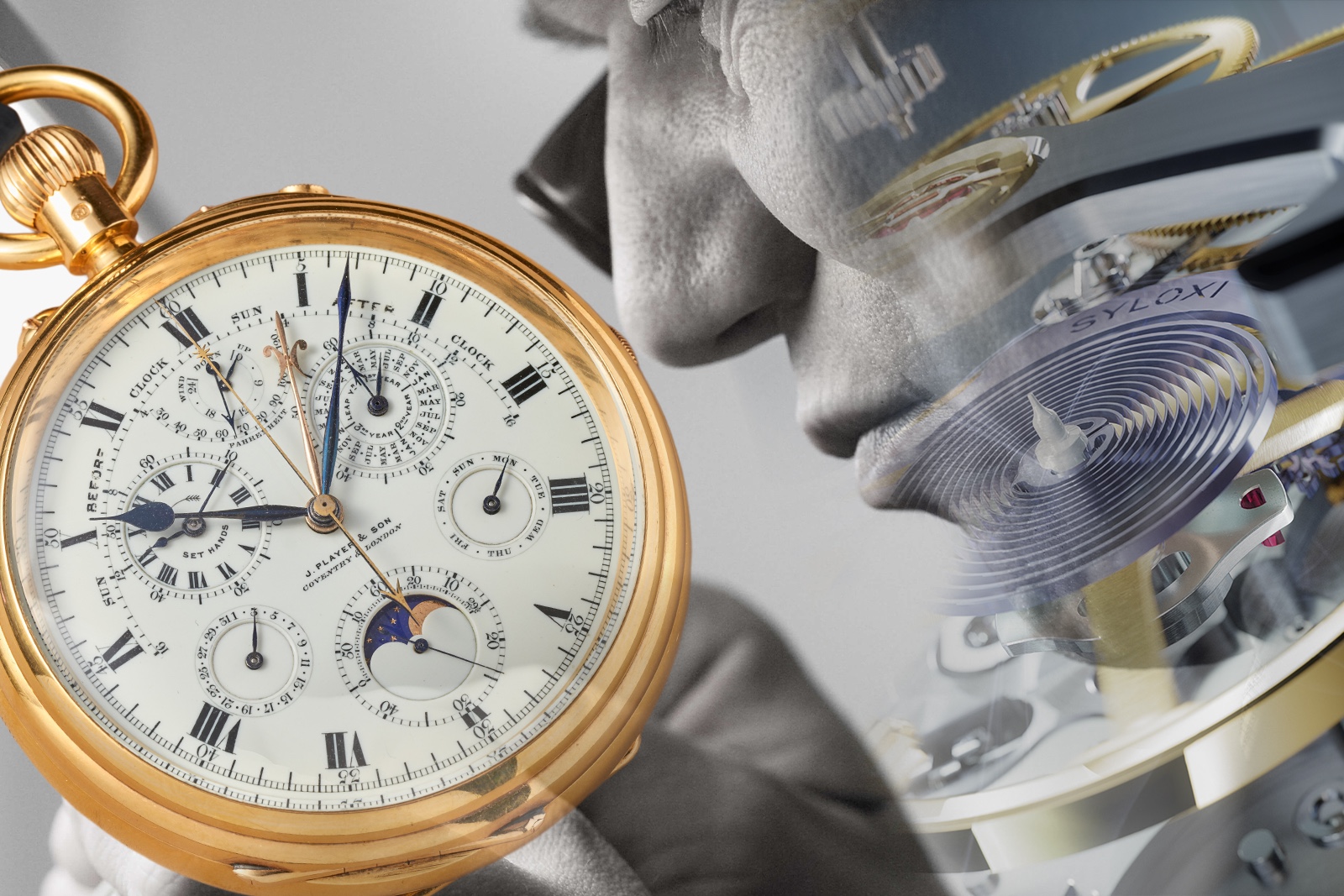 SJX Watches
Our 2025 coverage included original research and in-depth stories including CEO interviews, engineering explainers, behind-the-scenes manufacture visits, and hands-on features exploring the latest developments in modern horology. We’d like to thank our readers for their engagement and support, which continue to shape and sustain our work. Our founder SJX provided an in-depth study of the Breguet Sympathique No. 1, with exclusive insights from its creator François-Paul Journe. The story is notable not only for its technical reconstruction of the mechanism but also for clarifying how the Sympathique informed Journe’s earliest thinking as a constructor before launching his namesake brand. SJX also spent time with the people leading the industry. Interviews with Kari Voutilainen, Gregory Kissling, Ilaria Resta, and Marc Michel-Amadry offered unusually direct insight into how each manufacture is approaching product development, heritage, and shifting collector behaviour. That research-driven approach continued across several technical features, including his hands-on review of the Rolex Land-Dweller, the most consequential mainstream release of 2025. His analysis unpacked both the engineering decisions behind the cal. 7135 and the strategic implications of Rolex introducing a new collection. Finally his analysis of the record-breaking Patek Philippe ref. 1518 in steel and reporting from the major auctions traced the evolving tastes and appetites of a tightening pool of top...
 Time+Tide
Andrew & Niels Eggerding, CEO of Frederique Constant, tell the story of how the Onyx Moon came together.The post Frederique Constant’s CEO shares how our Time+Tide Highlife Onyx Moon Limited Edition came together appeared first on Time+Tide Watches.
 Teddy Baldassarre
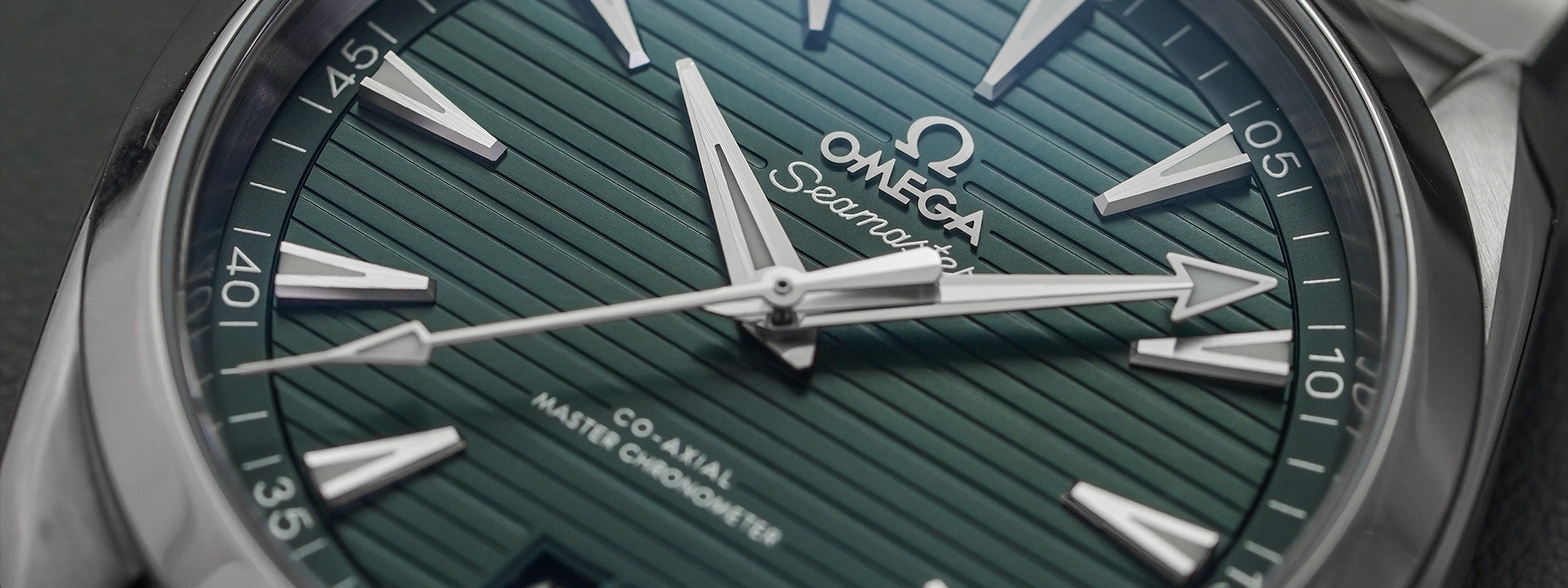
What is a Co-Axial Movement? More specifically, what is the now-famous Co-Axial Escapement that has become a standard feature on most all Omega watches? In short, it's both a radical concept by one of the modern era's most revered watchmaking geniuses and the culmination of a Swiss watch brand's longtime dedication to improving watchmaking accuracy. Here is the story of Omega's co-axial movements. [toc-section heading="Early Omega Movements"] While it is best known these days for its signature watch models, like the Speedmaster “Moonwatch” and the James Bond-worn Seamaster, Omega has also been a pioneer in movement-making since nearly the beginning. The company was founded in 1848 by 23-year-old watchmaker Louis Brandt (with family, above) in the Swiss village of La Chaux-de-Fonds. Originally called La Genérale Watch Company, and eventually renamed Louis Brandt et Fils after Brandt’s sons joined the business, it originally produced key-wound pocket watches from parts supplied by local artisans, After the growing company moved from La Chaux-de-Fonds to the more bustling town of Bienne, in the Swiss Canton of Bern, it pioneered a series of industrial watchmaking techniques and also began making its own in-house movements. The first one, called the Labrador, launched in 1885 in a now-legendary series of pocket watches. Nearly a decade later, in 1894, came the company’s chef d’oeuvre, the 19-ligne Omega Caliber, which was notable at the time for its enviable acc...
 Time+Tide
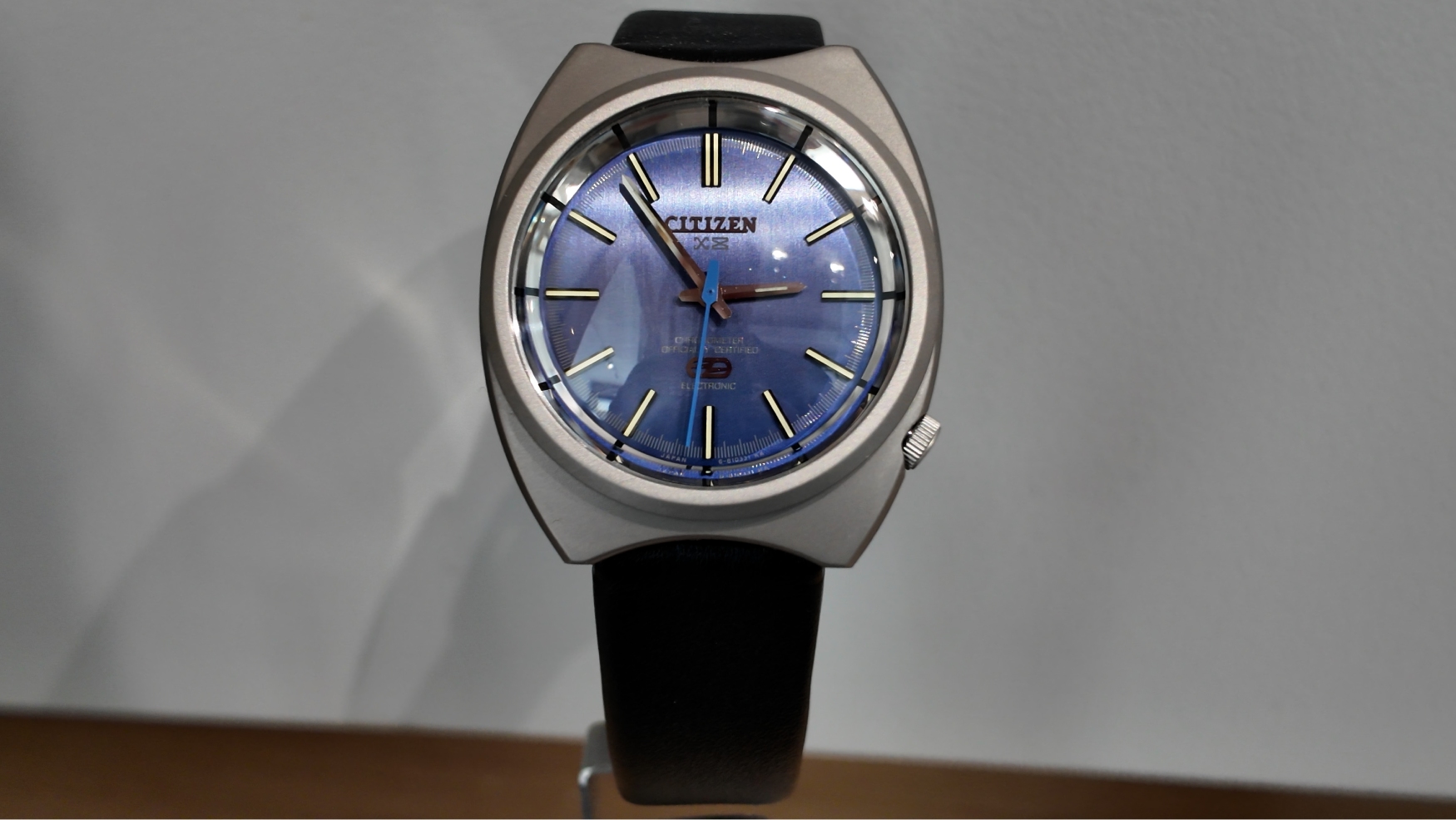
There is a long story of Citizen and titanium: it started 55 years ago and is still being told today through new releases and this exhibition. The post Citizen is putting its mastery in titanium on display for everyone to see appeared first on Time+Tide Watches.
 Teddy Baldassarre
If the modern success story of Tudor can be attributed to the launch of one distinct collection, it is, undoubtedly, the Black Bay. Like any intelligent watch brand, Tudor has taken that success and run with it full speed ahead, riffing and launching distinct extensions and sub-collections within the Black Bay universe that, at this point, are designed to meet the wants and needs of just about every enthusiast out there. Today, I’m going to be putting two distinct lines within the Black Bay family head-to-head that are, to the untrained eye, quite similar, but take on the vintage-revival theme in two distinct directions: the Black Bay 54 and the Black Bay 58. Down below, I’ll get into the nitty-gritty of what these two members of the larger Black Bay family have in common, and the intricacies that, together, have profound effects on what they deliver. After our short and sweet history lesson, I’ll be diving right into the key details of the Tudor Black Bay 54 vs. 58, all while interjecting my own musings and philosophies on how to approach these subtle differences. [toc-section heading="Tudor Black Bay Context"] As always, I’m going to keep the history lesson as concise here as I can, but if you have a bit more time, I’d recommend checking out this complete guide to the Tudor Black Bay. Anywho, the story of the modern Black Bay begins at Baselworld in 2012 (initially dubbed the “Heritage Black Bay”). After years of struggling in the shadows of the Crown a...
 WatchAdvice
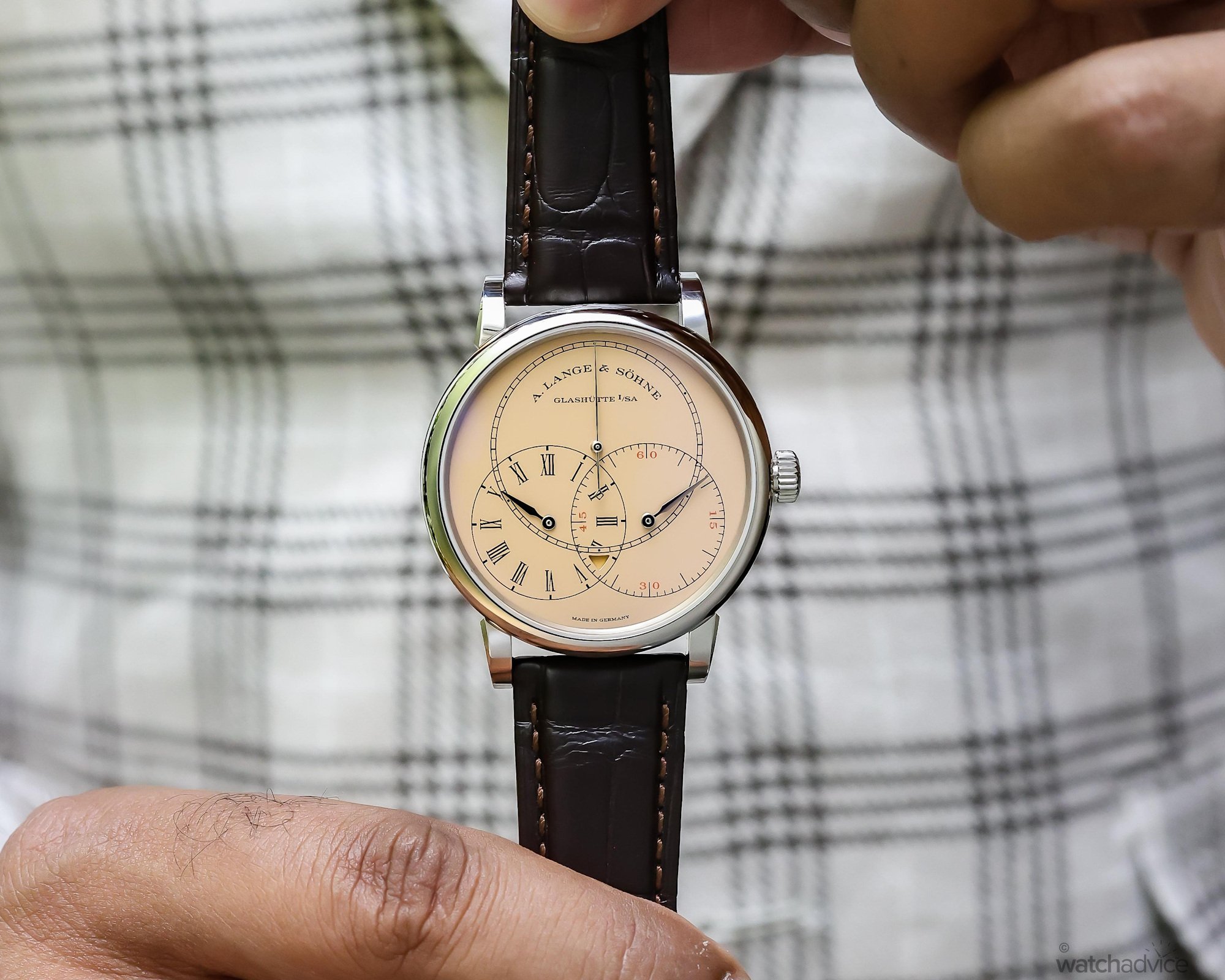
The Richard Lange Jumping Seconds isn’t about showing off, it’s about showing how precise watchmaking can get. Every jump of the seconds hand tells a story of engineering perfection and timeless design. It’s the kind of watch that reminds you why A. Lange & Söhne is one of the brands that sits at the top of the horological world. What We Love Exceptional craftsmanship as always from A. Lange & Söhne. Regulator display offers a unique way of telling time. Watching the seconds hand jump precisely each second is something truly special, especially for a fully mechanical timepiece. The finishing on both the case and movement is second to none, showcasing A. Lange & Söhne’s dedication to perfection. What We Don’t The case thickness remains on the larger side; even with the added function, it could be refined further. Reading the time at a quick glance can be a little tricky due to the regulator-style layout. The watch’s refined, dressy nature means it’s not the most versatile piece for everyday or casual wear. Overall Rating: 8.8/10 Value for money: 8.5/10 Wearability: 8.5/10 Design: 9/10 Build quality: 9/10 From the moment you strap on the A. Lange & Söhne Richard Lange Jumping Seconds, you can immediately tell that this is no ordinary dress watch, but rather a refined instrument of time. Straight away you can see the level of precision, and the idea that every element of this timepiece as a role and purpose. In the world of horology, where high complications...
 SJX Watches
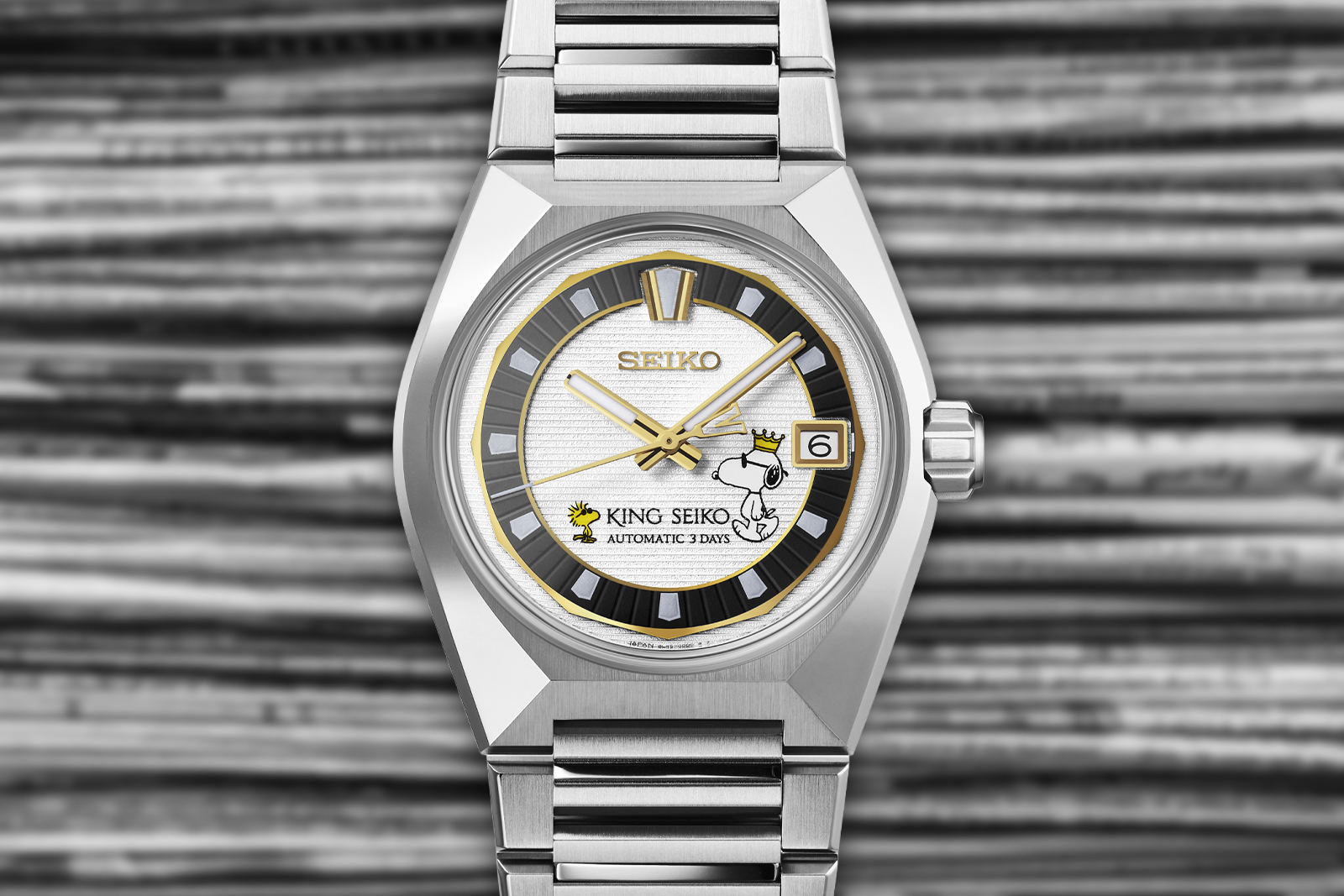
Seiko celebrates 75 years of the Peanuts with a King Seiko Vanac Peanuts 75th Anniversary SDKV011, with everyone’s favourite Beagle on a newspaper-inspired dial. Limited to only 150 pieces for Japan only, foreigners will need to get creative if they want one. Initial Thoughts Peanuts is huge in Japan – or more accurately, Snoopy is. Grandberry Park in Tokyo plays host to a three-story tall Snoopy museum that receives several times as many yearly visitors as the Charles M. Schulz Museum in California. It should be no surprise then that the new Vanac is for the Japanese market only, which is unfortunate as it is an appealing watch for a relatively reasonable price. While a bit late to the integrated bracelet sports watch craze since it was only launched earlier this year, the Vanac is competitive in its segment thanks to standout case finishing and a highly competent movement. The new edition retains all the appeal of the standard model; the two-tone dial with gilt accents and Peanuts characters is subtle and a little retro in keeping with the design’s origins. A Snoopified King Seiko King Seiko is a Seiko sub-brand positioned just below the better-known Grand Seiko. The marque emerged from a multi-decade hibernation in 2021. Seiko launched original King Seiko Vanac line during the early 1970s, with sharp angular cases, colourful iridescent dials and faceted crystals – but the latter is missing on the modern Vanac. That absence stings as a faceted crystal would be an...
 Worn & Wound
Nestled in a small valley in the Jura Mountains, Hölstein is a typical Swiss town that has endured for centuries. At its center, a pastel pink factory has seen many of them. Its story began in 1904 when Paul Cattin and Georges Christian purchased the closed Lohner & Co watch factory. Searching for a name, they settled on a nearby brook - Oris. It turned out to be a winning formula. By 1911, Oris was the largest employer in Hölstein with 300 workers and two additional factories in Holderbank and Como. They introduced staff housing to cope with the influx of talent. Just fourteen years later they opened two additional factories, paving the way for future growth. Nestled in a small valley in the Jura Mountains, Hölstein is a typical Swiss town that has endured for centuries. At its center, a pastel pink factory has seen many of them. Its story began in 1904 when Paul Cattin and Georges Christian purchased the closed Lohner & Co watch factory. Searching for a name, they settled on a nearby brook - Oris. It turned out to be a winning formula. By 1911, Oris was the largest employer in Hölstein with 300 workers and two additional factories in Holderbank and Como. They introduced staff housing to cope with the influx of talent. Just fourteen years later they opened two additional factories, paving the way for future growth. The post A History and Guide to Oris appeared first on Worn & Wound.
 Teddy Baldassarre
Aside from the watch that was made legendary by Paul Newman - and which would forever, unofficially, carry the famous actor’s name - there is probably no version of the Rolex Daytona that is more coveted than the “Rainbow” models that bring a meticulously designed and eye-catchingly beautiful assortment of colorful precious stones to the bezel, case, and dial of the motorsport-inspired luxury chronograph. Here is the story behind the Rolex Daytona “Rainbow” and why it has become yet another smash hit for the Crown in the 21st Century. To start off, it’s worth answering the question, “Why is the Rolex Daytona so famous in the first place?” The model’s success story begins in 1962, when Rolex, hot on the heels of other genre-defining watch releases like the Explorer, GMT-Master, and Submariner several years earlier, became the official timekeeper of the “Great American Race,” the Daytona 500. In celebration of the partnership, the Swiss brand introduced its original “Cosmograph” racing-inspired chronograph watch the following year. The watch, notable for its tachymeter bezel and three-register dial design, adopted the name “Daytona” shortly thereafter and really took the enthusiast community by storm when actor, director, and part-time racecar driver Paul Newman began wearing one regularly. Newman became a big-screen icon in the 1970s, around the same time that auto racing took off in popularity as a spectator sport, and this confluence of...
 Monochrome
Exactly one year ago, Rolex, with the help of author Nicholas Foulkes and publisher Wallpaper, took us by surprise when releasing the first-ever Crown-authorised book, The History of the Oyster Perpetual Submariner Watch. While such initiatives have been done on multiple occasions by other brands, a historical book receiving the stamp of approval of Rolex […]
Question, suggestion, or just want to say hi? Drop a note.