Jack Heuer, the great-grandson of Heuer founder Édouard Heuer, designed the Carrera in 1963 when he was 31 years old and had just returned from a visit to the Sebring 12 Hours where he had seen drivers struggle to read their chronographs at speed. He was also fascinated by the story of the Carrera Panamericana - the border-to-border Mexican road race run 1950-1954 and shut down for being too lethal after killing multiple drivers and spectators. Heuer chose "Carrera" as a name for its associations with speed, endurance, and motorsport romance, and set out to build a chronograph that a driver could read at 250 km/h with a glance.
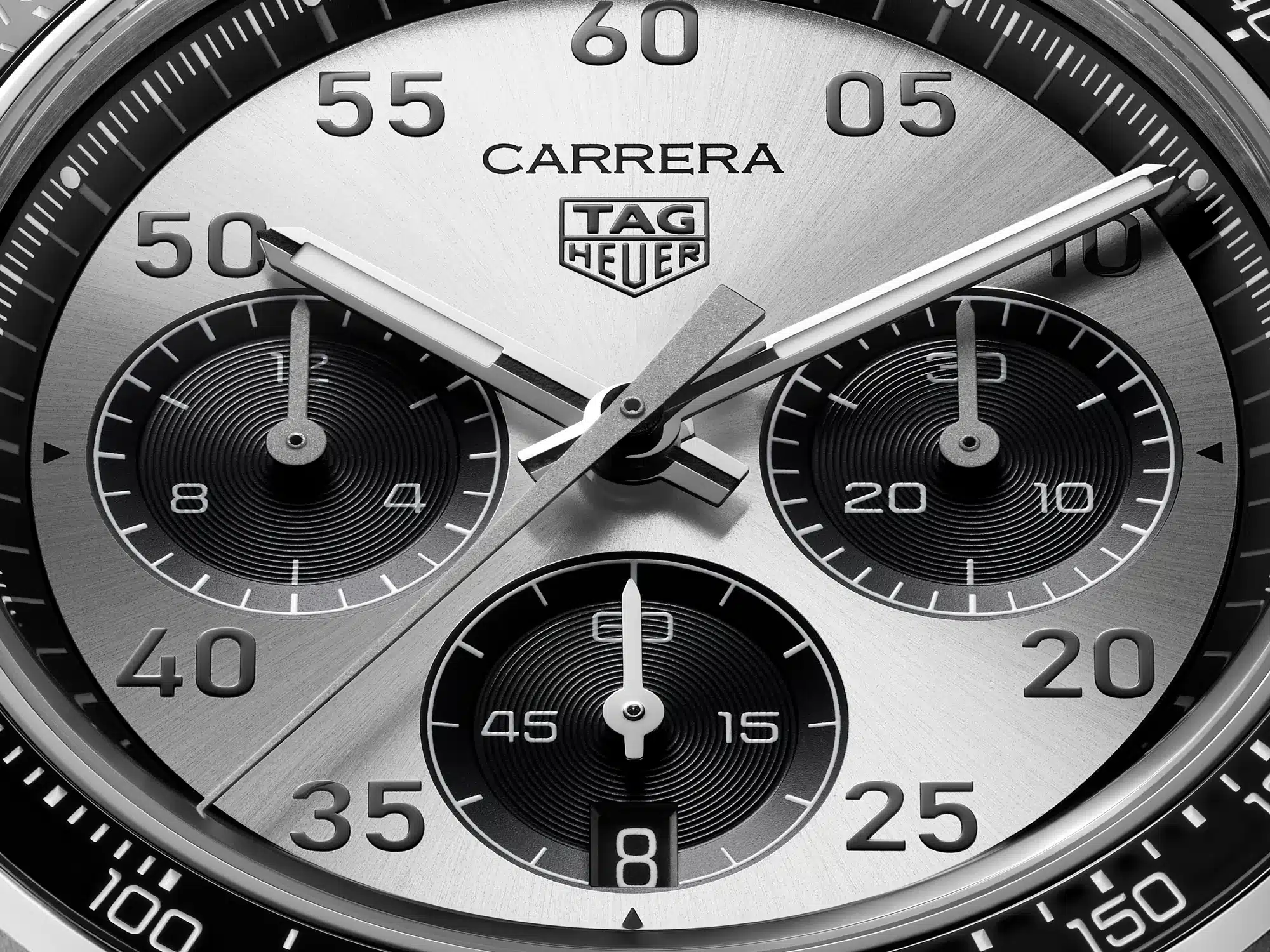
The original Reference 2447 (1963) stripped away every element a racing driver did not need. Unlike contemporaries with busy dials, crowded bezels, and tachymeter scales printed on the face, the Carrera placed the tachymeter on a thin sloping flange around the dial edge (the "tension ring"), kept the dial face clean, used two perfectly symmetrical subdials (running seconds at 9, 30-minute register at 3), and added a bold applied Heuer shield at 12. Case was 36mm, domed plexiglass crystal, manually-wound Valjoux 72 chronograph movement. The result was immediately recognised as a definitive motorsport watch and - together with the Monaco four years later - established Heuer's place in the canon.
The Carrera family grew through the 1960s and 70s with the introduction of the Calibre 11 automatic (1969, one of the three contenders for "first automatic chronograph" alongside Seiko's 6139 and Zenith's El Primero), Reference 1153 "Carrera Automatic", and the first date-equipped Carreras. The line quietly faded through the quartz crisis but was relaunched in 1996 under TAG Heuer ownership as a Valjoux 7750-based reissue, and later with the in-house Calibre 1887 (2010, a first in-house chronograph built in Switzerland after disputes over its initial Seiko origin) and Calibre Heuer 01/02.
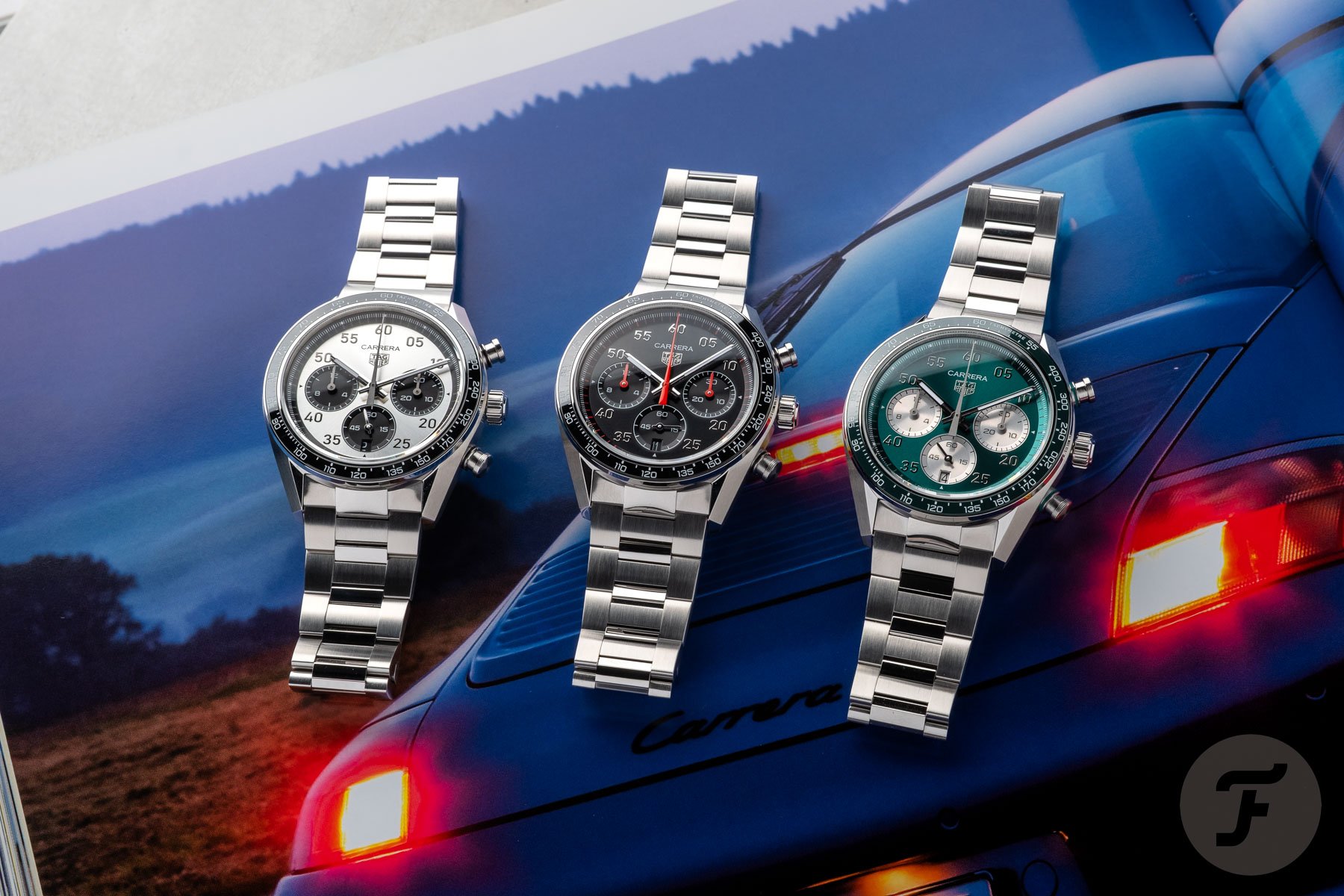
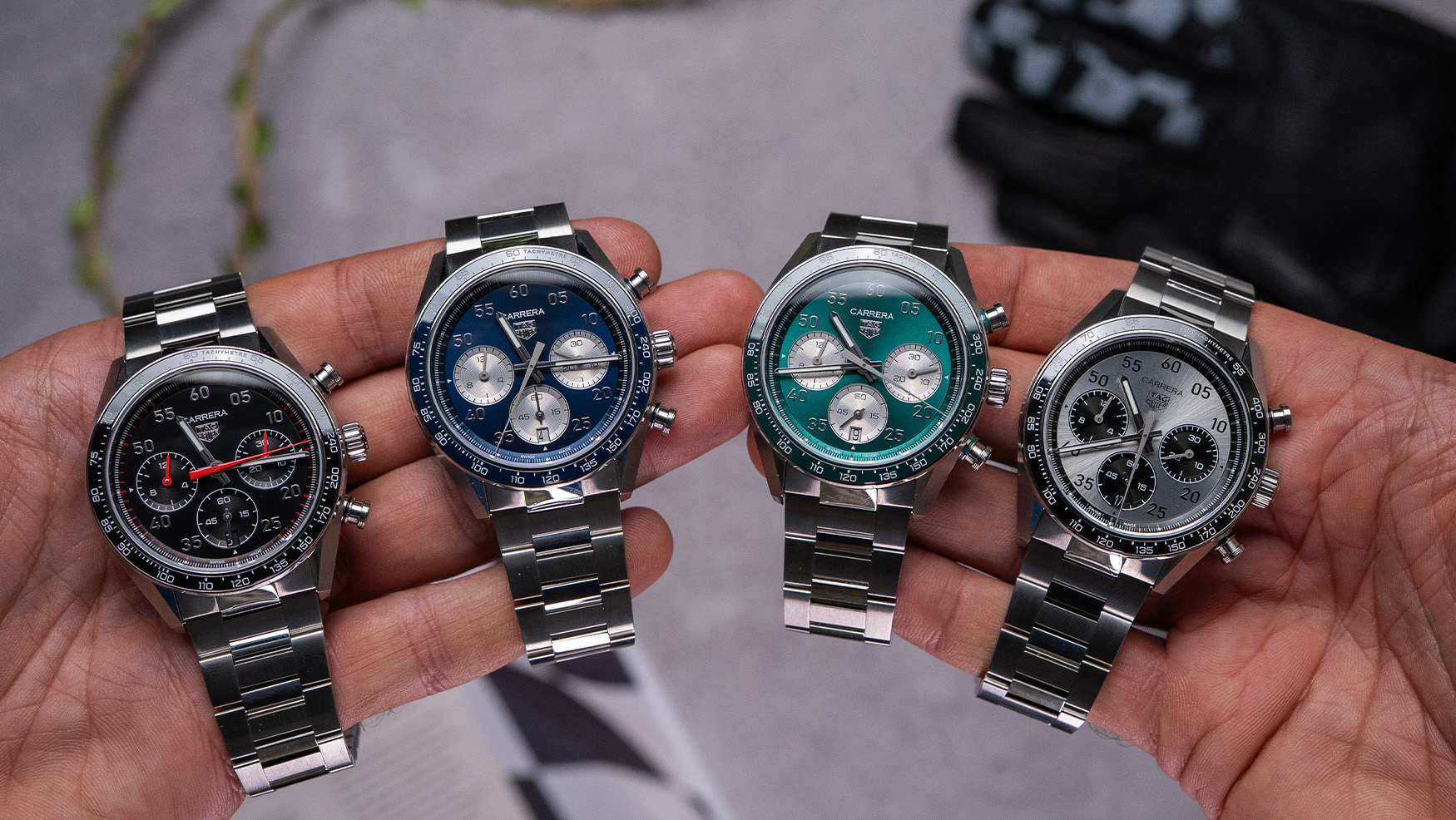
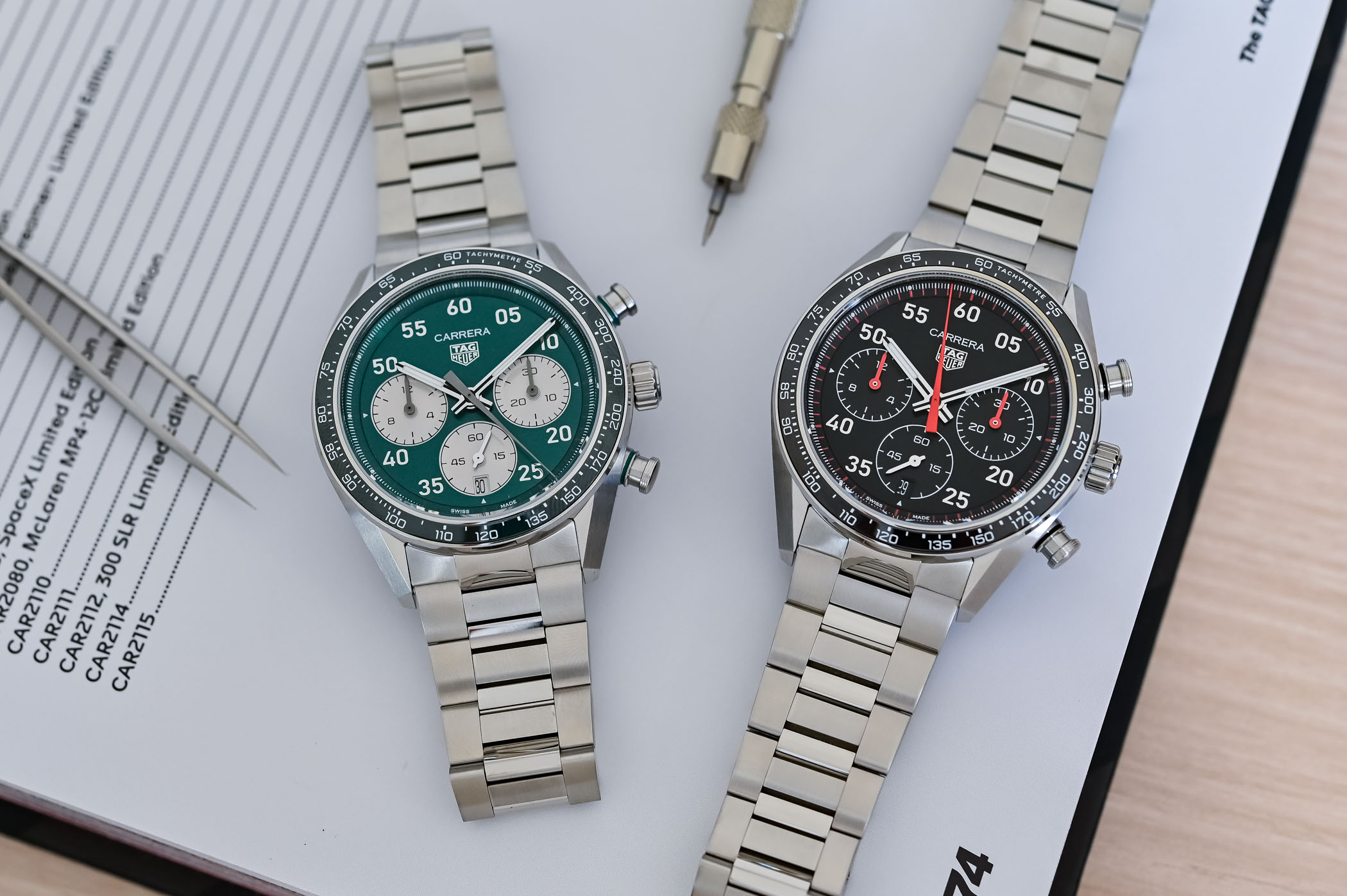
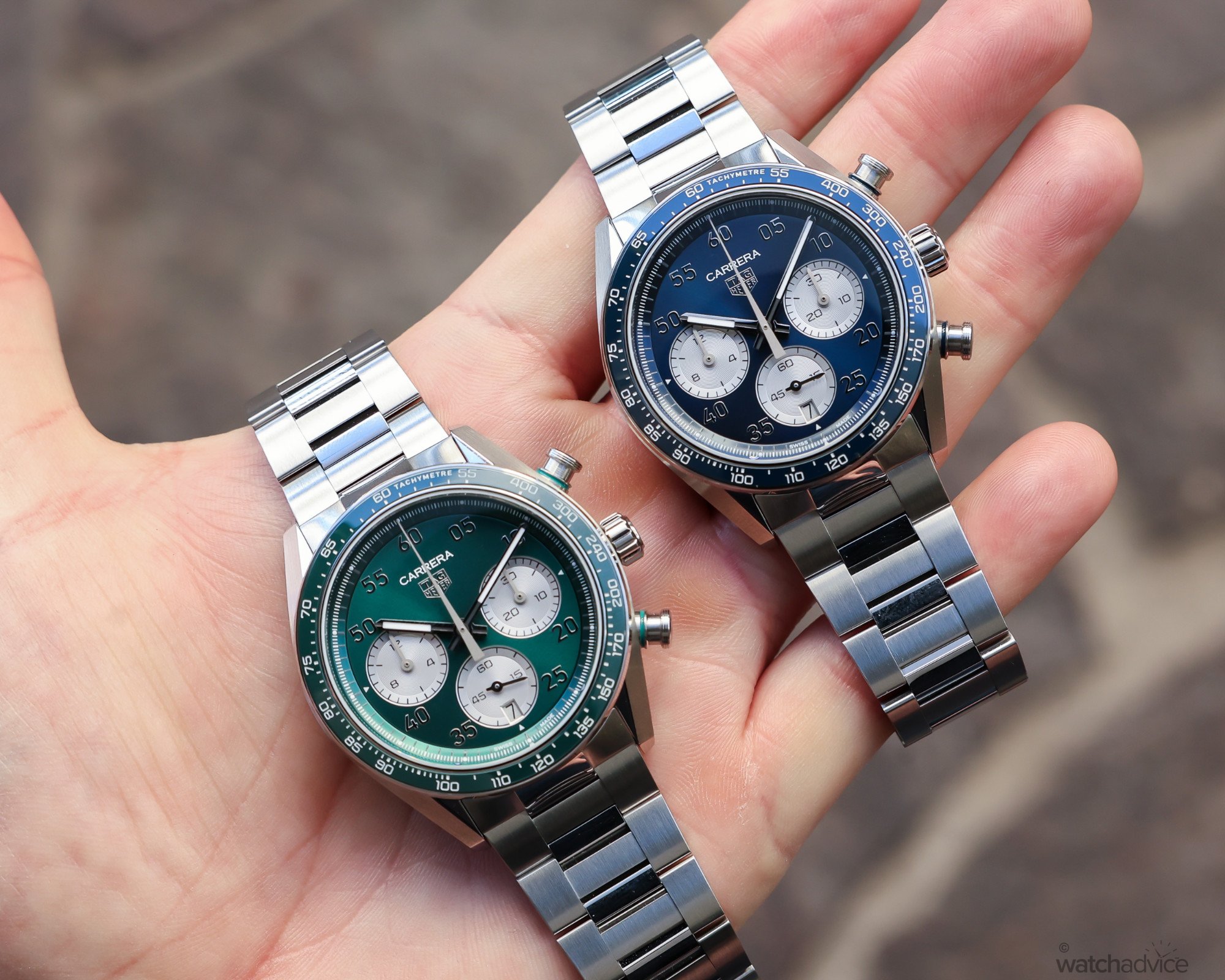
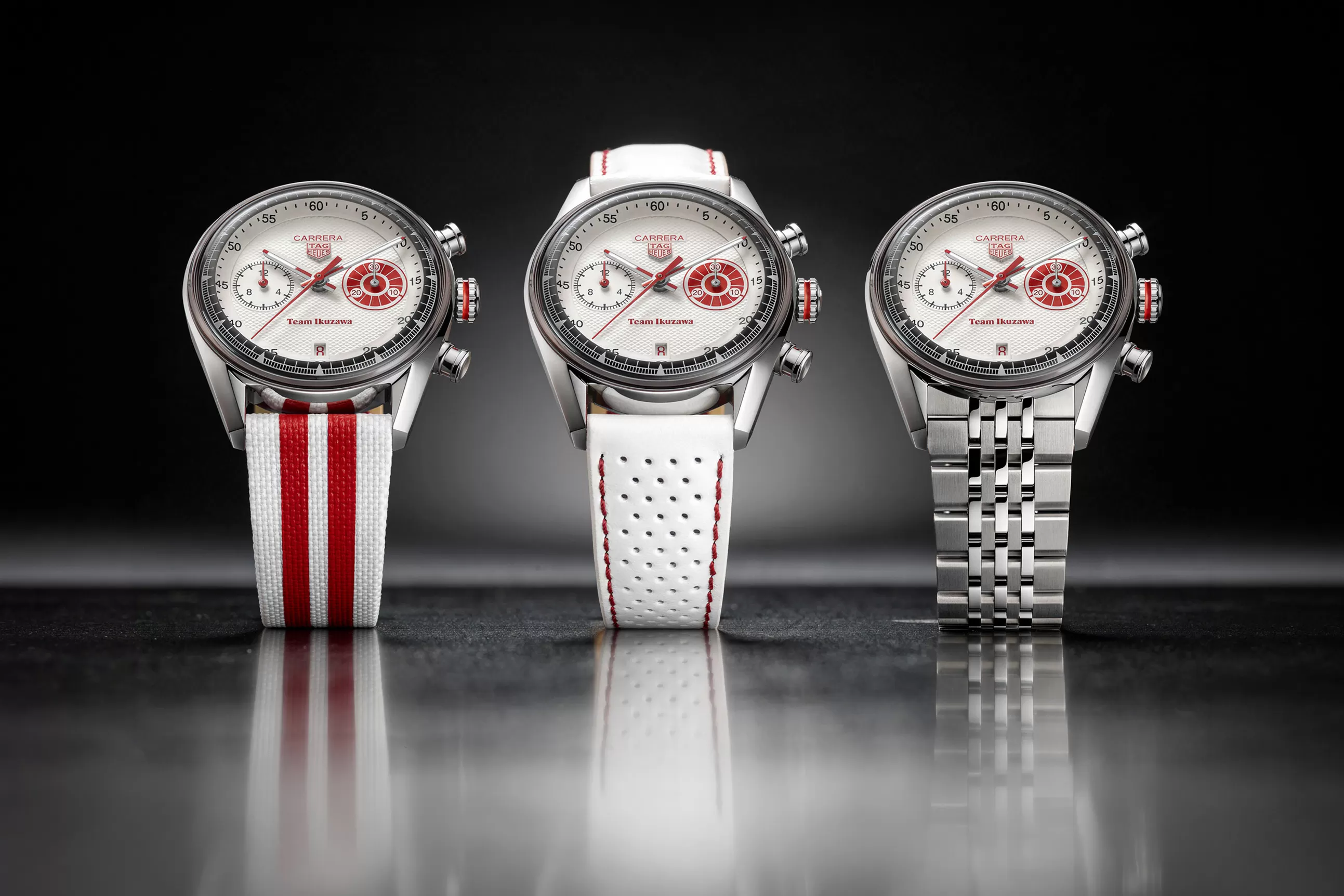
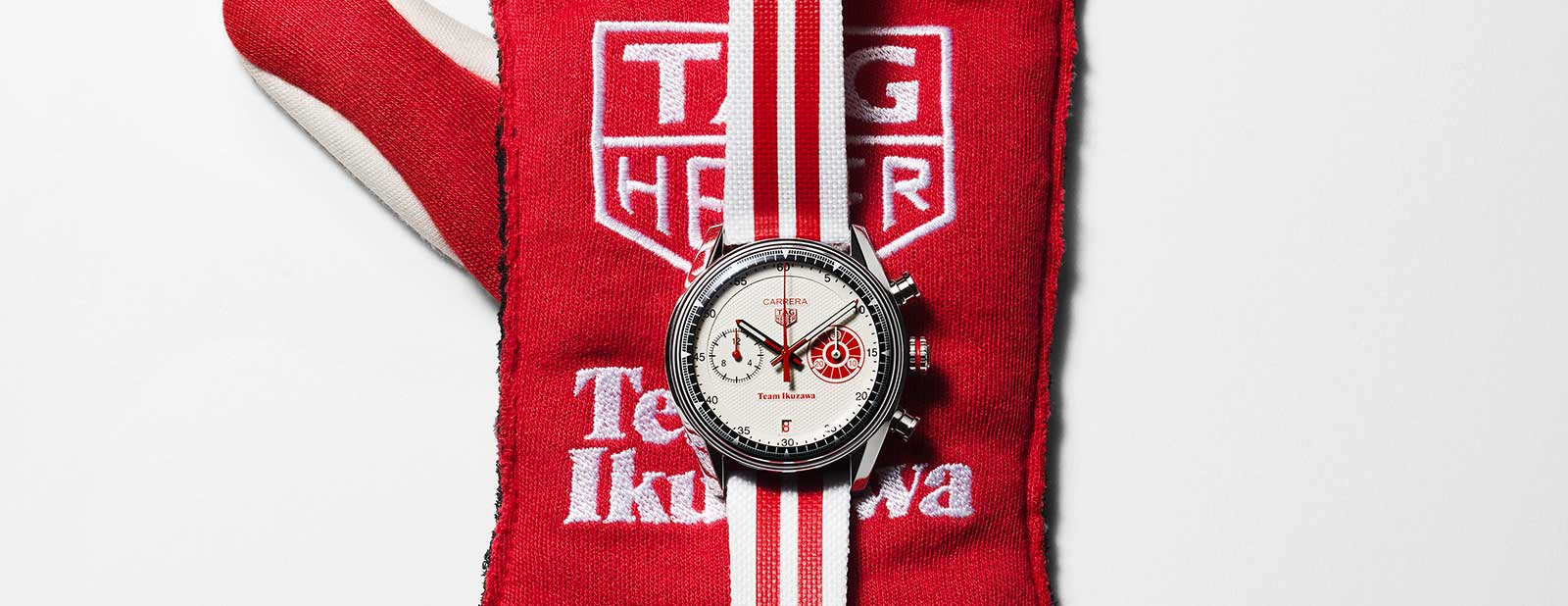
The current Carrera is defined by the 2023 Glassbox redesign - a 39mm case with a tall domed sapphire crystal that mimics the original plexiglass dome, a twin-compax 6-9 dial layout drawn directly from Ref. 2447 blueprints, and the in-house Cal. TH20-00 automatic chronograph with 80-hour power reserve. Alongside the Glassbox, the range includes the 42mm Cal. Heuer 02 chronograph, the Skipper, the Plasma Diamond Tourbillon, and a running selection of motorsport-partnership limited editions. Retail: ~$6,500 (Glassbox steel) to ~$25,000+ (Heuer 02 Tourbillon). The Carrera is the most continuously-evolved motorsport chronograph in watchmaking.



Comments
No comments yet, be the first to weigh in.