What it is
The 52000-series is the modern IWC 7-day automatic, a complete rework of the long-running 5000-series introduced in 2015. The architecture sticks with the Pellaton automatic winding system that has been an IWC signature since 1950, but rebuilds it with ceramic components for the high-wear parts (Pellaton pawl, ratchet wheel) and adds twin parallel barrels for the 168-hour (seven-day) power reserve. The 52000 is built at the IWC manufacture in Schaffhausen and is one of the very few Swiss in-house movements designed for a 7-day reserve from the ground up.
What "Pellaton winding" means
Albert Pellaton, IWC's technical director from 1944 to 1966, designed an automatic winding system in 1950 that uses an oscillating cam-and-pawl mechanism rather than the more usual reduction gears. A heart-shaped cam rotates with the rotor; two spring-loaded pawls fall into and out of the cam's notches, ratcheting a wheel that winds the mainspring. The system winds in both directions of rotor travel and is mechanically efficient, but the pawls and the ratchet wheel see hard impact loads, so they are the wear point. IWC has refined the design across decades; the 2015 52000 introduced ceramic pawls and ratchet wheel, eliminating the wear problem that dogged earlier 5000-series movements.
The variants in the family
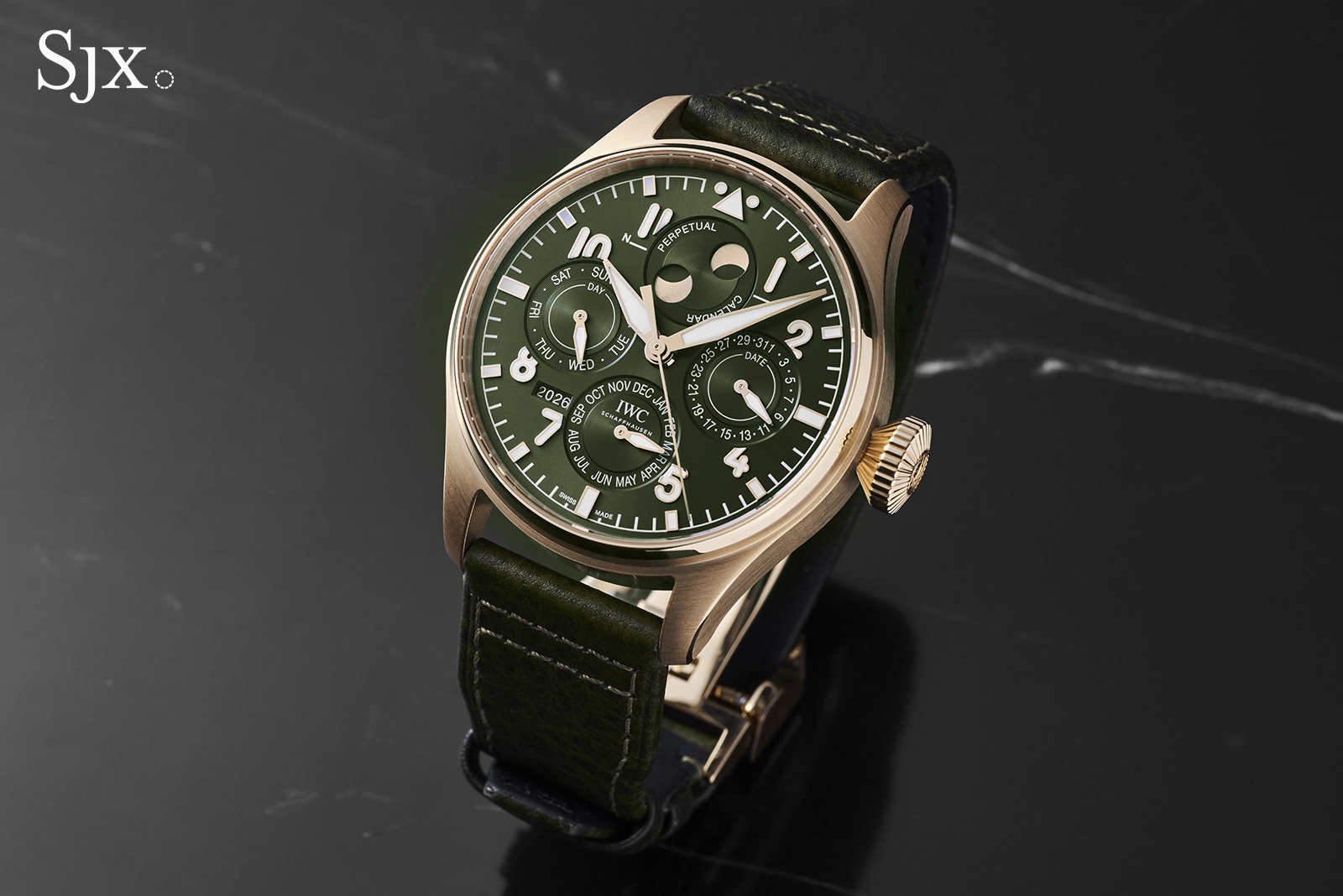
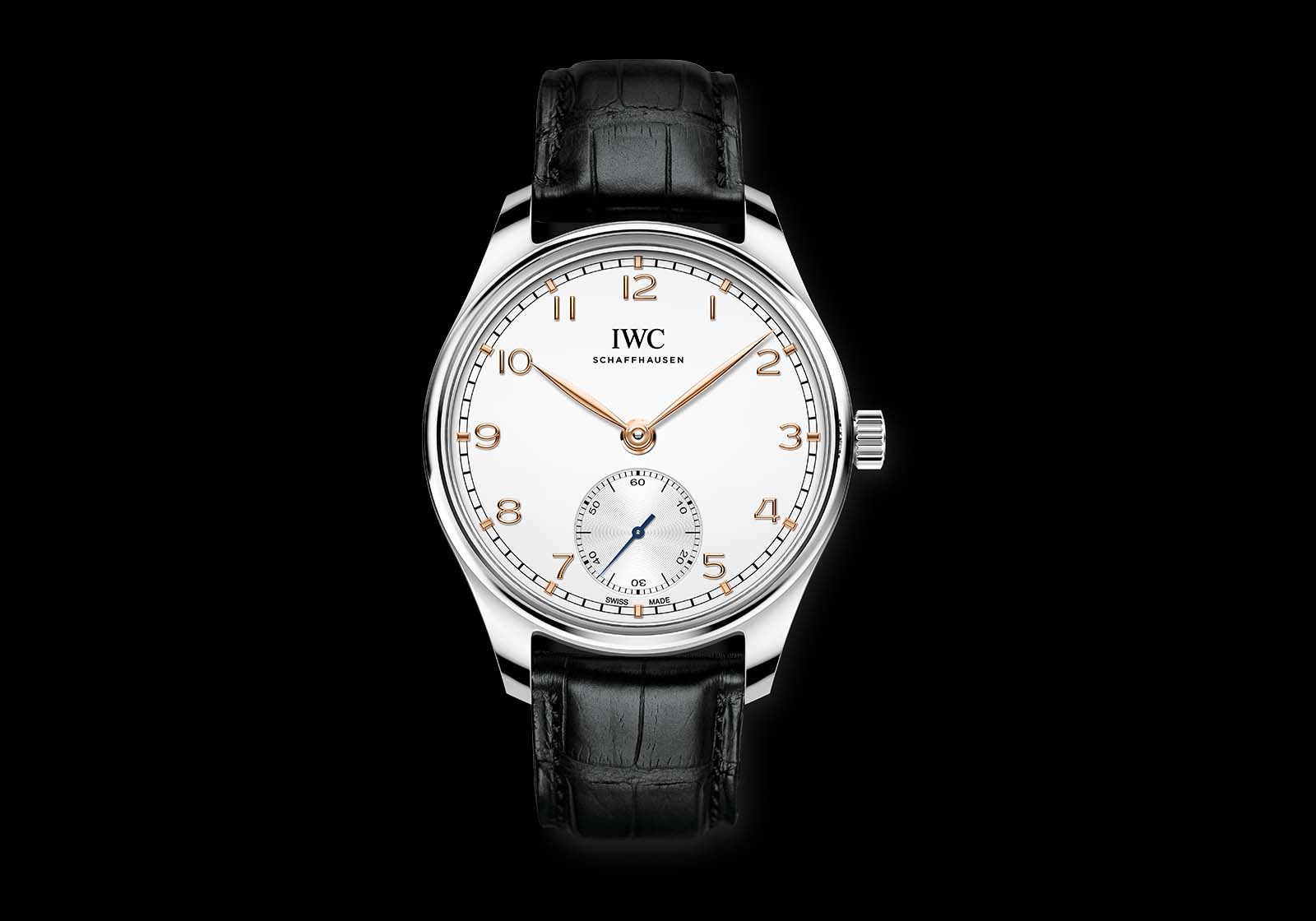
Most of the family share the base architecture and differ in indication. Cal. 52010: time + date + power-reserve indicator (the standard Portugieser Automatic 7 Days). Cal. 52110: same as 52010 with no power-reserve display (used in Big Pilot 46 mm). Cal. 52615: with perpetual calendar module + double moonphase (Portugieser Perpetual Calendar 44 mm). Cal. 52850: with annual calendar. Cal. 51011 (older, but related): used in the 5000-series Big Pilots. The 52000 base also appears in Spitfire 43, Portugieser Yacht Club, and various Portuguese Hand-Wound (where the rotor is removed for the manual variants).
How it compares
For 7-day automatics in the modern Swiss market, the 52000 sits in a small club. Panerai P.2002 / P.5000: 8-day hand-wound (not automatic). Lange Saxonia Up/Down: 72 hours (not 7 days). JLC Cal. 945 (Master Eight Days): 192 h hand-wound. Patek 240 PS IRM: 48 hours. Vacheron Constantin 4400: 65 hours hand-wound. The IWC 52000 is the modern reference for "automatic + 7-day reserve" in a single package; almost all other 7+ day calibers are hand-wound. The trade-off is movement size: the 52000 is 37.8 mm in diameter, requiring large cases (typically 43-46 mm). For small-case dress watches IWC uses smaller calibers (e.g., the 89000-series chronograph).
Service notes
The 52000 services well at IWC service centres: USD 1,200-1,800 for a base service (52010), USD 2,500+ for the perpetual calendar variants. Recommended interval: 10 years. The ceramic Pellaton components have largely eliminated the historic wear pattern of the 5000-series; 10-year service intervals are realistic. Independent service is uncommon: the Pellaton parts are bespoke, not aftermarket-sourceable. IWC's service network operates from Schaffhausen with regional centres; turnaround for a 7-day caliber is typically 6-12 weeks.


Comments
No comments yet, be the first to weigh in.