After the 62MAS, before the 6309
The first Seiko dive watch was the 62MAS ref. 6217 in 1965, a 150 m diver that established the brand's entry into the category. In 1968 Seiko launched the second generation, the 6105 family, with a 150 m water rating (later 150 m, sometimes marked "Proof" or "Diver's 150m" on the dial). The 6105 is widely considered the prototype of the modern Seiko diver: cushion case, single-crown layout, 60-minute bezel, and the unmistakable Seiko dive-watch silhouette that has continued for fifty years.
The "Captain Willard" reference
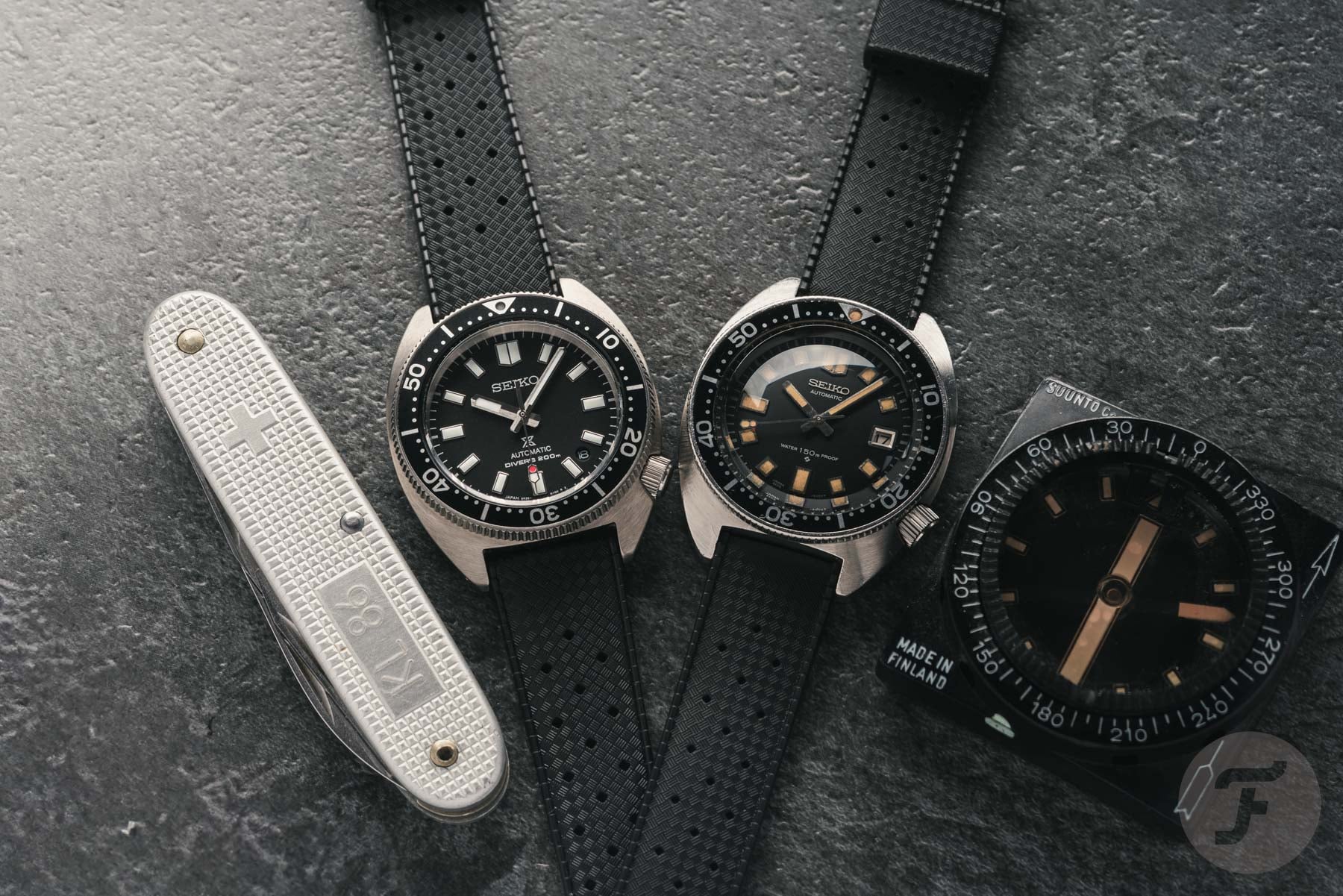
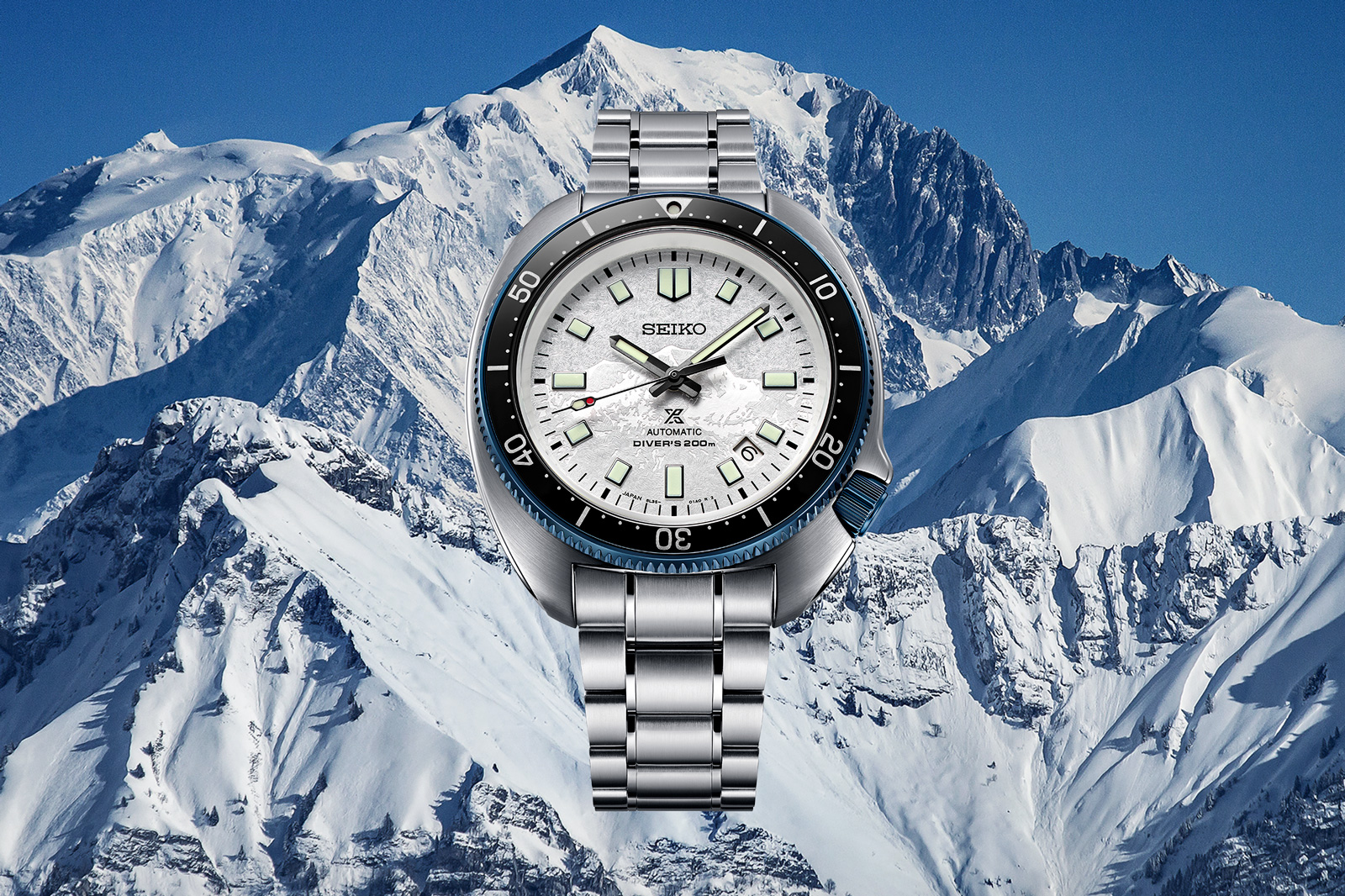
The 6105-8110 (and the visually identical 6105-8119) became known as the "Captain Willard" after Martin Sheen wore one as Captain Benjamin L. Willard in Francis Ford Coppola's Apocalypse Now (1979). The dial is matte black with rectangular indices, the case is the asymmetric cushion shape that protects the crown at 4 o'clock, and the watch was reportedly issued to U.S. military personnel deployed in Vietnam. The Captain Willard reference is now a cult classic and Seiko has reissued the design multiple times: the 2020 SLA033 (limited Prospex), the SPB151 (Seiko 5 Sports), and the 2022 SLA049 (LE).
Mechanical character
The 6105 is mechanically simple: 17 jewels, no hacking, no manual wind (you have to shake or wear the watch to start it), 21,600 vph, central seconds, date at 3. This is intentionally modest construction; the 6105 is the dive-tool half of the Seiko movement family, distinct from the higher-grade Grand Seiko movements of the same era. What it lacks in features it makes up in robustness: 6105 movements regularly survive 50+ years of intermittent service and still keep workable time. Service is straightforward at any vintage Seiko specialist.
Why it matters in Seiko history
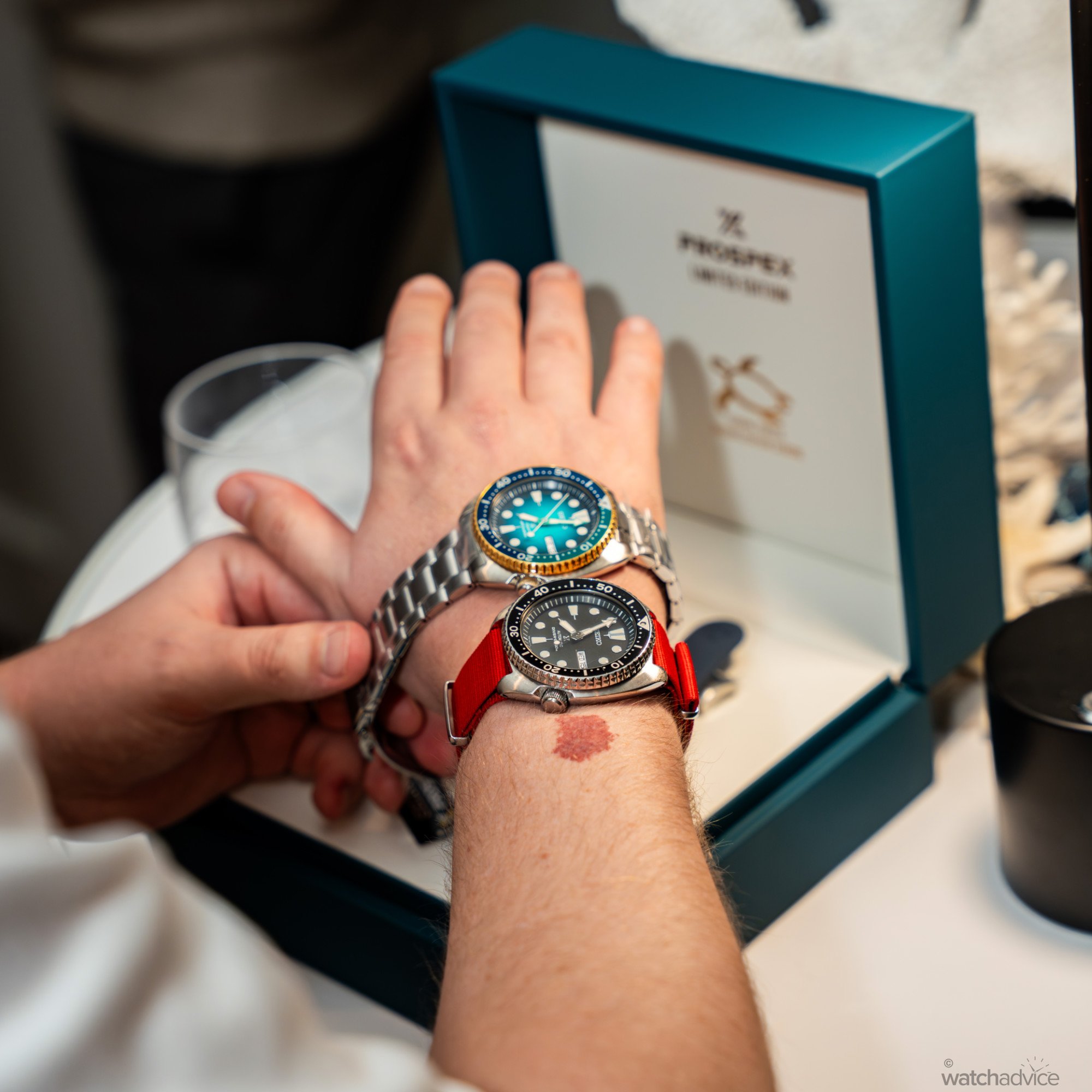
The 6105 family established the design language for every Seiko diver since. The cushion case, the single-crown 4-o'clock layout, the matte black dial with luminous bar indices, the 60-minute bezel: all of this is 6105 vocabulary. When Seiko launched the 6309-704x "Turtle" in 1977 (replacing the 6105), it kept the same case shape; the modern SRP777 / SRPE05 "Turtle" reissues directly cite the 6309 lineage. The 6105 is the seed of the entire Prospex collection.
Vintage market
A clean original 6105-8000 (1968-1972, the simpler "rounder" case) trades on the secondary market at USD 2,000-3,500; a clean 6105-8110 / 8119 "Captain Willard" (1972-1977, the asymmetric cushion case) at USD 2,500-4,500, with provenance and condition pushing higher. Service is essential for any vintage example. The 6105 is one of the most accessible "famous diver" entry points for collectors who want a piece of dive-watch history without paying Tudor 7016 or Rolex 5513 prices.


Comments
No comments yet, be the first to weigh in.