
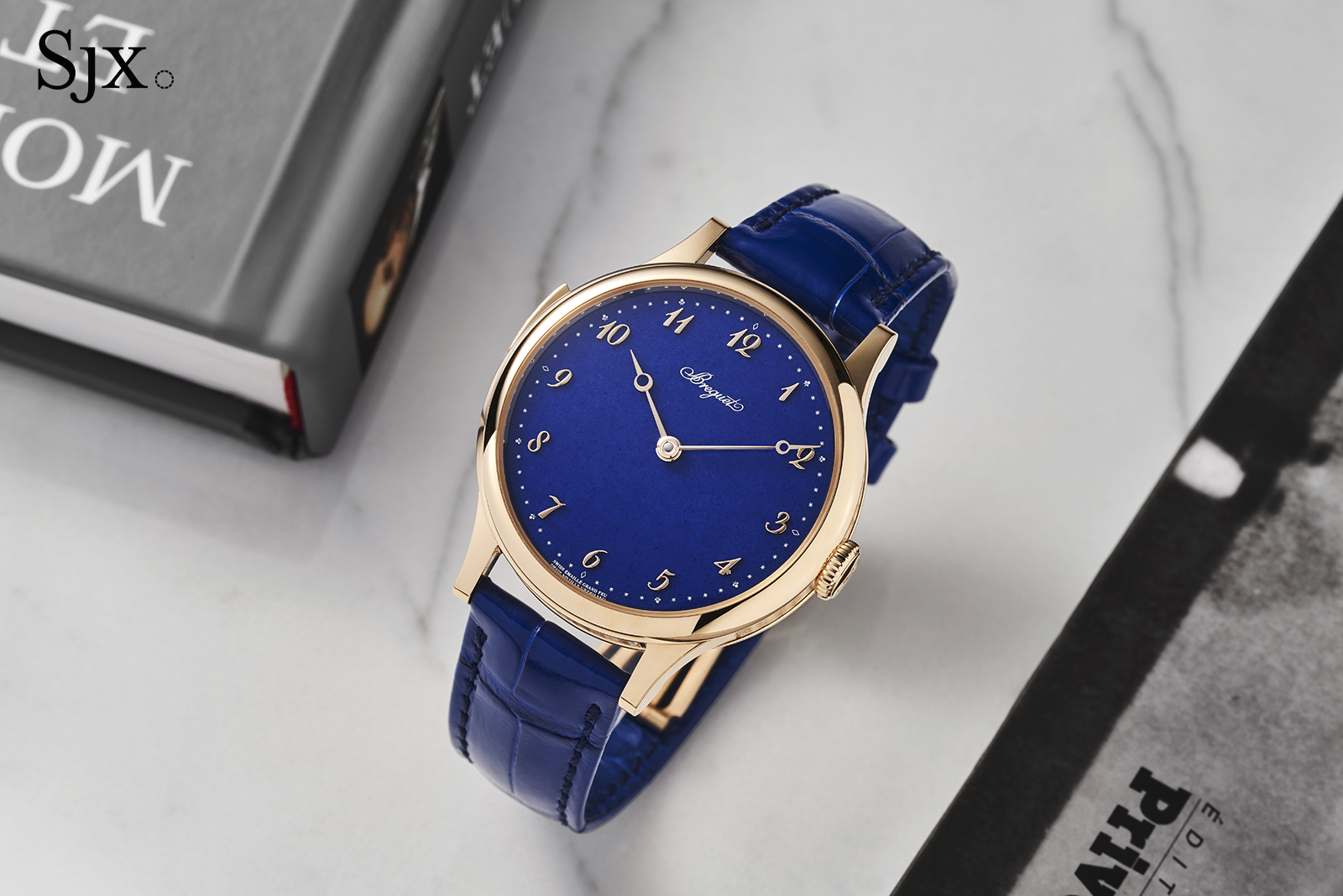
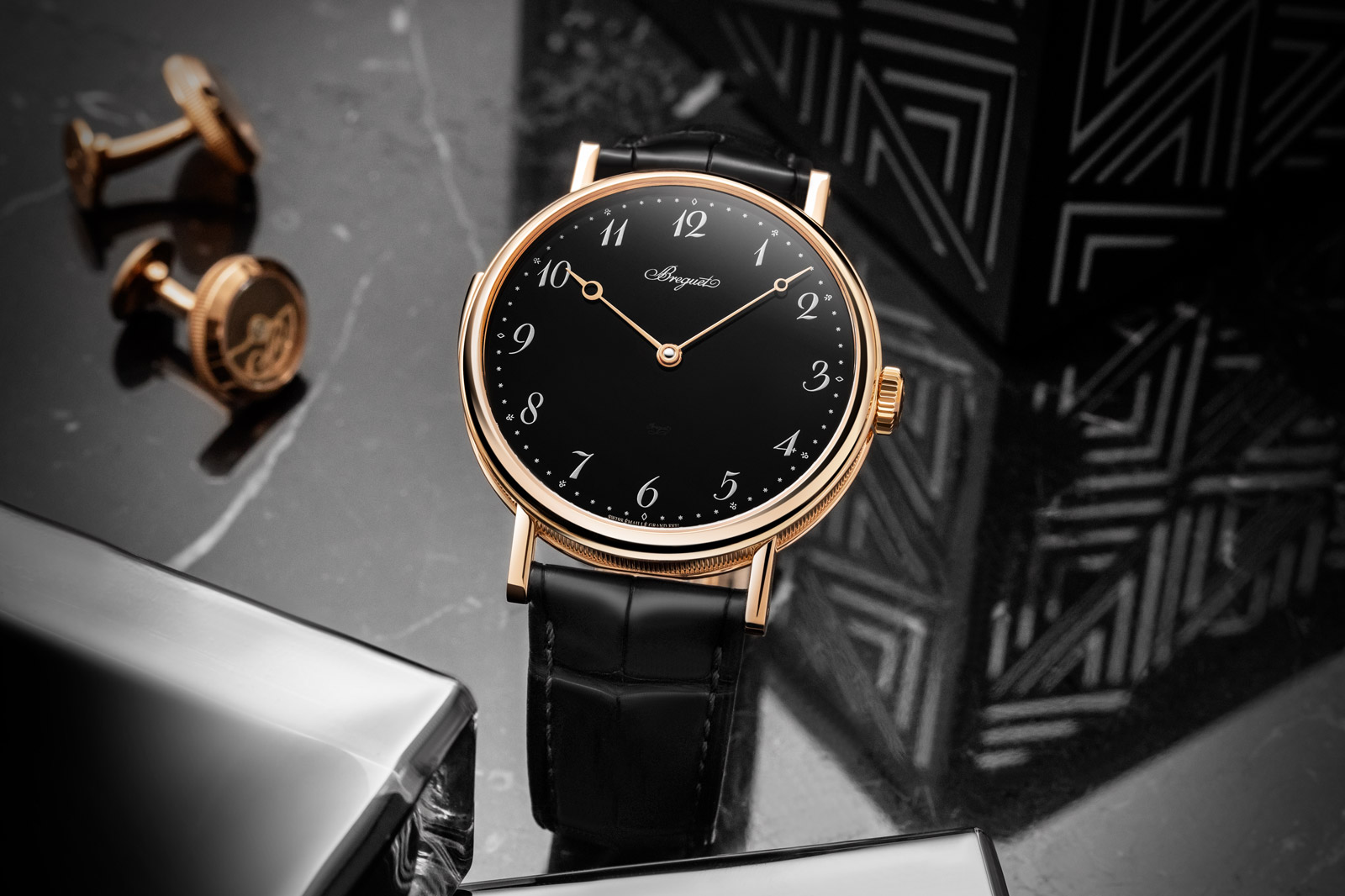
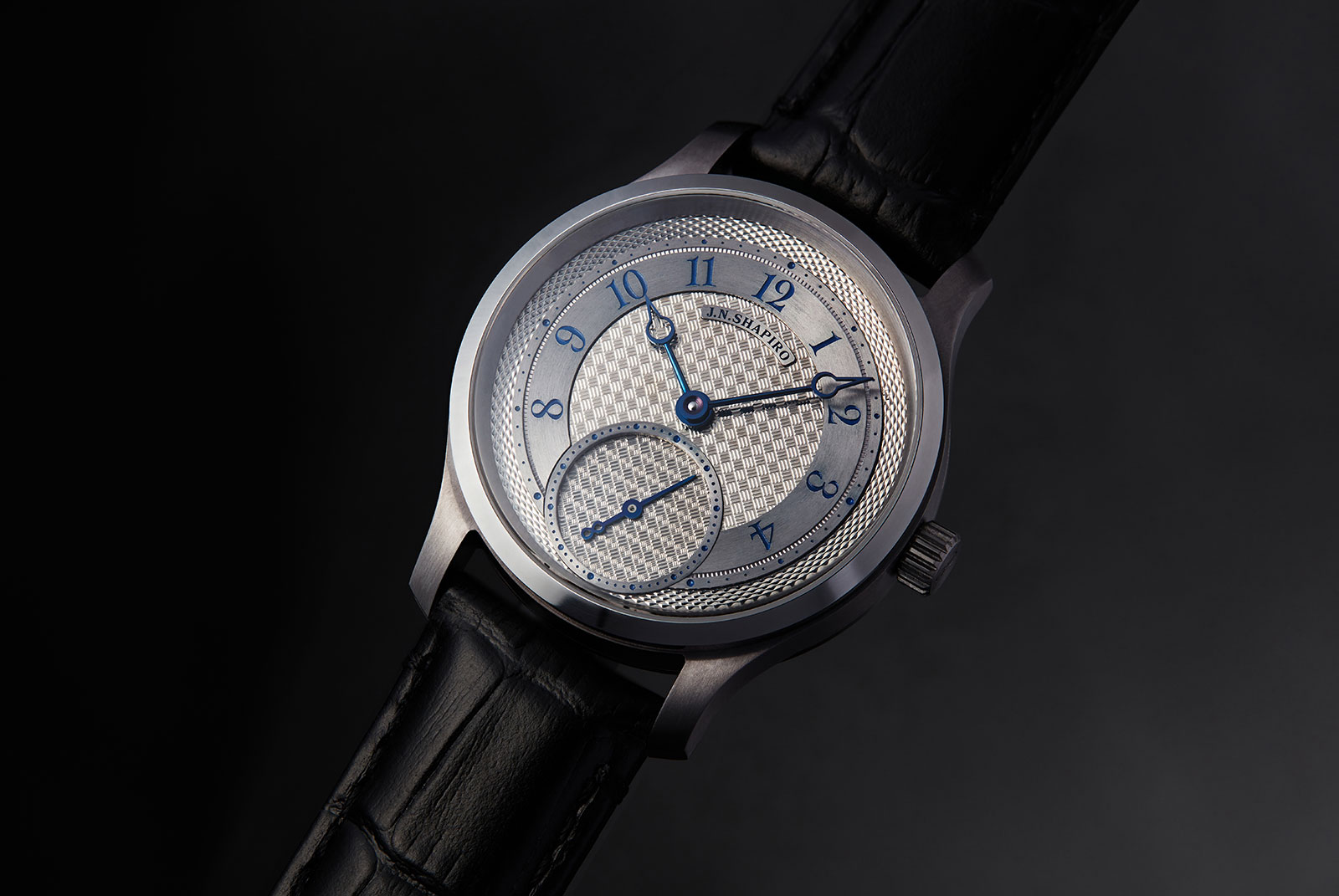
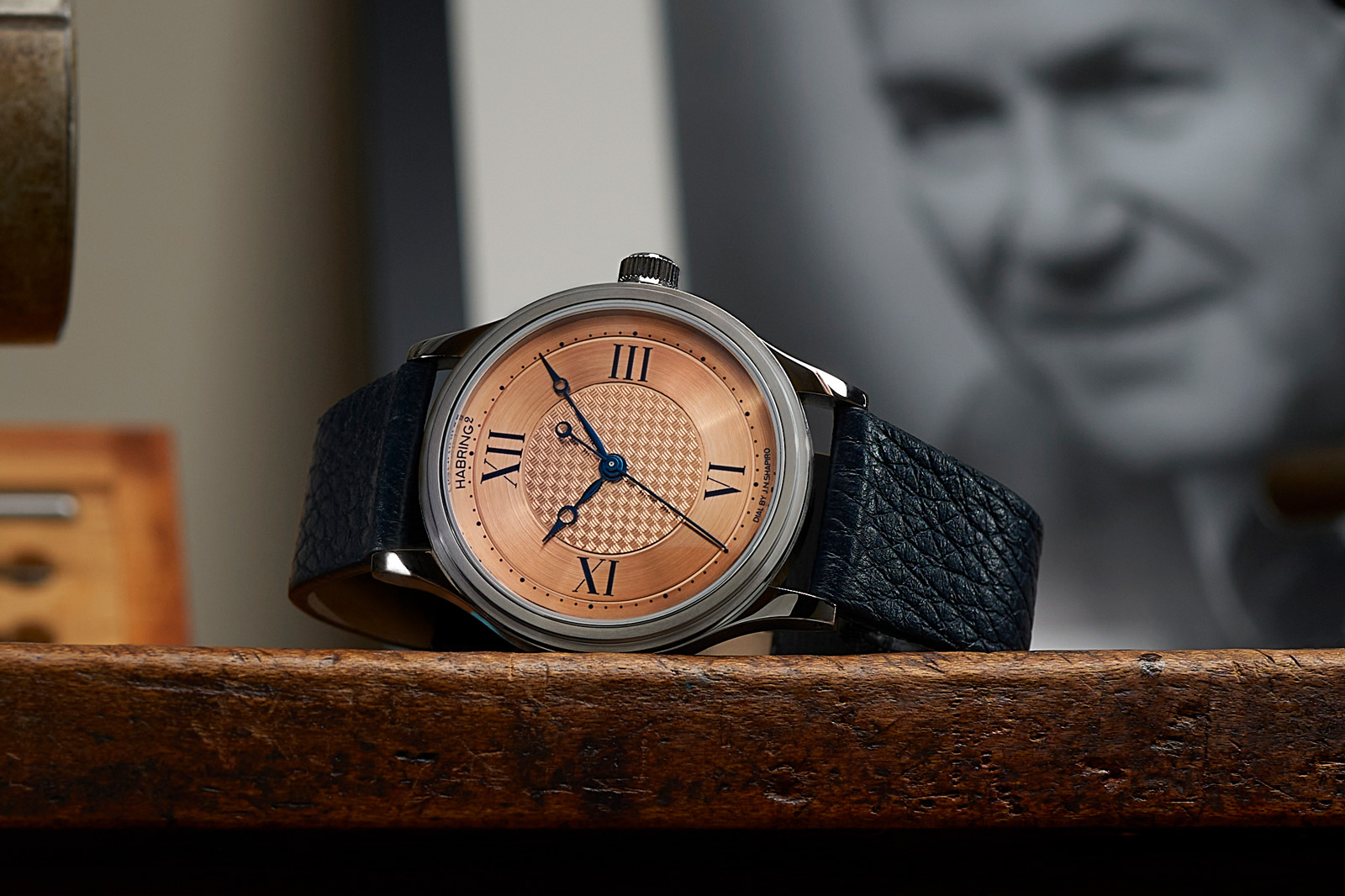
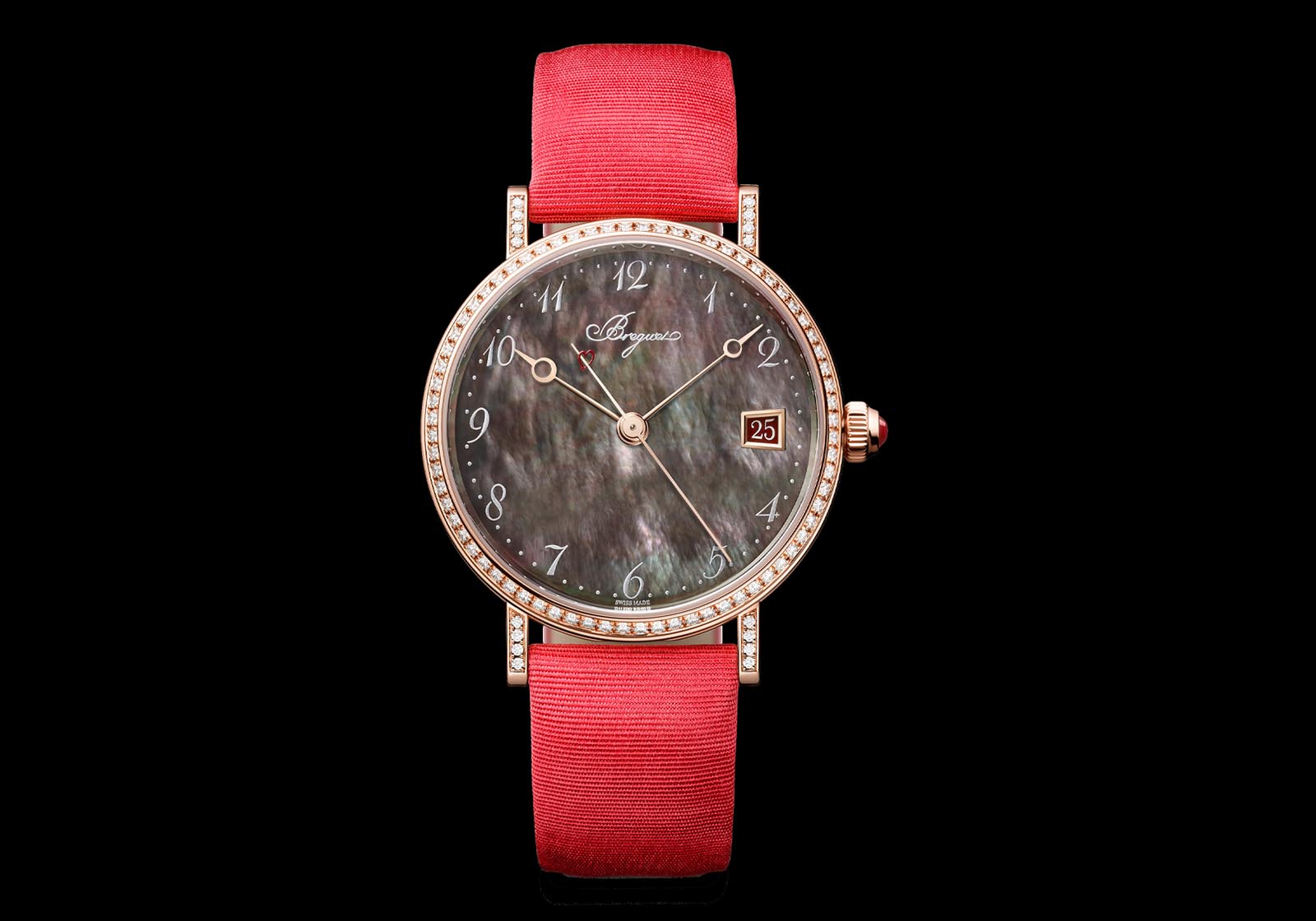
Breguet hands were designed by Abraham-Louis Breguet in his Paris workshop in the early 1780s. The shape is distinctive: a slim, gently tapered shaft of blued steel terminating in an open crescent moon (sometimes called 'pomme' or 'apple' in French watchmaking vocabulary). The crescent is solid metal but its open central area makes the hand 'lighter' visually than a solid hand of the same length, and allows the dial markings beneath to remain visible.
Blued steel is the canonical material. The hands are heat-treated steel that turns deep blue at controlled oven temperature; the blue is the steel's natural oxide layer. Against silver, white-enamel, champagne, or guilloché dials, blued-steel Breguet hands provide high visual contrast and a subtle warmth that printed-black hands cannot match. The Breguet brand uses Breguet hands on the Classique and Tradition lines as a stylistic signature; Patek Calatrava 5196 / 5227 / 5119 references and Lange Saxonia / 1815 also use the design extensively.


Comments 1