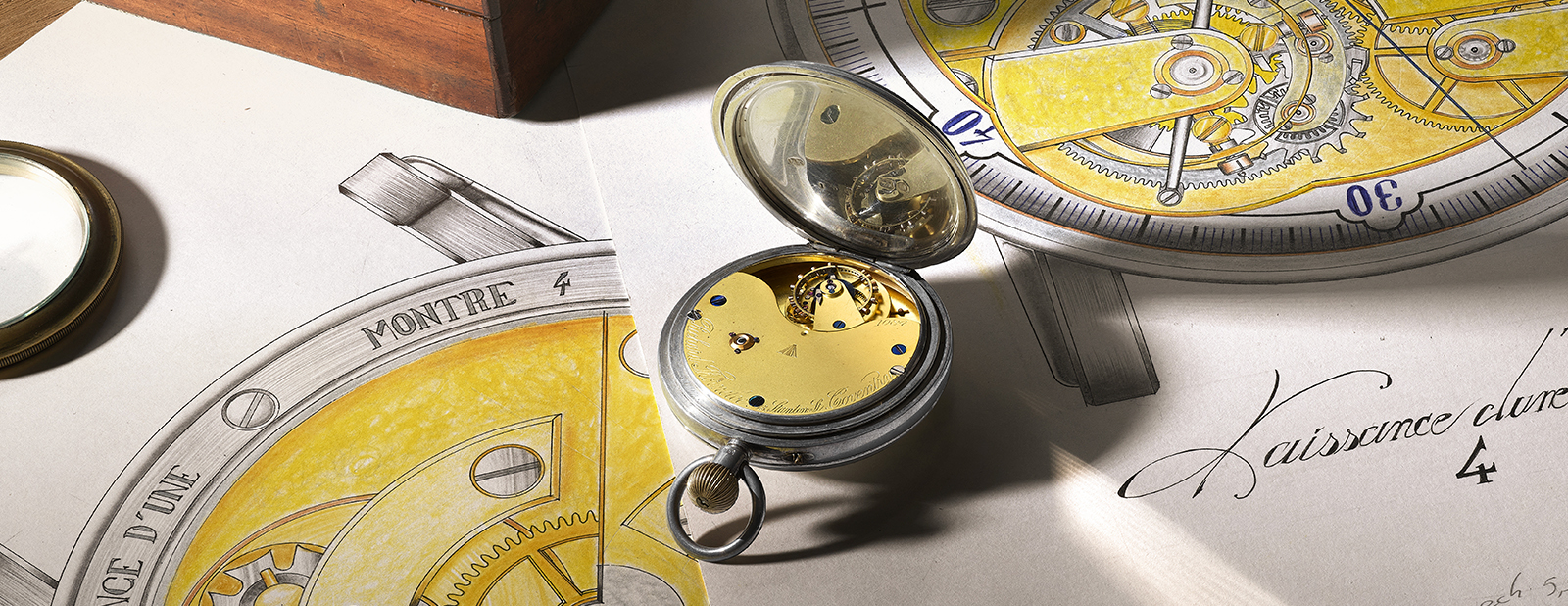
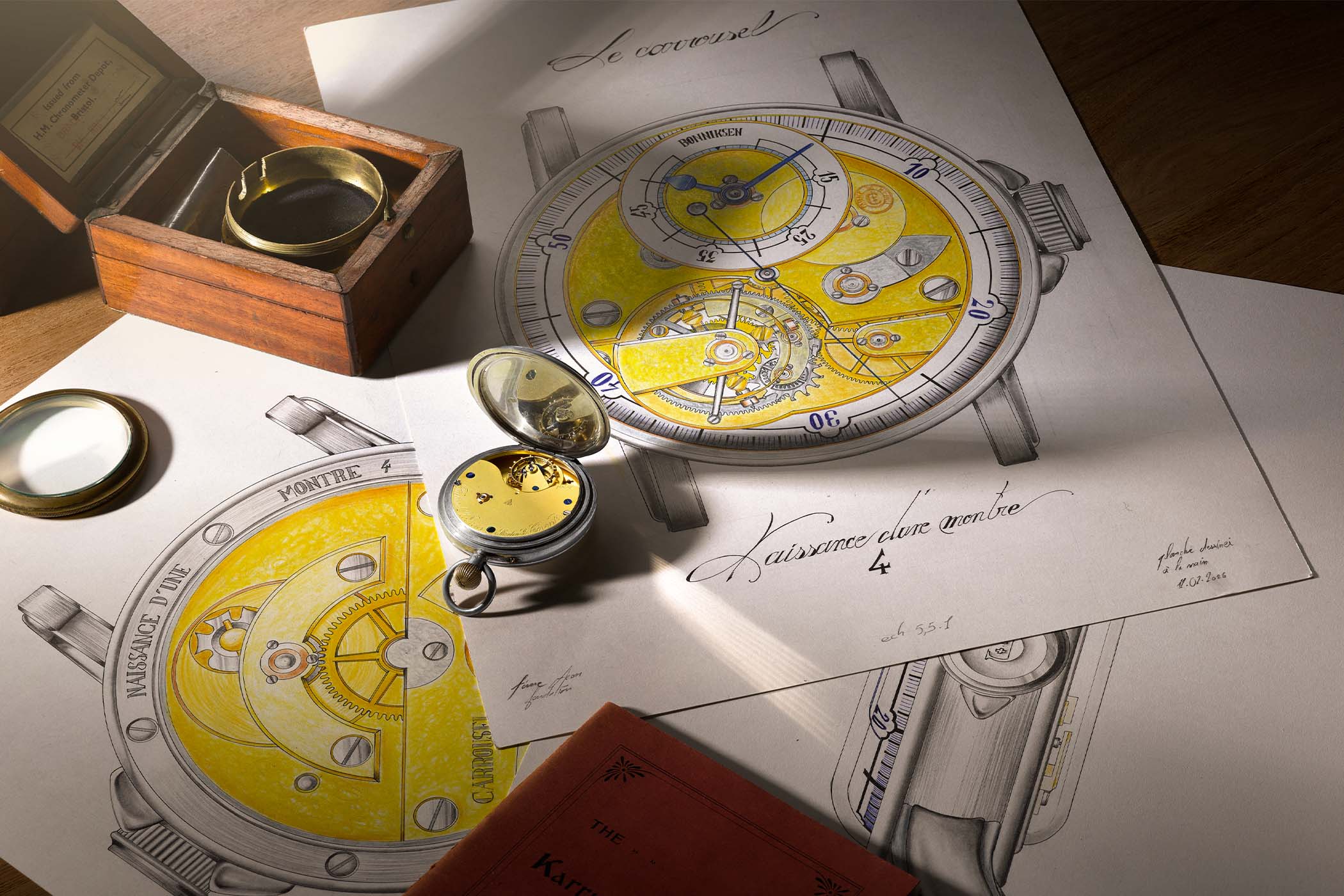
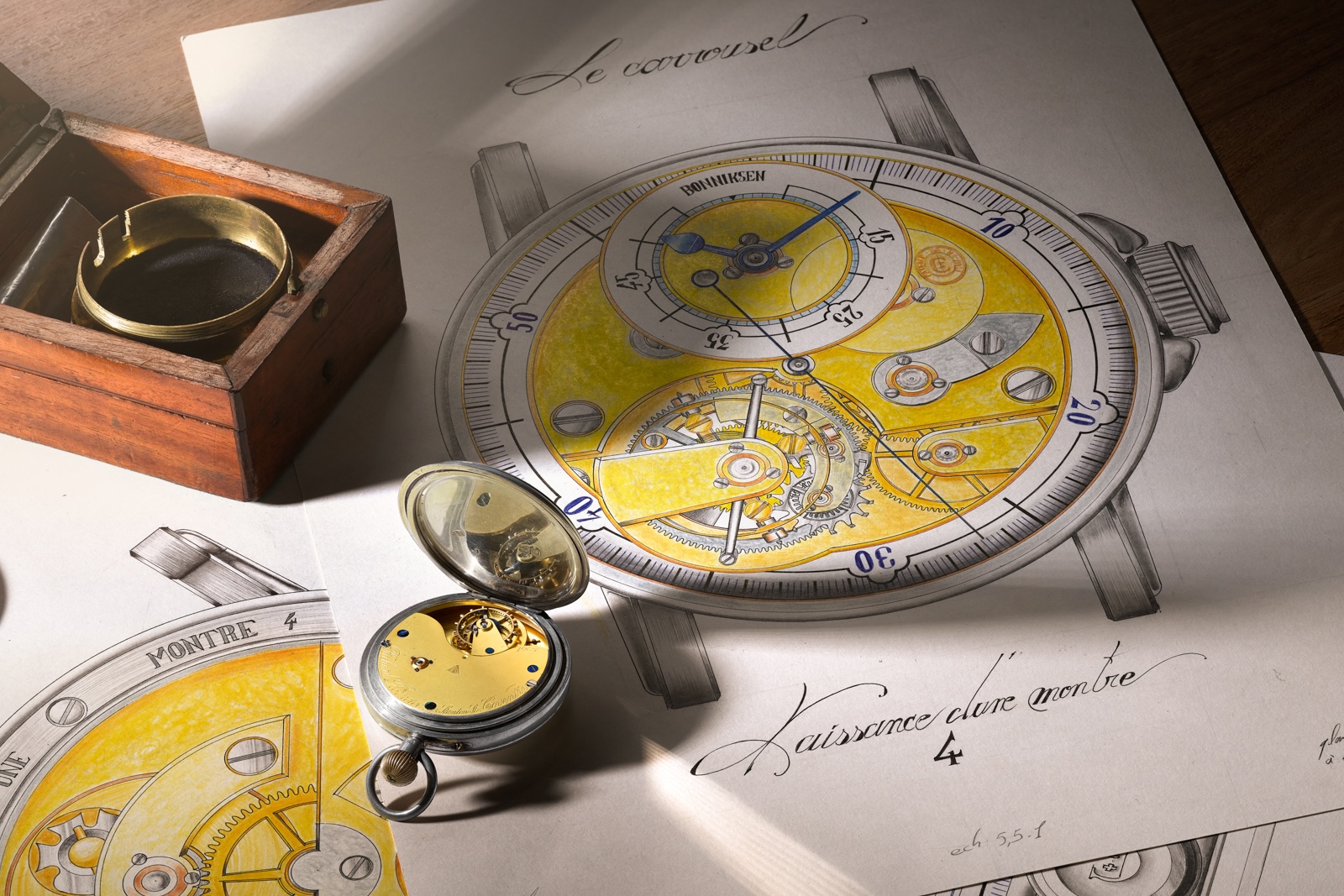
Danish-British watchmaker Bahne Bonniksen patented the karrusel in 1892. The mechanism's intent was the same as Breguet's tourbillon: rotate the entire escapement assembly to average out positional rate variations from gravity. But Bonniksen's design drove the cage from the third wheel (rather than the seconds wheel as in a tourbillon), allowing the cage to use plate-mounted bearings rather than the dedicated cage-bearings the tourbillon required. The karrusel was less expensive to manufacture and easier to service.
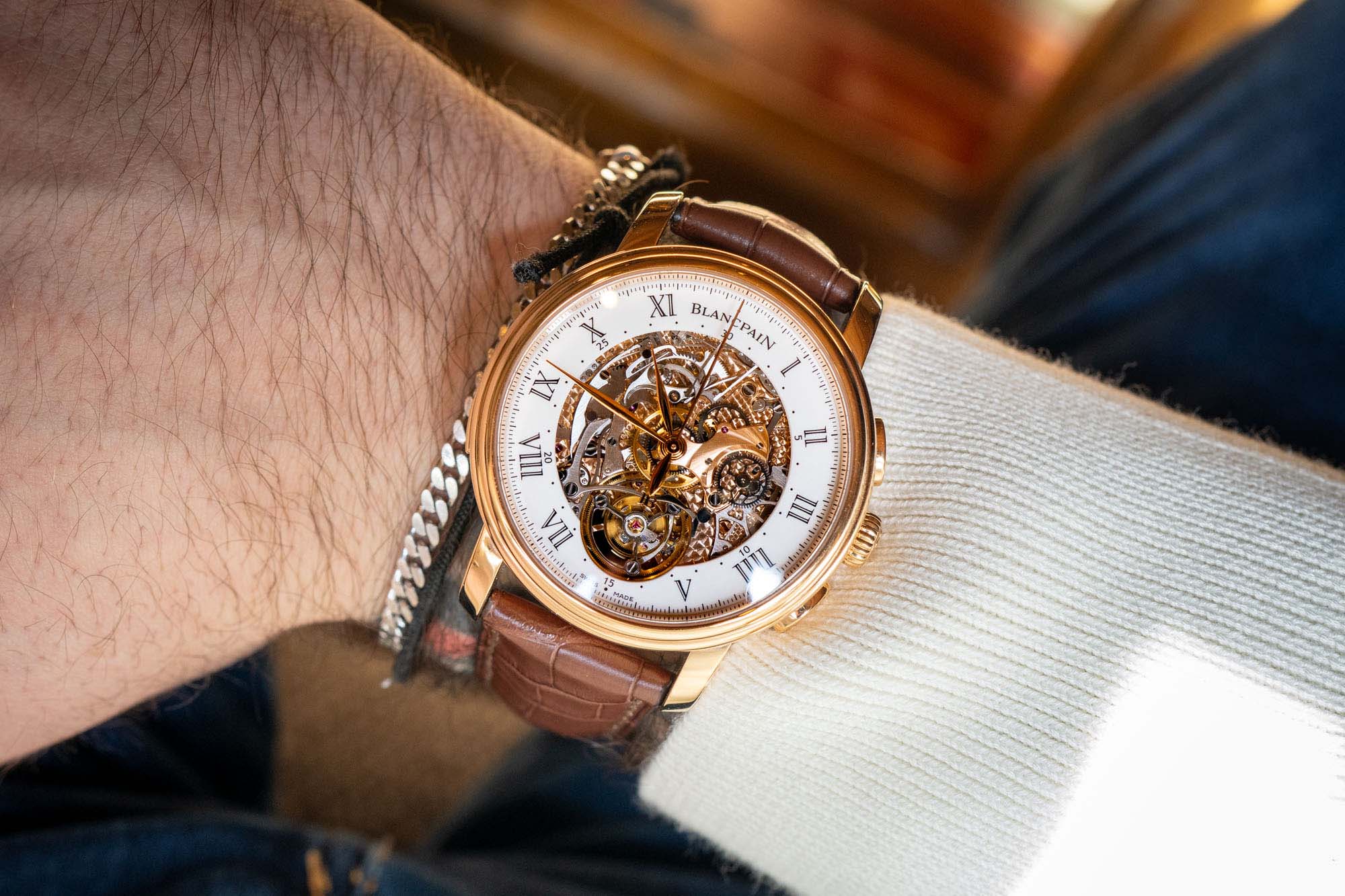
The trade-off was rotation speed. A standard tourbillon rotates once per minute; the karrusel typically rotates once every 52 minutes (depending on gearing). Slower rotation means weaker averaging effect on positional errors; theoretically the tourbillon performs better at correcting position-induced errors. The karrusel's commercial peak was the early 20th century; production essentially ended by mid-century. Modern revivals exist at Blancpain (Le Brassus karrusel), Jaeger-LeCoultre (Master Carousel), and a few haute-horlogerie houses; the complication remains a connoisseur reference rather than a major commercial category.


Comments 2