
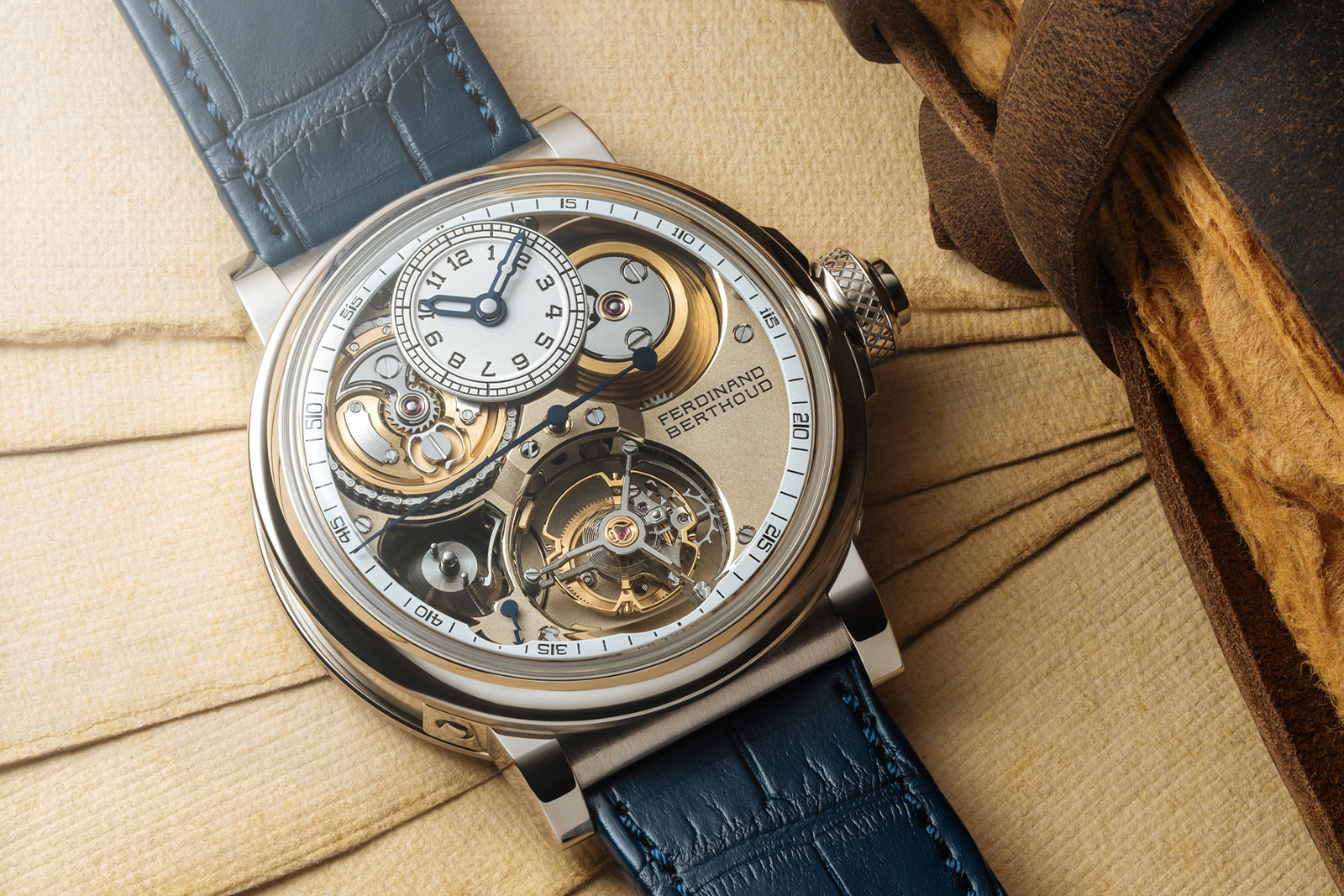
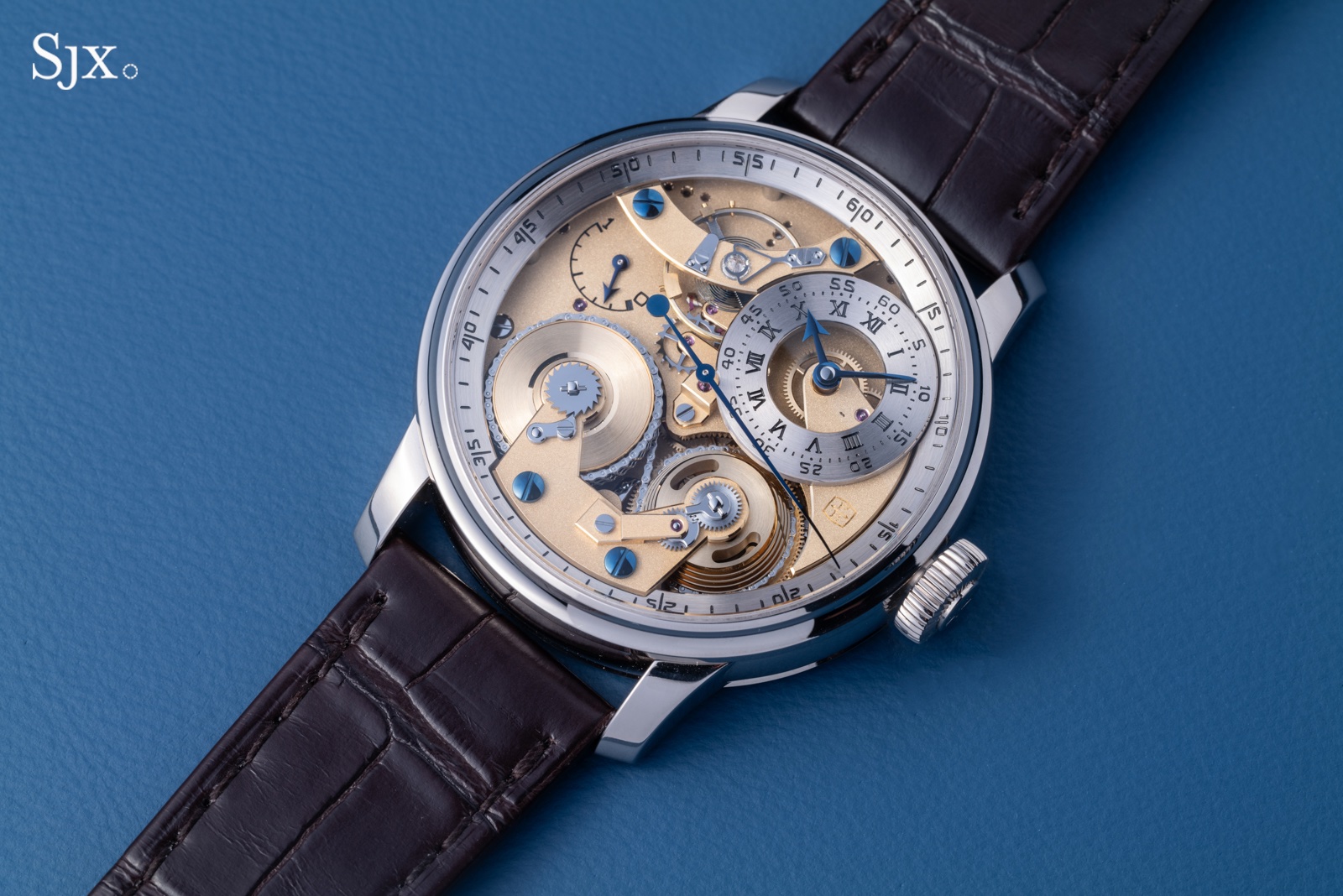
A mechanical watch's rate is influenced by mainspring torque variation: a fully-wound mainspring delivers more torque than a partially-wound one, causing rate to drift across the power-reserve cycle. The chain-and-fusee mechanism solves this directly: a tiny chain wraps around a tapered fusee (cone-shaped pulley); the chain unwraps from the fusee onto the mainspring barrel as the watch runs; the fusee's varying diameter compensates for the mainspring's declining torque, delivering constant torque to the gear train regardless of state of wind.
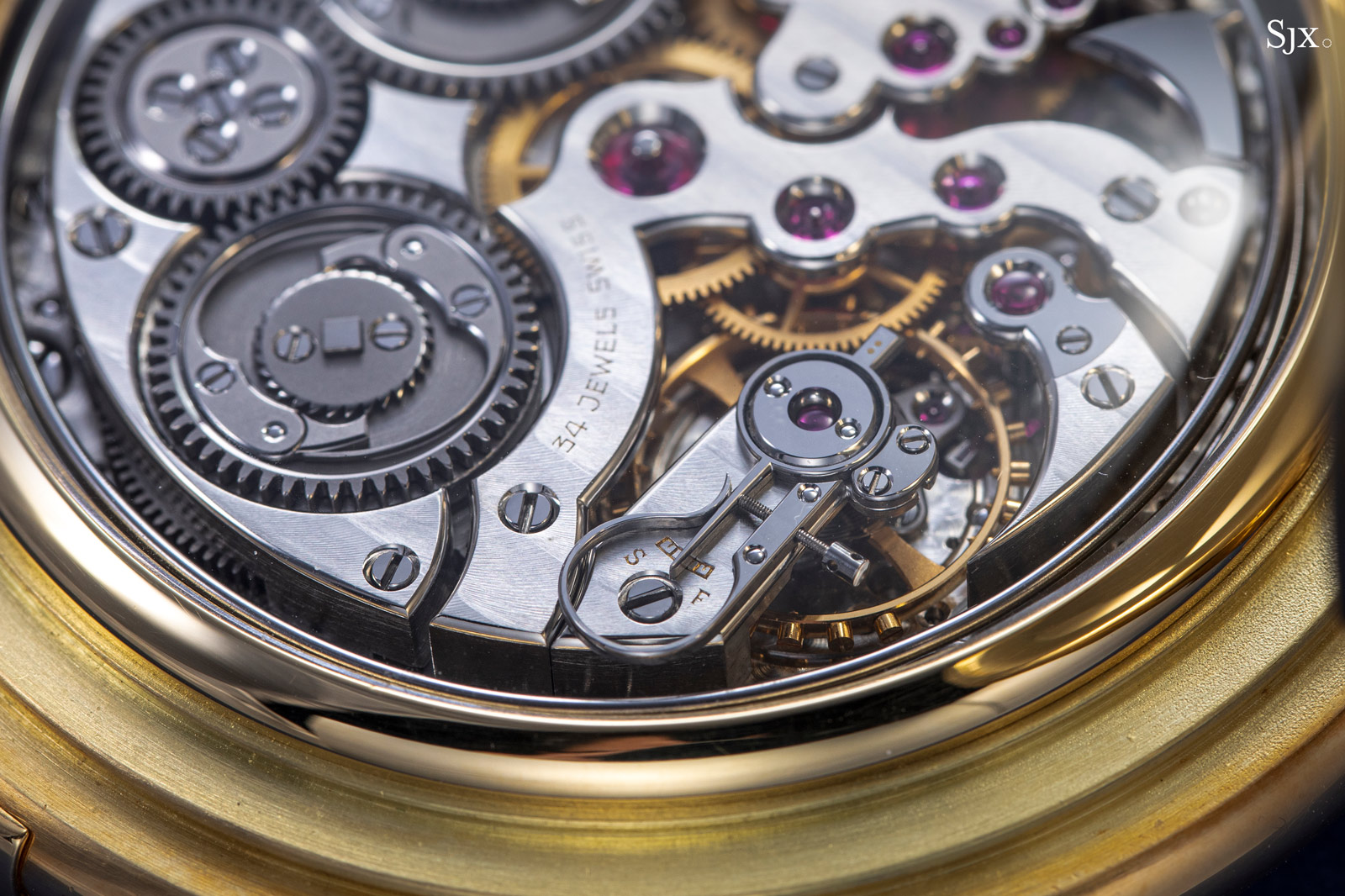
The mechanism dates to 16th-century mechanical clockmaking; Leonardo da Vinci sketched chain-and-fusee designs ~1490; the technique was used in marine chronometers through the 18th-19th centuries (where rate stability under sailing motion was critical). Modern wristwatch implementations are extraordinarily rare: the chain alone has ~636 components (each link a separate machined steel piece); building, assembling, and tuning a chain-and-fusee constant-force in wristwatch dimensions is one of the hardest tasks in modern watchmaking.
"The chain has six hundred components. The chain. Each link is hand-finished. We could buy a small house for the assembly time of one chain."- Lange watchmaker on Pour le Mérite engineering
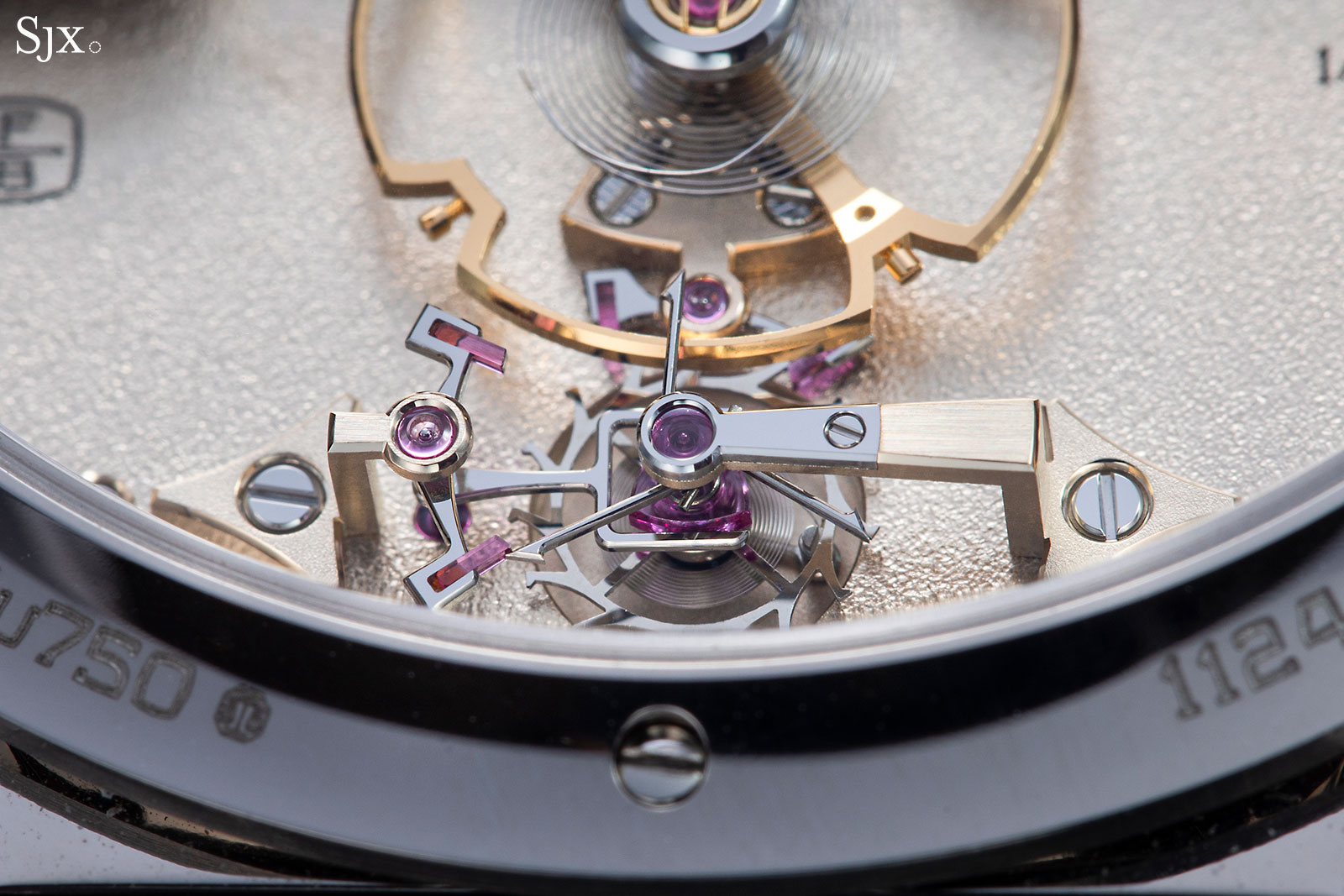
A. Lange & Söhne revived the mechanism with the Tourbillon "Pour le Mérite" in 1994 as the launch flagship of the 1990 Lange revival. The watch combined tourbillon + chain-and-fusee constant-force + Lange traditional finishing; production was limited to 50 platinum + 100 yellow gold + 100 rose gold pieces. The launch price was approximately CHF 230,000; the watch sold out and is now considered the defining first-decade Lange grand complication.
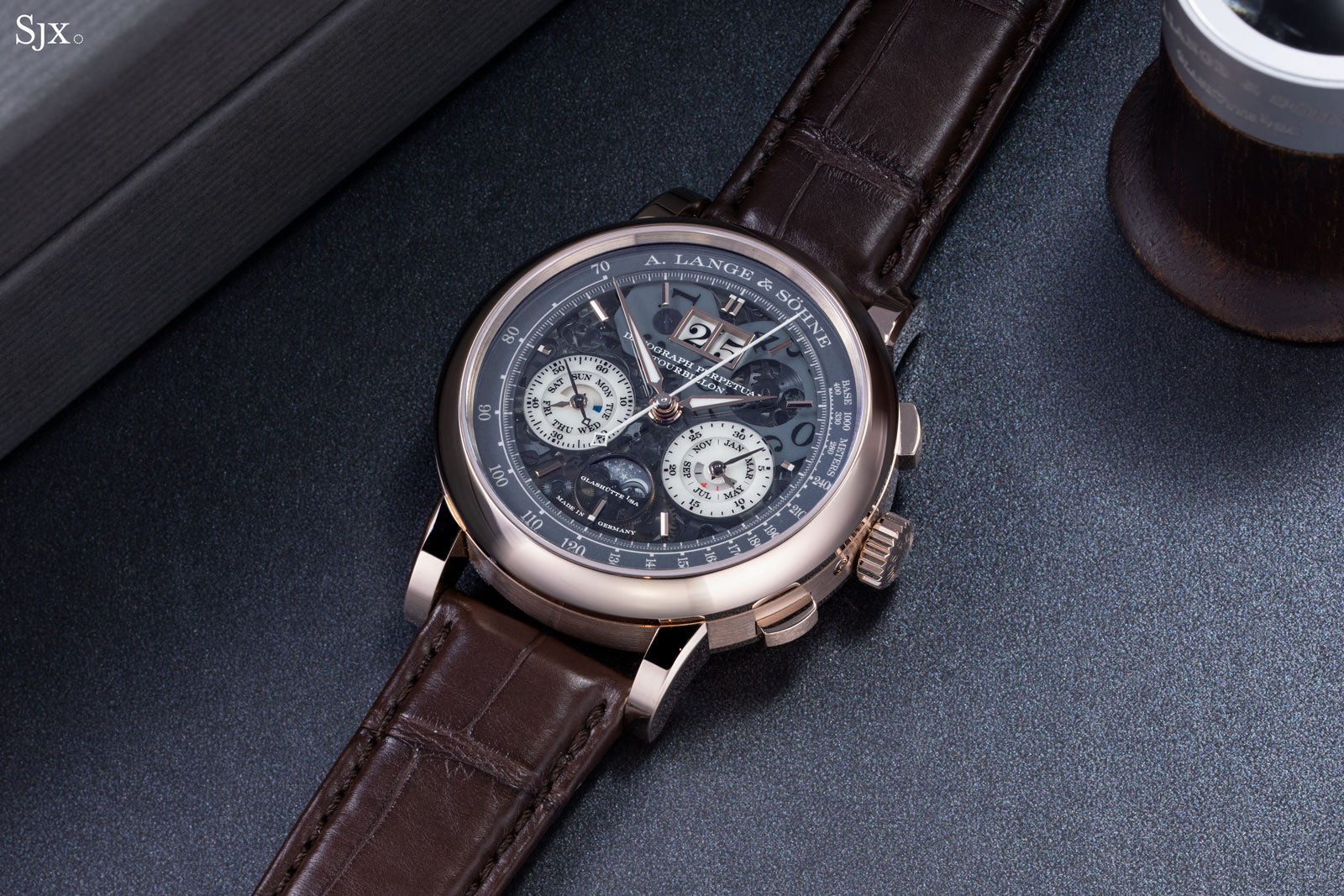
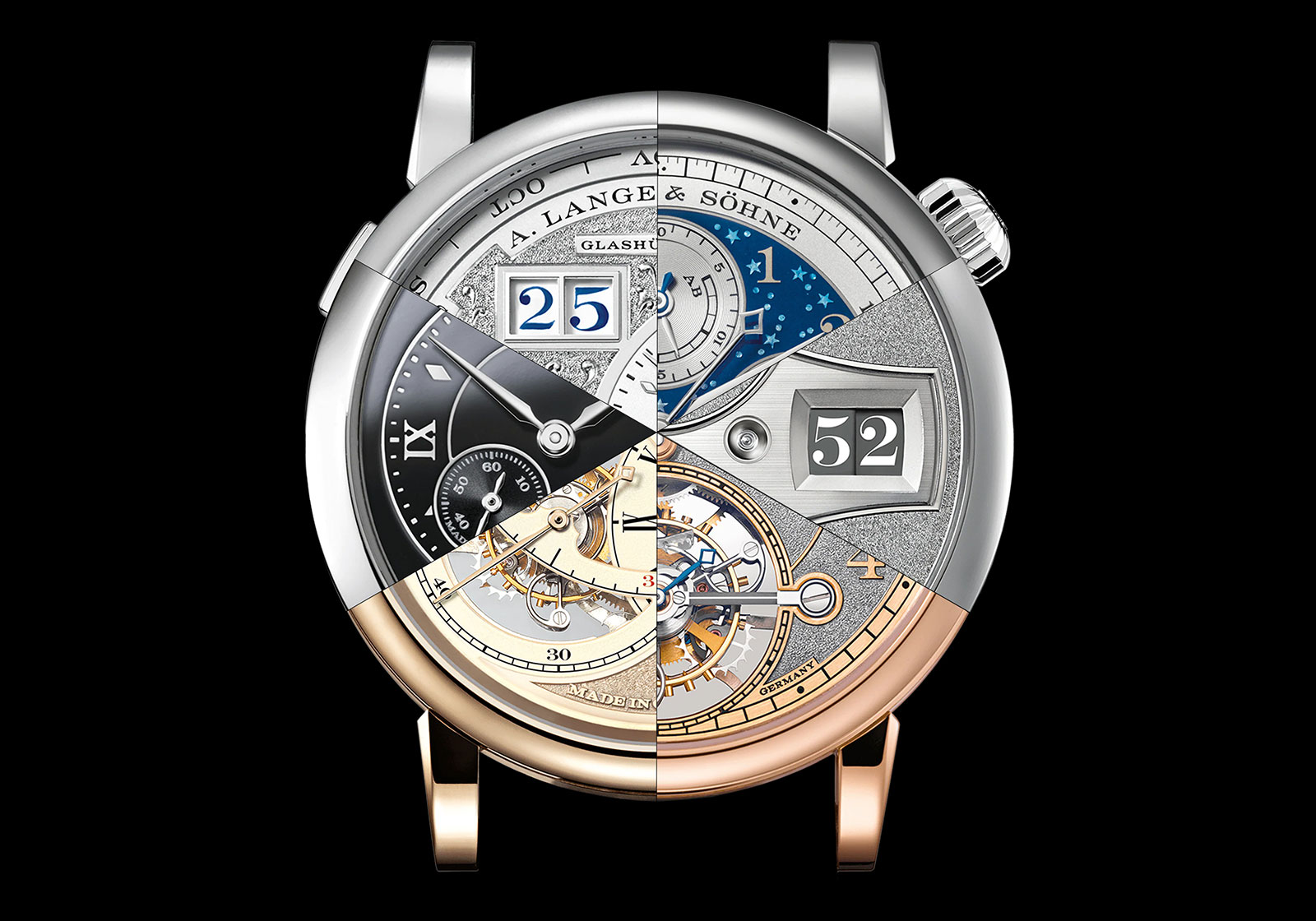
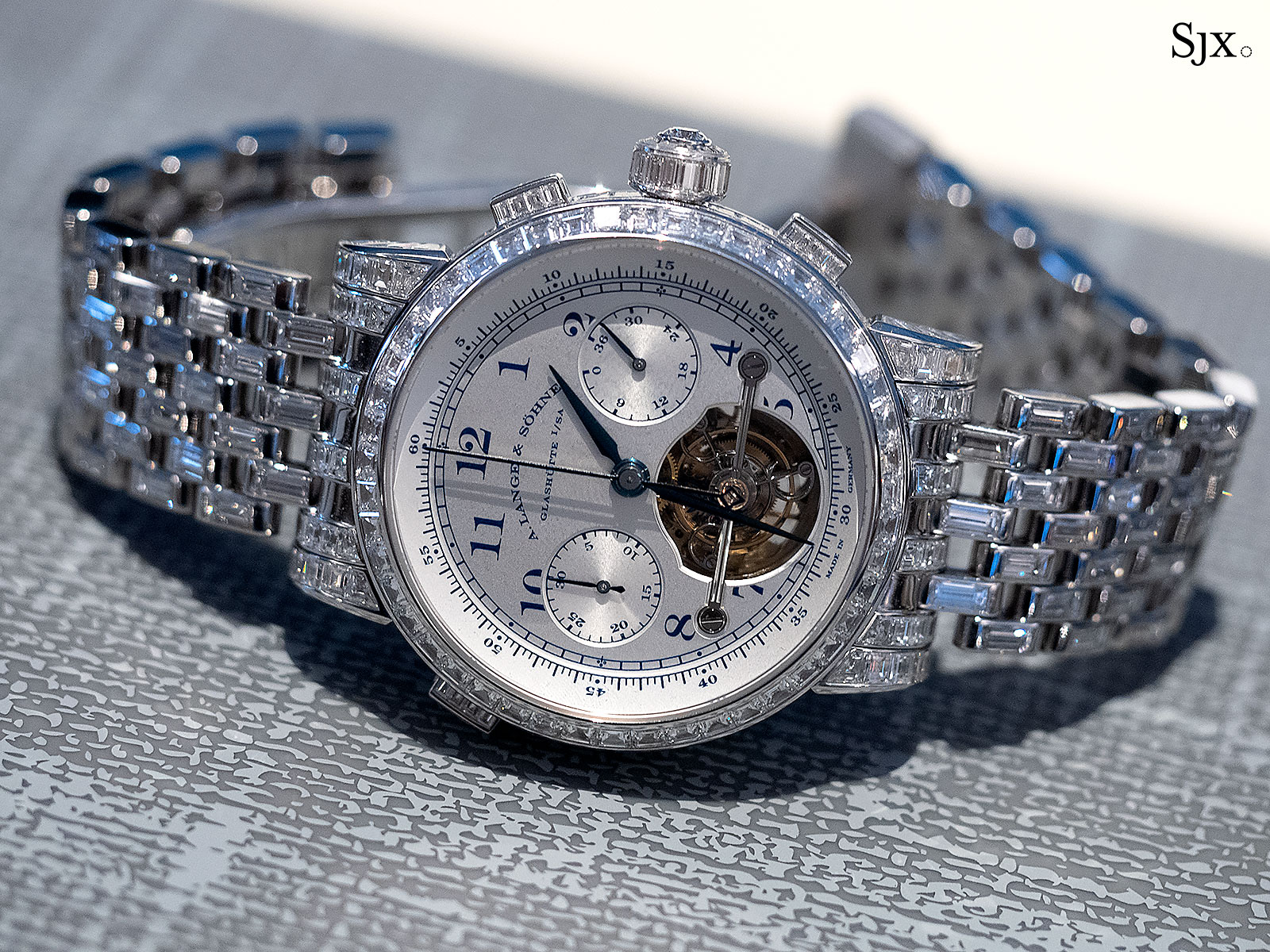
Subsequent Pour le Mérite references: 1815 Chronograph Rattrapante Pour le Mérite (2004) combined chain-and-fusee with split-seconds chronograph; Tourbograph Pour le Mérite (2005) stacked chain-and-fusee + tourbillon + chronograph + rattrapante (the most-complicated Lange wristwatch at the time); Richard Lange Tourbillon Pour le Mérite (2011) introduced regulator dial layout; Tourbograph Perpetual Pour le Mérite (2017) added perpetual calendar to the Tourbograph base, becoming the most-complicated Pour le Mérite reference.
The series is the most labor-intensive complication line in modern watchmaking. Per-watch assembly time is several hundred hours; the chain alone requires weeks of skilled hand-work per piece. Retail prices reflect the labour content: Tourbillon Pour le Mérite at modern auction CHF 250,000-400,000; Tourbograph Perpetual Pour le Mérite at retail CHF 1,000,000+. The series is the technical and pricing peak of modern Lange production and a defining showcase of haute-horlogerie engineering.

Comments 1