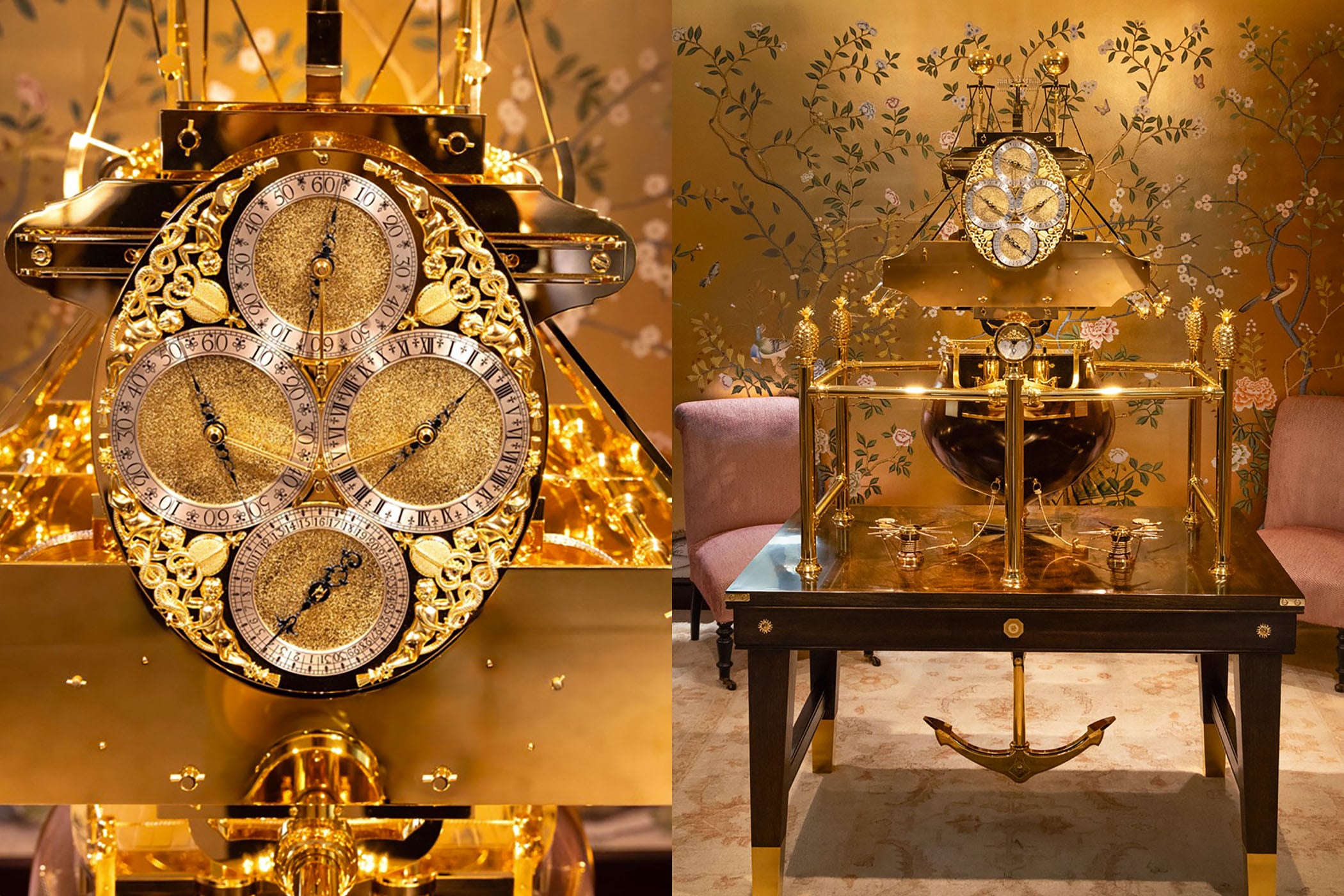
The Longitude Problem was the maritime navigation crisis that consumed European powers for roughly 200 years, from the 16th-century Age of Exploration through the 18th-century industrial era. Latitude (north-south position) had been calculable since Roman antiquity using the angle of the sun at noon or the height of the polar star above the horizon. Longitude (east-west position), by contrast, requires knowing the time at a fixed reference location simultaneously with the time at the ship's current location: the difference between the two clocks gives the longitude. With ship's mechanical clocks of the 17th century losing 5-15 minutes per day in rough seas, the timekeeping required for accurate longitude (within roughly 60 seconds for navigation accuracy) was simply impossible.
The cost of getting longitude wrong was catastrophic. The 1707 Scilly naval disaster (HMS Association, HMS Eagle, HMS Romney, HMS Firebrand all lost on the Isles of Scilly with 1,400-2,000 fatalities) is the most-cited British example: returning from Gibraltar, the British fleet under Admiral Sir Cloudesley Shovell believed they were safely west of the Channel when in fact they were far east, miscalculation of longitude grounding them on the rocks. Similar disasters occurred to French, Dutch, Spanish, and Portuguese ships throughout the period. By 1714, longitude was the most pressing technical problem in Europe.
"The discovery of the Longitude is of such Consequence to Great Britain for the safety of the Navy and Merchant Ships as well as for the improvement of Trade that for want thereof many Ships have been retarded in their voyages, and many lost." (Longitude Act preamble)- British Longitude Act, 8 July 1714
The British Parliament passed the Longitude Act on 8 July 1714, offering a prize ladder up to £20,000 (~£3 million in 2024 money) for "any practicable and useful method by which a Ship's Longitude may be ascertained at sea". A Board of Longitude was established to evaluate entries, including the Astronomer Royal and senior Royal Navy officers. The Act inspired immediate work on two competing approaches: the astronomical method (using lunar distances and the position of Jupiter's moons to calculate Greenwich time) and the mechanical method (building a clock accurate enough to keep Greenwich time at sea).
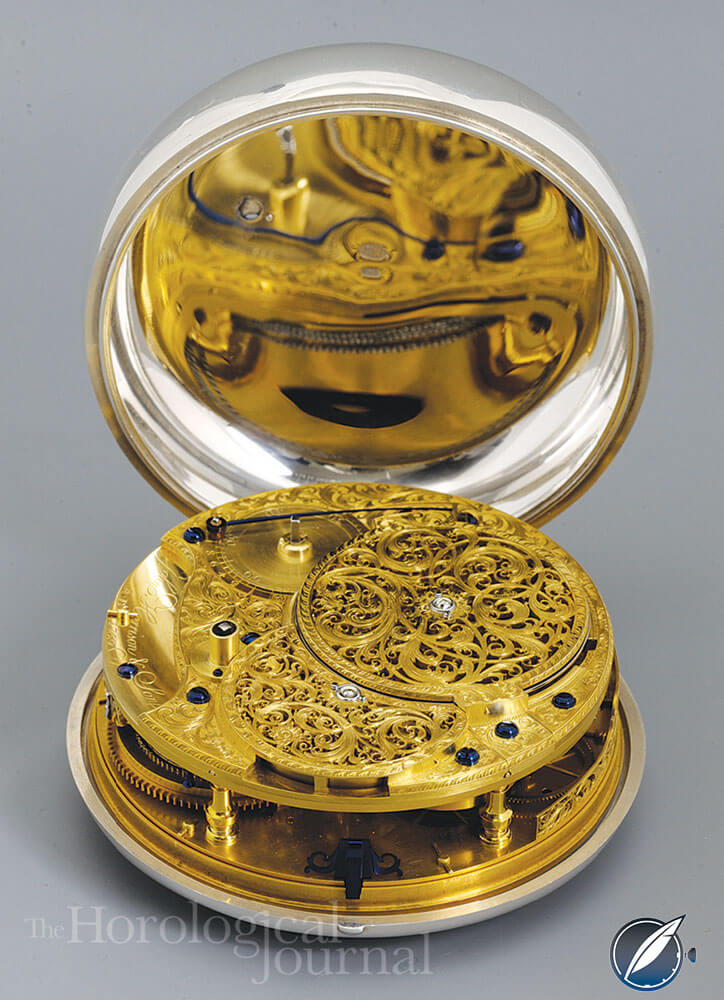
John Harrison (1693-1776), a self-taught Yorkshire carpenter and watchmaker, devoted 50 years of his life to the mechanical solution. His H1 (1735, 35 kg pendulum-balance hybrid) tested at sea showed promise; H2 (1741) refined the principles; H3 (1757) was a more compact precision instrument. The breakthrough was H4 (1759), a 14 cm pocket watch (only 1.5 kg) using a small balance wheel with a temperature-compensating bimetallic strip. It looked like an oversized pocket watch, not a marine chronometer; this was Harrison's key insight that the moving-balance approach could be miniaturised.
H4 was tested in November 1761 aboard HMS Deptford on a voyage from Portsmouth to Jamaica. The watch was kept in a sealed box and wound by Harrison's son William; on arrival in Kingston 81 days later, H4 was five seconds slow, equivalent to a longitude error of less than 1.25 minutes of arc, well within the prize requirement. After significant political resistance from the Board of Longitude (who favoured the astronomical method championed by Astronomer Royal Nevil Maskelyne), Harrison eventually received £23,065 in total payments over his lifetime, including a personal £8,750 award from King George III in 1773.
The H4's legacy is the entire modern precision-watchmaking tradition. Larcum Kendall made commercial reproductions of H4 (K1, K2, K3) in the 1770s; Captain James Cook used K1 on his second Pacific voyage (1772-1775) to verify accurate Pacific longitudes for the first time. From the late 18th century onward, marine chronometers were standard equipment on European and American merchant ships and warships; the mechanical lineage runs through the 19th-century chronometer industry (Earnshaw, Arnold, Mercer, Frodsham, Mudge), the early 20th-century Longines Lindbergh and Weems aviation chronographs, the COSC certification programme (founded 1973), and ultimately every modern Master Chronometer wristwatch. The Royal Observatory Greenwich, where H4 is displayed today, remains the symbolic origin of modern precision timekeeping.

Comments 1