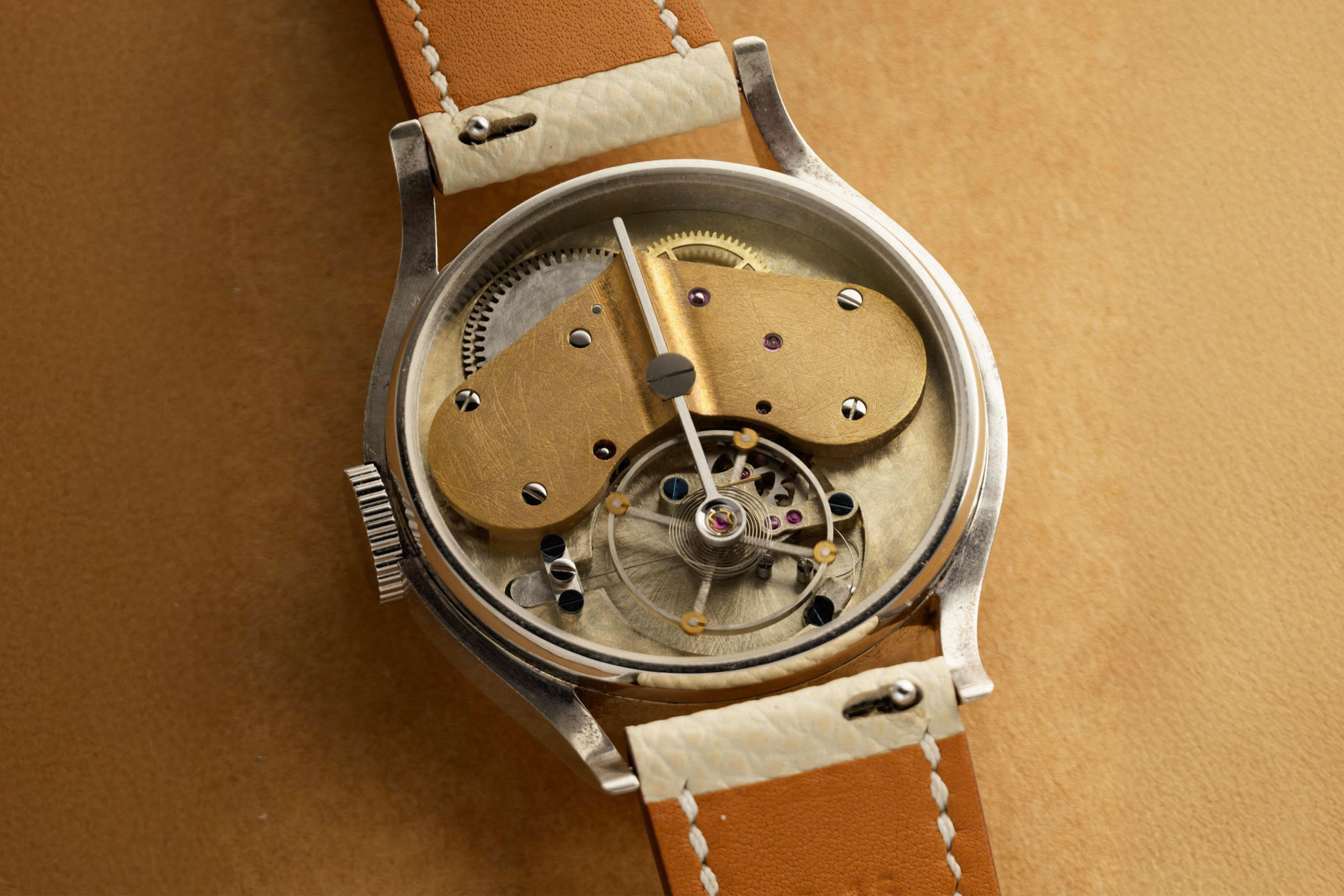
The spring detent escapement is the precision mechanical-watch escapement that defined the marine chronometer for nearly 200 years. Where a Swiss lever impulses the balance wheel twice per oscillation through sliding pallet stones, a spring detent delivers a single direct impulse per oscillation through a flat impulse pallet. The escape wheel is held stationary between impulses by a thin spring-loaded detent, which is briefly released by a discharging tooth on the balance roller during one direction of swing only. The result is an exceptionally low-friction, energy-efficient escapement that can sustain the balance with very little impulse loss.
The escapement was developed competitively in late 18th-century England. John Arnold, a London chronometer maker, patented his "spring-detent" version in 1779; Thomas Earnshaw independently developed a refined design around 1780 with a more reliable lift action. The two men disputed authorship for the rest of their careers; the design that prevailed in serial production was Earnshaw's. Abraham-Louis Breguet refined the spring detent further in the 1810s in Paris, applying it to his finest pocket chronometers. By 1830 the spring detent was the universal standard for serial marine chronometers built for naval and commercial shipping; major makers included Earnshaw, Arnold & Son, Charles Frodsham, Mercer, Hamilton, and (in Switzerland) Ulysse Nardin.
"The spring detent is the most efficient escapement ever made by hand. It is also the most fragile. The marine chronometer survives in a gimballed box. The wristwatch does not."- Watchmaking textbook commentary on chronometer escapements
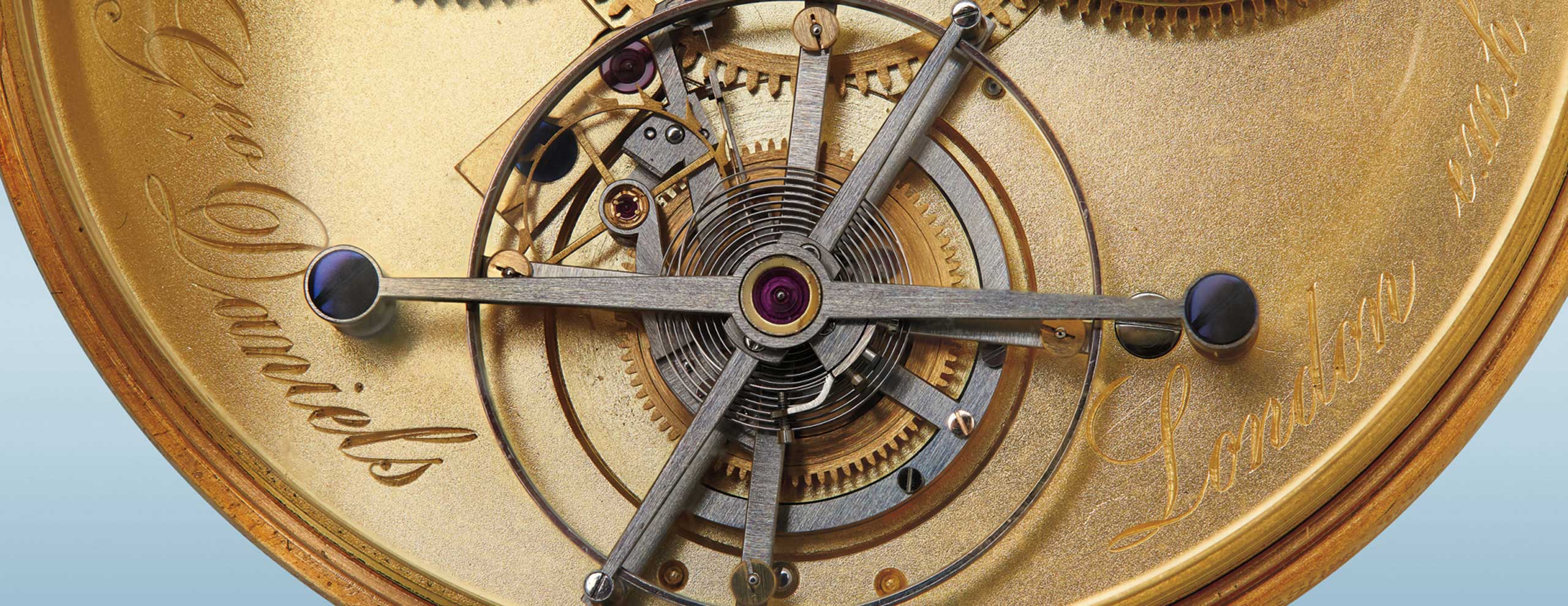
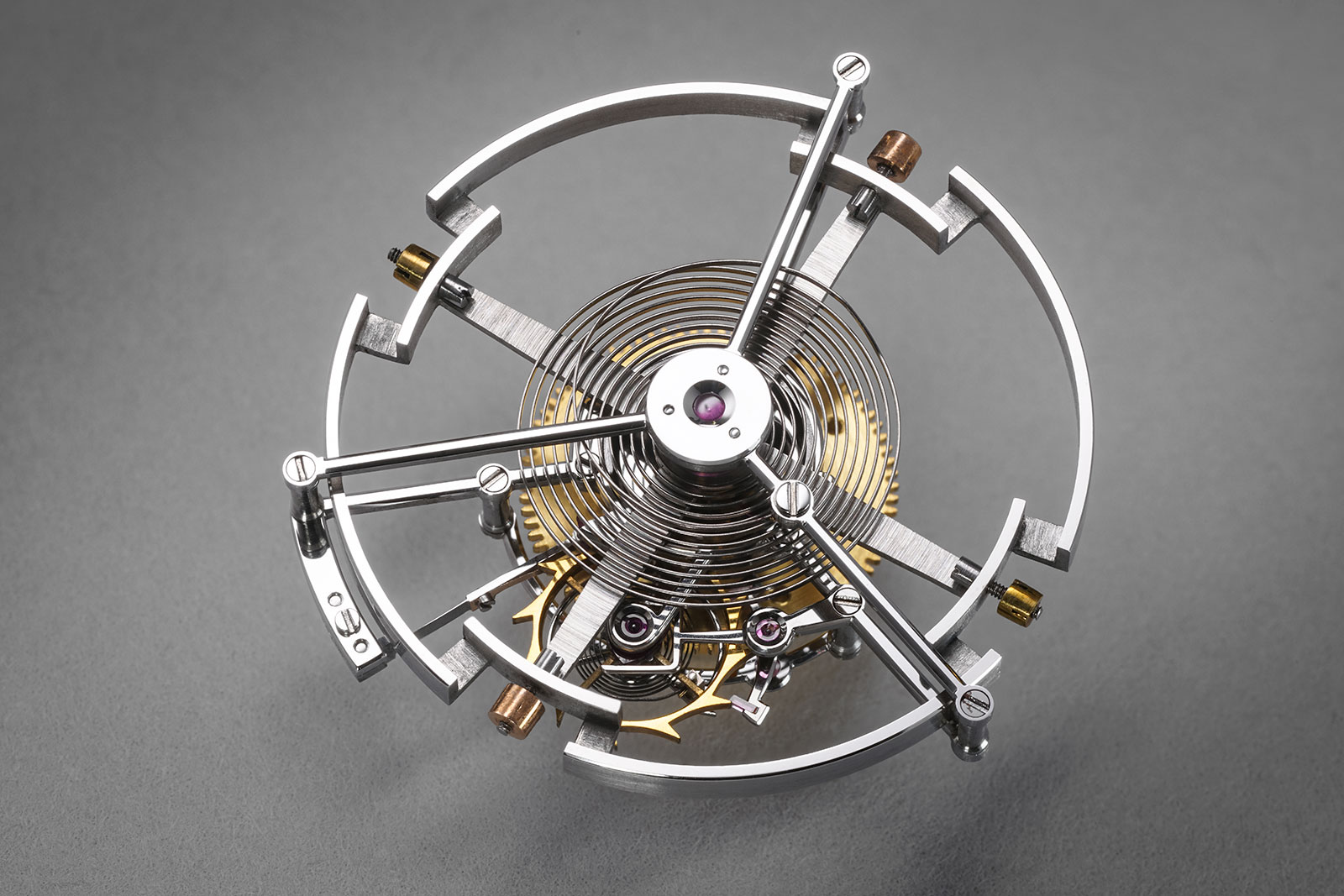
Mechanically the spring detent has three components: the impulse pallet (a single jewel on the balance roller), the escape wheel (held stationary by the detent), and the detent itself, a thin flexible steel arm with a small ruby tip that locks an escape-wheel tooth. The cycle: the balance swings clockwise; a small "discharging" pallet on the balance roller displaces the detent sideways, releasing the escape wheel; the escape wheel turns one tooth, pushing directly against the impulse pallet on the balance roller; the impulse pallet pushes through; the detent springs back into the next tooth's lock position. The next half-swing of the balance does nothing; the discharge pallet is profiled to slip past the detent without releasing it. Impulse occurs only on the active half-swing.
The advantage is precision and efficiency. Since the impulse is direct (no sliding friction at the pallet), the energy loss per oscillation is significantly lower than a Swiss lever, allowing higher amplitude and tighter rate over time. This is why the spring detent dominated marine chronometers, where seconds-per-month precision was the spec. The disadvantage is shock sensitivity and self-starting: the detent is a thin flexible spring; a sharp shock can cause it to "set" the escape wheel mid-stroke, stopping the watch. More importantly, if the watch ever stops with the balance at rest, it may or may not restart on its own; the discharge pallet has to engage the detent in the correct direction, and the detent has to release at the right time. For a stationary marine chronometer mounted in gimbals on a captain's table, this is fine. For a wristwatch, where the watch is shocked dozens of times per minute, it is a fundamental problem.
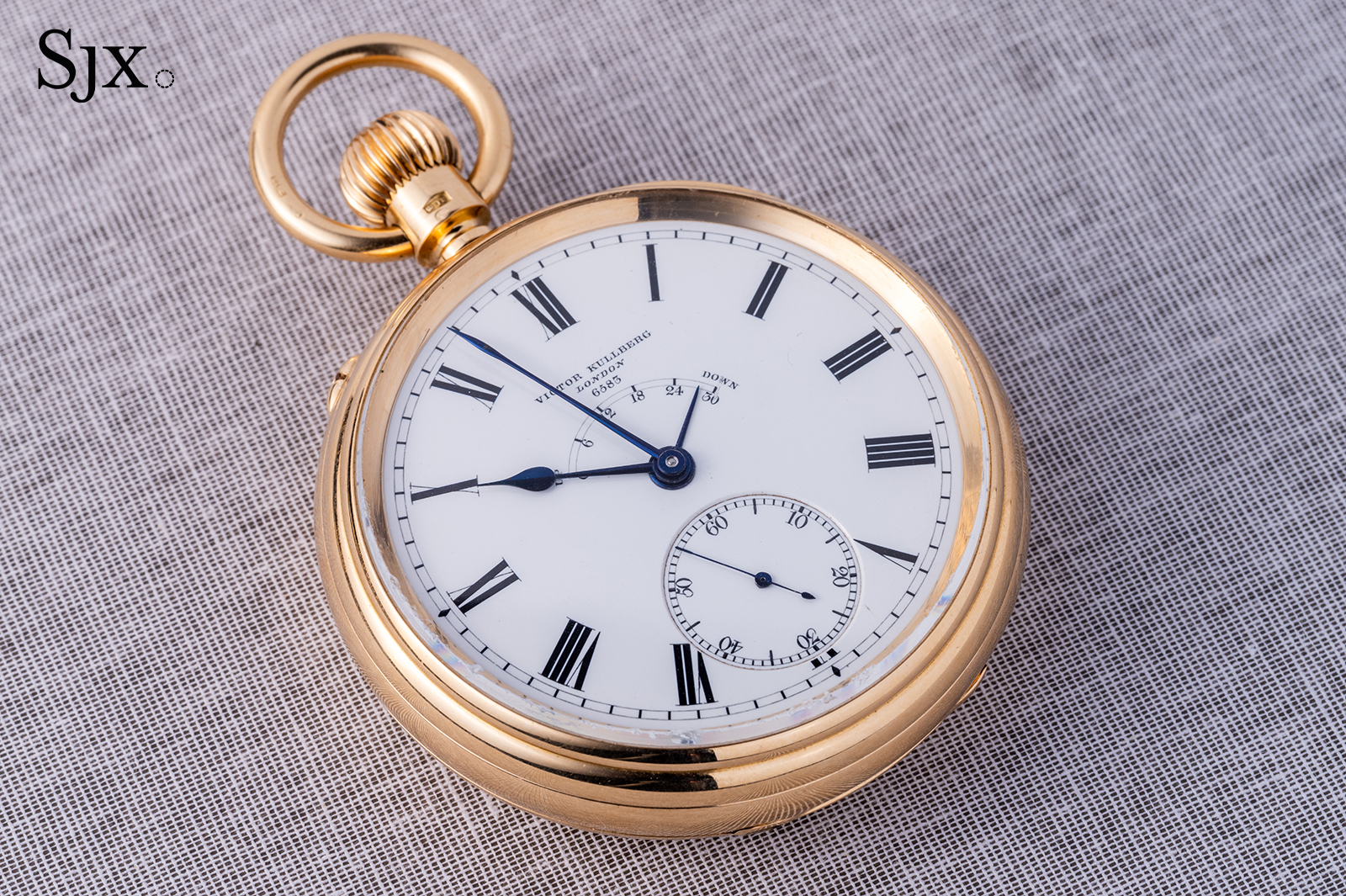
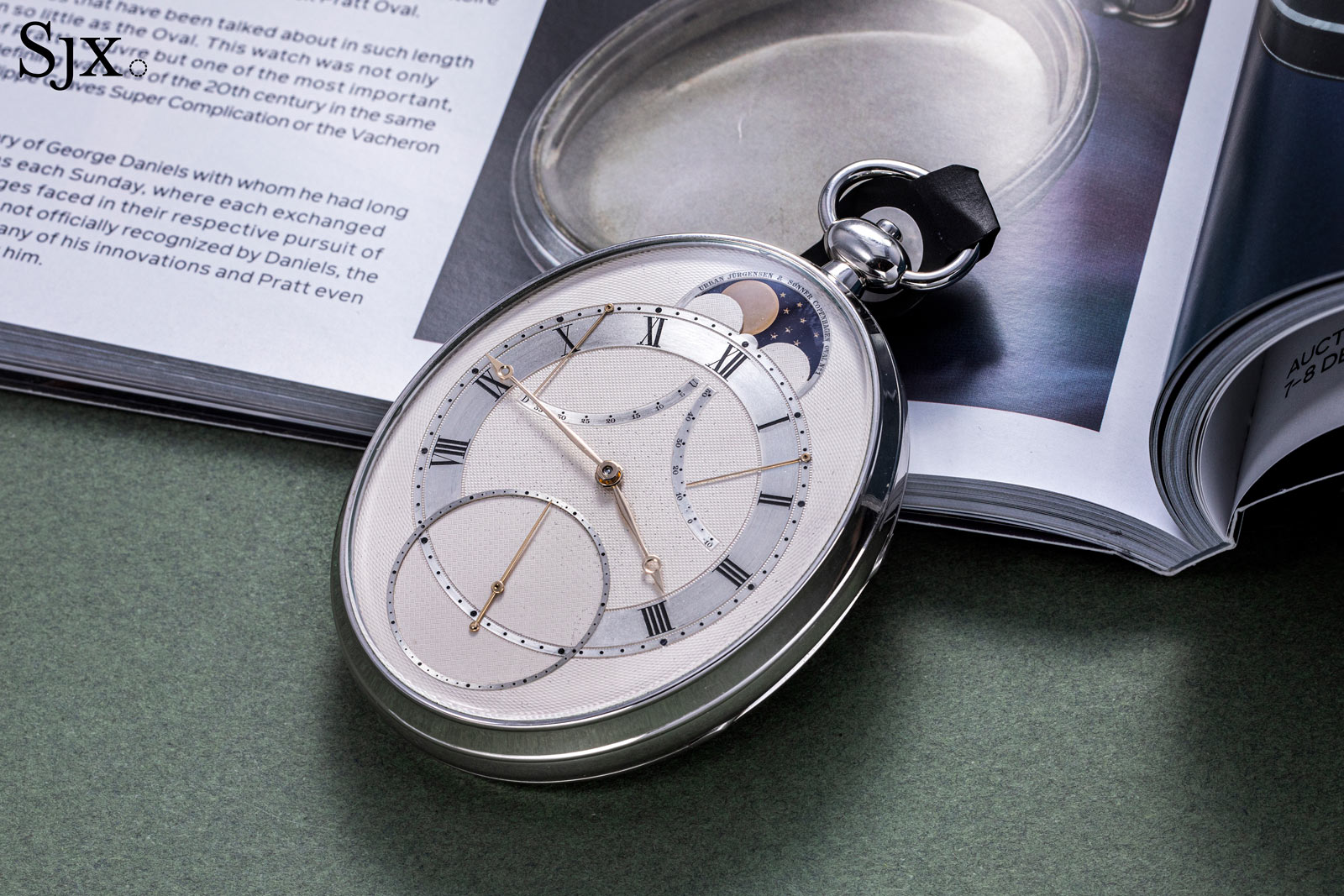
The wristwatch verdict was already in by 1900: spring detent escapements never made it into wristwatch series production, with one exception. Pivoted-detent wristwatches (where the spring is replaced by a tiny pivoting steel arm) were attempted in pocket watches by Saunier and others in the late 19th century but were not seriously industrialised. For the entire 20th century the spring detent lived in marine chronometers and museum-grade pocket watches only. The Mercer chronometer factory in St Albans, the last major industrial maker, produced spring-detent marine chronometers into the early 1980s, when GPS made marine chronometers commercially obsolete.
The 21st century has seen a small but significant haute-horlogerie revival of the spring detent. F.P. Journe introduced the Chronomètre Souverain in 2005 with a free-sprung balance, and the brand's Chronomètre à Résonance uses two adjacent balances regulated by a refined spring-detent geometry. Breguet built the Tradition 7047 Tourbillon Fusée with a hand-finished pivoted detent escapement in 2009. Urban Jürgensen applies a modified detent on its top-tier chronometers. These are exclusively very high-end pieces, six-figure retail prices, produced in tens or low hundreds per year. The spring detent is not an industrial escapement in 2024; it is a haute-horlogerie statement.


Comments 3