
Automatic winding systems convert random rotor motion into mainspring tension. The conventional approach, used in the ETA 2824 and the great majority of automatic calibres, runs the rotor through two reverser wheels (one for each rotor direction). Each reverser is essentially a one-way clutch; together they ensure both rotor directions wind the barrel. This is mechanically simple but has friction and wear at the reverser bearings.
Albert Pellaton, technical director of IWC from 1946, took a different approach. Instead of reverser wheels, he placed a three-lobed cam on the rotor axle. The cam pushes a rocking yoke that carries two click pawls; as the rotor turns, the cam alternately pushes one pawl forward and the other backward, and each pawl in turn drives the barrel ratchet wheel by exactly one tooth. Both directions of rotor rotation produce barrel rotation in the same sense; the system has no reverser wheels at all.
"The cam pushes one pawl, releases the other, and both directions wind the same way. It is the most elegant automatic system anyone has built. We have not found a reason to replace it in 75 years."- IWC technical director on the Pellaton system
The first commercial Pellaton calibre was the IWC Cal. 85 in 1950; through the 1950s and 60s the Pellaton system spread across the IWC manufacture-calibre lineup. The Cal. 853 (1959) was the high-volume Pellaton workhorse of the era; the Cal. 8541 (1969) the version used in the iconic IWC Aquatimer. The quartz crisis halted manufacture-calibre development in the 1970s-80s; the modern Pellaton lineage resumed in the late 1990s.
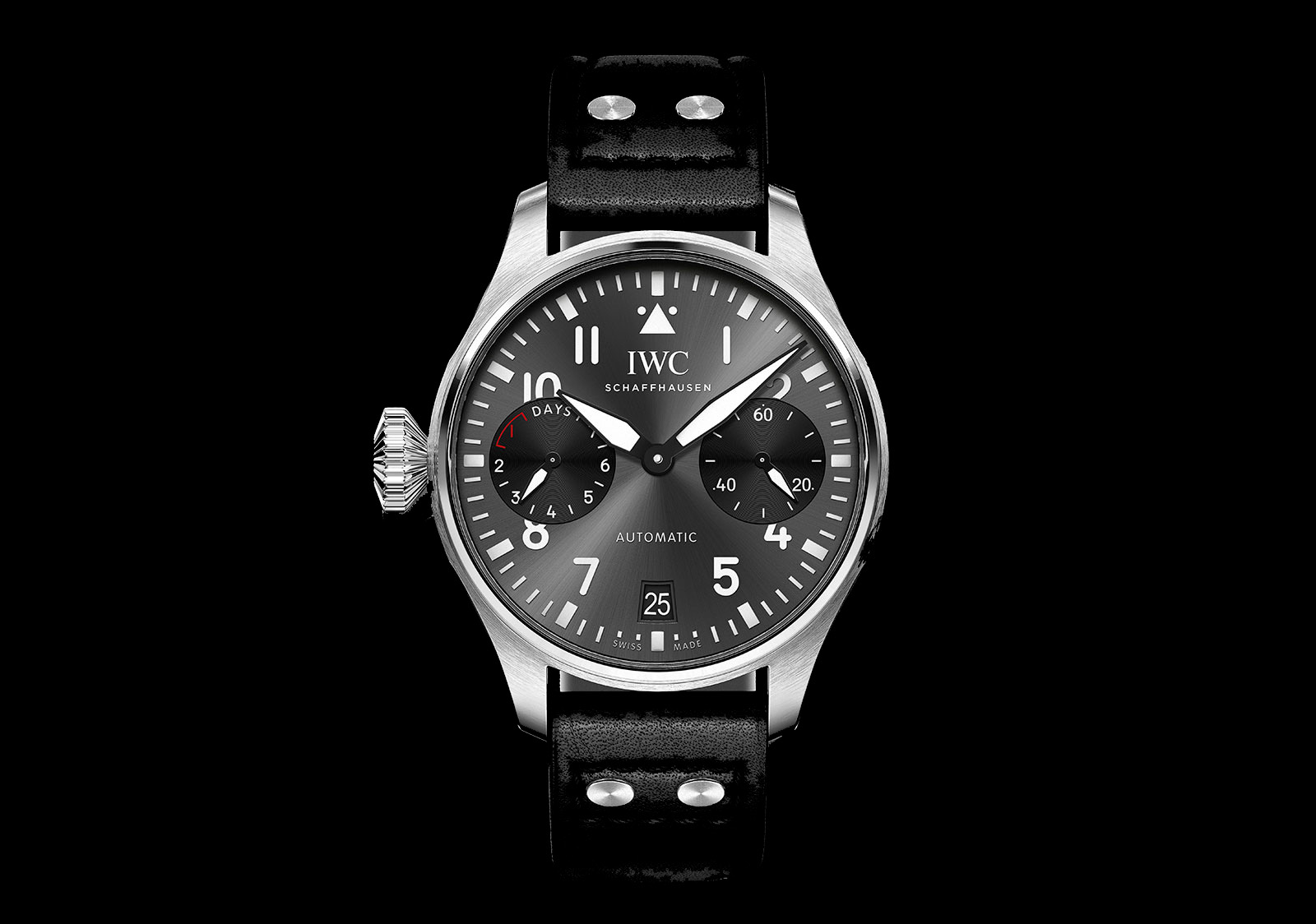
The modern IWC Cal. 50000 family (Cal. 50010, 51011, 52010, 89000) reintroduced Pellaton winding in 2000 with the Portuguese Automatic Cal. 5000. The architecture was upgraded with ceramic pawls and cam (replacing the original steel components) to eliminate the wear that had been the system's only weakness; ceramic-on-ceramic contact is essentially zero-wear. The Cal. 89000 family (chronograph, perpetual calendar, world time) added complications on top of the same Pellaton base. The Cal. 51011 in the modern Big Pilot has a 168-hour (7-day) power reserve, the longest of any Pellaton-based movement.
The system's technical advantages are operational. Pellaton winding is almost completely silent (no reverser wheel rotation, no audible clicks); the rotor turns smoothly with very low audible signature. The winding efficiency is high: the cam-and-pawl geometry can be tuned to deliver more winding torque per rotor degree than a reverser system. The durability with ceramic components is exceptional; modern Pellaton movements run for 10+ years between services without rotor-system overhaul.
Pellaton winding is the technical signature of IWC in the modern industry; no other brand uses it, and the system is not licensed. Brand-tier signalling: any modern IWC manufacture-calibre movement uses Pellaton; modular IWC calibres (e.g., the early 2000s Pilot Chrono Cal. 79320 based on the Valjoux 7750) do not. For collectors the technical authenticity claim of "full IWC manufacture" is functionally synonymous with "Pellaton-wound".



Comments 1