Zirconia high-tech ceramic has been used in watchmaking since the 1980s; Rado pioneered the material in the 1962 DiaStar (tungsten-carbide hardness) and has been the industry leader in ceramic technology ever since. Standard zirconia ceramic comes in white, black, and various tinted colours from the firing process; the surface finish is a fine matte or polished glossy depending on post-firing surface preparation. The colour palette is essentially fixed at the firing stage; once a ceramic case is fired, its colour cannot be modified.
The plasma high-tech ceramic process, developed by Rado in the late 1990s and refined through the 2000s, addresses this limitation by adding a secondary firing in a plasma chamber. The finished ceramic case (typically white or light grey) is placed in a controlled atmosphere chamber; an ionised gas (plasma) at approximately 20,000 °C is applied to the surface for a precisely controlled duration. The high-energy plasma reorganises the molecular structure of the surface ceramic layer; metal-like crystalline arrangements form spontaneously; the result is a matt metallic-sheen finish in warm gold or grey tones.
"We did not coat the ceramic. We changed it. Twenty thousand degrees of plasma reorganises the crystals so the ceramic looks like metal without becoming metal."- Rado technical communication on plasma high-tech ceramic
The technical distinction is that no metal is deposited. Unlike PVD coating (which deposits a thin film of titanium nitride or similar on the surface), plasma ceramic processing modifies the ceramic itself. The resulting case is still 100% ceramic by chemistry: the same scratch resistance (Mohs 9), hypoallergenic properties, and lightweight as the unprocessed ceramic. The visual change is real but the structural change is limited to the top few microns of surface.
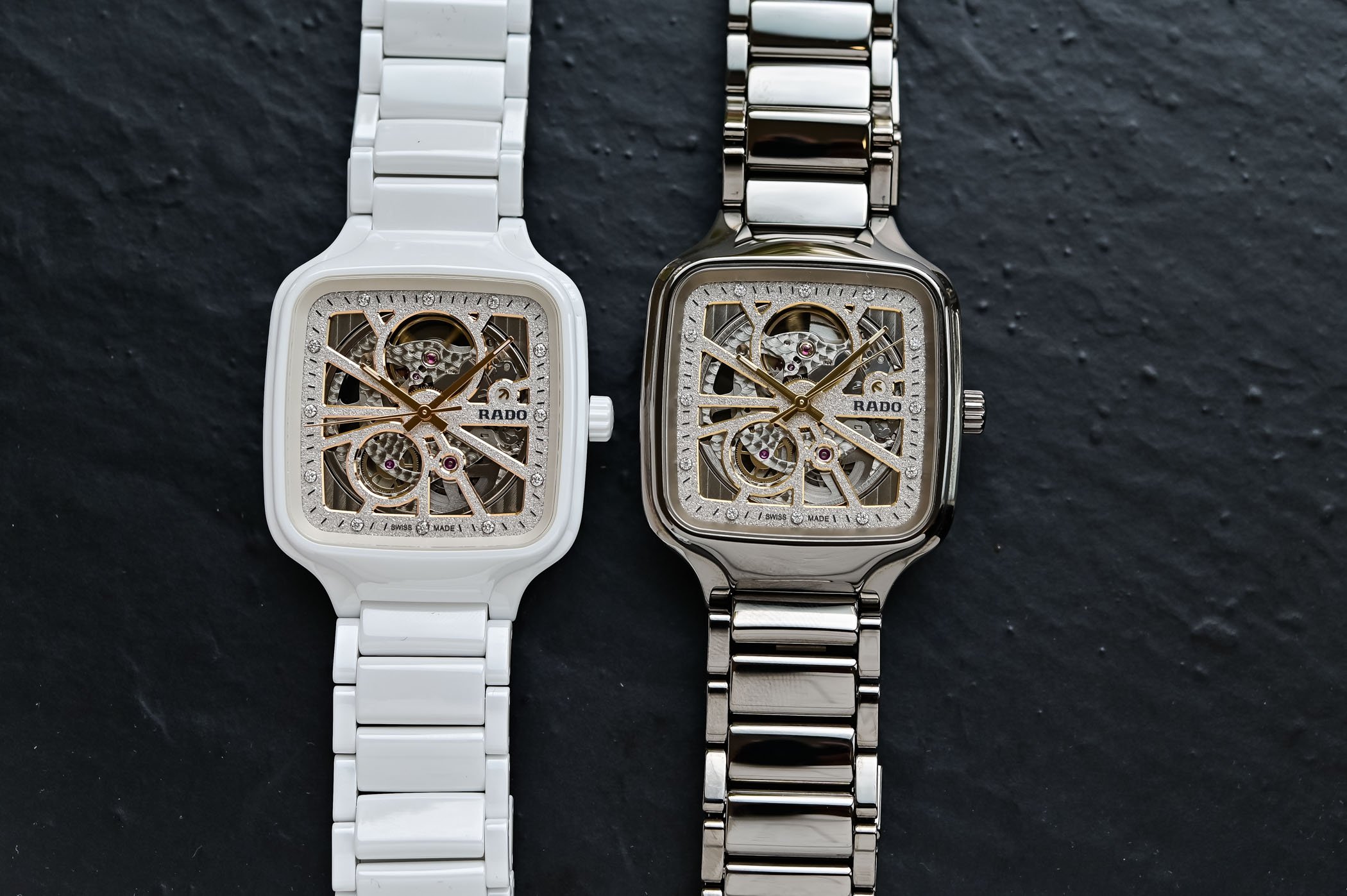
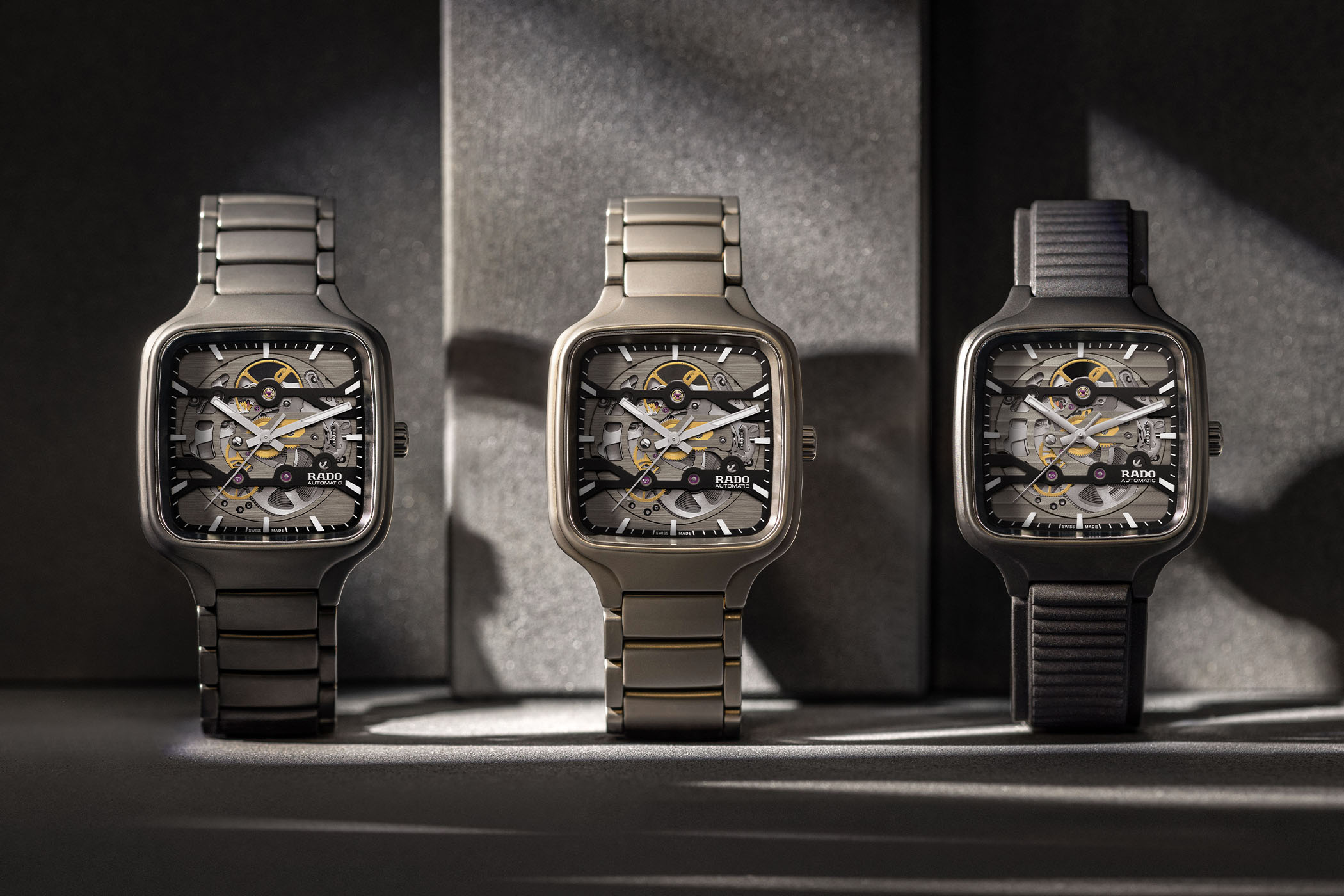
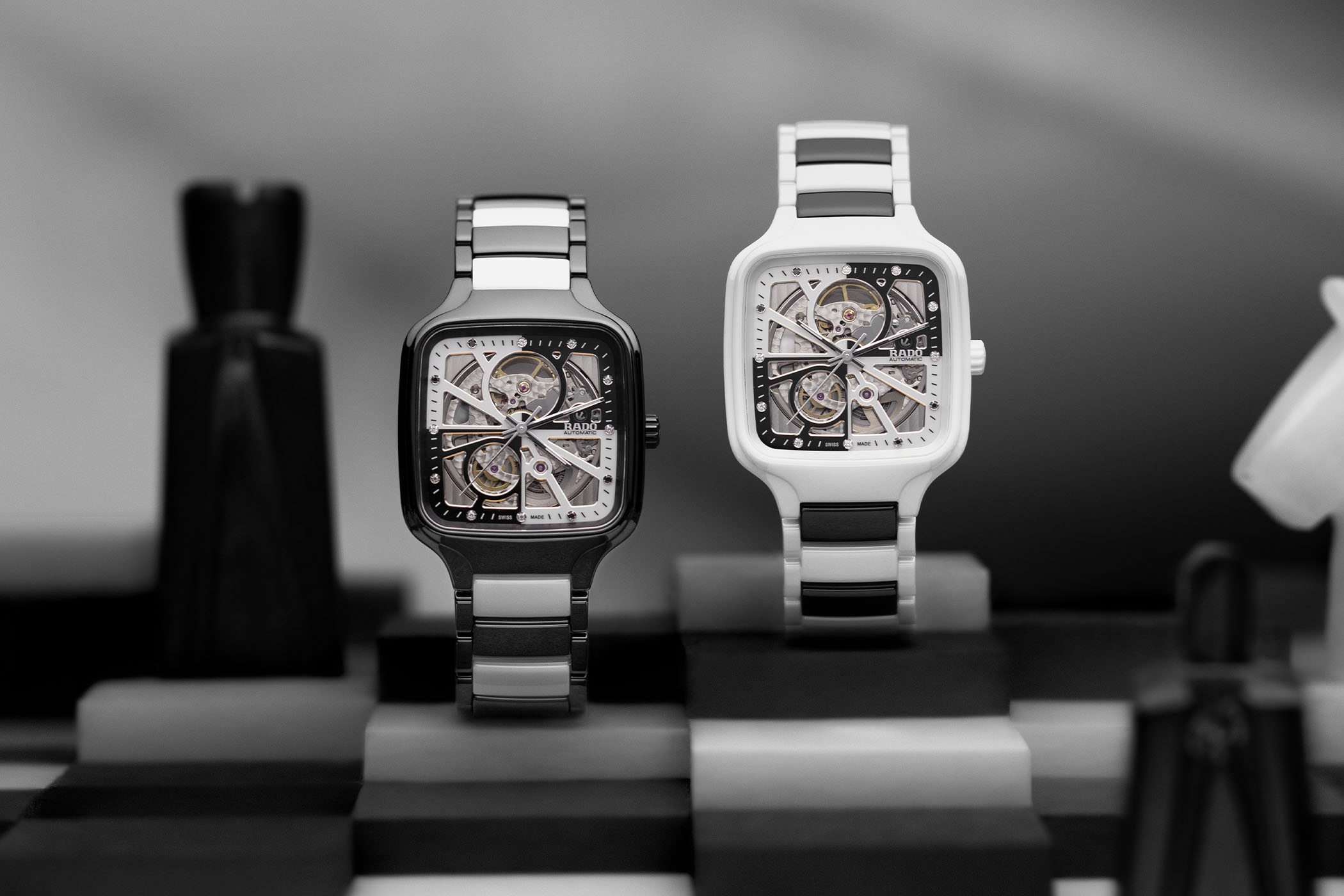
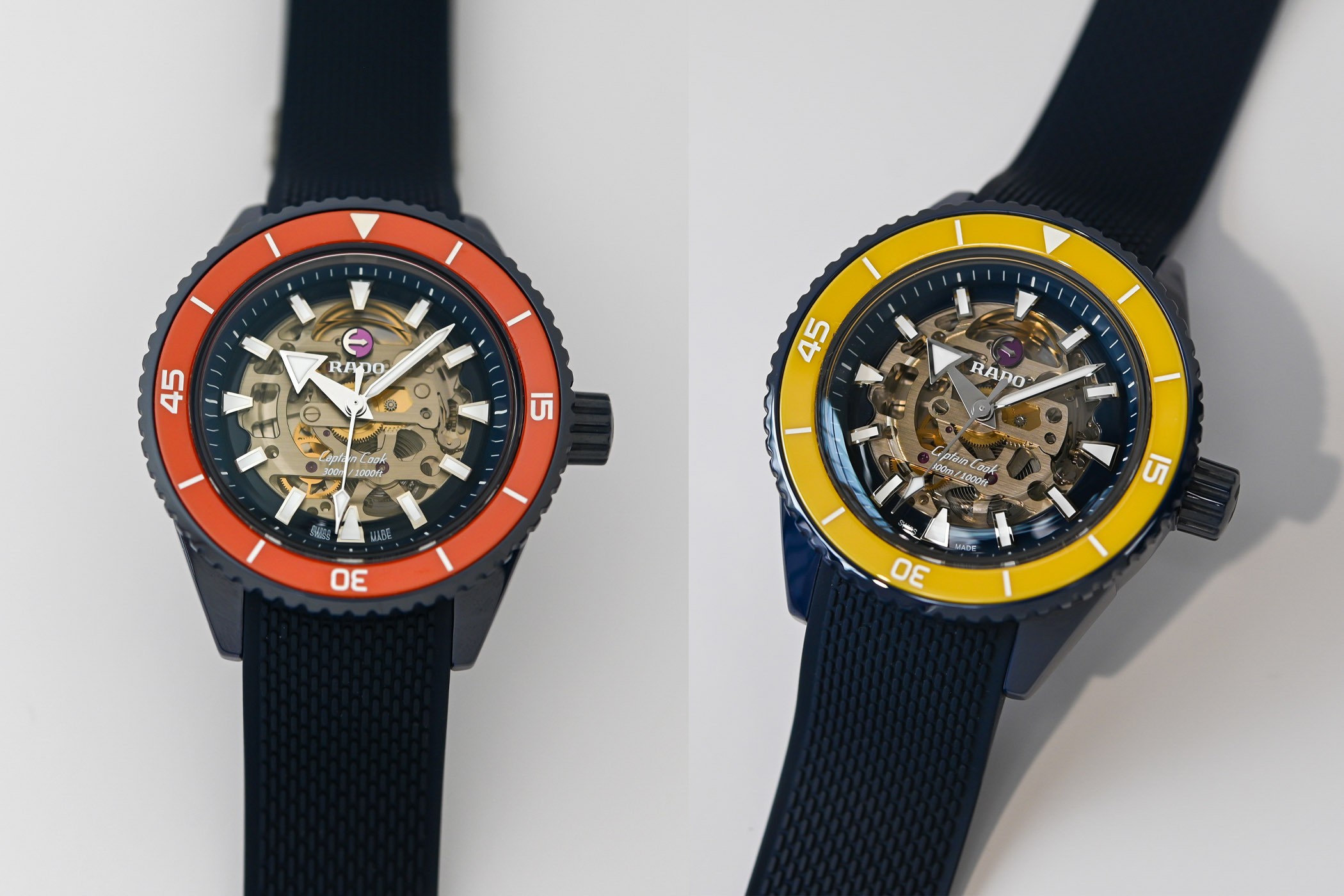
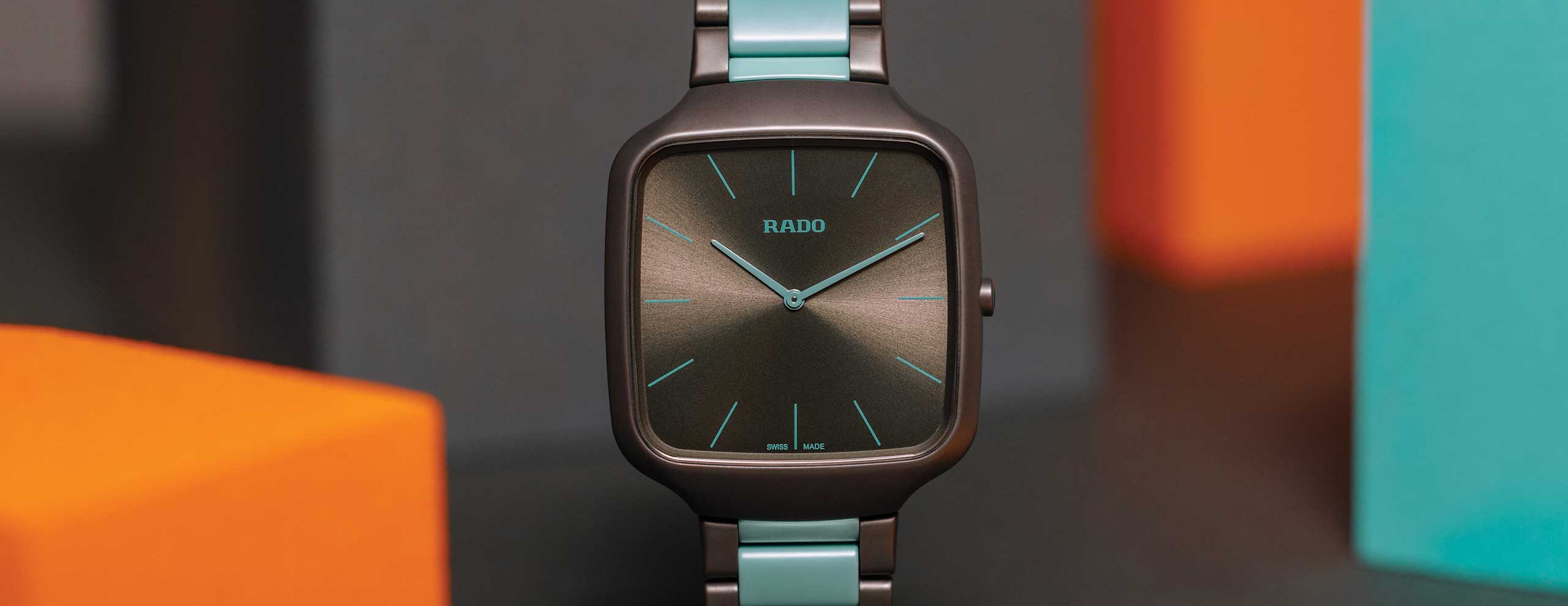
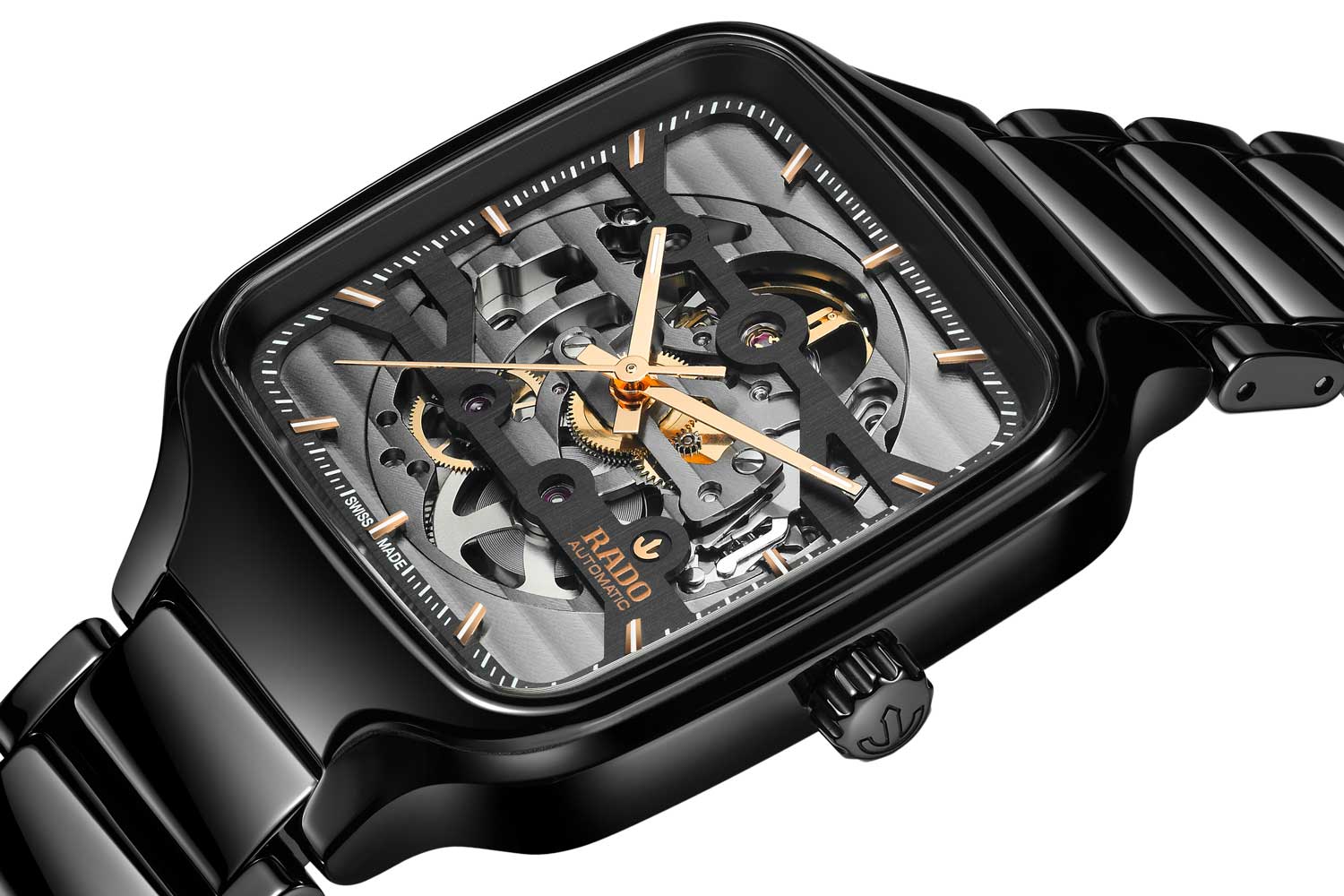
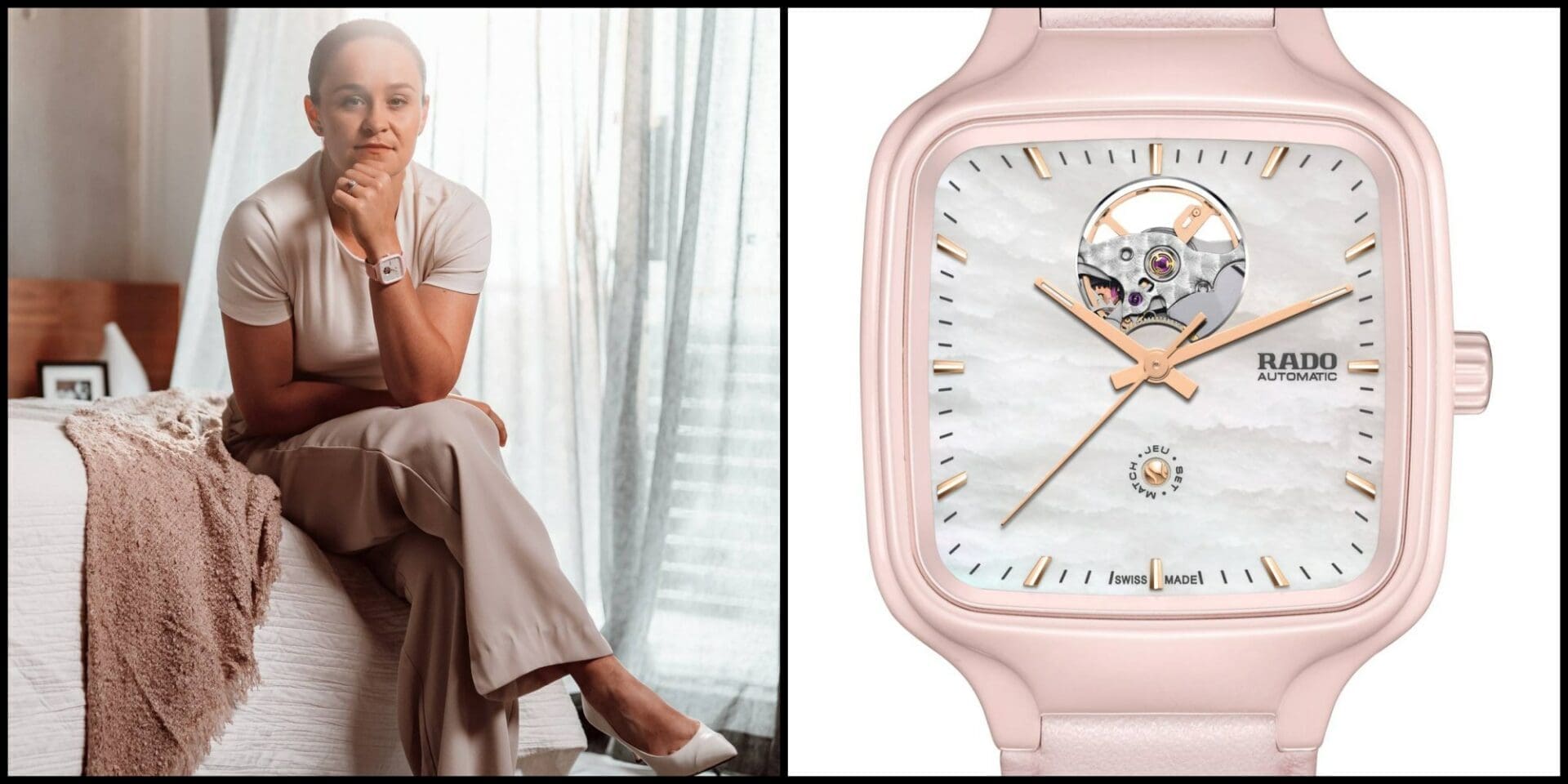
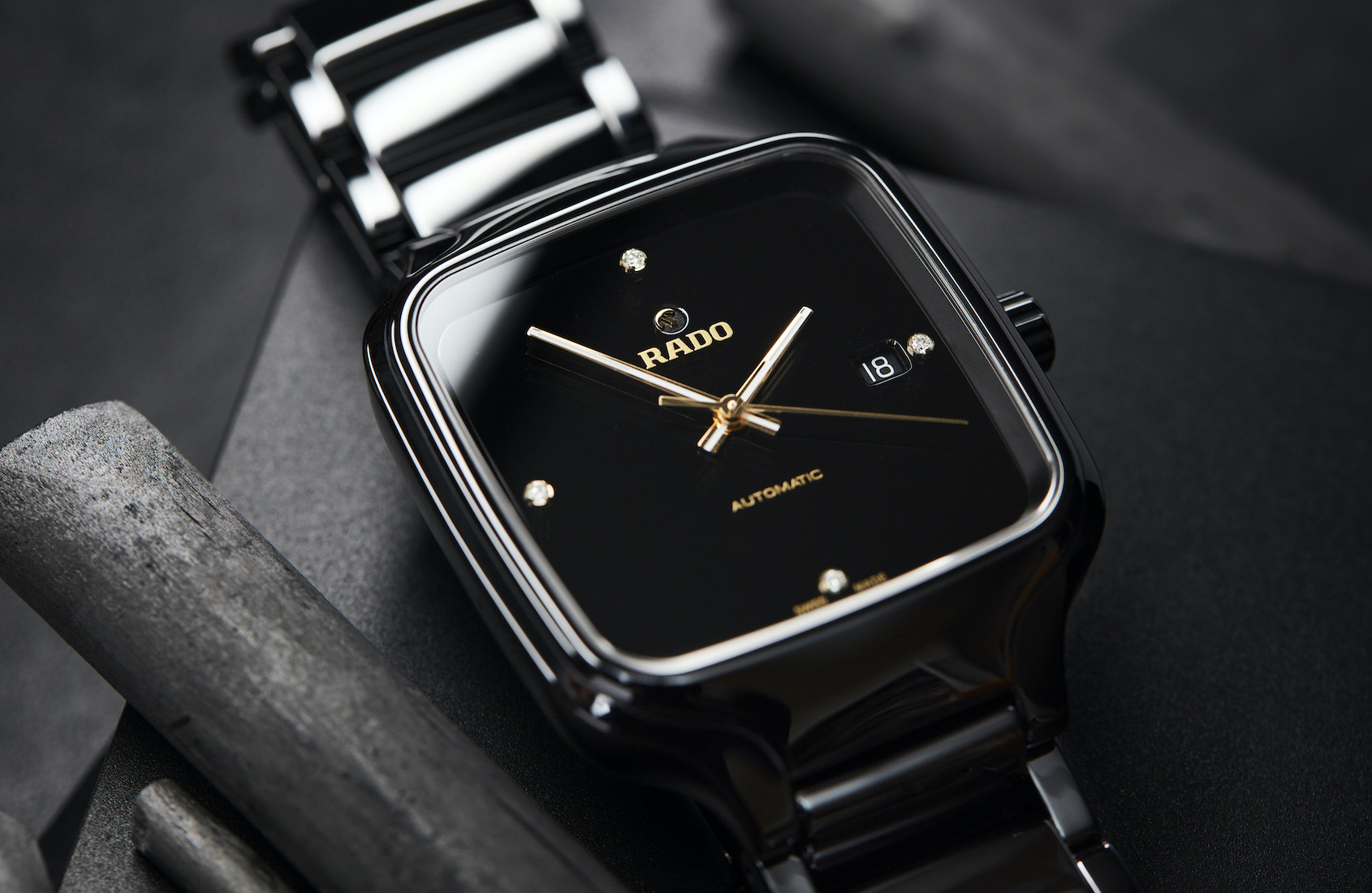
Rado has used plasma high-tech ceramic across multiple modern collections. The Rado True Square Plasma (multiple references) demonstrates the warm metallic-grey finish; the Captain Cook High-Tech Ceramic Diver uses plasma processing in selected references; the HyperChrome family rotates through ceramic finishing variations including plasma. The visual signature is distinctive: a Rado ceramic with the metallic-grey "plasma" finish looks like brushed titanium or tungsten without any of the weight or scratch susceptibility.
For buyers, the practical advantage is the visual identity at lightweight + scratch-proof construction. A plasma high-tech ceramic Rado on a wrist looks like a metal watch but weighs 30-50% less than an equivalent steel piece and is essentially scratch-proof in normal wear. The disadvantage is the same as conventional ceramic: impact-shock vulnerability (a hard drop on a tile floor can shatter a ceramic case in a way steel would not), and no field repair (a chipped corner cannot be polished out). The retail price tier (Rado typically CHF 1,500-3,500 for plasma ceramic models) reflects the manufacturing complexity.
Plasma high-tech ceramic remains unique to Rado in the modern watch industry. The patent and process are not licensed; competing ceramic-led brands (Hublot, IWC, Panerai, Omega, Audemars Piguet) use various coloured zirconia ceramic firing variations and PVD-coated ceramic but not the plasma secondary firing. This makes plasma ceramic a brand-recognition technical signature for Rado in the broader Swatch Group portfolio.




Comments 1