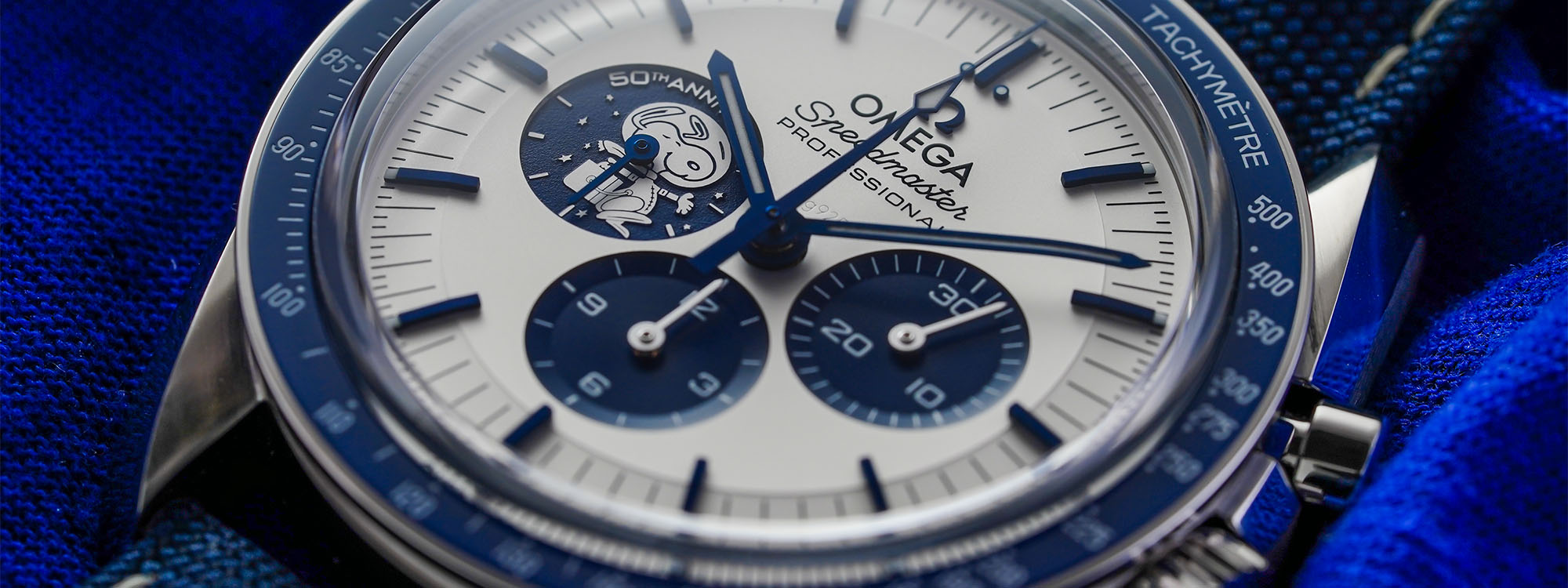
The Silver Snoopy Award programme was established by NASA in 1968 as a peer-to-peer honour for excellence in crew safety. The Apollo Programme's contractor base ran into the tens of thousands across hundreds of companies; the Silver Snoopy was designed as a recognisably special, personal honour given by an astronaut directly to an individual or company rather than a corporate-to-corporate award. Charles M. Schulz licensed the use of his Peanuts character Snoopy to NASA at no cost; the Apollo-era Snoopy in his white spacesuit appeared in NASA training materials and on hundreds of mission patches.
The award itself is a sterling silver Snoopy lapel pin, approximately one inch tall, depicting Snoopy in his white EVA spacesuit and helmet. Each pin is flown in space on a manned NASA mission before being presented; it is accompanied by a certificate signed by an astronaut that names the specific flight on which the pin was carried. The award has been given fewer than 25,000 times across the entire Apollo, Shuttle, and ISS programmes, an extreme rarity given the size of the NASA contractor base.
"For dedication, professionalism, and outstanding contributions in support of the first United States Manned Lunar Landing Project."- NASA Silver Snoopy Award certificate boilerplate
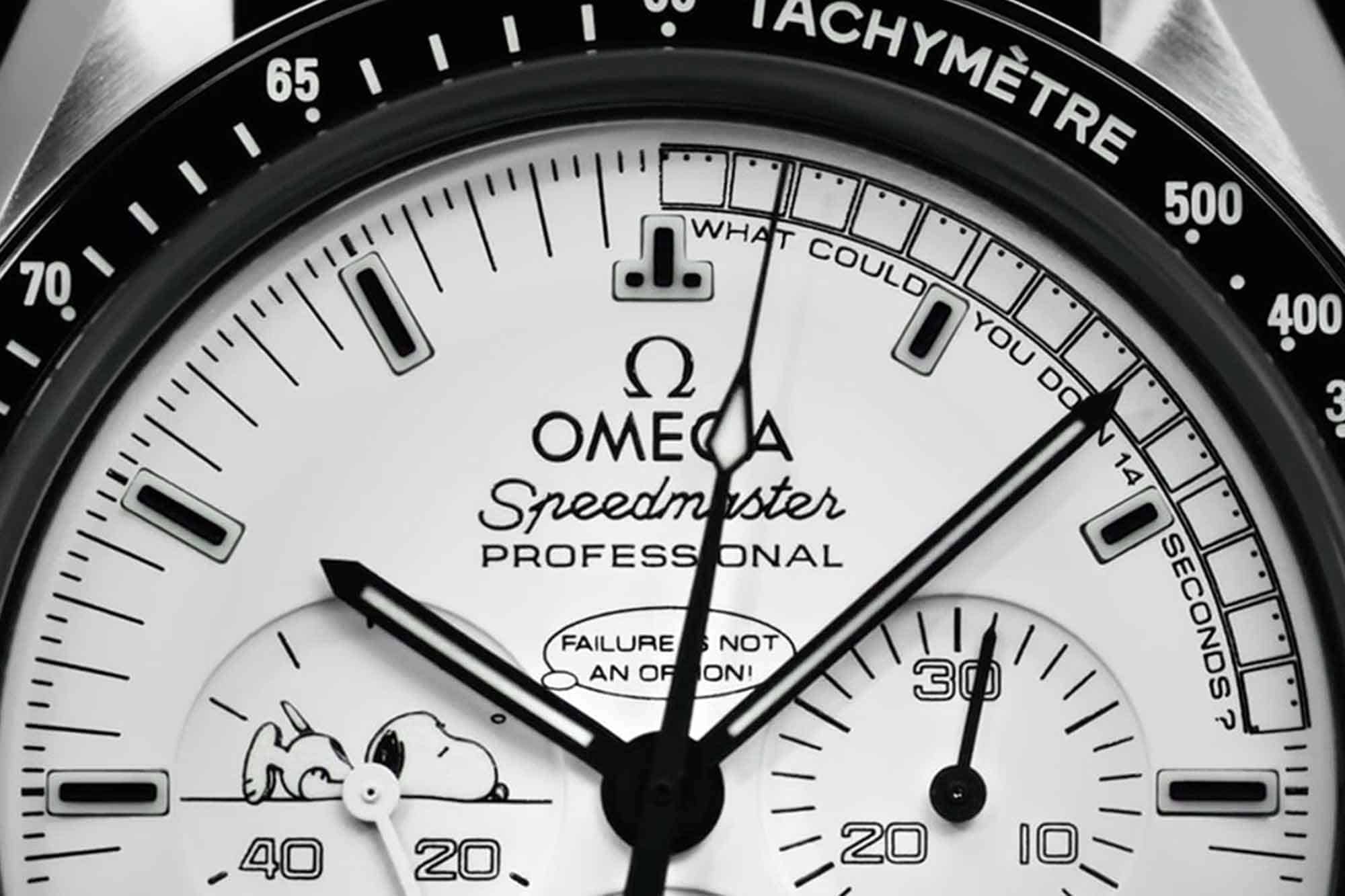
On 14 April 1970, two days into the lunar trajectory, the Apollo 13 oxygen-tank explosion crippled the Service Module and required the crew to use the Lunar Module as a lifeboat. Two days later the crew faced a 14-second engine burn on the LM's descent stage to make the final correction onto the free-return trajectory home. With the Service Module dead and computer-aided timing unavailable for the critical last burn, Commander Jim Lovell manually timed the 14-second burn using his Omega Speedmaster Professional reference 105.012 (or 145.012, contemporary records vary). The burn succeeded; Apollo 13 splashed down on 17 April with all three crew alive.
On 5 October 1970, six months after the safe return of Apollo 13, the Silver Snoopy was awarded to the Omega Watch Co. in a ceremony at the Manned Spacecraft Center (now Johnson Space Center). The pin was presented by astronaut Tom Stafford on behalf of the Apollo astronaut corps. The accompanying certificate cites the Speedmaster's role in the Apollo 13 free-return engine burn timing and recognises the Moonwatch's contribution to "operational dependability and crew safety in extreme conditions" across the Apollo programme.
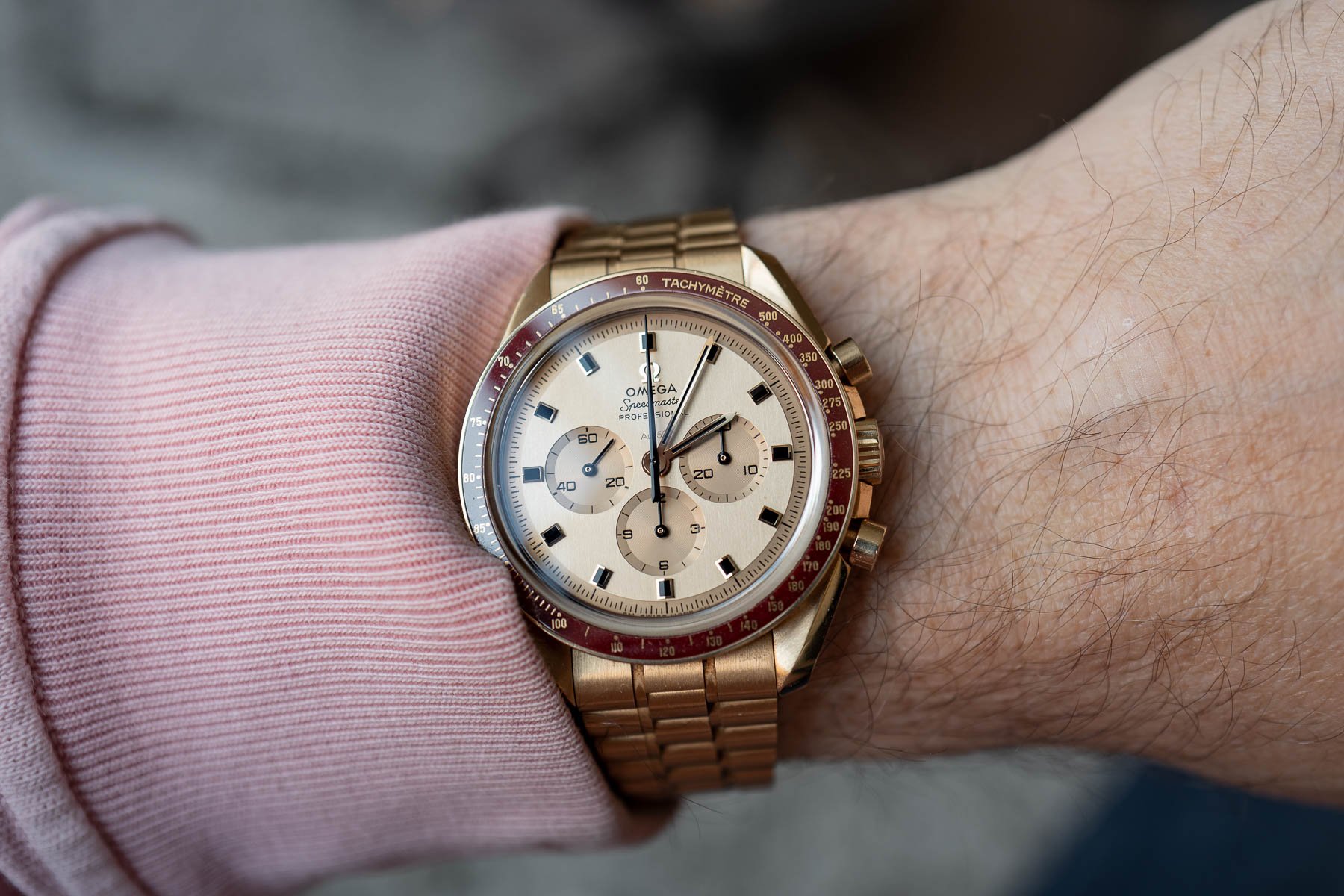
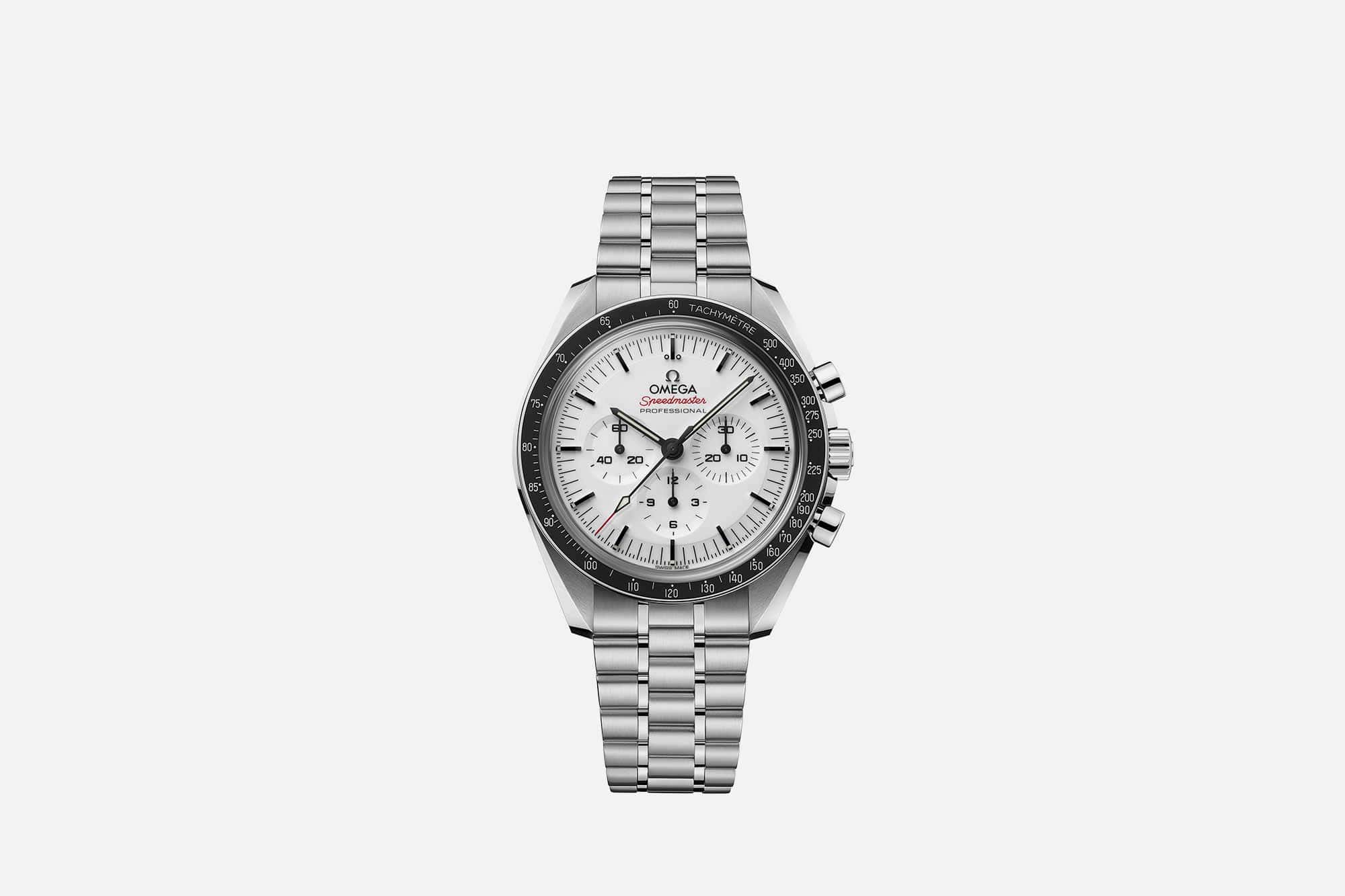
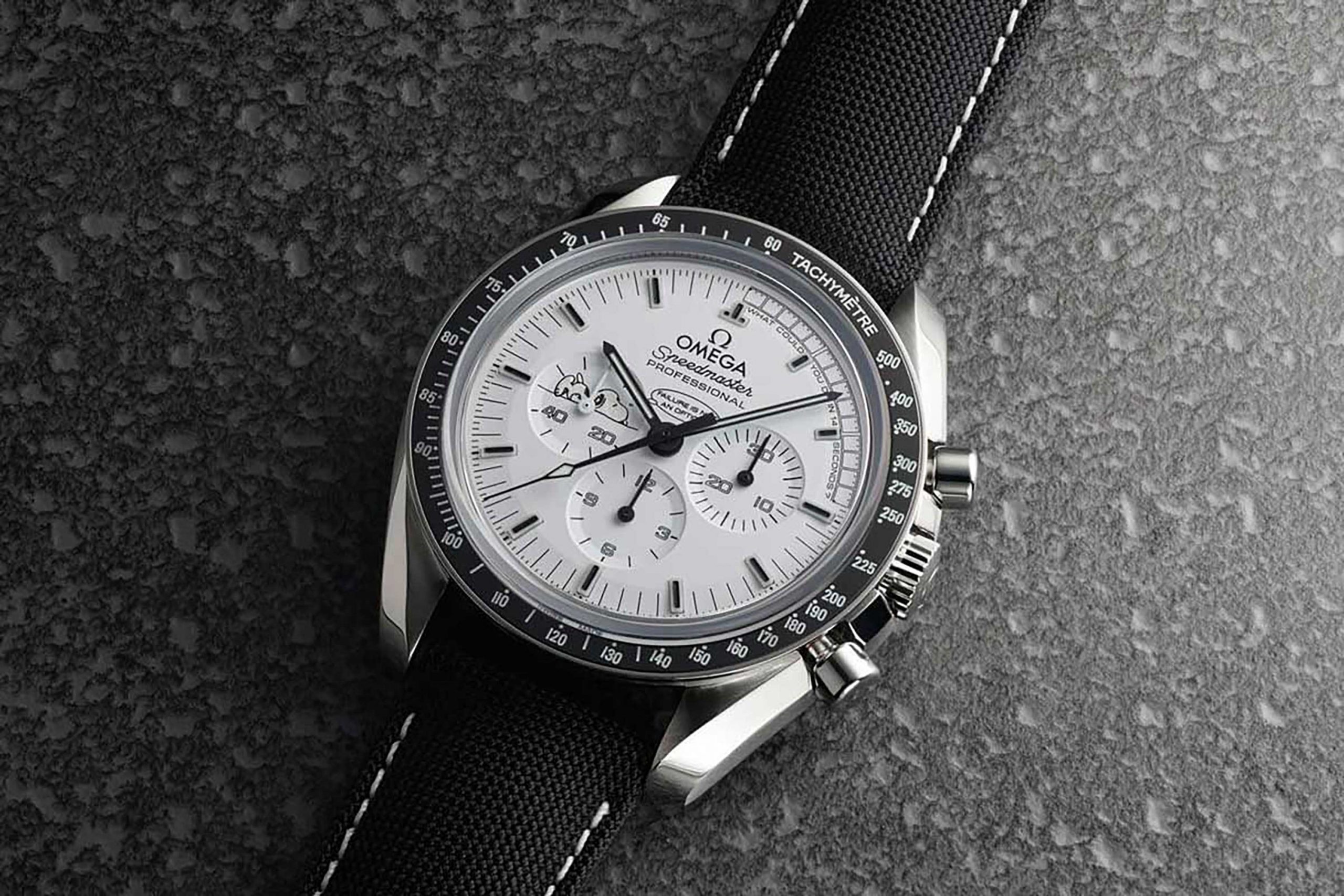
Omega has commemorated the 1970 Silver Snoopy Award in three formal limited-edition Speedmasters: (1) the 2003 Speedmaster "Mission Apollo XIII Silver Snoopy Award" (ref. 3578.51.00, 5,441 pieces, white dial with Snoopy at 9 o'clock); (2) the 2015 Speedmaster "Apollo 13 Silver Snoopy Award" 45th Anniversary (ref. 311.32.42.30.04.003, 1,970 pieces, white silver-plated dial with Snoopy in a starry sky on the caseback); (3) the 2020 Speedmaster "Silver Snoopy Award" 50th Anniversary (ref. 310.32.42.50.02.001, regular production, with a rotating Snoopy on the caseback that animates during the 14-second chronograph burn re-enactment). Each edition is significantly collected and trades well above retail on the secondary market.
Beyond the Speedmaster commemoratives, the 1970 Snoopy Award remains the most heavily marketed single endorsement in watchmaking history. It is the canonical confirmation of the Speedmaster's qualification for actual life-and-death timing tasks on a NASA mission, distinct from the much more frequently cited 1965 NASA flight qualification (which certified the Speedmaster as flight-suitable but did not document a specific operational use). The Snoopy pin is also one of the few NASA artefacts that has crossed cultural boundaries far beyond aerospace, becoming a recognisable Easter-egg detail in watch enthusiast media and collector culture broadly.


Comments 1