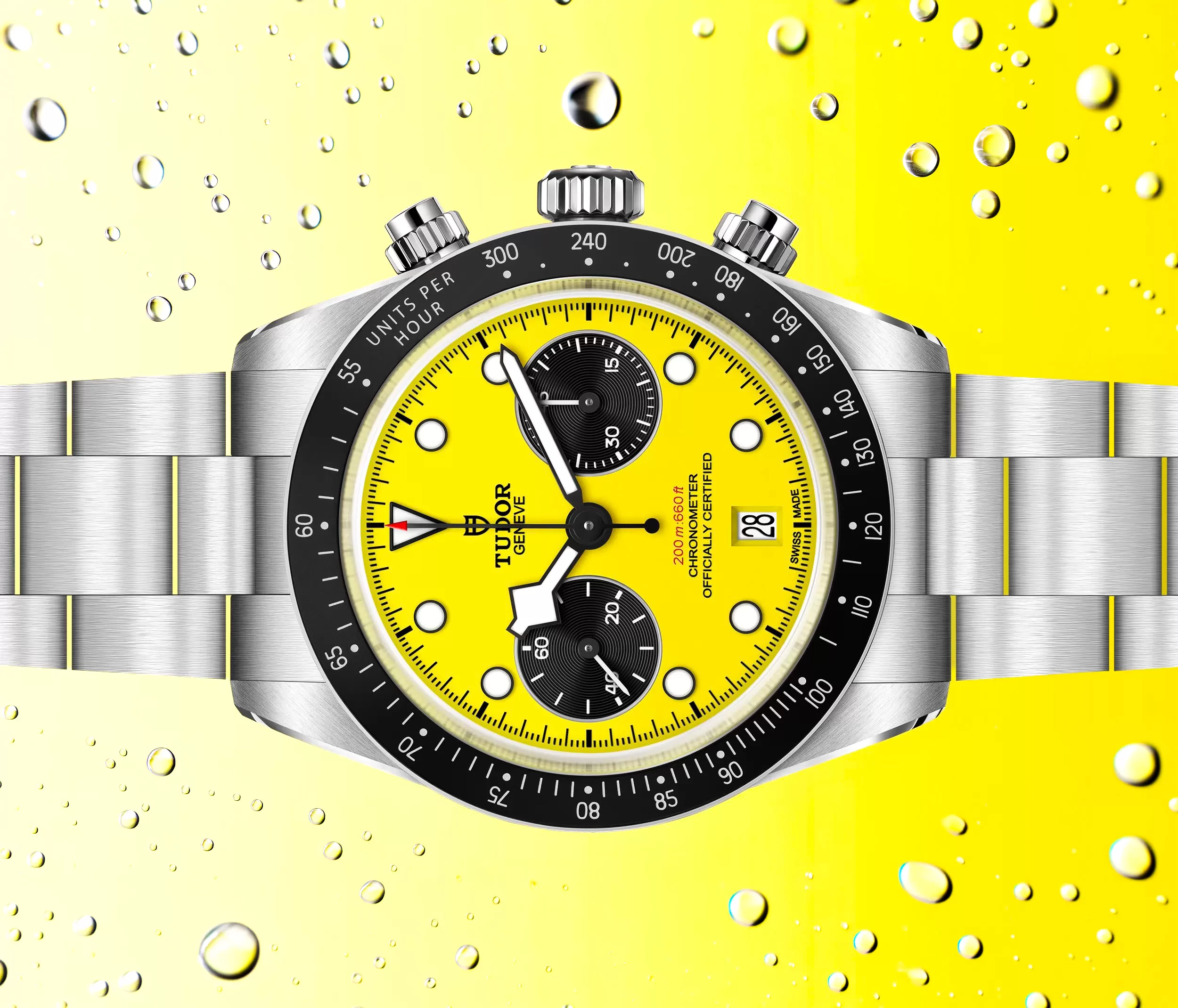
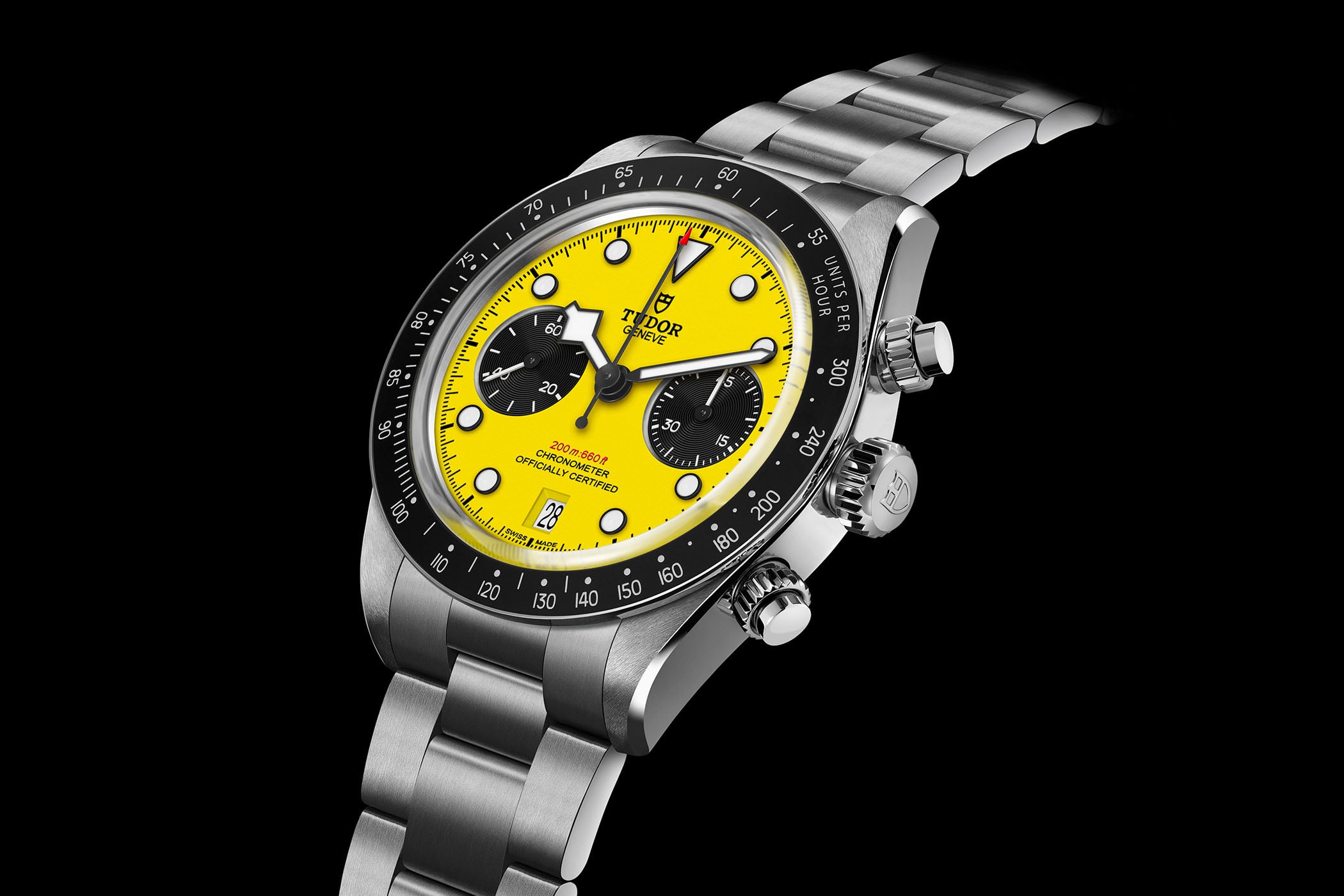
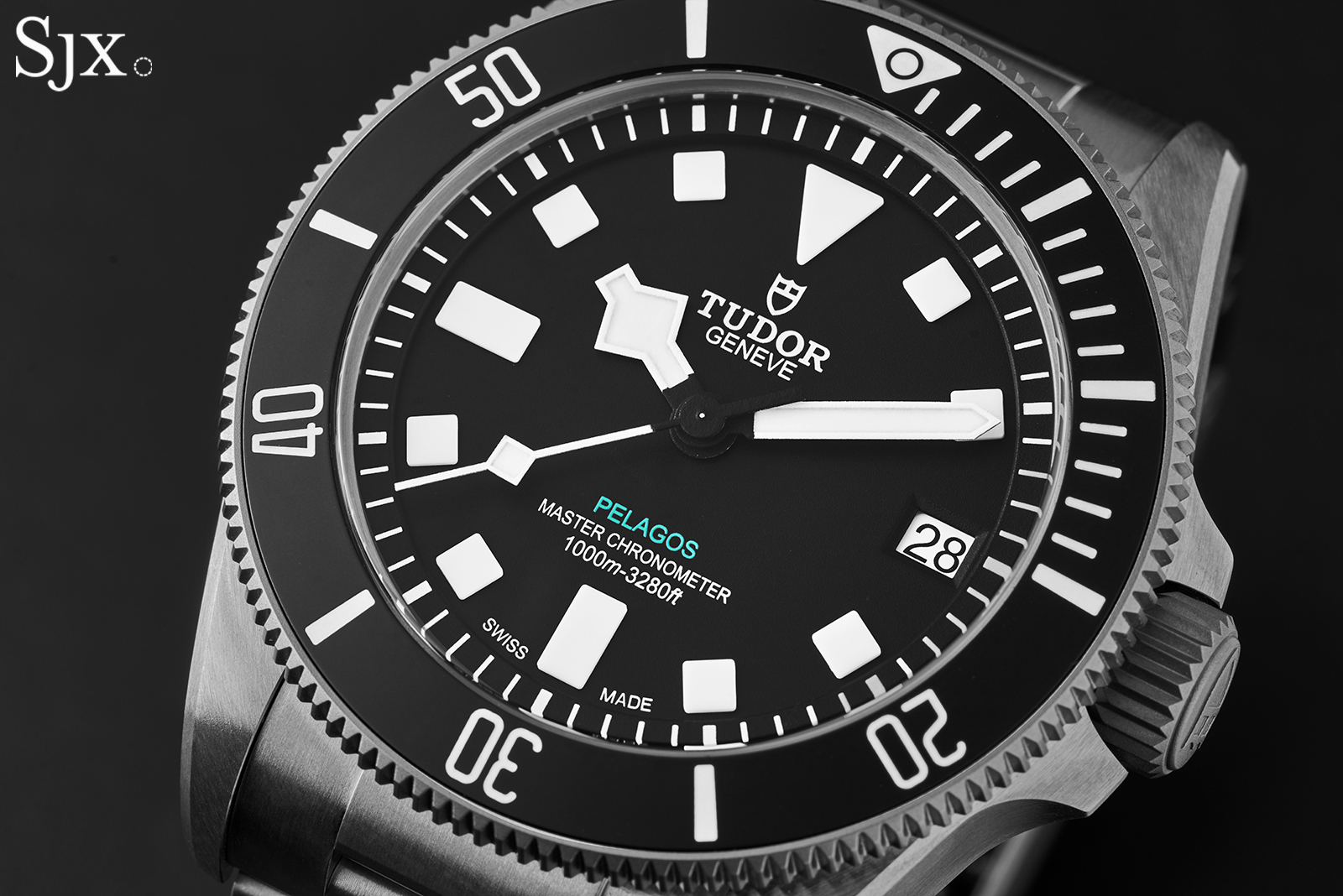
Snowflake hands are the visual identifier of Tudor diving watches. The hour hand is a flat trapezoidal blade with a wide, lume-filled body that tapers to a small square luminous tip; the broader rear section gives the hand a distinctive boxy outline that, viewed straight-on, resembles a stylised snowflake. The hand was first applied to the Tudor Submariner ref. 7016/0 in 1969, designed specifically for the French Marine Nationale (MN), the French navy, which had purchased Tudor Submariners as standard-issue diving watches since the early 1950s.
The MN had a specific underwater-legibility requirement that the standard Mercedes hour hand on the Tudor/Rolex Submariner did not satisfy: at depth, the difference between the hour and minute hands needed to be obvious at a glance, and the hour hand needed to carry as much luminous material as possible. Tudor's response was to redesign the hour hand into a flat blade roughly twice the width of the minute hand, fill nearly all of it with lume, and terminate it in a small luminous square tip rather than the conventional pointed tip. The minute hand was redesigned to match: a long flat baton with a luminous square tip. Together the two hands have very different silhouettes and very similar end-points, making time-reading unambiguous in any light.
"The Snowflake hand is what tells you, at first glance, that this is a Tudor and not a Rolex. It is the deliberate moment in 1969 when Tudor decided to look like itself."- Tudor design analysis, Hodinkee Reference Points, Pelagos edition
The 7016/0 was followed by the ref. 9401/0 (1973-1979), the ref. 76100 (early 1980s), and ref. 79090 (mid-1980s through 1995). The Snowflake stayed in production through the entire MN procurement window. Tudor sold approximately 4,000 Snowflake Submariners to the French navy alone between 1969 and 1984; civilian production added probably twice that. By the late 1990s Tudor had quietly removed the Snowflake from its catalogue; the 1990s and 2000s Tudor Submariners reverted to the conventional Mercedes hand.
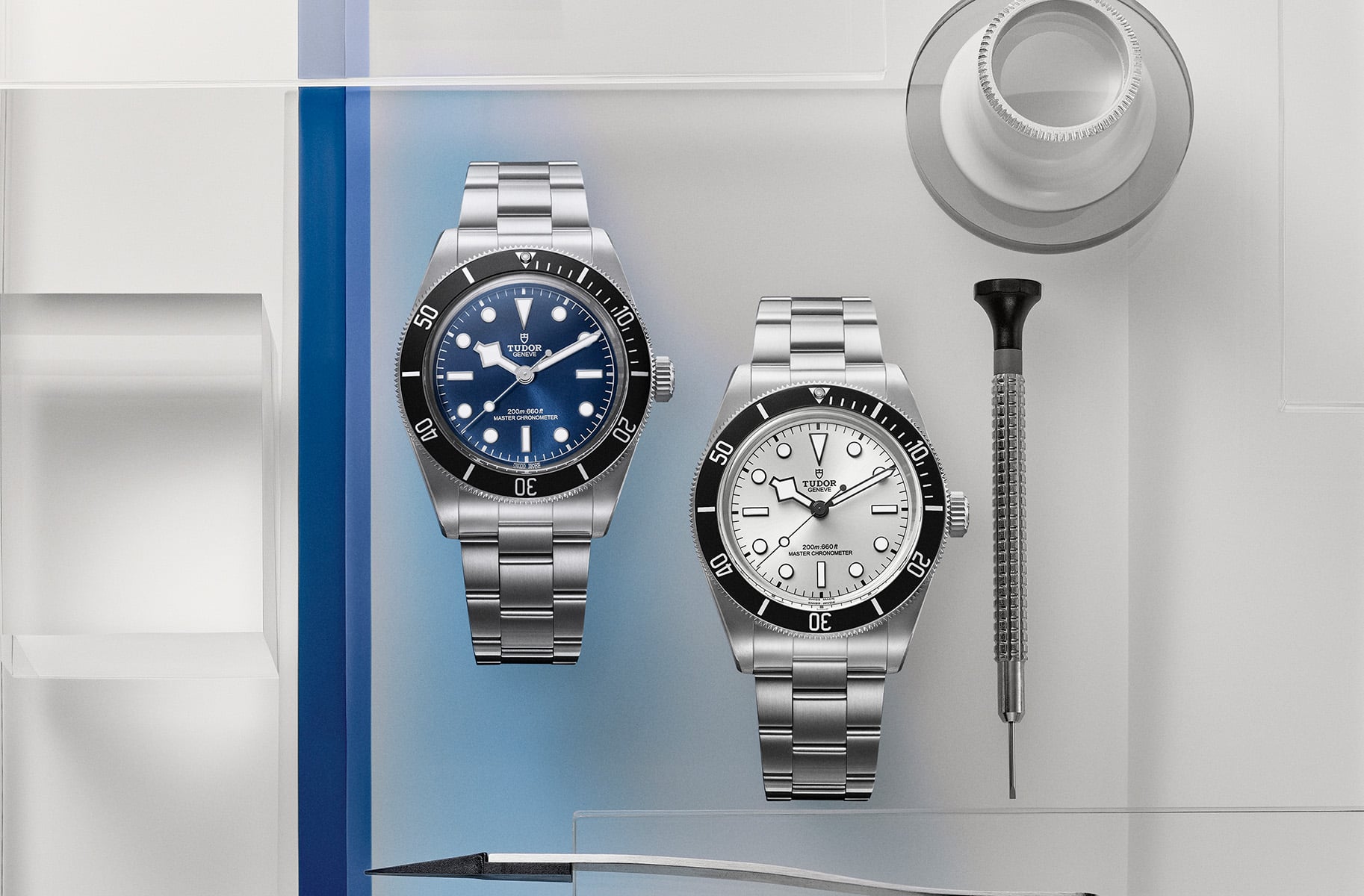
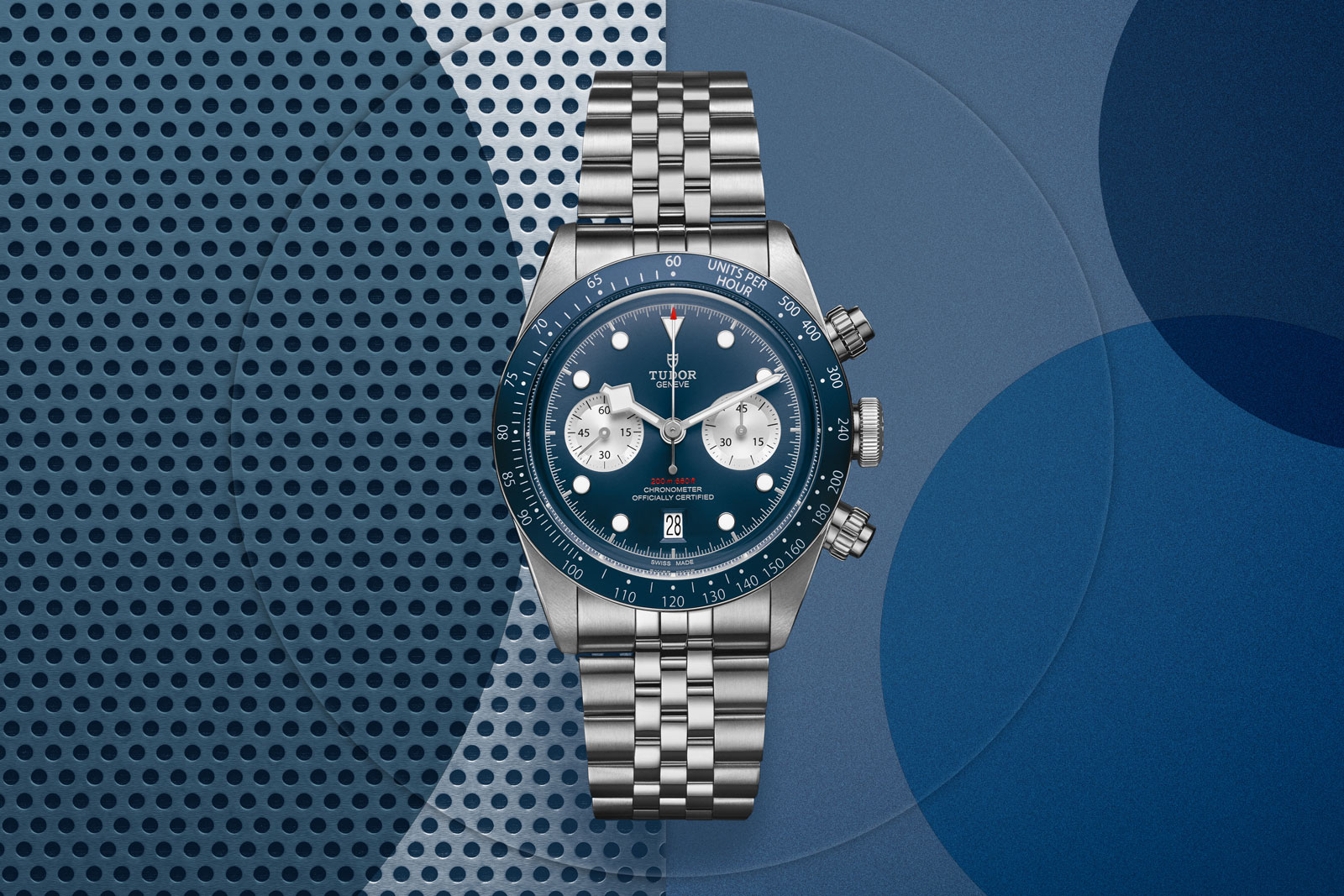
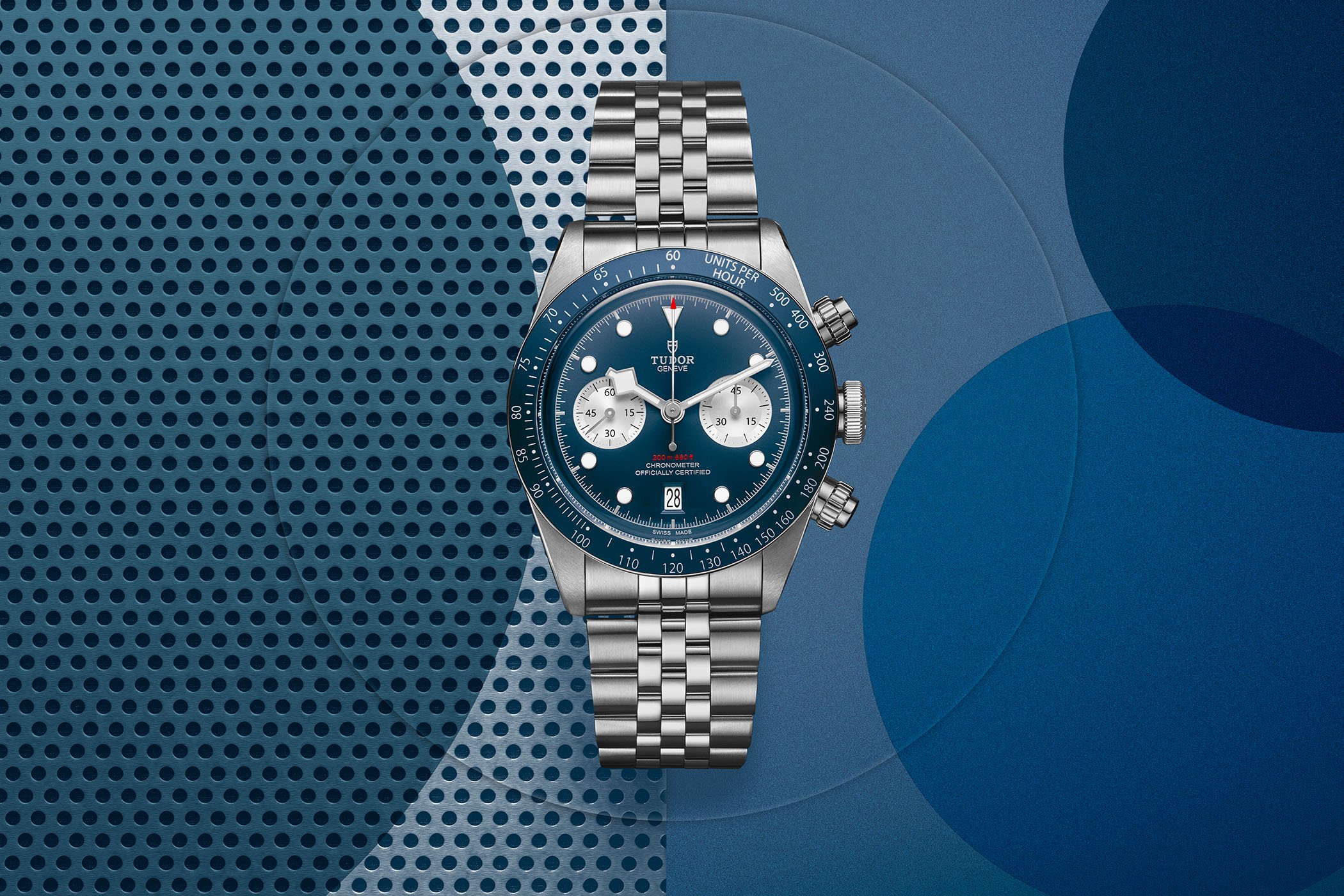
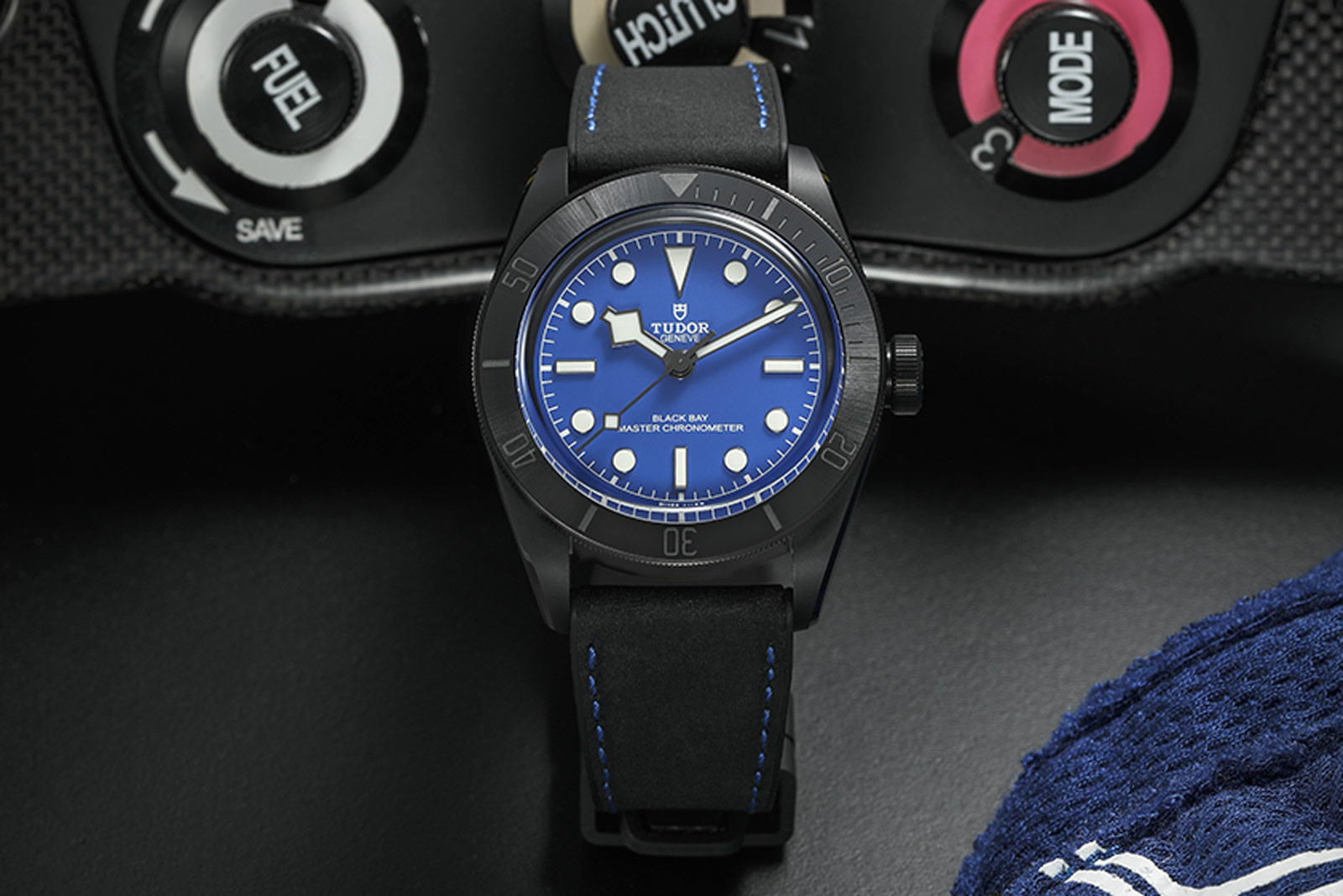
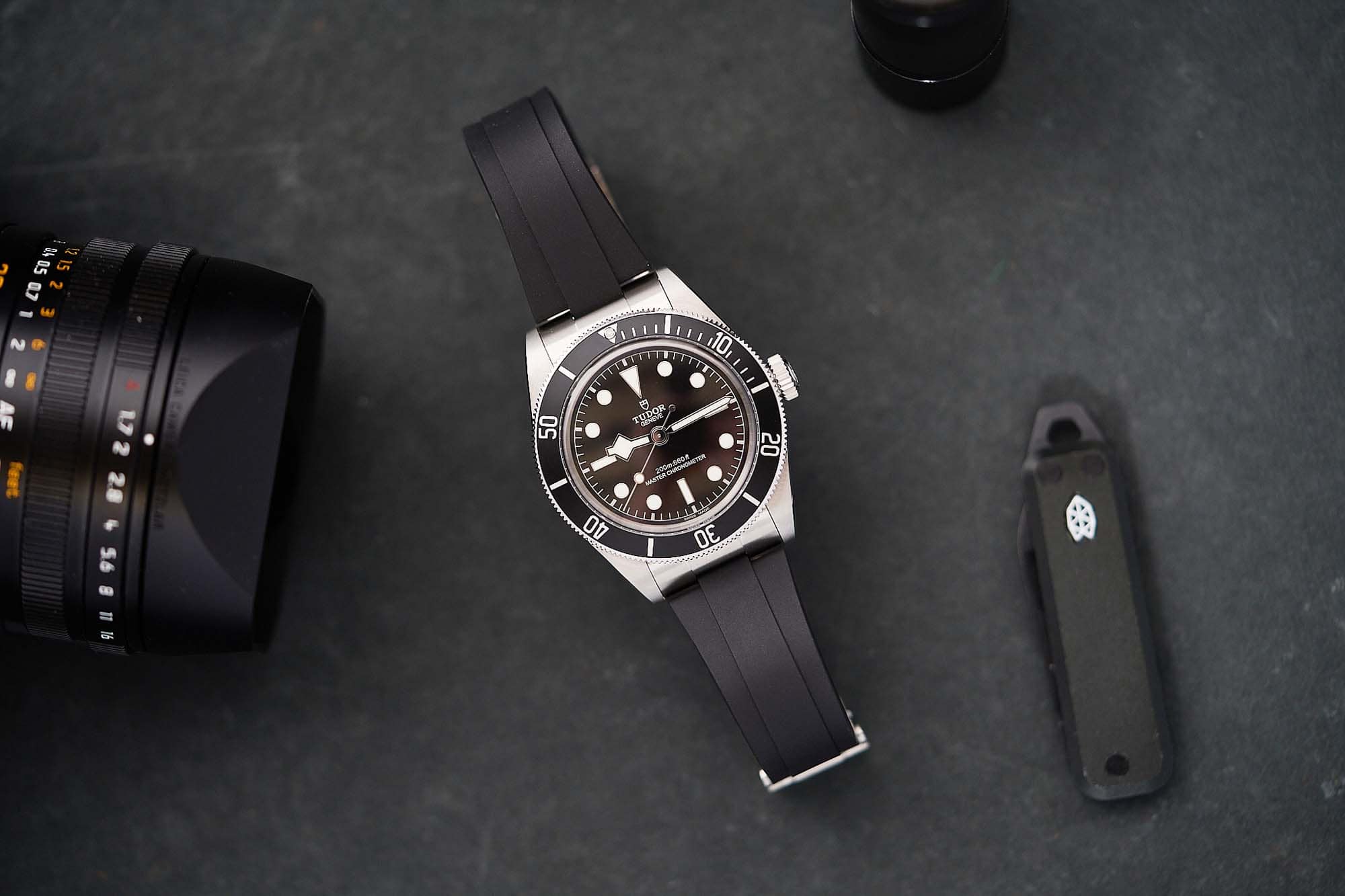
The Snowflake returned to the Tudor catalogue in 2012 on the Tudor Pelagos (titanium dive watch, helium escape valve, 500 m water resistance), and a year later on the Heritage Black Bay. The 2012 Pelagos used the Snowflake as a deliberate vintage-revival cue, signalling that the new Tudor was a return to the brand's 1970s tool-watch identity rather than a re-skin of Rolex. The decision was successful; by 2018 the Snowflake had become Tudor's most-recognised design element, applied to every Black Bay, Black Bay 58, Black Bay Pro, and Pelagos reference. The strategy explicitly mirrored Rolex's use of the Mercedes hand as a sport-line identifier; the Snowflake is Tudor's analogous brand cue.
Outside Tudor, the Snowflake is essentially exclusive. Other brands that have built tool-watch hour hands designed for maximum lume area (the plongeur "lollipop" on Doxa Sub, the arrow hand on Omega Seamaster 300, the broad arrow on early Omega military) are visually distinct enough that they are not confused with the Snowflake. Some microbrand homages and small independents have used the trapezoidal-blade-with-square-tip geometry, but the silhouette has a very specific Tudor association in collector vocabulary, similar to how the Mercedes hand is shorthand for "Rolex sport reference".
For the modern Tudor catalogue, the Snowflake is functionally a brand identifier as much as a design choice. A Tudor without the Snowflake is now reserved for non-diver lines (the Royal collection, the 1926 collection, the Glamour Date-Day); a Tudor diver, in 2024, has Snowflake hands as a near-permanent specification. The geometry has been refined slightly across the modern run (the Pelagos hand is fractionally cleaner; the Black Bay 58 hand is fractionally smaller in proportion to the case) but the underlying design, set in 1969 for the French navy, has not fundamentally changed in 55 years.



Comments 3