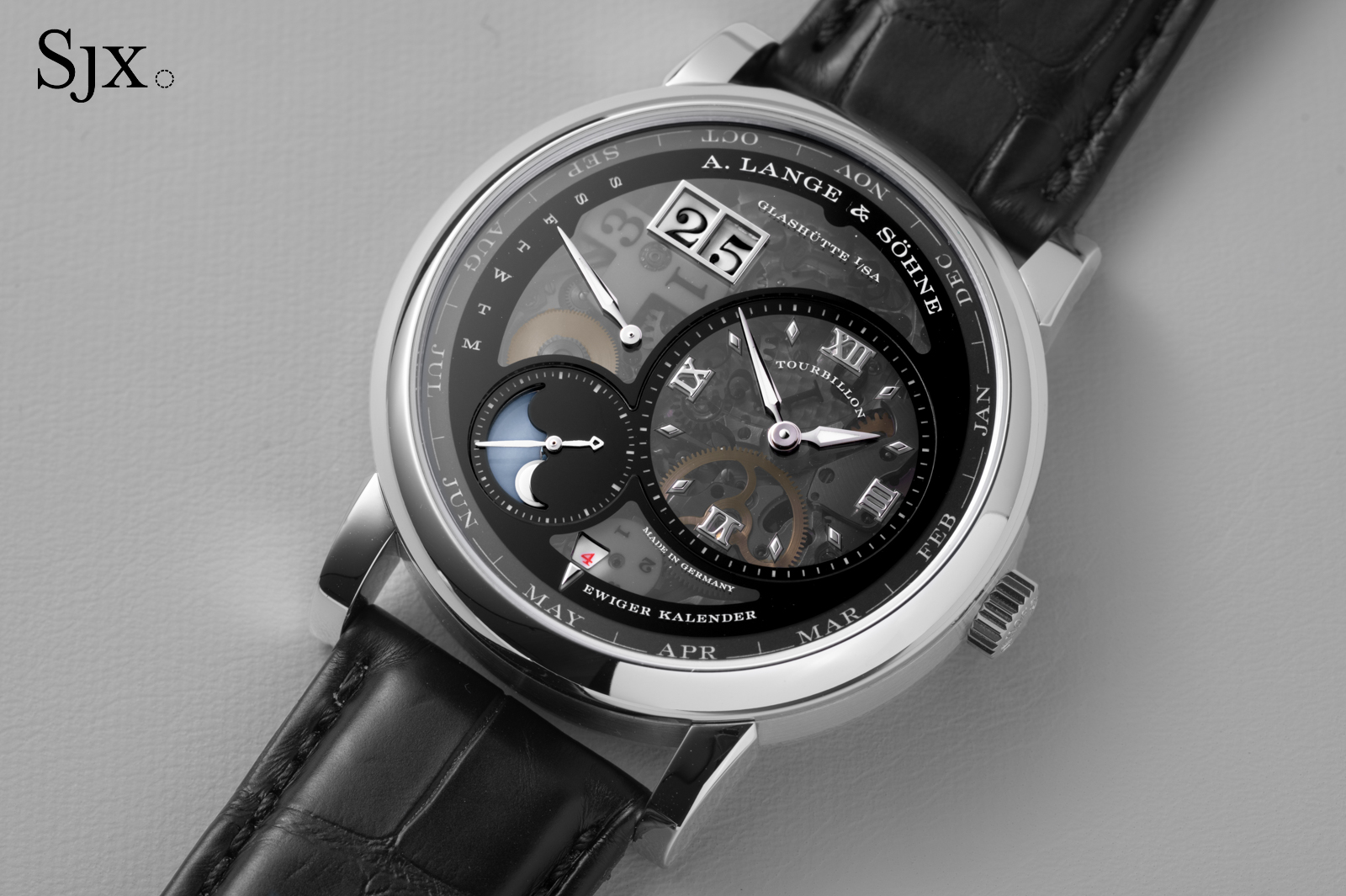
Three generations of luminous pigment have appeared on watch dials over the 20th century. Radium paint (zinc sulfide activated with radium-226) was the original, introduced around 1910 after Marie Curie's work on radioactivity. Radium is intensely radioactive and activates the zinc sulfide continuously, so it glows without needing to be charged. The women who hand-painted radium dials in factories in the 1910s-1930s (notoriously at the US Radium Corporation in Orange, New Jersey) developed jaw cancers and radiation poisoning from licking their brushes. Radium paint was phased out of civilian watchmaking through the 1960s and banned entirely in most jurisdictions.
Tritium (hydrogen-3) paint replaced radium from the 1960s. Tritium emits beta particles that are stopped by the watch crystal, so it is far less dangerous than radium, though still regulated. Dials painted with tritium bear a T SWISS T or T SWISS MADE T marking, visible under the dial at 6 o'clock. Tritium's half-life is 12.3 years, so tritium dials lose their glow gradually and typically need reluming after 20 to 30 years. Tritium was phased out of Swiss watchmaking around 1998 in favour of non-radioactive alternatives, though it survives in tritium gas tubes (small sealed glass tubes embedded in hands and indices) used by military brands like Ball and some Marathons.
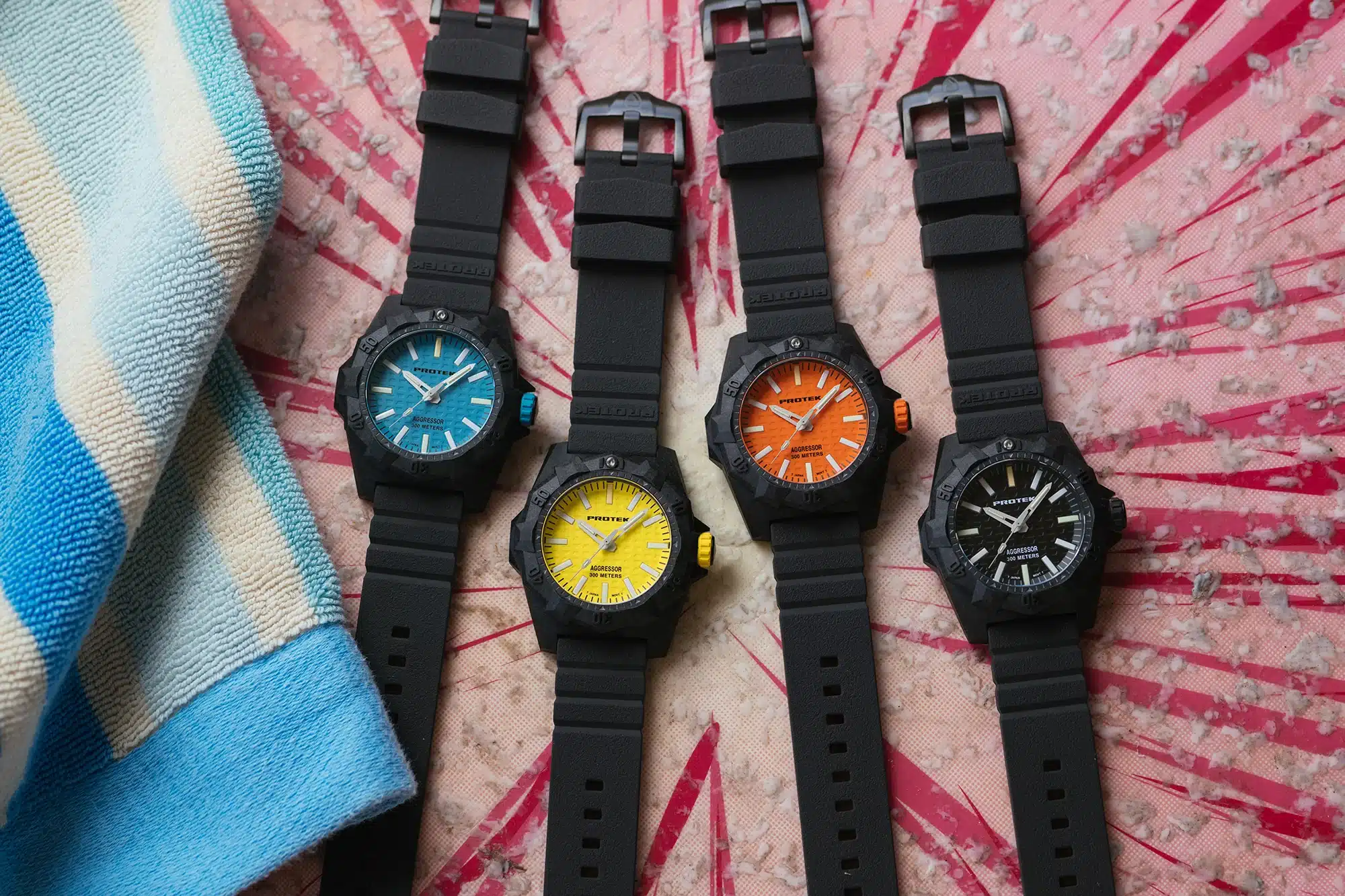
Super-LumiNova, invented in 1993 by Japanese firm Nemoto & Co. and commercialised through their Swiss subsidiary RC Tritec, replaced tritium as the Swiss industry standard. It is strontium aluminate doped with europium, a non-radioactive photoluminescent pigment that must be charged by exposure to light. A fully charged Super-LumiNova dial glows strongly for the first 30 to 60 minutes, then progressively dimmer for up to 12 hours. The pigment is available in multiple grades (A, B, C, X1 where X1 is brightest and most recent) and multiple colours (Standard green-blue, Old Radium beige for vintage look, Sea Blue, and so on).
Brand proprietary variants include Rolex's Chromalight (since 2008), a strontium-aluminate formulation tuned for blue emission that glows distinctly blue rather than the Super-LumiNova green-blue; Omega's Super-LumiNova blends; and Panerai's Old Radium tones designed to match the aged look of their vintage-inspired pieces. For military and search-and-rescue brands (Ball, Marathon, Luminox, Traser), H3 tritium gas tubes remain an option; they glow continuously for 20+ years without needing charging, at the price of regulatory complexity and a higher sticker.




Comments 2