
Tungsten carbide (chemical formula WC) is a chemical compound of tungsten and carbon that forms extremely hard ceramic-like crystals. In industrial use it is almost always processed as cemented carbide: tungsten-carbide grains sintered with a cobalt binder at high pressure and temperature, producing a dense composite material that is workable, machinable with diamond tooling, and significantly harder than any common metal. Cemented carbide is the standard material for industrial cutting tools (lathe inserts, drill bits, saw blades), giving it the colloquial nickname "industrial tooling material".
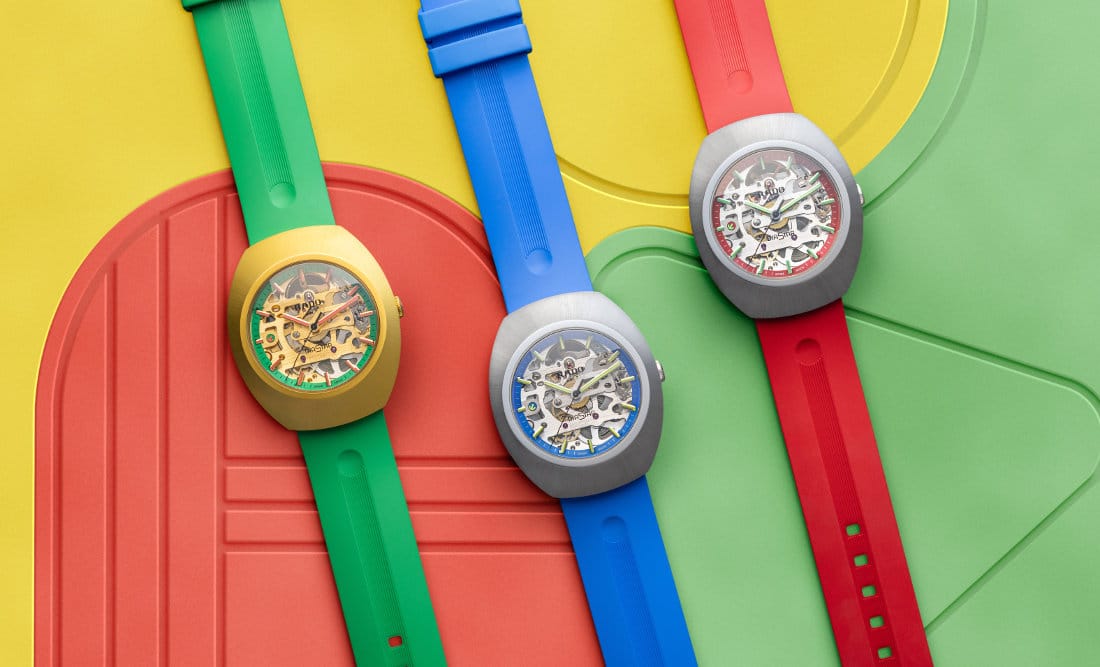
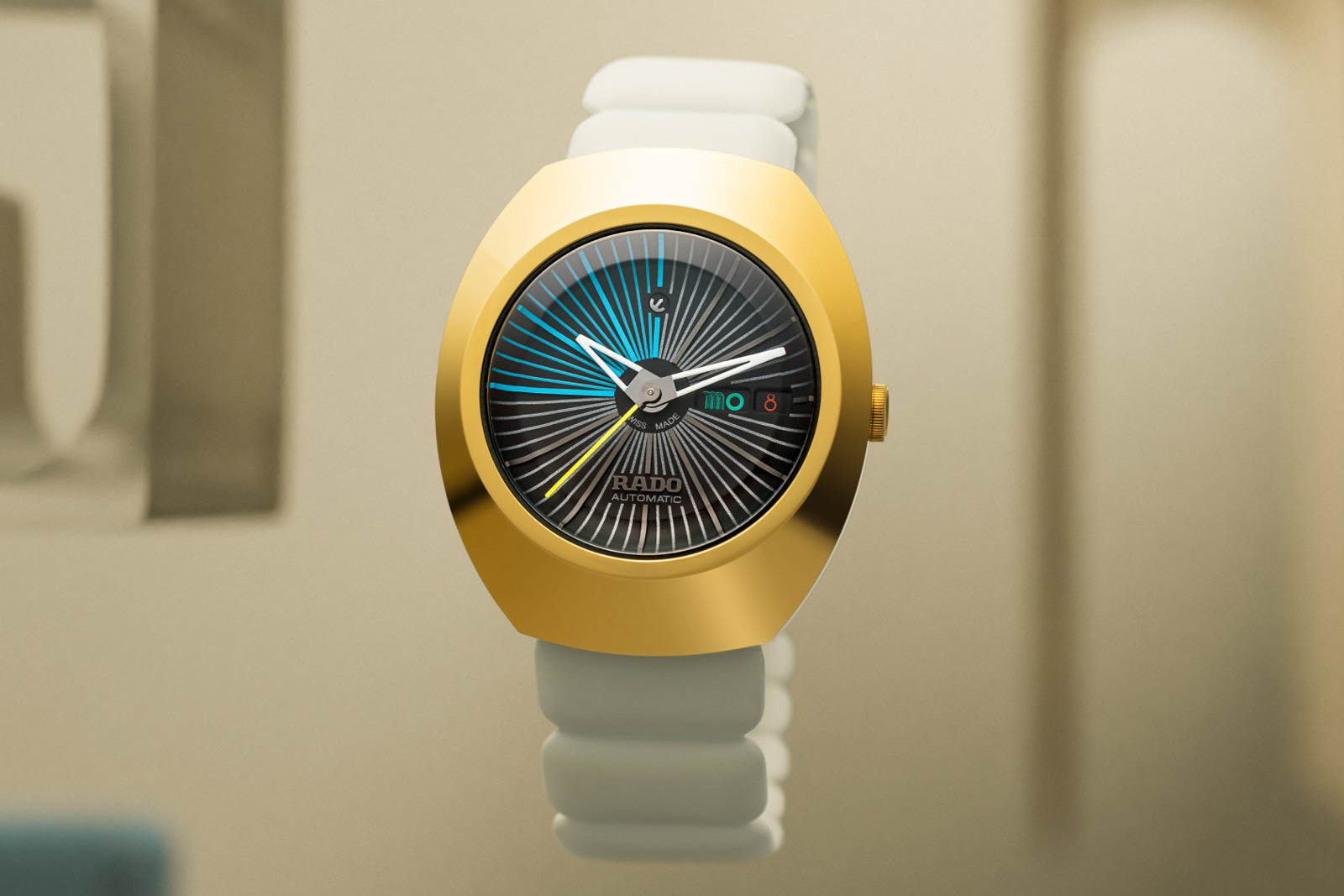
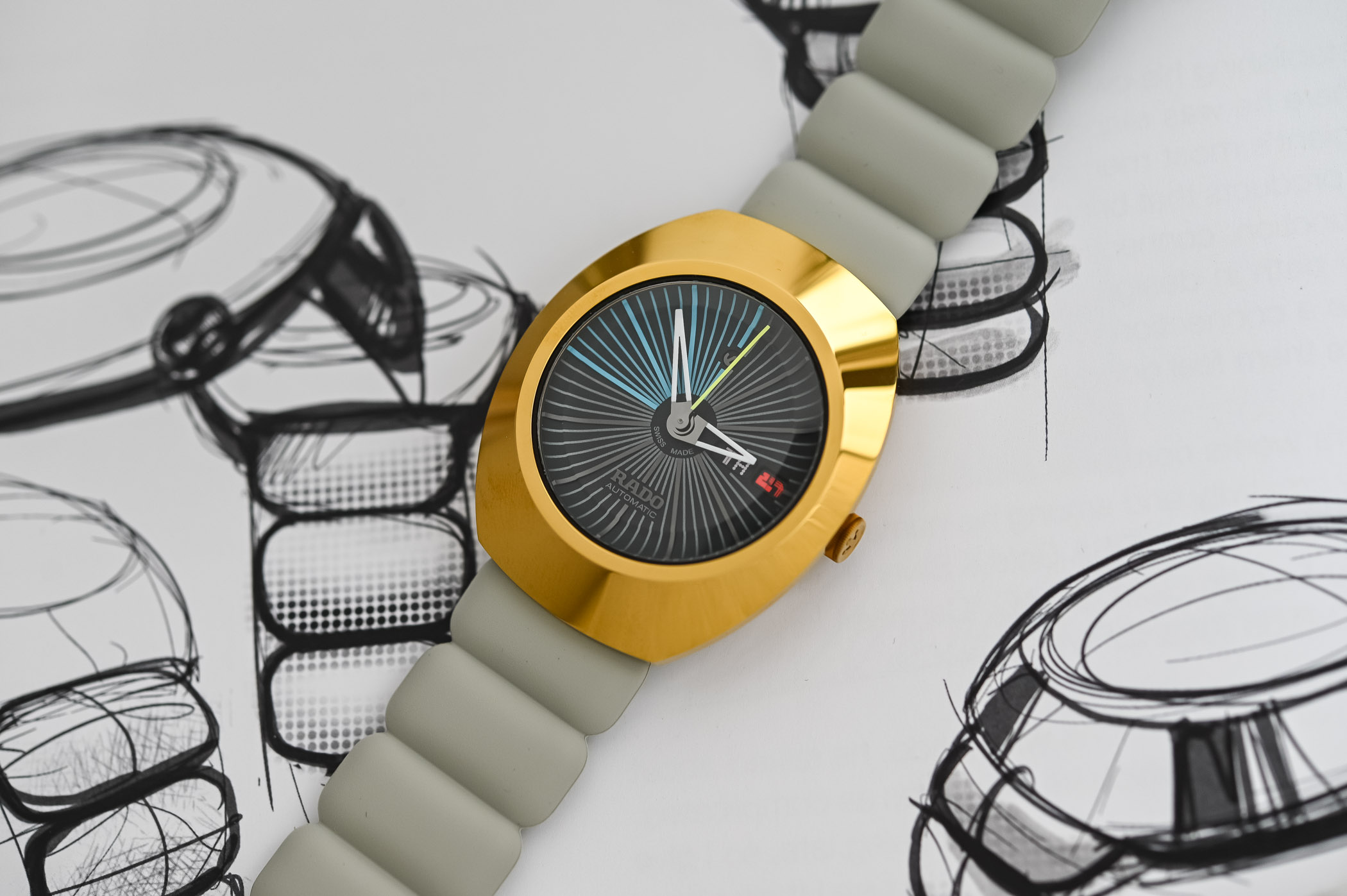
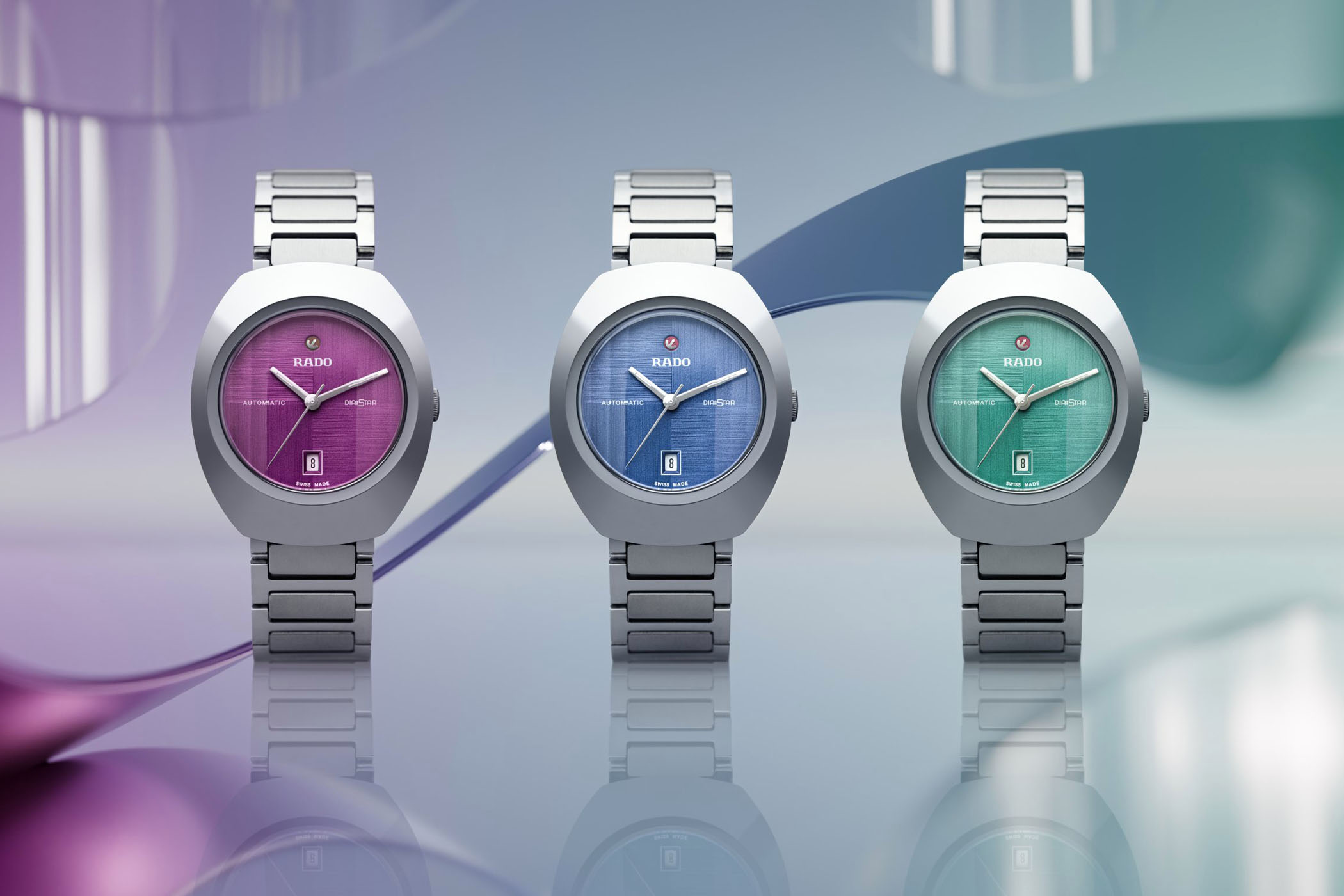
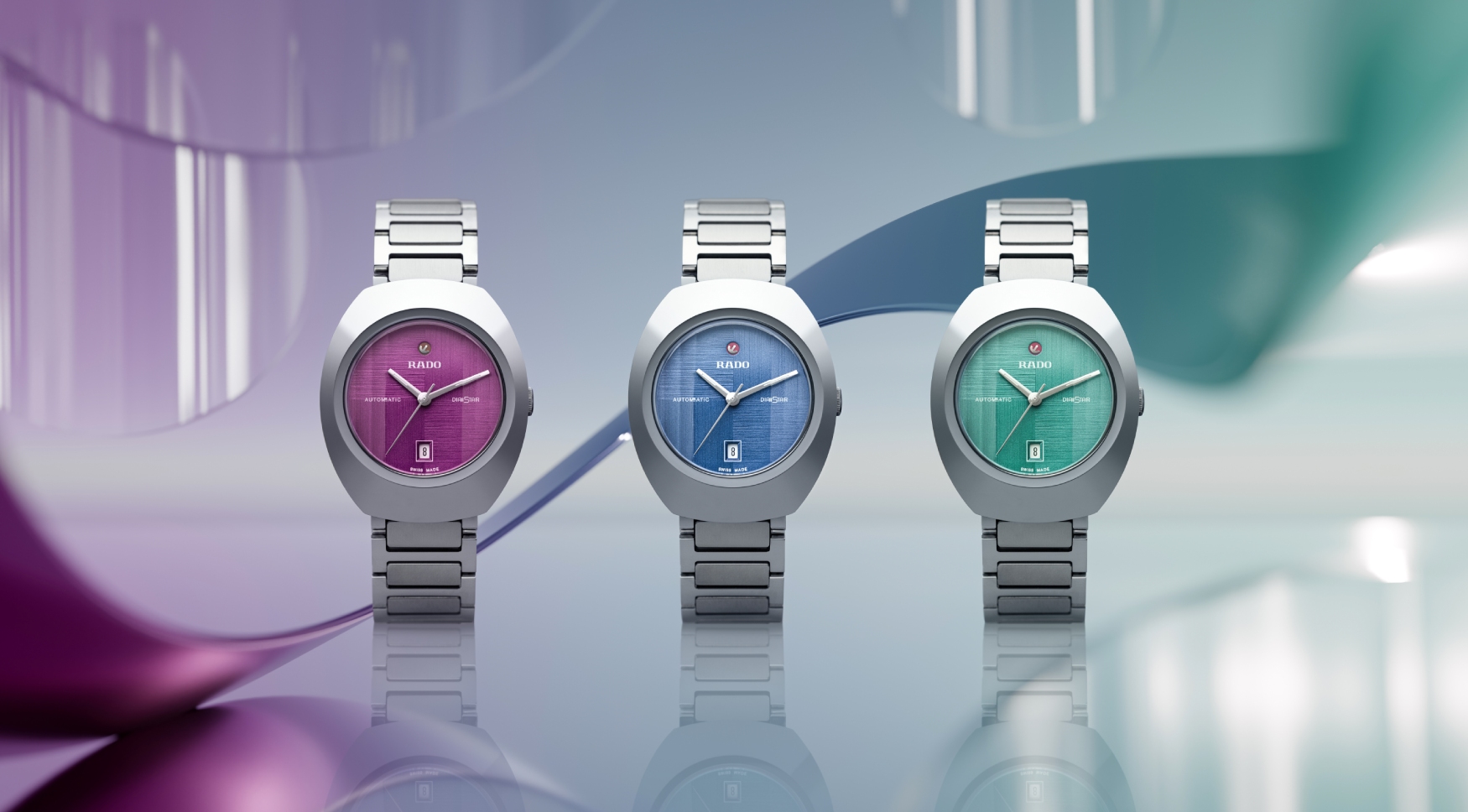
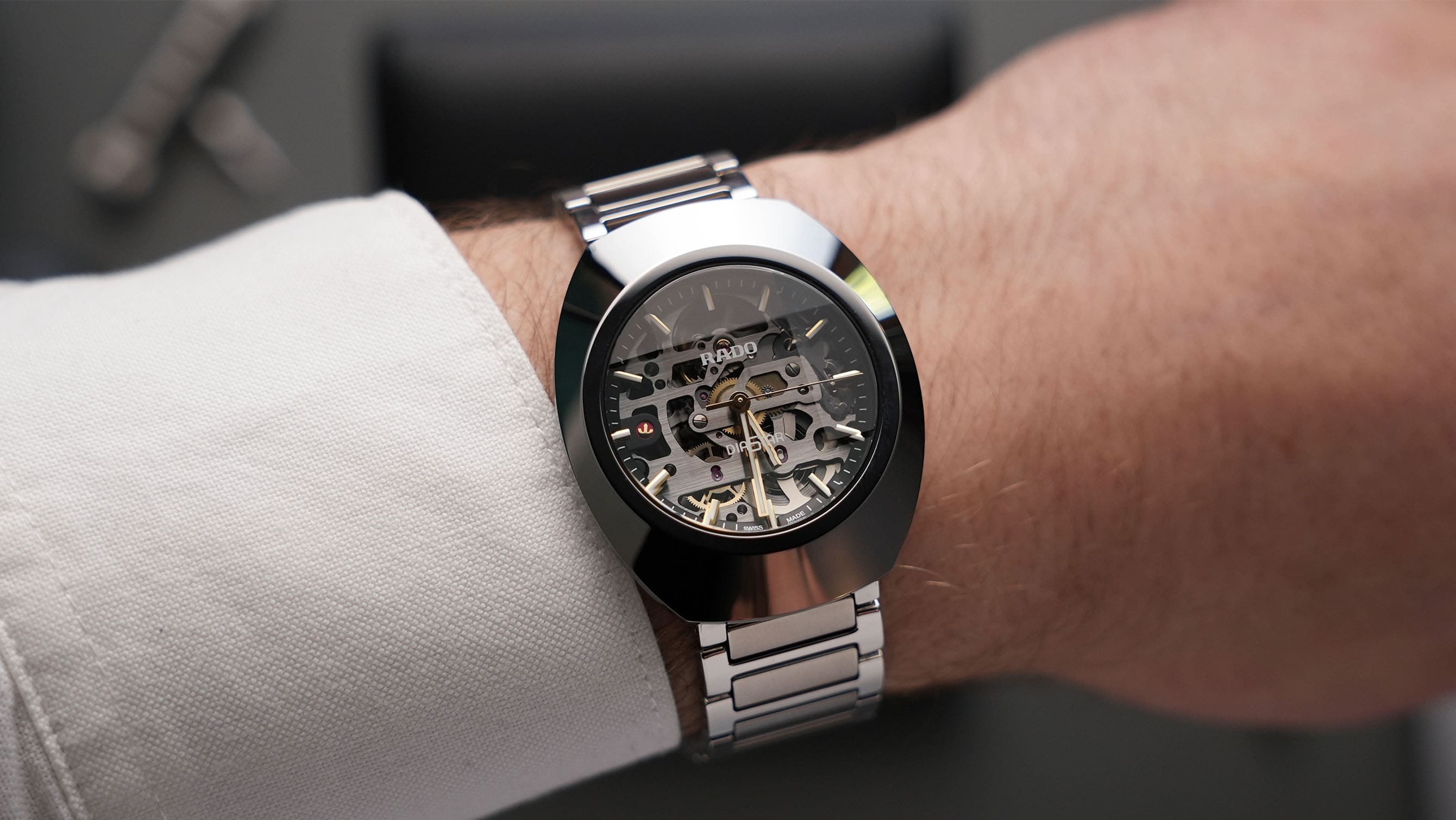
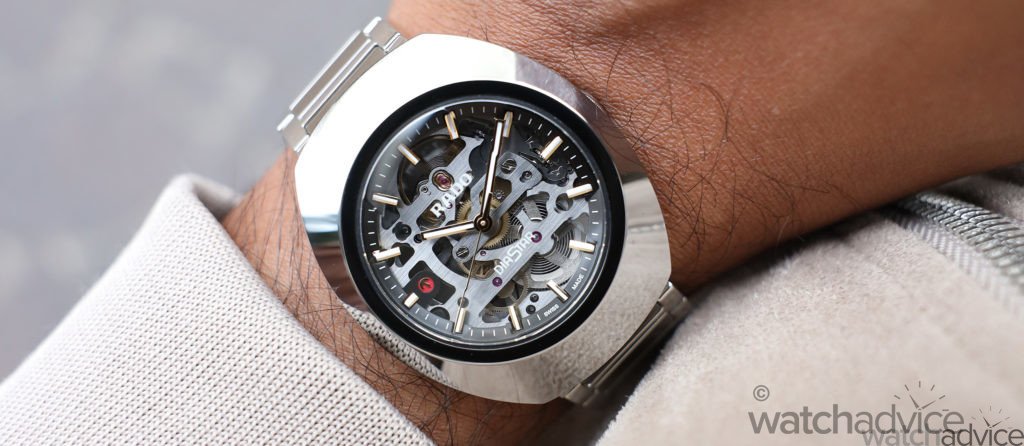
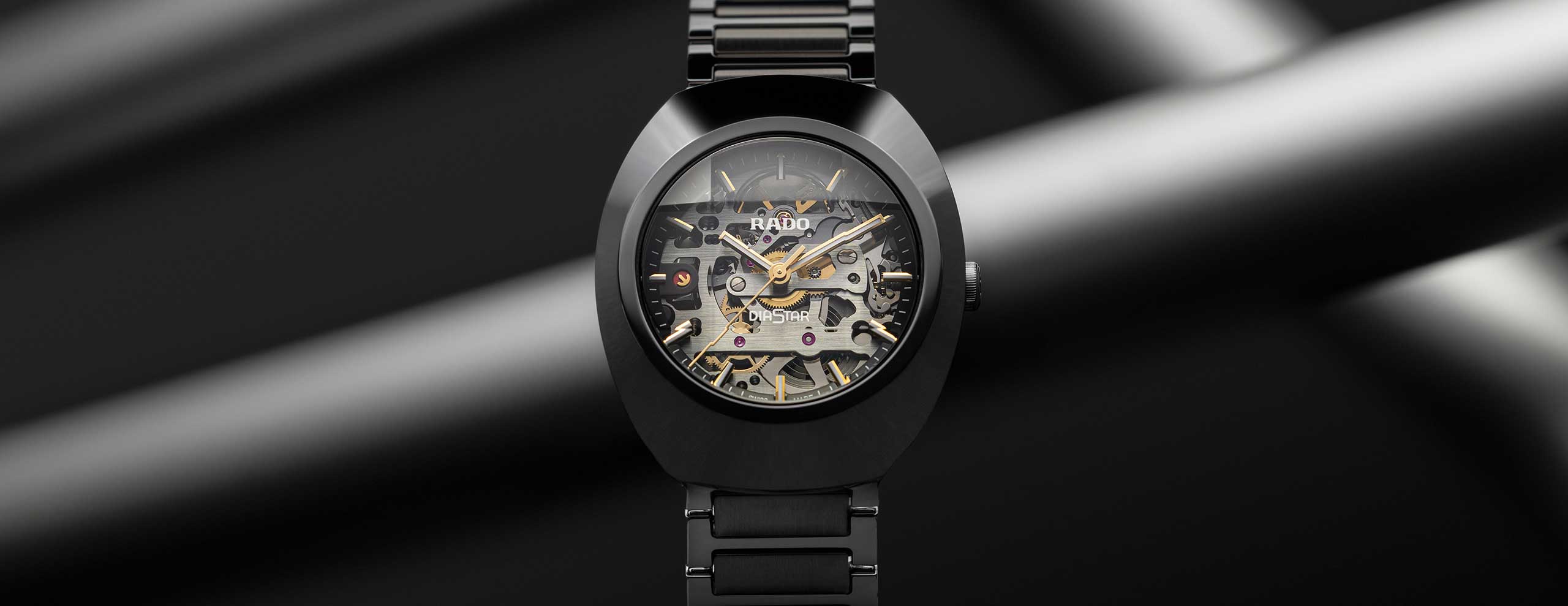
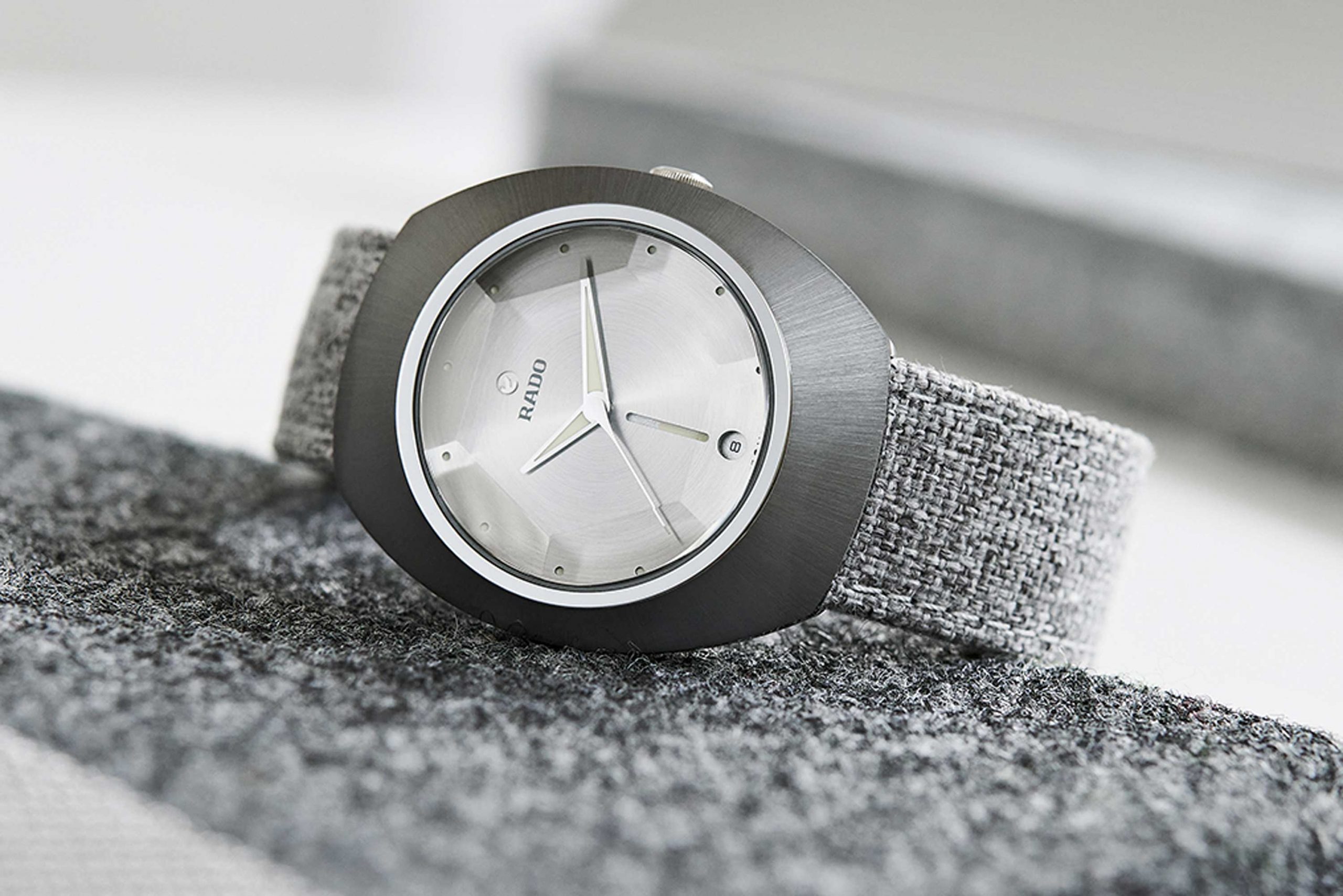
In watchmaking, tungsten carbide was pioneered by Rado with the DiaStar in 1962: the first commercial wristwatch advertised as "scratch-proof". The DiaStar case used cemented tungsten carbide for the entire case middle; the back was steel for skin contact (cobalt content of cemented carbide can cause skin reaction in sensitive wearers). The watch became Rado's identity-defining reference and remains in continuous production today as the Original DiaStar reference.
"In 1962 Rado put cutting-tool material on a wrist. Sixty years later the watch still looks like the day it left the factory."- Watch industry on the DiaStar legacy
Hardness comparison: tungsten carbide Vickers 1,500-1,800 vs stainless steel ~200-250, vs titanium grade 5 ~350, vs DLC coating 1,500-3,000, vs ceramic Mohs 9 (Vickers ~1,200). Tungsten carbide is ~10× harder than steel; in normal wear it is essentially scratch-proof against everyday materials (keys, sand, doorframes). Only diamond, sapphire, and harder ceramics can mark it.
Trade-offs: tungsten carbide is very heavy (density 14-16 g/cm³, ~75% denser than steel); a tungsten-carbide watch case feels noticeably weighty on the wrist. The material is brittle under sharp impact: a hard drop on a tile floor can chip the case edges in a way ductile steel would not. Refurbishment is essentially impossible: any case repair requires diamond tooling typically only available at the brand factory.
Modern users: Rado (multiple Original DiaStar references, plus tungsten-carbide variants in HyperChrome and Captain Cook); IWC Ingenieur Tungsten (selected references); selected microbrands offer tungsten-carbide-cased divers at premium price points. The material has been partially displaced by ceramic: zirconia ceramic achieves similar hardness with much lower weight (4-6 g/cm³ vs 14-16), and ceramic firing is more amenable to colour variation. Modern Rado uses ceramic far more than tungsten carbide; the Original DiaStar in tungsten carbide remains as a heritage product.

Comments 1