The watch you wear when your kid is born is the watch you're going to look at for the rest of your life when someone asks you what time they were born. There's no objective requirement to remember it - the hospital files have it written down to the minute - but the wrist remembers it differently than the chart does. Pick a watch you actually want to be glancing at twenty years later, when the kid is asking about it.
Practically: the maternity ward is harder on a watch than most environments most fathers ever live through. Hospital-grade chlorhexidine sanitiser repeats every two minutes and slowly degrades leather and most rubber. There will be blood, amniotic fluid, vernix, and (a few hours later) meconium. The case will be touched by anxious gripping hands, knocked against bed rails, and almost certainly handed to a nurse to hold while you do something with two hands. Plus: the average maternity stay is 36-72 hours, during which you'll go from suit to scrubs to sweatpants without taking the watch off. The watch needs to survive all of that.
What works: steel bracelet OR rubber strap (sterilise after; leather is gone), screw-down crown (stops the case flooding when you wash up), at least 100m water resistance (the actual depth doesn't matter; the gasket integrity does), and a case under 42mm so it slides under hospital scrubs without catching. Date complication is genuinely useful - new fathers lose track of days fast in the first month, and a date window is meaningfully helpful at 4am.
What doesn't work: any leather strap (sanitiser kills it within a week), any vintage piece (gaskets are old, water resistance is suspect), and any watch you'd be sad to scratch. There will be scratches. The kid's birth-time scratch is, in the long run, the most charming wear-mark a watch can earn - but you should know going in that the watch will earn it. The five picks below are watches we'd be happy to scratch in this specific way.
Rolex
126200 - 36mm - automatic
The watch you bequeath. Earn the patina at the birth.
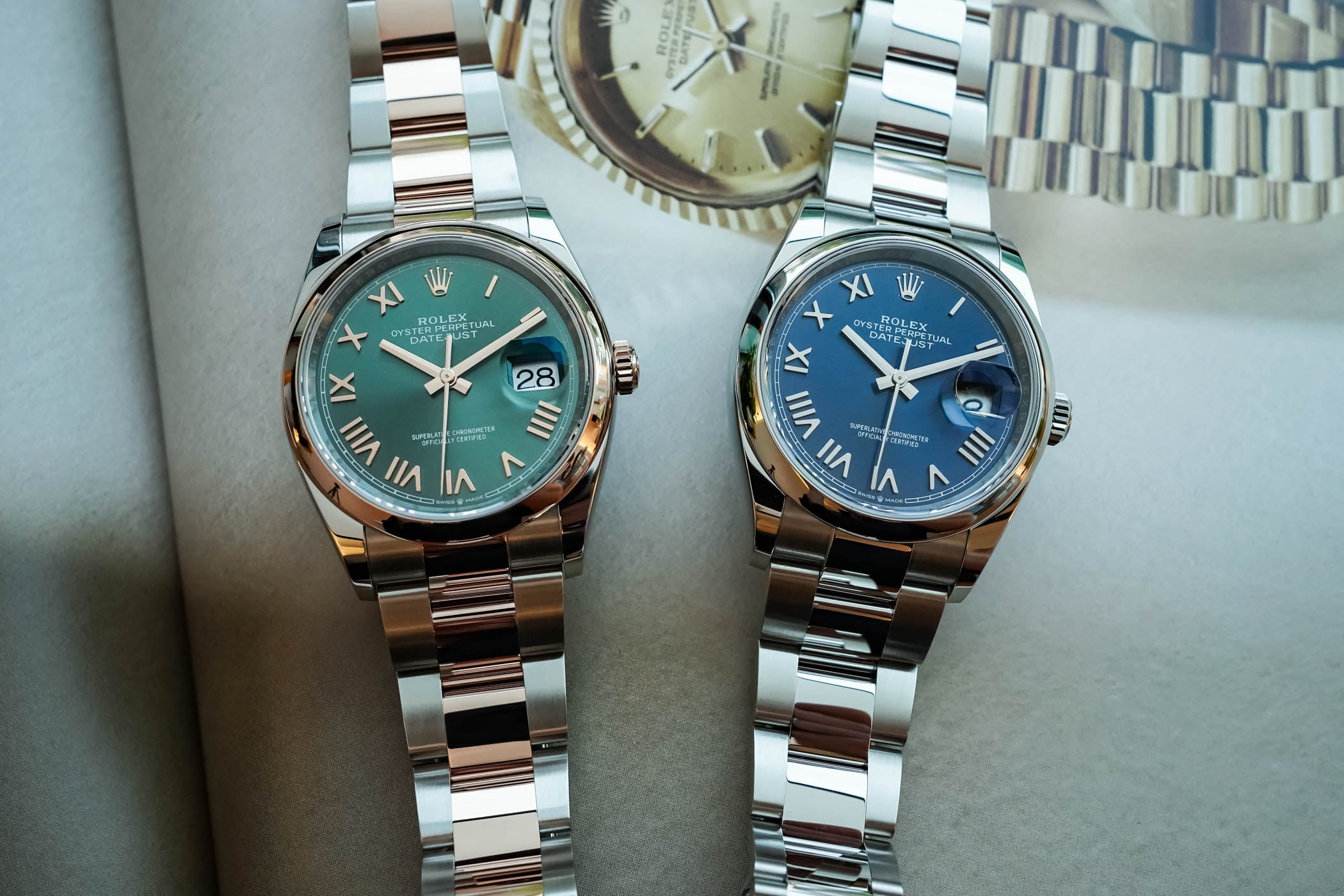
The Datejust is the archetypal heritage watch for a reason: the design has barely changed since 1945, the steel Oyster bracelet survives everything, and the 36mm case is the size most family heirloom watches eventually settle into. Date at three is exactly the complication a sleepless father needs. Around €8,400. The Jubilee bracelet is more comfortable on the wrist for long stretches; the Oyster is more durable when you're sterilising it daily. Either way, this is a watch built specifically to be passed down - which is the point of wearing it the day a person who'll inherit it is born. Engrave the case-back with the time and date afterwards if you're inclined.
Tudor
M79030N-0001 - 39mm - automatic
Tougher than a Datejust, half the price, ages the same way.
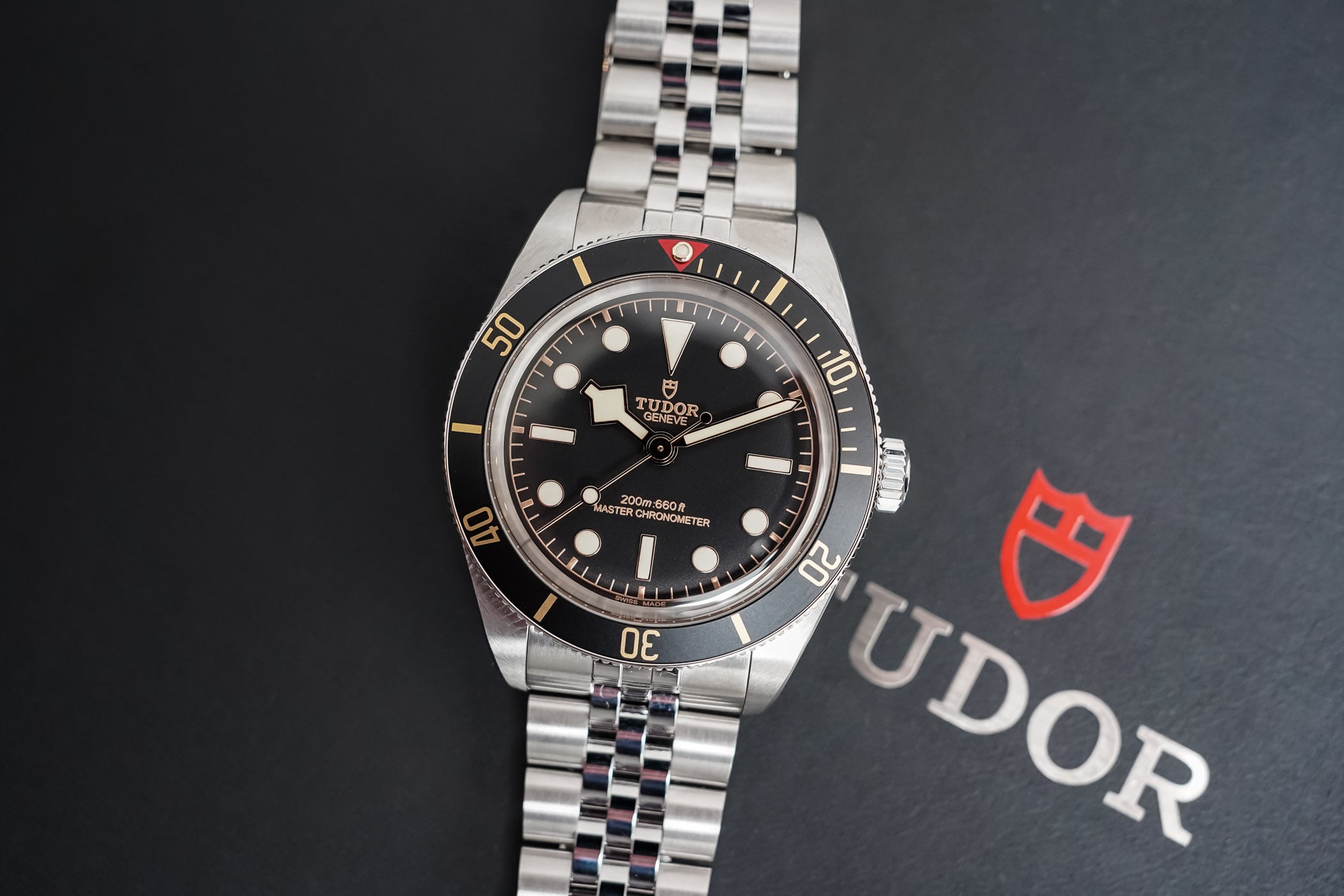
The Black Bay 58 is the most useful single watch in the modern Tudor catalogue: 39mm, 200m water-resistant, screw-down crown, in-house COSC-certified MT5402 with 70-hour reserve, on a steel rivet bracelet or a black NATO. Around €4,000. The case is genuinely robust enough for the rough handling that the next ten years are going to give it - the kid will find this watch on your nightstand and grip it, hard, and the BB58 will not care. Date-free, which keeps the dial clean. The black version is the most durable on patina; the navy version is the prettiest. Both are correct; pick by gut.
Oris
01 733 7732 4135 - 39.5mm - automatic
The €2,000 dive watch with a date that earns its keep on a sleep-deprived wrist.
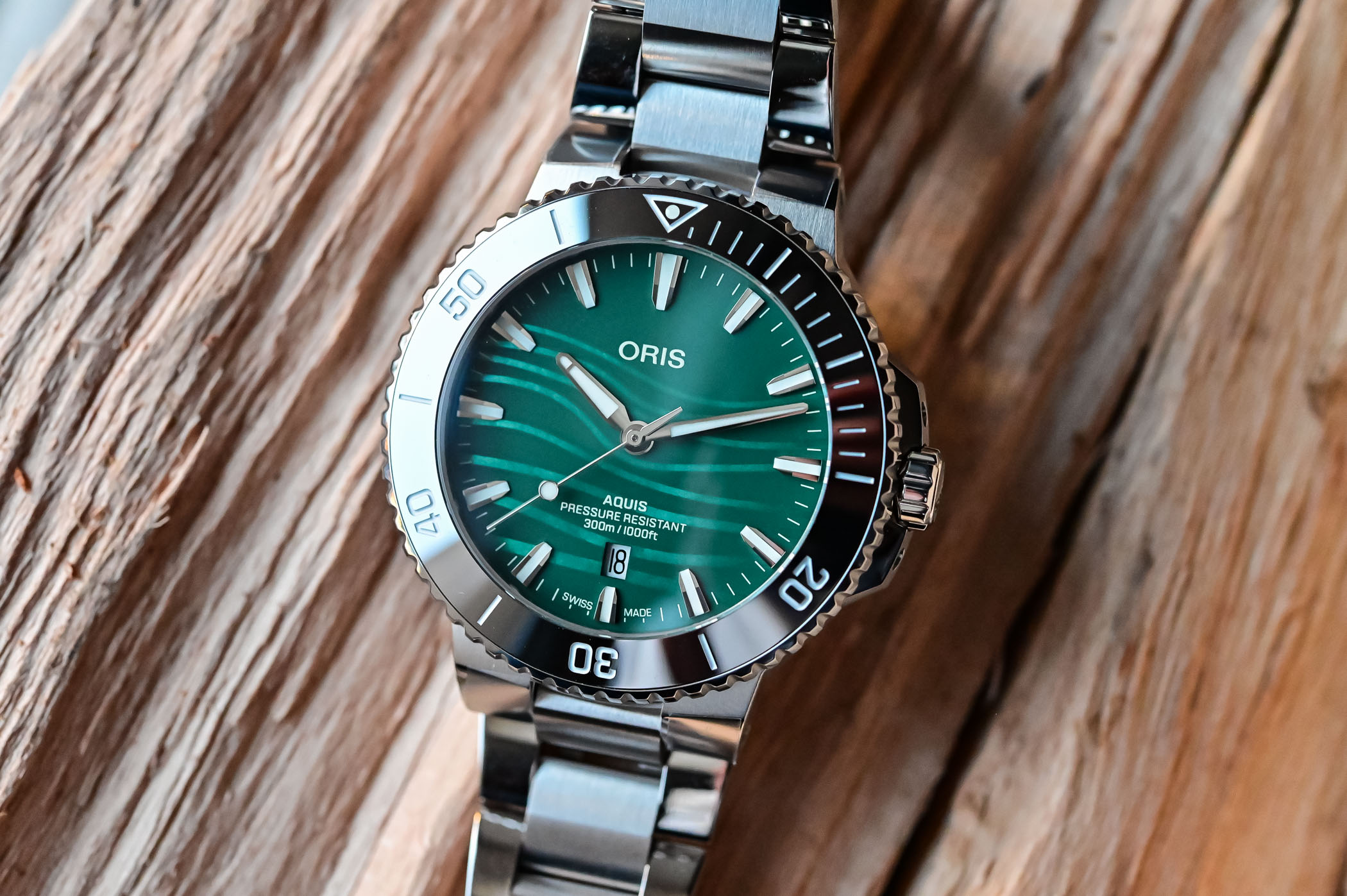
The Aquis is one of the most under-priced steel sports watches in the catalogue: 300m water resistance, ceramic bezel insert, screw-down crown, Sellita-derived caliber 733 with the date complication where it should be (3 o'clock, big readable numerals). Around €2,200. The 39.5mm case is the ideal size for someone who isn't already a watch person - it photographs well in the birth photos and disappears under a hospital scrub. The integrated bracelet is comfortable and easy to clean. The dial colour to choose for this brief is the sunray blue - warm and modern without being flashy.
Omega
220.10.38.20.03.001 - 38mm - automatic
The dress-sport hybrid that wears under a suit AND under hospital scrubs.

The Aqua Terra is the watch you put on for the birth and don't take off again until the baby's first month is over. 150m water resistant (over-engineered for the brief, which is the point), anti-magnetic to 15,000 gauss (genuinely useful around hospital MRI rooms), Master Co-Axial 8800 movement, 38mm case. Around €5,400. The teak-pattern dial in blue or grey is subtle enough for the office and interesting enough to look at during a 3am feeding. Steel bracelet preferred over leather for this brief. This is also a watch you can take to the courthouse to register the birth and then to dinner with the in-laws afterwards without changing.
Casio G-Shock
GW-5000U - 42.8×46.7mm - solar quartz
The watch that survives fatherhood. The watch you actually wear most days.
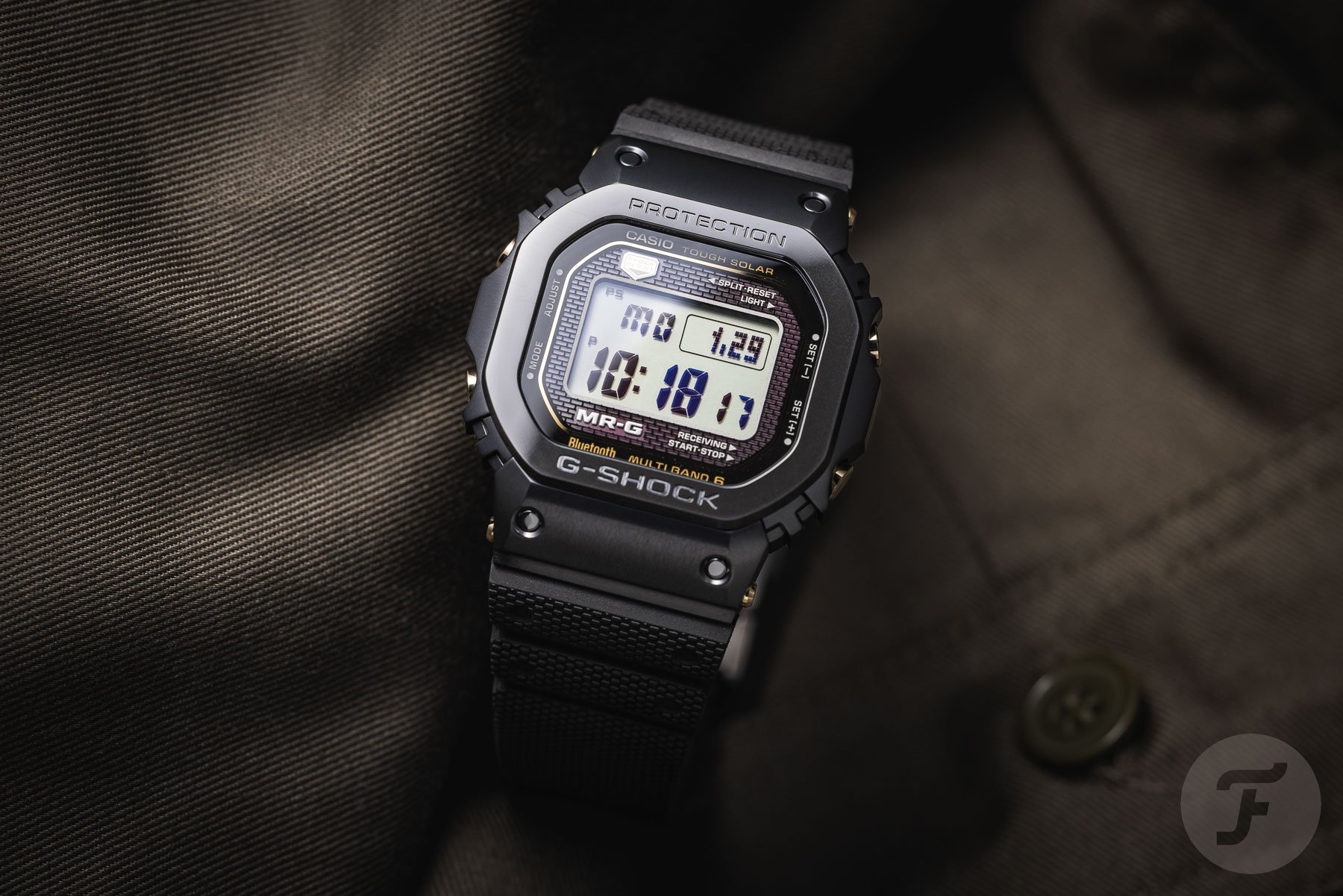
There's no shame in admitting that the watch you'll wear for most of the first year is a G-Shock. The GW-5000U is the highest-spec square G-Shock: solar (no battery changes), Multi-Band 6 (sets the time atomically every night, which is mildly miraculous when you've forgotten what day it is), full screw-back, stainless inner case. Around €420. Surviving the first year of fatherhood is a job-spec the G-Shock was literally designed for - it doesn't care about hospital sanitiser, doesn't care about being gripped by a small fist, and the digital read-out is faster to read at 3am than analogue hands. Wear the GW-5000U for the day-to-day; wear the Datejust or the BB58 for the birth photo.
A note on what to do AFTER
Two practical things: note the time (the watch is one piece of information; the chart is another; the partner's memory is the third - they'll all disagree by 30-90 seconds, which is fine and even charming) and service the watch within the year. Hospital sanitiser and being gripped/handled is harder on gaskets than it sounds; budget for a service in 12 months whether it feels like the watch needs it or not. The service paperwork itself becomes part of the watch's record, and a watch with the kid's birthday in its service history is worth keeping for that reason alone.
Frequently asked questions
What watch should I wear to the birth of my child?
Something you'll be happy to see in the photo card twenty years from now. A Rolex Datejust 36, Tudor Black Bay 58 or Omega Aqua Terra 38 all photograph well, wipe clean easily, and survive 36 hours of hospital time. This is a watch you'll associate with the moment for the rest of your life.
Should the watch match the exact birth time?
Set it precisely before you go in. Most fathers we've spoken to remember the minute on their wrist better than the wall clock, and the watch becomes the anchor object for that memory. A GMT is nice for a partner in a different time zone but not required.
Can I wear a G-Shock to the delivery room?
Absolutely. A Casio G-Shock GW-M5610 is 200m rated, wipes clean of anything a hospital produces, and has the advantage of a countdown timer for contractions. It's not the sentimental keepsake option, but it's the practical one and many partners prefer it.
Is a dress watch inappropriate at a birth?
A slim dress watch like a Cartier Tank isn't wrong, but the crown and case edges are fine and can catch on hospital sheets or a baby blanket. A slightly tougher watch like the Oris Aquis 39.5 handles the environment better while still looking like a proper watch in the card photo.
Comments 20