
Roger W. Smith has just unveiled the Series 7 Annual Calendar Tourbillon, and the timing is deliberate. This year marks 25 years since Smith founded his brand on the Isle of Man, carrying forward the tradition of his mentor George Daniels. To mark the occasion, he gathered collectors, supporters, and friends of the Daniels legacy for a private dinner reveal. Big moments deserve a bit of ceremony.
What makes this one genuinely significant is the production context. This is Smith's first regular-production tourbillon. Previous tourbillon work has been bespoke or one-off. The Series 7 changes that, bringing a 60-second tourbillon with Smith's co-axial escapement into something that can be offered more consistently to collectors. That's a real shift for the brand.
The movement draws its visual language from Smith's earliest work, right around the millennium period. If you've followed his career, you'll recognize the aesthetic immediately. The double-barrel calibre is new, designed to give the tourbillon the power reserve it needs while keeping the architecture clean and legible.
What's Actually New Here
The calibre is built around a double-barrel configuration, which is the right engineering choice for a tourbillon. More stored energy means more consistent torque delivery to the escapement, and consistency is exactly what a co-axial tourbillon demands. Smith has always been meticulous about how his escapements are fed power, so this makes sense.
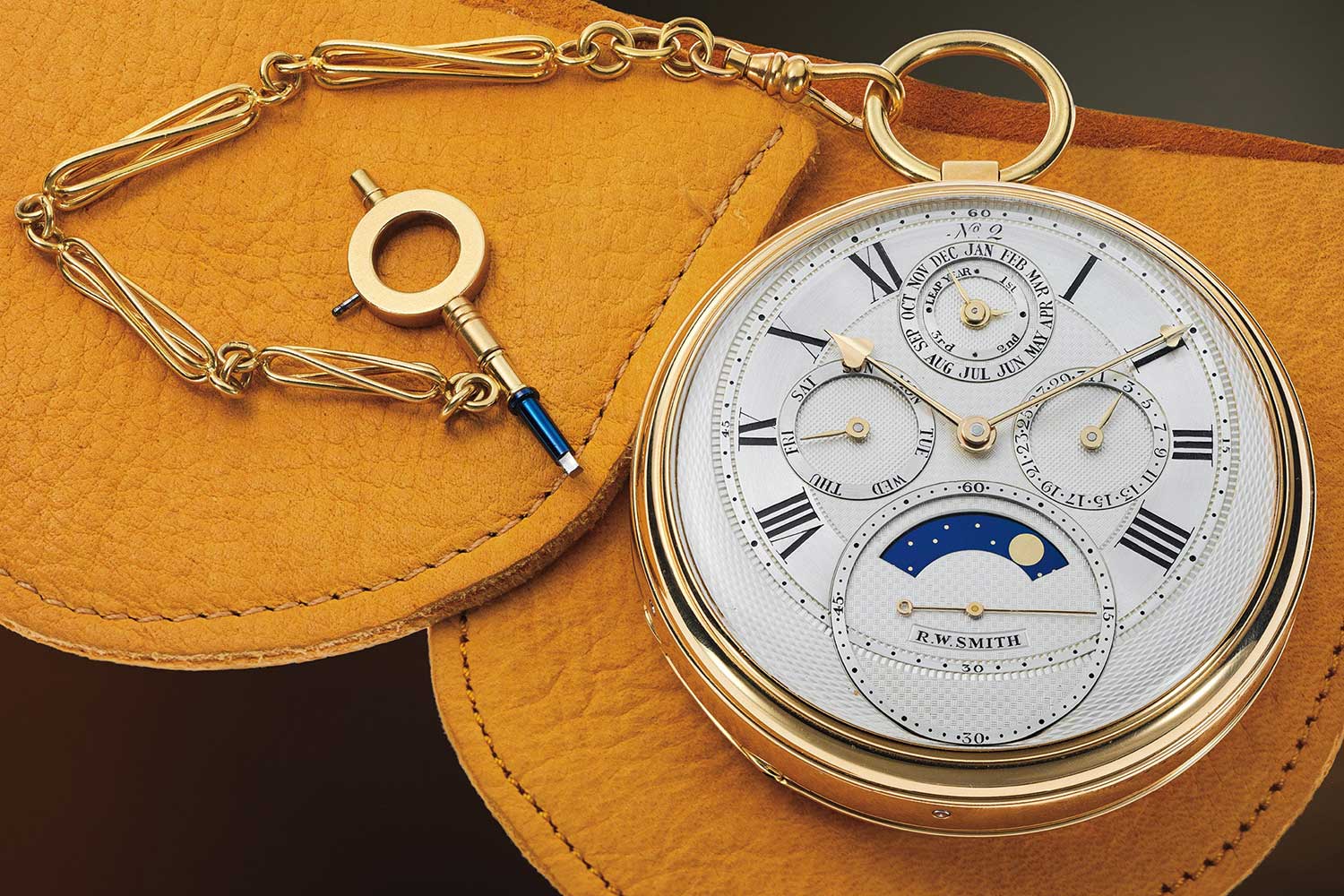
The annual calendar is worth talking about separately, because Smith has done something unusual with it. Annual calendars are common enough in high horology, but the execution here is described as genuinely distinctive in its layout and operation. It's not a module bolted on top. The calendar work is integrated into the overall movement architecture, which is exactly the kind of thing you'd expect from a maker who does everything by hand in a small workshop.
Add sweep seconds to the list of new features. It sounds simple, but a running seconds display on a tourbillon requires careful thought about how the train is laid out. Smith has incorporated it into the design rather than treating it as an afterthought.
This is the first time Smith has offered a tourbillon as a regular production reference rather than a bespoke commission. For collectors who've wanted a Smith tourbillon but couldn't navigate the one-off route, the Series 7 is a genuine opening.
The Millennium Connection

Smith's early work, the pieces he made around the year 2000 when he was just establishing himself after Daniels, had a particular character. Spare, technically rigorous, with a movement architecture that felt rooted in classical English watchmaking rather than the Swiss mainstream. The Series 7 is styled as a direct callback to that period.
That's not nostalgia for its own sake. Smith is making a point about continuity: 25 years in, the work still connects to the same foundation. The double-barrel calibre looks the part while doing a modern job. It's the kind of coherence that's hard to fake.
Who This Watch Is For

Roger W. Smith watches are not casual purchases. Production is tiny, prices are significant, and the waiting list dynamic is real. But the collector base for his work is serious and informed. These are people who understand what it means that one person, working by hand on a small island, is producing movements at this level.
- Collectors with existing Smith pieces who want a tourbillon to complete the picture
- George Daniels admirers who follow the lineage seriously
- Independent watchmaking enthusiasts who prioritize hand-finishing and mechanical originality over brand recognition
- Anyone who's been waiting for Smith to bring tourbillon work into regular production
- Investors in British horological history, full stop
How It Sits Against the Series Lineup

The Series 6, launched last year, was already a statement piece. The Series 7 builds on that foundation rather than replacing it. Where the Series 6 made its mark in a different direction, the Seven is clearly the technical summit of what Smith is doing right now. The tourbillon with co-axial escapement is the most demanding combination in his repertoire, and pairing it with an annual calendar and sweep seconds raises the complexity considerably.
Compared to Swiss independent tourbillons at a similar price point, the Smith proposition is different. You're not buying into a large atelier. You're buying into a workshop where the maker's hands touched every component. That's a rarer thing than the tourbillon complication itself.
The Series 7 Annual Calendar Tourbillon feels like a proper milestone piece rather than an anniversary cash-in. Twenty-five years of consistent, principled work in one of watchmaking's most demanding traditions, expressed in a single reference. Smith doesn't need to shout about it. The movement does the talking.

Comments
No comments yet, be the first to weigh in.