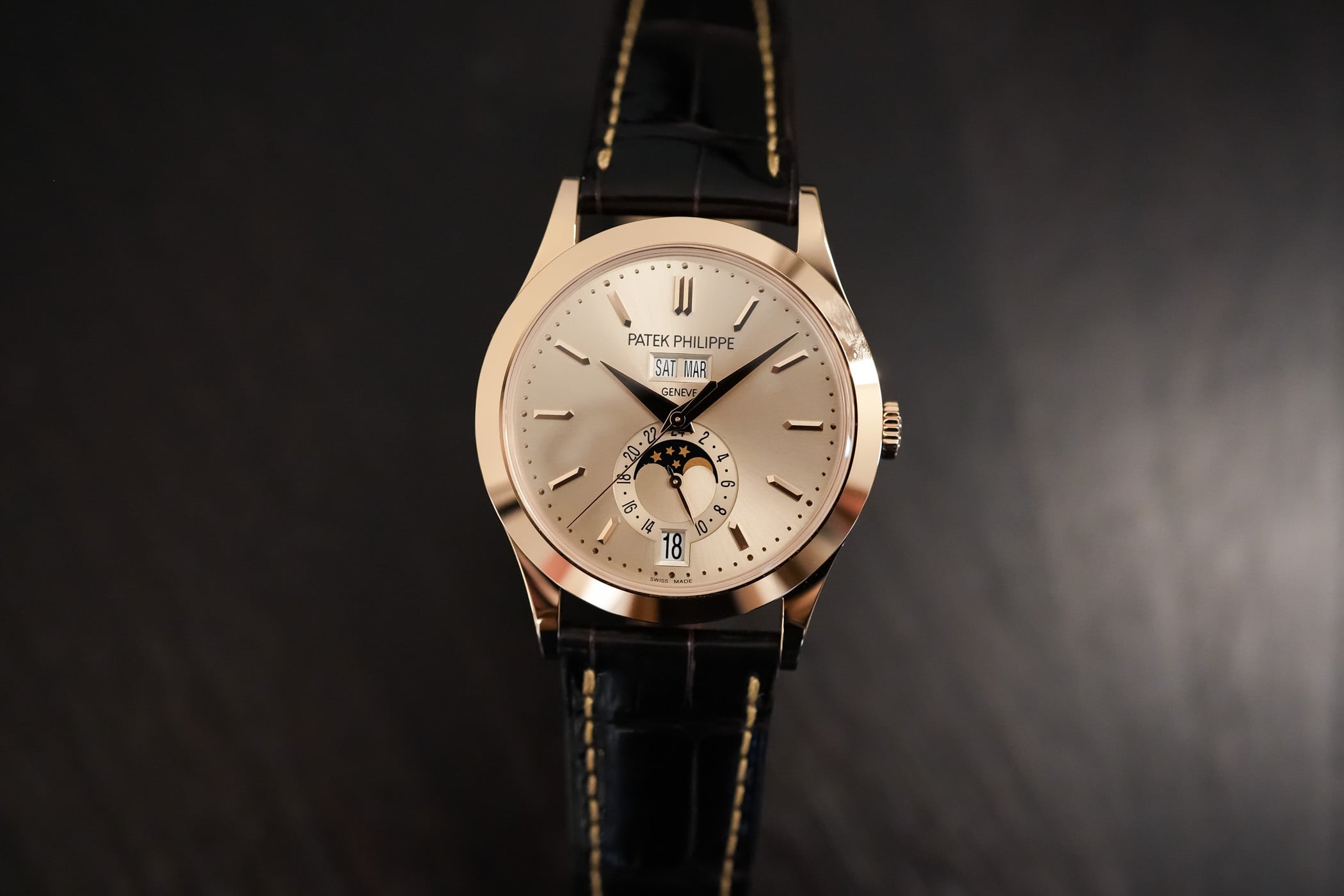
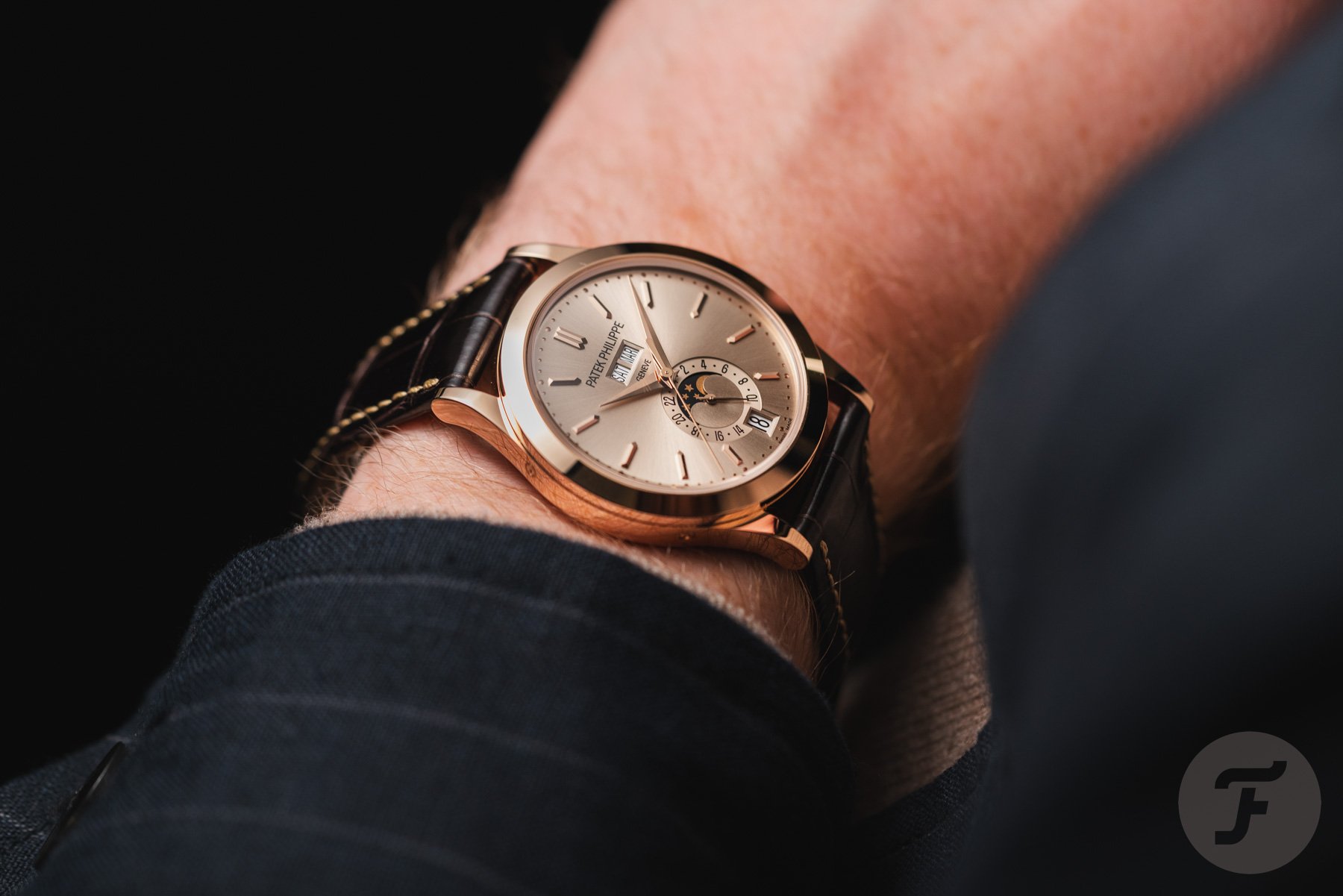
The annual calendar was invented, patented, and launched by Patek Philippe in 1996 as the reference 5035. Patek's engineers, led by Jean-Pierre Musy, set out to solve a specific problem: the perpetual calendar was mechanically complex, expensive to produce, and fragile, yet the vast majority of customers wanted a "set and forget" calendar that handled the difference between 30-day and 31-day months without their intervention. The annual calendar delivered that for roughly 20 percent of the cost of a perpetual, because it did not need the 48-month cam that tracks leap years.
The mechanism uses a single programme wheel rotating once a year. Each month position encodes the correct number of days (30 or 31), and the mechanism advances the date accordingly on the 30th or 31st. It does not know about February, so every year on 1 March the owner must pull the crown and skip the date forward. In exchange for this one manual correction, the buyer gets a display almost identical to a perpetual (day, date, month, often with a moonphase) for a fraction of the price.
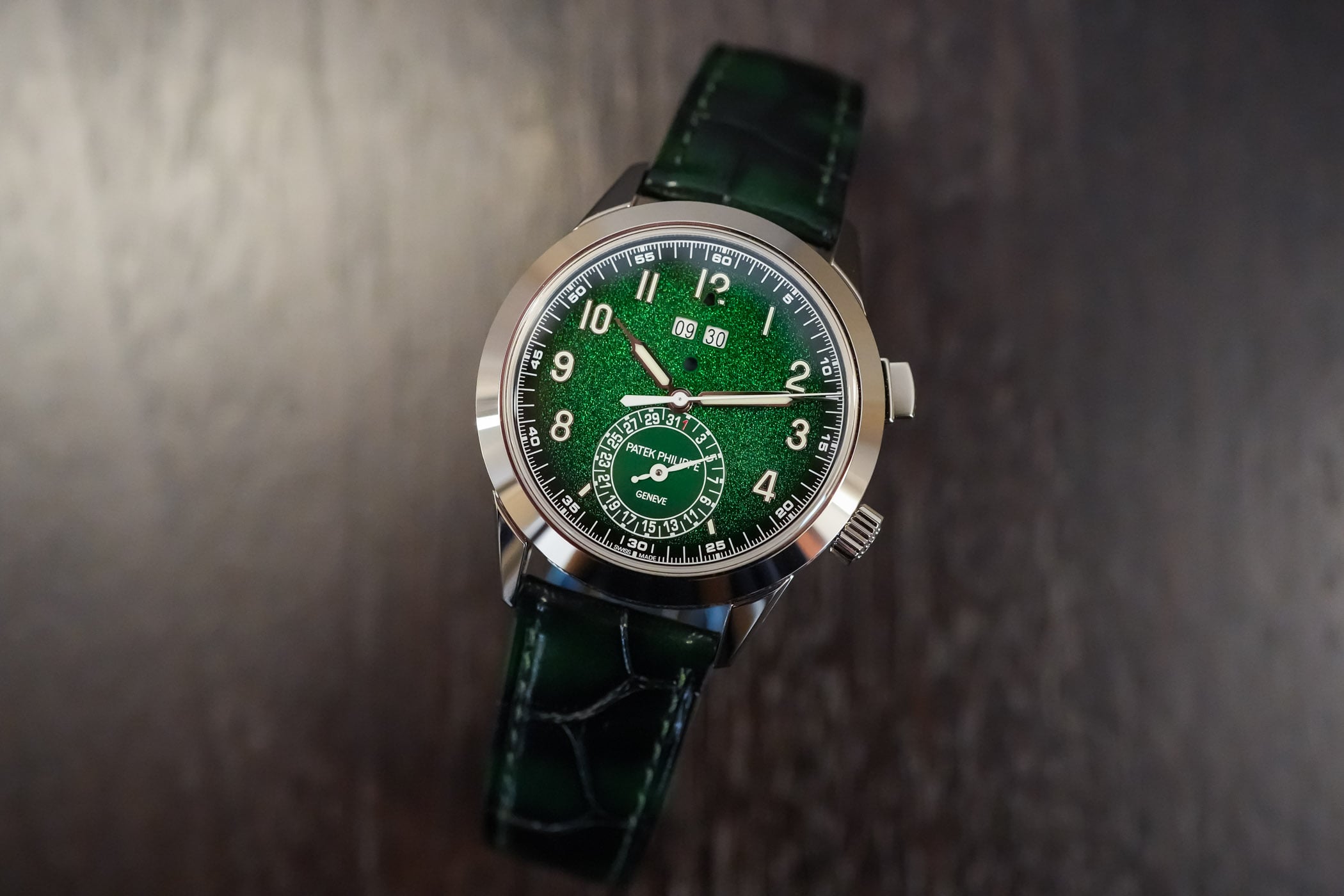
The commercial impact was immediate. Within ten years every major Swiss manufacturer had its own annual-calendar movement: Omega (Cal. 8500 Annual), IWC (Portuguese Annual Calendar, 2015), A. Lange & Söhne (Saxonia Annual Calendar), Jaeger-LeCoultre (Master Control Date), Baume & Mercier, and Longines. The annual calendar is the single most-sold mechanical calendar complication on the market today, outselling perpetuals by roughly 10 to 1 by unit volume. Patek refs 5396, 5205, and 5235 are the direct descendants of the original 5035.
The engineering appeal for the manufacturer is that an annual calendar can be built as a module added to a base movement (roughly 100 extra parts) rather than requiring a ground-up design like a perpetual. Most modern annual calendars use this modular approach. A few, notably the Omega Cal. 8500 and the Patek 5205 Cal. 324 S QA LU, integrate the annual mechanism directly into the movement architecture for better reliability and thinness.




Comments 2