Watch brandsWatch wikiWatch videosVariousWatch calendarSaved articles
PopularRolexOmegaPatek PhilippeAudemars PiguetTudorGrand SeikoCartierSeikoIWCTAG HeuerBreitlingJaeger-LeCoultreA. Lange & SohneZenith
WristBuzzWatch WikiEscapement
⚙ Movement · The Heart of the Watch

Escapement

The mechanism that counts time and lets energy escape from the mainspring, one tick at a time

The single most important component in any mechanical watch. Transfers energy from the mainspring to the balance wheel in controlled impulses, and counts each beat. Every mechanical timepiece ever made has some form of escapement.

Swiss leverThomas Mudge, c.1755
Co-axialGeorge Daniels, 1974
Typical beat28,800 vph (4 Hz)
High beat36,000 vph (5 Hz)
CategoryRegulating organ
WristBuzz Articles366
Escapement

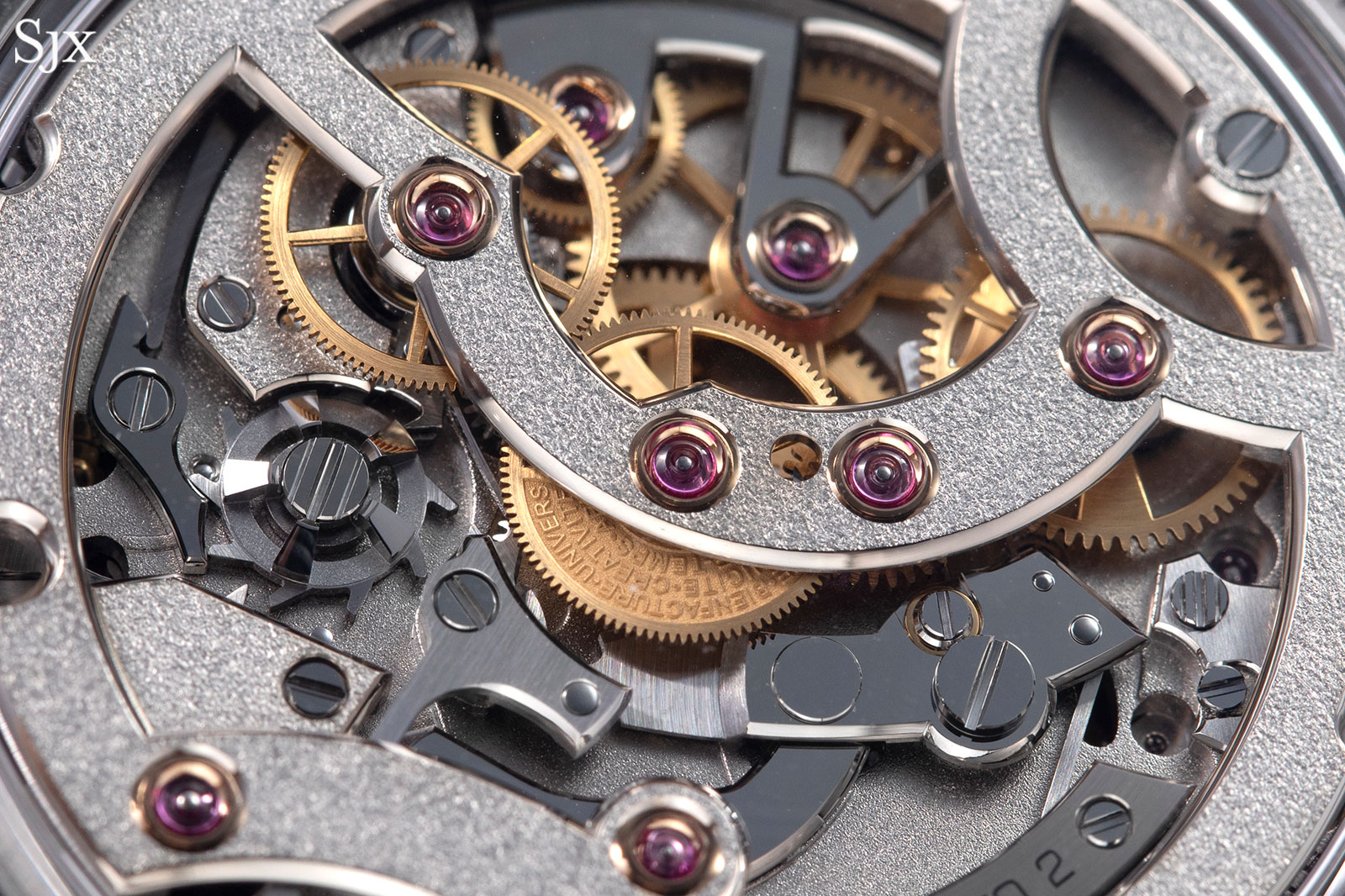
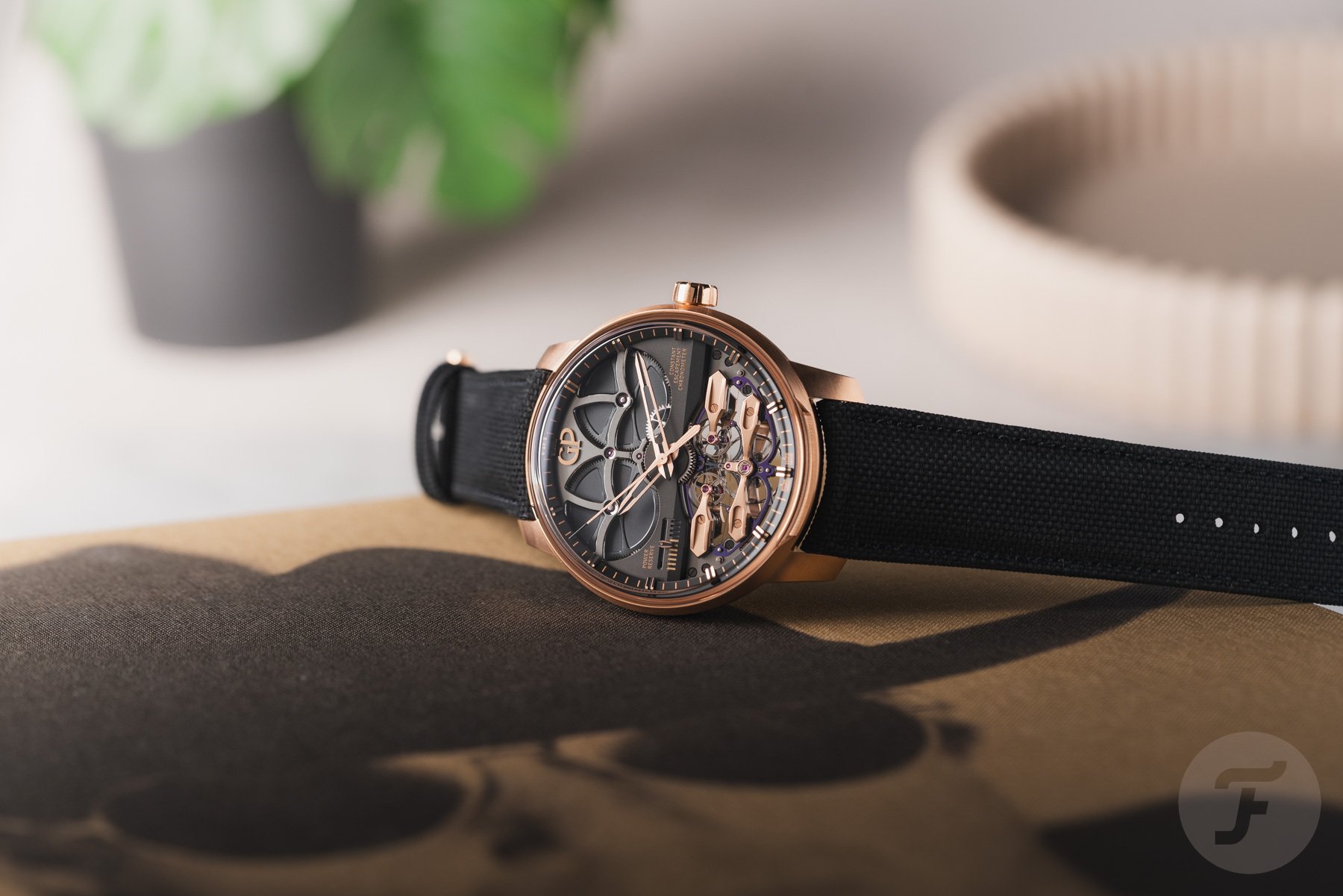
Photo: Hodinkee · Apr 1, 2026

1755Swiss Lever
1974Co-Axial
4-5HzTypical Beat
99%Lever-Based
366WristBuzz Articles

The Escapement Story

Every mechanical watch has an escapement, the part that transfers the stored energy of the mainspring to the oscillating balance wheel. It does this in tiny, discrete pulses, locking the wheel train between each one. Each pulse is a tick. The escapement is the single component that separates a mechanical watch from a decorative curio: without it, the mainspring unwinds in seconds. With it, the mainspring unwinds over 40 to 80 hours in exactly 28,800 regular pulses per hour.

The Swiss lever escapement, invented by English watchmaker Thomas Mudge around 1755, is the architecture used in virtually every mechanical wristwatch made today. A lever with two pallets alternately locks and releases the escape wheel; the escape wheel in turn delivers an impulse to the balance wheel, which then returns via the hairspring to release the next lock. The system is self-starting, shock-resistant, and mass-producible. Mudge's original lever was not adopted for a hundred years; its widespread use in Swiss watchmaking begins only in the mid-19th century, which is why it is called the Swiss lever despite being an English invention.

The co-axial escapement, invented by George Daniels in 1974 and patented in 1980, is the only commercially viable alternative to the Swiss lever in 250 years. It uses radial rather than sliding impulses, reducing friction and the need for lubrication at the escapement. Daniels licensed the patent to Omega in 1999, and Omega has used it in the Cal. 2500 (2000), Cal. 8500 (2007), and the modern Master Chronometer Cal. 8900/9900 series. The Omega Cal. 321 remains the only commercially produced watch movement alternative to the Swiss lever outside Omega itself.

Exotic escapements include the natural escapement (Breguet c.1790, used today by Parmigiani Fleurier), which eliminates lubrication entirely by using direct-impulse geometry; the detent escapement used historically in marine chronometers for high accuracy; and the grasshopper escapement (John Harrison, c.1722) that enabled the first successful marine chronometer. Silicon escapements, introduced by Patek Philippe, Ulysse Nardin, and Rolex in the 2000s, use silicon escape wheels and lever pallets for reduced mass, magnetic immunity, and tighter tolerances. Roughly 99 percent of mechanical wristwatches made today, by volume, still use a variant of Mudge's 1755 Swiss lever.
Notable Escapements in Use

1755 · Universal
Swiss Lever
<a href="/watch-calibers/eta-2824-2/">ETA 2824</a>, <a href="/watch-calibers/rolex-4130/">Cal. 4130</a>

The dominant escapement in mechanical wristwatches. Found in the ETA 2824, Rolex Cal. 4130, Valjoux 7750, and almost every movement from every major brand. Proven, robust, lubricated at two pallet jewels.

~99% Market Share
1999 · Omega
Co-Axial (Daniels)
Cal. 2500 / 8500 / 8900

The first serial alternative to the Swiss lever in 250 years. Radial impulses reduce friction, extend service intervals. Now in every Omega Master Chronometer. Licensed from George Daniels in 1999.

Co-Axial
2003 · Ulysse Nardin
Dual Direct Escapement
Ulysse Nardin Freak

Silicon-based escapement delivering direct impulses in both directions of balance motion. Pioneered in the Freak (2001) and subsequently in UN's higher-end movements.

Silicon
2010 · Parmigiani Fleurier
Natural Escapement
Cal. PF 517

Revival of Breguet's 1790s natural escapement. Delivers direct impulses to the balance wheel, eliminating lubrication at the escapement. Used in selected Parmigiani Tonda models.

Natural
1969 · Zenith
El Primero High-Beat
Cal. 3019PHC

The 5 Hz (36,000 vph) Swiss lever escapement. The highest-beat mass-production chronograph in watchmaking. Requires special lubricants and more frequent servicing.

5 Hz
2005 · Patek Philippe
Pulsomax Escapement
Silicon

Patek's silicon lever and escape wheel, used in Cal. 240 Q Si and modern references. Reduces mass by ~90% at the escapement. Part of Patek's Advanced Research programme.

Pulsomax

Latest Escapement News

SJX Watches
Hands On: Victor Kullberg Tourbillon Pocket Chronometer
12h ago
SJX Watches
SJX Podcast: Independent Highlights from Geneva
Yesterday
SJX Watches
Hands-On: Cleguer Horology Inspiration One
4 days ago
SJX Watches
The Yacht-Master II’s Encore
Apr 15, 2026
SJX Watches
The Rolex Yacht-Master II Returns for an Encore
Apr 15, 2026
Worn & Wound
Watches & Wonders: Oris Reintroduces the Star, a True 1960s Throwback
Apr 14, 2026
SJX Watches
Laurent Ferrier’s Sport Traveller is Ready for Takeoff
Apr 14, 2026
Fratello
Hands-On With The New Oris Star Re-Edition
Apr 14, 2026
Monochrome
Introducing – The Arnold & Son UltraThin Tourbillon Onyx Edition
Apr 10, 2026
SJX Watches
SJX Podcast: A New Era for Independent Watchmaking
Apr 10, 2026
Hodinkee
Introducing: Dominique Renaud Slows Things Down With The 1Hz 'Pulse60'
Apr 4, 2026
Hodinkee
Introducing: Cleguer Debuts The Inspiration One With A Proprietary “Innate” Escapement
Apr 1, 2026
View all 366 articles

Learn More