Watch brandsWatch wikiWatch videosVariousWatch calendarSaved articles
WristBuzz› Various› Compare› Omega Speedmaster vs Bulova Lunar Pilot
⚖ Head-to-head comparison

Omega Speedmaster Professional vs Bulova Lunar Pilot Chronograph

Two watches that flew on Apollo. Speedmaster Pro at €7,400 vs Bulova Lunar Pilot at €675. NASA-qualified mechanical vs the Bulova Dave Scott actually wore on Apollo 15.
Updated 2026-09-26 By Ronald Calls, WristBuzz Editor
Omega Speedmaster Professional
Omega

Speedmaster Professional

310.30.42 · 42mm · 50m
Introduced 1957 ~€7,400 retail
NASA-qualified manual chronograph. Worn on the lunar surface 1969-1972.
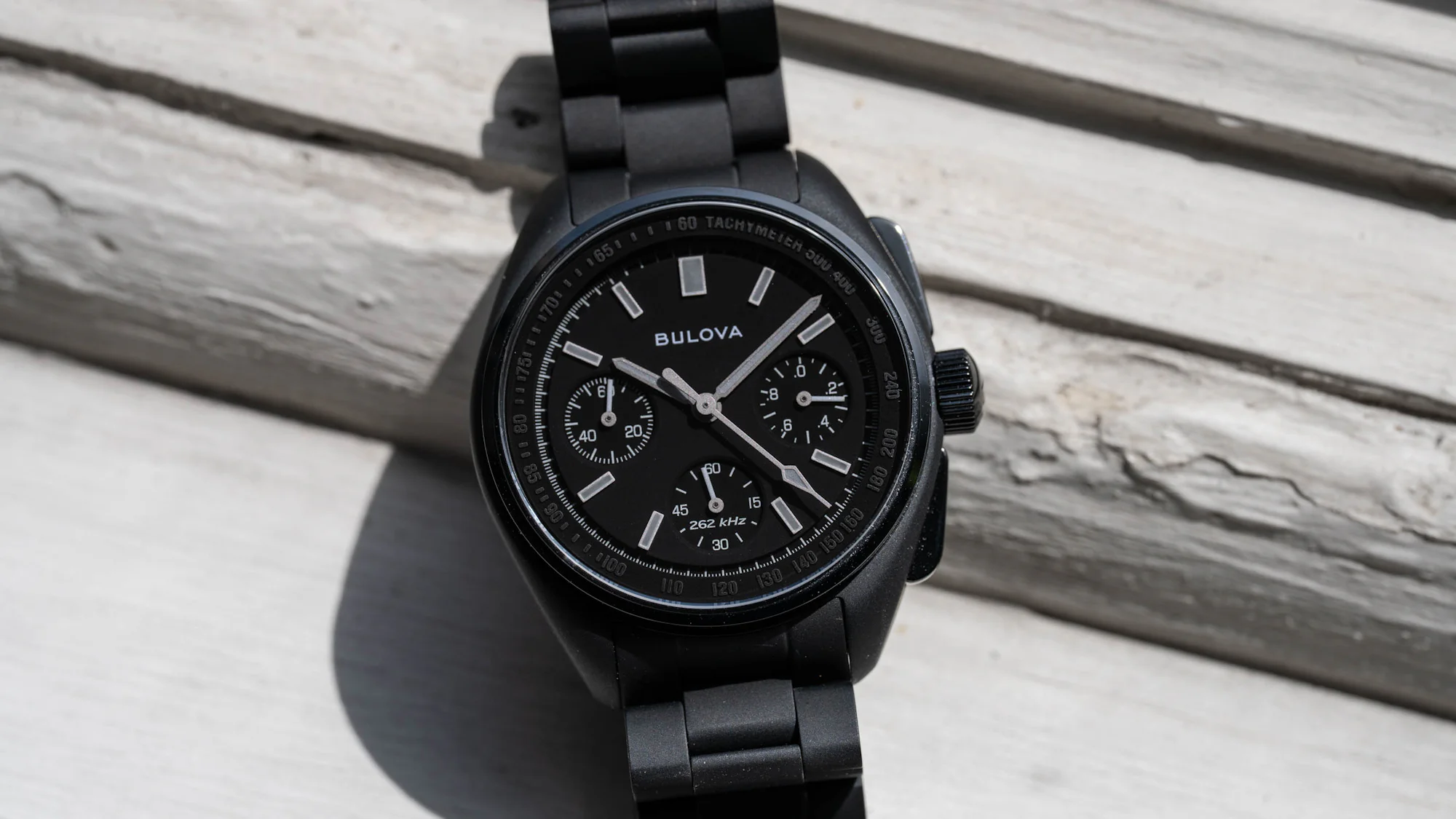
Bulova Lunar Pilot Chronograph
Bulova

Lunar Pilot Chronograph

96B251 · 45mm · 50m
Introduced 1971 (worn on Apollo 15), 2015 (current reissue) ~€675 retail
262 kHz Precisionist quartz reissue of David Scott's personal Bulova chrono.

Both watches were on Apollo. One famously, one quietly.

Omega's Speedmaster ref. 105.012 was NASA's flight-qualified spec for Apollo 11 in July 1969 and remained the issued watch through Apollo 17. Buzz Aldrin wore his on the lunar surface; the Moonwatch became horology's most-discussed flight-qualified watch.

Apollo 15 (July-August 1971) was different. Commander David Scott's Speedmaster crystal popped off during the second EVA. He completed the mission wearing his personal Bulova chronograph. That Bulova surfaced from his estate at Heritage Auctions in 2015 and sold for €1.5M. Bulova reissued the watch the same year as the Lunar Pilot at €675 retail.

Spec sheet

Attribute Omega Speedmaster Professional Bulova Lunar Pilot Chronograph
Reference 310.30.42 96B251
Case diameter 42mm × 13.2mm 45mm × 13.7mm
Case material Stainless steel Stainless steel
Movement Cal. 3861 (in-house mechanical) Bulova 262 kHz Precisionist quartz
Architecture Manual-wind cam-switching chronograph Quartz with smooth-sweep seconds
Beat rate / frequency 21,600 vph (3 Hz) 262,144 Hz (8x standard quartz)
Reserve 50 hours Battery (~3-5 years)
Antimagnetic 15,000 gauss (Master Chrono) Standard
Crystal Hesalite (plastic) standard Mineral
Water resistance 50m 50m
Retail price ~€7,400 ~€675

Mechanical vs 262 kHz quartz

The Speedmaster runs manual-wind cam-switching mechanical: NASA-spec preserved. The Lunar Pilot runs Bulova's 262 kHz Precisionist quartz: 8x the frequency of standard 32 kHz quartz, with a smooth-sweep seconds (most quartz watches tick once per second; the Lunar Pilot sweeps continuously). Different watch-buying philosophies entirely; same Apollo-era heritage applied differently.

Worn on the moon vs near the moon

The Speedmaster was issued to NASA astronauts and worn on lunar EVAs (Apollo 11-17). The Bulova that Bulova reissues was Dave Scott's personal watch, worn on Apollo 15 EVA after his Speedmaster crystal failed. Both are correct "watch on the moon" claims; only the Speedmaster was officially issued by NASA.

11x price gap

€7,400 vs €675. The Speedmaster's price is in line with its tier (in-house mechanical, METAS, hand-finishing, hesalite NASA spec). The Lunar Pilot's price is unusual for its heritage: most space-history watches cost more for marketing reasons. Bulova's pricing reflects quartz movement economics, not the genuine Apollo provenance.

Pros and cons

Speedmaster Professional · Pros
  • NASA-qualified mechanical chronograph
  • Apollo 11-17 lunar surface heritage
  • Master Chronometer (15,000-gauss antimagnetic)
  • In-house manual-wind Cal. 3861
  • Hesalite-crystal NASA-spec preservation
Speedmaster Professional · Cons
  • 11x the Lunar Pilot's price
  • Manual-wind requires daily attention
  • 21,600 vph standard beat rate
Lunar Pilot Chronograph · Pros
  • 262 kHz Precisionist quartz (smooth-sweep)
  • Genuine Apollo 15 heritage (David Scott's watch)
  • €675 retail at Apollo-spec heritage
  • 5-year battery, low-maintenance
Lunar Pilot Chronograph · Cons
  • Quartz at any price discourages mechanical buyers
  • 45mm case is bigger than the Speedmaster
  • Mineral crystal (less scratch-resistant than sapphire)
  • No NASA flight qualification

Verdict: which one?

If you want the NASA-qualified mechanical chronograph: Speedmaster Pro. The watch issued to Apollo astronauts.

If you want genuine Apollo heritage at €675: Lunar Pilot 96B251. The literal model David Scott wore on the lunar EVA.

These watches occupy completely different buying decisions. Speedmaster: mechanical-watch buyer with a heritage premium. Lunar Pilot: anyone wanting Apollo provenance without the mechanical premium. Both correct.

Common questions

Did the Bulova Lunar Pilot really go to the moon?
A Bulova chronograph did, yes. On Apollo 15 in 1971, commander David Scott NASA-issued Speedmaster lost its crystal, so he finished the second moonwalk wearing his personal Bulova chronograph. That watch sold for €1.5M at Heritage Auctions in 2015, and Bulova reissued the design as the Lunar Pilot the same year. The Speedmaster, though, was the watch NASA officially issued for Apollo 11 through 17.
Is the Bulova Lunar Pilot mechanical or quartz?
Quartz - specifically Bulova 262 kHz Precisionist movement, which runs at eight times the frequency of standard quartz and gives a smooth-sweeping seconds hand rather than the usual one-tick-per-second. The Omega Speedmaster Pro is manual-wind mechanical (Cal. 3861), which is part of why it costs roughly eleven times as much.
Why is there an 11x price gap between these two "moon watches"?
The Speedmaster ~€7,400 is in line with its tier - in-house mechanical, METAS Master Chronometer, hand-finishing, the hesalite NASA-spec crystal. The Lunar Pilot ~€675 reflects quartz-movement economics, not its heritage; it is unusually cheap for a watch with a genuine Apollo connection.
Which is bigger, the Speedmaster or the Lunar Pilot?
The Lunar Pilot is larger at 45mm x 13.7mm versus the Speedmaster Pro 42mm x 13.2mm. Both are 50m water resistant; the Speedmaster has the harder hesalite-or-sapphire crystal while the Lunar Pilot uses a more scratch-prone mineral crystal.

Comments 13

  1. DJ
    7400 euros for mechanical when quartz keeps better time. Tradition tax is real.
  2. Anonymous
    The €675 price gap is wild when both have genuine NASA heritage. Quartz vs mechanical is the real story here, not the names.
  3. Sam K.
    This is really helpful for someone like me just getting into watches. My girlfriend's dad has a Speedmaster and always talks about the history, so seeing it next to the Bulova is interesting. The price difference is pretty wild though, 7,400 euros vs 675. Is the mechanical movement really worth that much more?
  4. Anonymous
    The quartz Bulova actually kept better time on the moon. Kind of funny how the mechanical prestige piece got all the glory.
  5. Anonymous
    The 262 kHz quartz Bulova is a fascinating piece of history, but I'd argue the Speedmaster has aged better as an actual watch. That said, at nearly 11x the price, the Omega better deliver on more than just heritage.
  6. Ed
    Mechanical chronograph beats quartz any day of the week.
  7. Anonymous
    The Bulova at 675 euros is honestly the move if you actually want to wear it without worrying about resale value.
    1. Anonymous replying to Anonymous
      Dave Scott's 262 kHz quartz watch is a cool piece of history, but the mechanical Speedmaster feels like the more 'real' achievement if you get what I mean.
  8. Anonymous
    €675 for the actual watch Dave Scott wore beats the Speedmaster on price alone, even if it's quartz.
  9. Patrick D.
    The Speedmaster at 7,400 quid is the safer choice, I suppose, though one does wonder if paying nearly eleven times over for mechanical reliability while the Bulova at 675 quid actually went to the moon is peak watch collecting absurdity. Post-Brexit import duties make either proposition rather grim.
  10. Karam
    The 262 kHz quartz Bulova is the more interesting piece from a metrology angle. Quartz regulation at that frequency should keep it within COSC tolerances easily, but the real question is long-term rate stability over decades. Mechanical Speedmaster has known service intervals; quartz frequency drift is harder to characterize without original specification sheets.
  11. Otis
    The Speedmaster is the obvious pick here, but honestly a vintage Seiko 6139 gets you that same mechanical chronograph spirit for a fraction of the price and with better lume.
  12. Ravi
    Interesting comparison. Running the math: Speedmaster at 7400 euros depreciates maybe 2-3% annually if maintained well, so true cost of ownership over 10 years is roughly 1100 euros per year. The Bulova at 675 is harder to value long-term since quartz movements don't command collector premiums the same way. Historical data shows 262 kHz quartz holds value poorly. Speedmaster wins on total cost basis if you keep it past year 5.

Leave a comment

All comments are reviewed before they go live. Email is for our records only - it's never published.