
Johann Adolf Hanhart opened a watch shop in Diessenhofen, a small Swiss town on the Rhine, in 1882. In 1902 the business moved across the border to Schwenningen in Germany, then a major watchmaking town. A second factory followed in 1934 in Gütenbach in the Black Forest, and that's where Hanhart still makes its watches today.
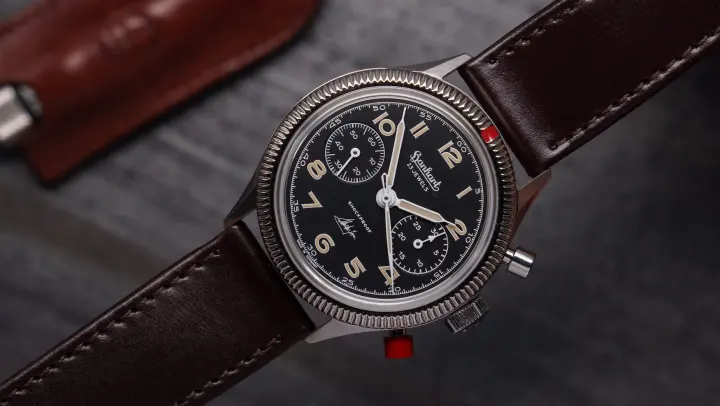
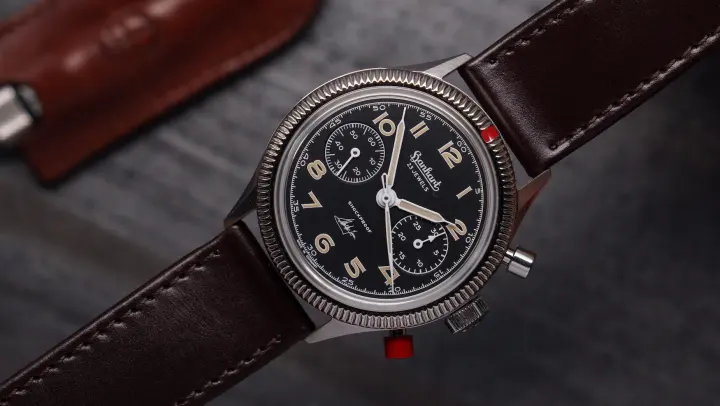
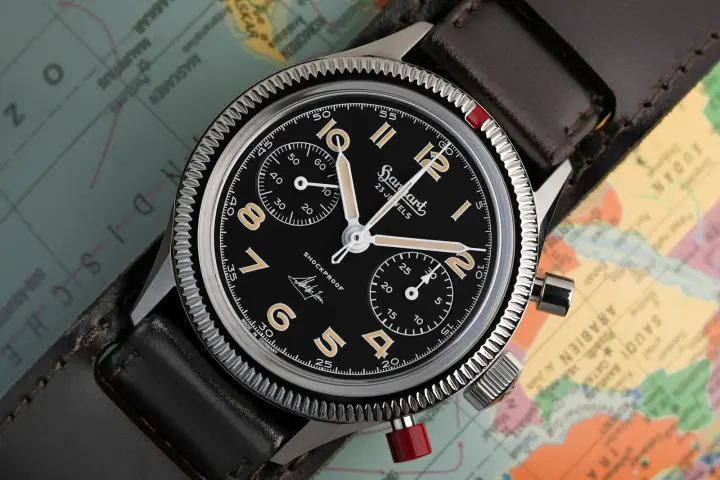
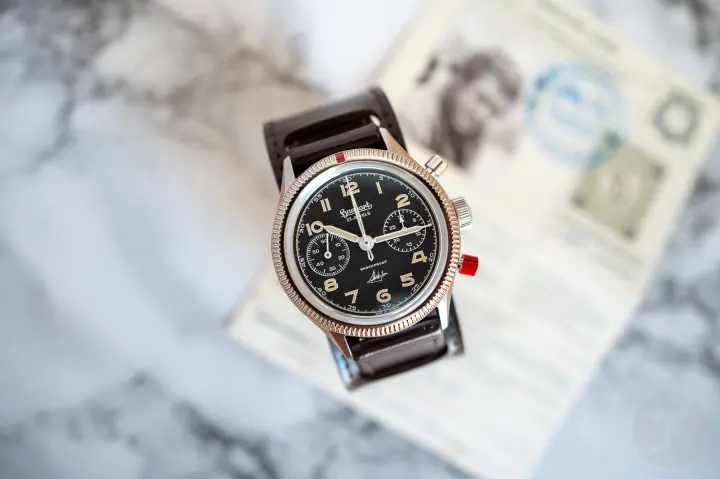
The first Hanhart chronograph, the single-pusher Calibre 40, went into production in 1938. The Calibre 41 and the Tachy Tele followed in 1939, and pilot's chronographs became the main product. Some had a red-lacquered reset pusher so pilots wouldn't reset a running timer by accident. That red pusher is still the brand's signature. Hanhart's own history page notes that this period falls in the Nazi era, and that its company museum in Gütenbach covers that chapter openly.
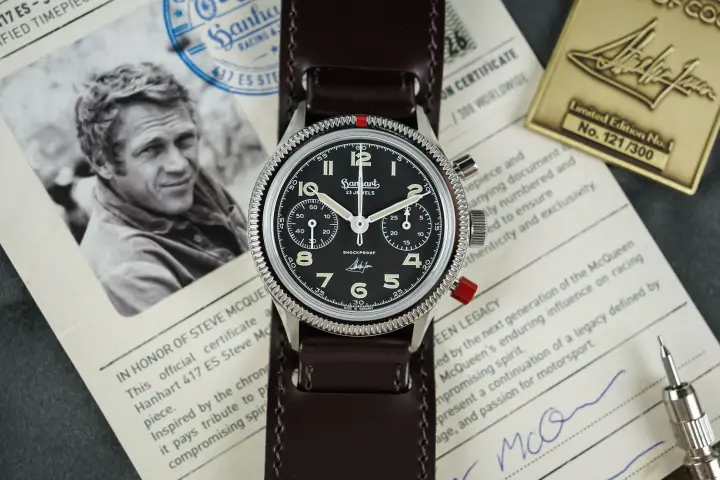
After the war, Hanhart supplied the new Bundeswehr with pilot's chronographs from 1957, powered by its Calibre 42. That watch, the 417, is the one Steve McQueen wore through the 1960s, before the Heuer Monaco years. Hanhart also became Europe's biggest maker of mechanical stopwatches, and got through the quartz era with cheap in-house movements such as the Calibre 3305, which sold 40 million units.
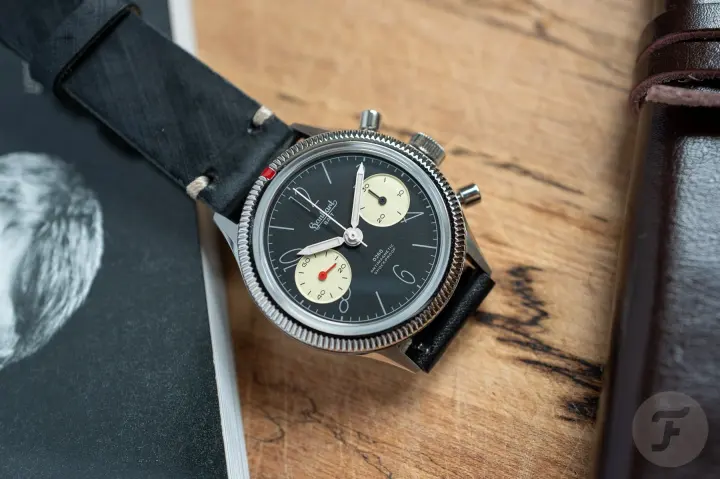
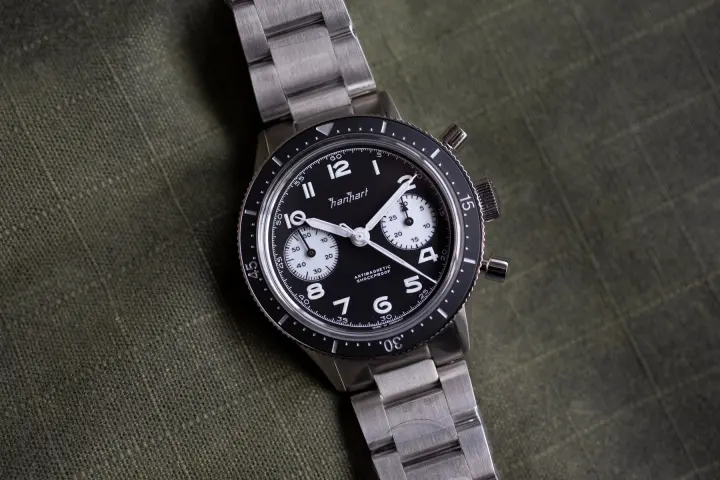
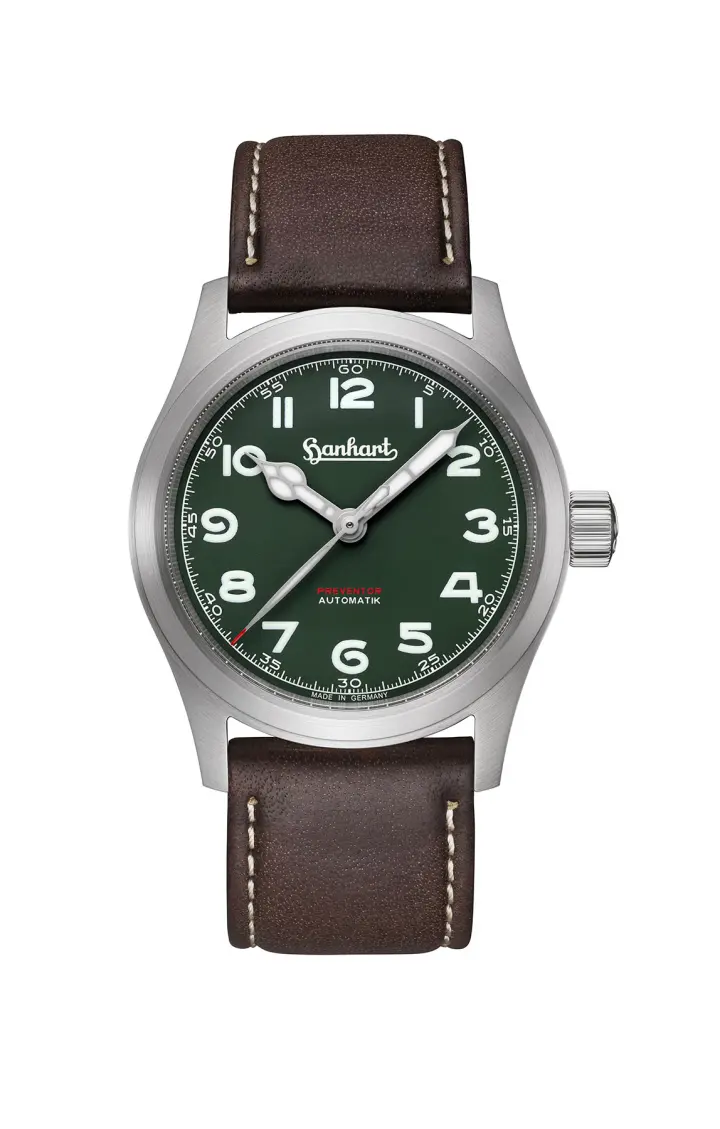
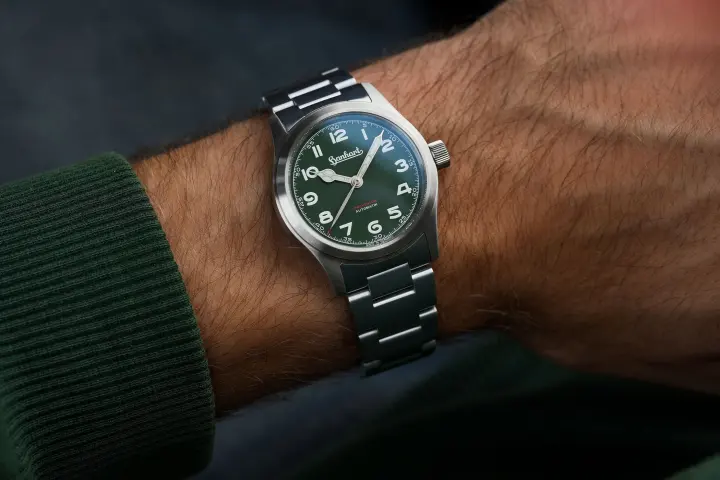
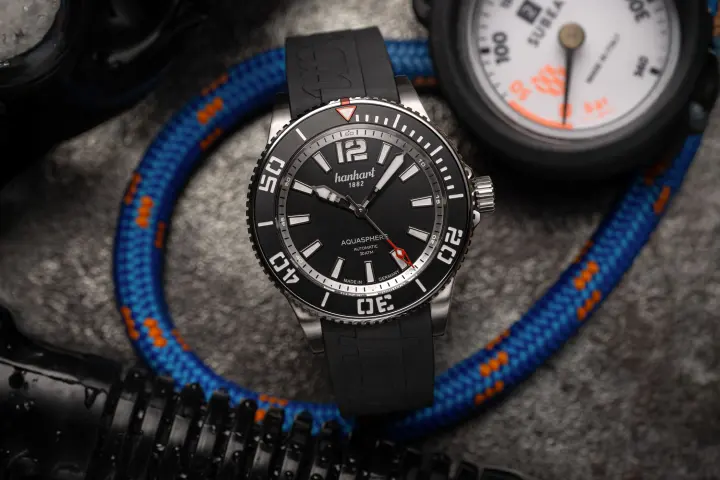
Today's range covers the 417 ES and 415 ES reissues, the Pioneer line, the Primus chronographs (since 2009) and the Aquasphere diver. Regular 417 ES models use the hand-wound Sellita AMT5100 M flyback chronograph, and Hanhart regulates it in Gütenbach to 0 to +8 seconds a day. On the brand's web shop, prices start at €1,540 for an Aquasphere and €2,140 for a 417 ES.


Comments
No comments yet, be the first to weigh in.