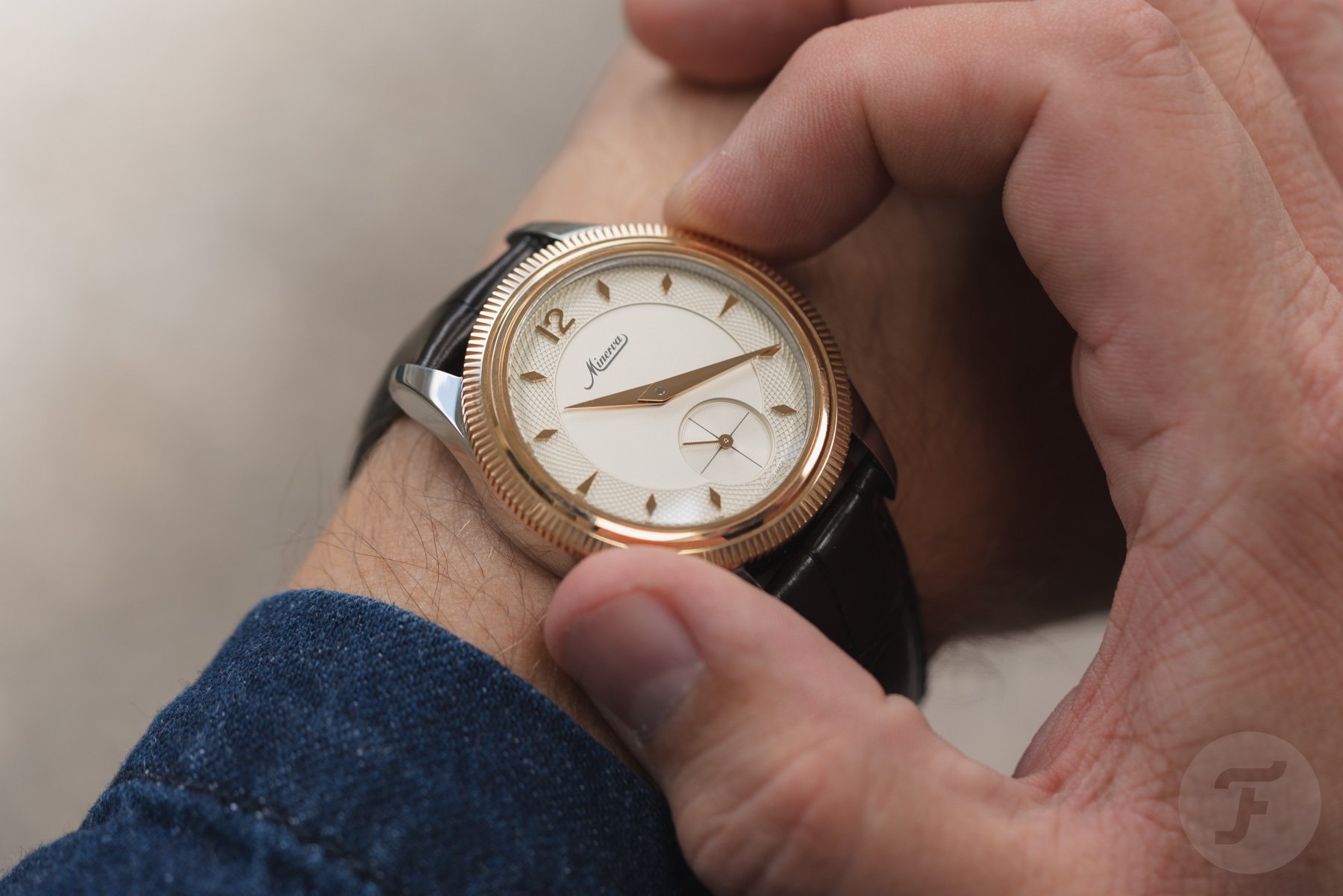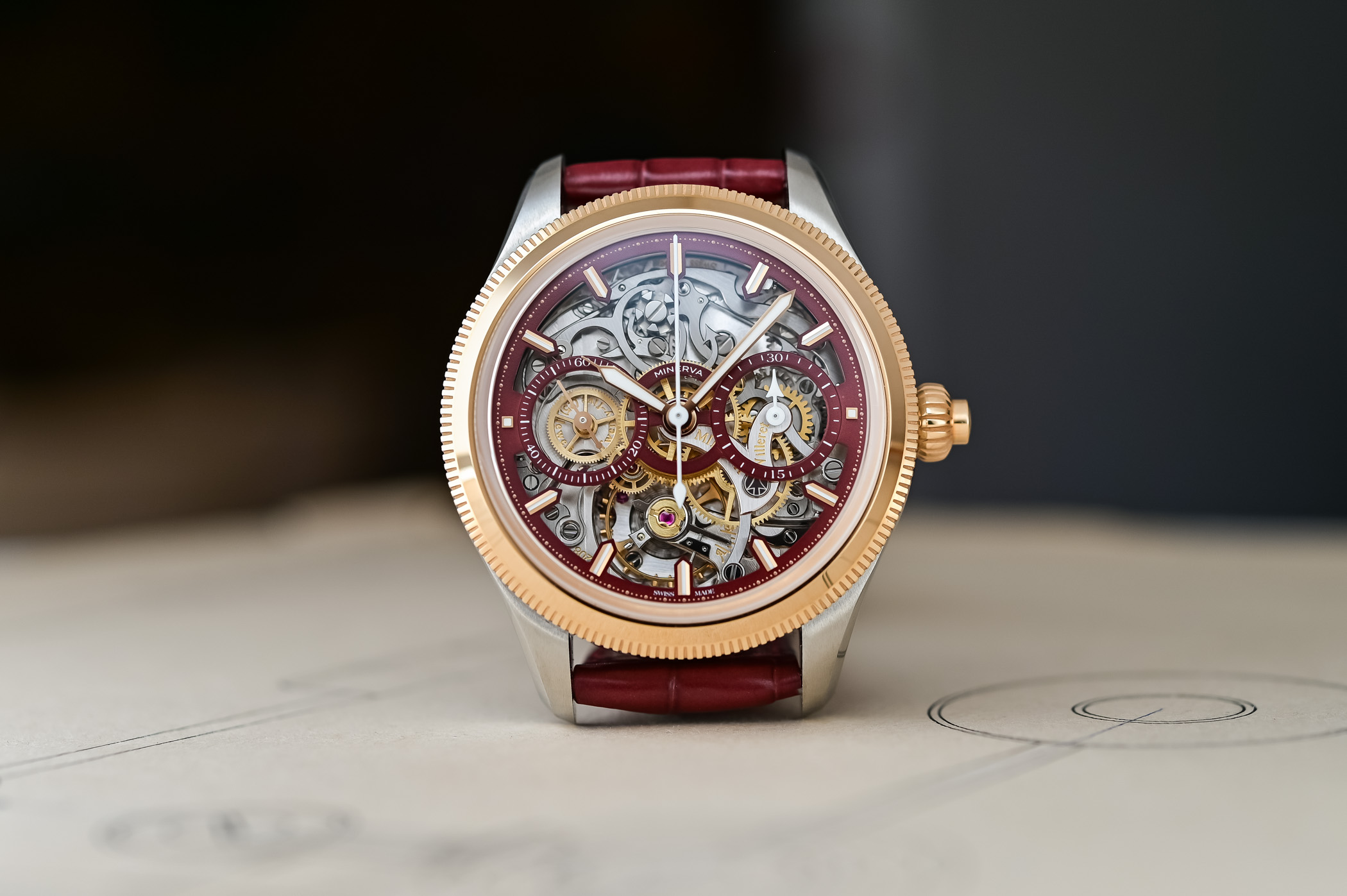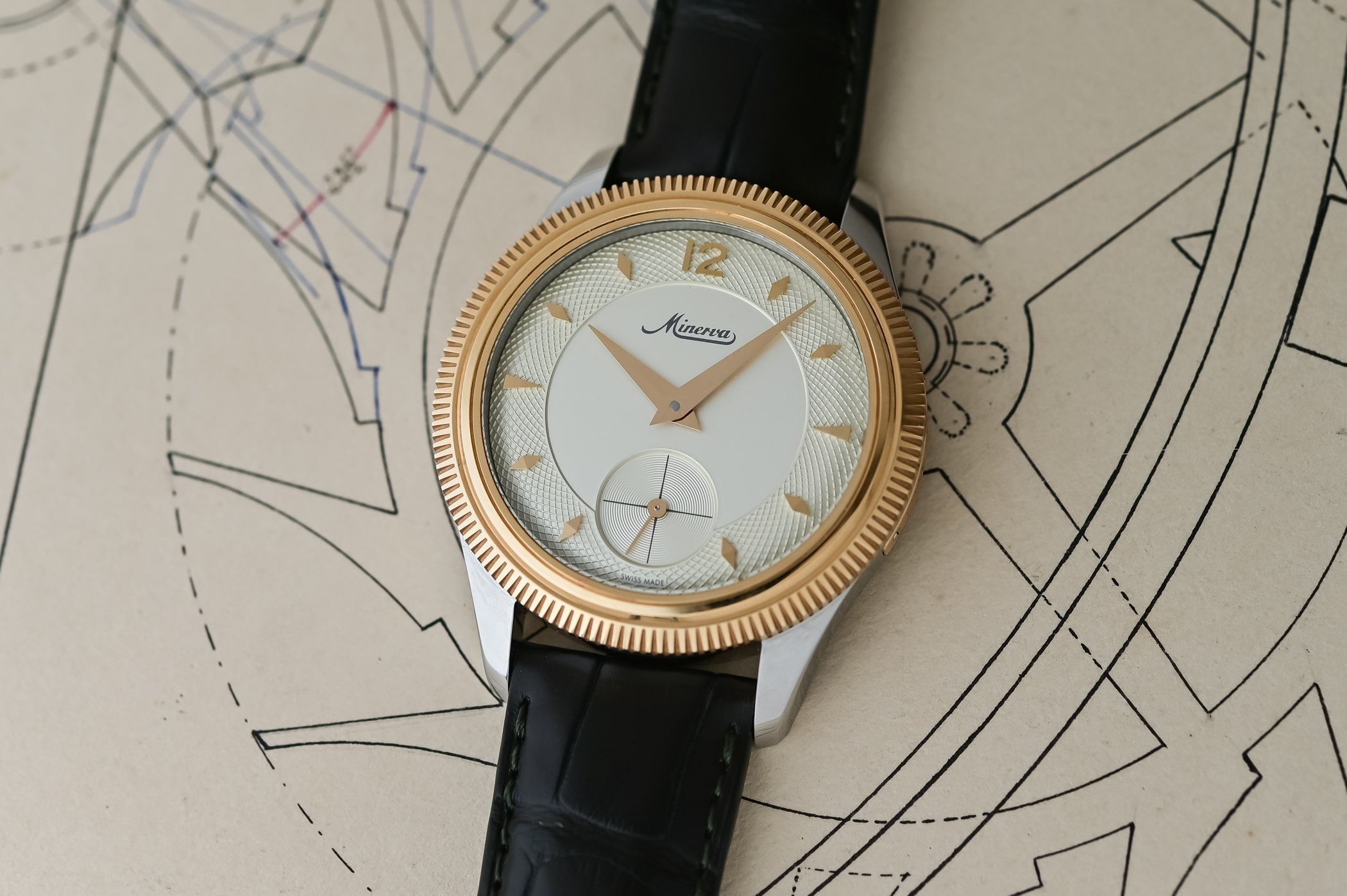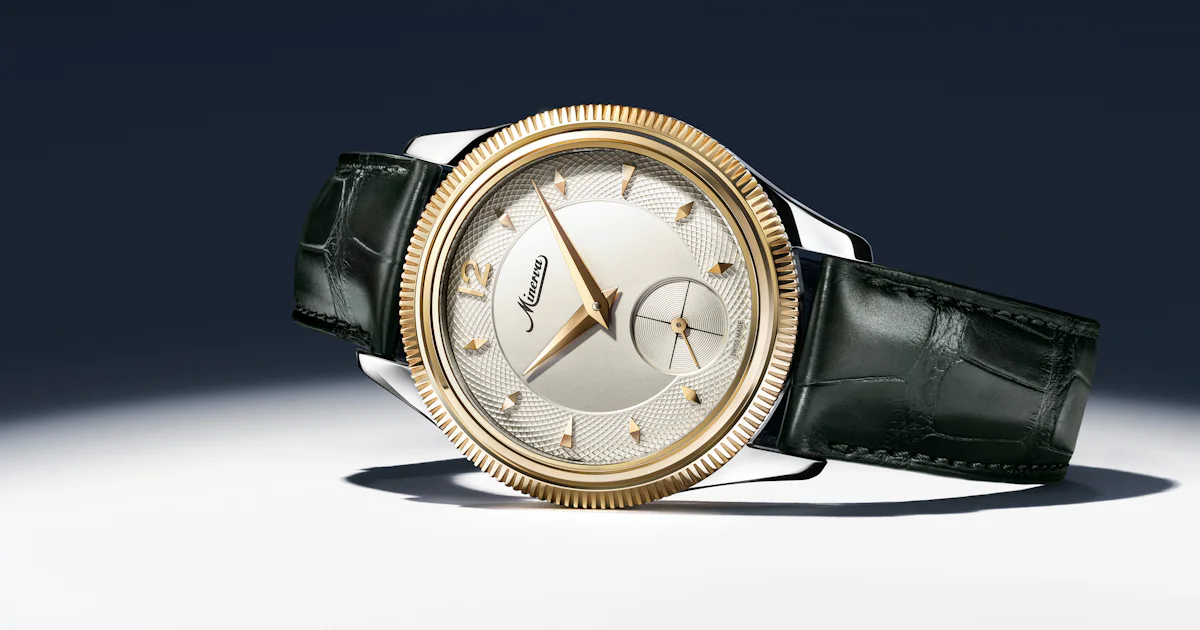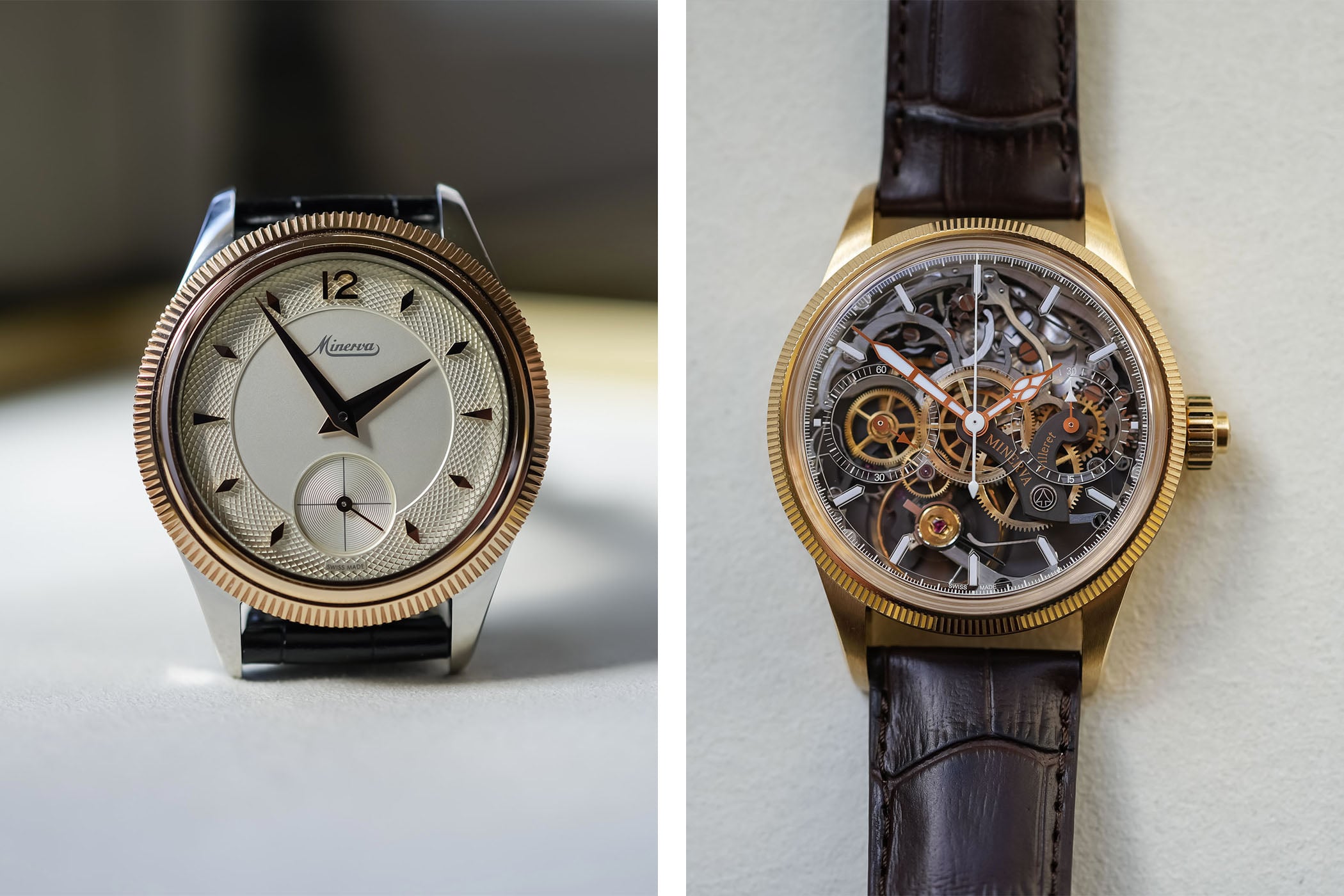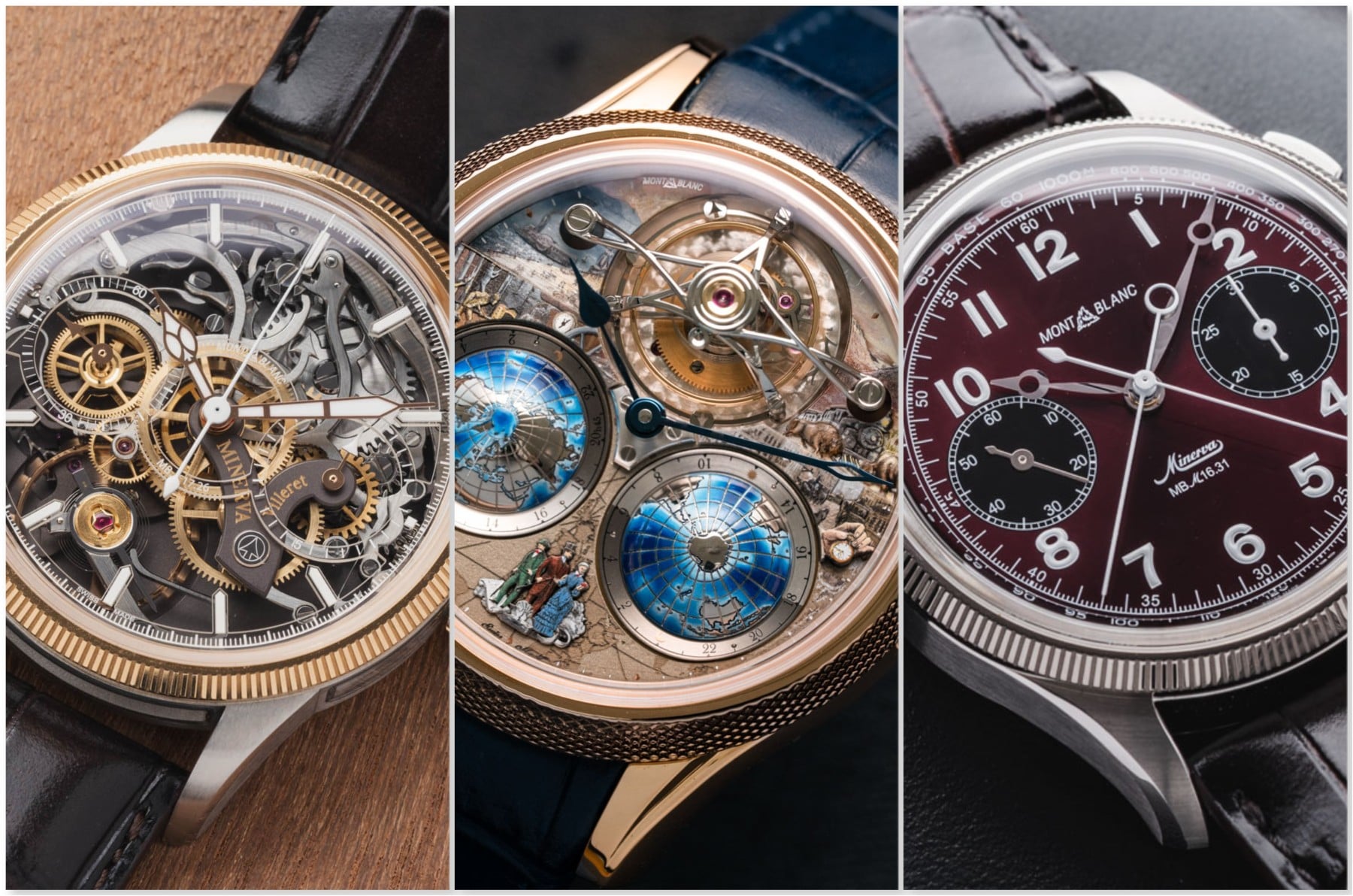
Minerva was founded in 1858 in Villeret, a small village in the Bernese Jura, by brothers Charles-Yvan and Hyppolite Robert. It began as "H. & C. Robert", was renamed "Robert Frères Villeret" in 1878, registered the Minerva trademark in 1887, and finally became "Minerva SA" in 1929. The brand's identity for the entire 20th century was chronographs and stopwatches. Minerva movements timed Olympic events, land-speed records, and the technical work of a whole generation of Swiss horology.
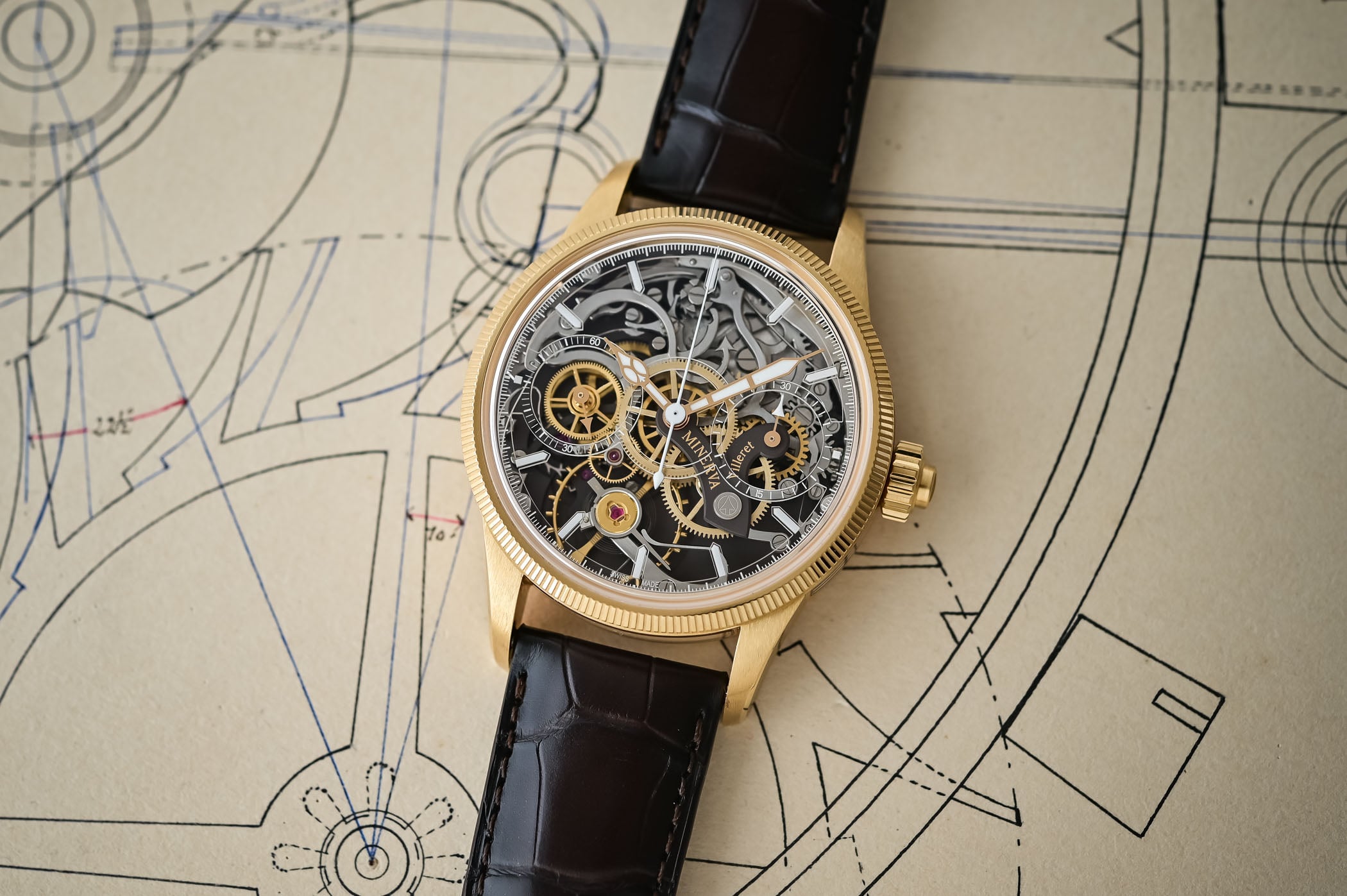
The manufacture's landmark movement is the Calibre 13-20, introduced in 1923: a manual-wind, column-wheel chronograph with the two pushers positioned at an unusual 37 degrees from the crown. Combined with its predecessor the 19-9 (1908, Minerva's first chronograph) and its successor the 17-27, this family of movements defined the maison's technical voice for decades.
Minerva stayed under family ownership through the 20th century (Robert family until the 1930s, then Pelot and Haussener, then Frey and Favre). In 2000 it was sold to Italian financier Emilio Gnutti. In October 2006 Richemont acquired Fabrique d'Horlogerie Minerva SA, and in 2007 the manufacture was folded into Montblanc as the Institut Minerva de Recherche en Haute Horlogerie, a dedicated haute horlogerie department. Modern calibres like the MB M16.29 monopusher chronograph and the MB M62.00 time-only movement are direct descendants of the historic Villeret movements, developed and hand-finished at the original Minerva site.
Minerva no longer produces watches under its own name. When you see a Montblanc 1858 Split-Second Chronograph, a Heritage Perpetual Calendar or a Star Legacy Nicolas Rieussec, you are looking at Institut Minerva work. For collectors the standalone Minerva pieces (1858 through the 2000s) remain a serious vintage-chronograph category.