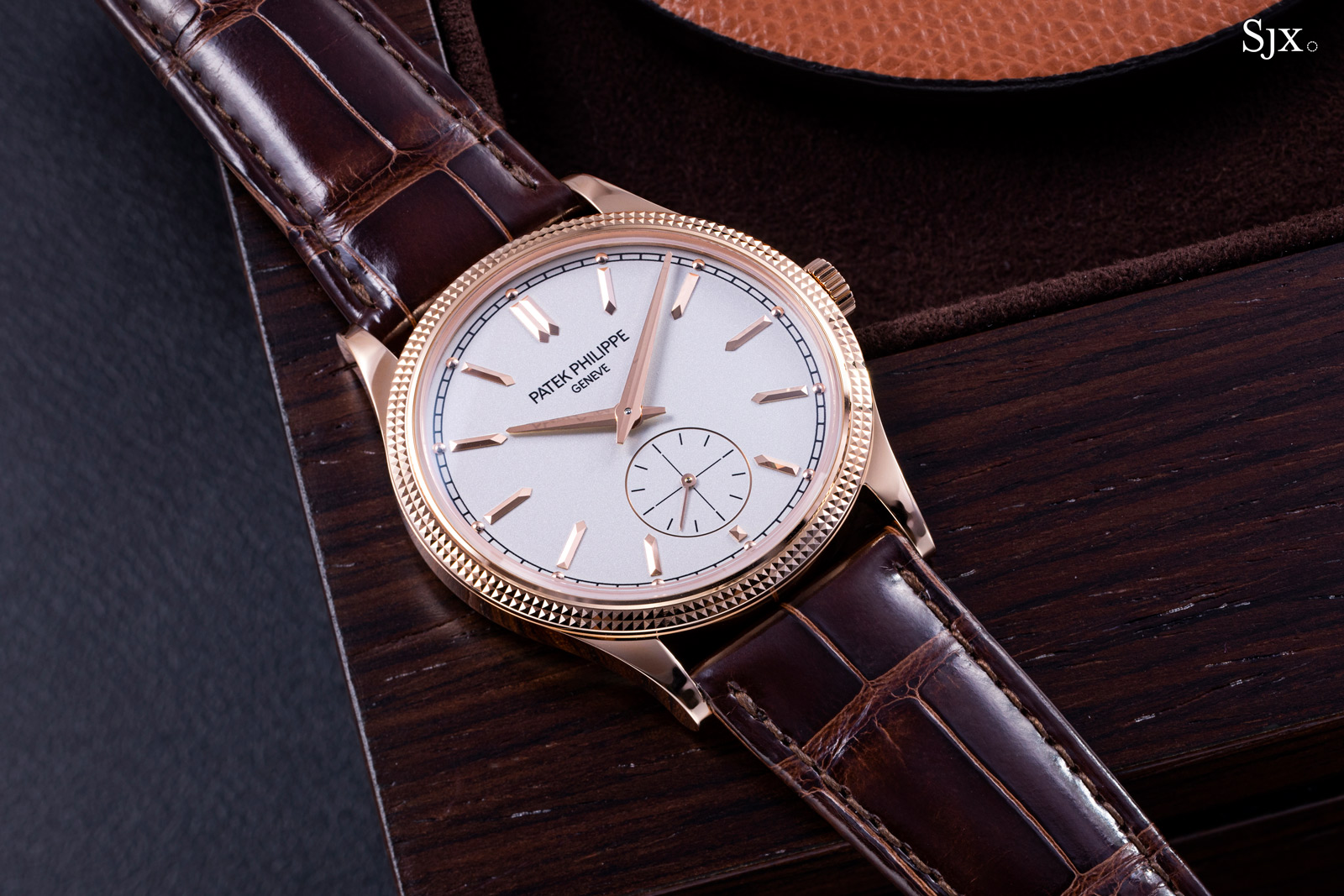
In-Depth: Patek Philippe Calatrava Ref. 6119 “Clous de Paris”
Launched earlier this year, the Calatrava Ref. 6119 “Clous de Paris” is significant amongst Patek Philippe’s recent releases, despite being a simple, time-only watch. That’s because it’s powered by the all-new cal. 30-255 PS, a large, thin movement that is the new workhorse calibre for the brand’s entry-level, hand-wind watches. Visually, the ref. 6119 takes its cues from past Calatrava models, but the overall design is contemporary and elevated by details like the facetted hour markers and textured dial. But the crucial feature of the ref. 6119 remains the new movement inside. The cal. 30-255, with its large, twin barrels and Gyromax balance The historical context Named after the Patek Philippe emblem, the Calatrava was introduced in 1932, the same year the Stern family took over the watchmaker as it struggled amidst the Great Depression. The original Calatrava was the ref. 96, a handsome but minuscule watch just 31 mm in diameter. While the Calatrava family has multiplied and grown in diversity since its launch, the ref. 96 remains the definitive Calatrava design. Its widely-spaced lugs, baton markers, and dauphine hands are instantly recognisable together, despite being relatively generic in themselves. In fact, the ref. 96 was influential in defining Patek Philippe’s house style for decades; the ref. 130, for instance, was essentially a ref. 96 with a chronograph. A ref. 570 from 1943, essentially an enlarged ref. 96 One of the longest-lived references ...
 Time+Tide