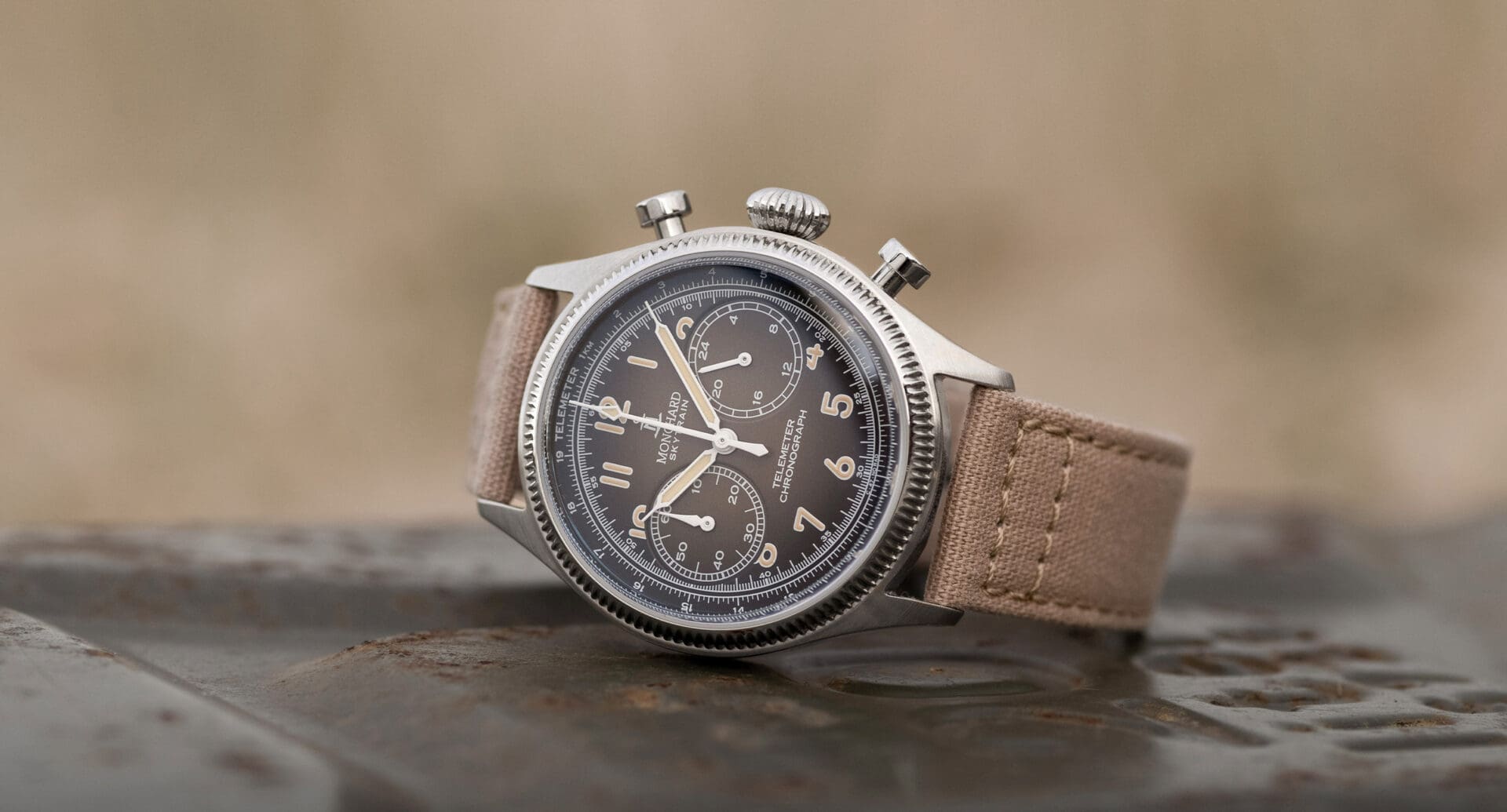
Telemeter scale is a chronograph dial scale calibrated for measuring distance from a visible-then-audible event by timing the gap between the visual cue (flash, smoke, light) and the sound arrival. The physics is straightforward: the speed of light is essentially instantaneous (300,000 km/s), but the speed of sound is finite (~340 m/s in air at 20°C). When you see a flash and then hear the sound, the time gap multiplied by the speed of sound gives the distance to the source.
In practical use: the wearer presses the chronograph start when they see the flash (lightning bolt, artillery muzzle flash, gunshot, distant explosion, distant fireworks) and presses stop when they hear the corresponding sound. The chronograph seconds hand points to the distance reading on the telemeter scale; typical scales calibrate from the start position around to roughly the 30-second mark (corresponding to ~10 km / 6 miles of distance), though some military scales extend further.
"A telemeter scale is the only chronograph scale you can still use with the original 1916 method: see the lightning, start the chronograph, hear the thunder, stop, read the distance. A century of physics in 30 seconds of timing."- Hodinkee Reference Points, on chronograph dial scales
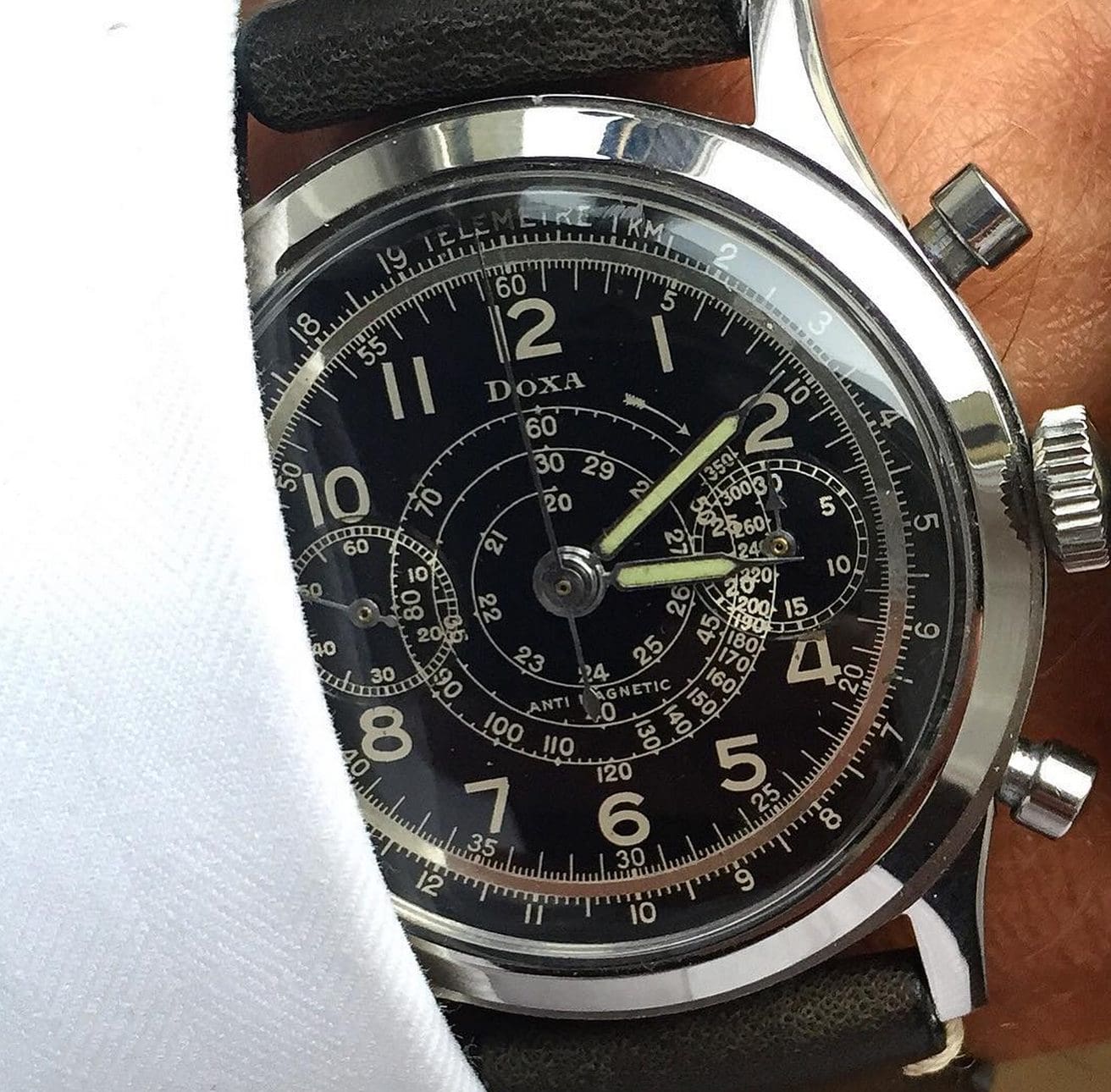
The scale was developed for military artillery spotting in WWI. Forward observers needed to estimate the distance to enemy artillery by timing the gap between muzzle flash and sound; a telemeter chronograph let them do this on the wrist instead of with a stopwatch and a calculation. The scale was widely used on WWI and WWII military chronographs from Longines, Lemania, Hanhart, Heuer, and others; many vintage Longines 13ZN and 30CH chronographs from the 1930s-50s feature a telemeter scale on the dial periphery alongside (or in place of) a tachymeter.
Civilian aviation chronographs of the 1950s-60s also frequently included telemeter scales, typically alongside tachymeter and sometimes pulsometer scales on the same dial. The Breitling Navitimer family does NOT typically use a telemeter (the Navitimer is a slide-rule pilot, not an artillery-spotter), but contemporary references from Universal Genève, Heuer Carrera, and various smaller chronograph makers include telemeter scales on their dials. The Breguet Type XX French Aéronavale specification did include telemeter on some variants.
Telemeter scales are functionally obsolete for most modern users. Civilian uses today: estimating distance to a thunderstorm by timing the gap between lightning flash and thunder is a textbook physics lesson and a real practical use; estimating distance to fireworks at a public display is another. Military distance-to-artillery estimation is now done with laser rangefinders rather than chronograph timing. The scale persists primarily as a vintage chronograph design cue.
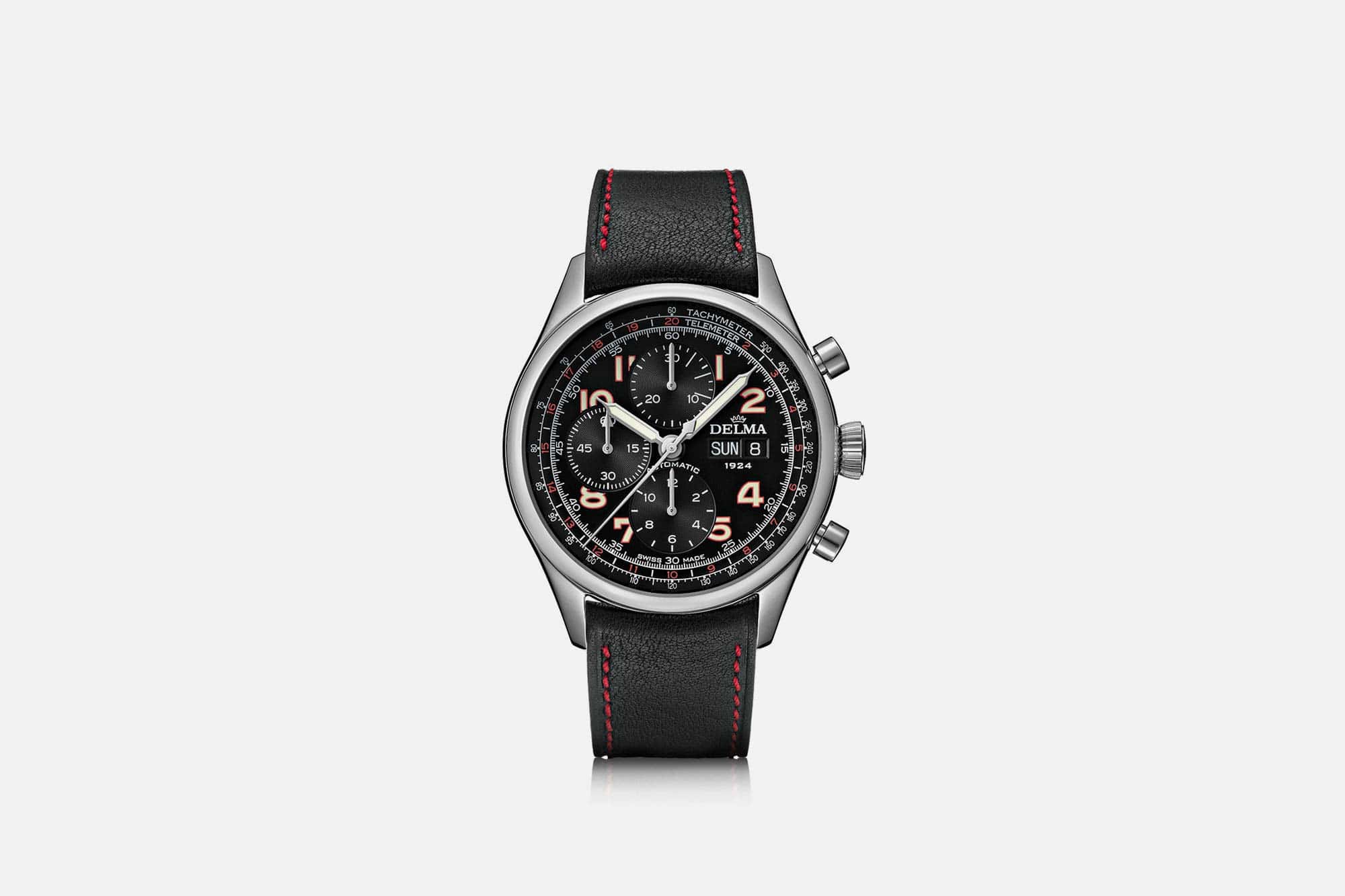
Modern chronographs that include telemeter scales are typically vintage-revival designs: Longines Heritage chronographs, Breguet Type XX/XXI reissues, Heuer Carrera Telemetre heritage variants, Hamilton Khaki Field Chronograph, and various microbrand military-style chronographs (Praesidus A-11 Type Aviation, Hanhart 1882). The scale typically appears in red printing as the inner dial track, with a tachymeter scale (in black) on the outer track. The combination is a deliberate vintage-cue: a telemeter scale on a modern chronograph signals "this is a heritage-aesthetic watch", not "this watch will be used to estimate artillery distance".



Comments 1