Revolution
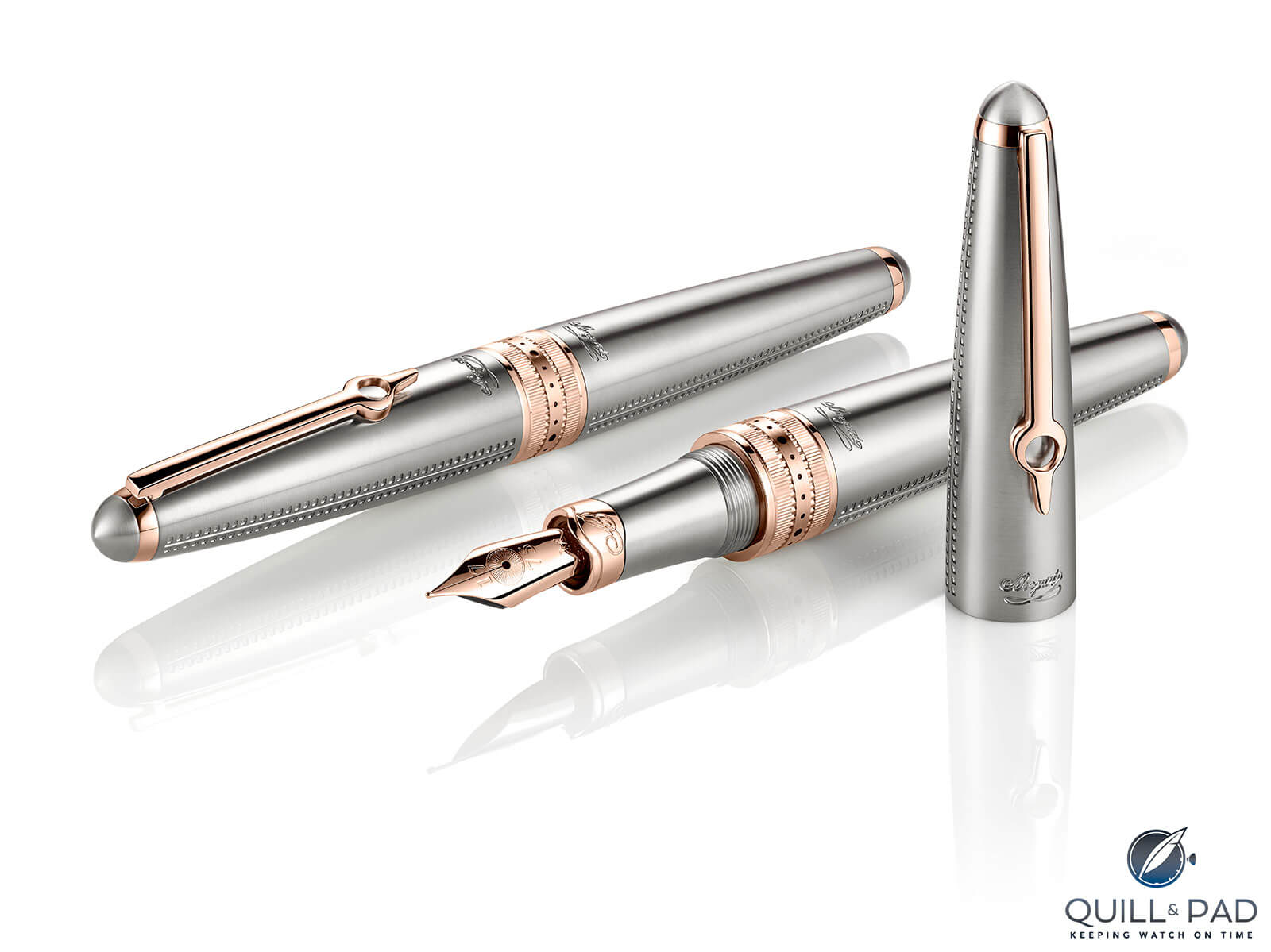
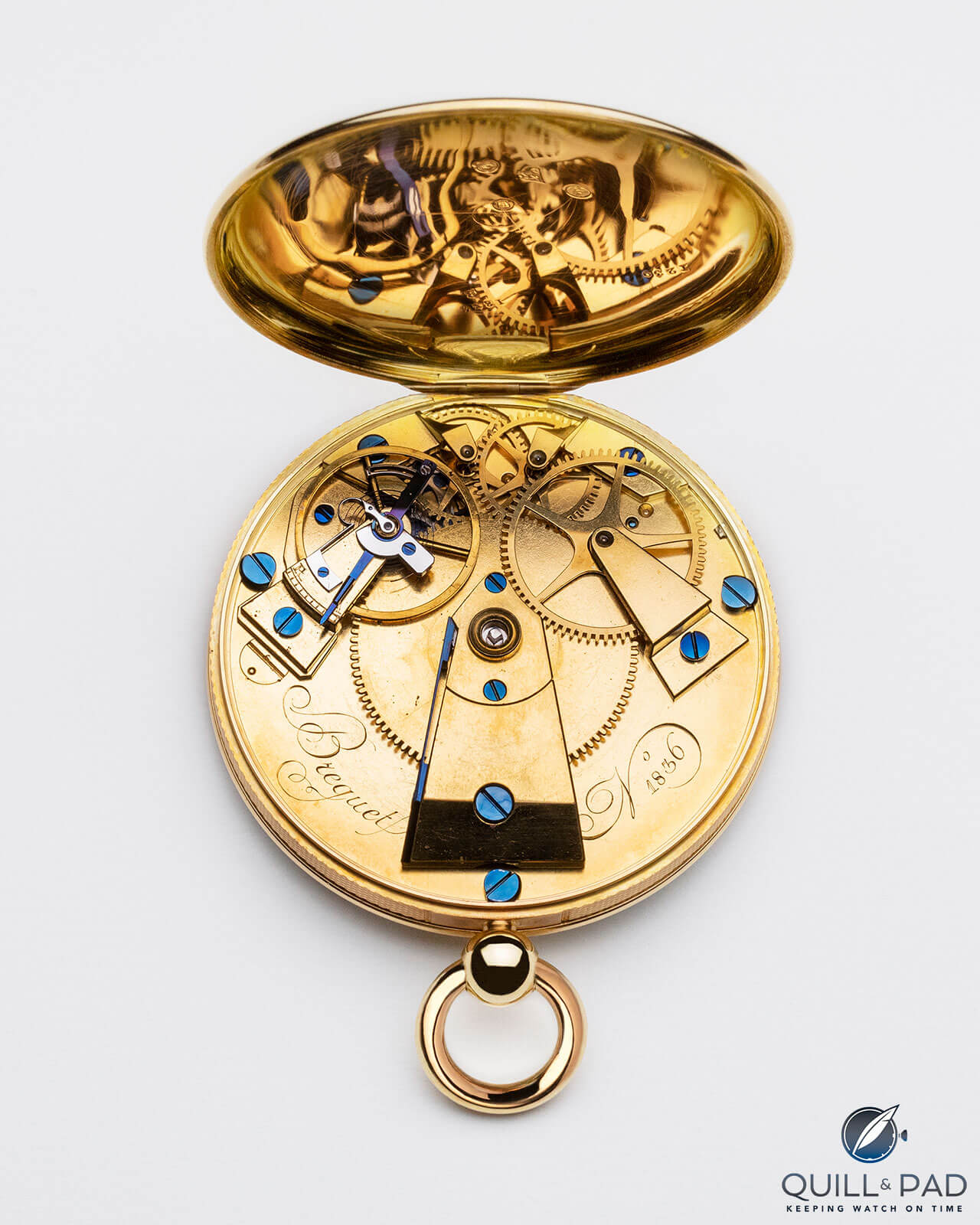
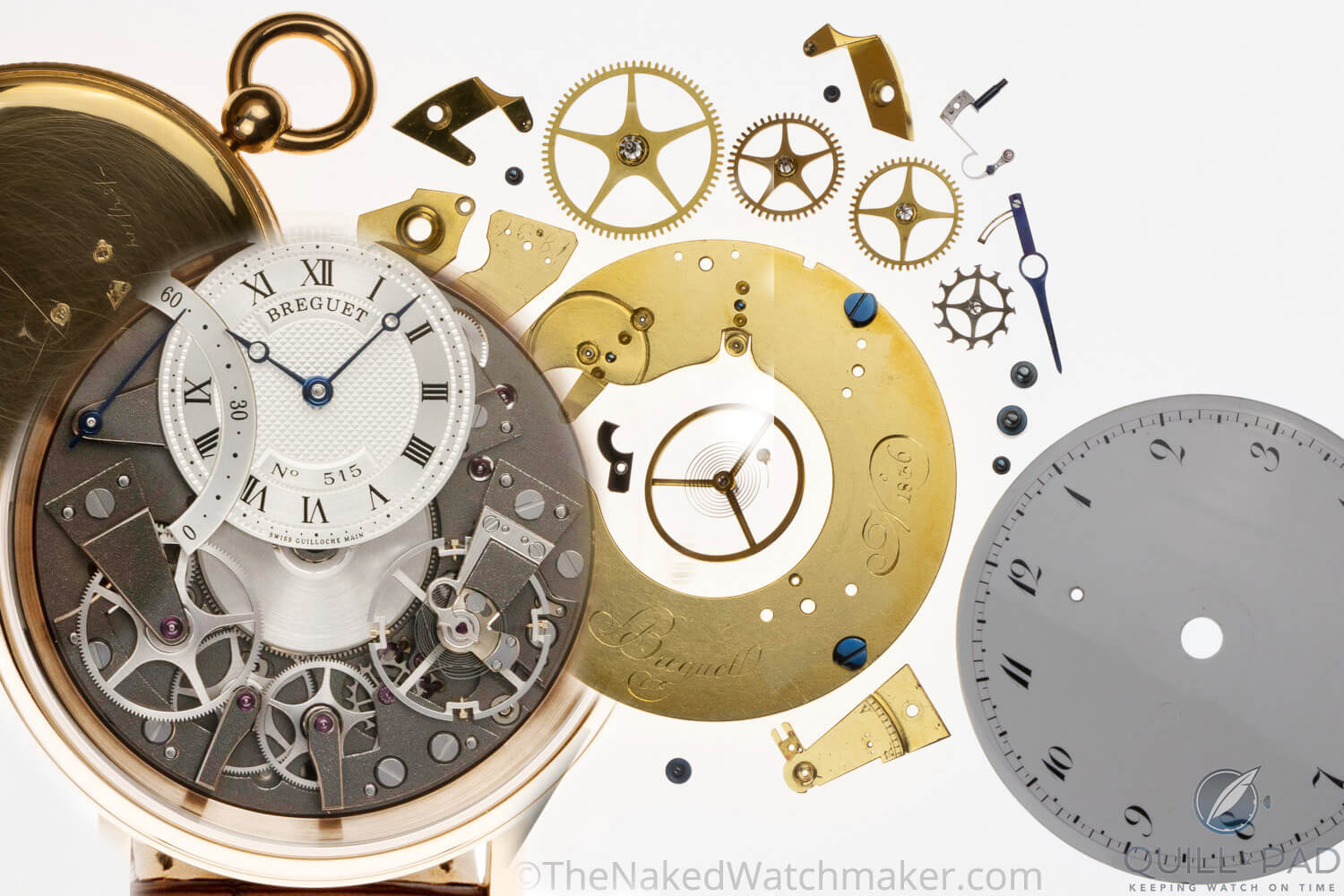
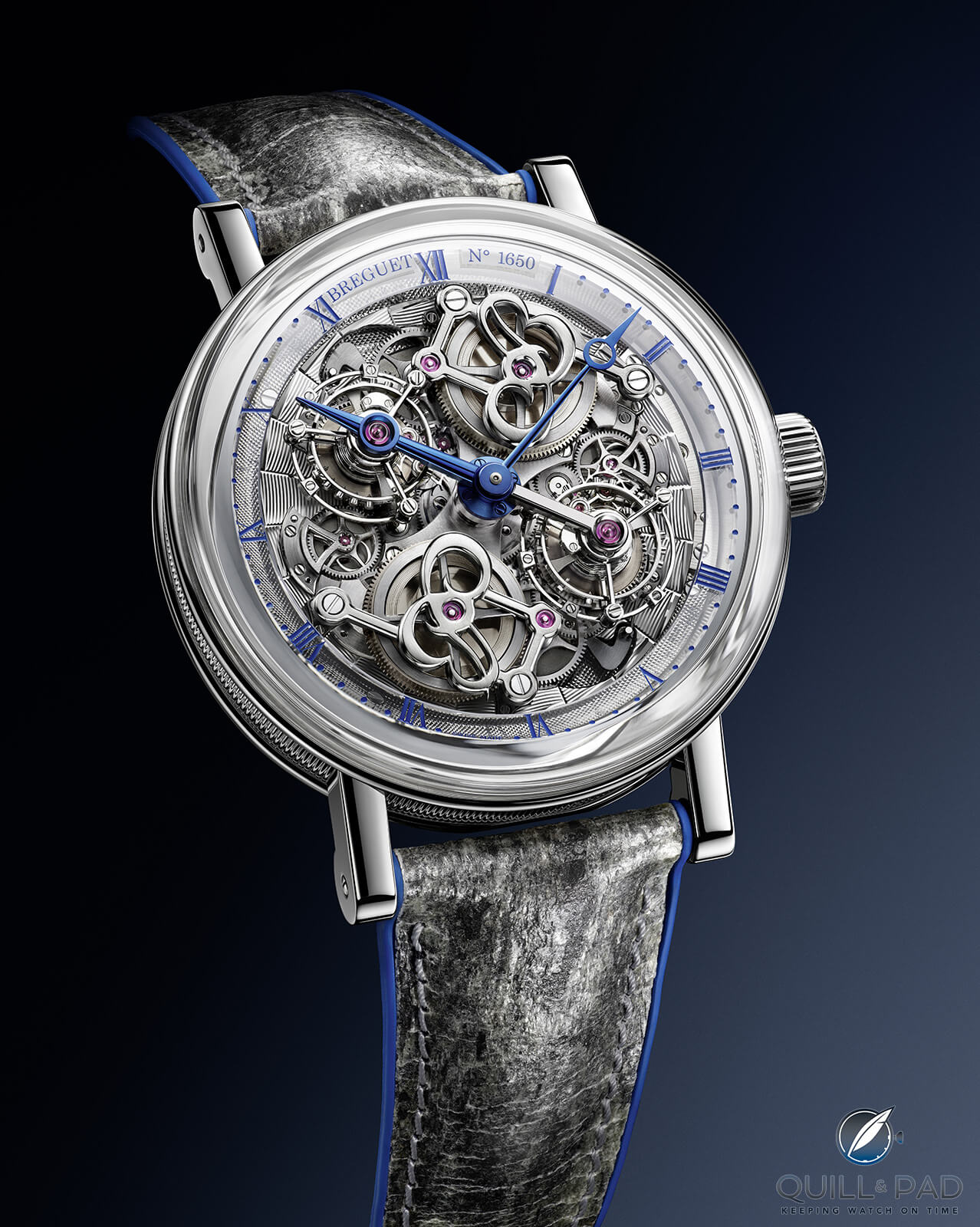
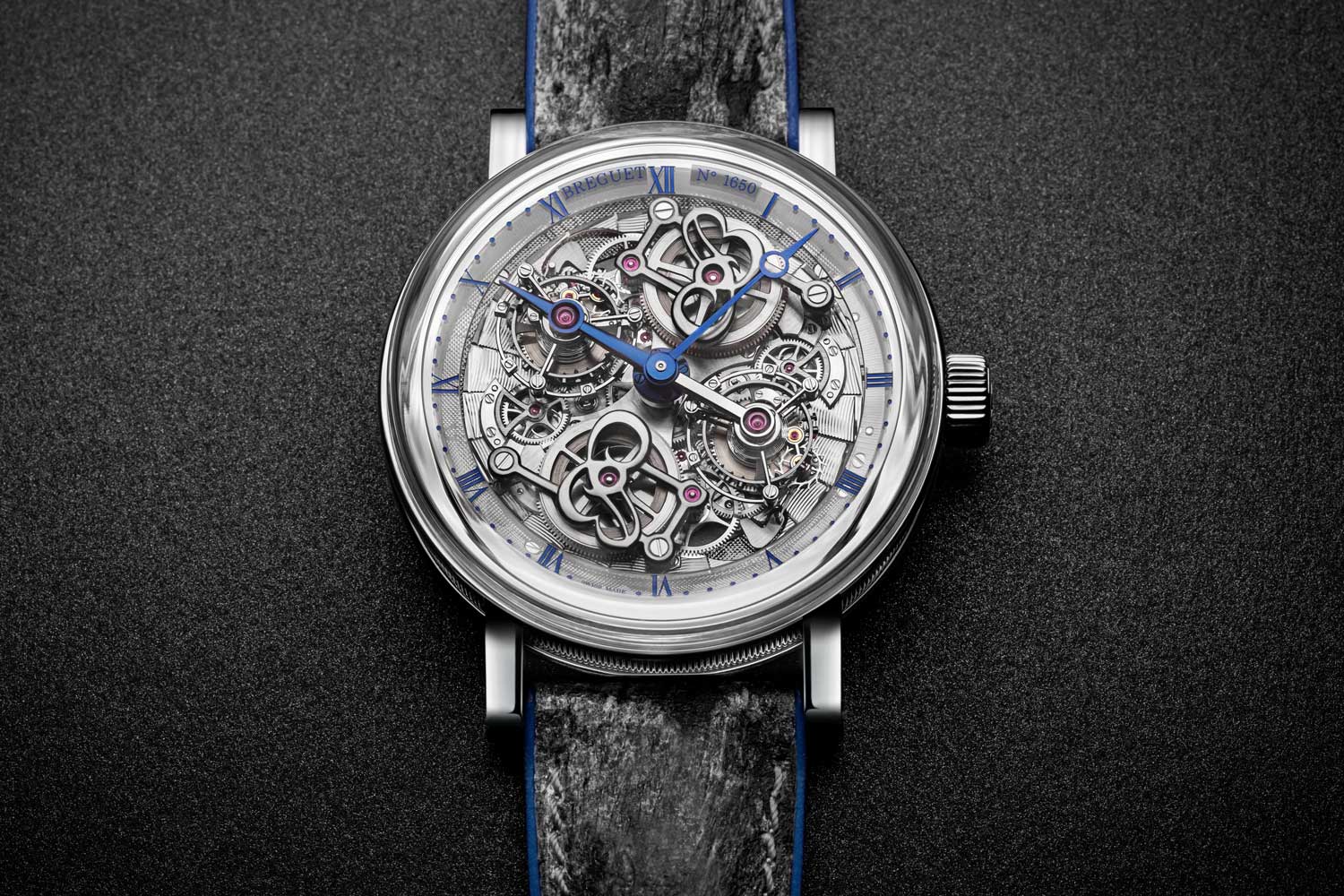
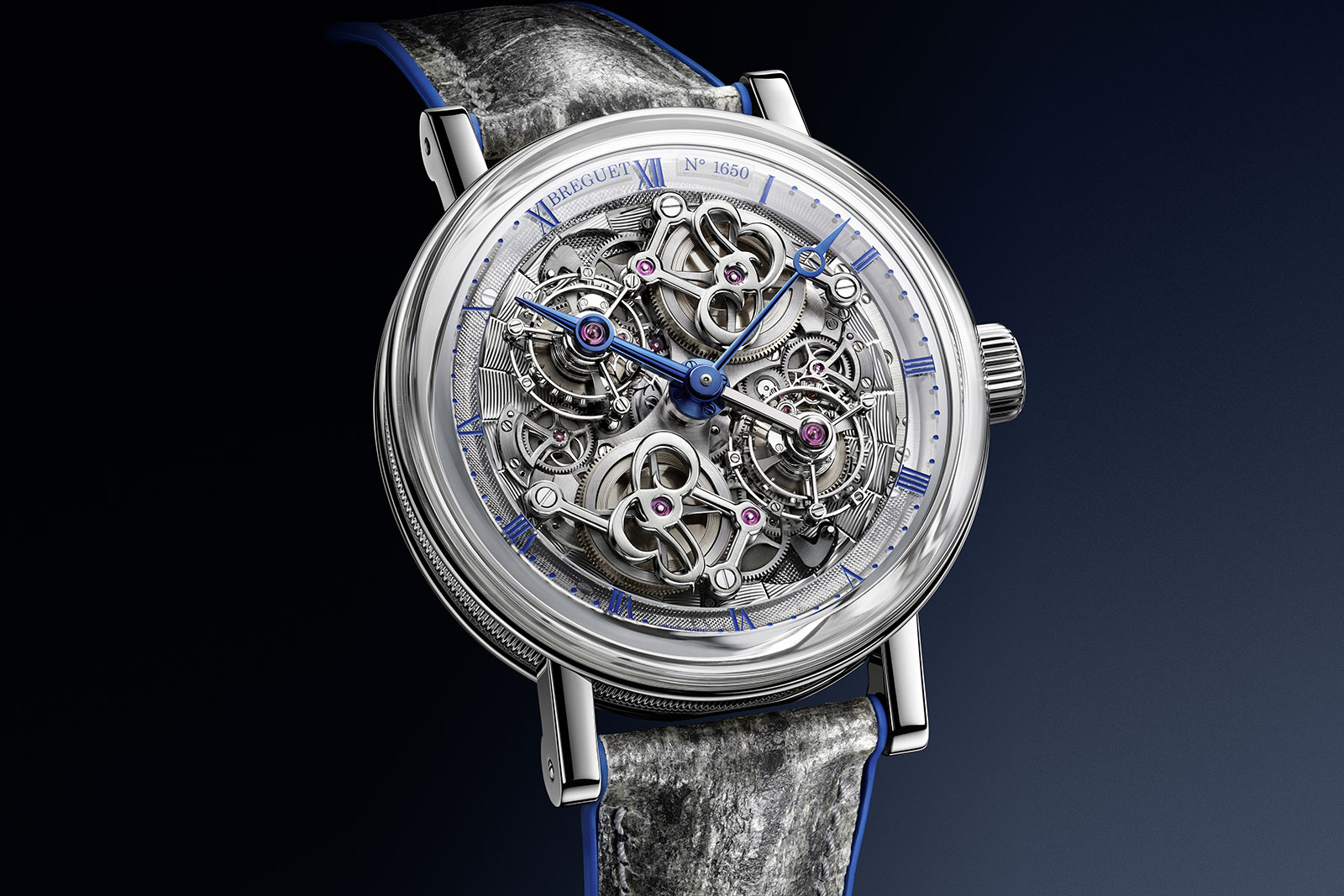
The Breguet Guilloché
Famous for the invention of the tourbillon, REVOLUTION takes a look at another pillar for one of watchmaking’s oldest brands: Guilloché.
720 articles · 50 videos found · page 15 of 26
Breguet's 1801 rotating-cage escapement, explained.
The coiled spring that controls the balance wheel; Huygens 1675, Breguet overcoil 1795.
Designer behind modern Breguet 1973-89 and the eponymous Daniel Roth brand with its double-ellipse case.
The cursive italic Arabic numerals designed by Abraham-Louis Breguet ~1790; canonical haute-horlogerie dress watch numeral.
Revolution
Famous for the invention of the tourbillon, REVOLUTION takes a look at another pillar for one of watchmaking’s oldest brands: Guilloché.
The Classique Tourbillon Extra-Plat Automatique 5367 wears the grand feu enamel dial of the 7147, which is the polar opposite of the equally traditional, if ornate, engine-turned dial of the 5377.
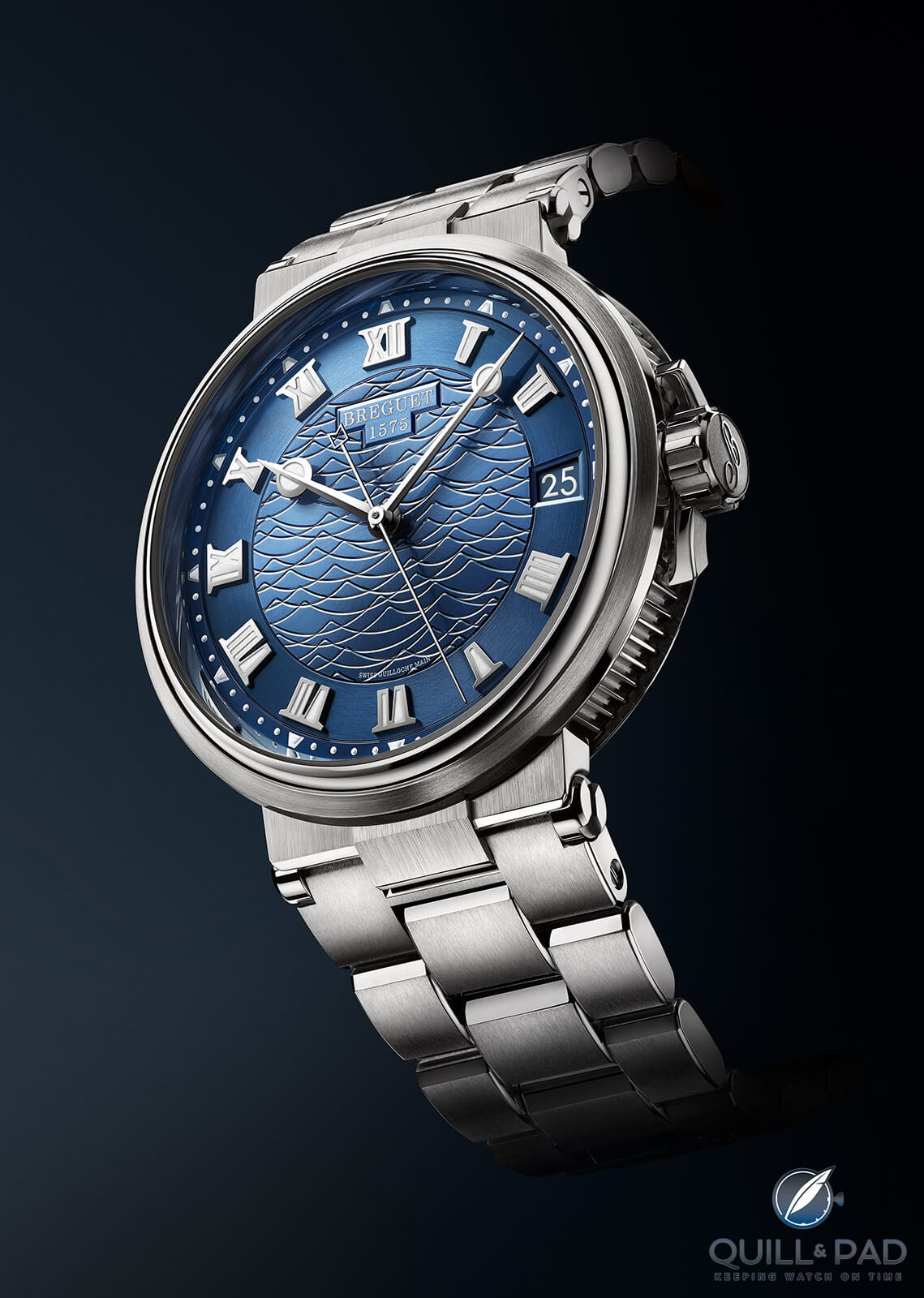
The Marine Chronographe 5527 is not a split-seconds chronograph but a no-less-desirable three sub-dial model housed in the new, dressy Marine case.
Deployant
This weeks Spot the Watch features Ben Affleck, who is playing Bruce Wayne in the new Batman vs Superman movie. See what we have spotted in this weeks STW.
Revolution
Revolution
Revolution
Revolution
“Precision and Splendor: Clocks and Watches at the Frick Collection” is an exhibit at New York’s Frick Collection of a stunning group of priceless clocks and watches, many from the collection of Winthrop K. Edey, who bequeathed his collection of clocks and watches –which includes remarkable timepieces dating all the way back to the Renaissance […]
SJX Watches
London, 1965. Christie’s had arranged the third and final part of the Sir David Salomons Collection for sale — a sequence of Breguet watches assembled by the Victorian baronet whose obsession with Abraham-Louis Breguet had produced the most important English-language study of the watchmaker’s work. When the bidding closed, one man had bought every lot in the catalogue. Continuing our ongoing Complicated Collectors series, Edgar Mannheimer left an indelible mark on watch collecting. He was 40 years old, and had settled in Zurich a decade earlier with nothing but the instincts he had developed in the post-war black markets of Germany. He was not a collector in the sense that he did not keep what he bought. What he did, with a consistency and conviction that separated him from every other figure in the mid-century horological trade, was understand, ahead of the market, what something was worth. The Salomons lots were subsequently divided between two collectors. It was, in miniature, a portrait of how Mannheimer operated: he absorbed the risk, resolved the complexity, and left his clients with the watches. Neutitschein and Auschwitz Edgar Mannheimer was born on December 23, 1925, in Neutitschein, Moravia, into a family whose presence in the town was visible and established. His father ran Marsmalz, a confectionery business prominent enough to operate the community’s first delivery van — a small but telling detail about the family’s position within a world where Je...
SJX Watches
In the run-up to Watches & Wonders, a new crop of emergent independents is making its debut. But even within a crowded field, the Cleguer Inspiration One manages to stand out with an ambitious proprietary escapement and clever construction. It’s a promising start for founder Mathieu Cleguer, an engineer who’s had a hand in developing several calibres for well-known independent brands. Initial thoughts The artisanal, highly finished time-only watch is a well-worn trope among independents, but occasionally one breaks from the pattern. The Inspiration One from Cleguer Horology is one such watch. Mathieu Cleguer is an industry veteran who has worked as a movement construction consultant and now produces watches under his own name. The opening salvo in what is planned to be a larger ‘Inspiration’ series designed to explore alternative escapements, the Inspiration One is built around the so-called innate escapement, a fresh twist on Breguet’s natural escapement. The system is Mathieu Cleguer’s own design, and from initial analysis it exhibits a surprising degree of ingenuity and is original in its execution. Discreet signature on the interior bezel. The open design - an off-centre dial with exposed escapement - is a familiar arrangement among independents, but the delicacy of the components gives it a refined quality. The 38.5 mm case is well-proportioned, though the 12 mm height borders on tall. While there’s room to develop a more cohesive design language goi...
SJX Watches
“How can you make a watch, my dear boy?” His aunt, Jeanette Salomons, then under medical care in St. Leonards-on-Sea, wrote back to her nephew, David Lionel Salomons, in early March 1867, shortly before her death. He was 16, orphaned since his father Philip’s death earlier that year. His mother, Emma Abigail Montefiore, had died when he was eight. At the time, Salomons lived with his uncle, Sir David Salomons (1st Baronet), the Lord Mayor of London, at Great Cumberland Place, near Marble Arch, making frequent visits to a nearby watchmaker’s shop, where he learned to use a lathe and to file metal to tolerances measured in a fraction of an inch. Fifty years later, that teenage training would allow him to assemble the most comprehensive collection of Breguet watches in history. Broomhill Salomons inherited the expansive Broomhill estate in 1873 when he was 22. His uncle, the first Sir David Salomons, had died without children, and the baronetcy passed to his nephew along with the estate near Tunbridge Wells. The house stood on substantial grounds, and Salomons began altering it almost immediately. Broomhill from the south, a photograph by Sir David Lionel Salomons, 1868 (cropped). Album 19, Richard Levy Family Archive. Image – By permission of the Salomons Museum. He built workshops housing machine tools like lathes, drill presses, and milling equipment. Then came electrical apparatus. Then storage for chemicals and photographic equipment. By the 1890s, the workshop...
Monochrome
Chronoswiss was founded in 1983 by German watchmaker Gerd Rüdiger Lang and was sold in early 2012 to Swiss entrepreneurs Oliver and Eva Ebstein, who transferred operations to Lucerne, Switzerland. Known for reviving the regulator layout, Lang’s neoclassical design language, characterised by oversized onion crowns, knurled bezels, guilloché dials and Breguet-inspired features, was modernised by […]
Monochrome
Since its invention by Abraham-Louis Breguet in 1801, the tourbillon has remained one of the most mesmerising mechanisms in watchmaking. Often regarded as a complication in its own right, despite not actually indicating anything most of the time, it is a very complex and extremely precise testament to the maker’s abilities, whoever it is. Rotating […]
Fratello
Baltic’s MR, which stands for “micro-rotor,” is the perfect affordable flex on the wrist. The 36mm watches in the collection feature a sturdy field-watch case paired with either a Breguet-style or dressy roulette-inspired dial and, to top it all off, a micro-rotor movement. For around €700, the Baltic MR offers unmatched style and attitude, even […] Visit Introducing: The Baltic MR Moissanite - The Final MR…For Now to read the full article.
Monochrome
If I had to describe the return of L.Leroy, once one of France’s most illustrious watchmaking houses, with its name respected as much as those of Breguet and Ferdinand Berthoud, it was very theatrical. Founded in 1785 by Charles Leroy in Paris, it became famous for its marine chronometers, regulator clocks, and commissions for European […]
SJX Watches
The beginning of 2025 marked the 350th anniversary of the hairspring, the invention that made portable precision timekeeping possible. To commemorate the occasion, we published a series of deep dives covering the disputes around its invention, the evolution of spring materials over the years and the finer rules of forming Breguet overcoils. This final instalment examines isochronism. Some initial definitions and considerations A proper and universal definition of isochronism is: the property of an oscillatory system to maintain the same period of vibration despite variation in environmental factors. This implies that a vibrational system’s behaviour is inherent and external factors should not influence its frequency. A few basic terms help frame the discussion. The period, measured in seconds, is the time taken for the oscillator to travel from one extreme position, through equilibrium, and back again. Frequency, measured in Hertz, is the inverse of the period; a system with a constant period can serve as a stable timebase. The amplitude is the distance swept by the oscillator from the equilibrium point to its extreme position. In practical terms, when saying that a sprung balance has an amplitude of 330°, it means the balance wheel rotates a full 330° in one direction from its equilibrium point before swinging back. Figure I. Anatomy of a sinusoidal wave. In watchmaking parlance, isochronism means that an oscillator keeps the same period, regardless of its amplit...
SJX Watches
In the autumn of 1948, at Galerie Fischer’s auction house in Lucerne, a young Swiss watchmaker secured Lot 155, a Breguet pocket watch, No. 4763, circa 1848, with a straight-line club-tooth lever escapement. The case, fitted later by E. Brown at George Daniels’s suggestion to employ original movements and parts held in stock, aligned with his purpose. For most collectors, such a purchase might not have represented a pure Breguet. But for Gerd Ahrens, it was something altogether different: the first sentence in what would become a four-century narrative of mechanical ingenuity. Gerd Ahrens in his shop office on Schwanenplatz 7 around 1955. Image – Gerd Ahrens Foundation: a life built on wheels and springs Gerd Ahrens was born on September 18, 1920, in Hamburg, Germany, at a time when mechanical watches represented the pinnacle of portable precision. His father, Otto Ahrens, born in 1877, had already established himself as a highly respected watchmaker. Otto’s path, however, would be marked by the upheavals of the twentieth century. Before World War I, he had operated a successful shop in Paris and had built connections throughout the watchmaking centres of Inner Switzerland. The evidence of his skill was tangible: Otto personally built ten pocket watches, demonstrating not just commercial acumen but genuine mastery of the craft. Then the war came. Otto was forced to close his Paris shop in 1914, and the conflict left him penniless. A trained craftsman of the highest...
Monochrome
Friendships matter in life, and what better way to celebrate the bond between two of watchmaking’s greatest individuals than with a tribute watch? Bringing together Abraham-Louis Breguet’s renowned tourbillon escapement and John Arnold’s beloved fusée-and-chain system, lovingly replaced with a constant force mechanism, the Constant Force Tourbillon 11 made a deep impression when launched earlier […]
SJX Watches
Gautier Massonneau didn’t set out to become a watchmaker; he just wanted a nice watch. Nearly a decade later, the thirty-something Frenchman finds himself on the verge of re-establishing industrial watchmaking in the French capital with Trilobe. His partner in this evolution, Volcy Bloch, has helped steer Trilobe from design-led start-up to a vertically integrated enterprise capable of producing its own movements and, increasingly, of charting its own future. Having surrounded himself with an experienced team of watchmakers and engineers in the city’s upscale 9ᵗʰ arrondissement, Mr Massonneau has built something quietly radical: a young brand that began as an idea sketched in a Paris apartment that is now in transition to becoming a full-fledged manufacture. Initial thoughts It’s difficult to discuss the rebirth of French watchmaking without acknowledging the turbulence of the past half-century. France was once a powerhouse of horological innovation, home to Breguet, Lépine, and the great marine chronometer makers of the 18th and 19th centuries, but the industrial base began to erode after the Industrial Revolution and never truly recovered. By the late-twentieth century, the last national movement manufacturers had either collapsed or been acquired, their ambitions thwarted by globalisation and Switzerland’s ascendance. Lip, for example, was an early pioneer in electronic timekeeping, but the company’s head start wasn’t enough to insulate them from the rap...
SJX Watches
Every great collection is a reflection of its owner. In the case of Thomas Engel (1927-2015), the imprint is unmistakable; the mind of an inventor, the discipline of a scientist, and the independence of a man who built his fortune by intuition and sheer will. Engel lived through war, displacement, and postwar scarcity, only to reinvent himself in the 1950s as a pioneer of polymer chemistry. By the time he turned to horology, he had already registered more than a hundred patents, licensed his inventions to multinational firms, and been hailed as a ‘modern Edison.’ The story that follows is drawn from Engel’s own accounts, above all his two books - Breguet: Thoughts on Time and Ein Moderner Thomas Edison - which preserve his memories, methods, and reflections. They allow his voice to guide the narrative, from his earliest mistakes to his most celebrated acquisitions, and from his inventions in plastics to his interpretation of Abraham-Louis Breguet’s works. Engel brought to collecting the same qualities that had defined his scientific career: a commitment to verification, a reliance on systematic method, and an instinct for invention. Each watch he acquired was studied as an instrument, its mechanism understood and its history traced. To hold a Breguet, for Engel, was to engage in dialogue with a fellow inventor across centuries. The man Thomas Paul Engel was born in Leipzig in 1927, amid the uneasy calm between wars. His father, a textile merchant dealing in fin...
Monochrome
Born from the French Ministry of Defence’s Type 20 brief in the mid-1950s, the Type 20 Chronograph watches featured a black dial, a flyback (retour en vol) function, a rotating bezel, and pilot-proof robustness. Alongside fellow suppliers like Breguet, Mathey-Tissot, and Auricoste, Airain’s Type 20 quickly became one of the most recognisable field chronographs. A […]
Fratello
We started our series about the people behind watch brands’ names with Abraham-Louis Breguet, arguably the greatest watchmaker ever. This week, instead of presenting you with another name behind a brand, we would like to introduce you to watchmaker/inventor George Daniels, who wrote an essential book about Breguet’s watchmaking philosophy. Like Breguet, Daniels got caught […] Visit Who Was George Daniels? - Fighting Quartz In Times Of Crisis to read the full article.
SJX Watches
Orient celebrates its 75th anniversary with a limited edition World Map, inspired by a 1969 fan favourite and priced under US$400. Distinctly retro in style, the World Map features an unusual world time arrangement using a striking map and rotating bezel for global time zones. It’s well priced and well made, and a break from the brand’s usual staples, which tend to be affordable but plain. Initial Thoughts It seems 2025 is a year of many anniversaries: Audemars Piguet, Vacheron Constantin, Breguet, and of course, Orient. While never the most prominent Japanese watch manufacturer, Orient has built up a strong back catalog over 75 years, which includes the World Map. That said, I’d have preferred a reissue of the more formal looking World Trip, though I imagine the brand is saving that for the up-market Orient Star line. Beyond the watch, it’s important to remember that while Orient is a relatively small brand, it’s part of Seiko Epson, the company behind the Spring Drive UFA that made headlines this year (though a distinct entity from Seiko Watch Corporation that markets and sells Seiko and Grand Seiko watches). For the brand’s 60th anniversary, Orient equipped the Orient Star Skeleton with Japan’s first (and only) silicon escapement. With that in mind, it’s worth keeping an eye on Orient this year, as the brand has more to offer than just a pretty face. Post War Travel Ban and Boom In the aftermath of the Second World War Japan was devastated and isolated. ...
SJX Watches
Jaquet Droz is enjoying a good run with unique, dragon-themed watches. While last month’s debut was firmly in the mould of Anglo-Saxon fantasy lore, the Tourbillon Skelet Red Gold “Dragon Mask” is inspired by the Chinese dragon. A unique piece created at the behest of a client, like most of brand’s current repertoire, the Dragon Mask has an open-worked dial engraved and painted by hand – and set with emeralds – installed on a skeletonised, self-winding tourbillon movement. Initial thoughts Personalised commissions are, by definition, personal and not for everyone. This watch is over the top in its decoration, maybe even overdone to the point of kitsch, but I like it. Dragon-themed watches don’t always get the motif right – Breguet’s dragon was a little too fat – but this one is done well in its own way. The case is a little large for what it is, but the size is useful as it results in a larger canvas for the dial decoration. And because this is a Jaquet Droz, the execution, both in terms of dial and movement, will be good quality, as is usually the case with the high-end brands owned by Swatch Group. I imagine the client who commissioned this will be pleased – except maybe for the CHF450,000 price tag, which is steep but typical for a watch like this. A dragon in all its colours Despite its strikingly different look, the Dragon Mask is actually a variation of the clean and modern Tourbillon Skelet. Both share the same movement and case, but the Drago...
SJX Watches
In a surprising move from the conservative watchmaker, Rolex has quietly set up Rolex Quantum SA, a new entity dedicated to atomic timekeeping, the most precise form of timekeeping ever invented by man. Rolex chief executive Jean-Frederic Dufour will sit on the board of Rolex Quantum, with engineer Fabien Droz serving as director of the venture. With Rolex Quantum, the watchmaker plans to develop and sell atomic clocks, conceivably for industrial or scientific purposes. Being somewhat removed from the core Rolex offering of wristwatches, the atomic clocks will be developed separate from the main Rolex brand. The new venture strengthens the brand’s ties with CSEM (Swiss Center for Electronics and Microtechnology), the Swiss technical institute most famous in watchmaking for having developing silicon component for watch movements. The venture will benefit from Rolex’ broad industrial research and development capabilities, while also leveraging CSEM’s experience with atomic timekeeping. The establishment of Rolex Quantum was first reported by Swiss newspaper Arcinfo. Neuchâtel timing Despite the cutting edge nature of its work, Rolex Quantum will be located on historic grounds, namely on the same street as the Neuchâtel Observatory, which is current home to CSEM’s atomic timekeeping laboratory. The location also has historical resonance as the city has long played a role in watchmaking and chronometry over the years. Abraham-Louis Breguet was born there and the obs...
Monochrome
France’s golden age of horology during the 17th and 18th centuries produced notable figures like Julien Le Roy, Ferdinand Berthoud and Abraham-Louis Breguet. And it’s fair to say that had it not been for the expulsion of French Protestants following the revocation of the Edict of Nantes in 1685 by King Louis XIV, Swiss watchmaking […]
SJX Watches
Urban Jürgensen’s entry-level model is now the time-only UJ-2. The brand’s new design language includes nods to the past without being repetitive. Compared to the limited-edition UJ-1 tourbillon, the UJ-2 is a simpler and (relatively) more accessible watch, with a calibre inside that can serve as a base for complications in the future. Initial thoughts The UJ-2 shows no obvious direct influence from past watches and marks the beginning of Urban Jürgensen’s new approach. The styling is reminiscent of Breguet’s work, but the fine details are traceable to Jürgensen’s own creations. Inside, a new movement bears Voutilainen’s unmistakable touch. The gilded, grained caliber appears plain at first glance, but it is of high quality and strikingly original in many respects. Among the four versions of the UJ-2, one in particular catches the eye. The rose-gold model in particular, with its bright silvered dial recalls George Daniels’s Millennium series, thanks to the off-center dial and gold dial rings. The small seconds sub dial is rather large, with its diameter almost spanning the watch face diameter. Along with its lopsided placement, it makes for an interesting sight. The dial as a whole looks classical, but with a slight minimalist touch - same as in the UJ-1. The movement inside looks to be the base for models to come. In a growing trend of using new materials, longer power reserves and high frequencies, the UJ-1 caliber remains quintessentially traditional,...
SJX Watches
Led by Kari Voutilainen and backed by an American collector, Urban Jürgensen has been revived in grand style. The brand’s inaugural watch is undoubtedly one of this year’s most surprising launches, the UJ-1 250th Anniversary Watch. The first of three new models, the UJ-1 is a limited edition that pays tribute to the Oval, a pocket watch created by Peter Baumberger and Derek Pratt that is perhaps brand’s greatest timepiece. Having been dormant for a while and a little confused in terms of focus (including jumping on the fad of an integrated bracelet sports watch), the brand is now running full steam ahead and going back to its high horology roots with a trio of models, led by the UJ-1 that lives up to expectations, and then some. Initial thoughts The UJ-1 sets the tone for what is to come from Urban Jürgensen by Kari Voutilainen. Even before turning the watch over and admiring its movement, the execution of the dial hints at the quality within, reflecting the fact that Mr Voutilainen is an undisputed master of guillochage. At first sight the piece shows an engine-turned face that is tastefully restrained. The collective style of Breguet, Jürgensen, Pratt and Voutilainen can be immediately discerned from the dial. While wearing all the marks of traditional engine-turned dials, the proportions, the typeface and the “zero” marker make it look a little updated and almost leaning on the minimalistic. The subtle change suggests that the brand is truly going into a...
Monochrome
Looking back at the history of watchmaking, there are some inevitable names to be mentioned: Abraham-Louis Breguet, John Harrison, Thomas Mudge, John Arnold, Antide Janvier, Jean-Marc Vacheron and Christiaan Huygens, just to name a few. Moving up North, in the city of Copenhagen, to be precise, we have to talk about one of the most […]
Monochrome
In haute horlogerie, few relationships have shaped timekeeping history quite like that of John Arnold and Abraham-Louis Breguet. Bound by shared respect and a deep commitment to mechanical innovation, their friendship helped lay the groundwork for modern precision watchmaking. Arnold & Son’s latest release, the Constant Force Tourbillon 11, is a tribute to that legacy […]
Question, suggestion, or just want to say hi? Drop a note.