Watch brandsWatch wikiWatch videosVariousWatch calendarSaved articles
PopularRolexOmegaPatek PhilippeAudemars PiguetTudorGrand SeikoCartierSeikoIWCTAG HeuerBreitlingJaeger-LeCoultreA. Lange & SohneZenith
WristBuzzWatch WikiHairspring
⚙ Movement · Since 1675

Hairspring

The tiny coiled spring that controls the <a href="/watch-wiki/balance-wheel/">balance wheel</a>

A microscopic coil of metal or silicon, roughly the diameter of a human hair, that controls the oscillation of the balance wheel. The component on which a mechanical watch's accuracy ultimately depends. Invented by Christiaan Huygens in 1675.

InventedChristiaan Huygens, 1675
OvercoilBreguet, 1795
Modern alloysNivarox, Parachrom, Nivachron
SiliconUlysse Nardin / Patek, 2001
Thickness~30 micrometres
WristBuzz Articles153
Hairspring

Photo: Hodinkee · Apr 2, 2026

1675Invented
1795Breguet Overcoil
2001Silicon
30µmTypical Thickness
153WristBuzz Articles

The Hairspring Story

The hairspring, or balance spring, was invented by Dutch physicist Christiaan Huygens in 1675. Huygens realised that pairing a balance wheel with a spiral spring produced an oscillator with a predictable, repeatable frequency, analogous to a pendulum but immune to orientation. The hairspring's restoring force, combined with the balance wheel's inertia, defines how often the watch ticks. Change the hairspring's stiffness by even a fraction of a percent, and the watch gains or loses seconds per day.

The Breguet overcoil, developed by Abraham-Louis Breguet around 1795, curled the outer end of the hairspring upward and inward in a second plane. This solved an isochronism problem: a flat hairspring breathes unevenly at the extremes of its travel, introducing rate errors at different amplitudes. The overcoil forces the coil to breathe concentrically, keeping rate constant across amplitudes. The modern equivalent, the Phillips curve (Edouard Phillips, 1861), mathematically derives the ideal overcoil geometry.

The magnetism problem dogged hairsprings for 250 years. Traditional steel hairsprings magnetise easily and thereafter lose accuracy until demagnetised. Nivarox (developed by Reinhard Straumann in 1933) is a copper-iron-nickel alloy that is mostly antimagnetic and forms the hairspring of the vast majority of Swiss movements today. Rolex's Parachrom blue hairspring (2000) is a niobium-zirconium alloy completely antimagnetic. Tudor's Nivachron (2018) is a titanium-based alloy developed jointly with the Swatch Group that is both antimagnetic and shock-resistant.

The silicon revolution began in 2001, when Ulysse Nardin put a silicon escapement wheel in the Freak, followed by Patek Philippe's Spiromax silicon hairspring in 2005. Silicon is completely antimagnetic, extremely light (allowing thinner, faster oscillators), and can be photo-etched to precise shapes including built-in terminal curves that eliminate the need for Breguet-style overcoils. Rolex's Syloxi silicon hairspring (2014) is used in their ladies' movements. Silicon is now the high-end standard, though Nivarox and Parachrom continue to dominate by volume.
Notable Hairsprings

1933 · Nivarox (industry)
Nivarox Hairspring
ETA & industry standard

The dominant Swiss hairspring alloy since 1933. Copper-iron-nickel, paramagnetic, in every ETA and most Swiss-made movements. Swatch Group subsidiary Nivarox-FAR supplies most of the industry.

Industry Standard
2000 · Rolex
Parachrom Hairspring
Cal. 4130 / 3235

Rolex niobium-zirconium hairspring, blued by oxidation. Fully antimagnetic, 10x more shock-resistant than standard alloys. In every Rolex Cal. 4130 and 3235 family.

Niobium-Zirconium
2005 · Patek Philippe
Spiromax Hairspring
<a href="/watch-calibers/patek-324/">Cal. 324</a>, 240

Patek's silicon hairspring, part of the Advanced Research programme. Photo-etched terminal curve replaces Breguet overcoil. Completely antimagnetic.

Silicon
2014 · Rolex
Syloxi Silicon
Cal. 2236

Rolex's silicon hairspring for ladies' movements. Antimagnetic, temperature-stable. Paired with a special silicon attachment system patented by Rolex.

Silicon
2018 · Tudor
Nivachron Hairspring
Cal. <a href="/watch-calibers/tudor-mt5402/">MT5402</a>

Titanium-based antimagnetic hairspring developed jointly by Tudor and the Swatch Group. Brings high-end antimagnetic performance to the Tudor price bracket.

Nivachron
1795 · Breguet
Breguet Overcoil
Every Breguet movement

The original 1795 overcoil geometry, still used today in Breguet haute-horlogerie movements and widely as a prestige marker across the industry. Visible as a raised outer loop of the hairspring.

Overcoil

Latest Hairspring News

SJX Watches
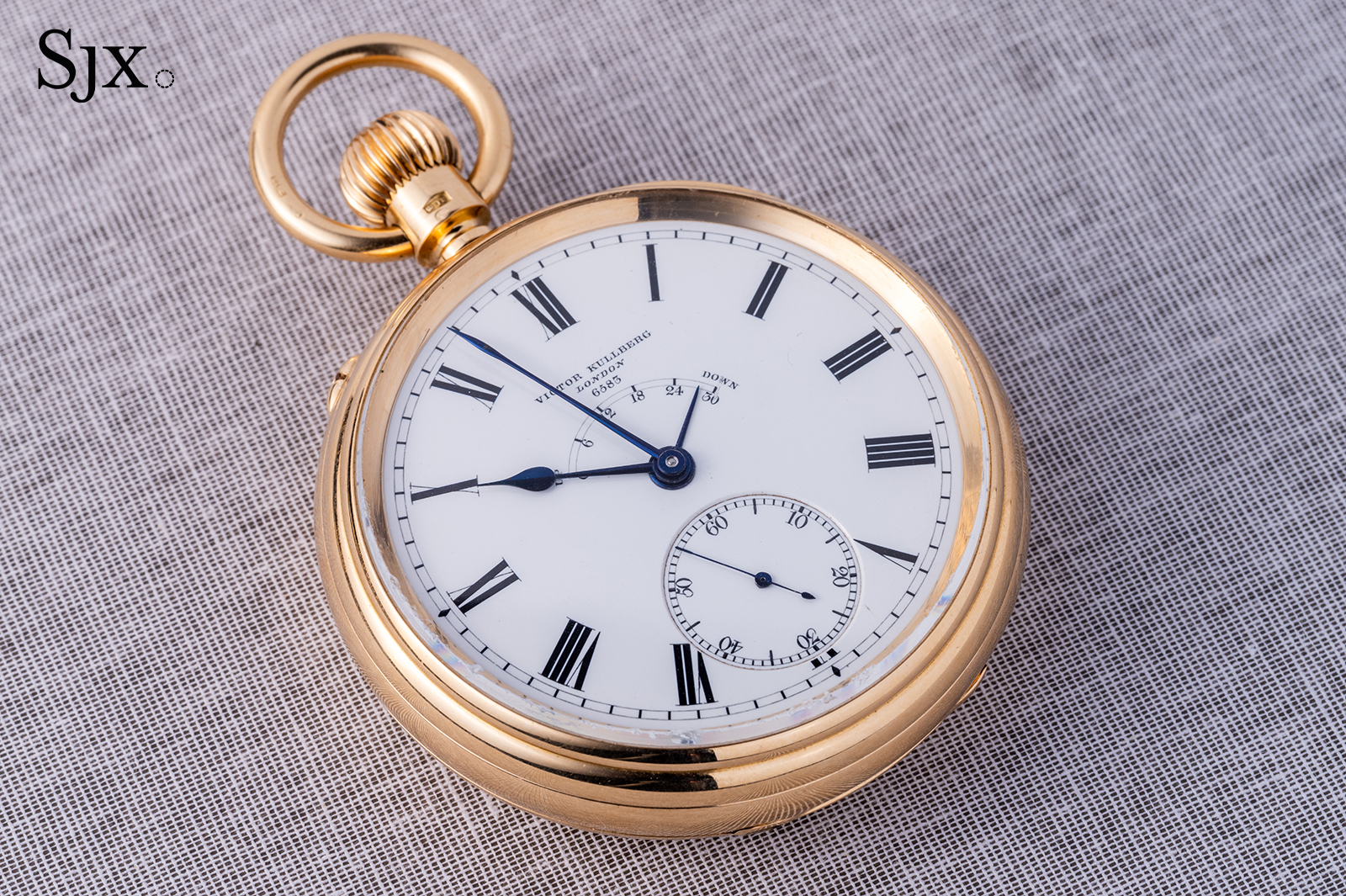
Hands On: Victor Kullberg Tourbillon Pocket Chronometer
14h ago
Hodinkee
Introducing: The Tudor Black Bay Chrono “Carbon 26”
5 days ago
SJX Watches
Hands On: Jaeger-LeCoultre Gyrotourbillon à Stratosphère
Apr 28, 2026
Hodinkee
Happenings: Claude Greisler To Lecture At The Horological Society Of New York
Apr 22, 2026
Monochrome
Introducing – H. Moser & Cie Endeavour Minute Repeater Cylindrical Tourbillon Skeleton
Apr 18, 2026
Worn & Wound
Watches & Wonders: Tudor Introduces the Black Bay 54 Blue
Apr 14, 2026
SJX Watches
TAG Heuer Rethinks the Chronograph
Apr 13, 2026
Hodinkee
The Business of Watches Podcast: Tag Heuer CEO Antoine Pin On Carbon Hairspring Setbacks, Pricing, Tariffs, And Formula One
Apr 2, 2026
Hodinkee
The Business of Watches Podcast: The Head Of Montblanc's Timepieces Division Laurent Lecamp On Minerva, Hairsprings, And What's Next For The Brand
Apr 2, 2026
Worn & Wound
Behind the Curtain: A Conversation with Mark Braun, Designer of the Nomos Metro
Mar 24, 2026
SJX Watches
Ruby Resonance from Armin Strom
Mar 2, 2026
SJX Watches
In-Depth: Understanding Resonance in Watches
Feb 19, 2026
View all 153 articles

Learn More