 Revolution
Results for Cyclops Lens
84 articles · 2 videos found · page 2 of 3
Related pages
Revolution
 Quill & Pad
Behind The Lens: Unique Kari Voutilainen 28Sport
One of the best things about dealing with independent watchmakers is the ability to request unique touches on your watch. That’s just what happened after GaryG's new friend first saw Kari Voutilainen’s Sport28, a titanium-encased watch that itself is quite rare with only eight examples made in total.
 Worn & Wound
Watches, Stories, & Gear: Digital Meets Analog with the Teenage Engineering TP-7, Quite Carry Premieres The Drift Large Contoured, & the Svelte Voigtländer Ultron 27mm Prime Lens
“Watches, Stories, and Gear” is a roundup of our favorite content, watch or otherwise, from around the internet. Here, we support other creators, explore interesting content that inspires us, and put a spotlight on causes we believe in. Oh, and any gear we happen to be digging on this week. We love gear. Share your story ideas or interesting finds with us by emailing tcalara@wornandwound.com Header Image Via: Teenage Engineering Teenage Engineering’s TP-7 Equips The Digital Recorder An Analog Feel Via Teenage Engineering You can bet that anything produced by Teenage Engineering is going to have a clean and distinguishable design. With a focus in developing high quality, Swedish designed electronics and synthesizers, there’s a consistent level of attention to detail across their range of products. Their latest is the TP-7 – a compact field recorder that combines their unique design language with an appealing analog feel. Via Teenage Engineering The TP-7 is built to record in all sorts of situations, from recording music to logging important thoughts for later on. Each button is strategically placed so that every function is accessible in the palm of your hand. The main feature is its mechanical tape reel which allows you to conveniently scrub through previous recordings or seamlessly navigate the TP-7 menu. Plus the actual look and feel of the center wheel adds to the cool factor that is sure to speak to all of us analog lovers. The Teenage Engineering TP-7 will r...
 Quill & Pad
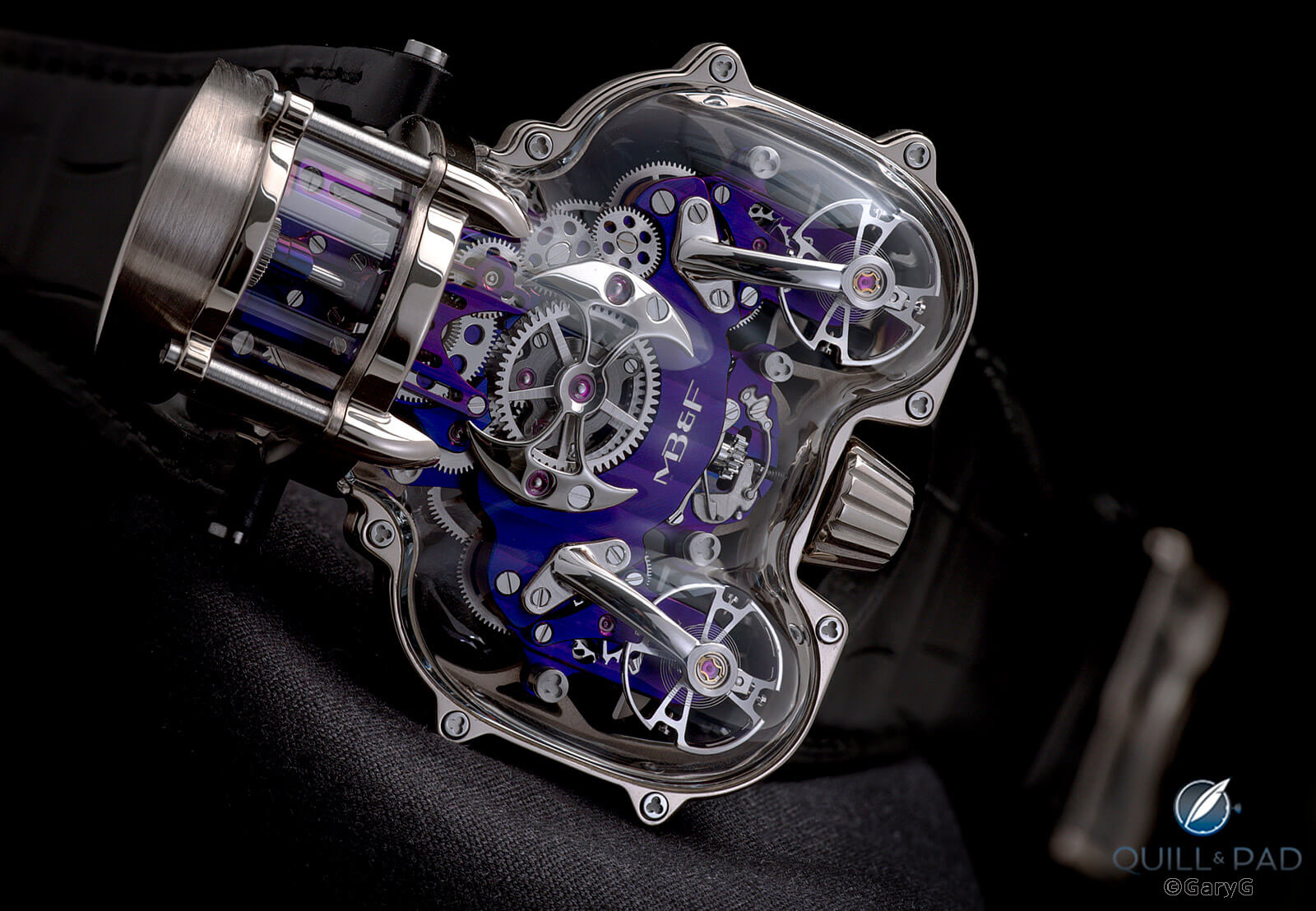
Behind The Lens: MB&F; Horological Machine No. 9 Sapphire Vision In White Gold - Reprise
GaryG was delighted when his favorite local independent watch retailer brought out a very special piece, one of five HM9 Sapphire Vision watches in white gold with a vivid purple movement. And he was even more pleased when he was allowed to take some photos to share before the watch was delivered to its happy new owner.
 Quill & Pad
Mothers Of Invention: Behind The Lens With Invention Pieces 1 And 2 By Greubel Forsey - Reprise
GaryG was delighted to take possession of a Greubel Forsey Invention Piece 1 with its inclined double tourbillon, while a good friend of his replied in kind with a purchase of the quadruple-tourbillon Invention Piece 2. Ever since, he has been dying to get these two gorgeous monsters side by side in the light tent. And the time has finally come!
 Quill & Pad
Behind the Lens: Oileán H-B1 Triple Calendar Chronograph by John McGonigle
GaryG had so much fun shooting the Oileán HB-1 by John McGonigle that he has more images to show than words to say!
 Worn & Wound
Watches, Stories, & Gear: Boots with Commando Soul, In-Depth Leica Lens Guide, Steven Soderbergh’s Annual EOY List, & More
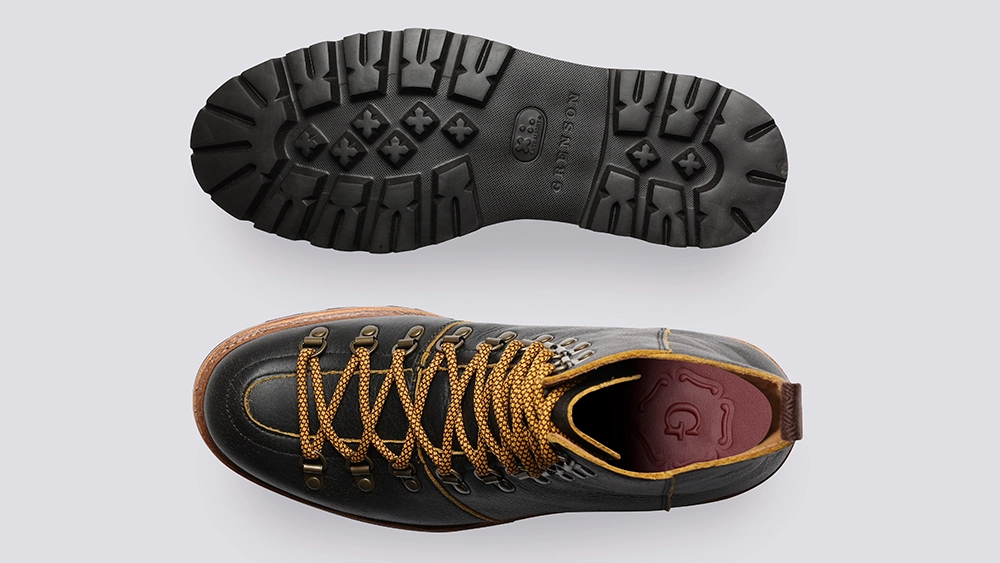
“Watches, Stories, and Gear” is a roundup of our favorite content, watch or otherwise, from around the internet. Here, we support other creators, explore interesting content that inspires us, and put a spotlight on causes we believe in. Oh, and any gear we happen to be digging on this week. We love gear. Share your story ideas or interesting finds with us by emailing tcalara@wornandwound.com Header Image Via: Robb Report / Grenson Boots With Commando Soul Via Robb Report / Grenson Boots are very much a part of our everyday gear around the office. We’re no strangers to throwing on and lacing up rugged works of art from brands like Red Wing, Grant Stone, and Blundstone, even if the closest outdoorsy thing we do on a regular basis is to climb the set of stairs that lead into the office. Turns out, the rubber soles on some of these boots actually have a purpose and history that dates back to WWII. Via Robb Report / Grenson Are you wearing a pair of boots right now? Stop reading and check out the soles of your boots. If you see chunky rubber blocks framing several star-shaped medallions lined down the middle, then you my friend are rocking a boot with a commando sole. Developed for the military, this specific rubber soul served its purpose by giving soldiers more traction, cushion, and stability out in the battlefield. When the war finally ended, British shoemakers translated this style into casual boots providing practical features to regular folks who want to get about ...
 Quill & Pad
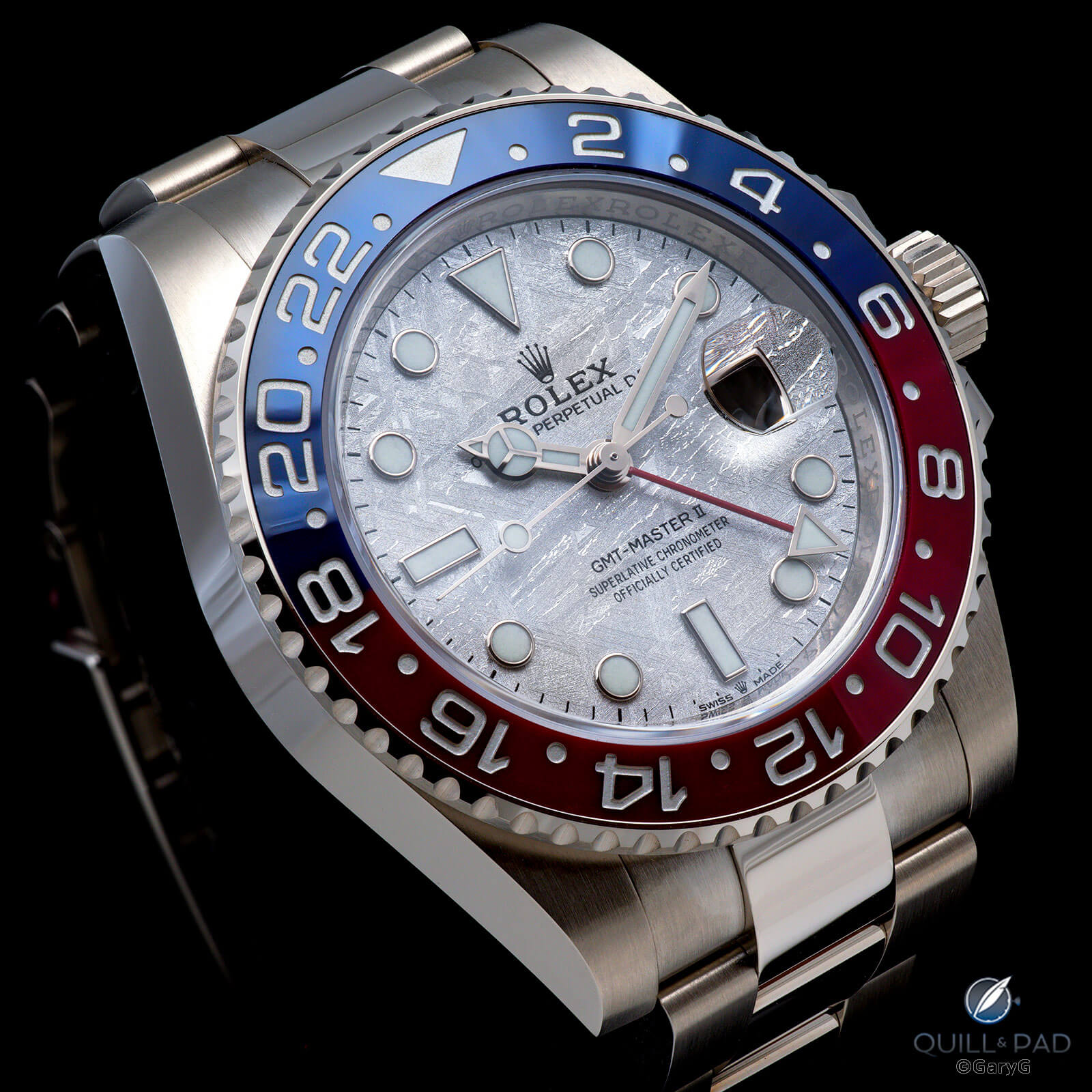
Behind The Lens: Rolex GMT-Master II Meteorite, Where Global Travel Meets Outer Space - Reprise
GaryG had the opportunity to borrow a Rolex GMT-Master II BLRO Meteorite from a long-time friend to photograph and wear. This watch's main event is the dial, a thin slice of metallic meteorite whose crystalline structure reflects the slow cooling process that took place as the meteor hurtled through space. Here he tries a variety of photographic techniques to learn which works best on the dial's unique structures. Which are your favorites?
 Quill & Pad
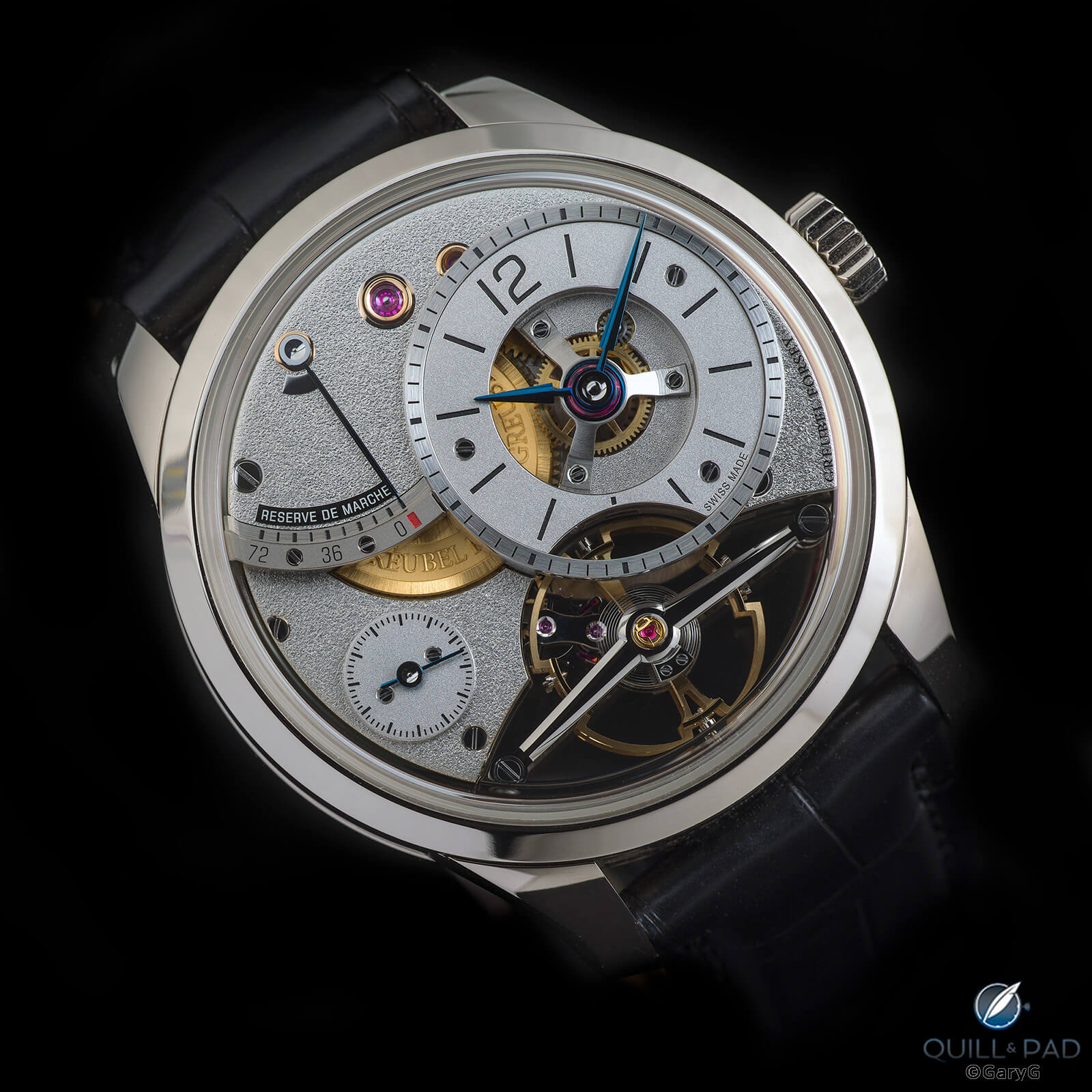
Behind The Lens: Greubel Forsey Balancier Contemporain
Recently, GaryG had the opportunity to handle, photograph, and wear a good friend’s Balancier Contemporain in white gold. His pal had long been a fan of the brand but had always been put off by the size of the watches. At 39.6 mm wide, though, the Contemporain is the most compact Greubel Forsey ever.
 Quill & Pad
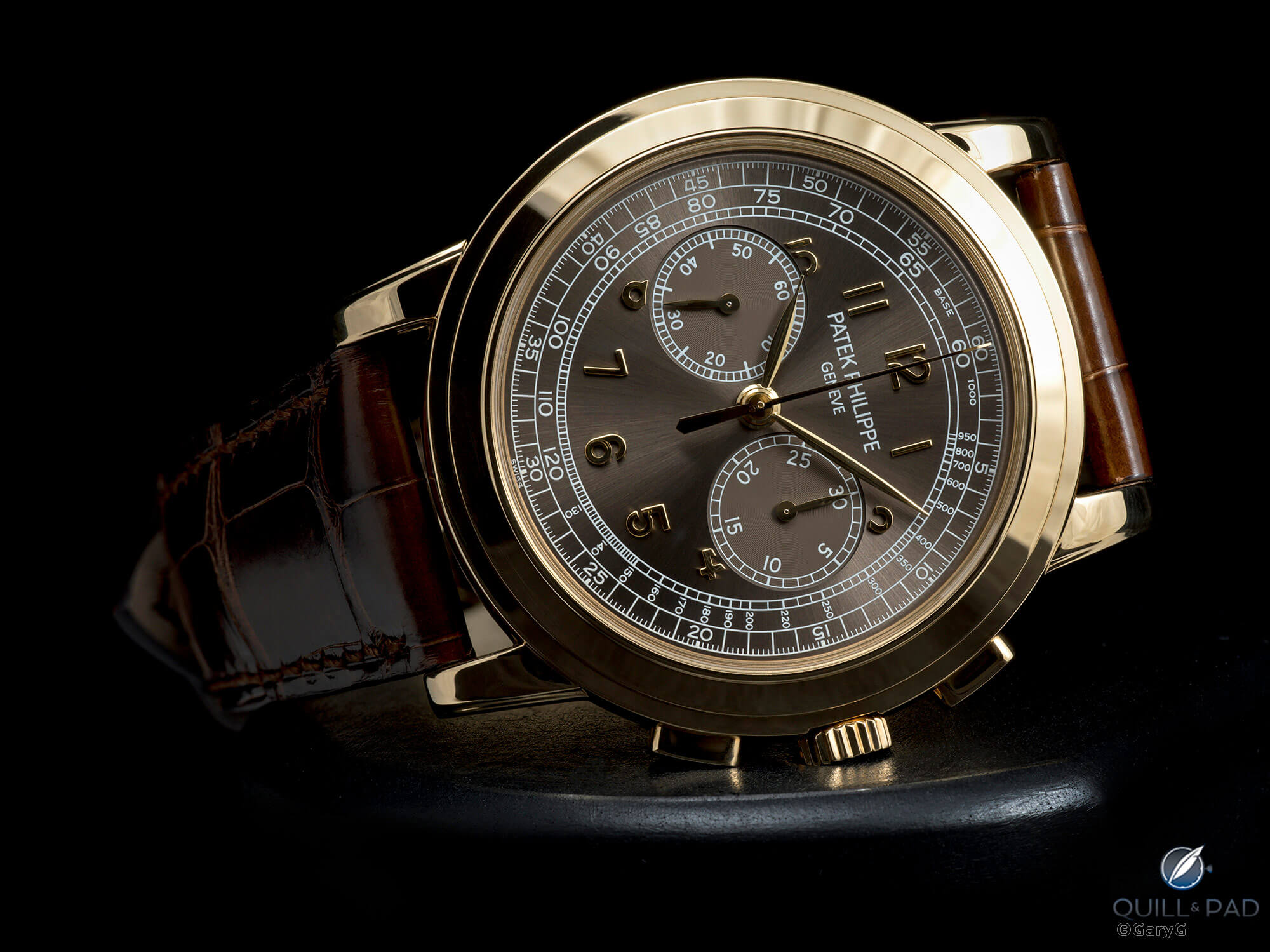
Behind The Lens: The Ultra-Rare Patek Philippe Reference 5070J-013 - Reprise
As most folks who follow Patek Philippe are aware, the brand has long been in the habit of making unique watches for special customers, including in recent times entertainment luminaries such as Eric Clapton and Michael Ovitz. It was not until 2015, however, that Patek Philippe publicly issued a number of small editions of previously discontinued references, each in previously unmade metal/dial combinations. This Patek Philippe Reference 5070J-013 is one of those ultra-rare birds. And GaryG wonders if it might bring yellow gold back into fashion single-handedly.
 Hodinkee
Photo Report: This Group Gathered To Celebrate Watch Collecting Through The Lens Of Black Culture
Incredible watches and even cooler people at CP Time's Denver meetup.
 Quill & Pad
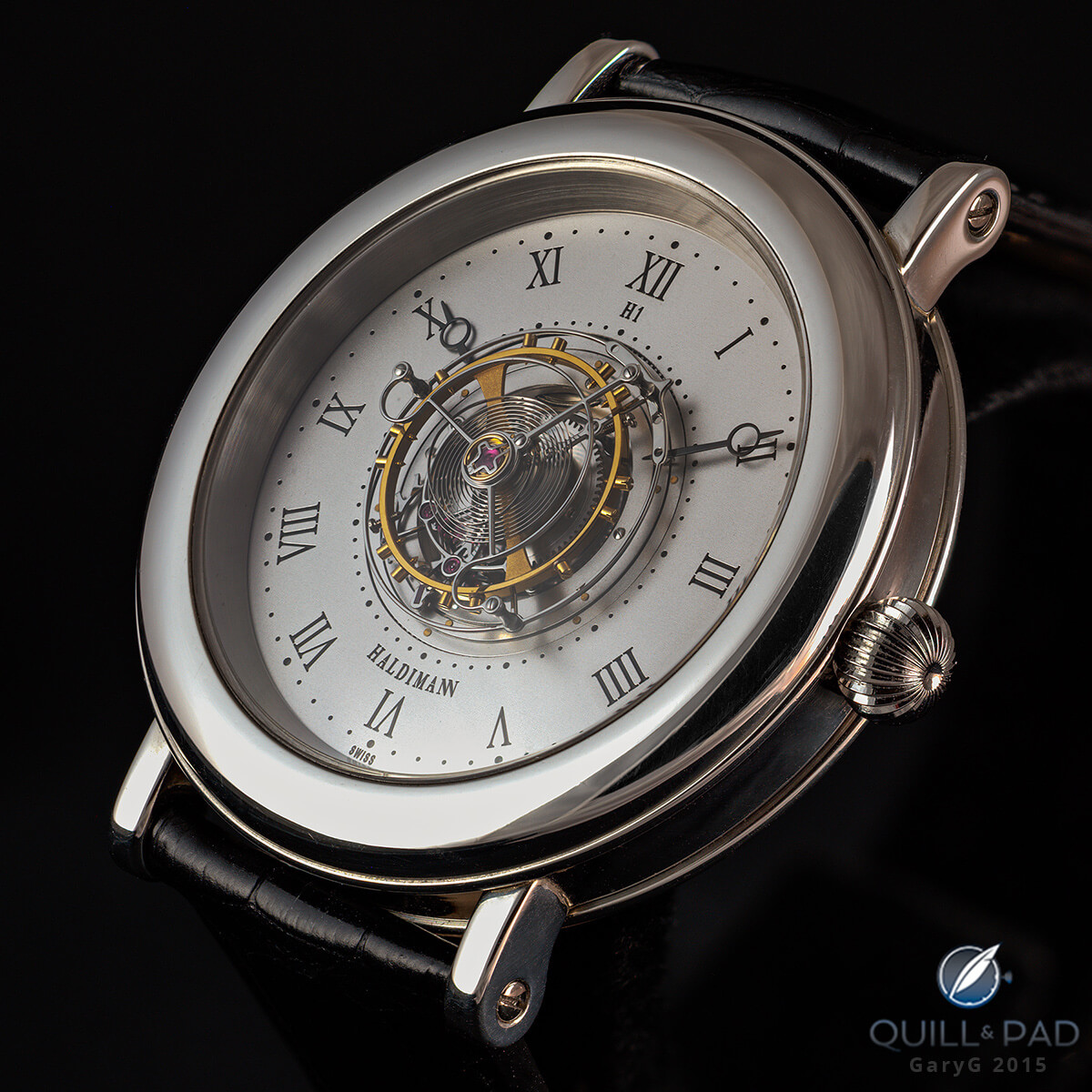
Behind The Lens: Beat Haldimann H1 Flying Central Tourbillon - Reprise
In GaryG's view, every successful independent watchmaker has elements of a “house style” that may attract some buyers and put off others, but nonetheless set them apart. And, at the highest level, this style goes beyond “branding” to become an expression of the personality and artistic vision of the creator. Beat Haldimann and his small team distinguish themselves by focusing on technical virtuosity of the highest order as typified by the Haldimann H1 Flying Central Tourbillon.
 Quill & Pad
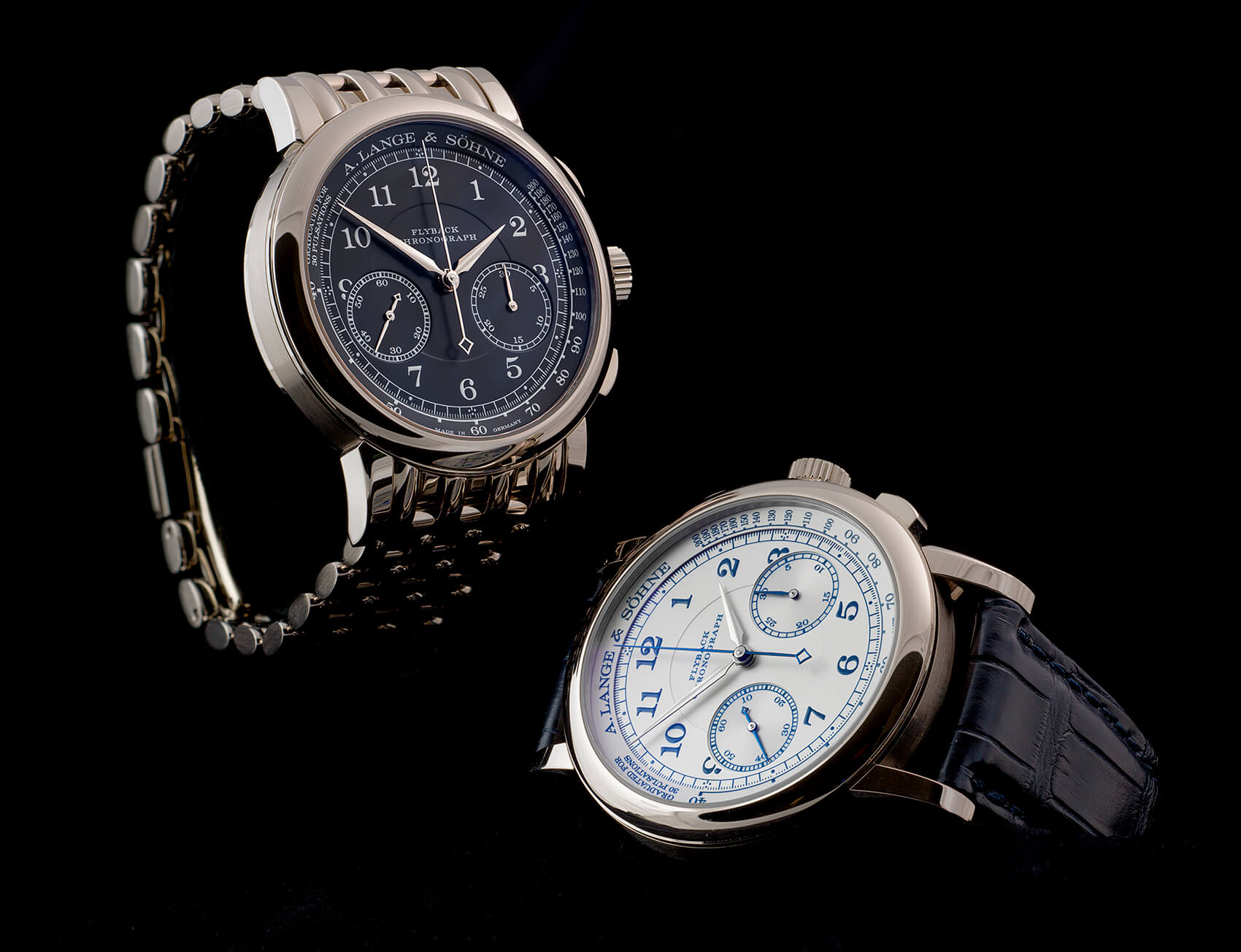
Behind The Lens: Two 1815 Chronographs From A. Lange & Söhne - Reprise
Can you imagine buying a watch bracelet and then searching for the right watch to pair with it? Seems a bit far fetched, but that’s exactly what a good friend of GaryG's did a few years ago. And it led to him purchasing two beautiful 1815 Chronograph models from A. Lange & Söhne.
 Quill & Pad
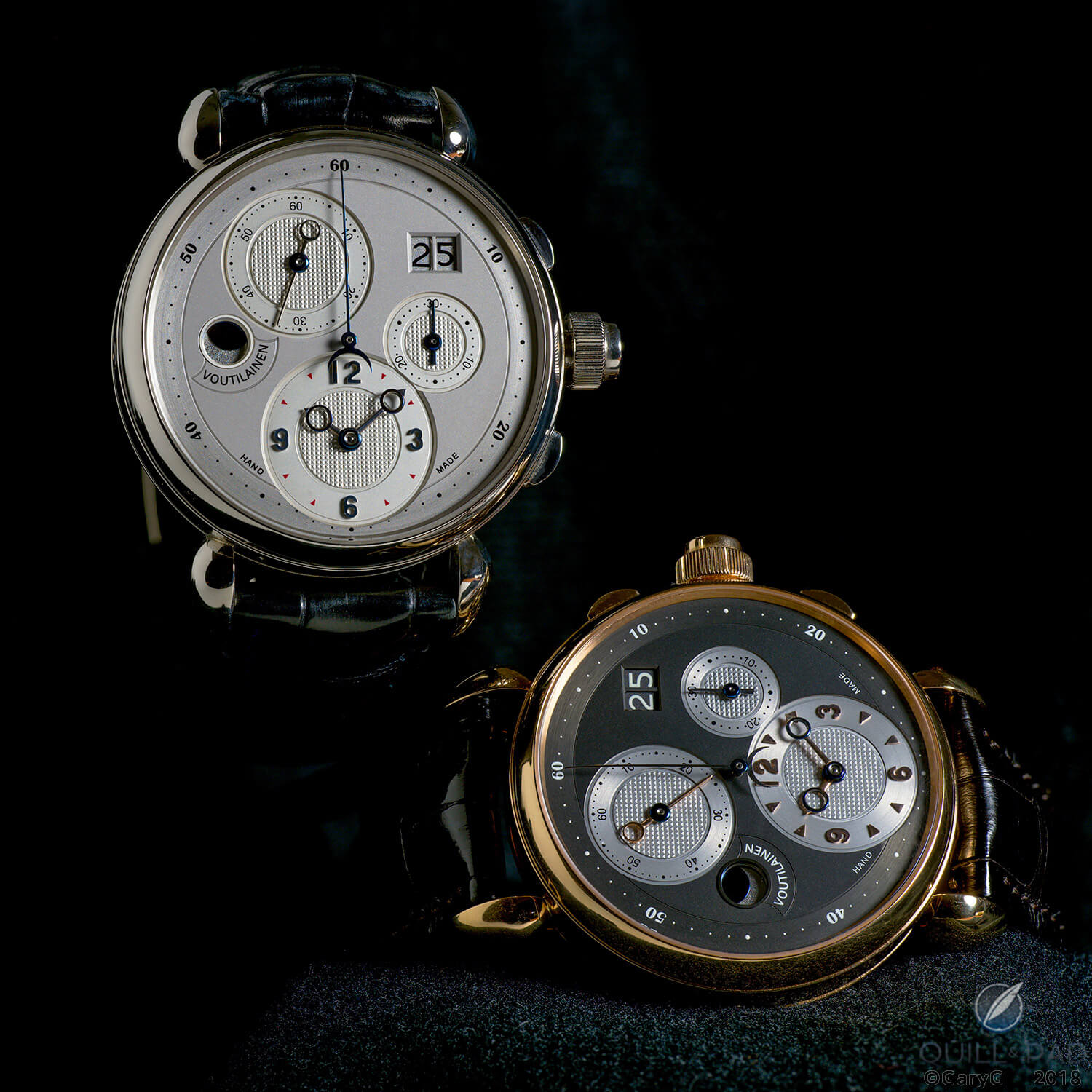
Behind The Lens: Two Unique Masterpiece II Chronographs From Kari Voutilainen - Reprise
A generous friend offered GaryG the opportunity to shoot his white gold Kari Voutilainen Masterpiece Chronograph II so that Gary is able to share delightful photos of both his custom pink gold Chronograph II in comparison with his friend's custom white gold version.
 Quill & Pad
Behind The Lens: 3 Watches From Massena Lab
GaryG turns his attention and camera to three watches developed by collector and industry veteran William Massena, two of which are co-branded collaborations and the third a piece with origins in a conversation among a bunch of friends.
 Quill & Pad
Behind The Lens: Vianney Halter Anniversary - Reprise
One of the inconveniences associated with COVID-19 restrictions on gatherings was that GaryG's local watch gang hadn’t been meeting in person so he wasn't able to borrow interesting watches to shoot. However, just prior to the lockdown in California he did pick up an intriguing piece from a pal: the Anniversary by Vianney Halter.
 Quill & Pad
Behind The Lens: Unique Piece Classic Date By Vianney Halter
A friend of GaryG's recently purchased a real object of desire: a unique piece Classic from Vianney Halter that includes a date indication. When asked about his motivation in adding this to his collection, his friend told him, “I’m interested in what history will determine to be the ‘greatest’ watchmakers of our time."
 Deployant
Baselworld 2017 Rolex Oyster Perpetual Sea-Dweller Now 43mm with a Cyclops
Beloved dive behemoth with helium escape valve returns in new case dimensions and a highly desirable single red line of text - 43mm Rolex Sea-Dweller.
 Worn & Wound
Hands-On: Exploring Film Photography with the Nodus Obscura II
When you’ve been using the same camera and lens for literal decades, it can be hard to push yourself creatively and get out of your own habits. Shooting in all conditions becomes muscle memory, and even the trickiest shots can start to feel like just another snap of the shutter. So what is a hobby photographer to do? Well, if you’re me, you use the exposure gauge on the new Nodus Obscura II to challenge your idea of “correct”, and re-learn the act of shooting film in the process. Let’s rewind a bit, first. Nodus is a Los Angeles-based microbrand established in 2017 who specializes in purpose-built watches. That may seem like a nebulous thing to claim as your hallmark, but it basically comes down to this: all Nodus watches are assembled, regulated, and tested in Los Angeles, and are intended to perform their stated function (or functions) at the highest degree, rather than offering a myriad of complications that could muddy a piece’s “purpose”. Their lineup consists of divers, pilot and sport watches, and GMT units. The star collection, though, is their Design Lab series, where the brand showcases watches designed and built in collaboration with other creators or brands. These watches push Nodus’ aesthetics, and introduce even more hyper-niche categories and use cases. The most innovative of the Design Lab watches is, of course, the Obscura II collaboration with Beers and Cameras. Image: Nodus The first Obscura watch introduced Nodus’ patented exposu...
 Worn & Wound
A Majestic Journey Through Clocks & Watches Made for Royalty: The Victorian Age of Time - Queen Victoria and the Watchmaking Revolution
From the imposing astronomical clocks of Tudor England to the exquisite pendant watches of Victorian Britain, timekeeping has long been a symbol of power, prestige, and technological marvel within Europe’s royal courts. This new series explores the fascinating evolution of clocks and watches crafted specifically for royalty, tracing how these intricate masterpieces reflected the tastes, ambitions, and innovations of monarchs. Through the lens of craftsmanship, artistry, and historical significance, we reveal how these royal timepieces marked the passage of dynasties and empires. Victoria (1819-1901) was the queen of the United Kingdom of Great Britain and Ireland between 1837 and 1901 and empress of India from 1876 to 1901. She was the last monarch of the House of Hanover and a queen whose reign defined an age known as the Victorian Era. It was a period of immense change and expansion that shaped Britain and the modern world. Under her rule, the monarchy evolved into the symbolic, ceremonial institution it is today. Victorian Britain was the workshop of the world, a place where science, engineering and artistry converged to define a new age of progress. From railways and telegraphs to the marvels of the Great Exhibition, innovation pulsed at the heart of empire. In horology, too, Britain played a commanding role with its precision chronometers keeping the navy supreme, while its watchmakers and clockmakers set standards of craftsmanship that resonated across Europe. In...
 Worn & Wound
A Majestic Journey Through Clocks & Watches Made for Royalty: King George III, the Scientific Monarch and his Passion for Science and Horology
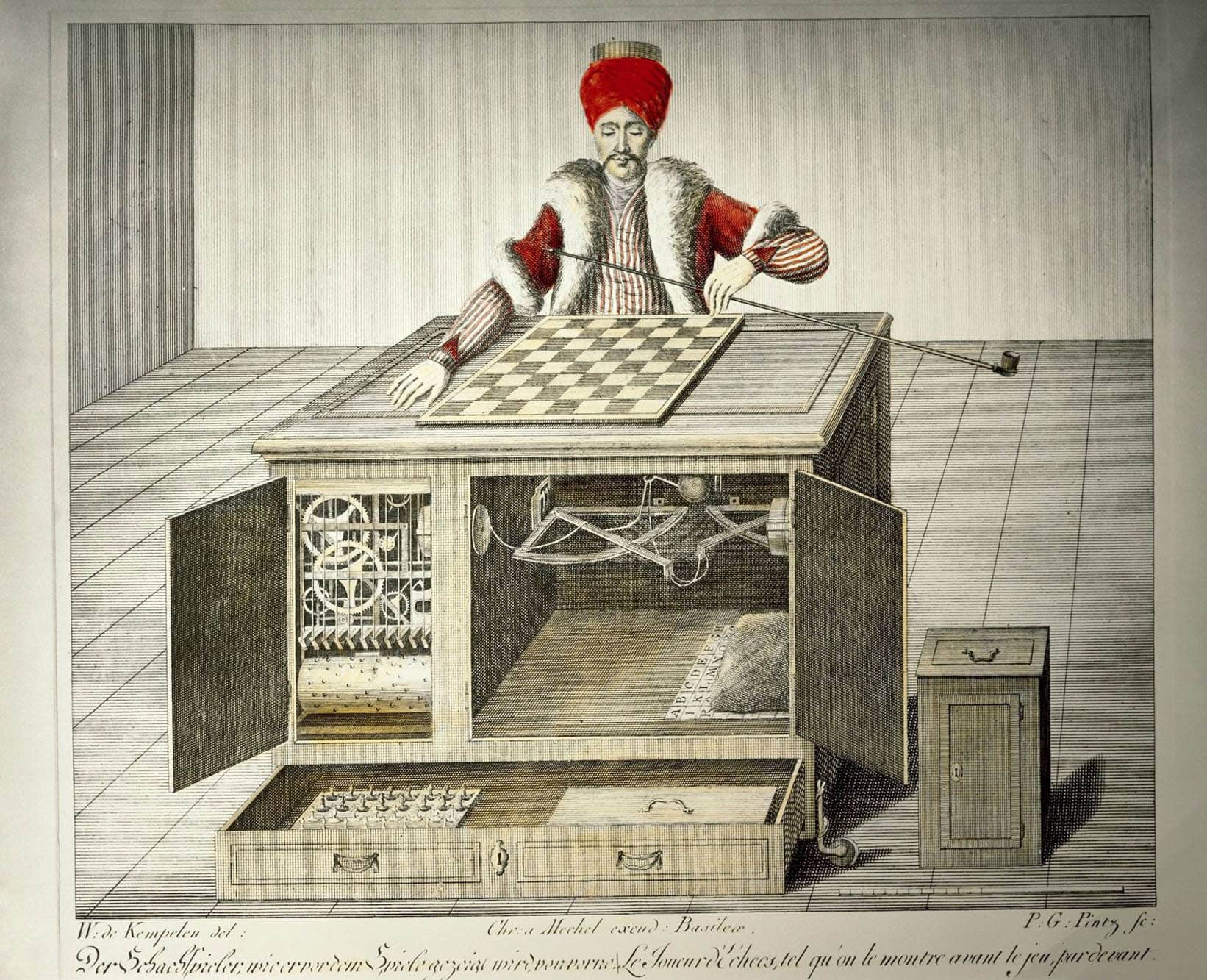
From the imposing astronomical clocks of Tudor England to the exquisite pendant watches of Victorian Britain, timekeeping has long been a symbol of power, prestige, and technological marvel within Europe’s royal courts. This new series explores the fascinating evolution of clocks and watches crafted specifically for royalty, tracing how these intricate masterpieces reflected the tastes, ambitions, and innovations of monarchs. Through the lens of craftsmanship, artistry, and historical significance, we reveal how these royal timepieces marked the passage of dynasties and empires. King George III, who reigned from 1760 to 1820, had a deep interest in science, particularly astronomy, horology, mathematics, and natural philosophy. He was one of the most scientifically minded British monarchs and commissioned several important horological instruments and supported scientific institutions during his reign. King George III (1738–1820) is often remembered for his struggles with mental illness during his long reign, but he was also deeply engaged in science, astronomy, and horology. Although his interest did not necessarily come directly from his grandfather, King George II, there are examples of important commissions made prior to him succeeding to the throne. One such piece is the magnificent Grand Orrery below made by leading London maker, Thomas Wright in 1733. Image 1 – George II’s Grand Orrery, Fleet Street, made by Thomas Wright, c.1733. King’s College London © T...
 Worn & Wound
A Majestic Journey Through Clocks & Watches Made for Royalty: The Enlightened Empress - Maria Theresa and the Mechanics of Wonder
From the imposing astronomical clocks of Tudor England to the exquisite pendant watches of Victorian Britain, timekeeping has long been a symbol of power, prestige, and technological marvel within Europe’s royal courts. This new series explores the fascinating evolution of clocks and watches crafted specifically for royalty, tracing how these intricate masterpieces reflected the tastes, ambitions, and innovations of monarchs. Through the lens of craftsmanship, artistry, and historical significance, we reveal how these royal timepieces marked the passage of dynasties and empires. Maria Theresa was the ruler of the Habsburg monarchy from 1740 until her death in 1780, and the only woman to hold the position in her own right. Though crowned as Archduchess of Austria and Queen of Hungary and Bohemia, her true authority came from willpower, reform, and image-making. Maria Theresa ruled not as a king in disguise, but as a monarch in her own right, one who embraced both tradition and the flux of the Enlightenment. Horology, like art and music, became part of her sovereign language and a way to express her modernising ambitions and cultivated authority. Maria Theresa was born in Vienna on the 13th of May 1717, the eldest daughter of Emperor Charles VI and Empress Elisabeth Christine of Brunswick-Wolfenbüttel. As a child of the Habsburg dynasty, she grew up in the Hofburg Palace (below) surrounded by the rituals and splendour of imperial court life. Although her father’s hopes ...
 Hodinkee
The Business of Watches Podcast: Henrik Ekdahl (Managing Director, Leica Watches & Accessories)
This week on The Business of Watches, we're in Wetzlar, Germany, home of the legendary camera and lens maker, Leica. Of course, Leica isn't just an optics company. Since 2015, it's been on a new mission to create watches as well, a project initiated by Leica's controlling shareholder, Dr. Andreas Kaufmann, who is not only passionate about cameras and photography, but also timepieces. Henrik Ekdahl wearing a Leica watch and using a Leica camera in 1996 (left) during his first stint with the brand, and in 2024 (right) wearing a newer model Leica watch, after rejoining the company as head of watches and accessories. (Photo courtesy Leica) The person in charge of Leica's nascent watch ambitions is Henrik Ekdahl, a convivial Swede who has returned to Leica after more than two decades away, spent in the executive ranks of automakers, and, most recently, watchmakers such as IWC. Leica's connection to watchmaking is not unwarranted. Ernst Leitz, the company's founder, studied watchmaking in Neuchâtel in the 1860s. It was partly this mechanical know-how that allowed him to begin producing optical instruments, including microscopes and cameras, in Germany and to create the foundation for the company that would become Leica. The latest iteration of Leica watches, launched in 2022, is currently distributed only at Leica stores and online. Less than 5,000 watches are currently being produced each year by the brand, but Ekdahl says the watch division has ambitions to grow and make fu...
 Monochrome
Introducing - The Second-Generation Studio Underd0g 02Series, Now Slimmer and More Powerful
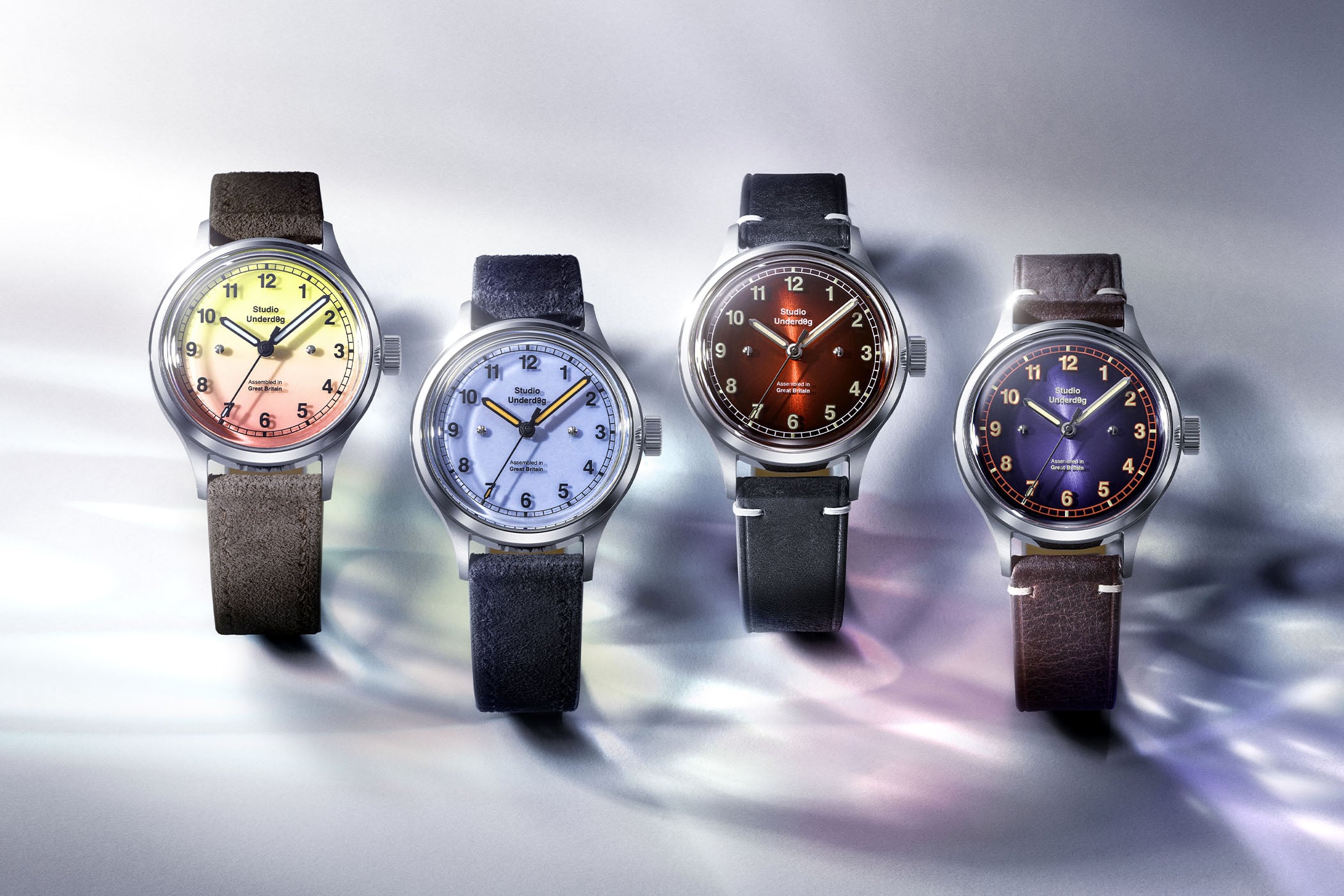
The 02Series was Studio Underd0g’s “difficult second album”. Introduced in 2023 after the success of the brand’s colourful chronographs, it took a different route, reinterpreting the classic field watch through the British brand’s typically playful lens. Inspired by a theoretical 1945 Ministry of Defence brief and the famous Dirty Dozen watches, the collection paired compact […]
 Worn & Wound
A Majestic Journey Through Clocks & Watches Made for Royalty: The ‘Sun King’ Louis XIV’s Clocks at Versailles and the Rhythm of Absolute Power
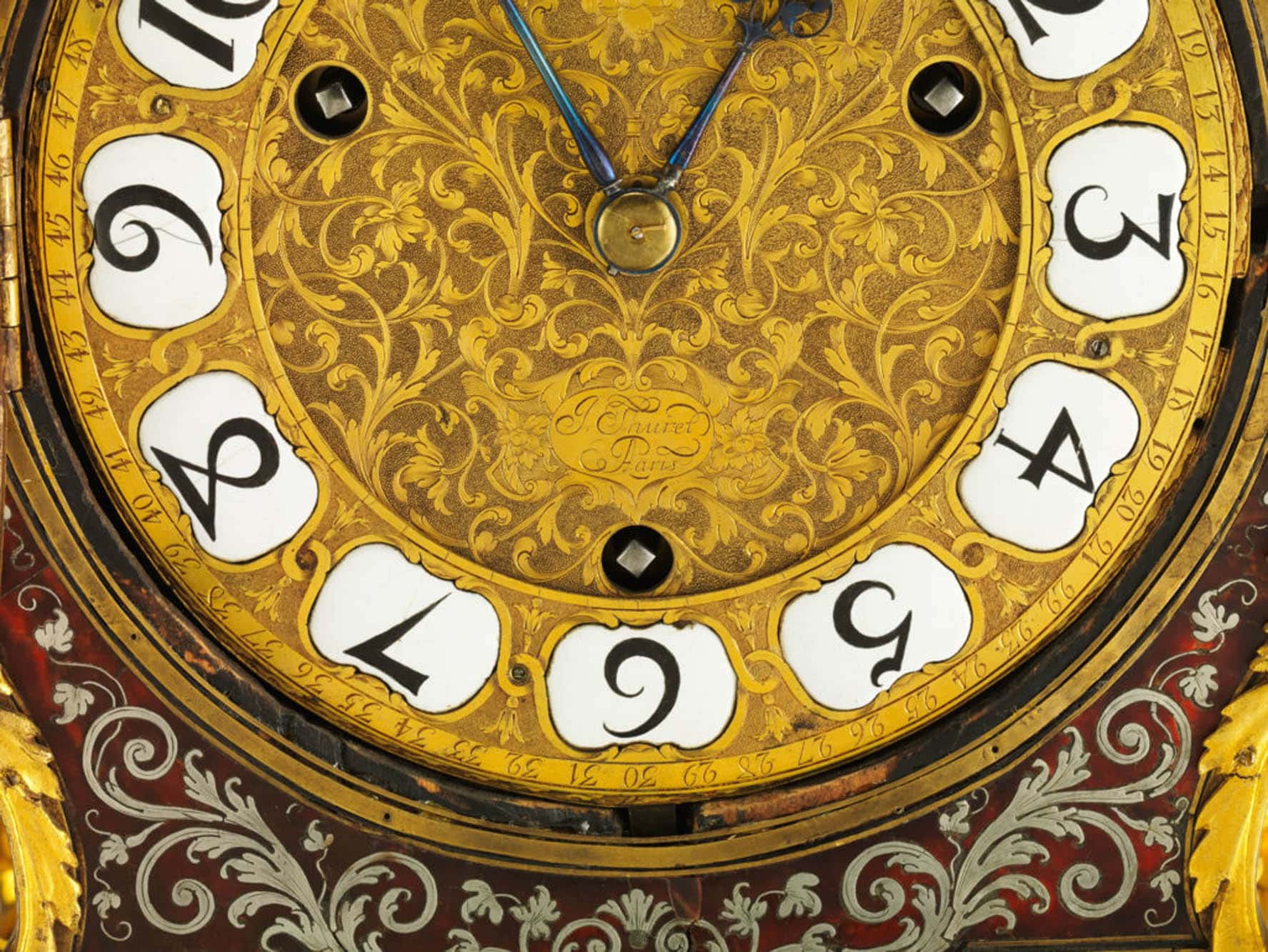
From the imposing astronomical clocks of Tudor England to the exquisite pendant watches of Victorian Britain, timekeeping has long been a symbol of power, prestige, and technological marvel within Europe’s royal courts. This new series explores the fascinating evolution of clocks and watches crafted specifically for royalty, tracing how these intricate masterpieces reflected the tastes, ambitions, and innovations of monarchs. Through the lens of craftsmanship, artistry, and historical significance, we reveal how these royal timepieces marked the passage of dynasties and empires. Louis XIV (1638–1715), the ‘Sun King’, was not only a patron of the arts but also an avid collector of scientific instruments, clocks, and watches. His interest reflected both his fascination with astronomy and mechanics, and his desire to project royal magnificence through technological marvels. Louis XIV ascended to the throne of France as a child, inheriting the crown at just four years old after the death of his father, Louis XIII. His early years were shaped by regency under his mother, Anne of Austria, and the powerful guidance of Cardinal Mazarin, who navigated the kingdom through internal rebellions and European conflicts. Emerging from this formative period, Louis assumed full control of the kingdom at the age of 23, determined to consolidate royal authority and establish himself as the embodiment of absolute monarchy. His rise to power was not just a succession of events, but th...
 Worn & Wound
A Majestic Journey Through Clocks & Watches Made for Royalty: King Philip II of Spain and the Rise of a Dynasty that Ruled by the Clock
From the imposing astronomical clocks of Tudor England to the exquisite pendant watches of Victorian Britain, timekeeping has long been a symbol of power, prestige, and technological marvel within Europe’s royal courts. This new series explores the fascinating evolution of clocks and watches crafted specifically for royalty, tracing how these intricate masterpieces reflected the tastes, ambitions, and innovations of monarchs. Through the lens of craftsmanship, artistry, and historical significance, we reveal how these royal timepieces marked the passage of dynasties and empires. King Philip II (1527–1598) inherited a globe-spanning empire from his father Charles V and, after 1580, also ruled Portugal. A devout champion of the Counter-Reformation, he centralised government, built the vast monastery-palace of San Lorenzo de El Escorial, and presided over Spain’s political zenith. His court prized scientific instruments and clocks as emblems of order and piety. Philip was part of the great Habsburg dynasty and the son of the Holy Roman emperor Charles V. From time to time, the emperor wrote Philip secret letters, impressing on him the high duties to which God had called him and warning him against trusting any of his advisers too much. Philip, a very dutiful son, took this advice to heart. During his reign the Spanish empire attained its greatest power, extent, and influence, though he failed to suppress the revolt of the Netherlands and lost the ‘Invincible Armada’...
 Worn & Wound
A Majestic Journey Through Clocks & Watches Made for Royalty: Horological Renaissance In The Age Of Cosimo I de’ Medici
From the imposing astronomical clocks of Tudor England to the exquisite pendant watches of Victorian Britain, timekeeping has long been a symbol of power, prestige, and technological marvel within Europe’s royal courts. This new series explores the fascinating evolution of clocks and watches crafted specifically for royalty, tracing how these intricate masterpieces reflected the tastes, ambitions, and innovations of monarchs. Through the lens of craftsmanship, artistry, and historical significance, we reveal how these royal timepieces marked the passage of dynasties and empires. Cosimo I de’ Medici (1519–1574), the first Grand Duke of Tuscany, is remembered as a masterful statesman who unified Florence’s power. Yet behind his political authority lay a profound curiosity for the sciences, especially the study of the heavens and the measurement of time. The Medici family rose to power in Florence primarily through their wealth and strategic use of the Medici Bank, which became the largest and most powerful bank in Europe during the 15th century. They leveraged this financial power to influence Florentine politics, eventually establishing themselves as the de facto rulers of the city, although they maintained the appearance of a republic. They used their wealth and influence to transform Florence into a leading capital of trading and a place for the greatest creators to work and develop incredible scientific instruments, such as the clock in the Cathedral of Santa...
 Worn & Wound
A Majestic Journey Through Clocks & Watches Made for Royalty: Henry VIII and the Birth of Royal Time
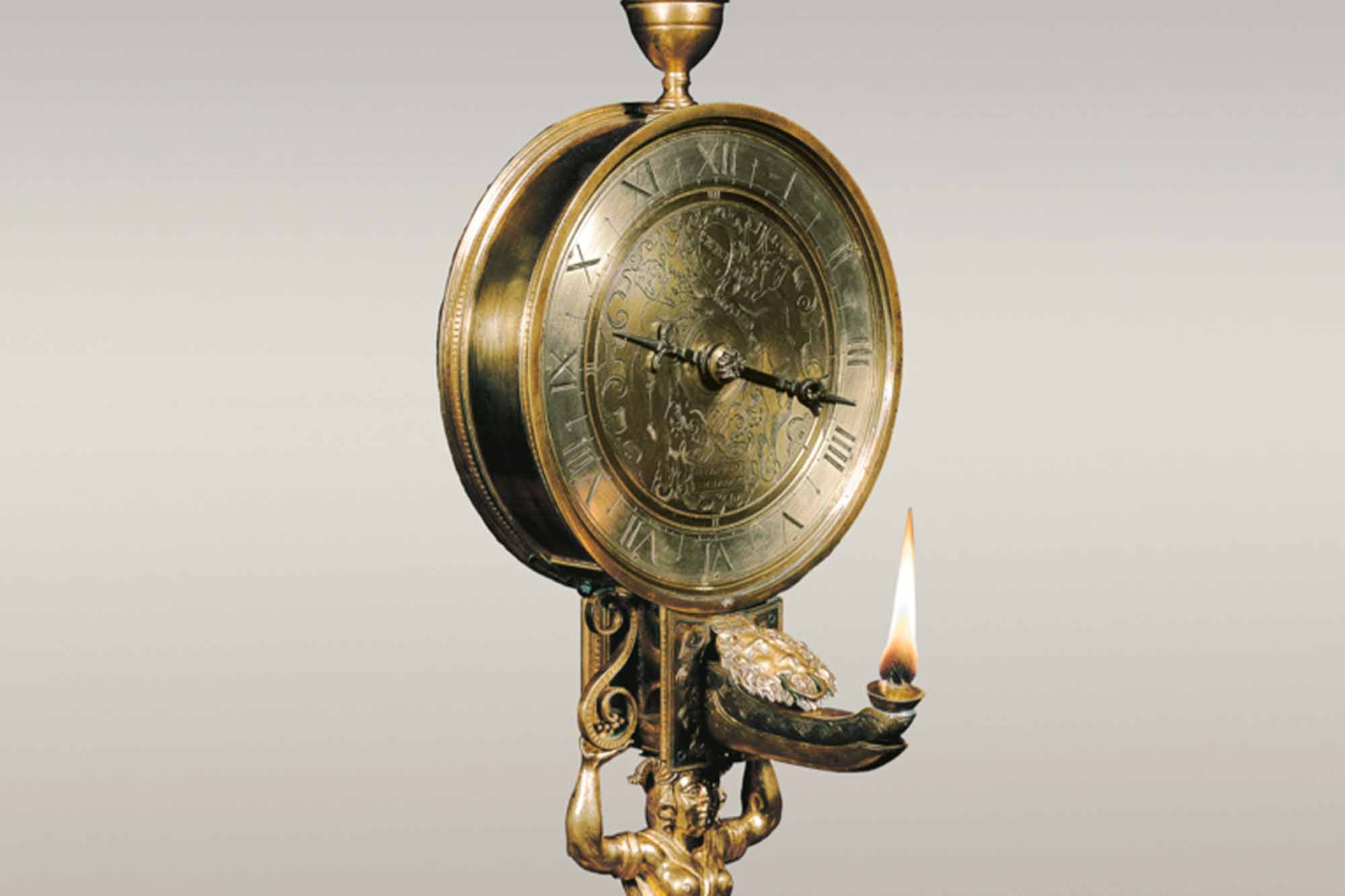
From the imposing astronomical clocks of Tudor England to the exquisite pendant watches of Victorian Britain, timekeeping has long been a symbol of power, prestige, and technological marvel within Europe’s royal courts. This new series explores the fascinating evolution of clocks and watches crafted specifically for royalty, tracing how these intricate masterpieces reflected the tastes, ambitions, and innovations of monarchs. Through the lens of craftsmanship, artistry, and historical significance, we reveal how these royal timepieces marked the passage of dynasties and empires. During Henry VIII’s reign (1509–1547), portable watches as we know them today had yet to emerge in significant numbers. Timekeeping was dominated by grand and stationary mechanisms, with tower clocks or ornate table pieces, serving both practical and symbolic purposes as a show of wealth and status. Watches, if present at all, were nascent and extremely rare. The first clocks and watches were expensive luxuries and only in the reach of royalty and landed gentry. There was, however, a sufficient demand for these items in the Tudor royal court which spread to a prosperous London. The beginnings of the horological industry were probably first initiated by King Henry VIII. During this period there was somewhat of a technical revolution, starting with the invention of the printing press which changed the way people received information. This filtered through to the court where there was a revoluti...
 Teddy Baldassarre
Ming Watch Brand Review: Independent Watchmaking With A Decentralized
When it comes to luxury watches, rarely is a timepiece experienced on the wrist before it is admired through a lens. Horological photography has evolved so much that high-resolution imagery and macro-cinematography have become a virtual loupe, portraying the watch’s qualities and character through focus stacking and special lighting. For brands like MING, the photograph is the primary medium of truth, since the founder of the company is a world-class photographer. Ming Thein spent years dissecting the world’s finest timepieces through the lens of a camera. Before long, he became one of the industry’s most respected photographers, forming an obsession with light and how it behaves on the surface of a watch. Since building his own brand, Ming Thein has continued to nurture this special relationship between timekeeping and imagery, so much so that it has become part of the brand’s unique story. Every curve of a flared lug or inverted lume track on a dial is designed to catch, bend, and manipulate light – a philosophy that has translated into a string of global successes, including the "revelation" of the 17.06 Copper and the 2024 GPHG-winning 37.09 Bluefin. [toc-section heading="The Brainstorm That Gave MING Its Lift-Off"] Early concept sketch Plenty of business ideas have probably been dreamt up while racking up air miles, but the origins of MING were perhaps among the most unexpected. During a return flight from a 2014 watch fair, cruising 30,000 feet above the gr...
 SJX Watches
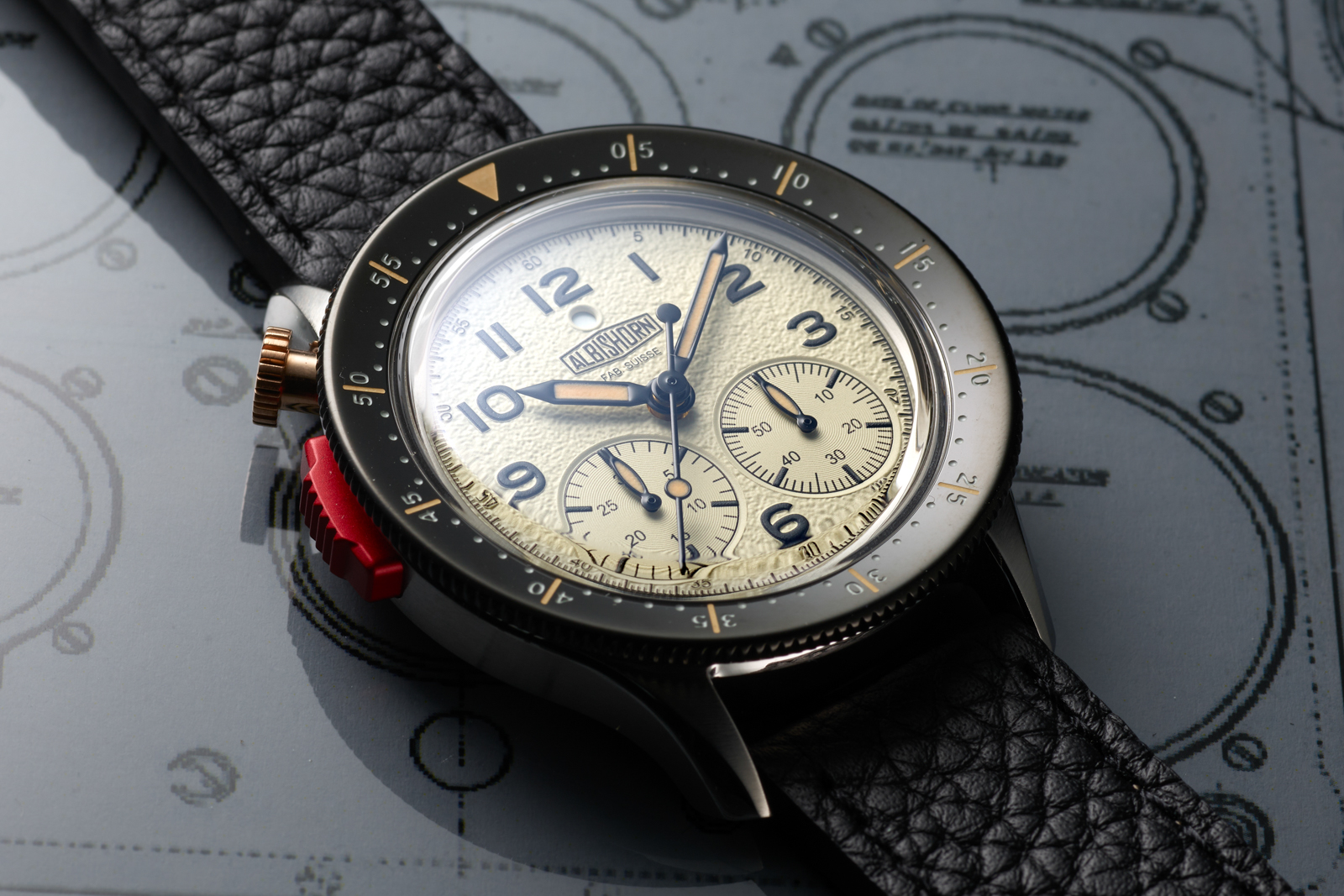
Albishorn’s Type 10 Officer Takes Flight
The Albishorn Type 10 Officer is the latest expression of the brand’s “imaginary vintage” philosophy, reworking the familiar codes of the mid-century military chronograph through the lens of a hypothetical Type 20 predecessor. Conceived by founder Dr Sébastien Chaulmontet, the cream-dialled Officer pairs its distinctive, parchment-like textured dial with a proprietary monopusher movement derived from a re-engineered Valjoux 7750 architecture, combining COSC-certified performance with thoughtful ergonomic and aesthetic refinements at a price that undercuts many conventional aviation-inspired chronographs. Initial thoughts Military aviation-inspired watches are a cornerstone of the luxury watch market, but most pay homage to specific historical references like the famed Type 20 of the 1950s. In contrast, the Albishorn Type 10 proposes to ‘recreate’ a hypothetical Type 20 predecessor. The cream-dialled Officer takes this idea further, suggesting a “missing link” is the aesthetic development of the military chronograph, with a lighter-coloured dial for open-air usage away from the front lines. When the Type 10 debuted with black and green dials, I was a bit skeptical of the texture, which reminded me of asphalt. The Officer’s dial features a similar texture, but the off-white colour transforms the look. To my eye, the new dial looks like vintage German etching paper, which is an appealing texture that suits the theme of the watch. Inside, the Officer is as com...