
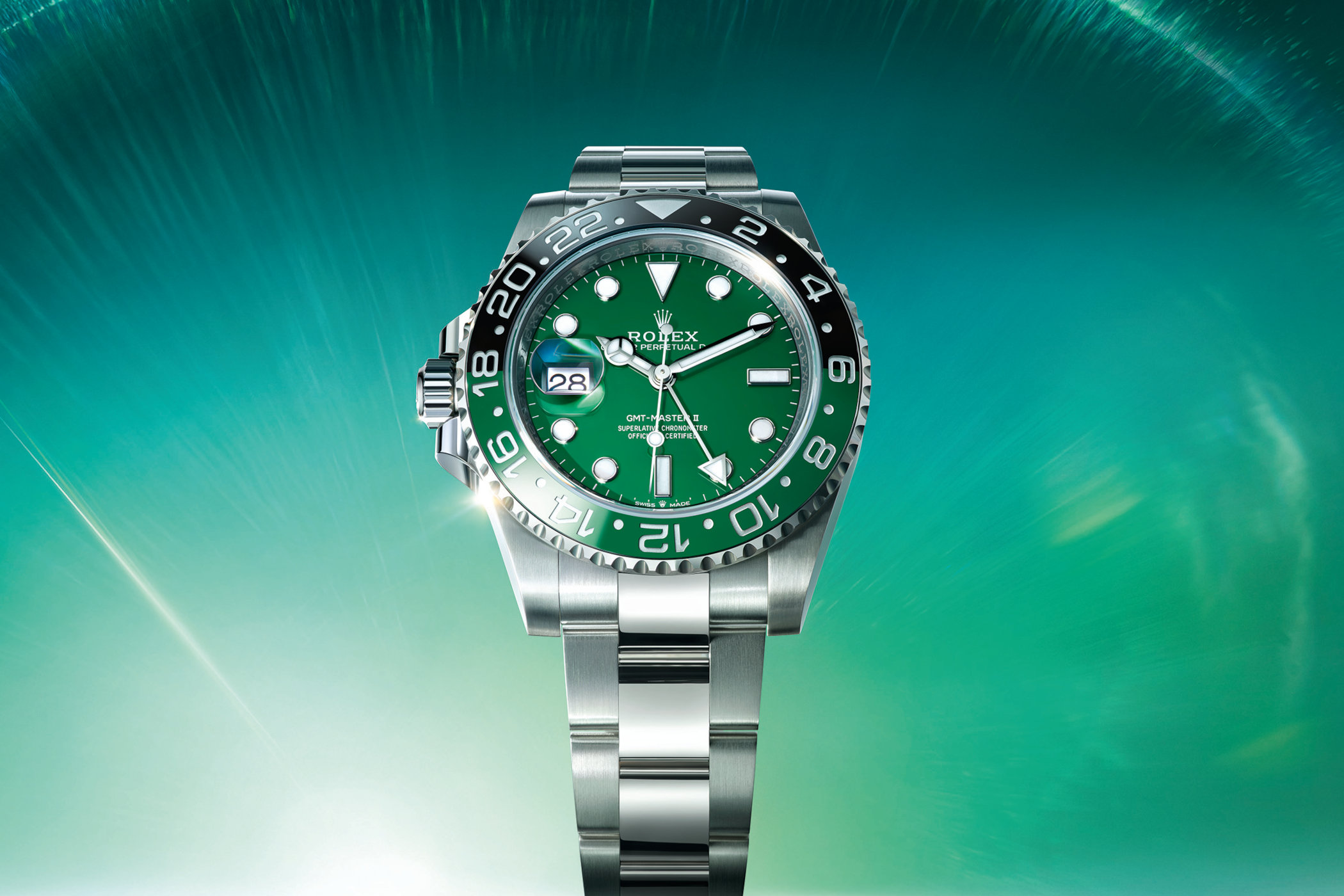
The Cyclops lens was patented by Rolex in 1953, six years after the first Rolex Datejust (1945). Legend, sourced from a 1970s Rolex brochure and never denied by the company, says Hans Wilsdorf's wife Florence May Wilsdorf complained that the date on his Datejust was too small to read. The Cyclops was Rolex's answer: a small hemispherical magnifying bubble fused to the underside of the acrylic crystal, directly above the date aperture, enlarging the date numerals by approximately 2.5 times to improve legibility.
The Cyclops first appeared on the Datejust and then the Day-Date (1956), Submariner (date variant, 1966), GMT-Master, and most other date-displaying Rolex references. The original Cyclops was moulded into the acrylic crystal. When Rolex transitioned to sapphire crystals in the 1970s, the Cyclops was machined separately from sapphire and fused to the crystal face with optical adhesive. Modern Cyclops lenses are one-piece with the crystal, CNC-carved from a single sapphire blank.
The Cyclops is polarising among watch enthusiasts. Defenders point to the genuine legibility benefit and the unmistakable Rolex visual signature. Detractors argue the bubble distorts the symmetry of the dial, breaks the clean curve of the crystal, and catches unwanted reflections. Rolex has experimented with double anti-reflective coating on the Cyclops (first on the Deepsea and Sea-Dweller in 2008), a more expensive process that reduces reflections but also subtly changes the way the Cyclops looks.
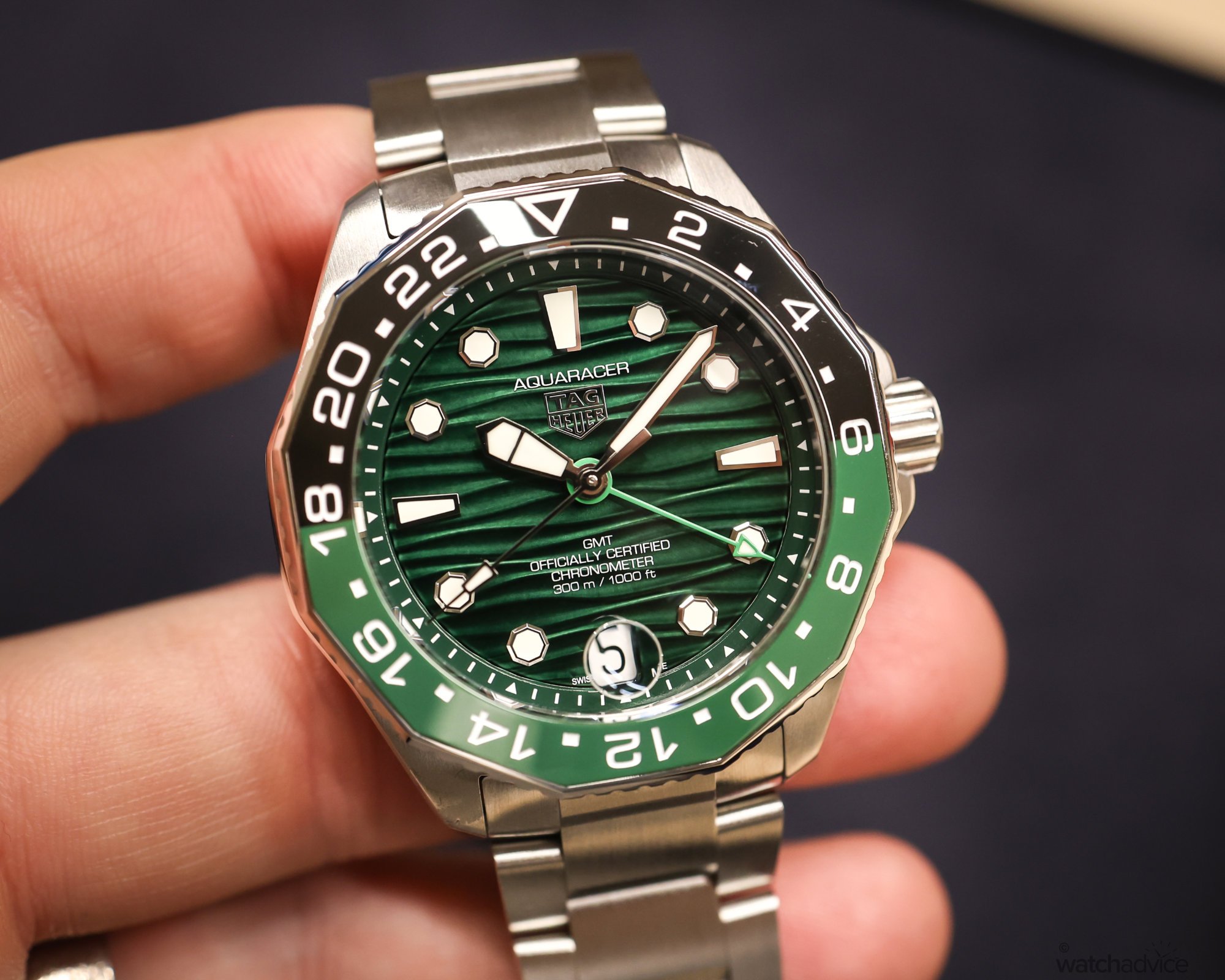
The Cyclops is essentially Rolex-proprietary in spirit. Tudor uses it on some recent references (Black Bay Pro, Black Bay 58 GMT). A handful of other brands have used date magnifiers over the years (Breitling Chronomat B01 with a square loupe, some Seiko references), but none have made it a brand signature. A "no-Cyclops" Datejust or Submariner modification is a common aftermarket request from collectors who prefer the clean-crystal look, using replacement crystals from parts suppliers.




Comments 3