 Revolution
Results for Moonwatch
185 articles · 3 videos found · page 4 of 7
Related pages
Wiki · Guide
Omega Cal. 3861 Omega
The Master Chronometer Co-Axial caliber inside the modern Speedmaster Professional Moonwatch (2021+). 15,000 gauss anti-magnetic, NASA re-qualified for spaceflight 2022.
Wiki · Guide
Moonwatch Omega
Why the Omega Speedmaster is called Moonwatch. The 1965 NASA flight qualification, Buzz Aldrin on Apollo 11, the Apollo 13 engine burn timed by hand, the Silver Snoopy Award of 1970, and every Snoopy Speedmaster that followed.
Exclusive · Guide
Omega Speedmaster 38 refresh: the mini Moonwatch nobody was allowed to want
Round subdials are back. A no-date black-dial variant reads as a shrunk Moonwatch. Seven references, cal. 3330 / 3332 with silicon hairspring, prices from €6,400 to €12,900. This is the Speedmaster Reduced successor the community has been asking Omega for since 2014.
Icon · Guide
Speedmaster Omega
The only watch certified by NASA for manned spaceflight. On the Moon in 1969.
Revolution
 Hodinkee
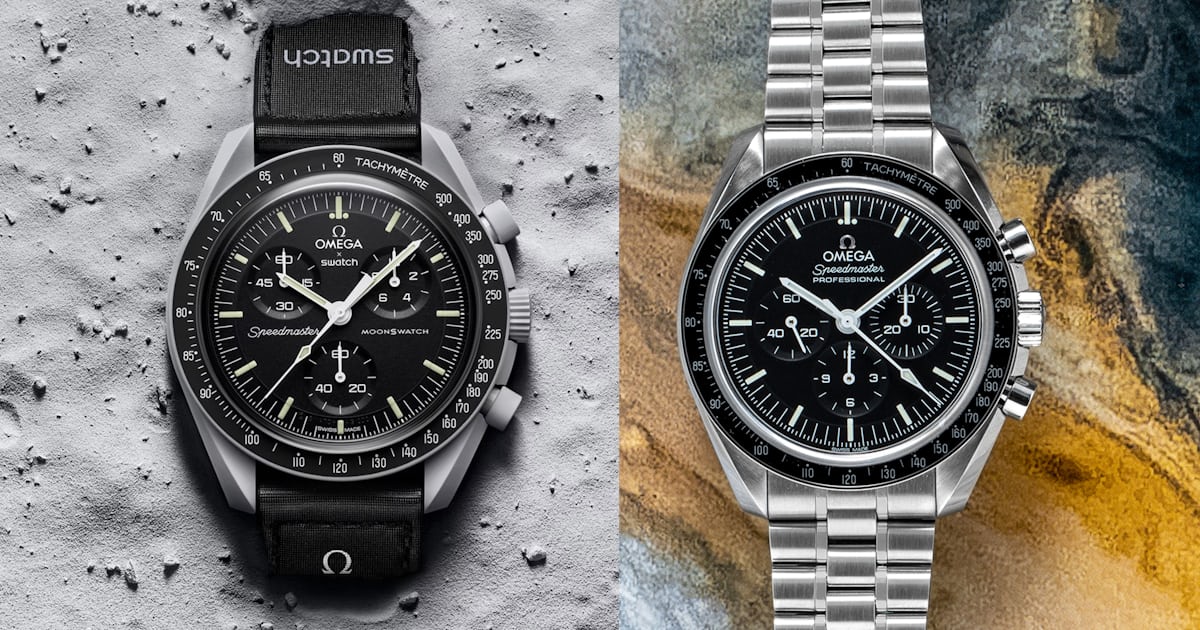
Business News: How Has MoonSwatch Mania Affected Moonwatch Prices?
Naysayers were adamant that Omega's blockbuster Swatch collaboration would devalue the Speedmaster. Now that the dust has settled, we checked to see if that's happened.
 Hodinkee
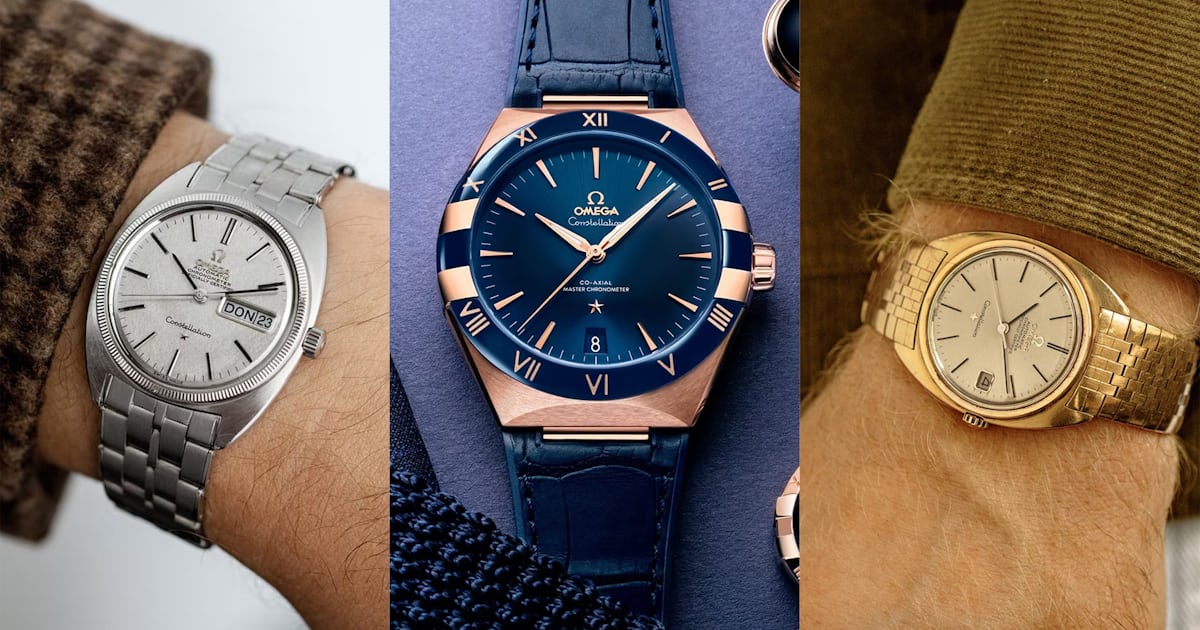
Stepping Out From The Shadow Of The Moonwatch: A Look At The Stellar History Of The Omega Constellation
A look back at seventy years of precision, performance, and elegance.
 Hodinkee
Pre-Owned Picks: A Rolex Yacht-Master 40, An Audemars Piguet Royal Oak 15500ST, And An OMEGA Speedmaster Moonwatch Gemini IV 40th Anniversary
Watches we love, the second time around.
 Hodinkee
My Watch Story: Two Decades With A Timex Expedition, The Universality Of A Moonwatch, A Breitling Surprise, And More
Five video stories from HODINKEE readers.
 Hodinkee
Sunday Rewind: How The Speedmaster Became The Moonwatch
Straight to the moon (with astronauts!).
 Revolution
New on the Shop: Moonwatch Only, the 3rd and Latest Edition
 Revolution
Introducing the Speedmaster Moonwatch 321 Stainless Steel
Since Omega’s announcement of the remake of the cal 321, Speedmaster fans have been waiting for a 321-driven Speedy in steel. That wait is now over.
 Revolution
Hot Chocolate - The Speedmaster Professional Moonwatch Chocolate
 Revolution
Reliving History with James Ragan: NASA’s Man Behind the Moonwatch
James Ragan, former NASA engineer and the man behind the watch that went to the moon, shares ten anecdotes on the 50th anniversary of the moon landing.
 Revolution
Omega Reintroduces the Original Moonwatch Movement - The Calibre 321
 Fratello
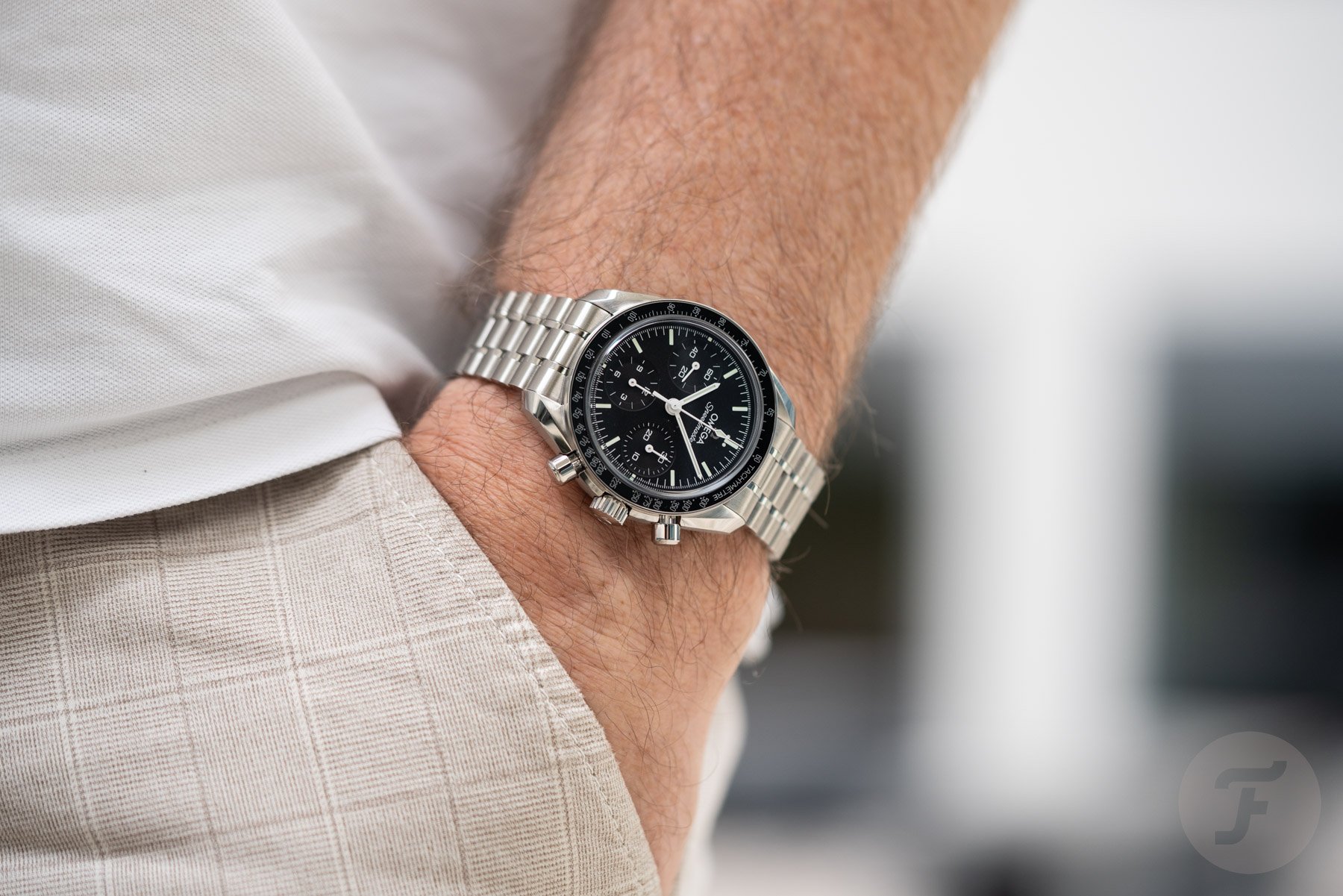
Finally A New Speedmaster Reduced? Hands-On With The Redesigned Omega Speedmaster 38
Omega is introducing a new Speedmaster 38 collection. For a long time, Omega offered a serious alternative to the famous Moonwatch for those who wanted a smaller automatic version. The Speedmaster Reduced 3510.50 was in production from 1988 to around 2010. In its final years, demand for the 42mm hand-wound Speedmaster Professional was simply higher. […] Visit Finally A New Speedmaster Reduced? Hands-On With The Redesigned Omega Speedmaster 38 to read the full article.
 Hodinkee
Introducing: A New Generation Of The Omega Speedmaster 38 MM
What We Know Say goodbye to oval subdials—Omega just announced a complete refresh of the brand's midsize Speedmaster 38mm collection. In total, there are seven new models replacing the outgoing lineup. The black-dialed variant, ref 324.30.38.50.01.002, draws on the look of the classic Moonwatch. 324.30.38.50.04.001 324.30.38.50.02.003 If the previous generation of the Speedmaster 38mm took a more luxe, fashion-forward approach, the new design language returns to form with more Moonwatch-adjacent styling. Not only are the oval subdials gone, but the bezel also takes a more traditional turn with a classic wide insert. The Moonwatch reference is even more pointed with the inclusion of the dot-over-ninety numbering on the insert's tachymeter, as well as an updated bracelet that feels like a shrunken-down version of the current five-link Moonwatch bracelet, down to the clasp with Omega's "comfort release" micro-adjust system that offers two positions and 2.3mm of adjustment. Across the board, the new refresh also sees a cleaned-up dial with less printed text and an applied Omega logo at 12 o'clock. Across the seven new variations, three are set in steel—a matte black Moonwatch-like dial with a black aluminum insert (and no date window at six o'clock), a glossy lacquered white dial with blue ceramic bezel insert (not too far off from the Milano Cortina edition we saw released last October), and a silver dial with a grey aluminum bezel insert and PVD-coated Sedna Gold hands...
 Teddy Baldassarre
Omega Speedmaster Michael Schumacher Editions: The Ultimate Guide To A Neo-Vintage Cult Classic
Exploring the '90s icon that brought the Speedy back to its pre-Moonwatch roots. More
 Monochrome
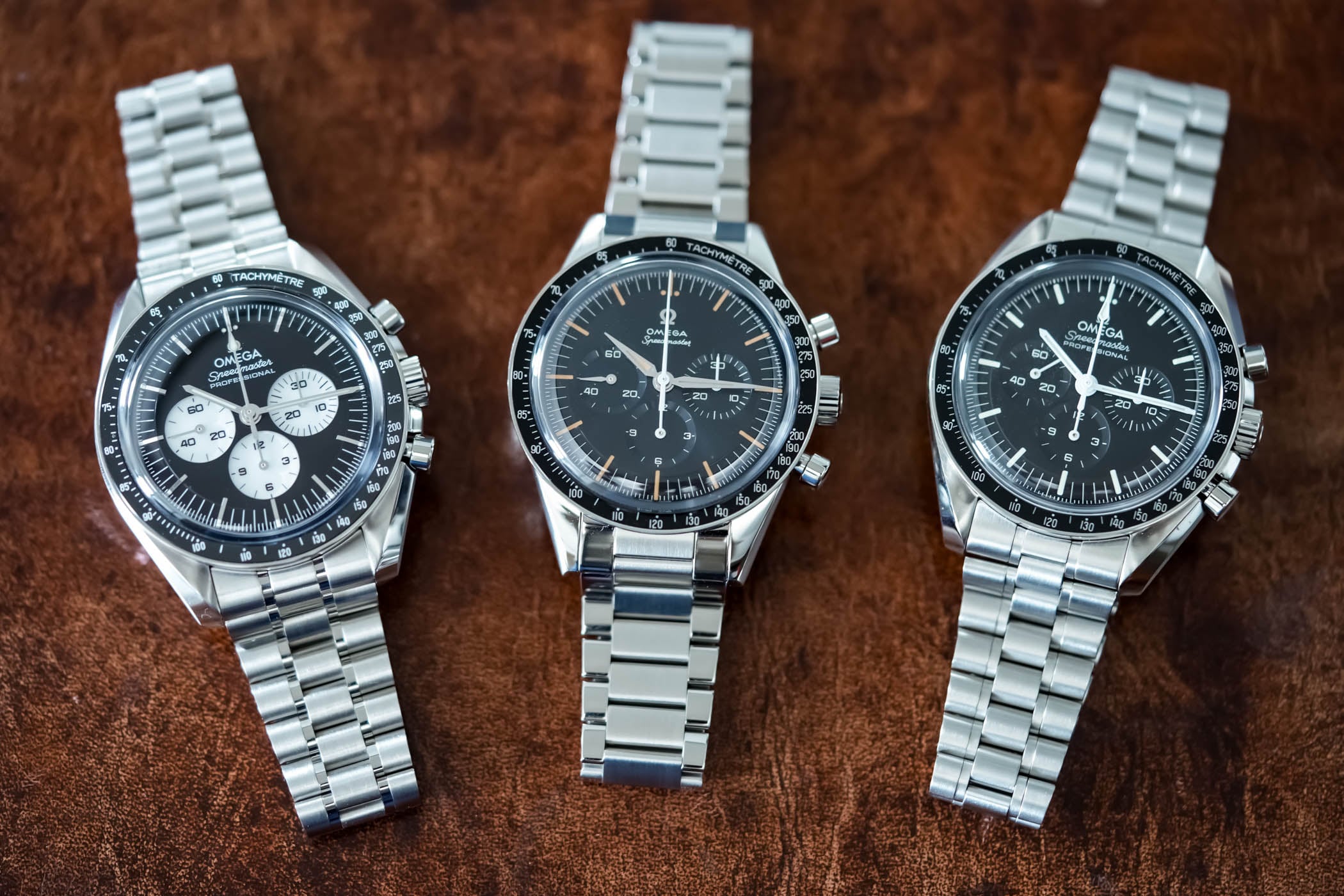
Video - An Almost Impossible Choice… Frank’s Long Journey to Finding his Favourite Omega Speedmaster
Some, from day-1, know what their favourite version of the all-time iconic Omega Speedmaster is. Whether it is the classic Moonwatch, a modern automatic version, a retro-inspired straight lugs or even a specific vintage model, their search was a short journey. It was not the case for me. I have always loved and respected the […]
 Fratello
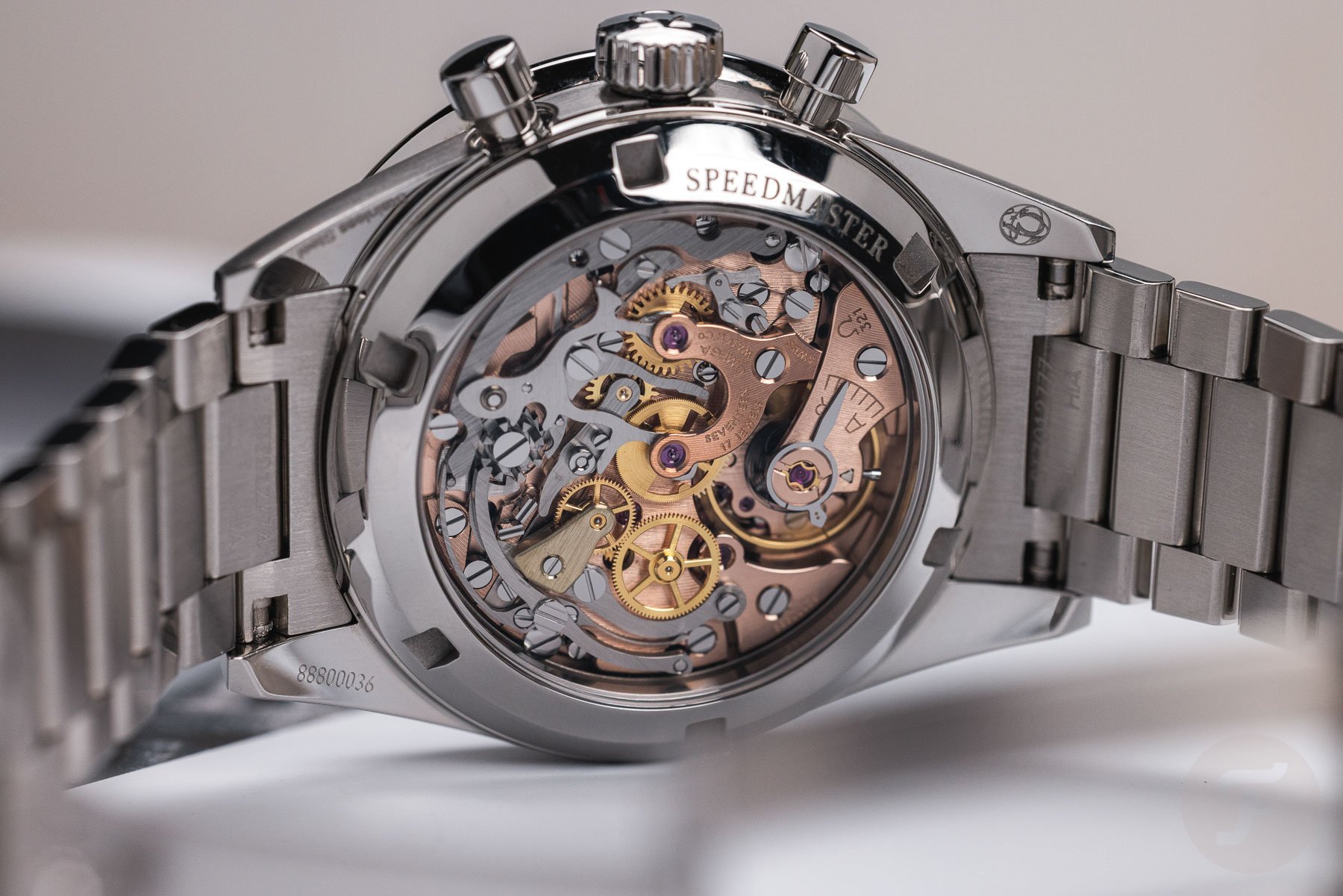
The Definitive Modern Speedmaster - Six Years With The Calibre 321
Recently, one of our readers asked me for an update on my ownership of the Omega Speedmaster Calibre 321. He also wanted to know how often I wear it compared with the stainless-steel Omega Speedmaster Professional Moonwatch introduced the following year (2021). They’re fair questions, and I’ll do my best to answer them today. Over […] Visit The Definitive Modern Speedmaster — Six Years With The Calibre 321 to read the full article.
 Time+Tide
Faux-tina or no-tina? Andrew and Justin dive deep into the Omega Speedmaster FOIS
Every Omega Speedmaster collector knows the Moonwatch. But what about the watch that started it all?
 Hodinkee
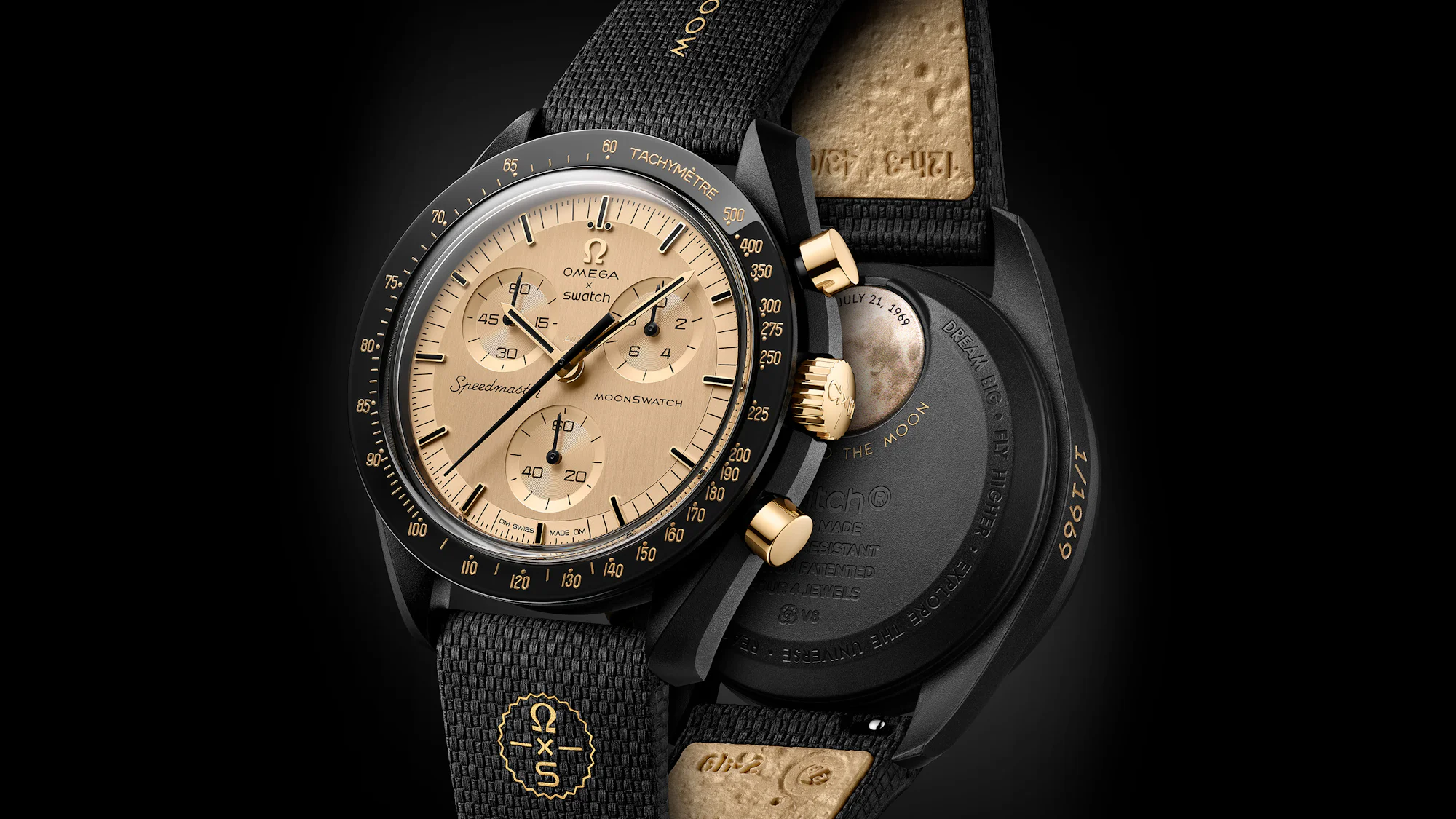
Introducing: The Swatch Mission To The Moon 1969 Moonswatch
What We Know It's kind of funny saying this, but it's been a bit of time since we've seen a new Moonswatch. Given the news cycle around this year's Swatch x Audemars Piguet launch, it makes a lot of sense that Swatch has held more Moonswatch releases in its back pocket, ready for when the time is right to get people talking again about its most popular high/low collab. Today's new Mission To The Moon 1969 Moonswatch is the most limited of the Moonswatches, with only 1,969 pieces made in total. It's certainly a special execution, with an homage to Apollo 11's Moon landing in—you guessed it—1969. But unlike an actual Omega Speedmaster Moonwatch, where the story is a huge part of the appeal to the collector, I have a feeling that this Moonswatch's appeal lies in its use of Omega's 18K Moonshine Gold. It's certainly not the first time Swatch has used Omega's gold alloy in Moonswatches, but this one has a lot of that gold. With the dial, hands, pushers, and crown all in Moonshine Gold, there are eleven grams total in each of these watches. Interestingly, Swatch is saying that the gold used for this edition is melted down from spare Omega parts from that era, which then ties the connection with Omega much closer together. This edition pairs a matte black Bioceramic case with all those bits of gold and black accents to complete the look. The Moonshine Gold dial is given a vertically brushed finish. No lume to be found on these hands, as the gold beveled applied indices are fi...
 Worn & Wound
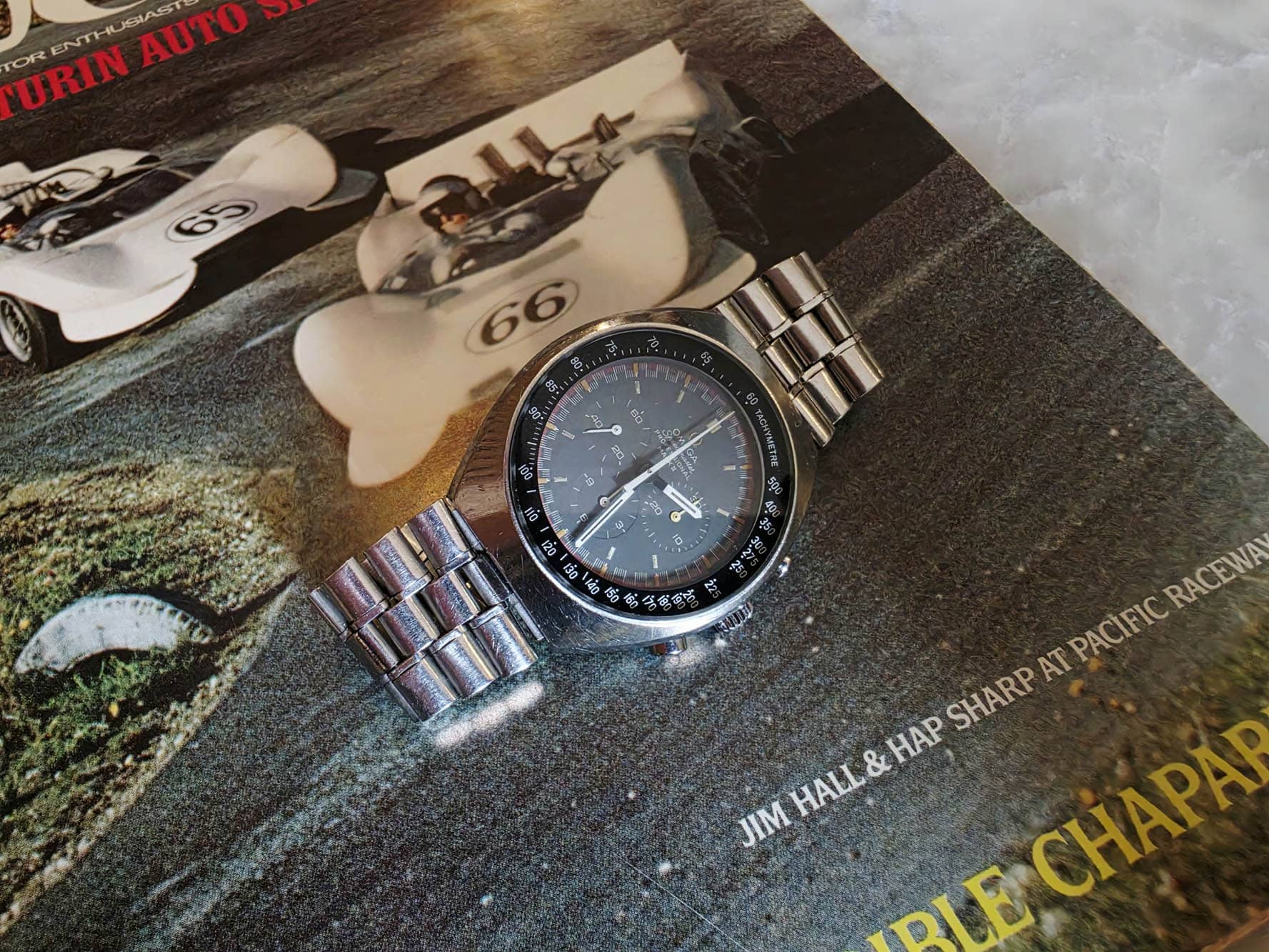
An Amateur Astronaut: How A Mark II Speedmaster Racing Reinforced My Love of Oddball Omegas
For better or worse, but likely worse, I have always attempted to be an iconoclast. When the iPod debuted, I eschewed it for an oddball Korean MP3 player, which I loaded up with nu-metal at a time when all my fellow high school students were evolving into emo kids. I shamelessly drive a 38-year old Saab instead of the Porsche that I thought I could own by this age. And it’s a mentality that has extended into my watch enthusiasm as well: whenever the perennially popular Omega Speedmaster Professional sometimes seems like one of the only watches that exists among enthusiasts and lifestyle publications alike, I look at Omega’s adjacent, oddball chronographs that were in development around the same time as the moon landing. Such as the Flightmaster: an Omega chronograph which also has an enviable space legacy, hewn from a single block of Swedish steel, same as the aforementioned Saab. View this post on Instagram A post shared by Blake Z. Rong (@bzrong) But it’s the Speedmaster’s sequel that commands my attention: once envisioned as a permanent successor to the Moonwatch, the Mark II Speedmaster is as bold as any seventies chronograph, worthy of the original’s lofty aspirations. I came across this watch at Theo’s Haberdashery, a recently-opened vintage shop that highlights vintage Americana. Think woolen pennants for the Brooklyn Dodgers, Playboy matchbook covers, turquoise jewelry and custom-rolled cigars, complete with a 1950s Dodge flatbed truck parke...
 Teddy Baldassarre Videos
What Omega Speedmaster Professional Should You Get?
The Omega Speedmaster holds a special place in horological history for a multitude of reasons, and there’s one Speedy that sits alone at the top: the Speedmaster Moonwatch Professional. It's an icon truly deserving of the often-overused title, and this is a watch that carries universal weight among collectors. However,
 Fratello
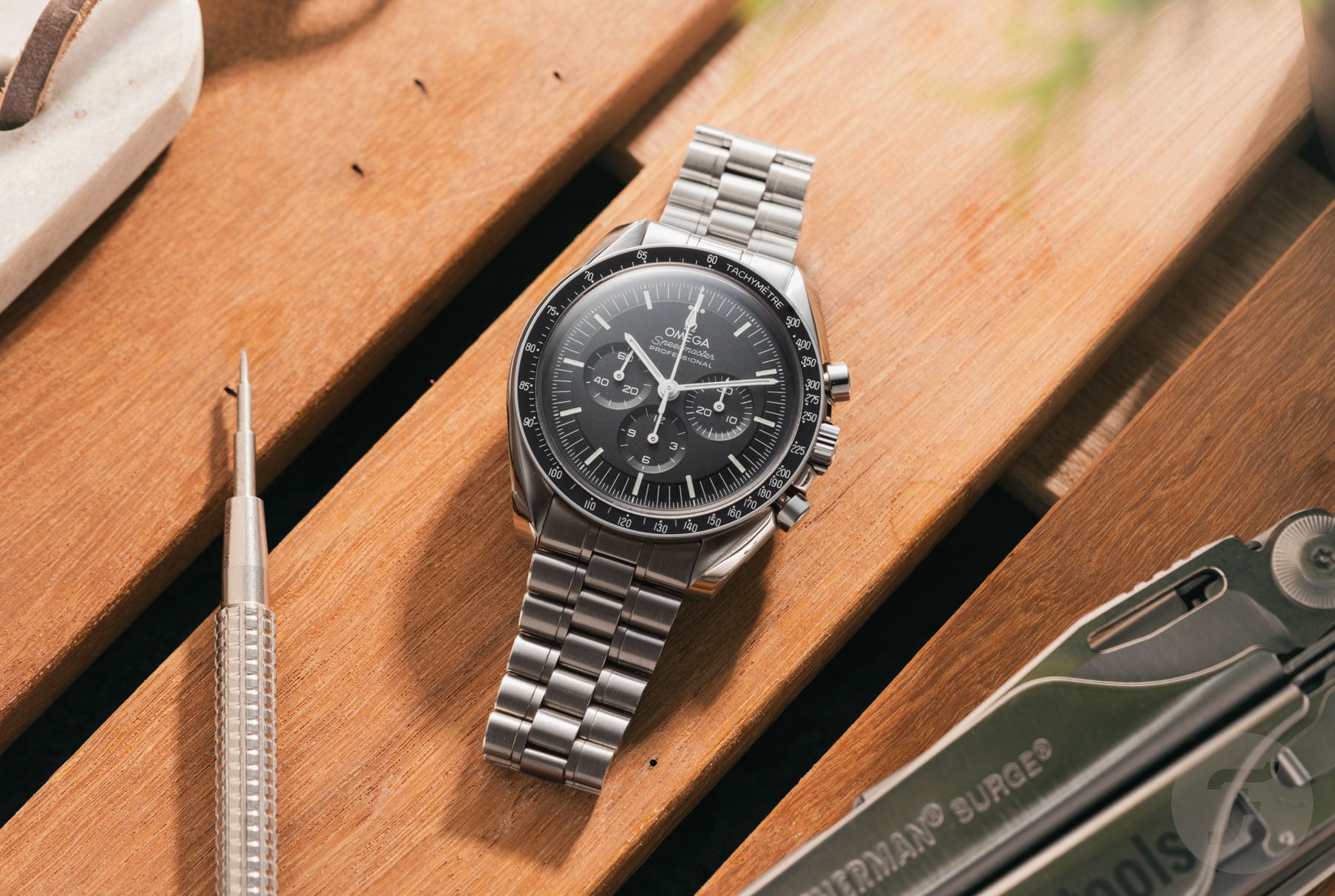
Long-Term Review: Omega Speedmaster Professional 310.30.42.50.01.001
The current Omega Speedmaster Professional Moonwatch 310.30.42.50.01.001 debuted on January 8th, 2021. The Moonwatch received a ton of updates, making many Speedmaster enthusiasts very happy. Those who weren’t hardcore fans, though, mainly found the big price increase from just south of €5,000 to €6,100 surprising. Updates to the modern Moonwatch You can read a full […] Visit Long-Term Review: Omega Speedmaster Professional 310.30.42.50.01.001 to read the full article.
 Teddy Baldassarre
Speedmaster Reduced vs. Speedmaster Professional: Comparison Review of
The Omega Speedmaster is among the heavyweight champions of the watch world. For so many out there, it's the entryway into the enthusiast community, a jumping-off point before taking the plunge into watches as a hobby, and the Speedmaster continues to be one of the most recognizable names in the industry. Today, we’re going to get a little more granular on the subject and put two iterations of the icon, which have been the subject of much debate, head-to-head: the Speedmaster Reduced and the classic Speedmaster Moonwatch Professional. Down below, I’ll set up the scene with a little history lesson, and then break down the key similarities and differences between the two to keep in mind. [toc-section heading="History and Context"] As one of the legends of watchmaking, the story of the Speedmaster is one often told and retold, so I will keep things quick and to the point here. If you want to go more in-depth on its backstory, feel free to break away from this article and head to our complete guide to the Speedmaster here. A symbol of the Space Race era, the Omega Speedmaster is most well-known for its role on the Apollo 11 mission in 1969, which officially made it the first watch to ever be worn on the Moon. It’s the watch that’s been aboard all six of the moon landing missions, thus earning the “Moonwatch” title once and for all. Taking off from its original motorsport-oriented intent to be the chosen watch of space exploration, the key DNA of the Speedmast...
 Worn & Wound
Omega Introduces the New Speedmaster Professional “Black and White”
The Speedmaster family grows again today as Omega announces a pair of new Moonwatches to the stable. The new additions, which the brand refers to as the Speedmaster Professional Moonwatch Black and White, seem kind of obvious at first glance, but if you dig a little deeper (just a little) these watches actually say something interesting about what a Speedmaster Professional is, and it’s somewhat different than what that was only a few years ago. Broadly speaking, what we have here are a pair of manually wound Speedmasters with a classic reverse panda dial layout, one in steel and one in 18k Moonshine Gold. A reverse panda layout, with a black base dial and white subdials, is not in and of itself all that unusual, but in the world of Speedmaster Professionals it’s quite out of the ordinary. Apart from limited editions, which are really a separate category altogether, the Speedy Pro has always just been black, until it wasn’t. The introduction of the white dial Speedmaster a few years ago reoriented us to think differently about these watches, and this pair, in a small way, does it again. The execution of these Black and White editions appears to be top notch. The black dials are varnished and lacquered, which ought to give them a more luxurious orientation than the standard matte black Speedy. The subdial frames are rhodium plated, and the white subdials have been given a lacquer treatment as well. Specs match other Speedmaster Professionals exactly, as you’d ex...
 Monochrome
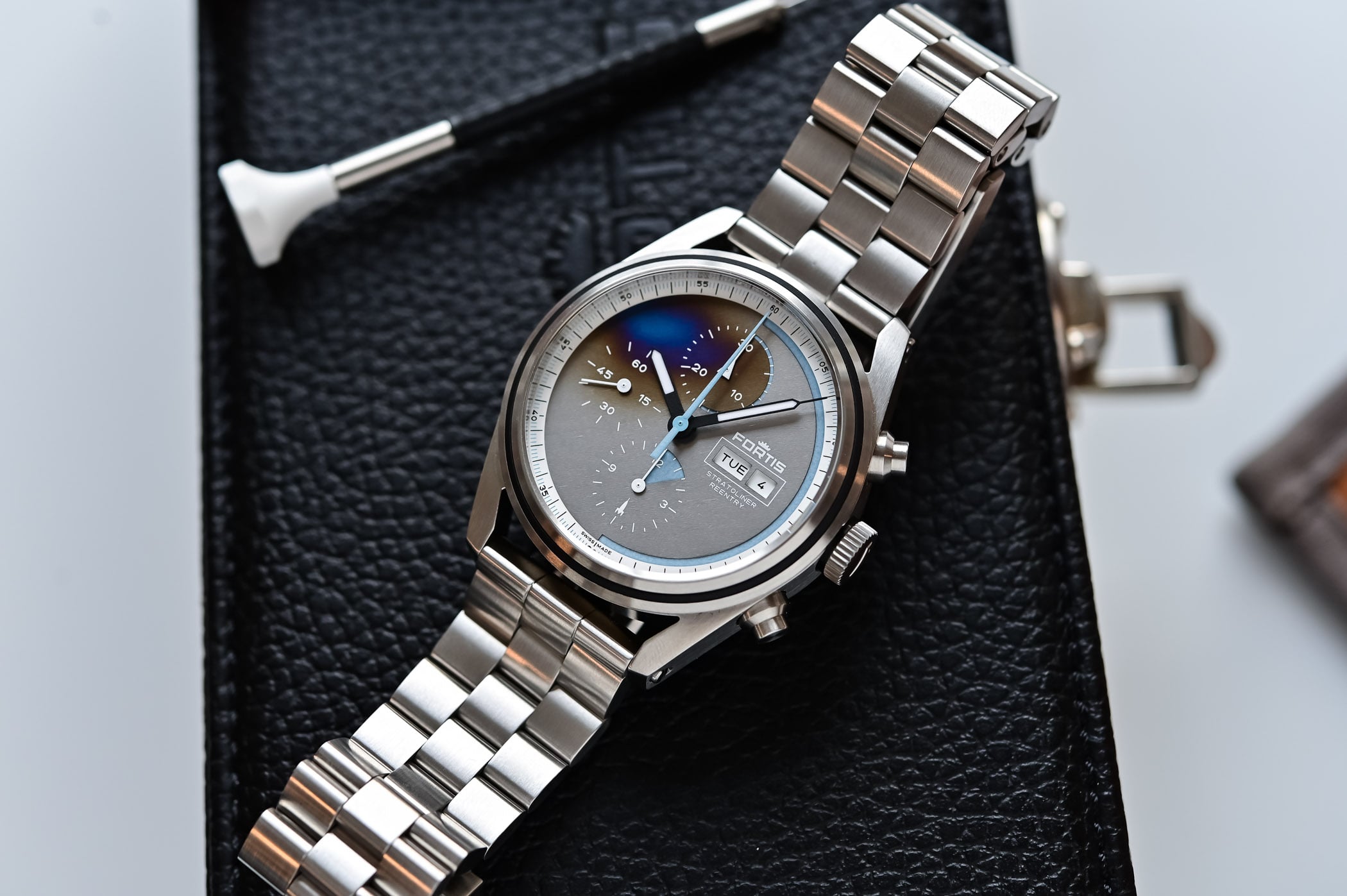
First Look - The Fortis Stratoliner S-41 Blasts Off in New Colours
With companies like Elon Musk’s SpaceX and Jeff Bezos’ Blue Origin, space tourism is no longer the stuff of sci-fi novels. While Omega’s Speedmaster Moonwatch has dominated the space story, others, like Fortis, have produced robust tool watches for astronauts, cosmonauts and “novonauts” alike. Boasting space-tested calibres, Fortis releases a fresh batch of four Stratoliner […]
 Teddy Baldassarre
Omega Speedmaster MK40 Review: A Colorful Cult Classic
When you think of the Omega Speedmaster, the first thing that comes to mind is likely the brand’s golden child, the Speedmaster Moonwatch Professional. It’s a modern grail with its NASA connection, and its intertwined history with the Moon landing and space exploration is its calling card. But today, we’re looking at a different Speedmaster that has been eschewed from Omega’s current lineup. One that’s a little more playful, a little more unconventional, than the brand’s well-established Moonwatch Professional formula: the Speedmaster Mk40. Down below, I’ll be breaking down the history, context, and all the aesthetic oddities of the watch, all of which work together to create one of the most compelling non-Moonwatch Speedmasters of all time, in my humble opinion. [toc-section heading="Some Speedmaster Context"] Image: S.Song From first glance, the Speedmaster Mk40 that made its debut in the ‘90s defies all the utilitarian, tool-watch-oriented austerity that is the key DNA of the Moonwatch Professional, from its functionality to its experimentation with color, shapes, and typography. But the Mk40 is part of a short-lived and often forgotten legacy of Omega’s experimentation with the Speedmaster formula, before things were so rigidly codified as they are today. It is also important to note that the moniker “Mk40” itself is a completely enthusiast-driven nickname, which Omega itself has never officially used (the brand denotes the different models wi...
 Fratello
Fratello’s Omega Speedmaster Guide
Are you looking to buy an Omega Speedmaster but don’t know where to start? We’re here to help! Over the past 65+ years, Omega has created many variations of one of the world’s most famous chronographs. The classic 42mm Moonwatch has been in the collection since 1965, and to the novice eye, little has changed […] Visit Fratello’s Omega Speedmaster Guide to read the full article.
 Teddy Baldassarre
I Gave An Omega Speedmaster To A Deserving Subscriber
We asked you on social media if there was someone you know that deserves the watch of their dreams. We received dozens upon dozens of stories highlighting potential worth recipients, but one stood out the most. Learn more about Lucas and why we chose to gift him his grail watch: the Omega Speedmaster Moonwatch.Is there
 Two Broke Watch Snobs
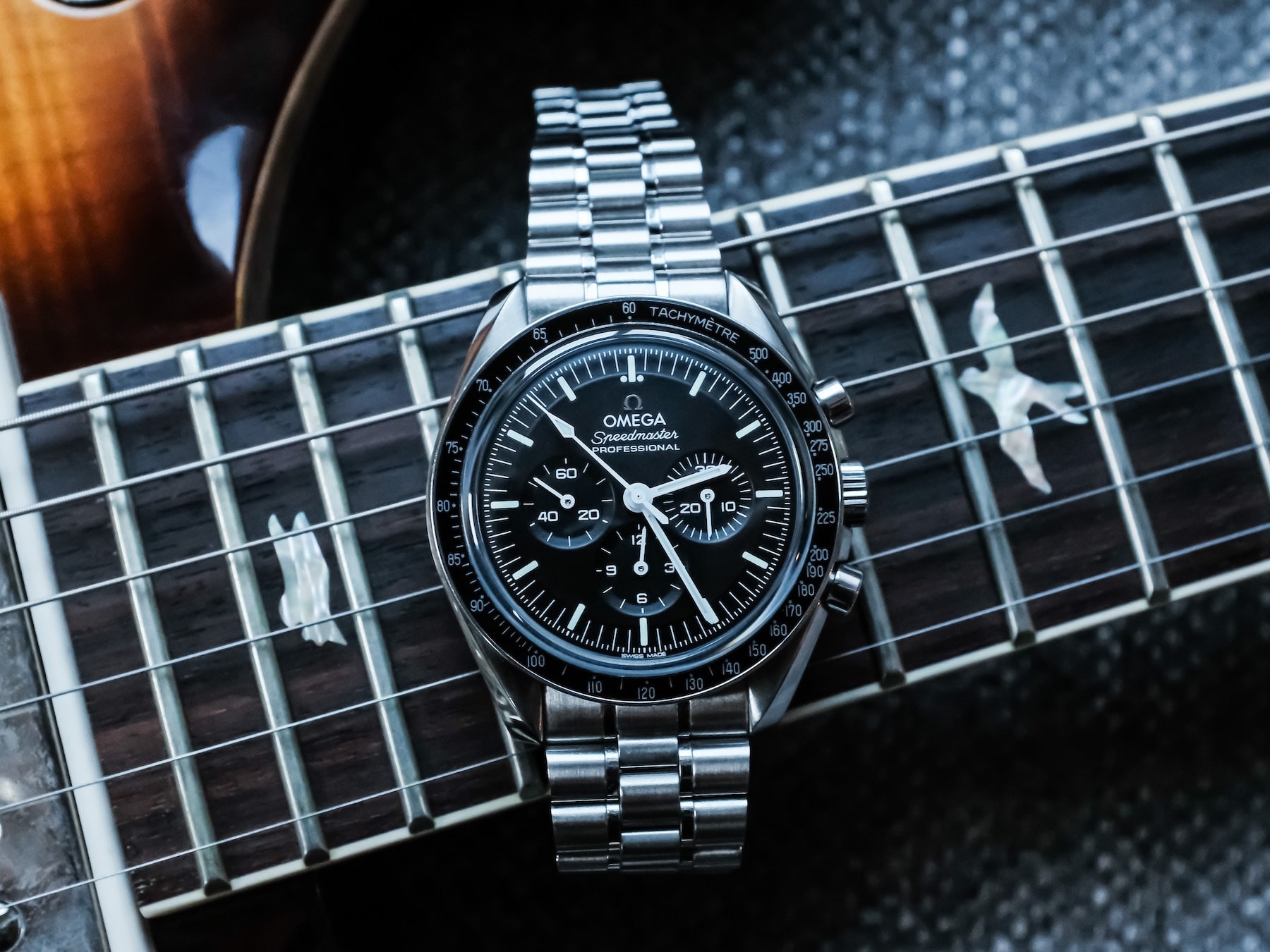
Omega Speedmaster Review: After Years Of Ownership, Is It Actually Worth It?
A long-term review of the Omega Speedmaster Moonwatch 3861, exploring how its subtle refinements turn a classic into a lasting companion.
 Teddy Baldassarre
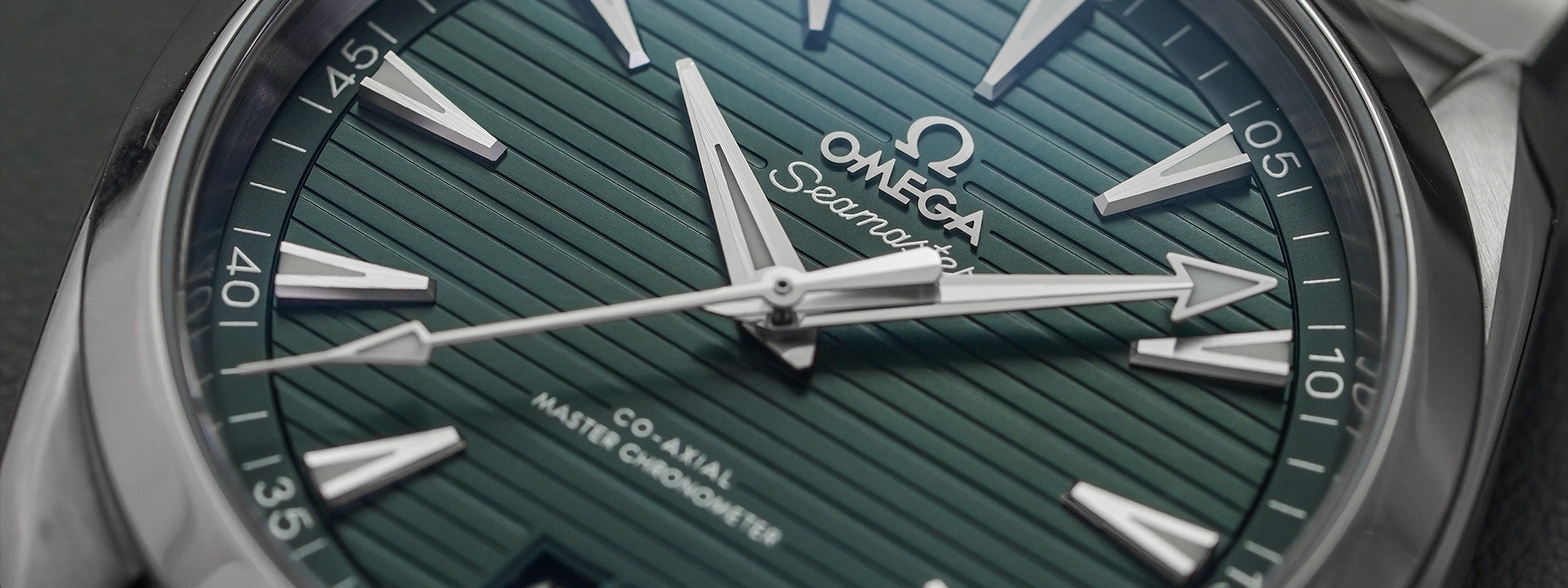
Omega Co-Axial Movement Explained: A Radical Invention
What is a Co-Axial Movement? More specifically, what is the now-famous Co-Axial Escapement that has become a standard feature on most all Omega watches? In short, it's both a radical concept by one of the modern era's most revered watchmaking geniuses and the culmination of a Swiss watch brand's longtime dedication to improving watchmaking accuracy. Here is the story of Omega's co-axial movements. [toc-section heading="Early Omega Movements"] While it is best known these days for its signature watch models, like the Speedmaster “Moonwatch” and the James Bond-worn Seamaster, Omega has also been a pioneer in movement-making since nearly the beginning. The company was founded in 1848 by 23-year-old watchmaker Louis Brandt (with family, above) in the Swiss village of La Chaux-de-Fonds. Originally called La Genérale Watch Company, and eventually renamed Louis Brandt et Fils after Brandt’s sons joined the business, it originally produced key-wound pocket watches from parts supplied by local artisans, After the growing company moved from La Chaux-de-Fonds to the more bustling town of Bienne, in the Swiss Canton of Bern, it pioneered a series of industrial watchmaking techniques and also began making its own in-house movements. The first one, called the Labrador, launched in 1885 in a now-legendary series of pocket watches. Nearly a decade later, in 1894, came the company’s chef d’oeuvre, the 19-ligne Omega Caliber, which was notable at the time for its enviable acc...
 SJX Watches
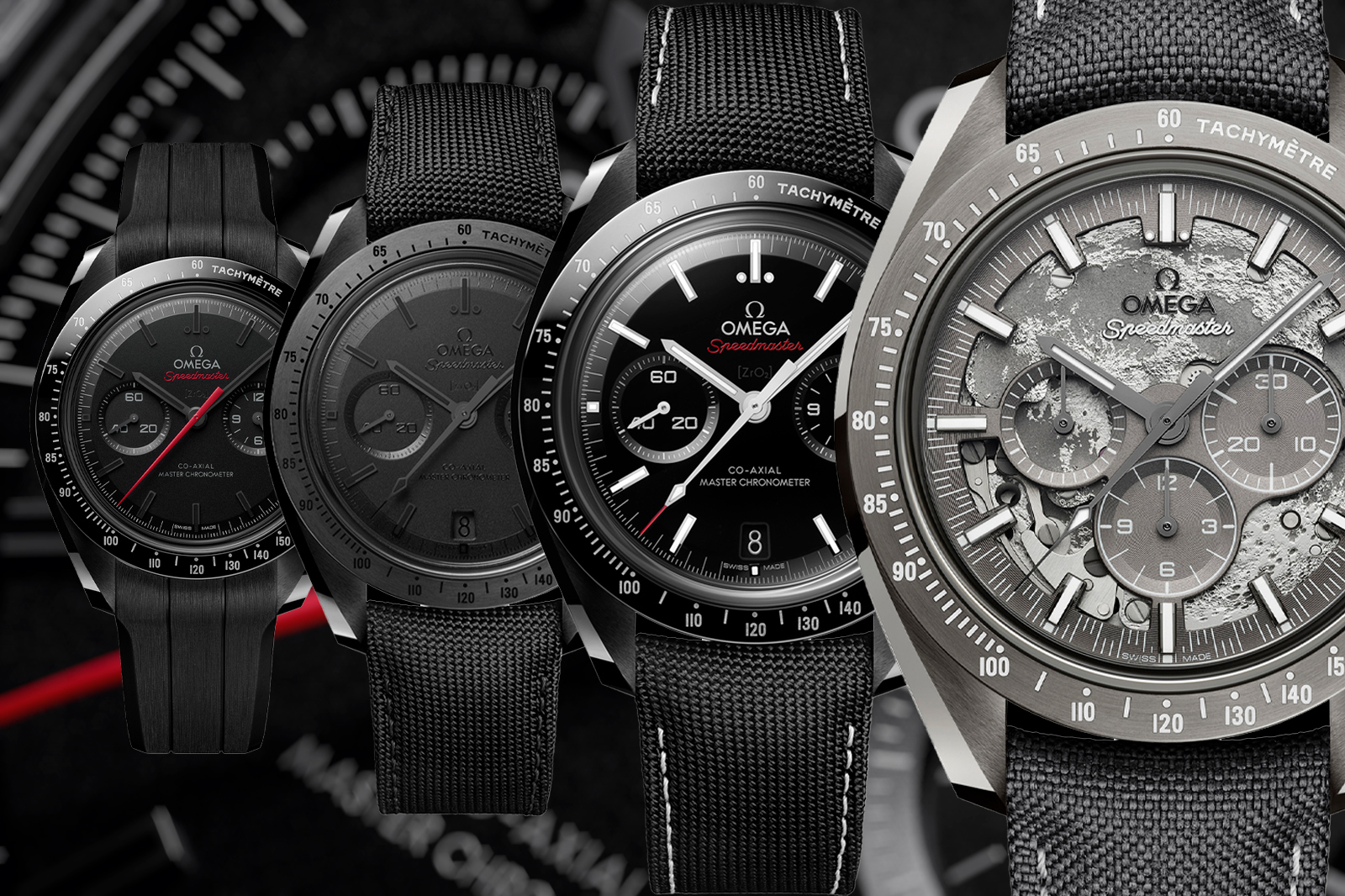
Omega’s Speedmaster Dark Side of the Moon Returns
A hit when it was launched a dozen years ago – time does fly – the Speedmaster Dark Side of the Moon was the first-ever Speedmaster in ceramic. Now Omega has refined and reworked the concept – the case is now almost 1 mm thinner – while retaining the all-ceramic construction and distinctive aesthetic. The new Speedmaster Dark Side of the Moon (DSOTM) makes its debut in four variants. The first two stick closely to the original, right down to the same automatic cal. 9900 movement, but in a slimmer format. More notable is the manual-wind version containing the cal. 9908, the first DSOTM offering with this movement, making it even thinner. And it has no date to boot. Rounding out the quartet is the Speedmaster Grey Side of the Moon (GSOTM) that is also manual-wind but powered by the historically-based, Moonwatch-famous cal. 3861. This adopts the lunar-textured surface, front and back, first seen on the Apollo 8 edition. The first manual-wind DSOTM that has a black-and-red livery Initial thoughts Contemporary collectors are spoiled for choice when it comes to the Speedmaster, which is available in seemingly endless configurations. While that’s arguably a criticism, it demonstrates Omega’s industrial prowess, which enables the brand to deliver large volumes of watches that are objectively high quality and equipped with some of the industry’s best chronograph movements, without keeping customers waiting. Regardless of the shade of grey or black, the watches are ins...