Hodinkee
Introducing: J.N. Shapiro's First Complication, A Monopusher Chronograph
Made for the Boston-based independent collectors' group Escapement, the new watch sets the stage for future releases from Shapiro.
216 articles · 1 video found · page 5 of 8
Hodinkee
Made for the Boston-based independent collectors' group Escapement, the new watch sets the stage for future releases from Shapiro.
Teddy Baldassarre
While Switzerland is regarded today as the world leader of watchmaking, Great Britain can lay claim to a wealth of horological milestones throughout its history as well. From Thomas Mudge’s development of the lever escapement in 1755 to John Harrison’s invention of the marine chronometer in 1759 to the innovations of clockmaker Thomas Tompion and his protegé George Graham in the areas of science and astronomy, England was an undisputed leader in timekeeping throughout the 18th and 19th centuries. The 20th century brought the decline of the British Empire and, with it, British watchmaking, as nations like Switzerland, Germany, and (for a while) the United States stepped in with modern mass-production techniques while the Brits held fast to traditional, artisanal methods. The United Kingdom essentially ceased being a major producer of timepieces by the end of World War II, but as the 21st Century dawned, a handful of entrepreneurial Britons have made great strides in bringing high-end watchmaking back to their native land, establishing new brands - and in some cases, resurrecting old ones - to make watches that appeal to today’s discerning enthusiasts in the U.K. and across the world. Whether the focus is military-style tool watches, avant-garde complications at approachable prices, or ultra-high-end pieces for well-heeled collectors, each brand boasts an identity that is proudly British and at the same time distinct from its peers. Here are 15 British watch bran...
Monochrome
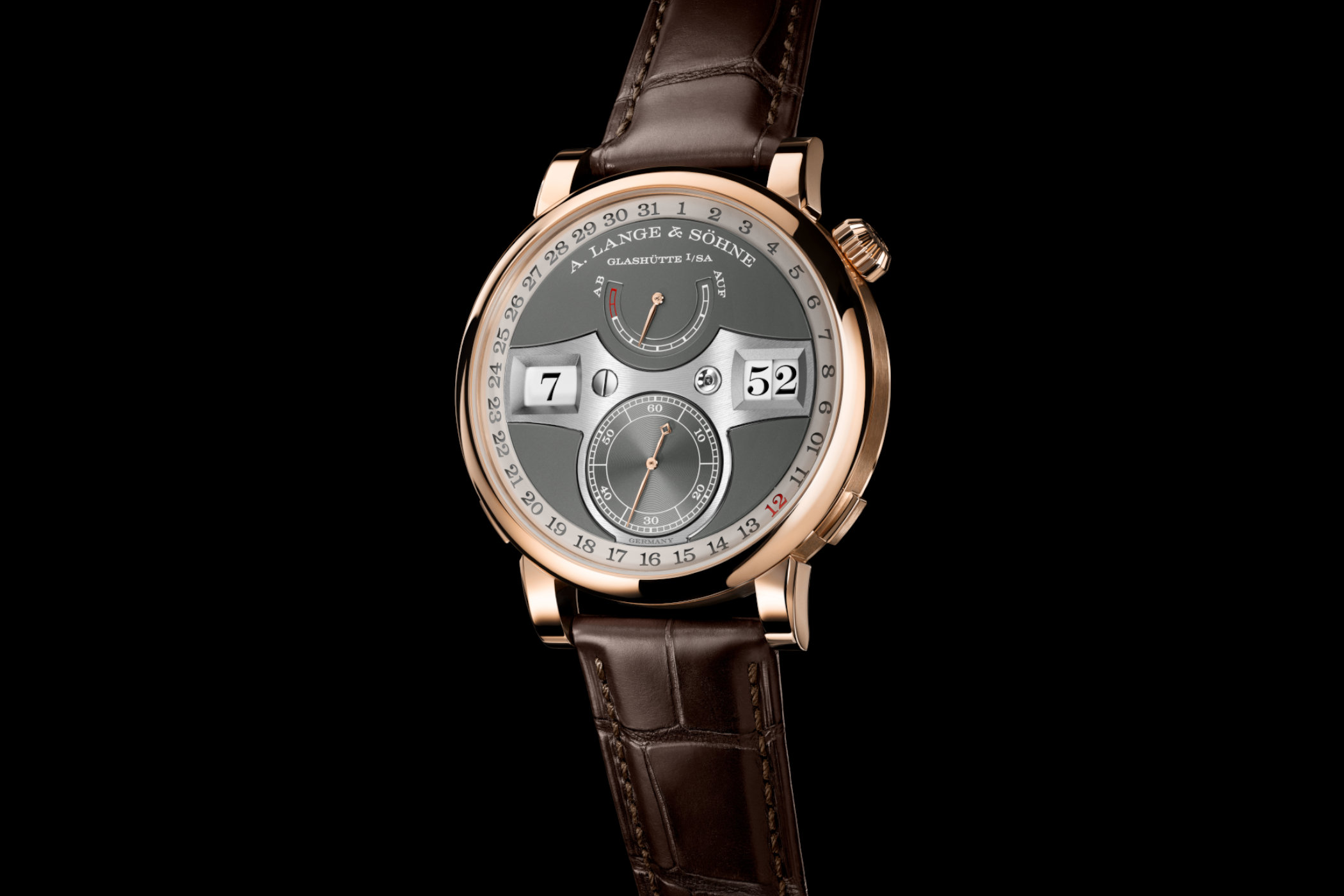
When A. Lange & Söhne first revealed the Zeitwerk in 2009, it marked a bold break from convention. A high-end Saxon watch that abandoned the familiar hands-on-dial format in favour of a purely mechanical digital time display, large jumping numerals for the hours and minutes, powered by an ingenious constant-force escapement. Since its introduction, the […]
Worn & Wound
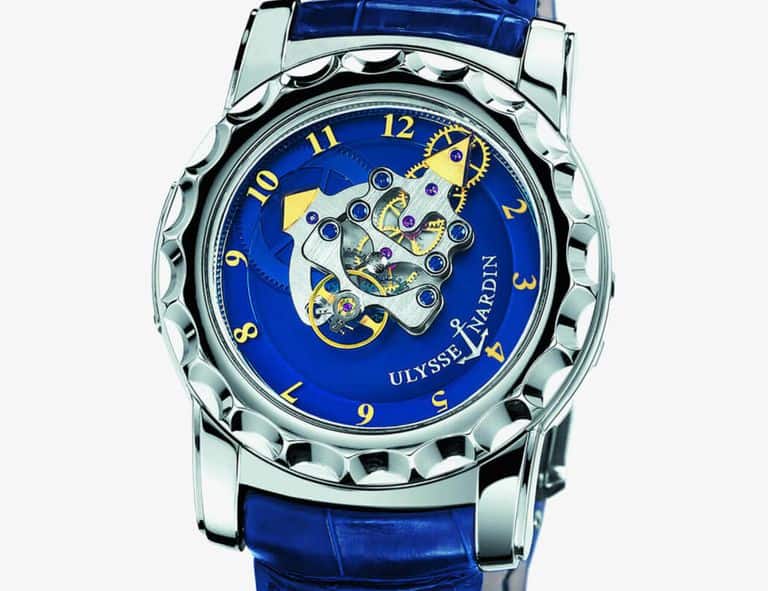
When Ulysse Nardin unveiled the Freak in 2001, it set off a chain of events that forever changed the course of history for the brand and for the industry at large. The model seamlessly flexed a combination of technical and design achievements. The Freak offered material innovation that was far ahead of its time, introducing the use of silicon in the escapement wheels-a technology that is now used by almost every major watch brand from Rolex to Patek Philippe, Girard-Perregaux, Breitling, and Jaeger-LeCoultre, just to name a few. It also presented an entirely new set of aesthetic codes for watch design with an expression of time that notably lacked a traditional dial, hands, or crown. With the Freak’s overall success, it immediately established the brand as a thought leader, an innovator, and (perhaps most importantly) a rebel in an industry often paralyzed by its reverence and steadfast commitment to tradition. In the nearly 25-years since the first Freak, we have seen Ulysse Nardin infuse this spirit in each subsequent Freak model and its catalog at large-from the Blast collection to its UFO clocks and, most recently, in its record breaking Diver [Air], the world’s lightest mechanical dive watch. The first Freak We all know record setting has become a bit of a thing in watchmaking. Particularly in the past decade or so, we have witnessed brands embark on the race to claim the next world record title. Since 2014, Bulgari has set a whopping ten for the ultra-thi...
Monochrome
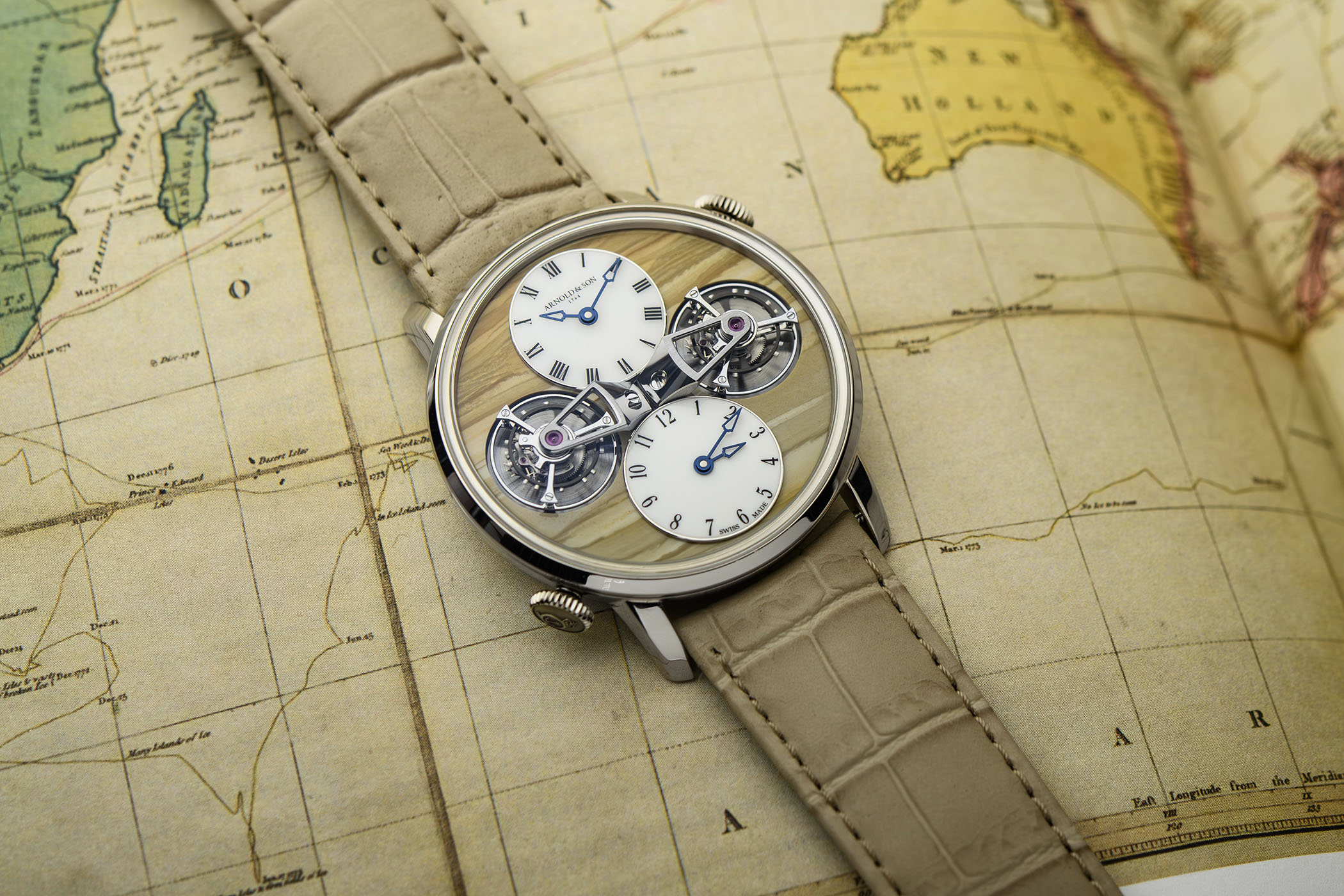
In 2014, Arnold & Son marked 250 years of John Arnold’s horological legacy with the debut of the Double Tourbillon Escapement, a timepiece that introduced a mechanically ambitious concept: two independent time displays, each driven by its gear train and regulated by its tourbillon. This duality, both technical and aesthetic, was made possible through separate […]
Hodinkee
A major leap forward in movement technology, featuring a new indirect impulse escapement and high frequency movement that confirms the Crown's industrial manufacturing prowess.
Worn & Wound
2022: the Kodo constant force tourbillon. 2023: the Tentagraph hi-beat mechanical chronograph. 2024: the 9SA4 manual wound, hi-beat, dual-impulse escapement caliber, and Kodo Daybreak. It’s easy to forget that Grand Seiko has brought the proverbial heat to Watches & Wonders every year since the fair started, unveiling something that one could call “revolutionary” for the brand, if on varying scales. Well, it’s looking like 2025 will continue the trend with the introduction of Spring Drive Caliber 9RB2, the first caliber with U.F.A., or Ultra Fine Accuracy, designation. Before proceeding, there are two important concepts to understand: Spring Drive and Grand Seiko’s history with acronyms (which, if you know, feel free to jump two paragraphs ahead). Starting with the former, the elevator pitch, which I will take from our article dedicated to the topic is “Spring Drive combines the best of mechanical watchmaking and the best of quartz timekeeping to create a state-of-the-art caliber that lacks the weaknesses inherent to both of these movements.” A bit deeper, Spring Drive movements use the energy stored in a traditional mainspring to drive their proprietary “Tri-synchro” regulator, which replaces the classic lever escapement. It consists of a glide wheel, the rate of which is controlled by an electromagnetic brake, and is essentially regulated by an integrated circuit with a quartz oscillator. The result is a mechanical movement with quartz-like accuracy and...
SJX Watches
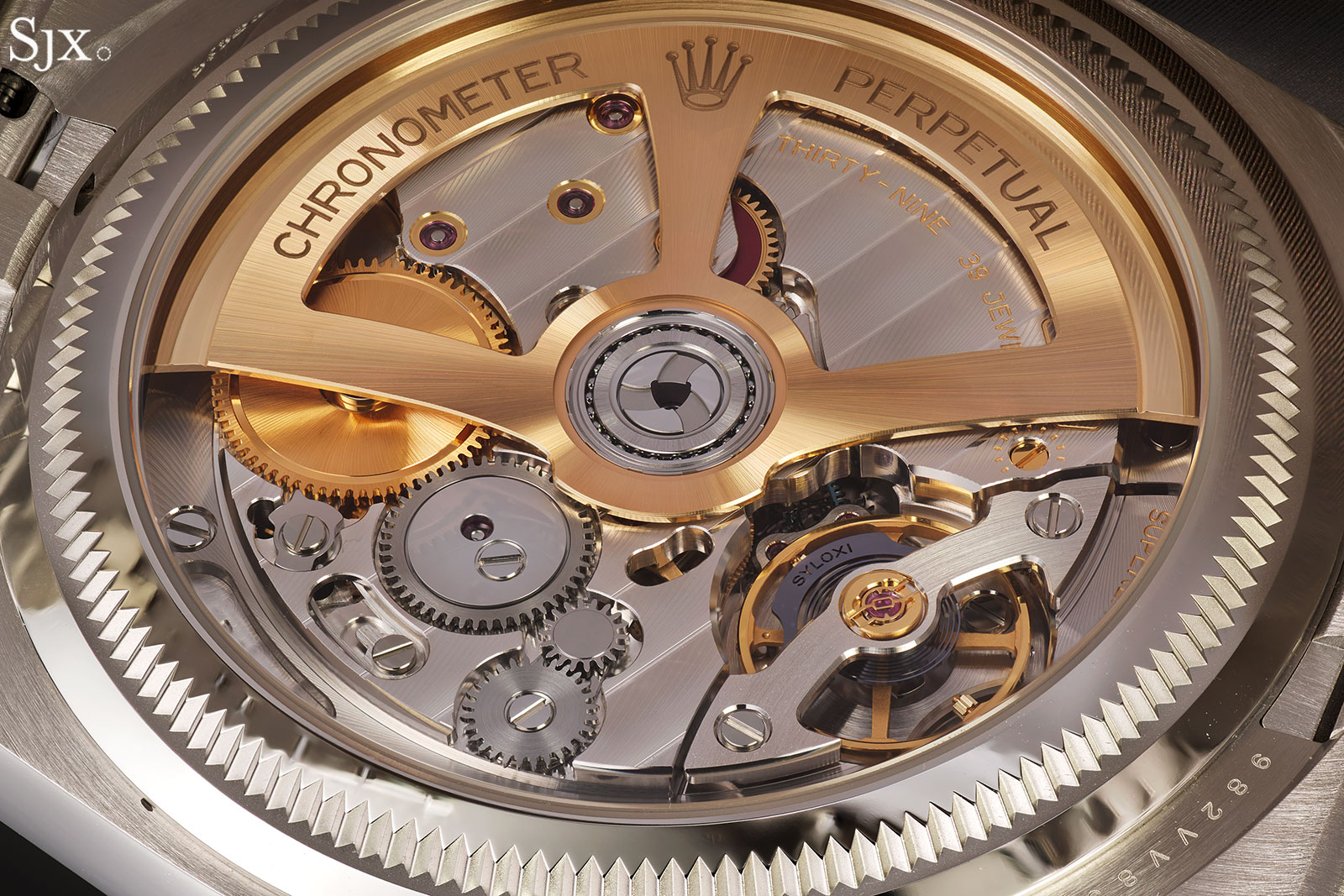
Rolex has entered uncharted territory with the Land-Dweller, arguably the most advanced and radical creation from a hitherto conservative brand. The Land-Dweller is significant, perhaps even game changing, not because of the integrated bracelet or patented solid lume, but because of the cal. 7135, a new calibre with an all-new double-wheel escapement known as Dynapulse and a ceramic balance staff. (This story details the technical advances in the movement; for a review of the watch, check out the accompanying story.) The Land-Dweller 40 mm in platinum The fundamentals Why is it significant, or even game changing? The cal. 7135 is the first in-house, serial production Rolex movement that is high frequency, beating at 5 Hz or 36,000 beats per hour. All things being equal, a higher frequency promises superior timekeeping. Despite the higher frequency, the cal. 7135 still has a 66-hour power reserve. That’s thanks in part to the Dynapulse escapement which is 30% more efficient than a conventional Swiss lever escapement, while occupying essentially the same volume of space. The balance assembly of the cal. 7135 Dynapulse is one of several innovations that make the cal. 7135 a landmark, especially since it will be produced at scale. While Rolex has traditionally been associated with incremental innovation, the cal. 7135 is a revolution. The Land-Dweller is the subject of 32 filed patents, 18 of which are unique to the watch. Moreover, 16 of the patents unique to the watch are ...
Hodinkee
These next rounds of classes will be hosted by the Carolina Watch Club, the Escapement Club, EsperLuxe and the Waltham Museum.
SJX Watches
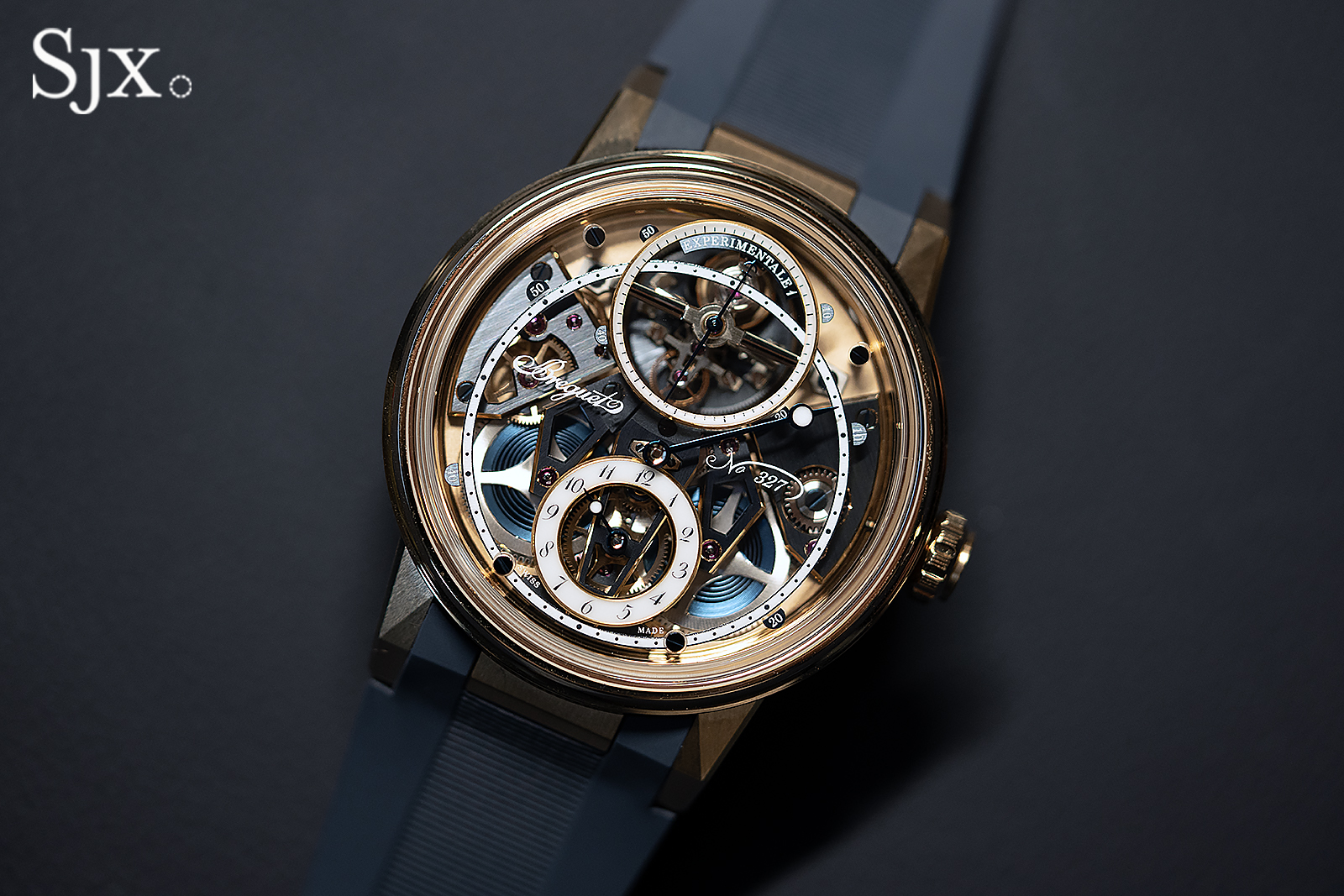
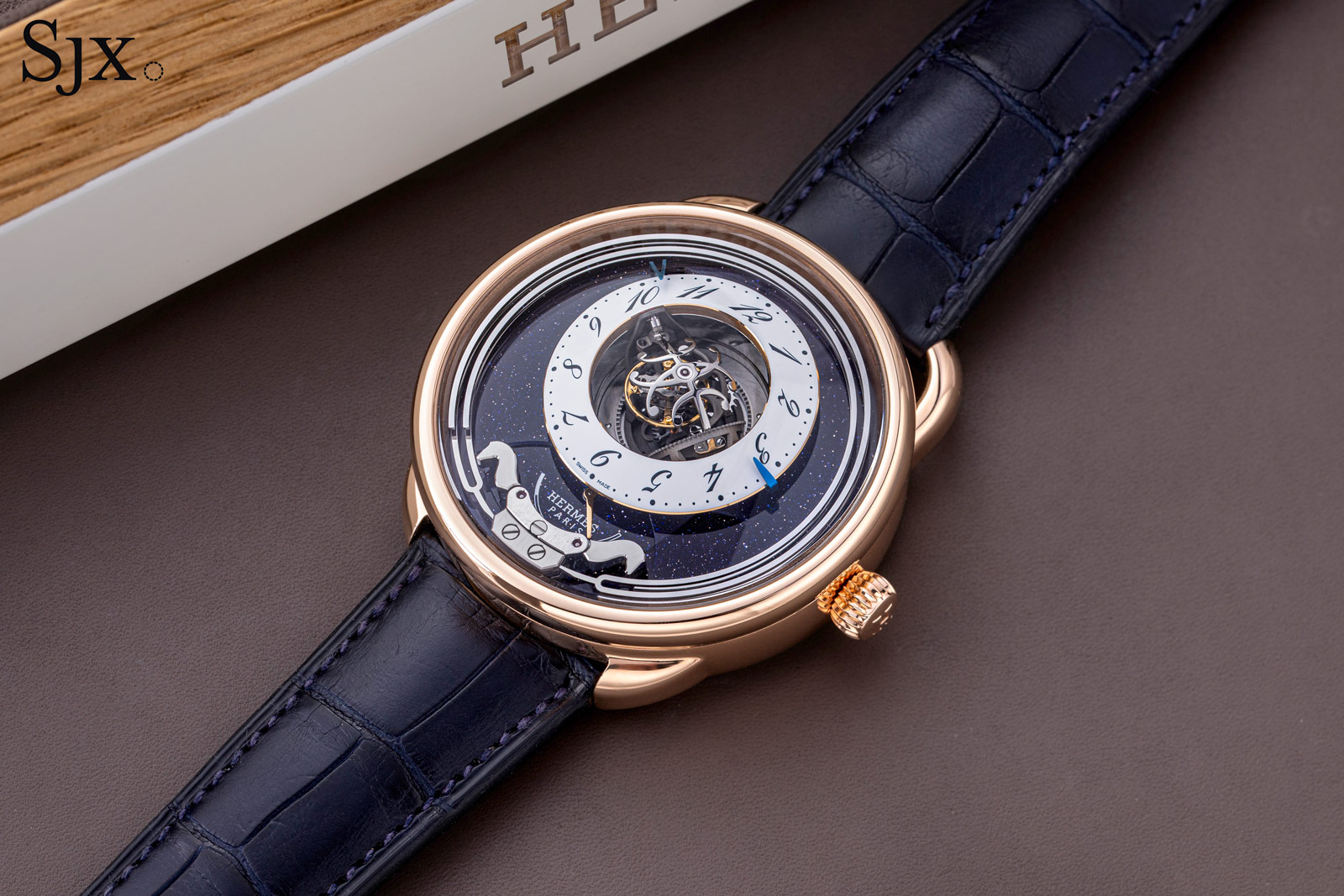
Hermès is a brand with a distinctive, often whimsical, visual identity that translates well across products, even on its most complicated watches like the Arceau Duc Attelé, which combines a triple-axis central tourbillon (containing a high-frequency escapement) with a minute repeater featuring novel “tuning fork” gongs. Large, thick, and very complex, the Duc Attelé still manages to capture the elegant aesthetic of the brand, even in subtle details of the H1926 movement, like horse-shaped hammers for the repeater. Customised for Hermès, the calibre has an intricate, dense construction but is recognisable as being produced by a specialist. Initial thoughts The Duc Attelé demonstrates the strength of the Hermès house style. On the front, it looks elegant despite the size, while the movement feels appropriate even though it is third party. The watch does sit big on the wrist, though the titanium version is a little lighter in weight and visually smaller due to its dark colours. But the Arceau case has tiny lugs, so it doesn’t feel clunky. And although the case is almost 20 mm high, a good part of that is due to the highly domed crystal that accommodates the tourbillon’s height. All of the design elements, however, give it an elegant feel. These include the Breguet numerals on the domed chapter ring and the “Lift” motif tourbillon cage modelled on the elevator in the brand’s flagship store in Paris. But more than anything else, this is a watch characterise...
Hodinkee
The founder of Lederer Timepieces will discuss the history and evolution of the escapement.
SJX Watches
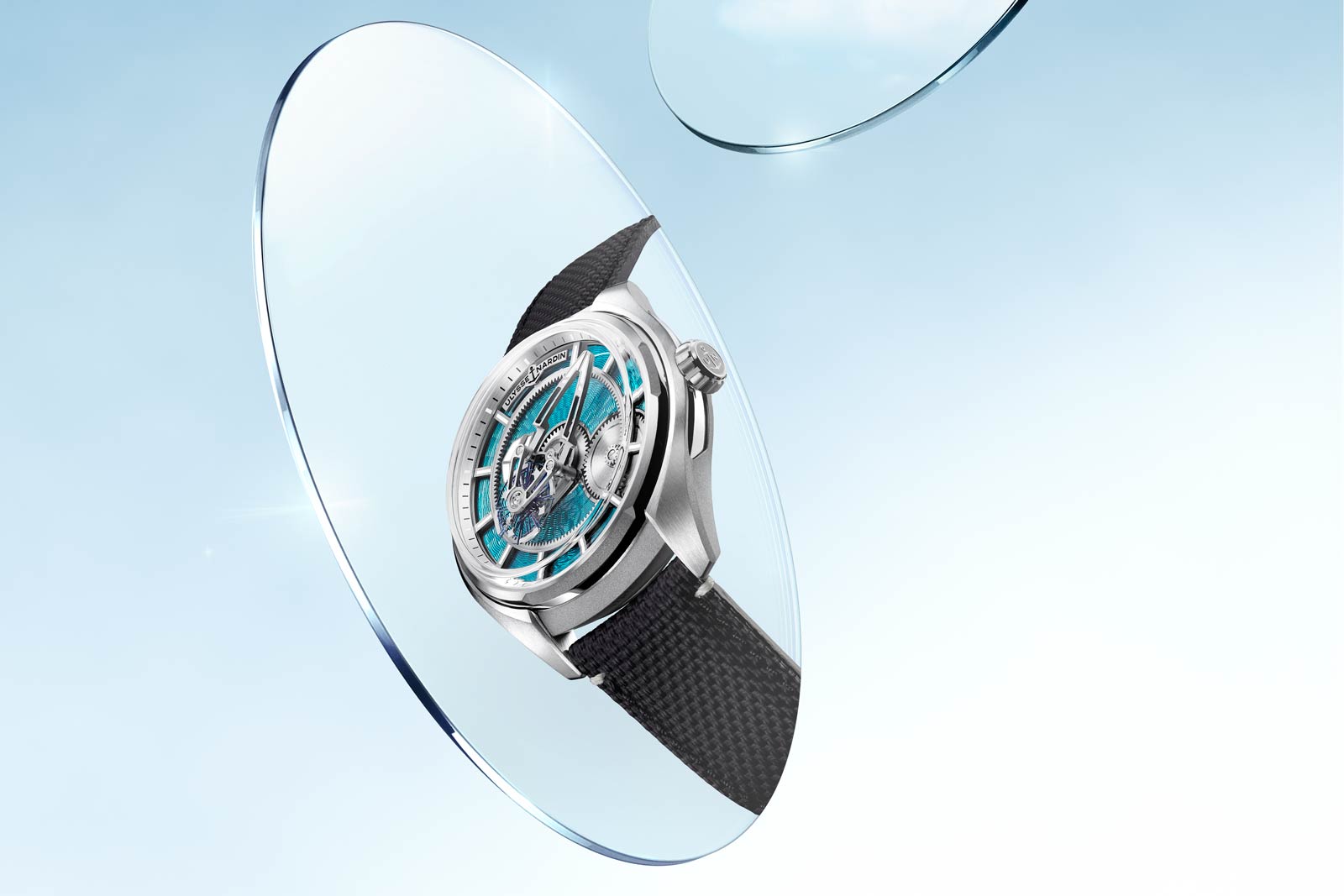
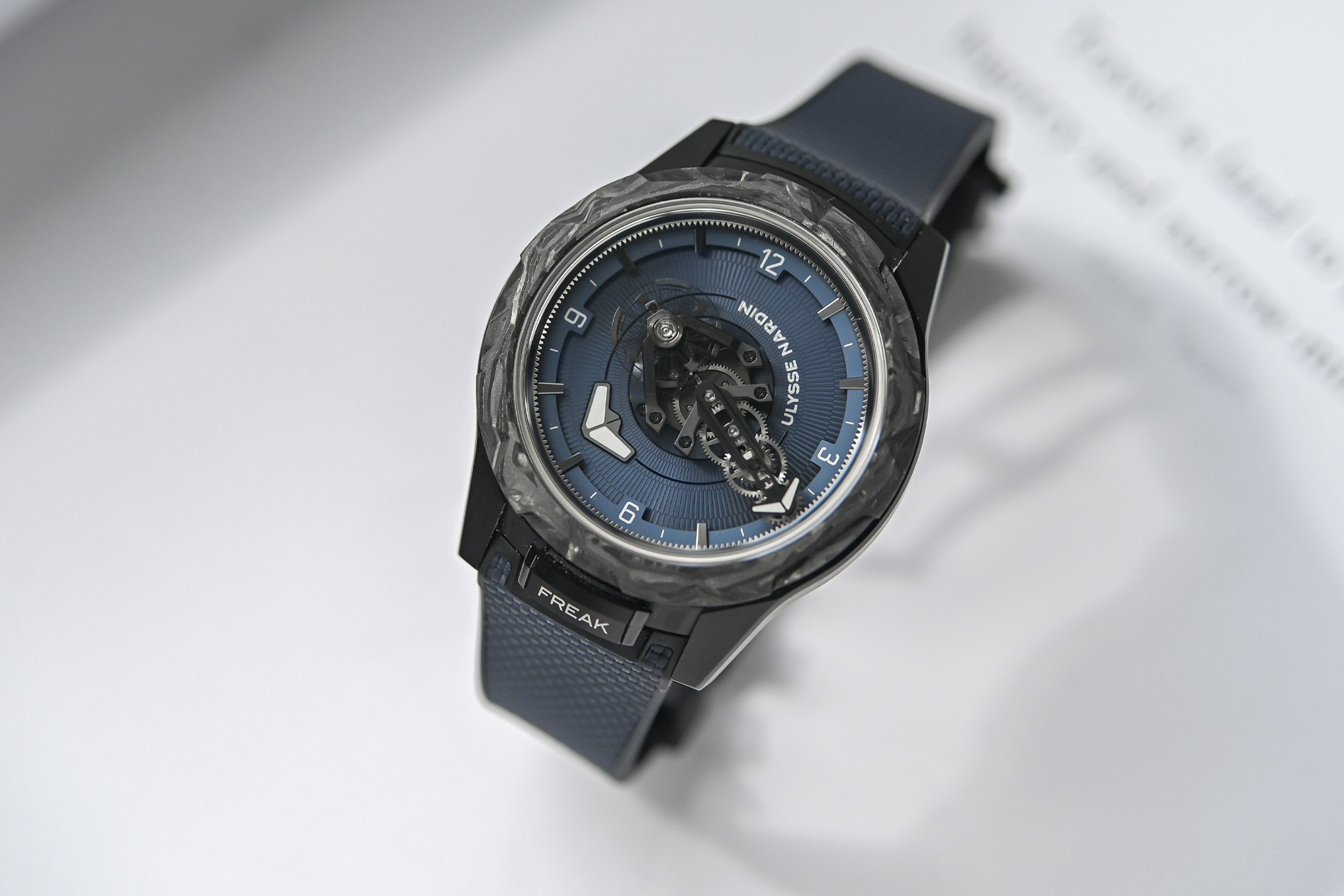
Ulysse Nardin’s entry-level Freak has been dressed up with a flinque enamel dial in a limited edition for Ahmed Seddiqi & Sons, the Middle East’s most prominent luxury watch retailer. The Freak X Enamel Seddiqi features a “Yas Blue” guilloché enamel dial with the signature carousel carrying an oversized oscillator and silicon escapement that acts as a minute hand. Initial thoughts The Freak X is a descendent of the original Freak, but simplified for user-friendliness and affordability. The Seddiqi edition combines the appeal of the Freak X with an artisan ally decorated dial – a combination of contrasts that are complementary. While the enamel might seem contrary to the high-tech nature of the Freak X, it complements the aesthetics of the watch. The striking, translucent enamel forms a pleasing backdrop for the carousel. Priced at AED154,000 or around US$42,000, the Freak X Enamel Seddiqi is a little more expensive than the base model Freak X, but still amongst the most affordable Freak models. Inversed calibre In 2001, Ulysse Nardin revolutionised watchmaking the Freak, a watch that reimagined the conventions of movement construction with an unprecedented design that relocated the going train and oscillator to double as the minute hand. And the watch was the first-ever application of silicon in watchmaking. The Freak X has the trademark carousel minute hand, but features a convenient automatic movement and crown, eliminating the need to wind the watch every f...
SJX Watches
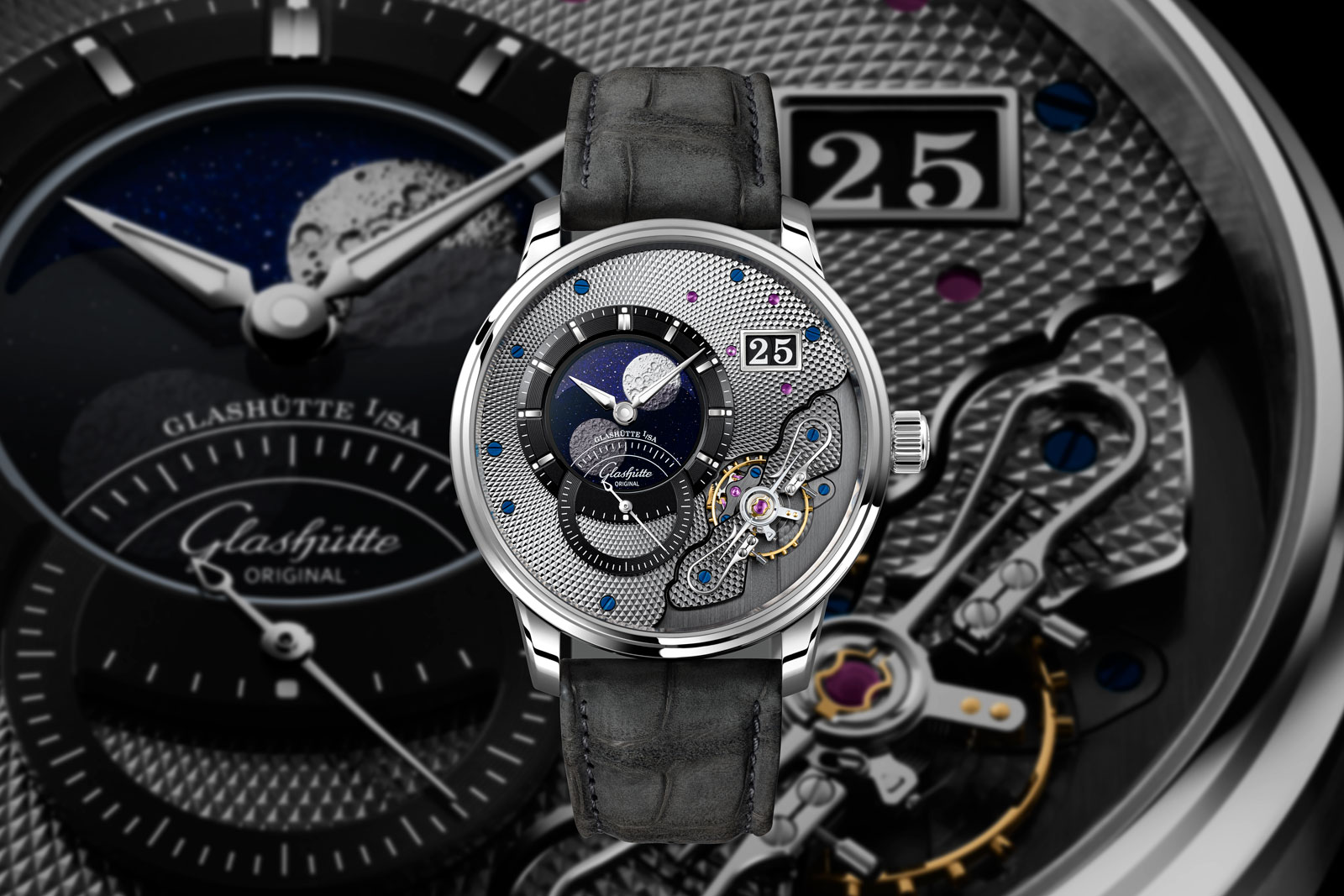
One of the first brands to invert a movement and showcase it on the dial, Glashütte Original just released the PanoLunarInverse, a sibling of the PanoLunarTourbillon and PanoMaticInverse. Like the earlier models, the PanoLunarInverse has key parts of the movement on the dial, including the balance wheel, escapement, and three-quarter plate that’s finished with with pyramid guilloche. In addition, it features the brand’s oversized Panorama date at two o’clock and a large moon phase display. Initial thoughts Older Pano models tended to be conservative in style. The PanoLunarInverse, on the other hand, is modern in colour and decoration, setting it apart from its Pano siblings. The inverted construction is made more interesting with the pyramid guilloche, while the moon phase adds a bit of romance to the technical appearance of the dial. Some models in Glashütte Original’s Pano collection bring to mind the asymmetrical dial layout of another German brand (which is partly why Glashütte Original has never escaped the shadows of its peers), but the PanoLunarInverse feels original because of the combination of colour, decoration, and complication. Priced at US$42,600, the PanoLunarInverse is one of the pricier watches in the Pano collection, but it is reasonably priced considering the platinum case and movement decoration. This is typical of Glashütte Original, which sits in the accessible high horology segment alongside brands like Jaeger-LeCoultre. Inverse German wa...
Monochrome
Introduced in 2001, Ulysse Nardin’s Freak watch turned many watchmaking conventions upside down. With no hands, no dial and no crown, the Freak was powered by an in-line movement pivoting on itself every 60 minutes to indicate the time. It was regulated by a dual direct escapement and introduced the watchmaking world to silicium (aka […]
SJX Watches
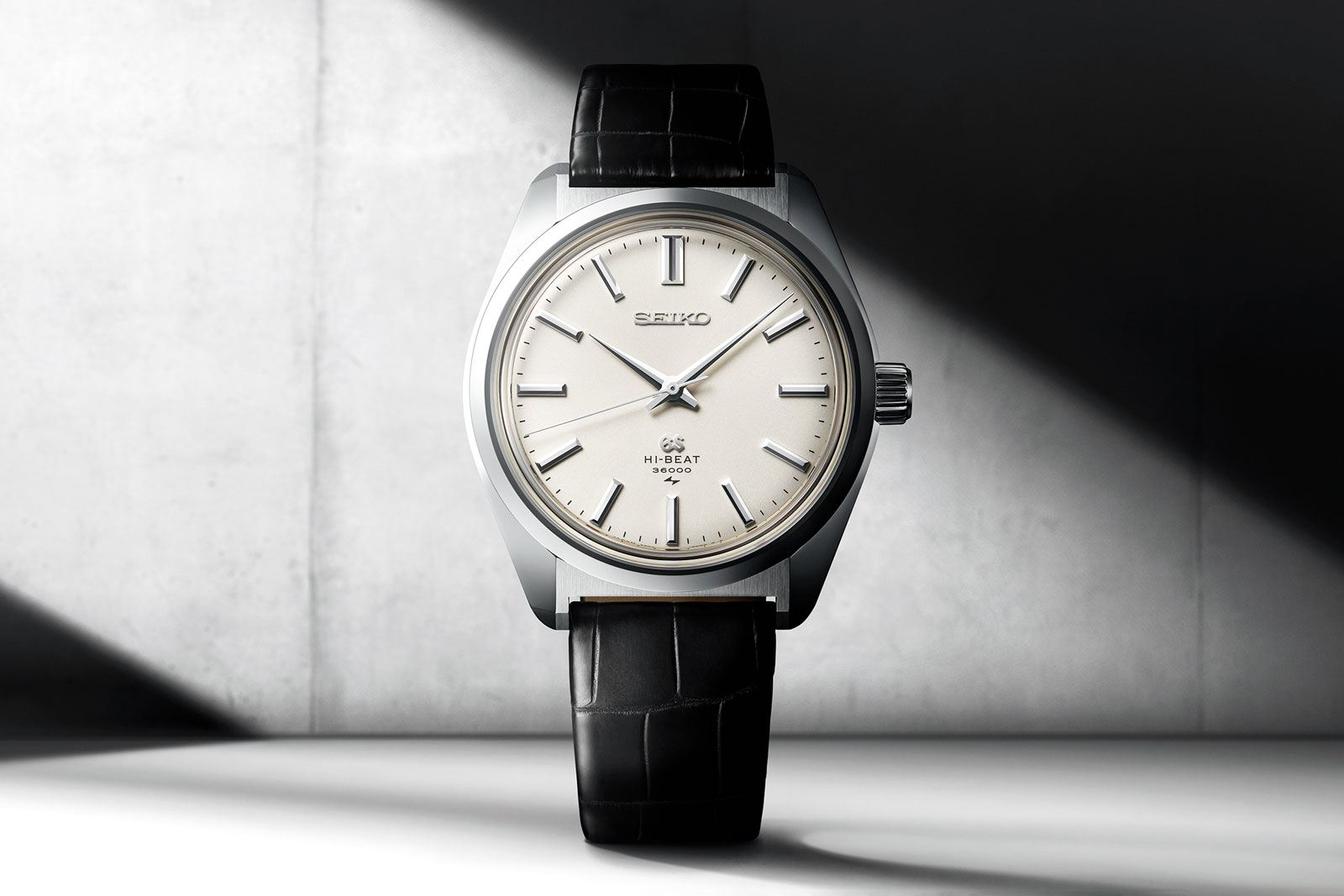
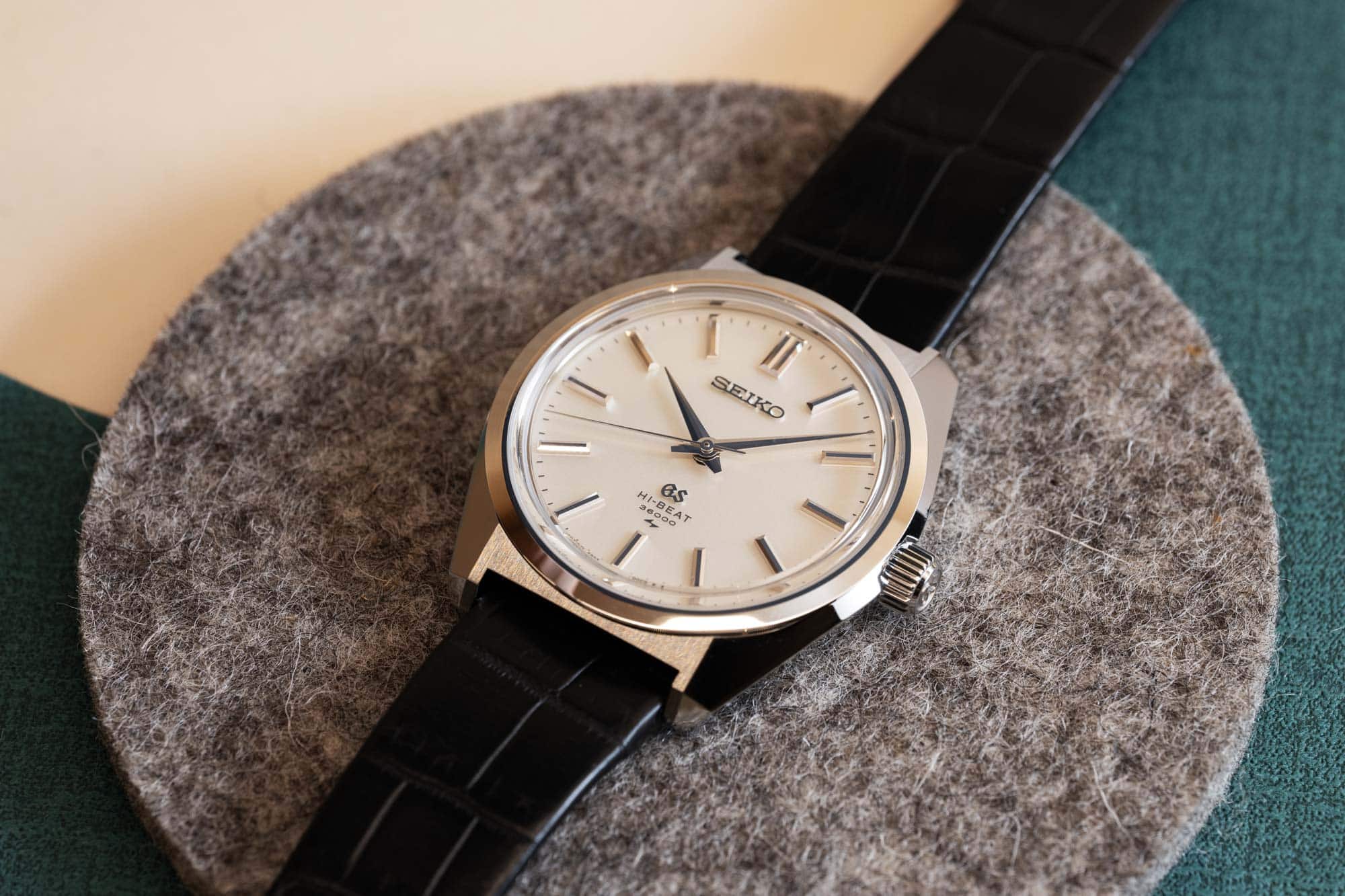
Having unveiled the top-of-the-line 9SA4 movement earlier this year, Grand Seiko has now installed the new calibre in a pair of vintage remakes, the Heritage Collection 45GS Re-creation SLGW004 and SLGW005. A limited edition in either steel or 18k yellow gold, the 45GS Re-creation is one of Grand Seiko’s few vintage reissues with its latest-generation calibre that boasts a high-frequency balance and Grand Seiko’s proprietary Dual Impulse Escapement. Initial thoughts This is Grand Seiko’s first remake of the 45GS, but if the new pair look familiar, that’s because Grand Seiko launched a 44GS remake in 2013. Though the 44GS and 45GS are different models launched just a year apart in the late 1960s, they were different models. The 45GS was an upgrade over the 44GS in terms of the movement, though it retained similar styling. In the same manner, the modern-day remakes are most notable for having different movements. Amongst Grand Seiko’s many remakes, the 45GS stands out for the 9SA4 inside. It’s a large, slim, and sophisticated calibre that’s a substantial improvement over the manual-wind movements found in past remakes. Because of the movement, the 45GS remakes are amongst the more expensive manual-wind Grand Seiko models at US$9,700 in stainless steel and US$30,000 in yellow gold. Moreover, the two priced comparably to the SLGW002 and SLGW003, which are modern designs but powered by the same calibre. While not as affordable as other Grand Seiko models, the 45G...
Worn & Wound
At Watches & Wonders 2024, Grand Seiko announced the new 9SA4 caliber and the first two watches featuring it, the SLGW002 and SLGW003. As a refresher, the 9SA4 is a manual hi-beat (36,000 bph), 80-hour, time-only caliber featuring their in-house dual-impulse escapement, first seen in the 9SA5. With a power reserve on the back of the movement, beautiful bridge designs and finishing, and a unique “wagtail-bird-shaped” winding click, it set a new bar for Grand Seiko’s mechanical calibers. But, perhaps just as exciting as the movement itself was that the watches featuring it were sized at an idyllic 38.6mm diameter and 9.95mm thickness with a 20mm lug, addressing the naysayer’s concerns around Grand Seiko’s sizing. While a pair of fantastic releases, since introduction, we have been wondering where we will see this movement next. Well, we just got our answer, and I have to tell you, I’m equally surprised and delighted. They went vintage rather than with the new case and a different dial, which would have been most expected. Yes, they decided to bring back, as a limited edition, of course, a “recreation” of the 45GS from 1968. A little history, the 45GS came out a year after the 44GS and featured the same case design, but differed in that it featured the brand’s first hi-beat manual wound movement, the 4520. The SLGW005 – the return of the 45GS The 44/45GS case defines the Grand Seiko “Grammar of Design” as set out by Taro Tanaka, with flat, Zaratsu poli...
Monochrome
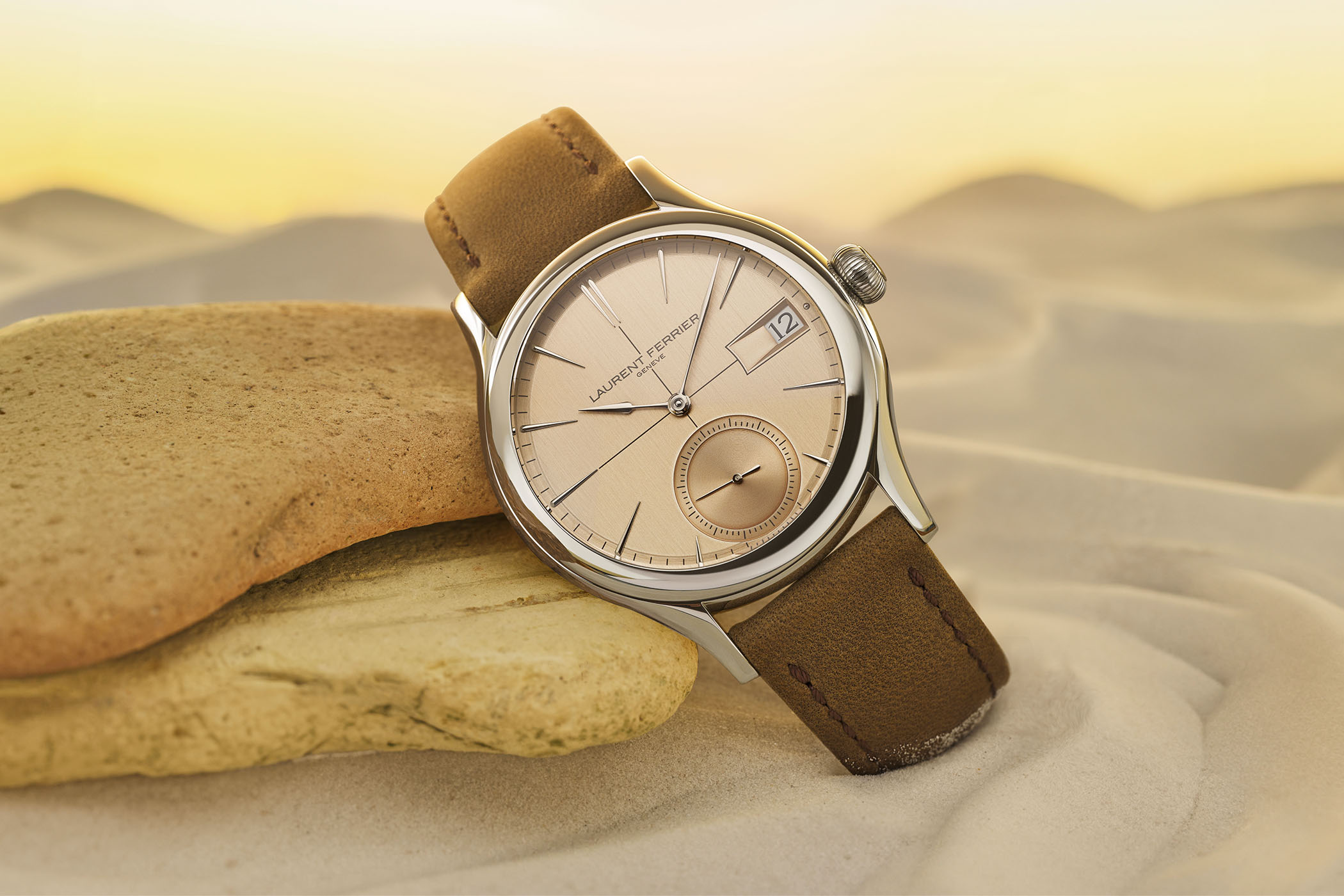
Founded in 2010 by Mister Ferrier, a veteran from the watch industry and an experienced racing driver, Laurent Ferrier has forged a reputation of creating from of the most elegant watches around, as well as mechanical marvels such as the natural escapement. Mechanically impressive, his watches were, design-wise, subdued and refined, the smooth and soft […]
Worn & Wound
The Armin Strom Gravity Equal Force is not like other watches. At a glance, it clearly doesn’t look like them, but more importantly, it also works a bit differently too, featuring a first in watchmaking. To be clear, it still tells time with three hands, is operated by a crown, and has all of the movement components one expects to find on a watch, from a mainspring to an escapement. But it hides a very cool secret. Something that sets it apart. Hidden within is a little mechanism that helps it be more accurate. It’s not a complication, per say, as it doesn’t add any functions beyond time-telling, rather, it makes for a better watch. The Gravity Equal Force is one of a small handful of watches that attempts to address a fundamental issue with mechanical timepieces: variations in accuracy across their power reserves due to changing torque. As the power reserve diminishes, the torque, or force, decreases, the amplitude of the escapement falls, and the timekeeping becomes less accurate. Watchmakers have addressed this issue in various ways over the last few hundred years, which are often grouped together and referred to as “constant force” mechanisms. The Gravity Equal Force uses a simple, though uncommon, mechanism compared to typical “constant force” systems such as fuseé, chains, and remontoirs called a Geneva or Maltese cross. This mechanism prevents the watch mainspring from unwinding to the point where the torque and, thus, the accuracy really drop off. Ho...
Quill & Pad
De Bethune has blended their Kind of Blue and DB28 case with their fast ultra-light rotating 30-second tourbillon/5 Hz escapement and a Starry Sky. The result is one of the best looking watches on the market and certainly one of the most comfortable.
Monochrome
On its own, a Laurent Ferrier Classic Micro-Rotor is already a true thing of beauty. The ultra-smooth, almost pebble-like case, the refined architecture of the dial and of course that superbly finished micro-rotor movement with natural escapement. There’s genuinely nothing we would change. However, Laurent Ferrier’s latest iteration of the Classic Micro-Rotor shows it can […]
SJX Watches
A tribute to the German city of Dresden, the PanoMaticInverse Limited Edition depicts the city where the predecessor of Glashütte Original was founded in 1845. It retains the inverted movement construction that characterises the model, displaying the escapement on the dial, but here the three-quarter plate on the front sports a hand-engraved rendering of Dresden landmarks, the Frauenkirche and Academy of Fine Arts, while the bridges on the reverse are engraved with the Elbe promenade. Initial thoughts Although the brand itself was founded after the fall of the Berlin Wall, Glashütte Original (GO) has its roots in the very beginning of watchmaking in the Glashütte area. Because the brand was formed from the East German state-owned watchmaking enterprise, it was vertically integrated from the beginning, making it a true manufacture. It is somewhat under-appreciated compared to its neighbour, A. Lange & Söhne, although the two brands focus on different segments of the market, with Glashütte Original offering more affordable timepieces. The brand’s steel watches, for example, usually retail for under US$15,000. However, GO is capable of German haute horologerie, as demonstrated by its top-of-the-line timepieces like the Senator Chronometer Tourbillon. The PanoMaticInverse “Dresden Tribute” is one of the brand’s high-end offerings, with a retail price of US$47,400. Even though that’s a big number, the watch delivers substantial tangible quality. In addition to th...
Hodinkee
One escapement, two barrels and gear trains, three new Duometres.
SJX Watches
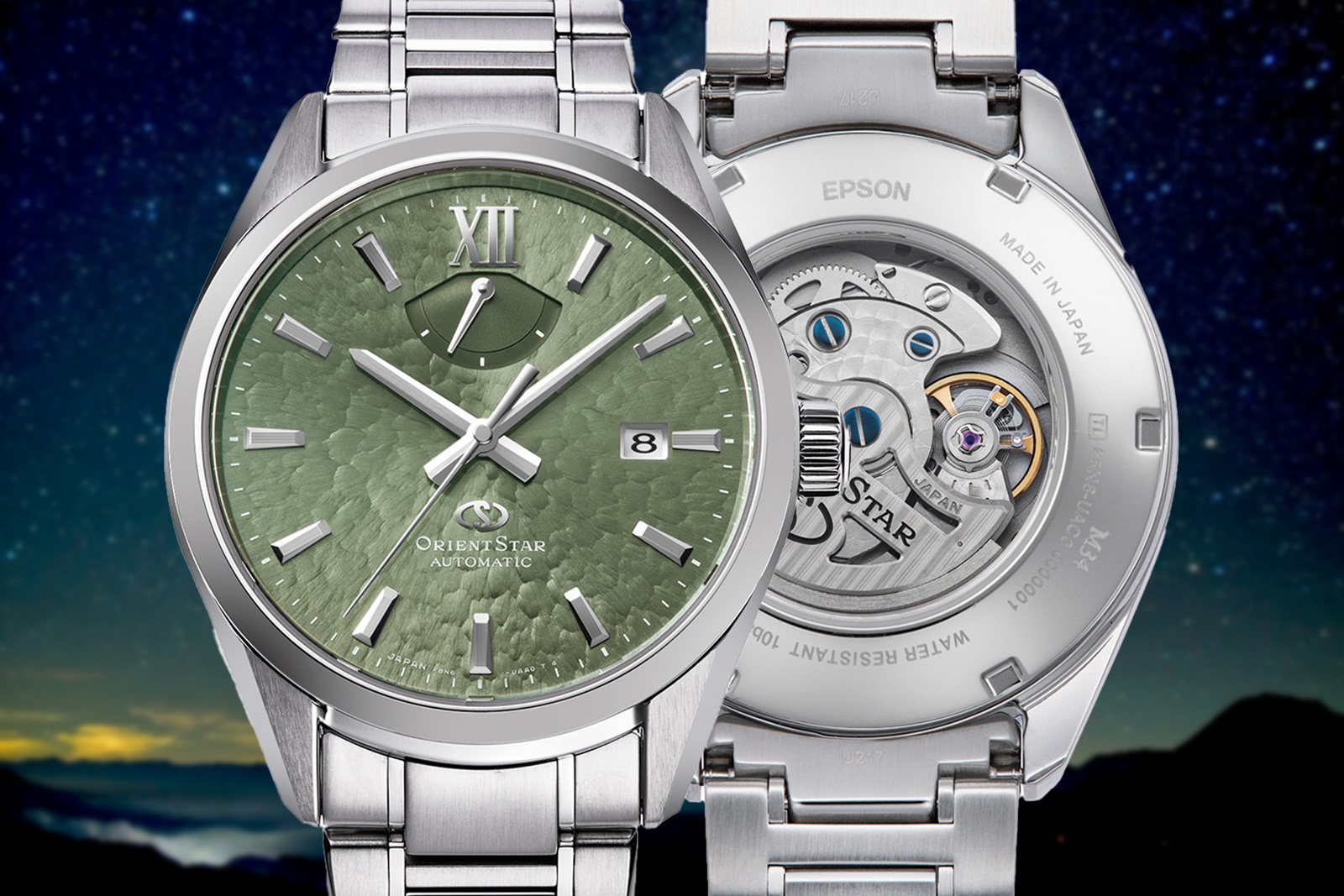
Grand Seiko has introduced the Evolution 9 “Birch Bark” SLGW002 and SLGW003, in rose gold and “brilliant hard titanium” respectively. Named after the dial pattern, the “Birch Bark” is powered by a new manually-wound, high-beat caliber that features the brand’s proprietary dual-impulse escapement. The only completely new model introduced by Grand Seiko at Watches & Wonder this year, the new references introduce a new, notably slimmer aesthetic to the brand’s Evolution 9 collection. Initial thoughts Grand Seiko has earned a devoted following in recent years, but collectors have been asking for slimmer options for some time; this release proves the brand is listening. While there’s nothing revolutionary about it, the watch has been nipped and tucked in all the right areas, getting the case down to 38.6 mm in diameter and just under 10 mm in thickness. Compared to the most similar existing watch in the catalog, the Spring Drive SLGA009 “White Birch” launched two years ago, the new Evolution 9 feature a new movement, a thinner case, slimmer dial markers, and a horizontal interpretation of the brand’s signature white birch-inspired dial texture. The slimmer profile is made possible thanks to the new 9SA4 movement, which is essentially a 9SA5 without automatic winding. This makes it the first manually wound caliber from Grand Seiko’s latest generation of mechanical movements, and also the first to be available without a date function. Perhaps the onl...
SJX Watches
Having explored the origins of the Ulysse Nardin Freak, from its concept by Carole Forestier Kasapi to its realisation by Dr Ludwig Oechslin, we now turn to the Freak’s more recent innovations, starting with the Dual Ulysse Escapement. [This story explains the evolution of the unique, high-performance escapement of the Freak. Part I, covers the origins of the Freak, from its conception to realisation, as well as its distinguishing characteristics, namely the inventive movement construction and innovative escapement. Part III details the history of silicium, the proprietary Ulysse Nardin silicium hairspring, and the patented Grinder rotor.] A new and improved version of the Dual Direct escapement in the original 2001 Freak, the Dual Ulysse made its debut in 2005 inside the Freak 28’000 V/H, colloquially known as the Freak 2. Slightly larger than the original model but otherwise very similar, the Freak 2 operated at 28,000 beats per hour (4 Hz), a higher frequency than the 21,600 beats per hour (3 Hz) of the original Freak. One of the factors which made possible the increase in frequency was the revised escapement christened the Dual Ulysse Escapement. A diagram showing the key parts of the Dual Ulysse Escapement. Image – Ulysse Nardin The Dual Ulysse Escapement Another creation of Dr Oechslin’s, the Dual Ulysse departs from the classical natural escapement à la Breguet that the original Dual Direct Escapement was based on, but it still bears some resemblance to its...
Monochrome
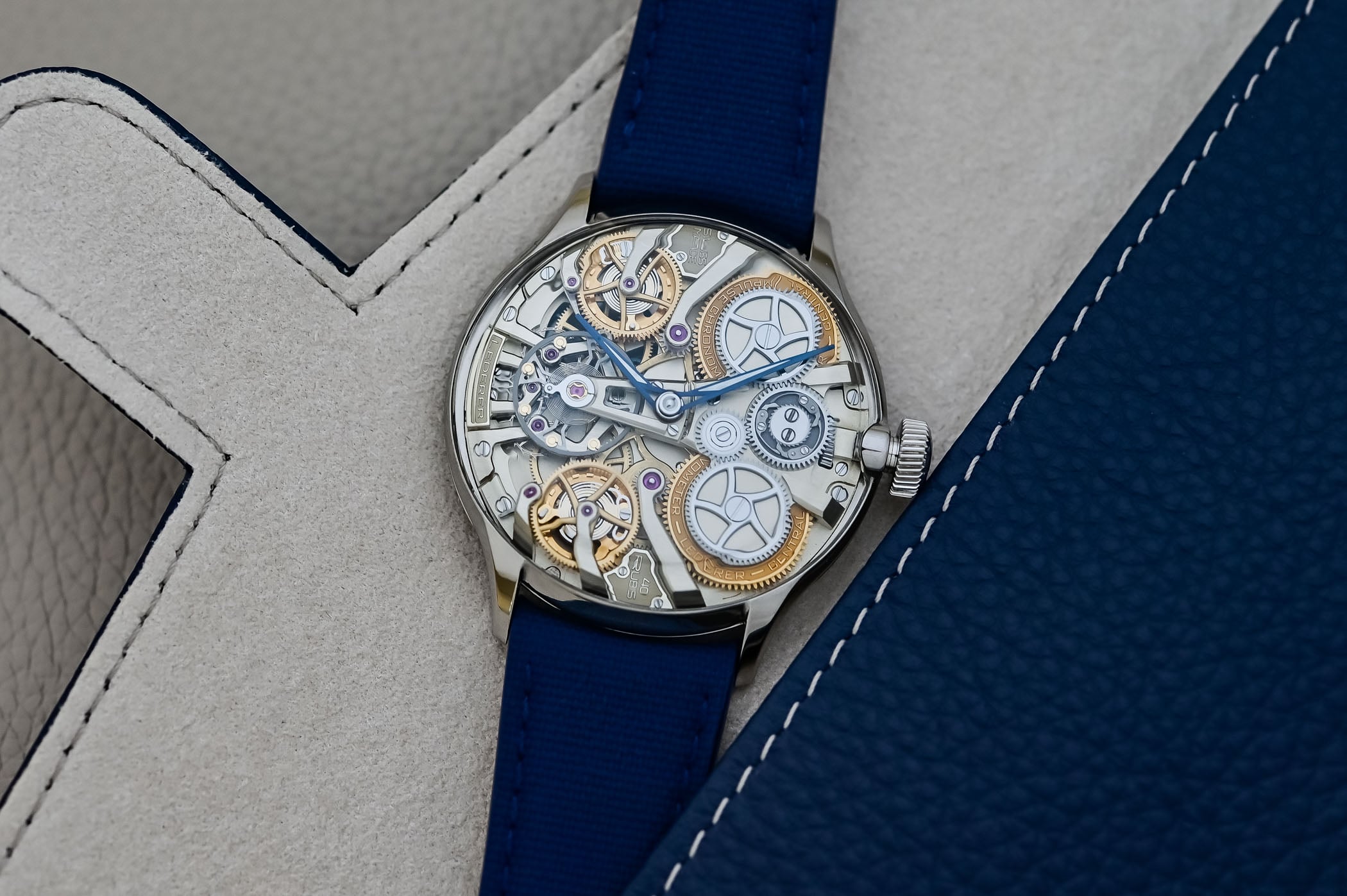
When Bernhard Lederer debuts his Central Impulse Chronometer in 2020, it didn’t go unnoticed. Here we had an esteemed independent watchmaker launching a watch with a double escapement inspired by George Daniels’ Independent Double Wheel Escapement pocket watch. Not only did Lederer use it as inspiration, but he also aimed to smooth out its driving force […]
SJX Watches
Girard-Perregaux (GP) is dressing up its entry-level “bridge” model with meteorite panels that flank the visible barrel and going train. The Girard-Perregaux Free Bridge Meteorite retains the model’s 44 mm steel case with a domed crystal and ergonomic lugs, with the centrepiece being the free-sprung balance wheel and escapement in silicon. Initial Thoughts GP’s flagship complication, historically speaking, was the Tourbillon with Three Gold Bridges. The Free Bridge is an abbreviated, affordable take on the Three Bridge concept. Although the Free Bridge is a simple watch – it’s a two-hand timepiece indicating just hours and minutes – it has been executed fairly elaborately in terms of the movement. In that sense, the Free Bridge is similar to the Ulysse Nardin Freak X, which is not surprising since the two are sister companies. However, past versions of the Free Bridge were fairly plain in terms of design. The Free Bridge Meteorite is a bit more stylish in terms of aesthetics thanks to the meteorite panels that frame the open-worked movement. The silvery-grey tone of the meteorite is a good match for the black and grey palette of the watch. At CHF24,600, the Free Bridge Meteorite isn’t too expensive, though it isn’t the same sort of value proposition that the Freak X is. Though the two watches are similar thematically, the Freak X has a more complex movement but only costs about 10% more. The Free Bridge Meteorite would have been a similar value propositio...
SJX Watches
Every mechanical watch employs at least one mainspring barrel as its energy source. When a watch is wound, the coils of the mainspring tighten, storing potential energy which is then slowly released through the gear train to the escapement. The mainspring is enclosed in a toothed barrel, essentially a drum covered by gear teeth. As a result the barrel is often considered to be the first wheel of the going train. Although one is the norm, two or even more barrels can be employed, typically to generate more energy. Double barrel movements usually feature two mainsprings kinematically linked in one of two ways: in parallel or in series. The number of mainsprings, energy stored, and power reserve are illustrated with equations (1), (2), and (3): As described by equation (1), the energy of a single barrel E is a function of its torque, angular discharge velocity and running time (autonomy). Linking two identical barrels naturally means having twice the energy, so 2E. By convenient association, equation (2) exploits the available energy to double the torque sent to the gear train, while equation (3) takes advantage of the total energy by doubling the running time. Parallel barrels The parallel arrangement of barrels embodies equation (2), which delivers twice the torque, increasing the energy available to run the movement (but not increasing the running time). Here two barrels unwind at the same time on a centre pinion connected to a second mobile of the going train. An embo...
SJX Watches
Twenty twenty-one was an important year for Grand Seiko as it saw the introduction of the brand’s latest-generation mechanical movement, the cal. 9SA5. A modern movement with attractive aesthetic and proprietary escapement, the cal. 9SA5 debuted in the Heritage “White Birch” SLGH005. But Grand Seiko didn’t stop there. Building upon the flagship calibre, Grand Seiko created the cal. 9SC5 and launched the Grand Seiko Tentagraph SLGC001. A large, sporty watch but entirely in lightweight titanium, the Tentagraph is a milestone for Grand Seiko (GS) as the brand’s first-ever mechanical chronograph. “Tentagraph” is self-explanatory, an acronym outlining the key features of the watch and cal. 9SC5 within: TEN beats per second, Three-day power reserve, Automatic winding, and chronoGRAPH. Initial thoughts The Tentagraph has all the tactile features expected in a modern, high-spec sports chronograph, namely substantial proportions and crisp, smooth pusher action. As expected for GS, it boasts high quality finishing inside and out, with the case in particular having category-leading finishing and detailing. And from a technical perspective, it is notable for being the high-frequency chronograph with the longest power reserve on the market – the balance runs at 36,000 beats per hour, or 5 Hz, and the power reserve is 72 hours, or three days. Aesthetically, the Tentagraph is refreshingly modern. It retains the characteristic GS design, but tweaked to accentuate the sport...
Quill & Pad
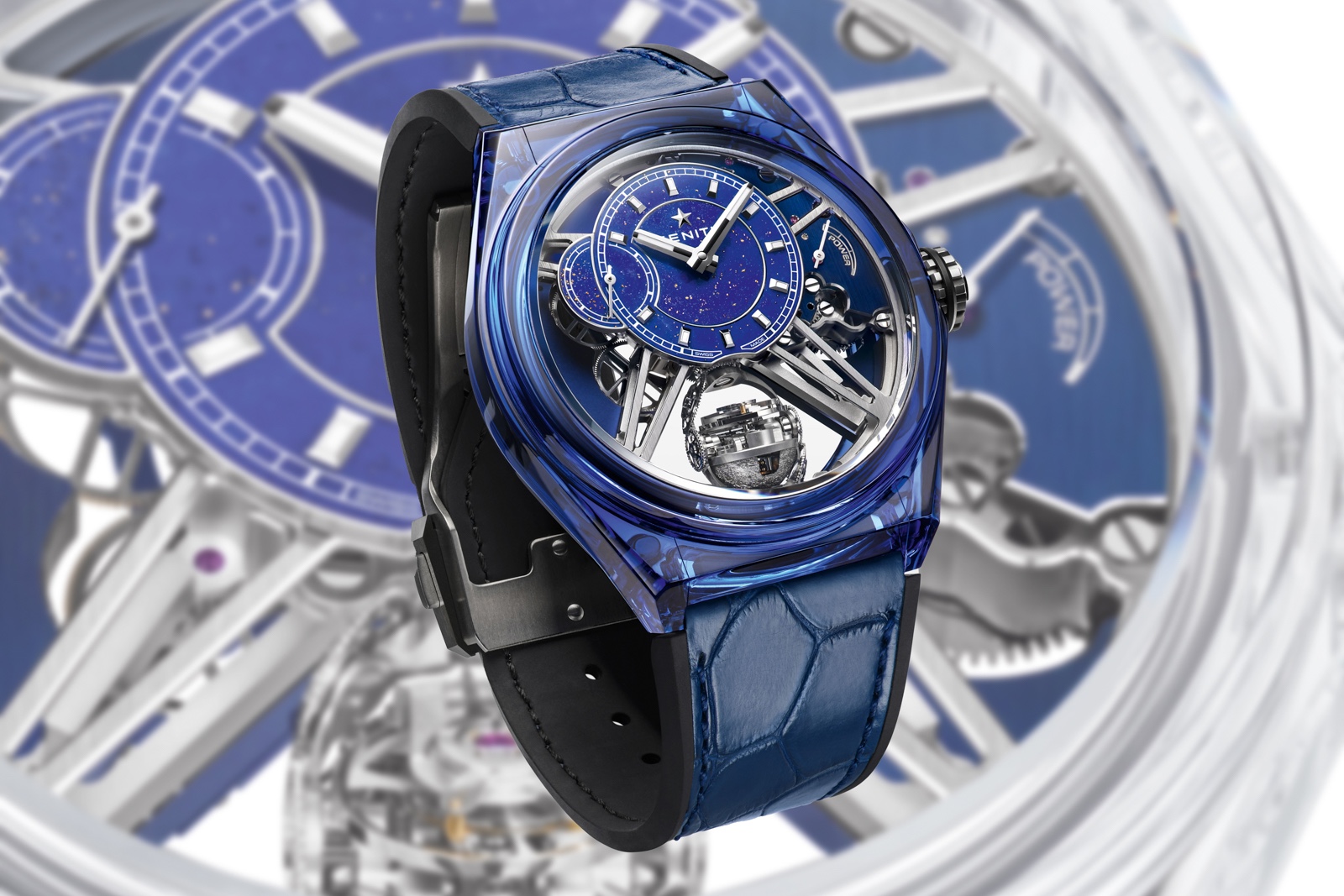
Quentin R. Bufogle could go on and on about the Zenith Chronomaster Tribute to Charles Vermot’s stunningly beautiful, metallic blue dial, silicon escapement (visible via the open heart feature), COSC chronometer certification and that it’s one of the last truly great Chronomasters, but that would be missing the point, i.e. how Charles Vermot saved Zenith.
Monochrome
In 2012, Chopard made waves with the introduction of the L.U.C 8HF, featuring the groundbreaking L.U.C 01.06-L calibre with a silicon escapement, oscillating at an impressive 8Hz (57,600 vibrations/hour), double the speed of most mechanical movements. Notably, it became the first high-frequency calibre to receive chronometer certification, marking a significant milestone. Encouraged by this success, […]
Question, suggestion, or just want to say hi? Drop a note.