 WristBuzz
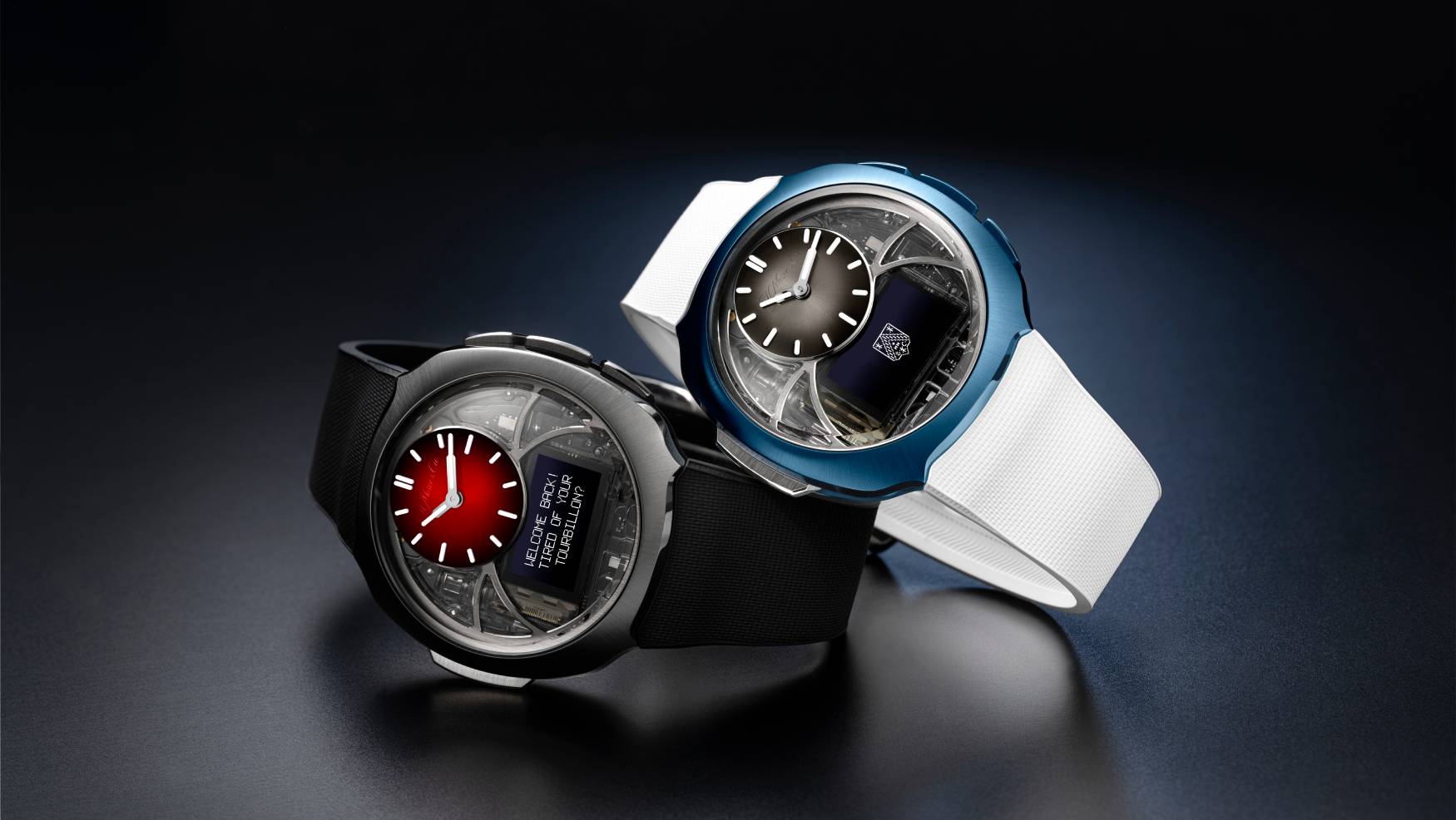
H. Moser & Cie. Streamliner OFF-GRID: Analog Minimalism Meets a Digital Twist
A perpetual calendar, split-second chronograph, vibrating alarm, and a multilingual dictionary - all in one very Moser package
4,387 articles · 16 videos found · page 83 of 147
Zenith's 1969 column-wheel automatic chronograph caliber at 36,000 vph, saved from quartz-era destruction by Charles Vermot in 1975 and supplied to the Rolex Daytona ref. 16520 (1988-2000).
Chronograph dial with high-contrast sub-counters. Vintage Daytona, Speedmaster CK 2998, Heuer Carrera; modern 116500LN, Tudor Chrono.
Chronograph scale converting flash-to-sound time into distance. WWI artillery-spotting origin; vintage Longines / Lemania / Heuer.
Chronograph scale reading heart rate in BPM after counting 15 or 30 pulse beats. The 1920s-60s doctor\'s watch standard.
WristBuzz
A perpetual calendar, split-second chronograph, vibrating alarm, and a multilingual dictionary - all in one very Moser package
Time+Tide
H. Moser & Cie unveils new analogue-digital display multi-functional timepiece with its Streamliner OFF-GRID With multiple practical functions including perpetual calendar, split-second chronograph, and vibrating alarm, the watch features an “OFF-GRID” mode, displaying a multilingual dictionary Available in two colourways, both versions are limited to 1,000 pieces, with priority access given to existing Moser clients. … Continued
 Monochrome
In watchmaking, pretty much every complication started with the quest for a solution to a common problem. The tourbillon solved the influence of gravity on the balance spring, the chronograph provided the ability to time events as they happened, and repeater watches served as an audible timepiece for when the lights went down. Perhaps above […]
 SJX Watches
Having recently unveiled a unique burgundy chronograph to benefit the Fondation Prince Albert II De Monaco, F.P. Journe is back with the unique Chronomètre Furtif ICM that will be auctioned later this month to support the work of the Institut du Cerveau et de la Moelle épinièhe (ICM), better known internationally as the Paris Brain Institute. The black enamel dial of the CF ICM. Image – F.P. Journe Initial thoughts F.P. Journe is a watchmaker at the height of its market influence, so its nice to see the brand use its considerable power to continue its longstanding practice of contributing to worthwhile causes. ICM was founded by former FIA president Jean Todt, a longtime friend of François-Paul Journe who also informed the concept behind the Centigraphe. The unique Centigraphe from 2016 featured a blue mother-of-pearl dial with the ICM logo at 12 o’clock. Image – F.P. Journe The Geneva-based watchmaker was the ICM’s first private donor, and has contributed significantly over the past two decades. The brand’s first contributions arrived in 2004 by way of a trio of unique Vagabondage watches auctioned by Antiquorum. The three lots hammered for between CHF63,250 and CHF80,500, with all proceeds going to ICM. A unique Centigraphe was produced for the charity in 2016, when it hammered for the equivalent of about US$136,000 at the time. An impressive sum for that era, but a number that highlights just how much demand for independent watchmaking — and F.P. Journe ...
SJX Watches
Having recently unveiled a unique burgundy chronograph to benefit the Fondation Prince Albert II De Monaco, F.P. Journe is back with the unique Chronomètre Furtif ICM that will be auctioned later this month to support the work of the Institut du Cerveau et de la Moelle épinièhe (ICM), better known internationally as the Paris Brain Institute. The black enamel dial of the CF ICM. Image – F.P. Journe Initial thoughts F.P. Journe is a watchmaker at the height of its market influence, so its nice to see the brand use its considerable power to continue its longstanding practice of contributing to worthwhile causes. ICM was founded by former FIA president Jean Todt, a longtime friend of François-Paul Journe who also informed the concept behind the Centigraphe. The unique Centigraphe from 2016 featured a blue mother-of-pearl dial with the ICM logo at 12 o’clock. Image – F.P. Journe The Geneva-based watchmaker was the ICM’s first private donor, and has contributed significantly over the past two decades. The brand’s first contributions arrived in 2004 by way of a trio of unique Vagabondage watches auctioned by Antiquorum. The three lots hammered for between CHF63,250 and CHF80,500, with all proceeds going to ICM. A unique Centigraphe was produced for the charity in 2016, when it hammered for the equivalent of about US$136,000 at the time. An impressive sum for that era, but a number that highlights just how much demand for independent watchmaking — and F.P. Journe ...
 WristBuzz
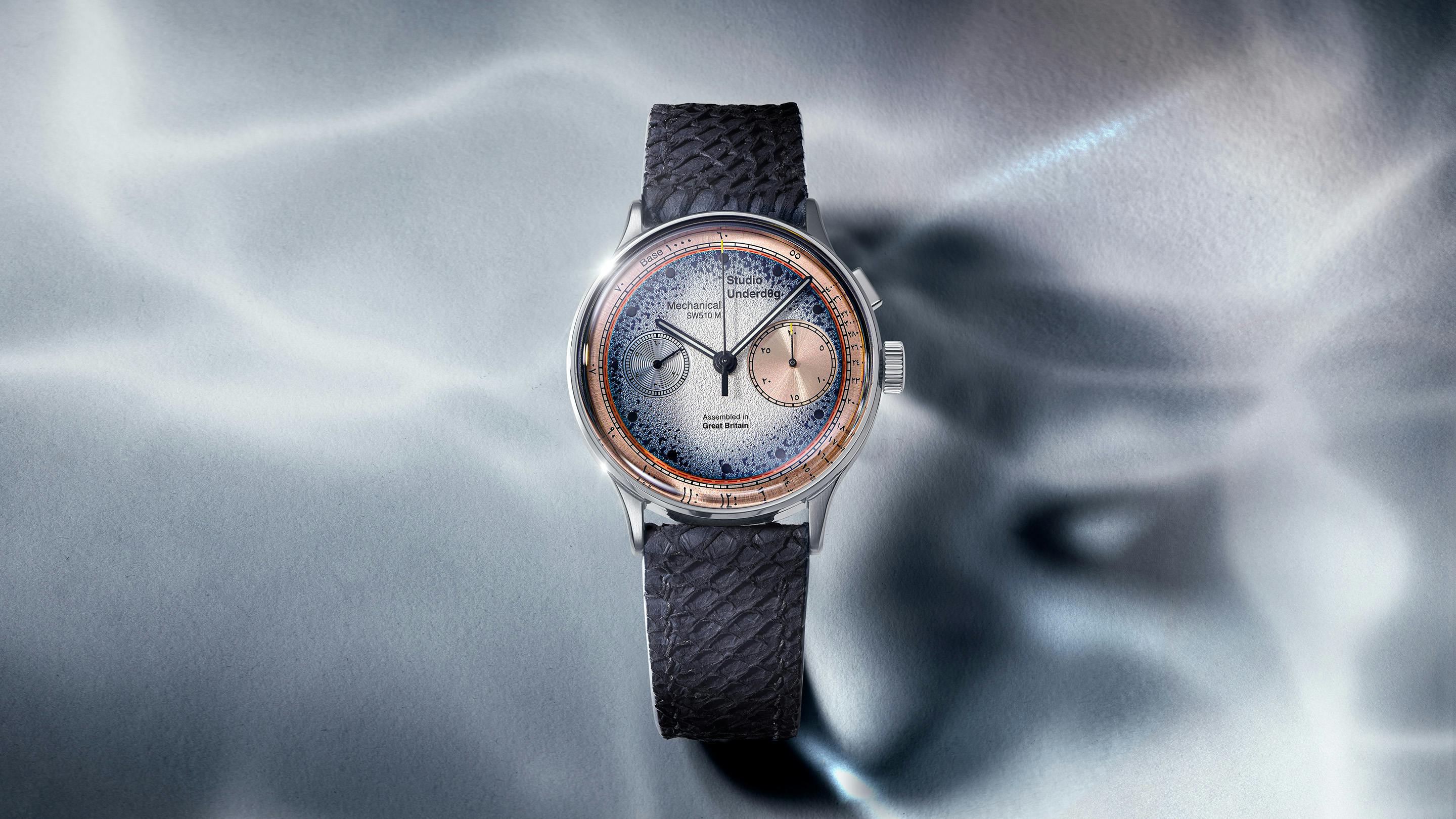
A limited-edition monopusher chronograph built around the Chan3ad, the kingfish prized across the Arabian Gulf
 Hodinkee
What We Know Two years after Studio Underd0g released its Series03 chronograph—an upgraded monopusher with a Sellita movement—they've teamed up with the Dubai-based powerhouse Ahmed Seddiqi for a new version with a twist. The new Chan3ad (Arabic for "Kingfish") comes on the heels of Studio Underd0g's first appearance at Dubai Watch Week last year. The dial features two contrasting layers, inspired by the UAE's most prized gamefish, the kingfish. The fish has a blue-grey color with distinctive scales, represented by the top dial, which is also very textured. The lower layer is a sunburst brushed pink, representing the meat underneath, while the tip of the chronograph hand and 30-minute counter hand are yellow, like the lemon you'd squeeze over the top after you cook it. A fish-themed watch is in keeping with the existing Series03 "Salmon" but the tones are slightly different. All the numerals are in Eastern Arabic script. Cased in stainless steel, the watch measures 38.5mm by 13.6mm (almost 2mm of which is the domed sapphire crystal), with a 20mm lug width and 44.5mm lug-to-lug. As noted on the dial (a curious quirk of Studio Underd0g), the watch uses the manually wound Sellita SW510 M movement, a "Custom Special" version running at 4Hz and regulated to +/- 5 seconds per day. The movement has a 63-hour power reserve and a hacking system. The Studio Underd0g x Ahmed Seddiqi Chan3ad is delivered with two straps: one is a 20-to-16mm tapered stainless steel Milanese mesh, a...
 Worn & Wound
Watches and Wonders 2027 is still months away, but the specifics of the event are beginning to come into clearer focus. News broke this morning that the roster of brands has grown once again, and now numbers 75 in total. It had previously been announced that Breitling (along with their House of Brands cohorts Universal Geneve and Gallet) would be joining the fair, and this morning’s news sees several additional brands joining them that sit across a variety of price points and segments of the industry (including a brand that has attended its fair share of Windup Watch Fairs). The headline grabbers in terms of participation are likely Berneron and Porsche Design. Porsche Design has grown considerably in recent years with an aggressive release schedule iterating on their iconic Chronograph 1 design. Berneron is arguably the hottest independent brand at the moment, and has been the subject of much discussion just in the last weeks following the public sale of a Mirage for over $500,000 on Loupe This (the retail price sits around CHF 51,000). While those two brands likely have the highest profiles of the newcomers to Watches & Wonders, there are several others that I think are interesting from an enthusiast and business point of view. Kerbedanz, a Swiss brand that for much of its 15 year history has made custom watches exclusively for private clients, has been making a concerted effort to get their name into the minds of watch lovers this year, exhibiting at Geneva Watch ...
 WristBuzz
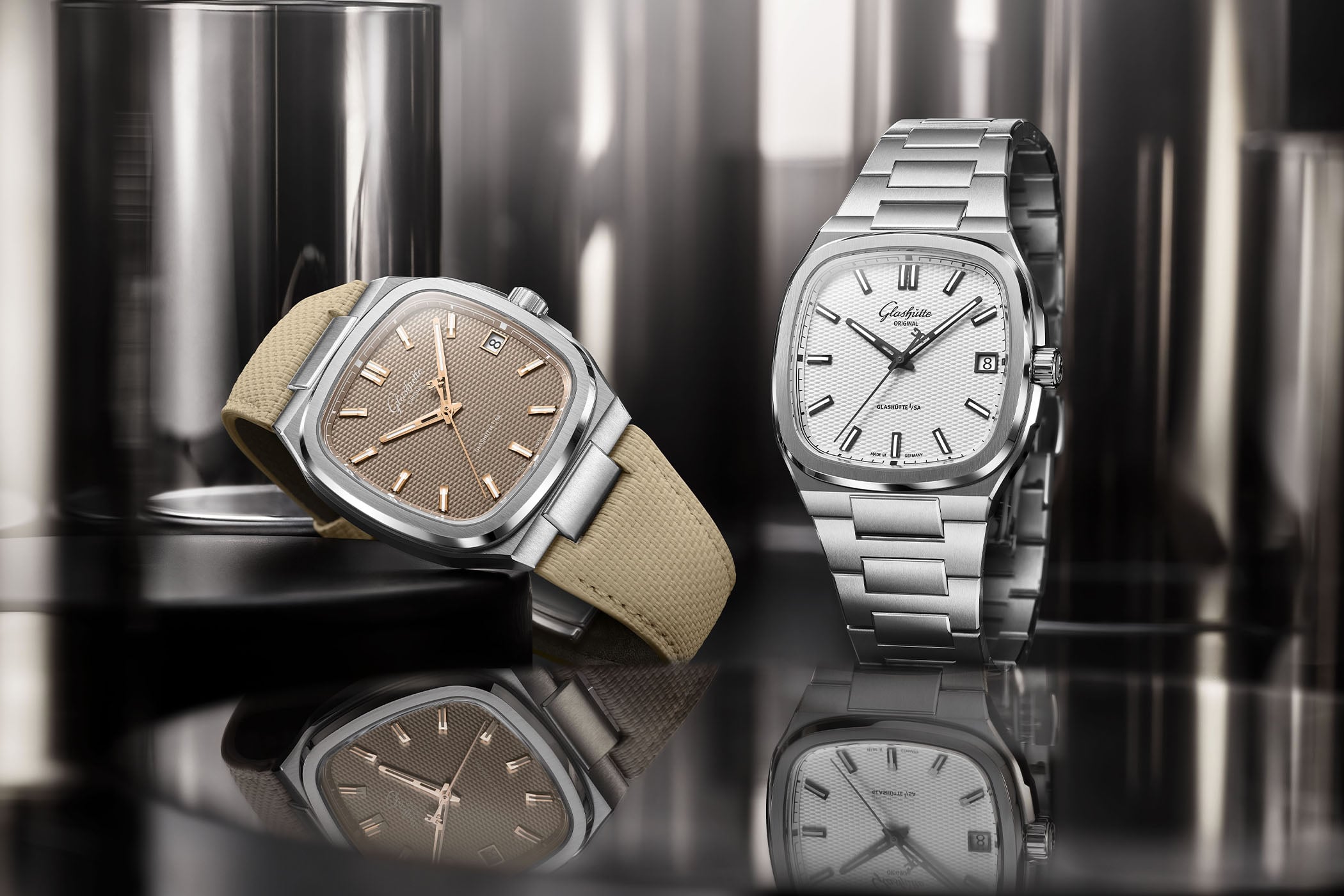
The new 70s Collection strips away the chronograph and doubles down on what made the original era great
Monochrome
While Glashütte Original‘s Seventies collection has become associated with its bold, square-shaped chronographs, the German manufacture also once offered Seventies Panaroma Date models without the chronograph function. Revisiting the decade with a substantially reworked watch, the brand returns to that time-and-date simplicity and presents the new 70s collection of integrated sports watches, alongside the existing […]
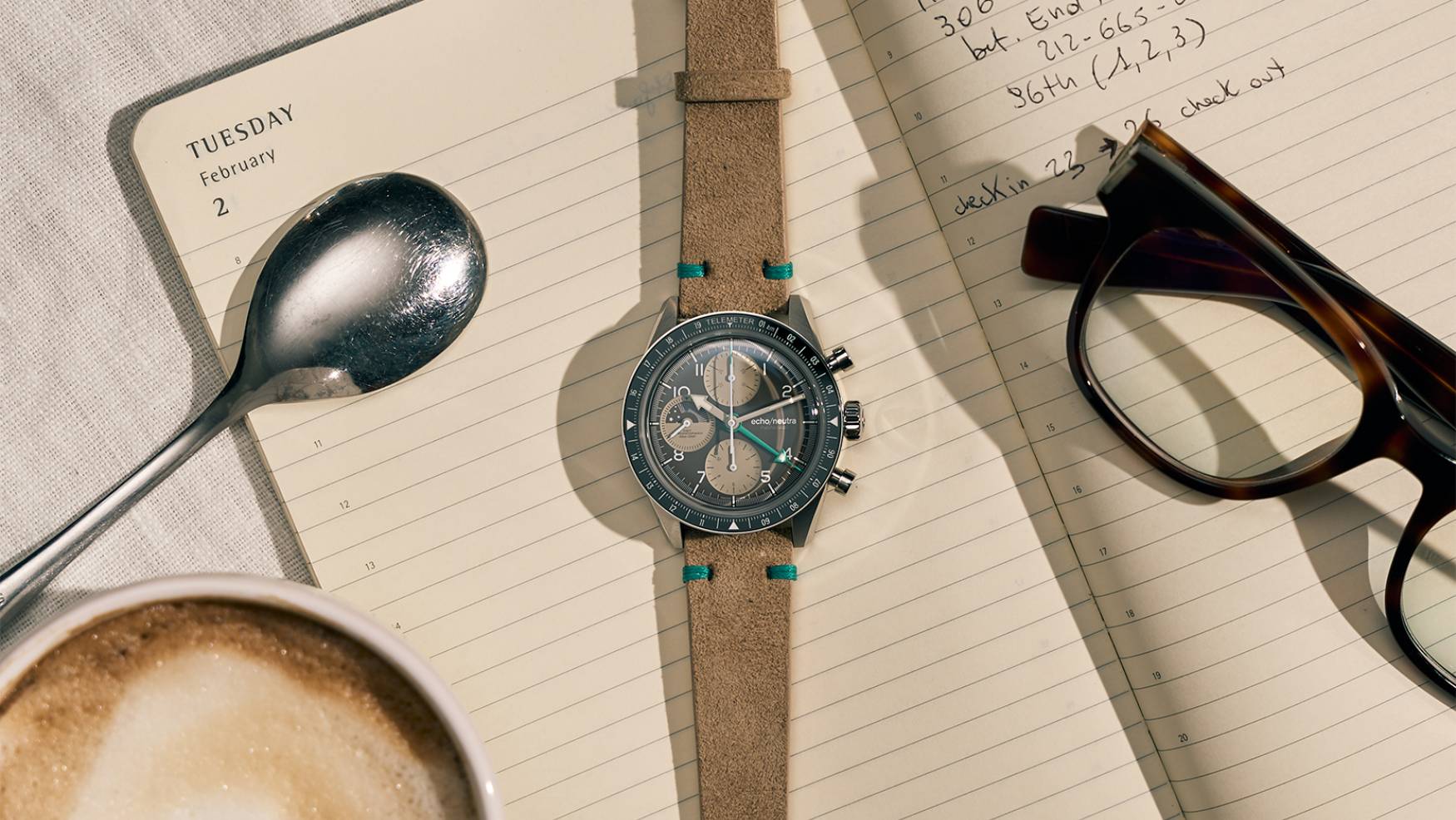 Time+Tide
Echo/Neutra updates its 1956 Chrono GMT with two new colourways With a brown-and-taupe Cappuccino model and a deep-wine-toned Purple model, both inject colour into a highly functional watch with chronograph and GMT functions. Available now, the Echo/Neutra 1956 Chrono GMT in both Cappuccino and Purple start at US$2,400 on a strap. Echo/neutra has gotten a lot … Continued
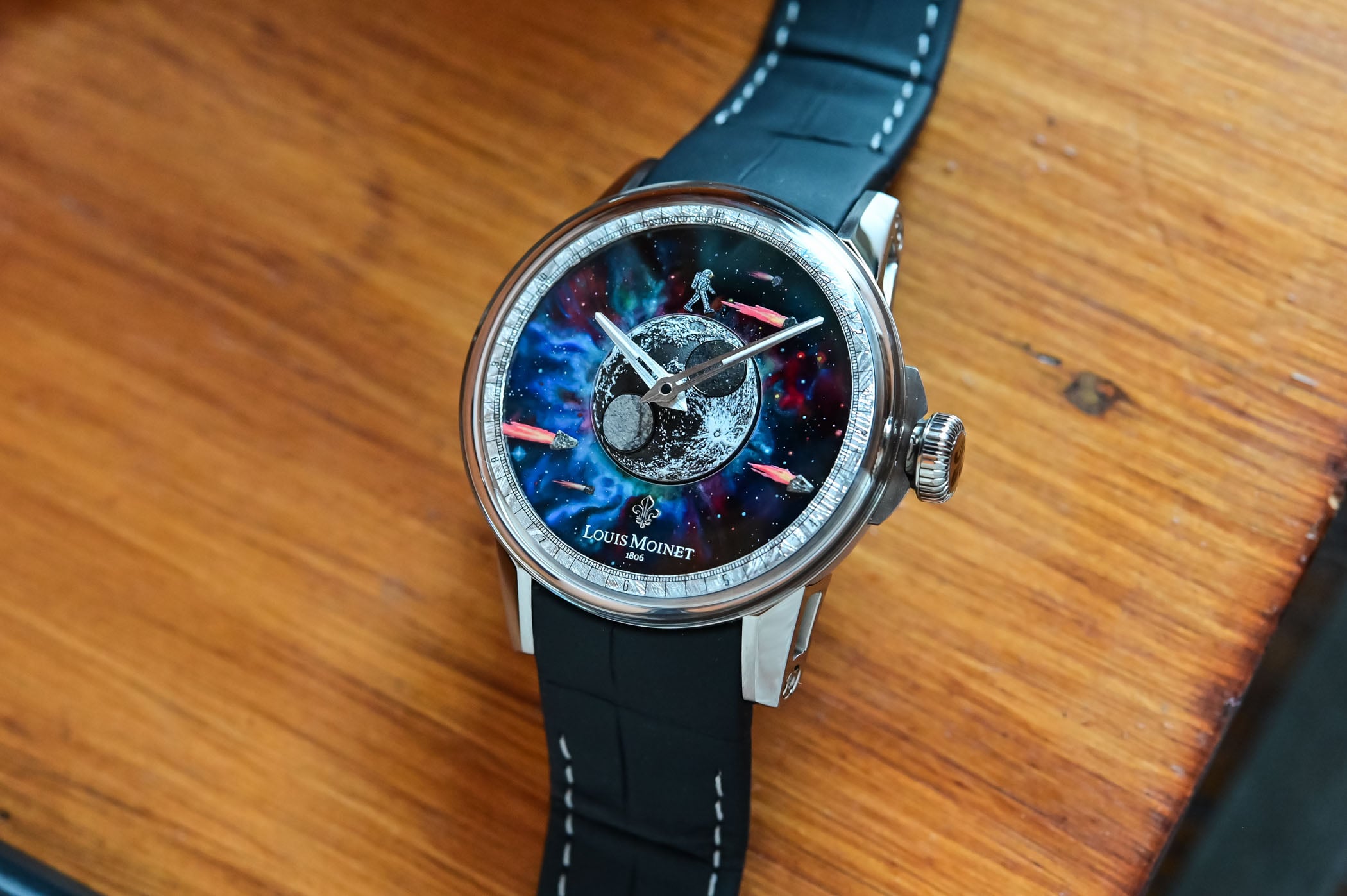 Monochrome
Astronomy is part of Louis Moinet‘s history, who created the “compteur de tierces” chronograph specifically for celestial observations. The brand bearing his name has kept the connection alive through its multiple space-themed creations, such as the Super Moon and Mars Mission, the Space One Chronograph, the more recent Starman, and now, with the Moon Meteor, […]
 Worn & Wound
eBay Finds is back! This bi-weekly installment will feature a selection of watches currently listed on eBay that have caught the eye of editor Christoph McNeil (@vintagediver). If you come across any hidden gems on the ‘Bay drop us a note at info@wornandwound.com for potential inclusion. Vintage Seiko 6139-6009 “Pogue” There are many famous vintage Seikos, but few are as iconic as the 6139 “Pogue” automatic chronograph with the yellow dial. Made famous of course by Col. William Pogue wearing one on his Skylab 4 mission in 1973, making it the first automatic chronograph worn in space! While this example isn’t the exact model, pretty much all the vintage 6139-600X models with a yellow dial are considered a “Pogue” by collectors. This example looks all original and in good shape. The case is unpolished with crisp edges and the original brushed finish, but it does have a few dings from honest use. The bright yellow dial is nice, and there is some aging to the lume on the dial and hands, not uncommon. The watch comes on the original and correct Seiko H-link bracelet. No movement picture but the watch runs per the seller. View auction here Vintage Eterna KonTiki Here’s a fantastic vintage Eterna KonTiki 20 with the original bracelet. Eterna made a plethora of various KonTiki models, both divers and sport/dress models. This version is the latter. The steel case is probably in the 36mm range although the seller doesn’t specify. But the case is in great sh...
 Hodinkee
Happy Friday, folks, and congrats on bustling through another week. Hopefully you're staring down a welcome break of a weekend with rest and good cheer. Scorekeeping last week's picks, the Zenith De Luca sold for €4,750, the Carlo Ferrara for €2,816, the Gen 1 Speedmaster X-33 for 2,000 SGD, and the Patek Philippe 1415 will sell this Friday. Strays Photo courtesy of The Saleroom. For those suddenly enthusiastic about vintage Zenith De Lucas that look an awful lot like the Daytona of the same time period, here's an excellent example, but if you'd rather a Zenith with a little more color and flash and water resistance, here's a great-looking vintage Defy. This Gübelin pocket watch is breath-arrestingly lovely, as are both of these (dog leg, non dog leg) 18k Omega Constellations. This Vintage Meister Anker chronograph is a catch-22 watch in that it looks really cool, but it's also got a plated case, and it's powered by an Ebauches Bettlach pin-lever movement, so proceed with caution. On September 18, Millon in Paris will host an auction that's listed as the "Collection Monsieur B," and whoever Monsieur B is, he's got phenomenal taste. Among the offerings are an Omega Chronometer Seamaster 'Sparkle' reference 168.022, a Universal Genève Polerouter Super, an Omega Holy Grail, a Sinn EZM 1, and a Zenith El Primero A386, but there are tons more you should go check out. Finally: Memosails forever. A Pair of Issued Smiths The British Ministry of Defense issued the Smiths W10 ...
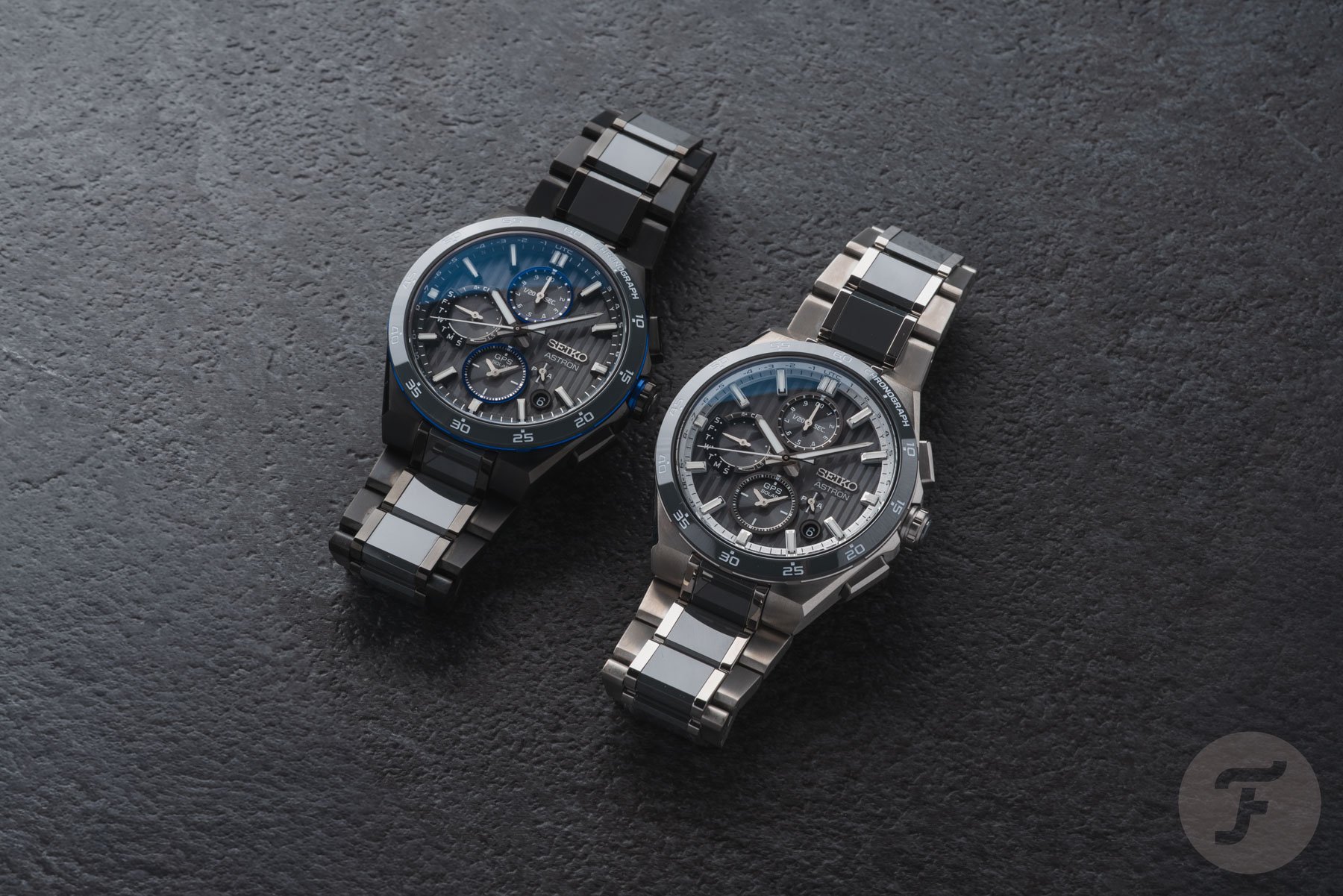 Fratello
For the first time in the Astron collection, Seiko introduces gray ceramic. The shiny non-alloy appears on the bezel, crown cap, and bracelet center links of two new Seiko Astron GPS Solar Dual Time Chronograph watches. While these models share the ceramic parts, they have differently colored titanium components. The HAB007 is the full-gray version, […] Visit Gray Ceramic Debuts On Two New Seiko Astron GPS Solar Dual Time Chronographs to read the full article.
 Worn & Wound
Vintage Seiko, as most collectors know, is a rich tapestry. Once you learn the story of Colonel William Pogue, or try to track down the funky bracelet that Bruce Lee paired with his own Speed-Timer, the wormholes naturally open themselves, each with their own dizzying amounts of reference numbers, specific models, and fun nicknames for the mind to notice and then squirrel away for later. But what about the ones you might have overlooked? Midcentury Seiko chronographs are a riot of design variations, bold patterns, and contrasting color schemes—and all backed by genuine innovation in the guise of the first automatic chronograph, flyback movements with stacked register hands, collaborations with luminary designers, and freakish dabbles with postmodernism. It’s what makes them so much fun to pay attention to. Hence, these six Seiko chronographs that play with the form, proving that even across the decades there are still surprises to rediscover. Not just familiar references, but obscure offshoots. Seiko 6138-8000 “Baby Panda” Seiko’s dual-register chronograph debuted shortly after the 6139, which we all know as the world’s first automatic chronograph. And while both watches represent futuristic seventies design, the slimmer 6139 takes a backseat to this lineup’s exaggeratedly bulky cases and clashing, patterned color schemes that have garnered nicknames like “UFO,” “Kakume” (“square eyes”), and “John Player Special” (a nickname popularized ...
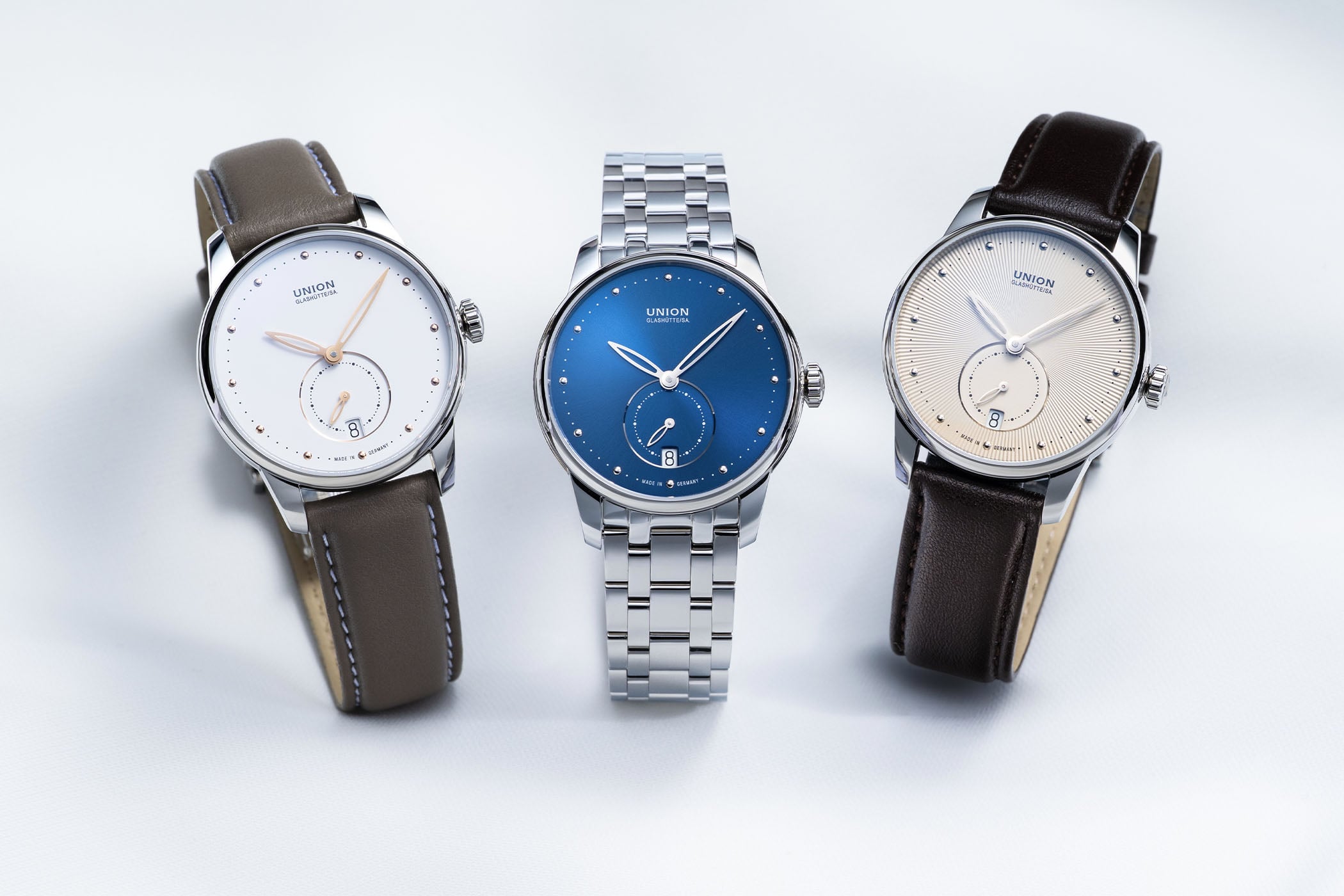 Monochrome
Recent releases from Union Glashütte have been largely about chronographs, from the latest Averin Chronograph with its white embossed tile-pattern dial to the Belisar Chronograph with its monochromatic look. Now, the Glashütte-based brand has something different in store with a new addition to its Seris family. Positioned as a more feminine collection, the Seris has […]
 WristBuzz
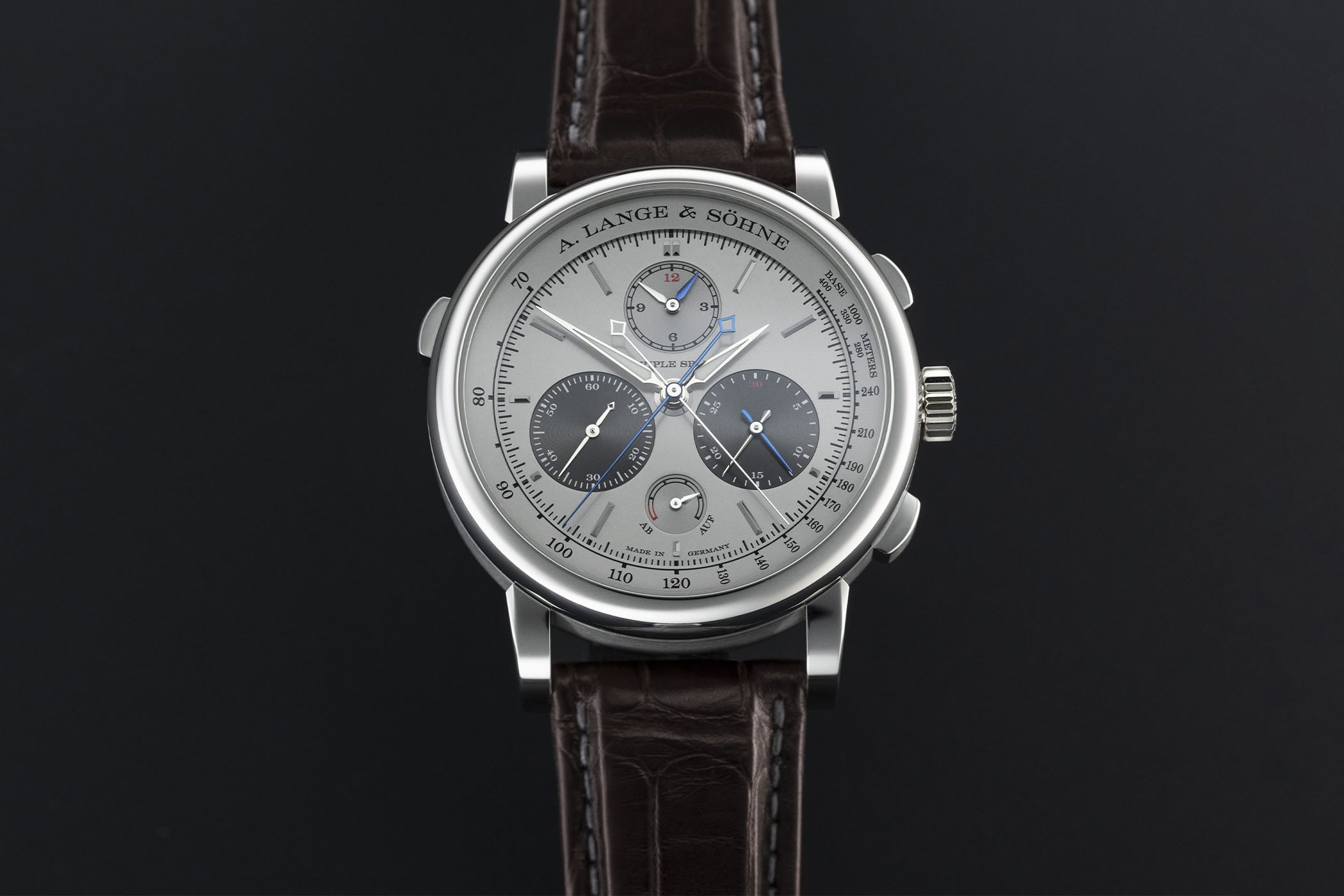
The world's only rattrapante chronograph that measures hours, minutes, and seconds simultaneously just got its best-looking case yet
Monochrome
We’ve said it before: not all chronographs are created equal, and few extend the limits of mechanical short-time measurement as far as the A. Lange & Söhne Triple Split. Since its launch in 2018, this watch has occupied a unique position in modern watchmaking as the only split-seconds chronograph capable of measuring intermediate and comparative […]
 Hodinkee
What We Know A. Lange & Söhne is synonymous with the most elegant approach to maximalist watchmaking. The tiny time-telling cities contained within the brand's cases are hypnotic and baffling. Trust me, it becomes all the more impressive when you visit Glashütte and see the work in action. And the brand's CEO, Wilhelm Schmid, has said that among the complicated watches the brand is known for, their most talented watchmakers would often far rather work on tourbillons and perpetual calendars than the famous Triple Split. It's that complex. It's that impressive. And after five years away, it's back. In 2018, Lange launched the first version of the "upgrade," of sorts, to the brand's Double Split. The watch is essentially a rattrapante (a chronograph that can time two intervals), but with the added ability to "split" the interval of the 30-minute counter and, with the Triple Split, the 12-hour counter. It's an incredibly technical and impressive bit of watchmaking and even more impressive when you hear it's cased in a relatively compact (for its complexity) 43.2mm by 15.6mm case, now in platinum. This is the first time the watch has been made in platinum and the first example since 2021. The dial is 0.925 silver, with a light grey track and main dial and dark grey lower subdials, plus luminous hands and hour markers. Finally, the case is water-resistant to 50 meters. The movement, the manually wound L123.1 caliber, is made of 567 parts, 46 jewels, and has 5 screwed gold chat...
 Hodinkee
What We Know Today, alongside a new variation of the technical powerhouse that is the brand's Triple Split chronograph, A. Lange & Söhne introduces a pair of limited-edition 1815 Up/Down references. The new models with blue dials offer not only a new livery but also another compelling proposition for collectors—a smaller case size. The new limited-edition 1815 Up/Down features a return to smaller proportions with a 37.5mm diameter case, smaller than the standard-production 39mm 1815 Up/Down models in the brand's current collection. It isn't the first 1815 Up/Down in 37.5mm; an earlier 1815 Up/Down "Homage to Walter Lange" limited edition took the crown in that regard. But between the first generation's 35.9mm case and the second generation's 39mm case, this diameter right in between is a nice welcome back. Thickness remains unchanged at 8.7 mm. This new blue dial offers eye-catching contrasting subdials, which show off the metallic texture of the base 925 silver dial with snailing underneath the printed scales of the power reserve (AUF/AB, translated to Up/Down) and the small seconds track on the right. Seen on the dial is Lange's signature design traits of the pocket watch-inspired 1815 collection, with a railroad minutes track on the periphery and Arabic hour numerals. Despite the downsizing of the dial, proportions remain generally the same, with none of the hour numerals cut off by the subdials. Offered in white or pink gold, the cases are accompanied by matching go...
 SJX Watches
Arguably the most accomplished A. Lange & Söhne chronograph – and undoubtedly the largest – the Triple Split returns for the third time in the best looking guise yet. Now in platinum for the first time, the new Triple Split has a silver dial with dark grey registers – a “panda” dial done Lange style. Following the last iteration in pink gold from 2021, the latest Triple Split is a new take on the familiar model, so the rest remains the same, including the chunky case that’s 15.6 mm high and accommodates the magnificent, multilayered L132.1 that can measure a pair of elapsed times of up to 12 hours, a world first and only. Initial thoughts The new Triple Split is merely a cosmetic variation on the model, but it’s probably the most appealing version of the model to date. The “panda” dial is a pale grey that reminds me of a long-ago Lange limited edition chronograph, while the dark grey sub-dials are a striking feature rarely found on Lange chronographs. Likewise, the case is identically sized, but now in platinum. The immediate impression of the Triple Split is one of size and weight – now even weightier thanks to the platinum case. It’s a reassuring feeling, albeit at the expense of balance on the wrist and ergonomics. This sensation is de rigueur for complicated Lange watches. In keeping with Lange’s recent confidence, the Triple Split is more expensive than its prior iterations, even accounting for the platinum case. But as is the case with the b...
 Monochrome
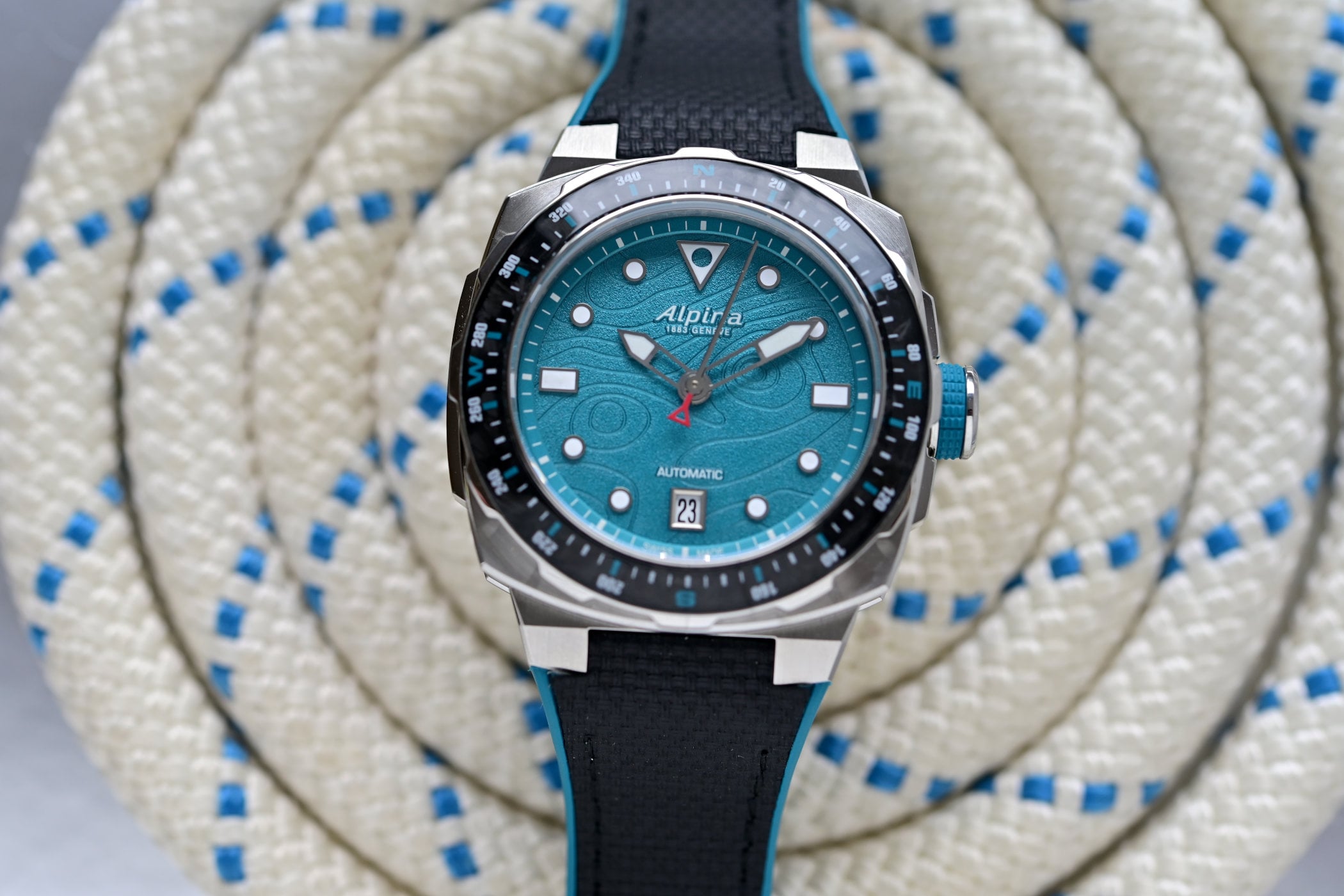
After recent releases like the Startimer Pilot IFR Chronograph and the slimmer Startimer Pilot Automatic models, Alpina is back with a new watch. The all-new Seastrong Diver Extreme Automatic Route du Rhum edition is another iteration of the Seastrong Diver Extreme Automatic introduced in 2024. This was an interesting release because it brought together Alpina’s […]
 Hodinkee
What We Know Today, amongst a slate of other launches and re-releases, Gallet — now a part of the Breitling "House of Brands" — lifted the curtain on the Gallet Multichron Pilot. The new watch takes the recipe of the original 1969 Multichron Pilot and updates it, and the result is a watch that is recognizable but also, arguably, the most contemporary model in the very fresh Gallet lineup. The new watch does borrow heavily from its namesake, and seeing the two watches next to each other highlights the similarities. The new Multichron Pilot is still a tri-compax chronograph, with a bi-directional twelve-hour bezel, pump pushers, stick hands, and cut-off arrow-shaped markers. By way of comparison, a vintage Gallet Multichron Pilot. Image, courtesy Analog Shift. But there are definite differences too, many of which are concessions to modern taste. For one thing, those cut-off arrow-shaped indices are now lumed instead of polished, but there's also a date — visible through an aperture at 6 o'clock — and while the telemeter remains on the new watch, the tachymeter (which appeared as a second scale on vintage examples) is omitted. The watch is also bigger than vintage Multichrons. The new watch has been upsized from 38 to 42mm, is 11.3mm thick, and measures 45.59mm lug-to-lug. At that size, the new Multichron Pilot is the largest watch in the new Gallet catalog but is still quite reasonable and a far cry from some of the oversized watches that still seem to populate Bre...
 Hodinkee
What We Know As we walked around Geneva on day one of Geneva Watch Days, we saw signs being put up for Gallet, and I thought how poetic. On the eve of the brand's relaunch, it's certainly an exciting time for fans of the brand. The parent group, House of Brands—Breitling, Universal Genève, and Gallet—already relaunched Universal Genève earlier this year and is rounding out 2026 by bringing back Gallet today, with one of the brand's most enduring models, the Flying Officer, in two variations: the Flying Officer Chronograph 40 and the Flying Officer Automatic 40. Today's reintroduced Flying Officer arrives in four dial colors across two versions, all cased in 40mm steel. Case specs are shared across the range: 20mm lug width, a screwed-in steel caseback, cambered sapphire glareproofed on both sides, and 100 meters of water resistance. The chronograph case is 15.02mm thick with a 47.55mm lug-to-lug; the three-hand case is thinner, at 10.67mm, with a 47.49mm lug-to-lug. Both versions share a bezel with a city ring listing 24 destinations, mixing major international airports with more remote locations. The Flying Officer Chronograph 40 comes in light blue or black, both with tone-on-tone subdials, and runs the Gallet 23, an automatic caliber based on the Sellita SW510. It measures 30mm in diameter and 7.9mm thick, runs at 28,800 vph (4Hz), and offers an approximate 62-hour power reserve. It offers quarter-second chronograph timing with a 30-minute counter. The Flying Offi...
 Hodinkee
What We Know Mixed in with the new releases from Gallet today is the Gallet Multichron Sport. The watch, which, instead of modeling itself on any specific Gallet model, draws its inspiration from mid-century Gallet chronographs as a whole, is meant to act as a general-purpose, automotive-inspired, everyday, and "all-terrain" sports chronograph. What does that mean? Well, largely, it just means that the Multichron Sport is exactly what it says it is on the tin. It's a reasonably sized (by modern standards), reasonably priced (again, by modern standards), straightforward, to-the-point, legible, contemporary chronograph. It's a watch that will withstand anything a reasonable buyer throws at it. It's also the only watch in the lineup without a directly corresponding heritage model for comparison. That said, when lined up next to the other new offerings from the new Gallet, it still makes a lot of sense. Practically speaking, the Multichron Sport measures 41 mm across, 13.87mm thick, and 49.20mm lug-to-lug. Like the slightly larger Multichron Pilot and slightly smaller Flying Officer Chronograph, the Multichron Sport is powered by the Gallet 23 chronograph caliber. That movement, based on the Sellita SW510, is a cam-actuated chronograph with a 62-hour power reserve and a date at 6 o'clock. The Multichron Sport is available today in two configurations: a black and silver reverse panda dial with a silver tachymeter ring, and a blue dial with black subdials and a black tachymeter ...
 SJX Watches
Ferdinand Adolph Lange was born in Dresden on February 18th, 1815. Thirty years later he’d found his eponymous company, and 145 years after that a new A. Lange & Söhne would rise from the proverbial ashes of East Germany. The A. Lange & Söhne we know today debuted in 1994 when the brand launched four watches: the Arkade, Saxonia, Lange 1, and the flagship Tourbillon Pour le Mérite, which established a set of visual codes that would later define the 1815 collection. Today, the 1815 family is primarily known for its many time-only variants, the 1815 Up/Down, and, of course, the 1815 Chronograph. However, the 1815 collection also includes some of the brand’s most extraordinary, unusual, and rarely seen models. Lange 1815 Emil Lange Moon Phase (1999) The Tourbillon Pour le Mérite of 1994 defined the 1815 collection’s design codes, specifically the printed Arabic dial that is vaguely reminiscent of a pocket watch despite being an almost from-scratch design. However, it was not officially badged as an 1815. That designation arrived the following year with the refs. 206.021 in yellow gold and 206.025 in white gold. These introductions saw the rectangular movement inside the Arkade and Saxonia reformatted to make it presentable through a display case back. The extra space was put to use in the followup 1815 Up/Down, which added the namesake power reserve indicator and recreated the running seconds. In 1999, Lange launched the 1815 Moonphase Emil Lange (1849-1921) to mark...
 SJX Watches
Ferdinand Adolph Lange was born in Dresden on February 18, 1815. Thirty years later he’d found the eponymous company, and 145 years after that a reborn A. Lange & Söhne would rise from the proverbial ashes of East Germany. The A. Lange & Söhne we know today debuted in 1994 when the brand launched four watches: Arkade, Saxonia, Lange 1, and the flagship Tourbillon Pour le Mérite, which established a set of visual codes that would later define the 1815 collection. Today, the 1815 family is primarily known for its many time-only variants, the 1815 Up/Down, and, of course, the 1815 Chronograph. However, the 1815 collection also includes some of the brand’s most extraordinary, unusual, and rarely seen models. Photo credits: @lelangelust and @scatteringphotons Lange 1815 Emil Lange Moon Phase, c. 1999 The Tourbillon Pour le Mérite of 1994 defined the 1815 collection’s design codes, specifically the printed Arabic dial that is vaguely reminiscent of a pocket watch despite being an almost from-scratch design. However, it was not officially badged as an 1815. That designation arrived the following year with the refs. 206.021 in yellow gold and 206.025 in white gold. These introductions saw the rectangular movement inside the Arkade and Saxonia reformatted to make it presentable through a display case back. The extra space was put to use in the followup 1815 Up/Down, which added the namesake power reserve indicator and recreated the running seconds. In 1999, Lange launched...
 Hodinkee
What We Know If H. Moser is guaranteed to do anything, it's to surprise us. A watch made out of cheese. A watch inspired by the Reebok "Pump." Those are easier to process because they're fun and a bit silly. But when Moser signed a deal to be a sponsor of Alpine's Formula 1 team, it was even more surprising to me. That's a serious sponsorship for a brand that makes far fewer than 5,000 watches a year and doesn't charge Richard Mille prices. But Moser is taking full advantage of the platform and turning out very sporty watches, including this new collaboration. This isn't the first collaboration between the brands; it began with a surprising smartwatch for the pit crew, paired with a skeletonized chronograph. Pierre Gasly (one of Alpine's drivers) also got his own limited edition. But this one takes the automotive inspiration in a different direction: lightweight and with all the Alcantara you could want (maybe even more). While Moser has done a Streamliner tourbillon in ceramic before, that watch came with a full dial and a ceramic bracelet. The 40mm by 12.8mm case is made of anthracite grey ceramic, but now it comes with an integrated light blue Alcantara strap, a synthetic microfiber material with a soft, suede-like texture. If you're into cars, you've run into this material a lot. Unlike the previous release, this is the first skeleton-flying tourbillon version of the Streamliner, made in ceramic. Powered by the HMC 814, the watch has blue-toned plates with diamond...
 Worn & Wound
Since its inception in 1969, Zenith’s groundbreaking El Primero movement – the first automatic, integrated, high-frequency chronograph caliber – has been synonymous with the classic complication. Now, Zenith takes the essence of this historically significant movement and highlights the high-frequency component with its first time-only application in the Chronomaster line. With the new Chronomaster Solo Sport, form and function go hand in hand. The three-hand display offers a design that is decidedly less sporty than its chronograph counterparts. However, the new collection continues a throughline we’ve seen within the Chronomaster lineup, making it both fresh and familiar to the model family. The Solo Sport has a 40mm build that fits well within the Chronomaster range of 37mm for the vintage-inspired revival models up to 41mm for the standard chronograph sport models. As we’ve also seen in the typical sport models, the Solo Sport models feature a ceramic, unidirectional rotating bezel. Ceramic extends to the dial, which presents a new “Z” pattern. Depending on the version – white, black, or brown – this pattern is engraved on either a sunray-finished white ceramic dial or a polished black or brown ceramic surface. Additionally, the black version is also offered in a no-date variant for a total of four Solo Sport styles. The “Z” motif is repeated once more on the stylization of the seconds hand. The more geometric elements of this dial design continue ...
Question, suggestion, or just want to say hi? Drop a note.