 Hodinkee
Introducing: The Audemars Piguet Royal Oak Minute Repeater Supersonnerie
AP drops its most wearable and desirable Supersonnerie to date.
971 articles · 3 videos found · page 9 of 33
Bracelet that flows directly from the case without separate end-links. Genta\'s 1972 Royal Oak innovation.
Every AP Royal Oak: 5402ST A-Series, 14790, 15400, 15500, 15510, Jumbo 15202 / 16202, Chronograph 26240.
Swatch's plastic Royal Oak needs an actual strap the moment you get it home. Here are the four makers doing colour-matched integrated-lug Royal Pop straps in leather, rubber, canvas and everything else. Prices, colour ranges, quality, and which to buy per watch reference.
Gérald Genta's overnight 1971 sketch that invented the luxury steel sports watch.
Hodinkee
AP drops its most wearable and desirable Supersonnerie to date.
 Hodinkee
And we have all the other winners here for you too.
 Revolution
 Hodinkee
One of the hottest watches on the planet just got even hotter.
Hodinkee
A concept becomes a reality, and the world of perpetual calendars will never be the same.
 Hodinkee
Our boy Jason Heaton goes diving with the AP ROO Diver. You know, so you don't have to.
 Hodinkee
The 23-time Grand Slam singles winner achieves a milestone for any American athlete.
 Hodinkee
Can you imagine a cooler summer watch? Yeah, didn't think so.
 Hodinkee
A selection of vintage watches from around the globe.
 Revolution
The Cabinet No.4 comes from the ultra-exclusive Tradition d’Excellence collection meant to showcase Audemars Piguet’s watchmaking skill and spirit.
 Revolution
Once again, the global editors of Revolution weigh in on the best timepieces of the year, as well as the personalities that shaped the watch industry.
 Revolution
 Deployant
Audemars Piguet has re-engineered a three-storey movement into a single level, making it ultra-thin while combining and re-arranging functions to boost ergonomy, efficiency and robustness.
 Revolution
Once again, the global editors of Revolution weigh in on the best timepieces of the year, as well as the personalities that shaped the watch industry.
Revolution
Once again, the global editors of Revolution weigh in on the best timepieces of the year, as well as the personalities that shaped the watch industry.
 Revolution
There’s a lot of postulation as to why suddenly a whole new generation of watch collectors, myself included, have become so fixated with vintage watches. To me, the charm of an over-half-a-century-old Rolex GMT or a nearly-40-year-old Patek Nautilus Ref. 3700/1A is that when you strap it to your wrist, you realize that, while time […]
 Worn & Wound
Raymond Weil celebrates its 50th anniversary this year, Weil founding his eponymous brand in 1976. And the brand’s first integrated-bracelet watch is a nod to the seventies era of experimentation: where, in the face of impending quartz dominance, watchmakers produced bold designs like they had nothing to lose. This was the era of the Patek Philippe Nautilus and Audemars Piguet Royal Oak, both launching the concept of the luxury sports watch—in essence, a classier and far pricier interpretation of the Go Anywhere, Do Anything ethos that once took its inspiration from military and field watches. Only this time, going anywhere is to Monaco or St. Moritz, and doing anything is jumping off the back of a yacht into the waters of Bali. Fifty years later, the integrated bracelet watch has never been more popular. Perhaps it’s the trickle-down effect from the cachet of those two OGs, which have taken off so much that people are willing to snap up an anniversary Nautilus desk clock, or storm your nearest Swatch store for a plastic Royal Oak. Or it’s the promise of a certain inherent and integrated toughness, eschewing the notion that we won’t ever reach 1,000-ft deep-water depths and still make it back to the boardroom. In fact, skip the beach-to-boardroom mentality. This category is all upscale by comparison, and the A.R.T. series — which, according to Raymond Weil, stands for “art, refinement, and timekeeping,” with the latter perhaps seeming redundant — captur...
 Worn & Wound
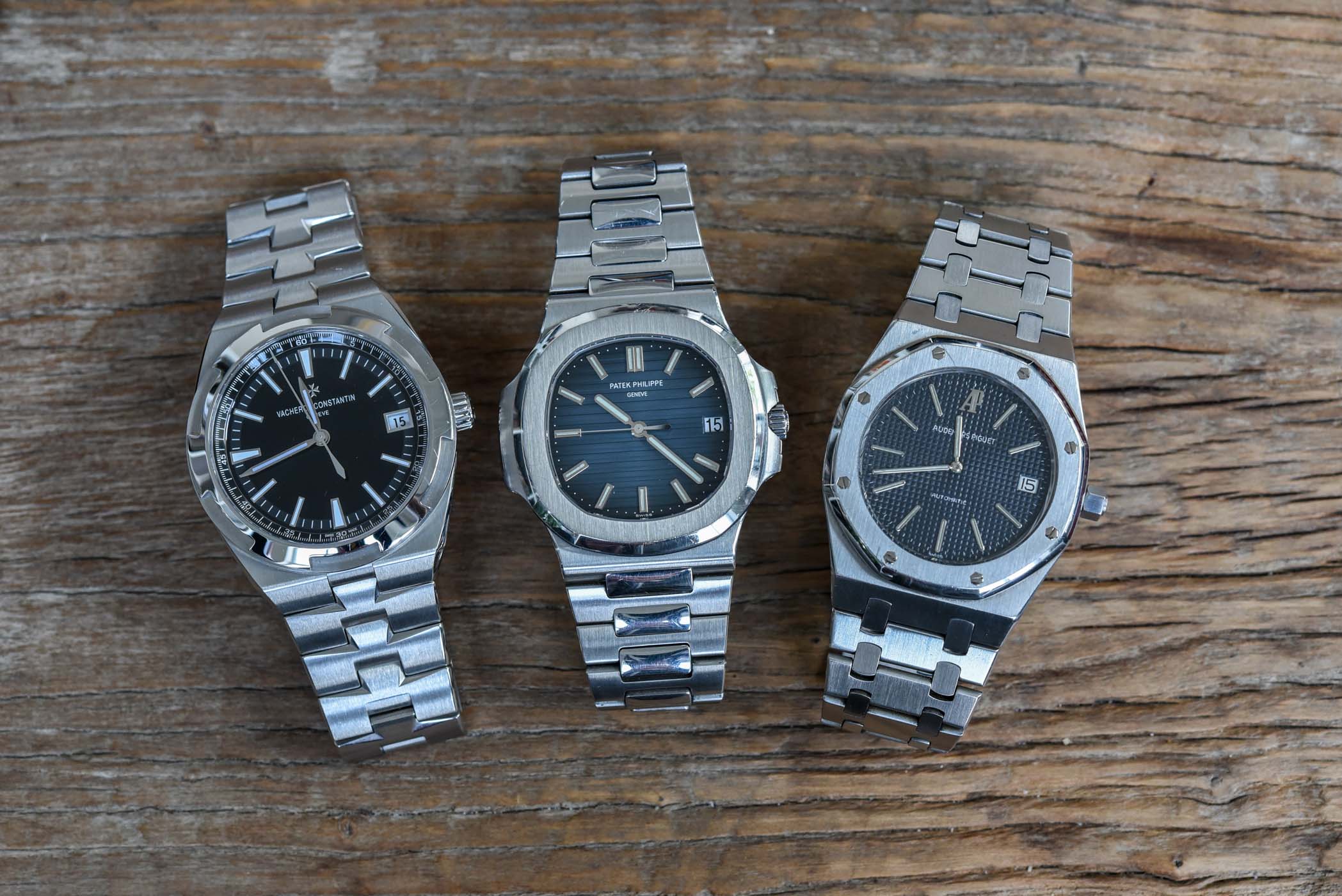
While some brands regularly take the collaborative approach, this hasn’t been the case for Dennison. Its first co-designed model came to us just about a year ago when the Maison first teamed up with Collectability, the brainchild of Patek Philippe expert and horological icon John Reardon. The pair’s initial offering achieved an impressive balance of design language. It combined some clear inspiration from Patek’s Ellipse as well as some of the brand’s lesser-known models with elements of the collection that revived Dennison in the modern era – the A.L.D. – developed by acclaimed watch designer Emmanuel Gueit, whose resume includes the Rolex 1908, Harry Winston Z1, and Audemars Piguet Royal Oak Offshore. The duo has just spun up its second collaboration, available for pre-order for one week only, beginning today through June 3. If you didn’t immediately click over to place an order, and you’re still with me, let’s unpack these latest additions. The new Oblique collection certainly has echoes of the original co-design but with a little bit more edge. The pair’s inaugural offering was relatively classic and timeless whereas the latest interpretations are a bit more modern and sculptural. This time, Dennison and Collectability give us two variations: the bold Enigma dial and the more sober Vector dial. In both iterations, the brands lean further into the funky design language that began emerging in the 1960s with asymmetry being a focus. Here, the familiar ...
 Monochrome
There’s an endless amount of mechanical wristwatches on the market today from a seemingly endless amount of brands (large and small), but almost all watches fall into a specific style (assuming it’s not from MB&F; or Urwerk). However, many take on multiple roles and blur those lines – an Audemars Piguet Royal Oak is a […]
 Teddy Baldassarre
Let's face it: a gold chronograph is not exactly the most subtle style of wristwatch you can sport. Combine the high complication, the complex multi-level dial, and the gleaming precious-metal execution of the case (and, in some instances, also the bracelet), and the result tends to be a prominent, weighty, and expensive timepiece that inevitably attracts attention. Unlike standard, three-handed gold dress watches, gold chronographs are not built to be shy, discreetly hiding their assets beneath a shirt cuff. All the more reason, then, to make sure that if you're bold enough to rock one of these watches, that the face it's presenting to the world is one that inspires awe and admiration. Here are 10 of our favorites from an elite lineup of respected watchmakers. [toc-section heading="Audemars Piguet Royal Oak Frosted Gold Selfwinding Chronograph"] Price: $95,400, Case Size: 41mm, Case Height: 11mm, Lug Width: 23mm, Crystal: Sapphire, Water Resistance: 50 meters, Movement: Automatic Audemars Piguet Caliber 4401 Audemars Piguet’s frosted white gold, used here for the 41mm case of a vibrant, blue-dialed chronograph within Audemars Piguet’s flagship Royal Oak collection, is achieved through a process of hammering the gold with a diamond-tipped tool to create tiny indentations - a process that dates back to ancient Florence. The dial’s surface is enhanced with the signature Royal Oak Grand Tapisserie texture and highlighted by contrasting golden-toned subdials at 3, 6,...
 Fratello
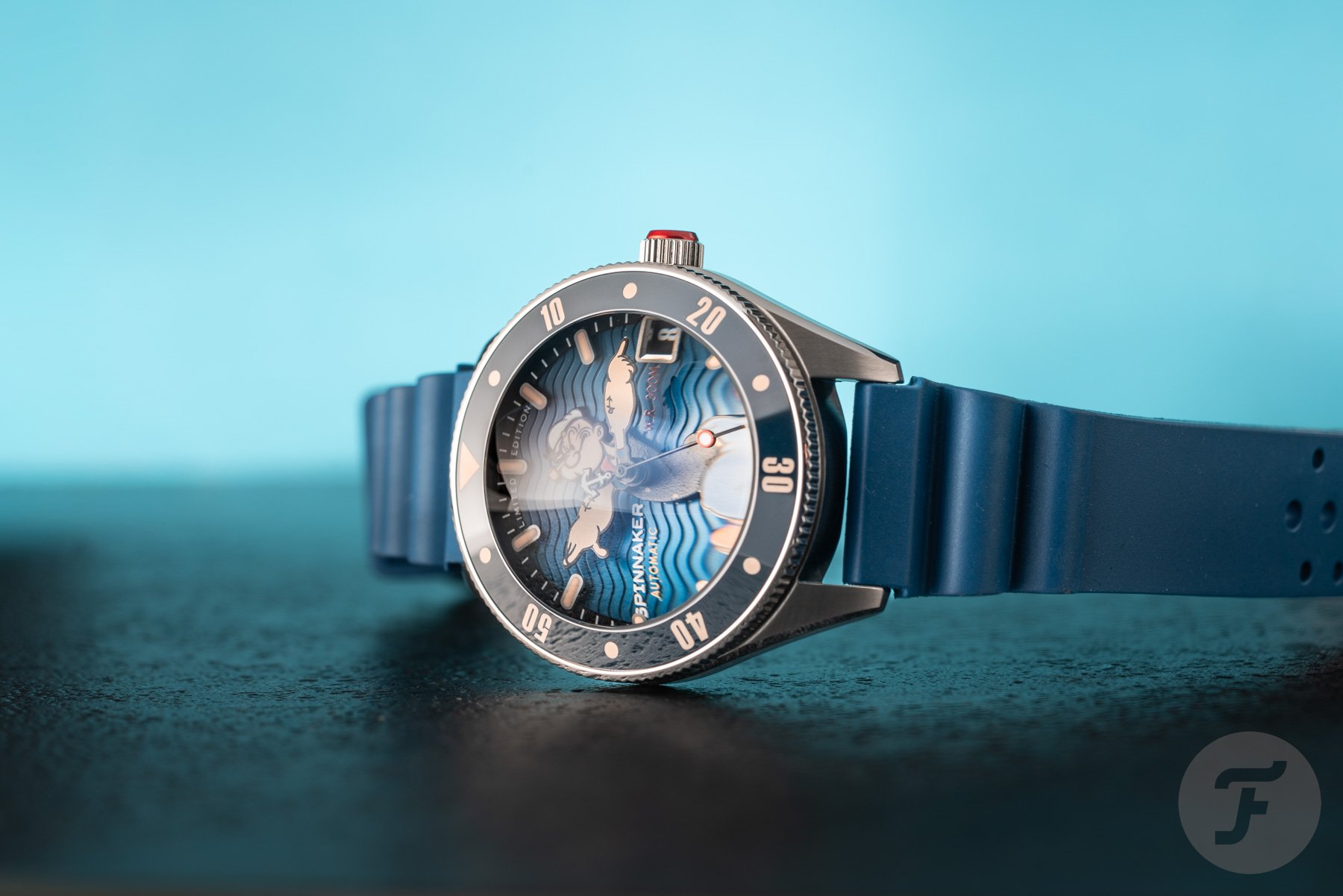
Over the past few years, we have seen a ton of fun watches with famous comic characters, from the return of Disney characters on several Gérald Genta watches to famous DC characters on the dial of Audemars Piguet’s much-praised Royal Oak Concept models. Of course, there are also the famous Omega Speedmaster Snoopy models. However, […] Visit Hands-On With The Spinnaker Challenger Automatic Popeye Anchor Arms Limited Edition to read the full article.
 SJX Watches
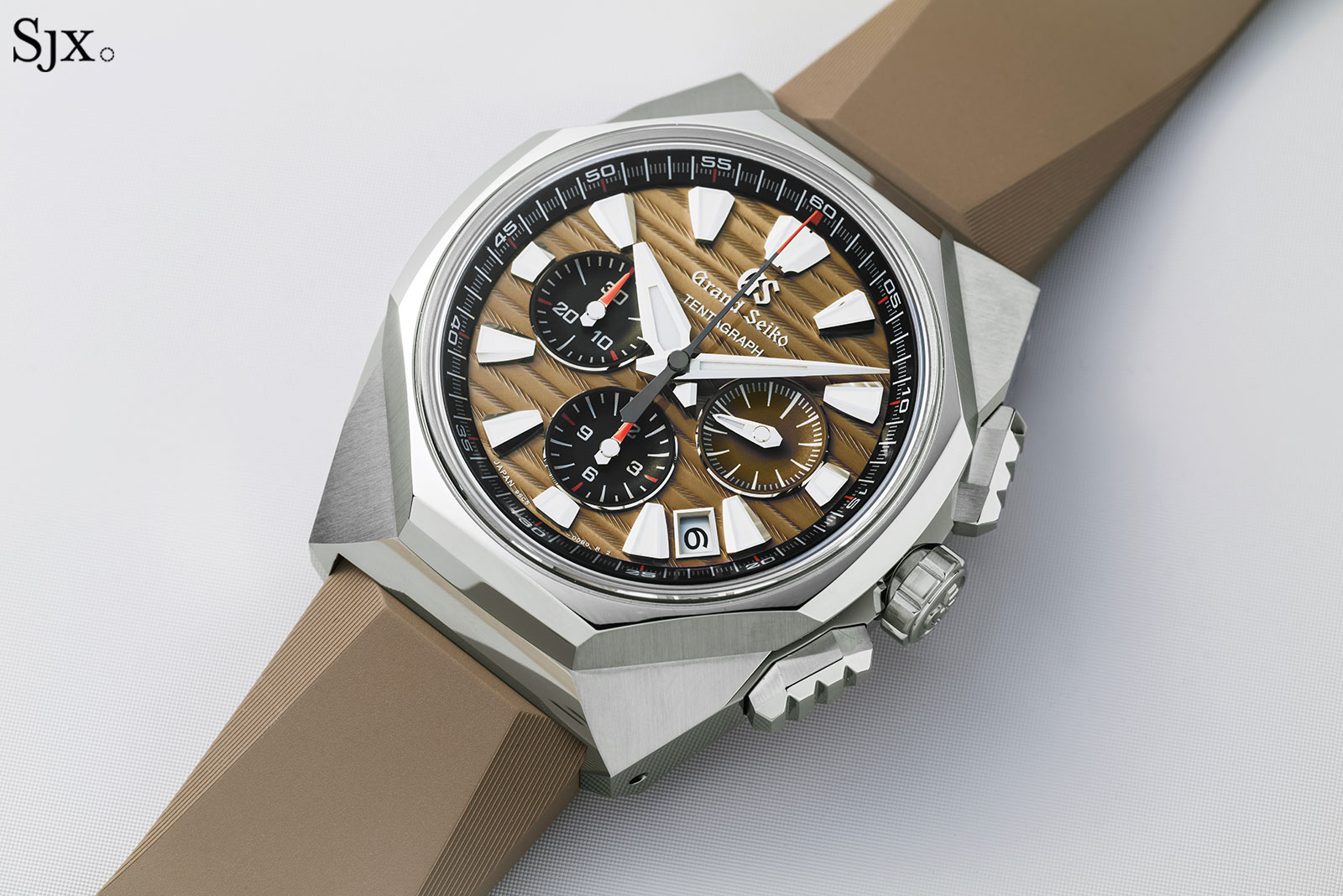
Grand Seiko returns to its Sport Collection with an even bolder and edgier take on its flagship chronograph with the Tokyo Lion Tentagraph SLGC009. Combining an oversized case Brilliant Hard Titanium and a high-spec, high-beat chronograph movement, the striking new is Tentagraph is surprisingly not an all-new design but an iterative evolution that builds on the existing Sport Collection case. Initial Thoughts While a strength of Seiko itself, chronometry-focused Grand Seiko has historically struggled with sports watches, though not for lack of trying. In 2019 Grand Seiko launched the angular and aggressive Sport case featuring a facetted, polygonal form with a sapphire-covered bezel to celebrate 20 years of Spring Drive. Grand Seiko intended the design to evoke the mane of the brand’s lion mascot. In 2023 came the regular production Tokyo Lion series, and the brand also extended the design language into its jewelled Masterpiece watches. The “lion’s mane” case design reminds me of the Audemars Piguet Royal Oak Concept, and with the addition of an octagonal bezel the resemblance has only grown, though I wouldn’t say it is derivative – if anything the Grand Seiko case is a more boisterous take on the 45GS design from the late 1960s. The earlier Spring Drive GMT Chronograph SBGC275 with a less stylised case design I quite liked the Sport case when it was launched in 2019, especially the rose gold SBGC230, but it felt unfinished with a round bezel and buttons. With...
 Teddy Baldassarre
The Tissot PRX Chronograph is one of the latest releases from the Tissot PRX collection, one of the Swiss brand’s major success stories of the past decade despite its relatively recent introduction (or, more accurately, re-introduction) to the market. Engaging the 21st-Century watch-aficionado zeitgeist with its crowd-pleasing combination of classical sport-luxury design, intriguing colorways, and accessible price points, the Tissot PRX has grown from a handful of models to become a modern pillar of the 170-year-old brand’s sprawling and diverse portfolio, adding the first chronograph models to the growing lineup in 2022. Tissot PRX Origins It all started with the original Tissot PRX watch, which debuted in 1978 and which, like many watches from that era, was powered by a quartz movement. The PRX was distinguished by its flat, barrel-shaped, multi-faceted case, which integrated smoothly into a flexible, articulated steel bracelet; it took its three-initial model name from its attributes: the “P” and “R” stand for “precise” and “robust,”respectively, and the “X” is actually a Roman numeral “10” depicting the model’s 10 atmospheres (aka 100 meters) of water resistance. The overall aesthetic was one that today’s watch historians will readily recognize, hearkening back to the groundbreaking design of a much pricier watch that had debuted several years earlier, in 1972, the Audemars Piguet Royal Oak. The latter had, in fact, exerted influence...
 Worn & Wound
It’s no secret that watch design over the past few years has been heavily inspired by timepieces of yesteryear. Many brands today are looking to integrate 20th-century principles into more modern and technologically advanced packages, typically in an effort to keep alive the vintage aesthetics collectors know and love. On the heels of their recent relaunch, Dennison has just announced their first watch collaboration ever, pairing up with horological icon John Reardon and his website Collectability to produce a new model for the brand’s contemporary catalog. Last year, Dennison, a brand established in 1874, was revived with the help of its new A.L.D. Collection. This assortment of watches was designed by acclaimed watch designer Emmanuel Gueit, known for designing the new Rolex 1908, the Harry Winston Z1, and Audemars Piguet Royal Oak Offshore. Dennison offers these vintage-inspired timepieces for $490 for sunray dials and $690 for stone dials. Their rather affordable prices helped the A.L.D. Collection catch the attention of many collectors, including John Reardon’s. For those unfamiliar with his experience, Reardon has been a notable figure in horology for years. He began his career at Sotheby’s in 1997, later joining Henri Stern Watch Agency, then spending five years as the International Head of Watches at Christie’s Watches. In 2019, he left Christie’s to launch the Collectability website, aiming to educate collectors on all things Patek Philippe, in add...
 Monochrome
Long before the Nautilus, Ingenieur, or the 222, Baume & Mercier introduced its take on the emerging luxury sports watch trend with the Riviera in 1973 – just a year after Audemars Piguet’s Royal Oak. Over the decades, the Riviera saw highs and lows, at times fading into obscurity, only to be revived with a […]
 Time+Tide
The designer of the Audemars Piguet Royal Oak Offshore, Emmanuel Gueit, shares his insight into some watches from 2024.The post Through a designer’s eyes – Emmanuel Gueit critiques 2024 watch releases appeared first on Time+Tide Watches.
 Worn & Wound
As I write this piece, I find it fitting that Worn & Wound was co-founded by Zach Weiss, who, as many of you may know, happens to be an Industrial Designer too. There are dozens of us! DOZENS! When it comes to Industrial Design and the watches we love, it’s hard to separate the two, especially in the modern day. For this argument, let’s assume “modern day” refers to everything after 1972, when Gerald Genta changed the watch landscape forever with the Audemars Piguet Royal Oak. Not only did this release change the landscape for folks within the watch industry, but it caught the eye of Industrial Designers who were green in their careers at the time, which later created a snowball effect of designing outside the box when it comes to watches. No longer were we restricted to the round case and the simple forms of previous years. Yes, there were unique watches before this period, but with the progression of design aesthetics and newer advanced manufacturing methods, this was the jumping-off point for wild designs and new methods of manufacture. Marc Newson, the world-renowned industrial designer, is one of those who likely caught the curiosity bug of watches at the right time (pun fully intended). This is purely speculation on my part, but there is some evidence for my madness here, so bear with me. He would have been 9 years old when the Royal Oak was introduced, and years later, when adolescent youth and creativity were at a high for him during his university years, I...
 SJX Watches
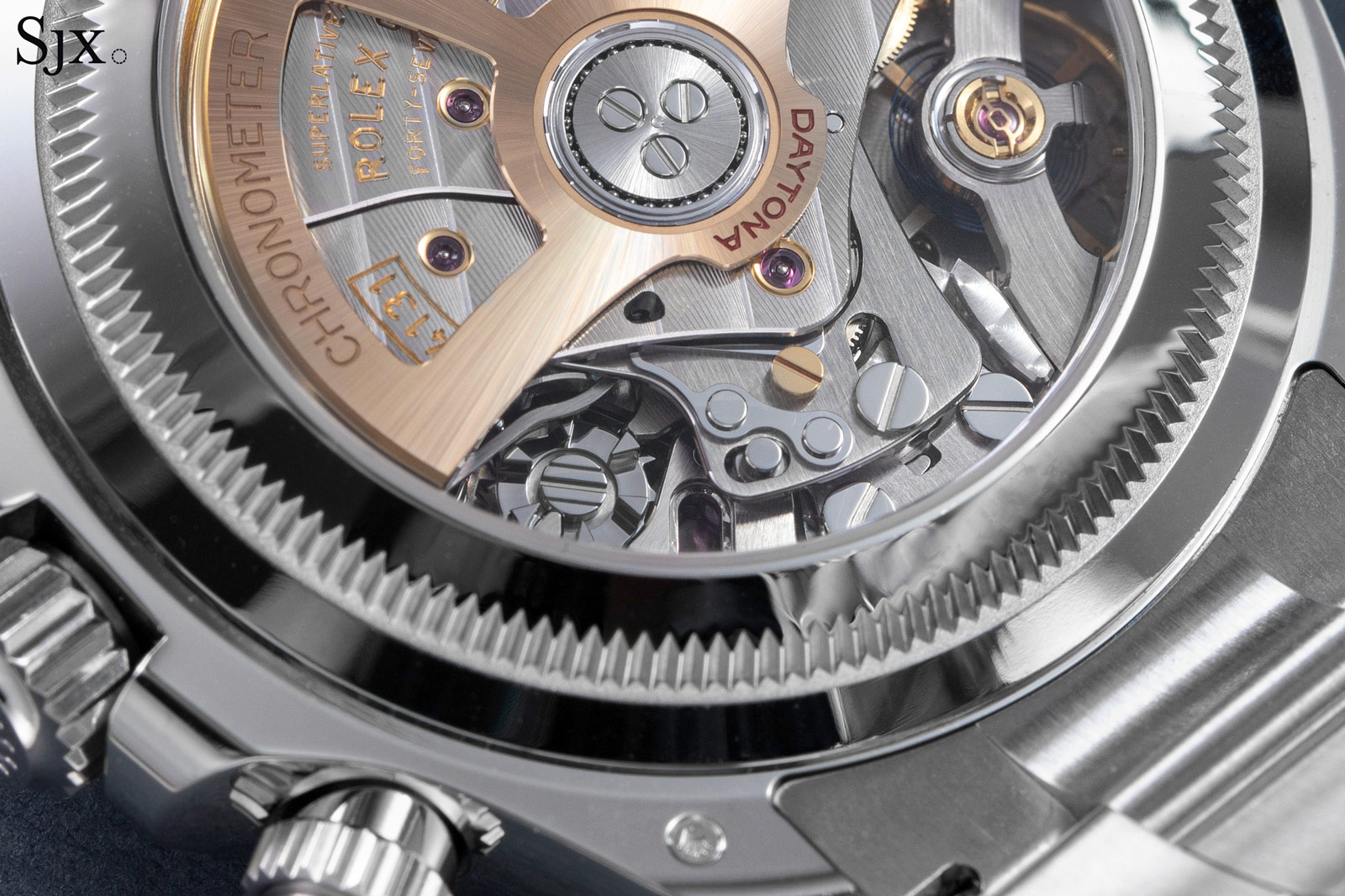
Having already explained the more traditional horizontal clutch (or lateral coupling), we now look forward to the more modern vertical clutch. This is found in some of the most famous chronographs in contemporary watchmaking, including the Rolex Daytona with the cal. 4131 (pictured above), Patek Philippe Nautilus with the CH 28-520, and Audemars Piguet Royal Oak Chronograph with the cal. 4401. Arguably the most advanced type of chronograph coupling mechanism, the vertical clutch as it is known today was debuted in 1969 by Seiko in the 6139 chronograph. But the concept can be found in late 19th century pocket watches, and even the inexpensive Pierce Chronographe of the 1930s. Today it is practically the default choice for new chronograph constructions. Equipped with the vertical clutch, the Patek Philippe CH 28-520 in the Nautilus Travel Time Chronograph ref. 5990/1A Like its horizontal counterpart, the vertical clutch serves as the mechanical link between the chronograph mechanism and the going train of a movement, allowing power to flow from the going train to the chronograph, which then allows the chronograph to run. While it fulfils the same function, a vertical clutch works differently from the horizontal equivalent, a distinction that comes with its own set of advantages and disadvantages. How it works A chronograph vertical clutch is similar to the clutch found in the manual transmission of some automobiles. The clutch of an automobile enables the intermittent connec...
 Teddy Baldassarre
IWC released a new generation of its Ingenieur collection in 2023, at what many would consider the tail end of the integrated-luxury-sport-watch craze that gripped the industry heading into 2020. At the time, it was tempting to say that IWC was a bit late to the punch here, especially considering the Schaffhausen-based brand's enviable position of having an original Gérald Genta design from the ‘70s to utilize. In hindsight, however, it seems that IWC was playing the long game, and wasn’t interested in rushing out a throwback type of release. Instead, IWC took a bit more time and released a modern rendition of the original Genta design, released in 1976, as a foundation for years to come. The result is the Reference 3289 Ingenieur, and it’s a watch that looks to do more than merely capitalize on a passing trend. There are two watches with which you likely associate the name Gérald Genta, and those are the Audemars Piguet Royal Oak, and the Patek Philippe Nautilus. Genta penned both of these now iconic designs, in 1972 and 1976 respectively, and they have served as cornerstones in creating the premium sport-watch genre as a whole, as well as helped to spawn the subset of integrated-bracelet designs within it. But those are far from the only watches that can be attributed to Genta, and in fact, aren’t even the only integrated-bracelet sport-watch designs to come out of that era. In 1976, he also designed a new Ingenieur for IWC, known as the SL Ref. 1832 (tha...
 SJX Watches
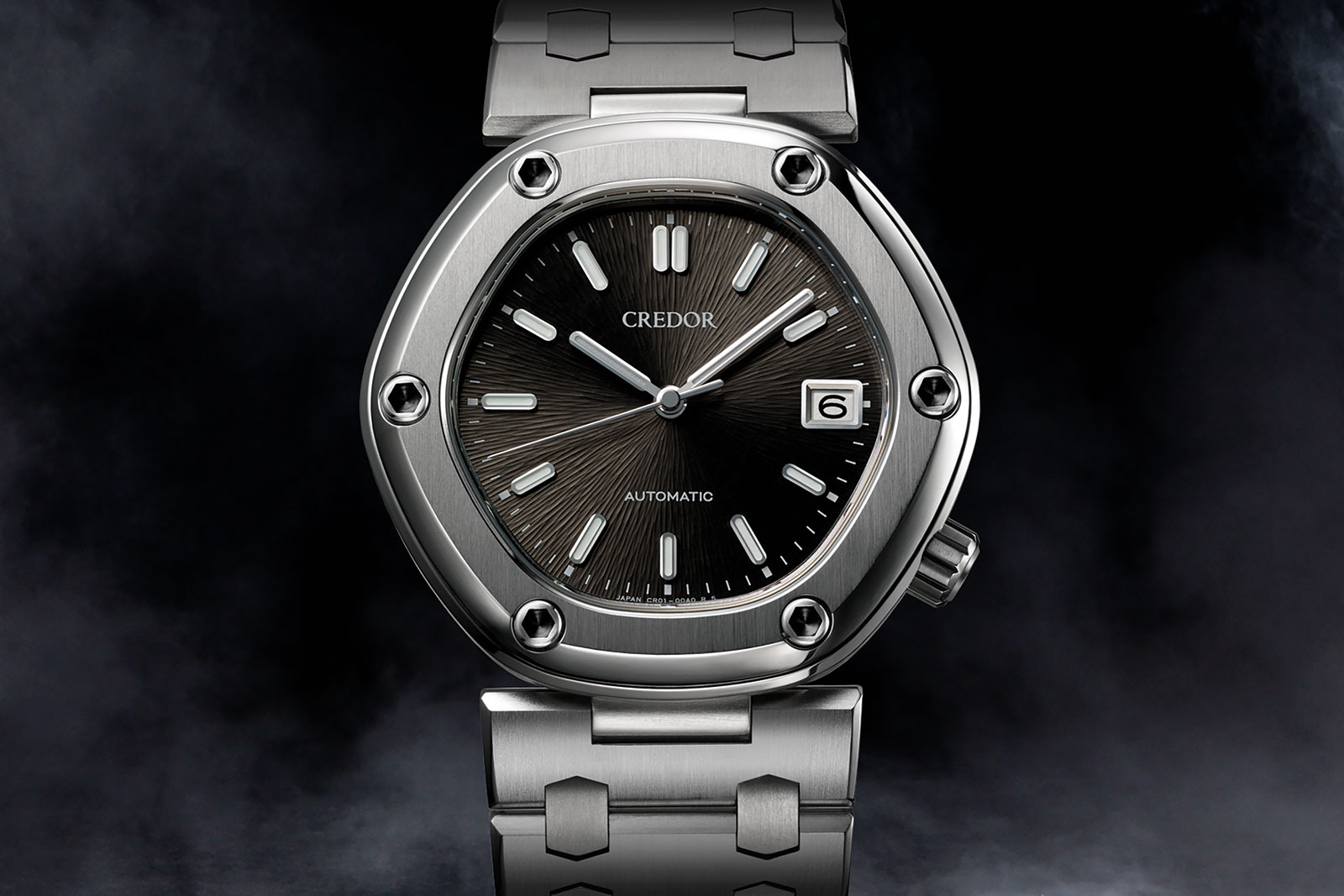
After having designed the Audemars Piguet Royal Oak (1972), IWC Ingenieur (1974), and Patek Philippe Nautilus (1976), Gerald Genta also penned the Seiko Credor Locomotive in 1978. Now Seiko has revived the Credor Locomotive, preserving much of the original’s aesthetics but executing it in the brand’s proprietary “high-intensity” titanium and installing the new Credor CR01 automatic movement. The 1978 sketch of the Locomotive Initial thoughts Probably the last of the 1970s integrated bracelet sports watches Genta designed, the Locomotive is typical of his work of the period. In fact, the design is arguably an amalgamation of his better-known creations. Though it brings to mind his other work, the Locomotive is distinctive and definitely polarising. The Locomotive isn’t Genta’s best creation, but for some reason I like it. I’m familiar with the original and it has charm, despite being a little weird. I am sure the new limited edition will have far superior fit and finish, which will boost the intrinsic appeal. At the same time, the retail price of US$12,000 is competitive, especially when set against the Swiss competition like the IWC Ingenieur. Forward motion Named locomotive in the hope that it would propel Seiko forward, the Locomotive was designed by Genta at the request of Reijiro Hattori, a grandson of Seiko’s founder and uncle of current Seiko Group chairman Shinji Hattori. Genta’s original sketch for the Locomotive is dated 1978, and the watch was l...
Question, suggestion, or just want to say hi? Drop a note.