Watch brandsWatch wikiWatch videosVariousWatch calendarSaved articles
PopularRolexOmegaPatek PhilippeAudemars PiguetTudorGrand SeikoCartierSeikoIWCTAG HeuerBreitlingJaeger-LeCoultreA. Lange & SohneZenith

Results for Hairspring

97 articles · 5 videos found · page 1 of 4

Related pages

Wiki · Guide
Hairspring

The coiled spring that controls the balance wheel; Huygens 1675, Breguet overcoil 1795.

Articles & videos

All Hairspring videos ›
In-Depth: TAG Heuer Achieves Carbon Hairspring Industrialisation SJX Watches
TAG Heuer Achieves Carbon Hairspring Industrialisation Sep 4, 2025

In-Depth: TAG Heuer Achieves Carbon Hairspring Industrialisation

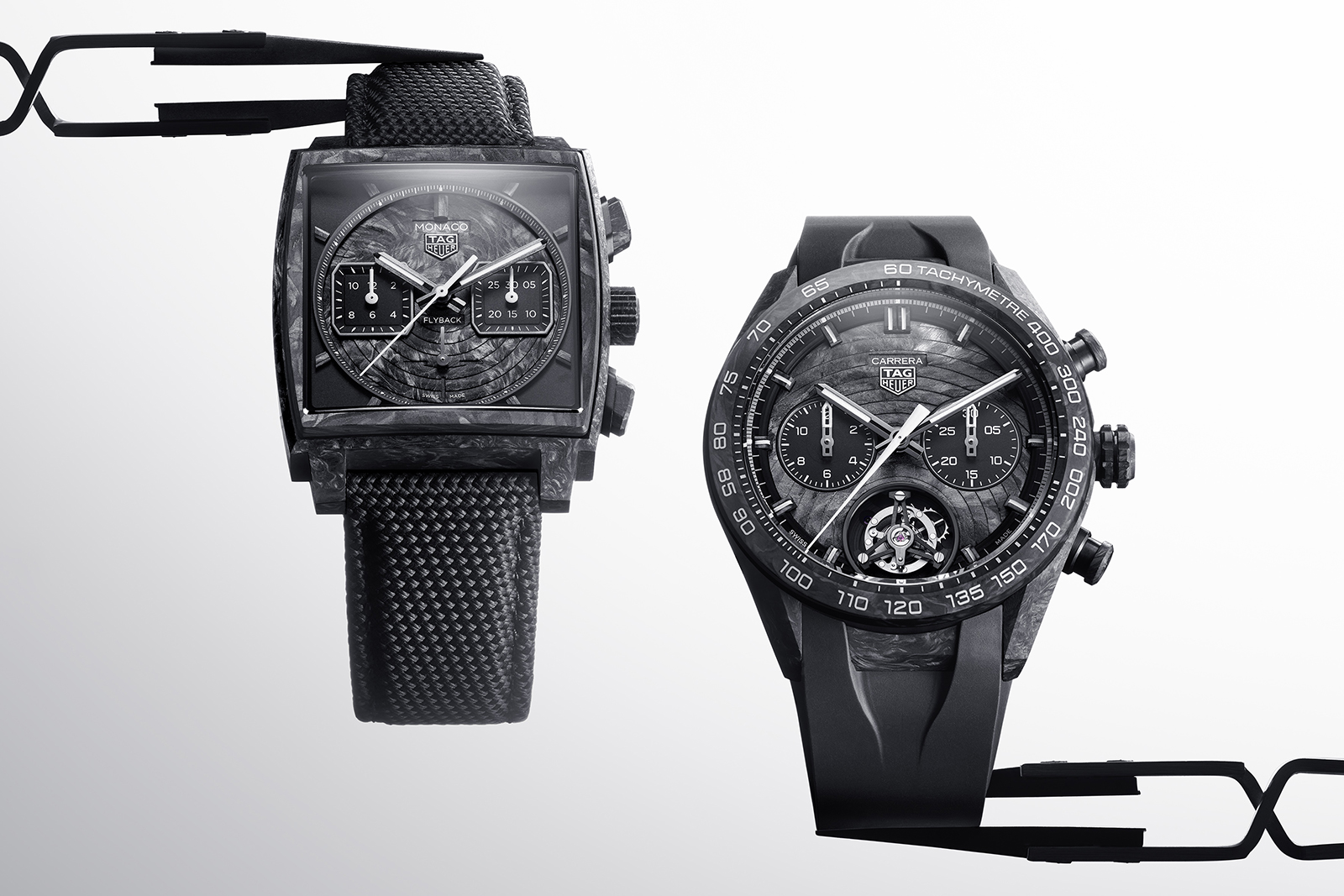
TAG Heuer is marking the rollout of its new-and-improved, and in-house, carbon hairsprings – timed to coincide with the 350th anniversary of the hairspring’s invention – with a pair of chronographs: the Monaco Flyback Chronograph TH-Carbonspring and Carrera Chronograph Tourbillon Extreme Sport TH-Carbonspring. More than just two new watches, the TH-Carbonspring is a notable technical achievement that might promise an entirely new generation of TAG Heuer movements equipped with oscillators that boast all of the advantages of silicon, but with added robustness. Protected by several patents, TH-Carbonspring is also the result of a fascinating process of research and development to overcome a surprising problem. Kitted out in carbon composite dials and cases, the two watches are centred on TAG Heuer’s latest-generation carbon-nanocomposite balance springs, with each being a limited edition of just 50 pieces Initial thoughts Both models serve as a launch platform for TAG Heuer’s improved and industrialisation-ready carbon hairspring. While the brand has been flirting with carbon hairsprings since 2019, its use of the technology has been intermittent and on limited scale. TAG Heuer explains previous attempts at carbon springs were not up to the brand’s standards, which is to say the hairsprings did not perform as expected and could not be produced at scale. The new TH-Carbonspring indicates TAG Heuer has perfected the technology to make reliable hairsprings, which m...
Insight: Hairspring Materials and Evolution Part II SJX Watches
Seiko SPRON 610 hairspring Lastly Aug 8, 2025

Insight: Hairspring Materials and Evolution Part II

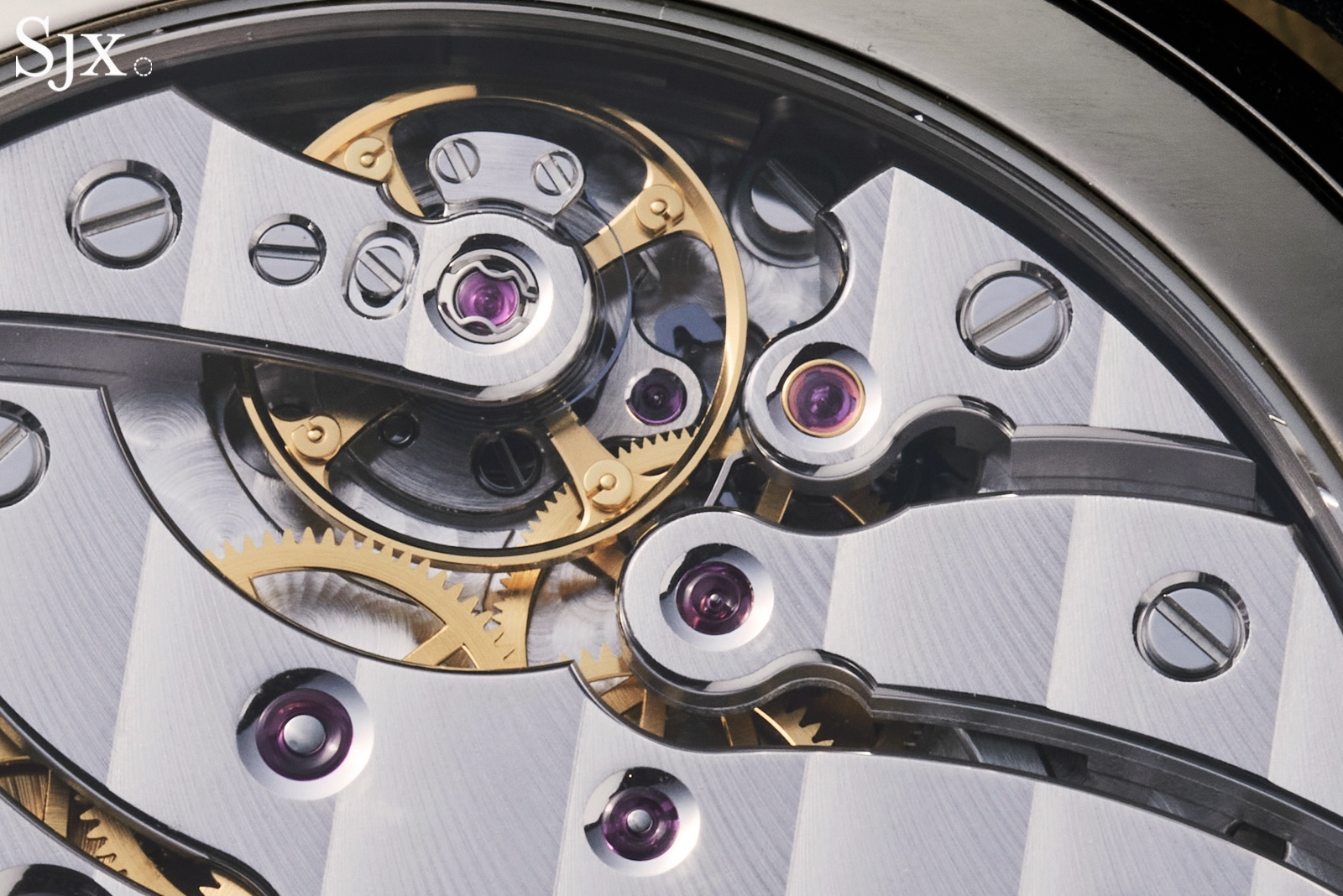
Part I of our story on the evolution of hairspring materials covered temperature compensation along with the development of the first specialised balance spring alloy, Elinvar. The story brought us to the 1920s, when scientist and horologist Charles-Edouard Guillaume (1861-1938) finished his work on nickel-iron alloys and watchmakers begun embracing Elinvar springs paired with mono-metallic balances. In this second part we turn to newer hairspring alloys, like the now-ubiquitous Nivarox. Then we look at today’s landscape and the future, touching on research done by the Swatch Group with alternative, niobium-based alloys and also the specialised but obscure Seiko SPRON 610 hairspring. Lastly we discuss silicon springs, which are growing more prevalent across a range of timepieces. Elinvar’s weaknesses Elinvar was by far the greatest breakthrough in self-compensating alloy hairsprings at the time. Guillaume considered Elinvar good enough and not needing further improvement - unsurprisingly since he was its inventor - but other watchmakers and engineers continued to experiment with iron-nickel compounds because Elinvar’s inherent properties made it a good, but imperfect, material. Even though the alloy behaved predictably with temperature changes, its physical properties were not ideal to begin with. Elinvar was a soft metal, which posed its own suite of problems for spring applications. The importance of softness in terms of hairspring performance is not related ...

Insight: Hairspring Materials and Evolution Part I SJX Watches
Casio n Jul 11, 2025

Insight: Hairspring Materials and Evolution Part I

The invention of the hairspring was among the greatest breakthroughs in horology, since its inception suddenly made mechanical timepieces portable, transforming clocks into watches. This not only marked the start of precision timekeeping, but also set mankind upon the long road to perfecting the accuracy of mechanical watches, arguably the most sophisticated pieces of kit on Earth at the time, when such precision was paramount for fields as varied as navigation, warfare, and astronomy. The hairspring turned 350 years old in 2025 and we’re marking the occasion with a series of stories on the topic, including the story of the spiral hairspring and also the importance and evolution of the overcoil. Now we turn to temperature compensation and metallurgy in a two-part story covering the evolution of the hairspring materials up until metal alloys. More exotic materials and inventions will follow in Part II. Elasticity and thermal expandability  One of the fundamental factors in hairspring function is ambient temperature, simply because metal alloys expand or contract uni-directionally with a change in temperature. As a result, watchmakers used calorimetry, the science of temperature effects, and material science, specifically metal alloys, to their gain in advancing hairspring technology. The equation below shows the relation between the initial length of a metal strip L0, measured at a given temperature and the final length LT after a certain change in temperature.  The equ...

Insight: The Overcoil Hairspring, From Breguet to Phillips SJX Watches
Breguet Jun 2, 2025

Insight: The Overcoil Hairspring, From Breguet to Phillips

While the invention of the spiral hairspring by Christiaan Huygens in 1675 kickstarted a revolution in terms of portable precision timekeeping, the concept was far from fully developed. It was arguably only with the later invention of the overcoil hairspring that the ideal oscillator in portable watches emerged. For many years horologists - theoreticians and artisans alike - worked to perfect the balance-hairspring assembly to optimise its performance, notably in terms of isochronism. True isochronism became a sort of holy grail for watchmakers all around the world, who all sought to ameliorate the inherent quirks of the sprung oscillator. The recent Breguet Soucription features an overcoil hairspring of non-magnetic Nivachron alloy The need for end curves The quest for isochronism was a true challenge for horologists. Isochronism is the ability of the balance-hairspring assembly the have the same period of oscillation for small and large amplitudes alike. In other words, the balance oscillation takes the same period of time regardless of the degree travelled. This is very important, since a balance usually swings with high amplitude with a fully wound mainspring and then runs at progressively smaller amplitude as the barrel unwinds. As a timepiece is required to keep good time regardless of  its winding state, an oscillator whose period is independent from its amplitude is needed. (Another solution to this is to optimise the energy delivery from the mainspring with a...

Who Invented the Hairspring? SJX Watches
Feb 21, 2025

Who Invented the Hairspring?

Twenty twenty-five marks the 350th anniversary of the hairspring – it’s hard to believe the spiral ticking away in tens of millions of mechanical watches is already over three centuries old. The hairspring’s history is marked by revelations, disputes, and technical advancements, driven forward by creative horological minds, making the story of the hairspring a fascinating one. But behind all of that lies the question: who invented the hairspring? There are two familiar contenders for the title and it’ll take a deep dive into history to figure out who deserves credit. The motivation Prior to the invention of the hairspring, most timekeepers were clocks. Watches existed, but were essentially miniature clocks that still relied on some sort of gravity pendulum, making such early watches wildly inaccurate. So the hairspring was born of necessity, the need to transform clunky, stationary clocks into relatively precise portable timekeepers. By the mid 17th century, Dutch mathematician and physicist Christiaan Huygens (1629-1695) had already demonstrated a swinging pendulum could indeed serve as a reliable base unit of time measurement for a mechanical timekeeper. He designed his own cycloidal pendulum clocks equipped with oscillating bobs that were only dependent on gravitational acceleration and the cord’s length, making them true isochronous timekeepers. The first such clock was built in 1657 with the help of clockmaker Salomon Coster. “Isochronous” refers to an o...

Explained: The Rolex Parachrom Hairspring SJX Watches
Patek Philippe turning Dec 20, 2024

Explained: The Rolex Parachrom Hairspring

Over the last decade, metal alloy hairsprings seem to fallen out of favour across watchmaking, with even conservative, haute horlogerie brands like Breguet and Patek Philippe turning to silicon balance springs. Not to mention large-scale makers of sporty watches like Omega and Tudor, which already transitioned to silicon balance springs. Rolex, however, stands out. The Geneva marque continues to employ a hairspring fabricated of its proprietary blue alloy – the Parachrom hairspring. The Parachrom hairspring inside the cal. 4131 of the Cosmograph Daytona The advantages of alloy The use of blue Parachrom is rooted in the simple fact that the right metal alloy boasts performance that is at least on par with its silicon counterpart – while offering some distinct advantages missing in silicon. Alloy hairsprings are traditionally made of Nivarox (and its family of related alloys), a special alloy that neither oxidises nor change its dimensions with variations in temperature. Invented in 1933 and almost a century old, Nivarox is a mix of nickel and iron, making it a ferromagnetic alloy, thus susceptible to influence from magnetic fields.  The cal. 3255 of the Day-Date 40 is equipped with a Parachrom hairspring. Image – Rolex In order to make its hairsprings more resistant to magnetism and to bypass the Swatch-imposed monopoly on Nivarox hairsprings (Nivarox-FAR being one of the key companies of Swatch Group), Rolex set out to develop its own hairspring alloy in the early 2...

Omega Introduces the Spirate Hairspring in the Speedmaster Super Racing SJX Watches
Omega Introduces Jan 27, 2023

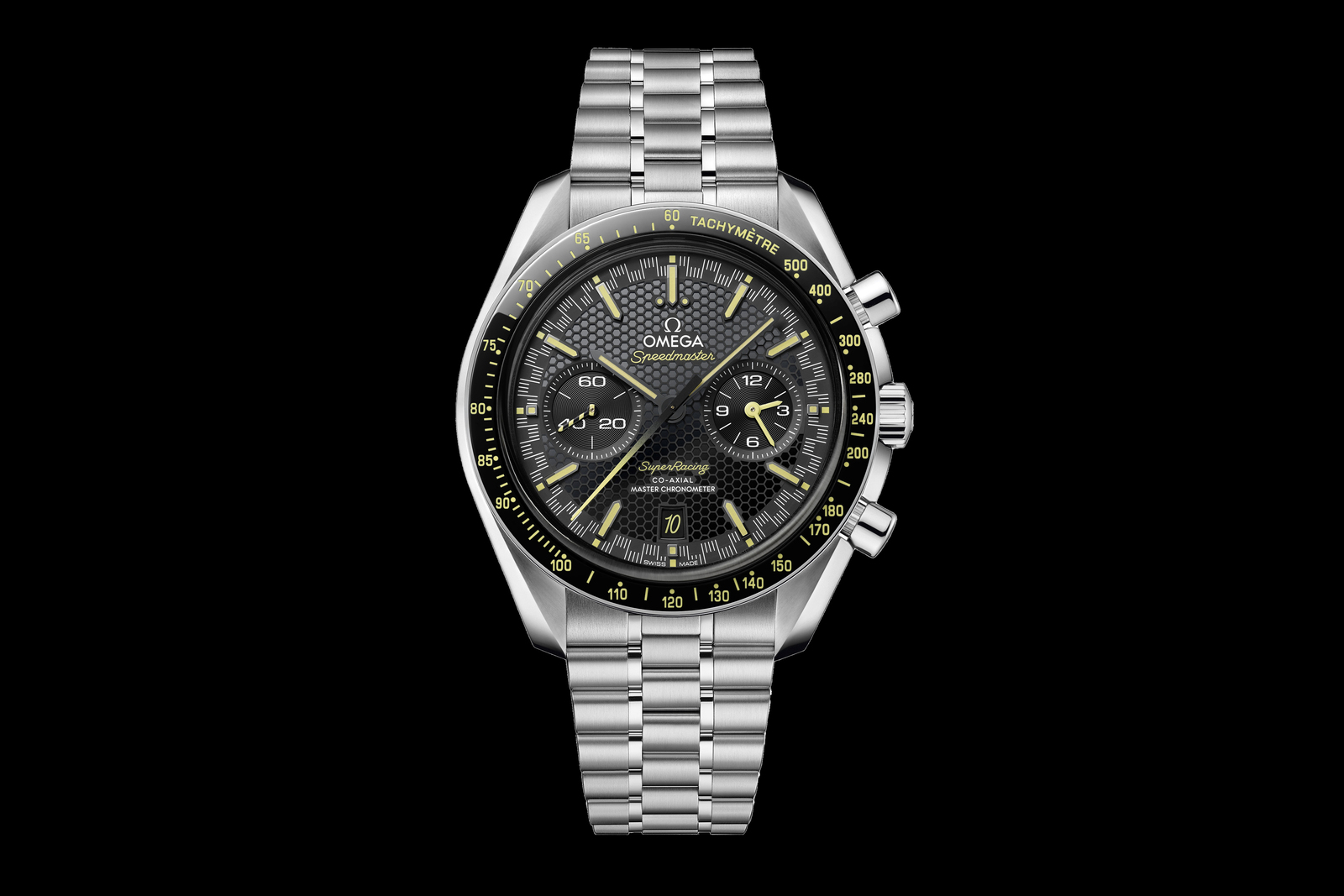
Omega Introduces the Spirate Hairspring in the Speedmaster Super Racing

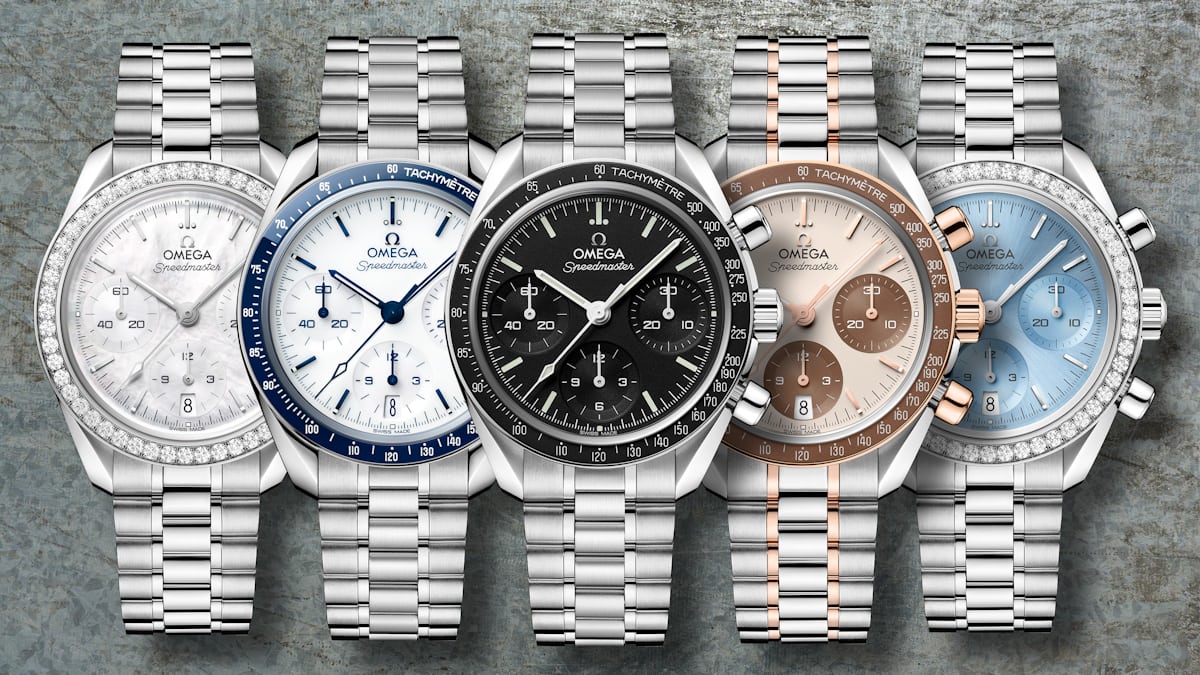
Having teased about a new innovation on social media for several weeks, specifically a “tiny device” that would be a game-changer for the Speedmaster, Omega has finally revealed the Speedmaster Super Racing. But the star of the show is not the watch but actually the technology in the all-new silicon hairspring within the latest Speedmaster. Known as Spirate, a portmanteau of “silicon” and “rate”, the new hairspring has a proprietary form that allows a watchmaker to vary the tension along its length, theoretically enabling fine adjustment of up to a tenth of a second. The result is a watch certified to have a daily rate of 0/+2 seconds, the most stringent timekeeping criteria amongst Omega watches.  Initial thoughts  While it is a given that Omega debuts a new Speedmaster every year, several of them at a go in fact, the revolutionary innovation in the hairspring was unexpected (though anyone who was trawling the Swiss patent registry would have gotten some hints). The patented Spirate hairspring The technical innovation behind Spirate is unquestionable, though the benefit to the wearer is probably less than the advantage it brings Omega in terms of streamlining regulation during production and assembly. And when Omega starts equipping its offerings with Spirate on a large scale, it will be an achievement from the perspective of industrial production.   As for the Speedmaster Super Racing itself, well, the watch is less than spectacular. Visually it’s sim...

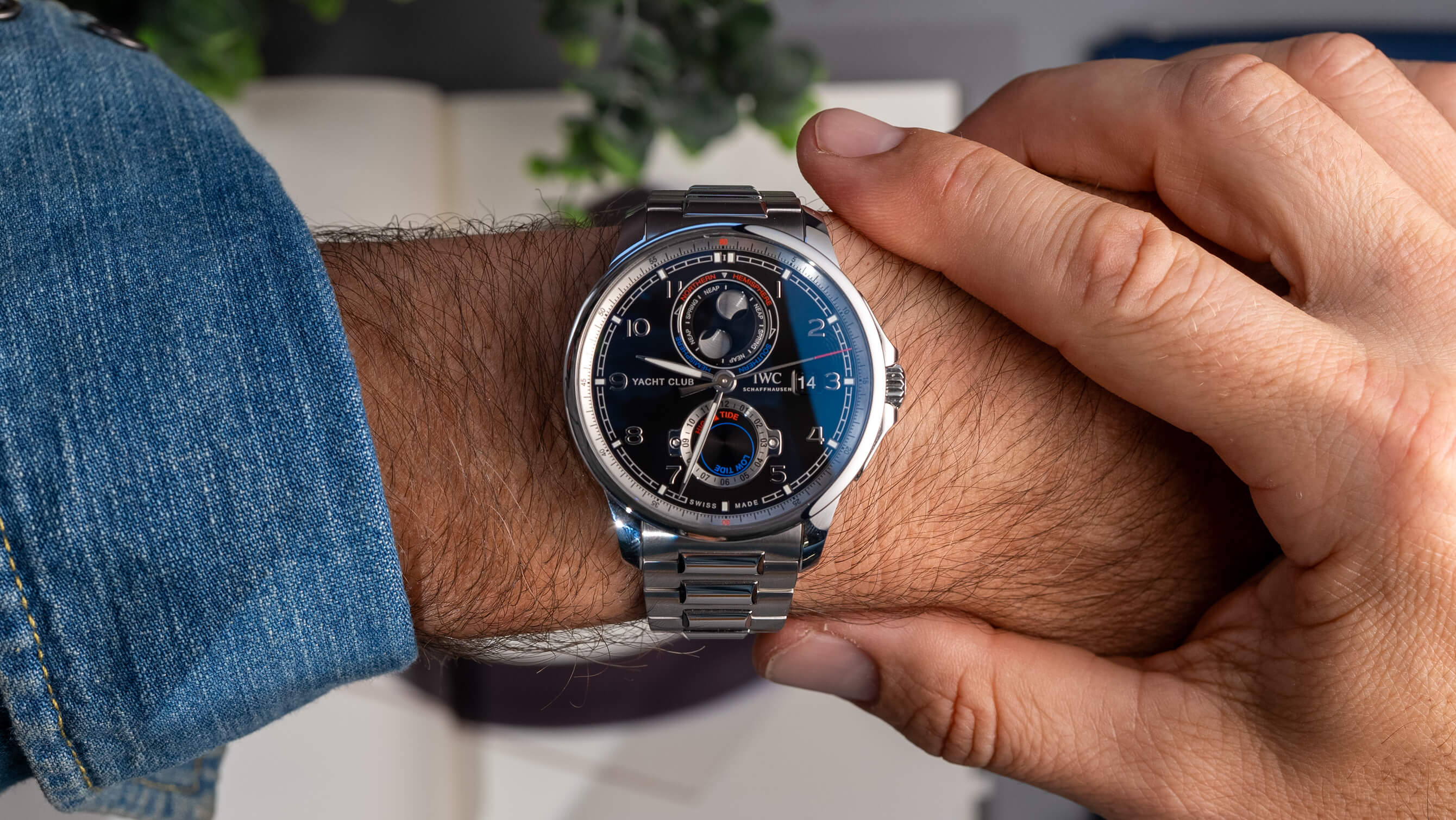
First Look – The Updated IWC Portugieser Yacht Club Moon & Tide, the First IWC with a Silicon Hairspring Monochrome
Casio n Aug 28, 2024

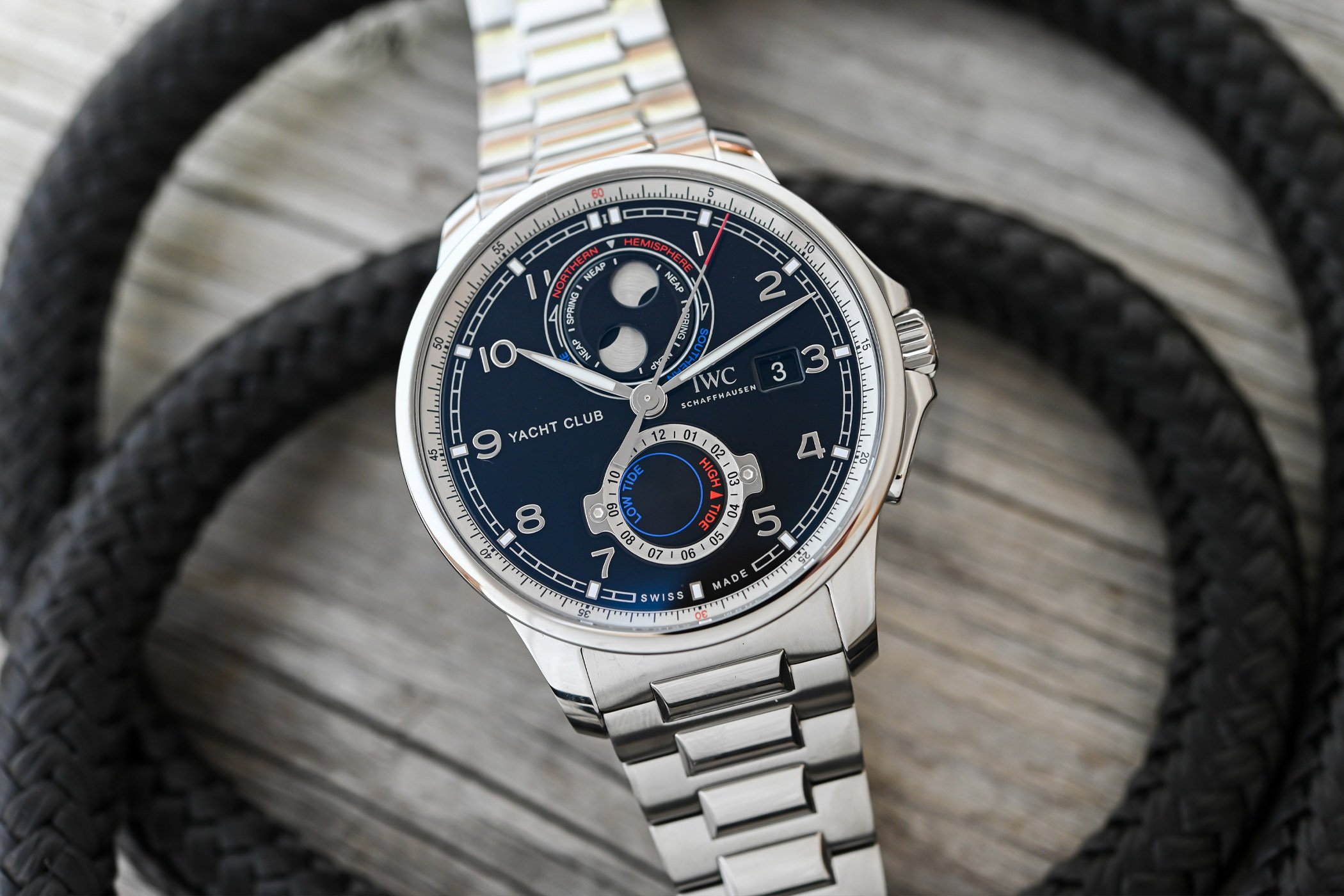
First Look – The Updated IWC Portugieser Yacht Club Moon & Tide, the First IWC with a Silicon Hairspring

This year, IWC brings the emblematic Portugieser collection under the spotlight, introducing several stunning new additions to the collection, including the impressive Eternal Calendar and updates to several iconic models, such as the chronograph and the 7-day Automatic. On the occasion of Watches and Wonders Shanghai, the brand unveils a new version of its Portugieser […]

Hands On: Jaeger-LeCoultre Gyrotourbillon à Stratosphère SJX Watches
Jaeger-LeCoultre Gyrotourbillon à Stratosphère Apr 28, 2026

Hands On: Jaeger-LeCoultre Gyrotourbillon à Stratosphère

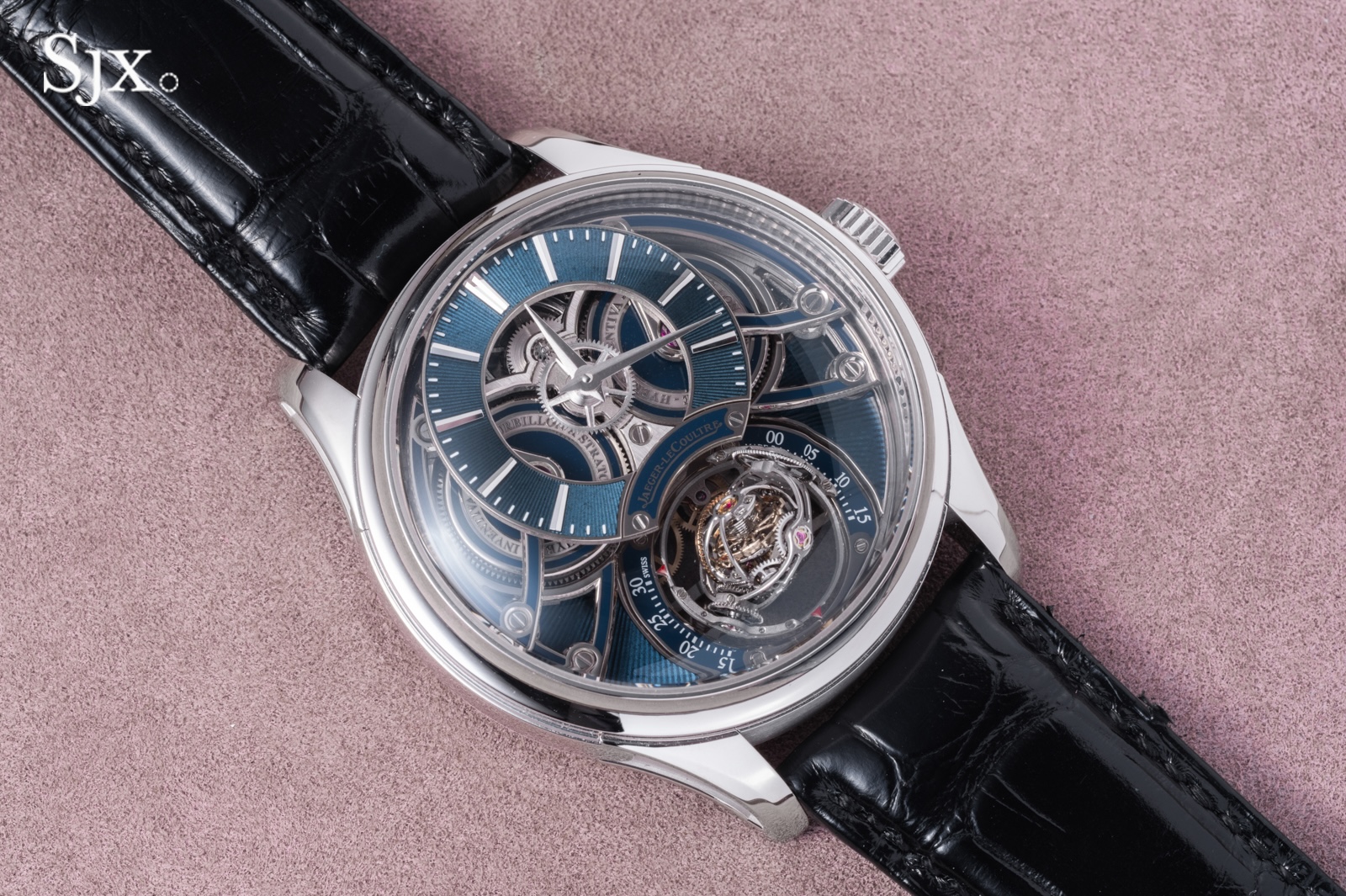
A tourbillon within a tourbillon, itself within yet another tourbillon. The Master Hybris Inventiva Gyrotourbillon à Stratosphère is Jaeger-LeCoultre’s sixth-generation multi-axis tourbillon, 22 years after the first Gyrotourbillon launched in 2004. The revised tourbillon architecture now covers close to 100% of possible positions in space to dilute the effects of gravity across nearly all possible orientations. But is it a genuine precision instrument, or an exploration of the limits of contemporary mechanics? Evolution or revolution? The calibre 178 that powers the Stratosphère builds on more than two decades of research into multi-axis tourbillons, during which Jaeger-LeCoultre (JLC) has explored variables such as axis multiplication, different hairspring geometries, miniaturisation, and new forms of energy management. This logical evolution of the Gyrotourbillon concept remained theoretical until recently. “Its realisation has only been possible thanks to the current maturity of the Manufacture’s expertise and technologies – it would have been difficult to envisage just a few years ago,” notes Takahiro Hamaguchi, Product & Innovation Director at JLC. This capability also stems from the brand’s internal structure, which enables the conception and production of a movement from scratch, and is reflected in the new Hybris Inventiva line, which will grow into a showcase of watches that isolate a single innovative complication developed through multi-year inte...

Introducing – H. Moser & Cie Endeavour Minute Repeater Cylindrical Tourbillon Skeleton Monochrome
H. Moser & Cie Endeavour Minute Apr 18, 2026

Introducing – H. Moser & Cie Endeavour Minute Repeater Cylindrical Tourbillon Skeleton

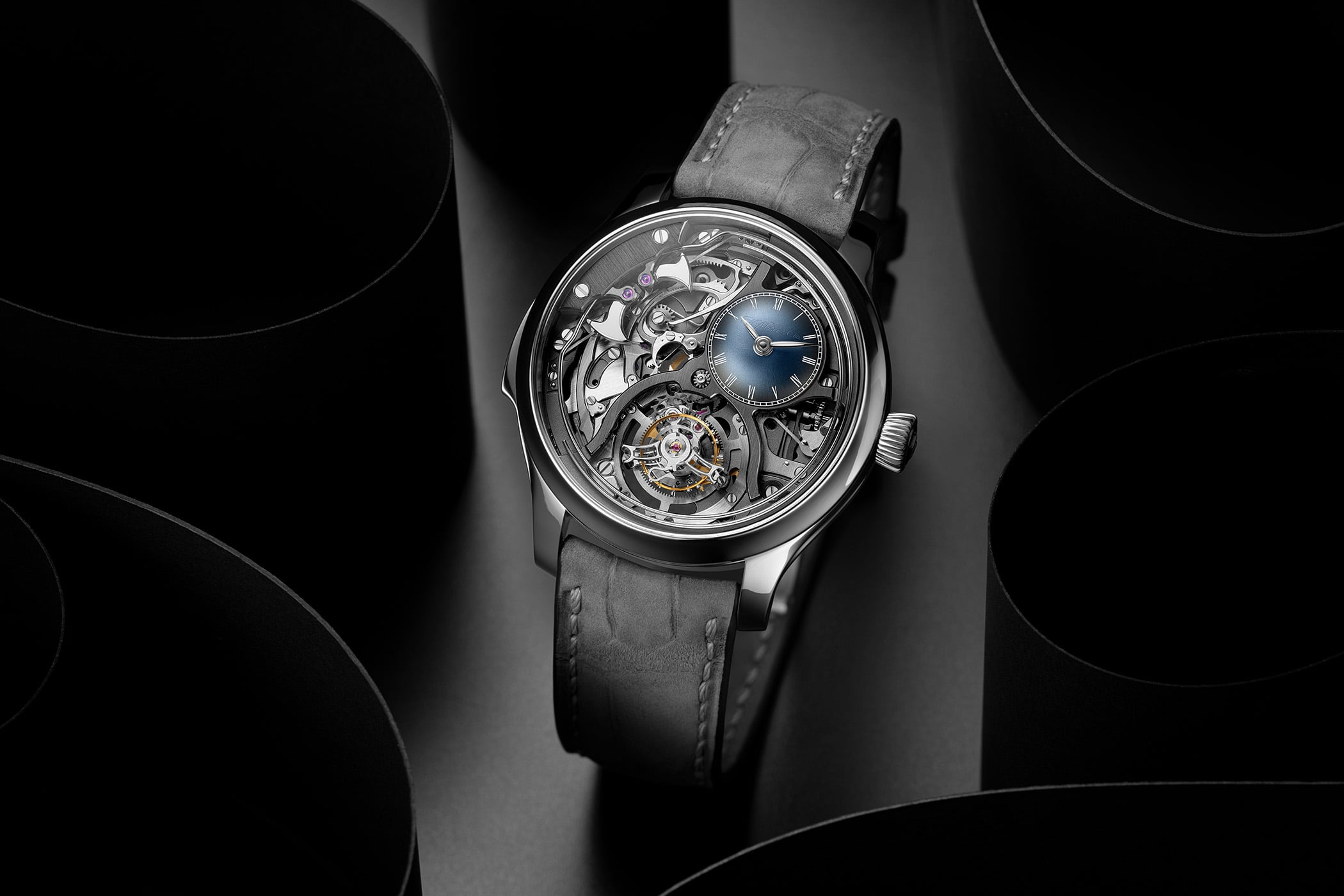
H. Moser & Cie. fearlessly takes two of its most prestigious complications, strips away all superfluous elements, and reveals them up front in the Endeavour Minute Repeater Cylindrical Tourbillon Skeleton. Exposing its dial-side minute repeater and cylindrical hairspring flying tourbillon in a fully skeletonised form, Moser ascends to new heights on the complications ladder. Launched […]

TAG Heuer Rethinks the Chronograph SJX Watches
TAG Heuer Rethinks Apr 13, 2026

TAG Heuer Rethinks the Chronograph

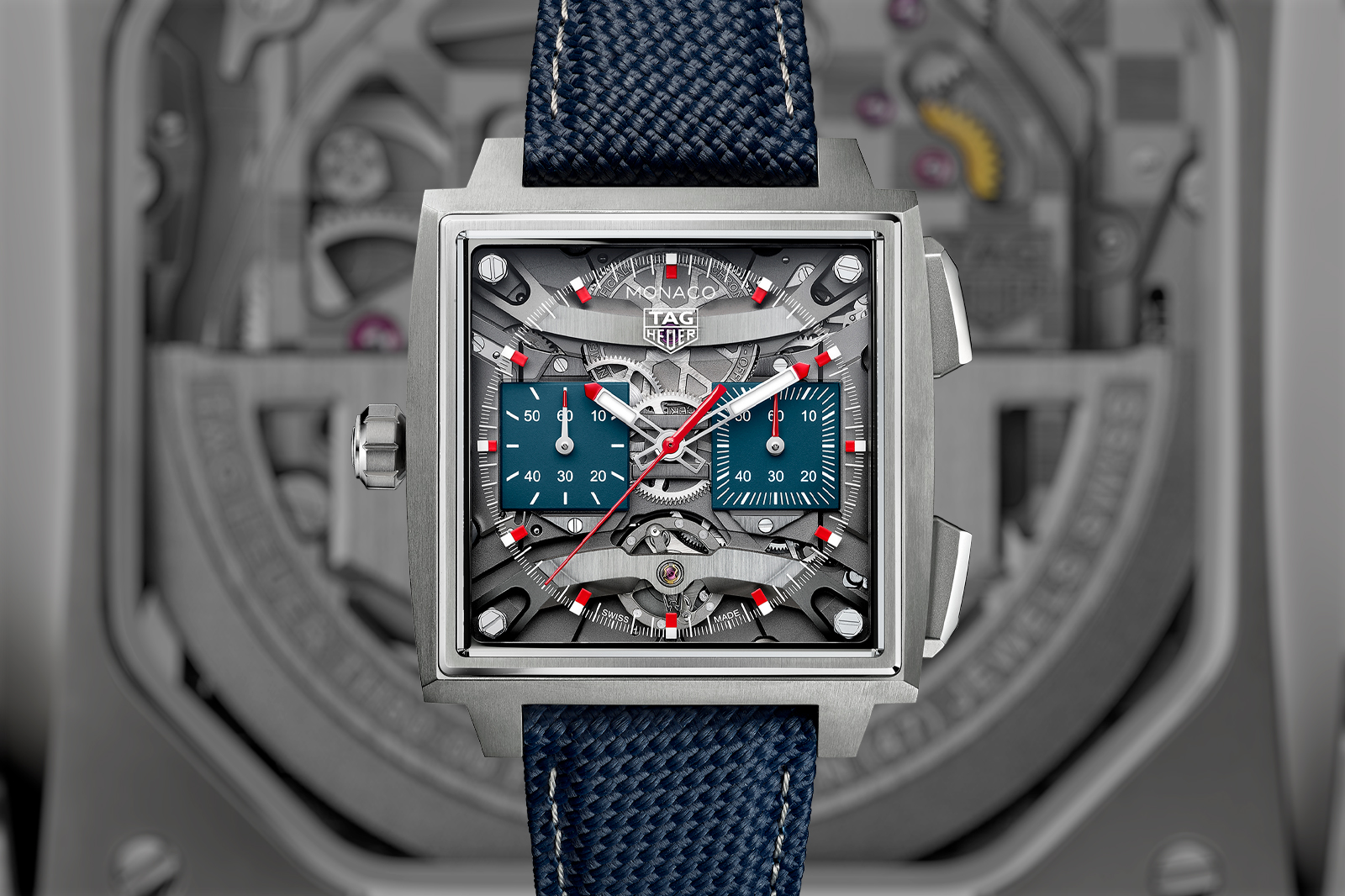
Sure to be among the most talked-about releases of Watches & Wonders, TAG Heuer has just unveiled the Monaco Evergraph. The openworked Monaco marks the debut of the calibre TH-80, one of the most advanced chronograph movements on the market. The Evergraph’s movement is notable for several reasons, but the most surprising is the use of an innovative compliant structure to simplify the chronograph mechanisms. Initial thoughts Beginning with the relaunch of the TH-Carbonspring last year, TAG Heuer has been on something of a road to redemption. Not long ago it seemed like the brand’s brightest days might be behind it, but the Evergraph provides further evidence that TAG Heuer has been retooling to become a new leader in technical innovation. The famous Breitling-Heuer-Buren Calibre 11 - one of the first automatic chronograph movements to hit the market back in 1969 - debuted in a Monaco, and so it’s fitting that the new TH-80 movement is first glimpsed through the transparent dial of the Monaco Evergraph. In more ways than one, the Evergraph pays proper hommage to original Heuer Monaco while remaining decidedly future-oriented.  It is also great to see the TH-Carbonspring literally front and centre on the dial side, proof that TAG Heuer is finally delivering on the promise of carbon hairspring industrialisation.  Even before digressing into the distinctive mechanics of the new cal. TH80-00, any chronograph aficionado will greatly appreciate the particular crown and...

Ruby Resonance from Armin Strom SJX Watches
F.P. Journe Mar 2, 2026

Ruby Resonance from Armin Strom

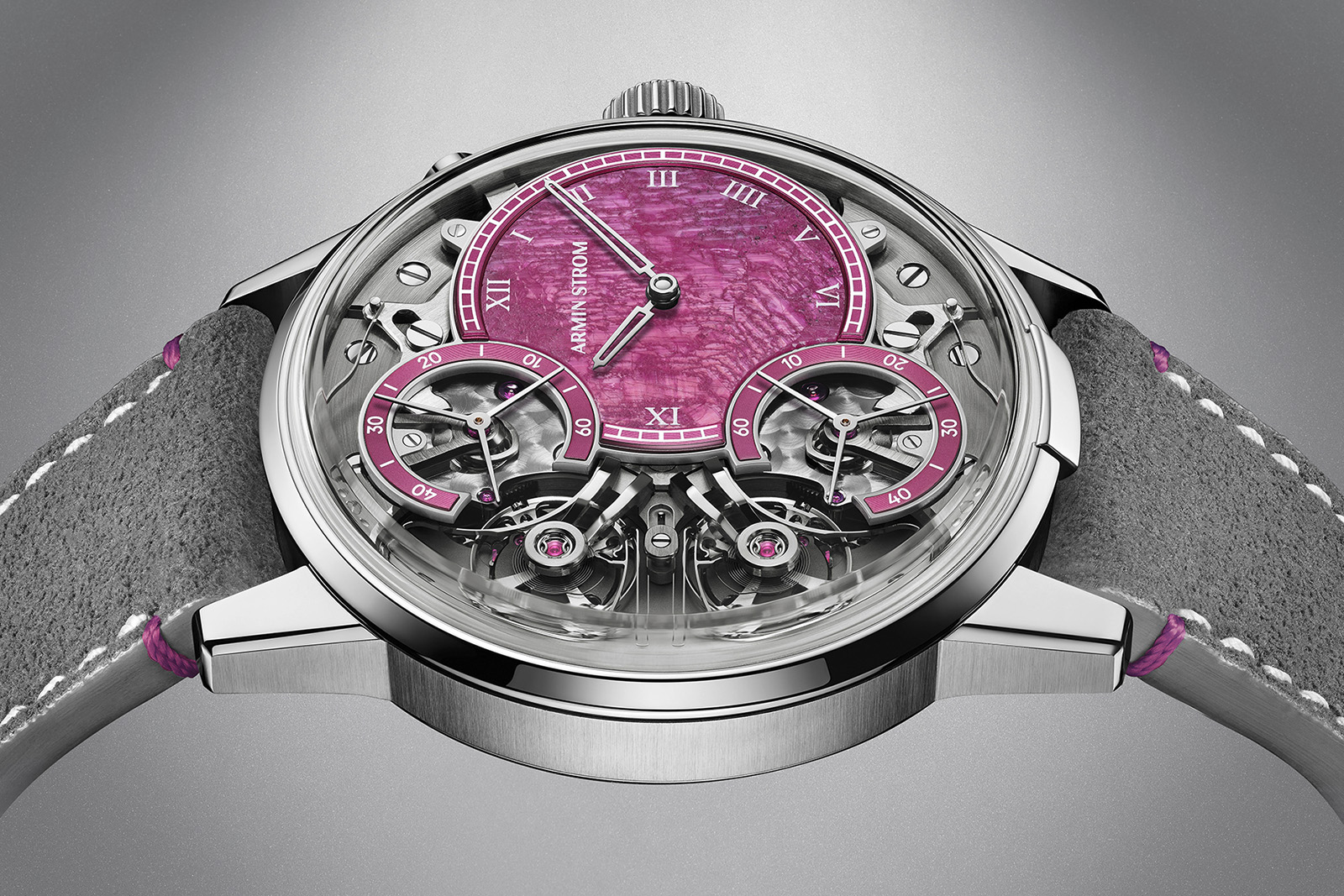
Independent watchmaker Armin Strom has upgraded its flagship complication with a precious stone dial. The Mirrored Force Resonance Ruby is a five-piece limited edition with a dial cut from natural ruby. Initial thoughts Armin Strom is arguably the second-most prominent watchmaker (after F.P. Journe) to successfully bring “resonance” watches to market. We extensively covered the subject of coupled oscillator watches recently, which examines Armin Strom’s unique approach to achieving this mysterious effect.  Within this narrow niche, Armin Strom’s Mirrored Force series is certainly the broadest collection of resonance watches on the market, with multiple movements and many variations exploiting the almost magic coupling between two sprung balances. This new limited edition employs the familiar in-house caliber ARF21, which connects the two hairspring by a long, swivelling blade spring - dubbed the Resonance Clutch Spring. While the movement is certainly well known, this particular iteration of the watch is quite surprising: a thin slice of natural ruby serves as the dial, with all the imperfections and liveliness of a natural mineral.  Using a ruby dial is not only aesthetically appealing but poetic for a mechanical watch. The jewels serving as bearings inside every movement are synthetic rubies - a fancy sort of industrial mineral glass. The uneven bright pink and violet shades of the Mirrored Force Resonance Ruby’s dial assure us there is nothing artificial...

In-Depth: Understanding Resonance in Watches SJX Watches
F.P. Journe s Chronomètre à Résonance Feb 19, 2026

In-Depth: Understanding Resonance in Watches

Resonance watches are among the most elusive machines in modern watchmaking. Creations such as F.P. Journe’s Chronomètre à Résonance perform well at auctions, commanding high prices. While their rarity and appeal are undeniable, watches that purport to harness resonance tend to be viewed with a degree of skepticism. A measure of skepticism is understandable - the concept of sprung balances becoming almost magically coupled is anything but straightforward and requires a profound understanding of oscillators in general.   This story seeks to shed some light on the concept of coupled oscillators by explaining the two models of coupling and explore the nuances of each system. Before exploring resonance, the reader is encouraged to review the basics of sprung oscillators and isochronism in order to become more familiar with the hairspring and balance wheel model.  The F.P. Journe Chronomètre à Résonance Souscription No. 2 sold for more than CHF3 million in November 2025. A confusion of terms First, the term resonance itself requires definition. In classical physics (mechanics, electrical engineering, signal processing, etc.) resonance is a phenomenon where a system vibrates under the influence of an external driving force that matches the system’s eigenfrequency (natural frequency). This is to say that a system at rest, which includes mass and spring elements, can be excited into a state of resonance by an external force when particular conditions are met. An imp...

Face Value: Why Painting on Watch Dials is Art SJX Watches
Vacheron Constantin s Masterpiece Jan 27, 2026

Face Value: Why Painting on Watch Dials is Art

Fine watches have pulled double duty as decorative objects since before the invention of the hairspring in 1675. In this sense, one could almost argue that watches have been linked to art since before they were even watches in the modern sense. This relationship emerged early in part because both types of objects were made primarily for the same clientele: wealthy elite in Europe and elsewhere. Though art and watches exist for different reasons, they are both often created with eternity in mind. The noble materials and timeless designs of many fine watches, especially those of the quality that would normally be paired with a work of art, also help justify the painstaking (and costly) work of artisanal decoration, which can, in some cases, take more than a year for a single work of miniature art. Introduction to miniature painting Of all the forms of decoration that have been applied to watches, miniature paintings are an especially important genre. Historically, these miniature masterpieces have been produced primarily in enamel, though acrylic paint is increasingly used today. Much has been written about the art of miniature painting, and it would not be an exaggeration to call it a dying art, since the number of living practitioners seems to have rarely exceeded half a dozen at any given time over the past century. Vacheron Constantin’s Masterpiece on Your Wrist programme is a partnership with the Metropolitan Museum of Art in New York that allows customers to commissi...

Down to the Wire: De Bethune’s In-House Hairsprings SJX Watches
De Bethune s In-House Hairsprings De Dec 10, 2025

Down to the Wire: De Bethune’s In-House Hairsprings

De Bethune plans to bring hairspring production in house, aiming to become one of the very few firms able to process alloy wire into a finished balance hairspring. This requires De Bethune’s new hairspring workshop to master wire drawing, rolling, cutting, heat treatment, and assembly. The rationale? “Externally produced hairsprings meet standards based on averages that do not enable fine adjustment of the dimensions to suit a particular balance wheel or its specific positioning in a calibre,” according to De Bethune. De Bethune’s “flat end curve” mated to a hairspring sourced from a supplier. Initial thoughts As De Bethune explains it, making its own hairsprings will allow the brand to tailor its hairspring to a specific balance or movement. Since its founding in 2002, De Bethune has presented itself as being on the cutting edge of chronometry, debuting a new balance design every year from 2004 to 2010. The brand was also quick to embrace silicon, and even briefly attempted a kilohertz magnetic oscillator system, Résonique. A new year, a new balance. Sometimes two new balances. Given De Bethune’s focus on chronometry, making its own hairsprings seems like a natural next step. However, there is a reason so few brands make their own hairsprings: the process is a difficult and demanding one that benefits greatly from economies of scale. For example, H. Moser & Cie. makes less than 4,000 watches per year, however, its sister company Precision Engineering claims...

In-Depth: Understanding Isochronism and Oscillators SJX Watches
Breguet overcoils Dec 10, 2025

In-Depth: Understanding Isochronism and Oscillators

The beginning of 2025 marked the 350th anniversary of the hairspring, the invention that made portable precision timekeeping possible. To commemorate the occasion, we published a series of deep dives covering the disputes around its invention, the evolution of spring materials over the years and the finer rules of forming Breguet overcoils. This final instalment examines isochronism. Some initial definitions and considerations A proper and universal definition of isochronism is: the property of an oscillatory system to maintain the same period of vibration despite variation in environmental factors. This implies that a vibrational system’s behaviour is inherent and external factors should not influence its frequency.  A few basic terms help frame the discussion. The period, measured in seconds, is the time taken for the oscillator to travel from one extreme position, through equilibrium, and back again. Frequency, measured in Hertz, is the inverse of the period; a system with a constant period can serve as a stable timebase. The amplitude is the distance swept by the oscillator from the equilibrium point to its extreme position. In practical terms, when saying that a sprung balance has an amplitude of 330°, it means the balance wheel rotates a full 330° in one direction from its equilibrium point before swinging back.  Figure I. Anatomy of a sinusoidal wave. In watchmaking parlance, isochronism means that an oscillator keeps the same period, regardless of its amplit...

How to Demagnetize A Watch Teddy Baldassarre
Dec 3, 2025

How to Demagnetize A Watch

Since their invention hundreds of years ago, watches and other timekeepers have had one consistent and implacable foe: magnetism. Magnetic fields are the arch-enemy of a watch’s ability to run reliably and accurately, as they can adversely affect the tiny metal parts in a traditional mechanical movement like the wheels, gears, and hairspring. The ill effects of magnetic fields on watches’ reliability first emerged as early as the 1920s, when electrical power became more ubiquitous in both homes and businesses, and the challenges for watchmakers have only multiplied in the years since.  Today, we’re surrounded by magnetic fields in almost every area of our everyday lives, from microwave ovens and refrigerators to computers, cell phones, and electrical motors. The watch industry’s decades-long battle against magnetic fields, explored in greater detail in this article, has been a largely successful one, with the use of protective inner cages and non-ferrous movement components now commonplace. Omega, for example, makes watches with movements that can resist magnetism up to 15,000 gauss, as in the Railmaster watch shown above. However, most of us, at one time or another, have still experienced a situation in which a watch falls victim to being magnetized, and it can be a bit intimidating to figure out how to fix it. [toc-section heading="How to Tell if Your Watch is Magnetized"] A watch that has had its movement magnetized might be difficult to notice at first. It mig...

Highlights: Complications on Bracelets at Christie’s Hong Kong SJX Watches
Patek Philippe Nov 24, 2025

Highlights: Complications on Bracelets at Christie’s Hong Kong

The uniform of high complications almost invariably includes a leather strap; a metal bracelet remains an uncommon pairing with, say, a grande sonnerie. Christie’s upcoming Hong Kong auction, however, brings an unexpected abundance of complicated watches on bracelets for collectors who prefer metal, including notable examples from Patek Philippe and A. Lange & Söhne. This season’s sale is anchored by two major private collections, most prominently the second part of The Chronicle Collection, the first half of which was dispersed earlier in the spring. The consignor began collecting in the 1990s, a fact reflected in the depth of neo-vintage highlights throughout the catalogue. Lot 2442 - Patek Philippe ref. 3448⁄8 with Possibly Unique Ruby Dial The Patek Philippe ref. 3448 was the first self-winding perpetual calendar produced in series. According to movement numbers, it is likely 586 were made in total - this lug-less example was one of the first made. Beyond its historical interest, the ref. 3448 is underpinned by one of – if not the – most beautiful automatic movements ever made: the cal. 27-460 Q. Looks aside, it was one of the most technically competent automatics of its era, with an overcoil hairspring, free-sprung balance, and bi-directional winding using a cam and pawl system. Atop this worthy base calibre, the ref. 3448 adds the iconic windows perpetual calendar by none other than Victorin Piguet. The ‘/8’ in ref. 3448/8 suffix denotes the style ...

Tokyo Retailer Shellman Celebrates Christiaan Huygens SJX Watches
Nov 17, 2025

Tokyo Retailer Shellman Celebrates Christiaan Huygens

In order to mark the spiral hairspring’s 350th anniversary and celebrate its inventor Christiaan Huygens (1629 – 1695), Japanese watch retailer Shellman presents a two-week exhibition event in Tokyo, The Origins of Time = Astronomy. Opening November 19 and slated to run through December 2, the Shellman exhibit is a collaboration with the Musée International d’Horlogerie (MIH) in La Chaux-de-Fonds, and showcases the larger extent of Huygens’ work, from horology to optical observation devices. Themed around the Dutch scientist credited with building the first pendulum clock and with inventing the hairspring, the exhibit also explores larger fields of horology, with a focus on astronomy and modern independent watchmaking. Original drawings showing early attempts at making a sprung balance. Beyond his practical applications in horology, Huygens left marks on many other scientific fields, from geometry to physics and astronomy. He notably discovered Saturn’s largest moon Titan and cemented the wave theory of light propagation. One could say that he was interested in the celestial bodies as much as he was in understanding motion and measuring time here on Earth. In his honour, the exhibit leans on the astronomical theme as well.  The exhibition is accompanied by a selection of special watches available for sale. Visitors will have the chance to acquire the world’s smallest wristwatch planetarium, the Planetarium Christiaan Huygens Limited Edition, created by the Du...