 SJX Watches
Hands On: Vacheron Constantin Traditionnelle Manual-Winding
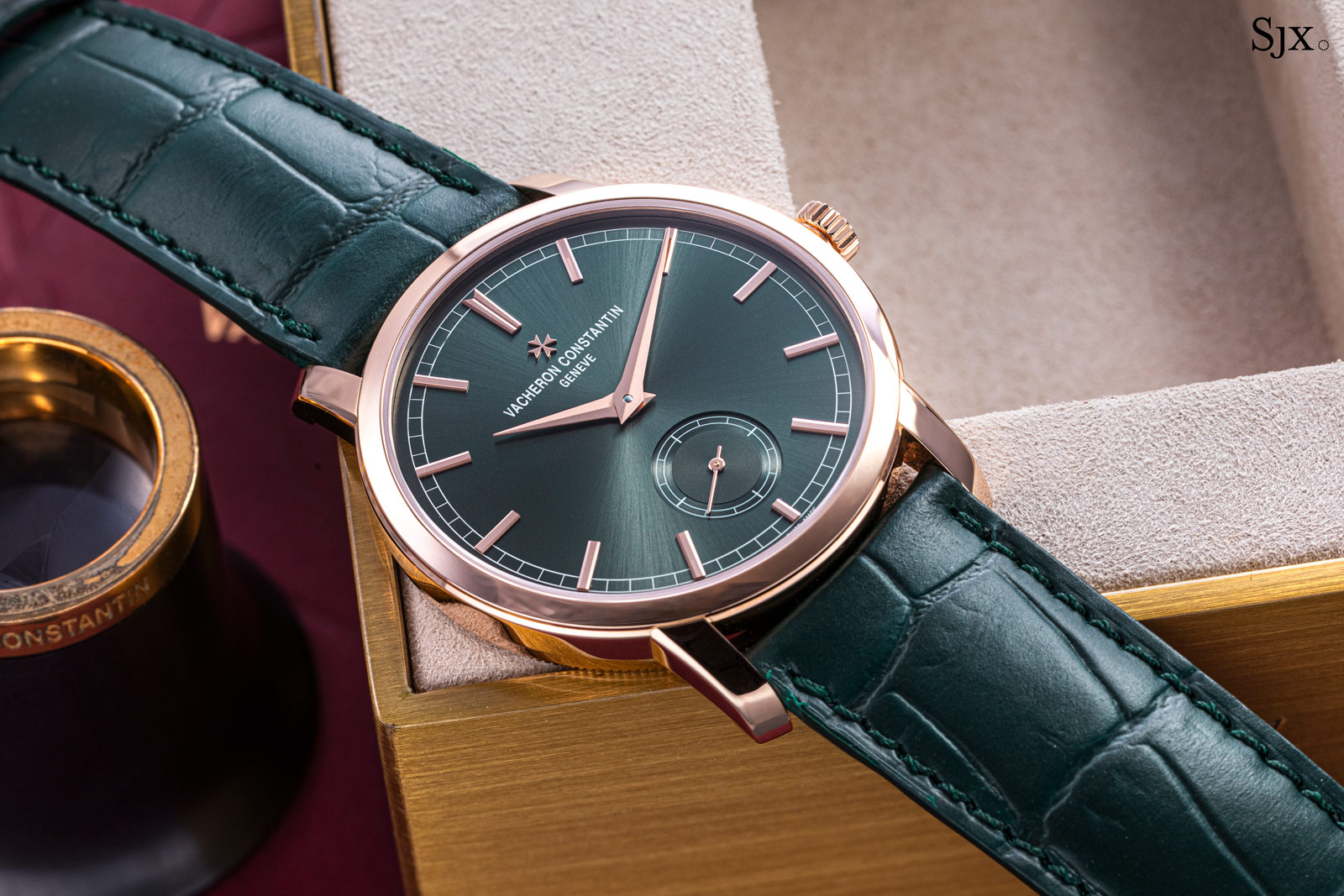
Last year Vacheron Constantin (VC) the Traditionnelle Manual-Winding ref. 82172, a fresh variant of the brand’s longstanding time-only dress watch. Combining an 18k pink gold case with a sunburst green dial, the new Traditionnelle is an unusual and bold twist on the traditional formal wear timepiece. Although compact in dimensions and formal in style, it stands out as dress watch that different without trying too hard. Initial thoughts The Traditionnelle Manual-Winding is arguably VC’s quintessential dress watch. It has a traditional aesthetic and perfect proportions at 38 mm. And though it’s an entry-level model, it features upscale details like solid-gold indices and hands, along with a refined movement. The most familiar iteration of the Traditionnelle Manual-Winding is pink gold with a silver dial, which is classic but perhaps too plain for some. Similarly, most dress watches, VC or otherwise, tend to be in conservative colours, silver, cream, black and so on. The new Traditionnelle Manual-Winding, on the other hand, is a striking metallic green that’s flashy but not overly so. The combination is unconventional as a dress watch, but it works well. And it’s also one of the most affordable dress watches in the brand’s catalogue. Only the Patrimony 40 mm is less expensive but that has the slightly simpler cal. 1400 movement. The Traditionnelle Manual-Winding on the other hand sports the higher-end cal. 4400 AS, a large movement with a long power reserve that...



Comments
No comments yet, be the first to weigh in.