What it is
The Omega 2500 is the caliber that made the co-axial escapement a commercial product. The escapement was designed by the British independent watchmaker George Daniels in the 1970s as a fundamental rethink of the Swiss lever escapement (the dominant escapement since the 19th century). Daniels spent two decades trying to interest a Swiss manufacture in producing it; Omega (under Swatch Group) eventually agreed in the late 1990s, and the first commercial co-axial caliber, the 2500, launched in the De Ville in 1999. The base is the ETA 2892-A2 with the standard lever escapement removed and replaced by Daniels' co-axial.
Why the co-axial mattered
The Swiss lever escapement (Thomas Mudge, ~1750) has a long-standing problem: the impulse and the locking happen at the same surface, so the escapement requires lubrication, and as the lubricant degrades the rate drifts. The co-axial escapement separates impulse from locking onto two different wheels (hence "co-axial", literally "on the same axis"), so the impulse surface barely needs lubricant. The theoretical benefit: longer service intervals, better long-term rate stability, less drift between services. In practice, the early 2500 had teething problems (rate variation in some references, escapement wear in others), and Omega revised the caliber several times: 2500A (1999), 2500B (2002), 2500C (2007, frequency lowered to 3.5 Hz to reduce escapement wear), 2500D (2011, refined). By the 2500D the caliber was reliable and the co-axial concept had been validated commercially.
What it powered
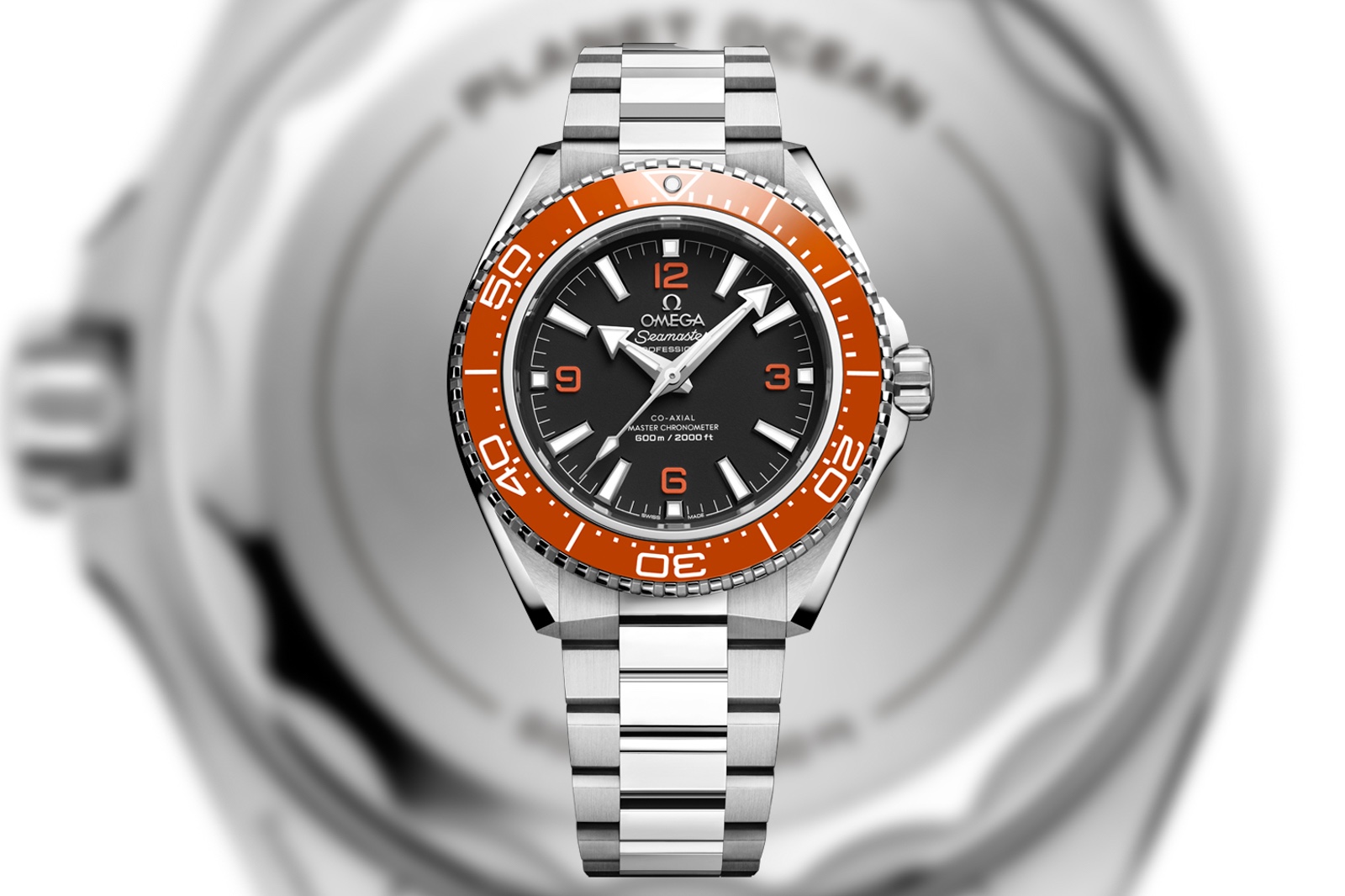
The 2500 family powered the modern Omega mechanical catalogue from 1999 to ~2014. De Ville Co-Axial (1999): the launch reference. Seamaster Aqua Terra: standard 2500 family. Seamaster Diver 300M Co-Axial (post-2005): 2500 family. Seamaster Planet Ocean (2005-2011): 2500. Speedmaster automatic variants (Reduced, Date, Day-Date): selected variants used the 2500. The Speedmaster Professional Moonwatch never used the 2500 (it remained on the cam-actuated 1861 until the 2021 switch to the 3861).
Replaced by the in-house 8500 / 8800 / 8900
The 2500 was always a "modified ETA" at heart: the base 2892-A2 with the co-axial added. Omega's ambition was a wholly in-house caliber designed for the co-axial from the ground up, and that became the Cal. 8500 (2007 launch in the De Ville) and the modern Cal. 8800 / 8900 family (with METAS Master Chronometer certification, 15,000-gauss anti-magnetic, Si14 silicon hairspring, 60-hour reserve). The 2500 was phased out across 2014-2017 as the 8800/8900 rolled across the catalogue. By 2018 the 2500 was no longer in current production references, but it remains in the substantial population of pre-2014 Omega automatics in active rotation.
Service notes
Service for a 2500-equipped Omega runs USD 600-900 at Omega service centres, with a 2-year warranty. Recommended interval: 5-7 years for early variants (2500A/B), 8-10 years for 2500C/D after the 3.5 Hz revision reduced escapement wear. The co-axial escapement is now well-understood by Omega-trained watchmakers; the early teething issues have been documented and the parts-replacement protocols are mature. Independent service is widely available for the 2500 because the underlying base is the ubiquitous 2892-A2 and Omega has not aggressively restricted parts. For a 2500A-equipped early example, a service includes inspection of the escapement and replacement if wear is observed.
Comments
No comments yet, be the first to weigh in.