
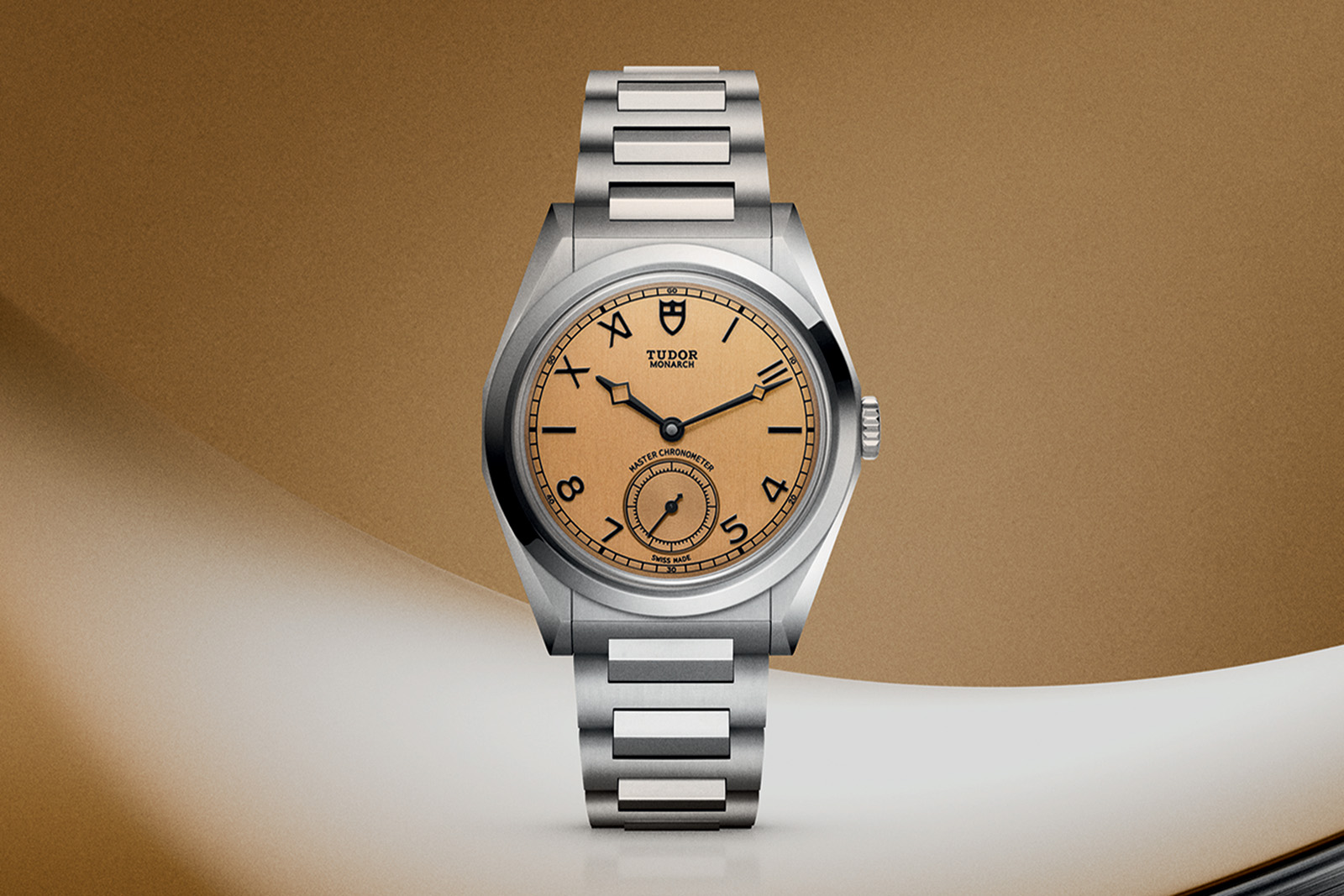
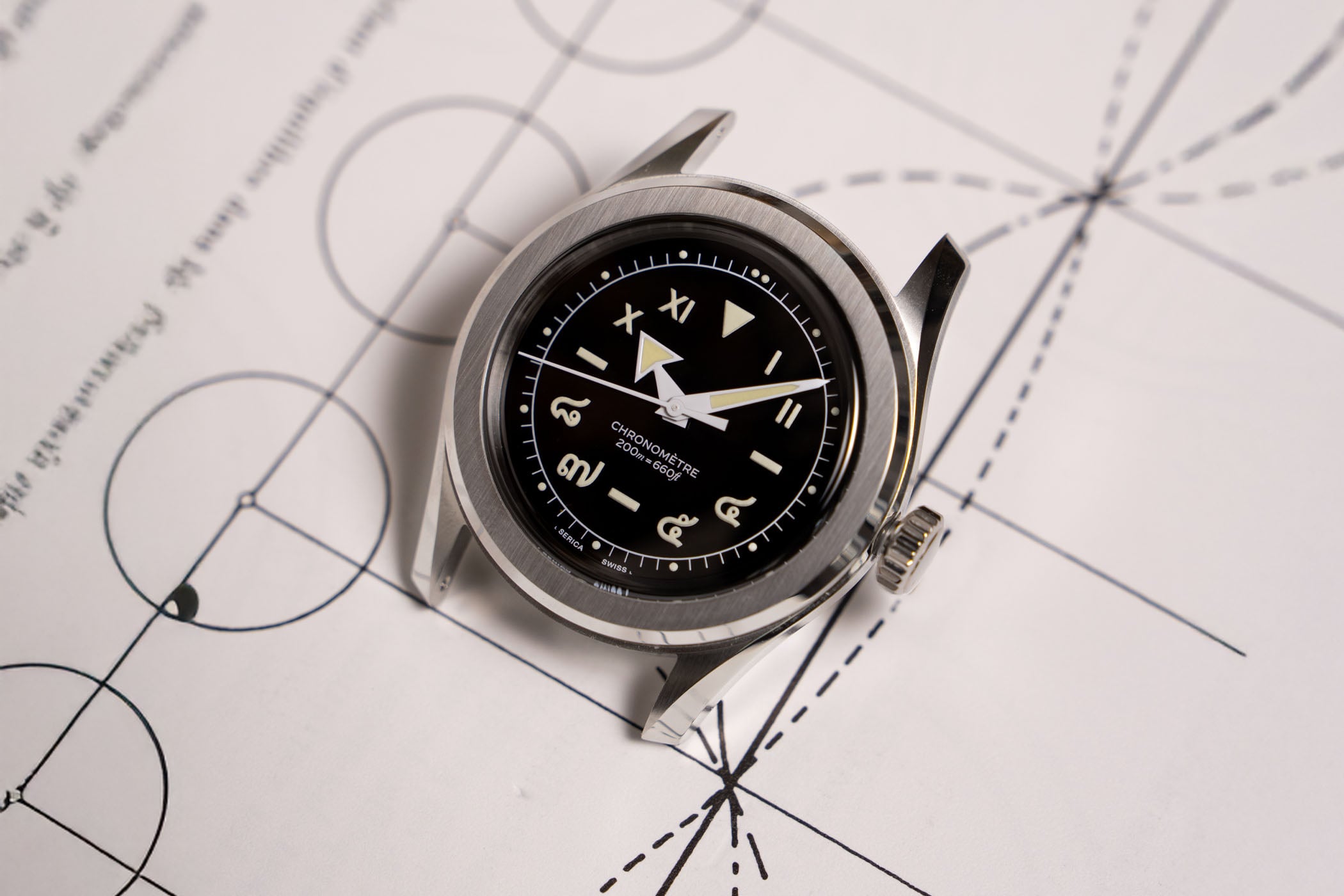
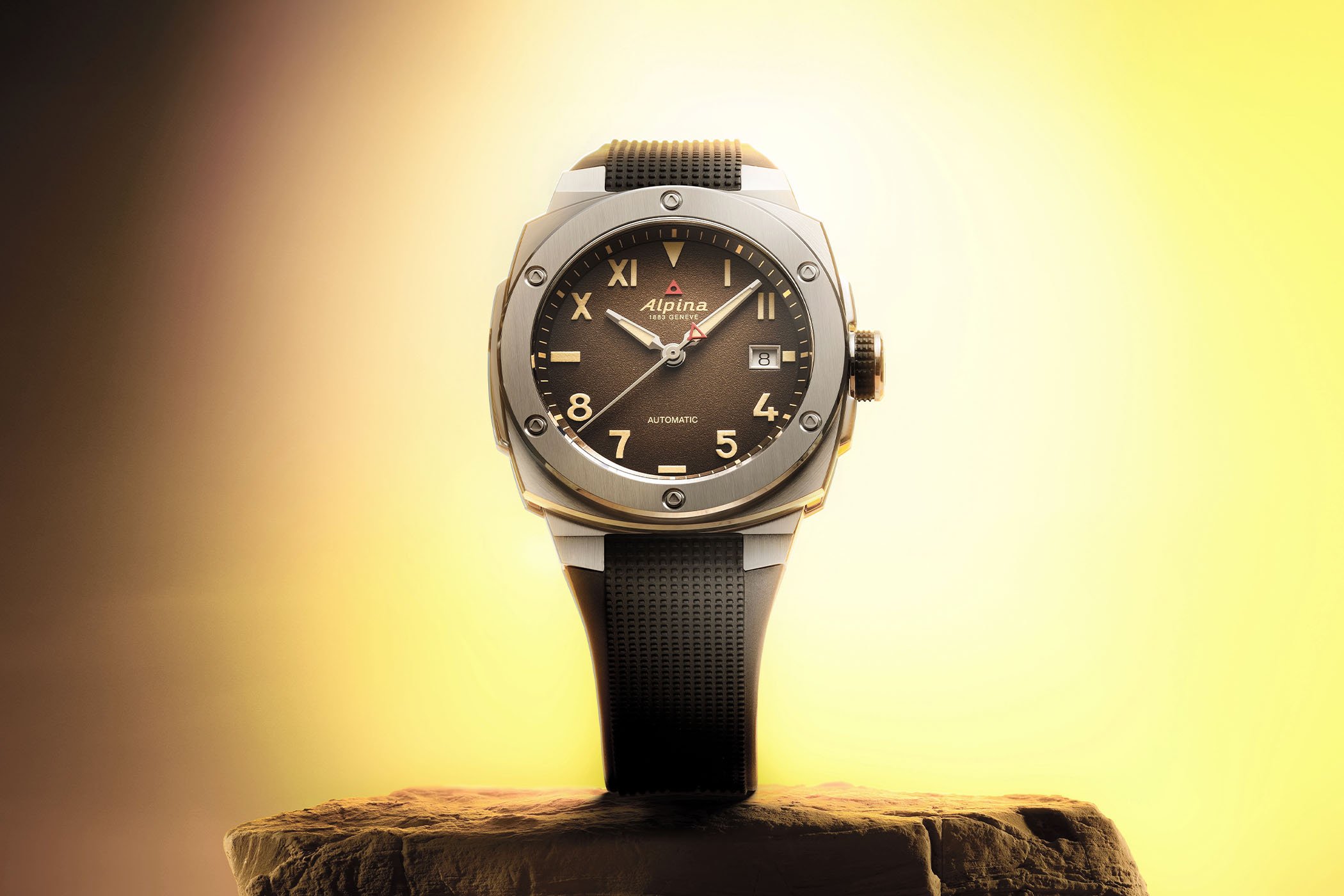
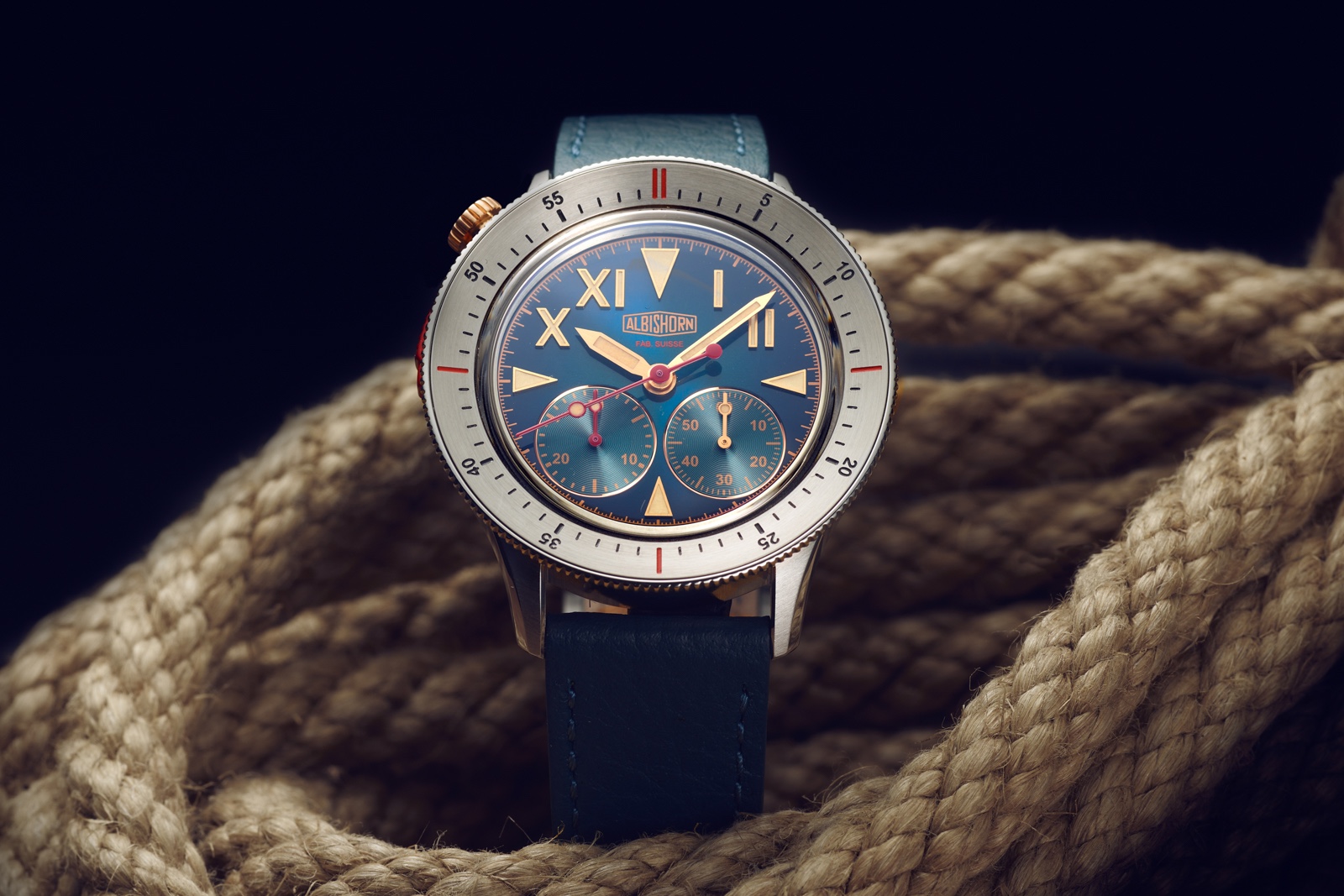
A California dial is a watch dial whose upper half uses Roman numerals (typically XI, XII, I, II at 11, 12, 1, 2) and whose lower half uses Arabic numerals (4, 5, 6, 7, 8). The 3 and 9 are sometimes replaced with elongated lume markers or simple stick indices, depending on the specific reference; some California dials also use Roman numerals on a half-dial (3, 9, 12 only) with Arabic numerals on the other quadrants. The shared visual signature is the deliberate inconsistency between the upper and lower halves.
The format originated with Rolex in 1934 on the Bubble Back ref. 3372 and similar Oyster Perpetual references of the period; vintage Rolex enthusiasts have documented California dials on the 3372, 3478, 4444, and 2940 Bubble Backs, plus a few mid-1930s Prince and Cellini references. The contemporary justification was probably aesthetic, splitting the dial visually into upper-formal and lower-utilitarian halves, though Rolex never published a design rationale.
"The California dial is the only major watch design term that comes from where the watches were repaired, not from where they were made. The 1980s restorers in Los Angeles named it; the name stuck."- Vintage Rolex collector forum tradition
The "California dial" name is a 1980s coinage. Kirk Rich Dial Company and other Los Angeles restoration shops frequently restored vintage Rolex Bubble Backs to the original mixed-numeral format in the 1980s, and US collectors began informally calling them "California dials" because that's where they came from. The name has stuck and is now used worldwide despite having no Italian or Swiss origin.
In Italian watchmaking, the same layout had been used independently from 1939 by Panerai, who built early Radiomir watches for Italian Royal Navy frogmen with what is now called the Panerai California dial: half the indices Roman, half Arabic. The Panerai design was intended for maximum underwater legibility (the larger Arabic numerals 4-8 are easier to read at a glance than Roman numerals would be at the bottom of the dial). Panerai still produces California-dial Radiomir variants; collectors typically use "Panerai California" specifically for these references and "California dial" generically for the format.
In the modern era, the California dial has been revived as a deliberate vintage cue by several brands. Panerai Radiomir California (2012, ref. PAM 424) is the canonical modern reissue; Tudor has occasional California-style references; Ralf Tech WRX uses the format on its Original variant; various microbrands (Vaer, Praesidus, Boldr, Sangin) produce California-dial models targeted at vintage-aesthetic-aware buyers. The format remains relatively rare and visually distinctive; it never became dominant, which is part of its appeal as a collector cue.
Vintage Rolex California-dial Bubble Backs in original condition command significant premiums today: a 1934 ref. 3372 with original California dial in good condition typically sells for $25,000-$60,000 at auction, vs $8,000-$15,000 for the same reference with a standard dial. The premium tracks scarcity (most California dials were re-dialled to standard during 1950s-70s services) and the design's reputation as one of the most collectable Rolex dial variations of the pre-war era.




Comments 1