
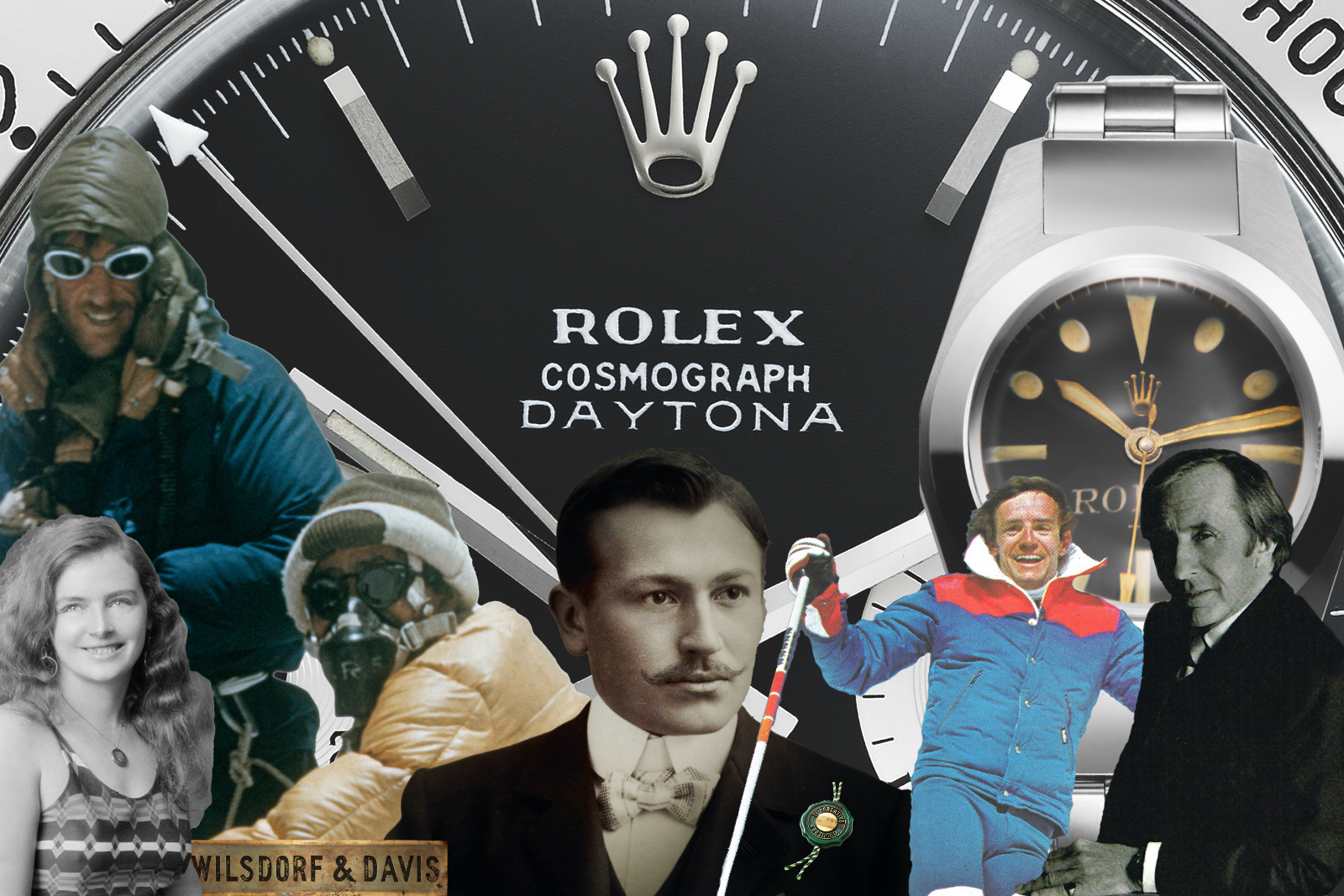
Hans Wilsdorf was born 22 March 1881 in Kulmbach, Bavaria. Orphaned at 12, he was raised by uncles and trained at a German watchmaking trading house in La Chaux-de-Fonds. He moved to London in 1903 and in 1905, with brother-in-law Alfred Davis, founded Wilsdorf & Davis, importing Swiss movements (initially from Aegler, later renamed Manufacture des Montres Rolex) and casing them in London for distribution to British and Empire markets.
Wilsdorf registered the Rolex name in 1908; he wanted a short, easy-to-pronounce, distinctive word that sounded the same in every language. The brand was registered in La Chaux-de-Fonds in 1915. Wilsdorf moved Rolex headquarters from London to Biel/Bienne in 1919 to escape British WWI watch-import duties; the move proved decisive for the brand's industrial scale.
"I wanted a name that was short, distinctive, easy to pronounce in every language, and that would look good on the dial of a watch."- Hans Wilsdorf on naming Rolex (c. 1908)
His commercial achievements defined modern watchmaking. The 1910 Bienne chronometer certification for a Rolex wristwatch was the first chronometer-certified wristwatch in history. The 1926 Oyster case was the first commercially waterproof wristwatch (Mercedes Gleitze swimming the English Channel in 1927 wearing one was Wilsdorf's marketing-genius proof). The 1931 Perpetual rotor was the first commercial automatic wristwatch winding system. The 1945 Datejust introduced the date window; the 1953 Submariner the modern dive watch.
After his wife May died in 1944 with no children, Wilsdorf established the Hans Wilsdorf Foundation in Geneva with all his Rolex shares. The foundation still owns Rolex today and is forbidden from selling. Wilsdorf died 6 July 1960 in Geneva. His legacy: a brand that combines independent ownership, reinvested profit, and 100+ years of cultural dominance in luxury watchmaking.





Comments 1