Maximilian Büsser was born in 1967 to a Swiss father and Indian mother, raised in Lausanne. He studied microengineering at EPFL, then joined Jaeger-LeCoultre in 1991 in product development. He moved to Harry Winston Rare Timepieces in 1998 as managing director; under Büsser, Harry Winston launched the Opus collaboration series with independent watchmakers (F.P. Journe, Vianney Halter, Antoine Preziuso, Christophe Claret) that put avant-garde watchmaking on the luxury map.
In 2005 Büsser left Harry Winston to found MB&F (Maximilian Büsser & Friends). The 'Friends' part was deliberate: the brand was structured around collaborations with multiple independent watchmakers and designers per piece, with Büsser as the conceptual architect. The first reference, the Horological Machine 1 (HM1), launched 2007, established the visual vocabulary: spaceship-influenced cases, exposed movement architecture, no traditional dial.
"I don't make watches. I make machines that happen to tell time. The watch is the side effect of the machine."- Max Büsser on MB&F's design philosophy
MB&F's Horological Machines (HM1 through HM11+) are each a complete reinvention. HM2 (2008) was a digital-jumping-hour and retrograde-minutes watch; HM3 'Frog' (2009) put hour and minute domes on the dial; HM4 'Thunderbolt' (2010) was a twin-rotor jet-engine inspired piece; HM6 'Space Pirate' (2014) was a battlestar-galactica-inspired curved sapphire case. Each reference produces 33-66 pieces; combined annual output is ~250 watches.
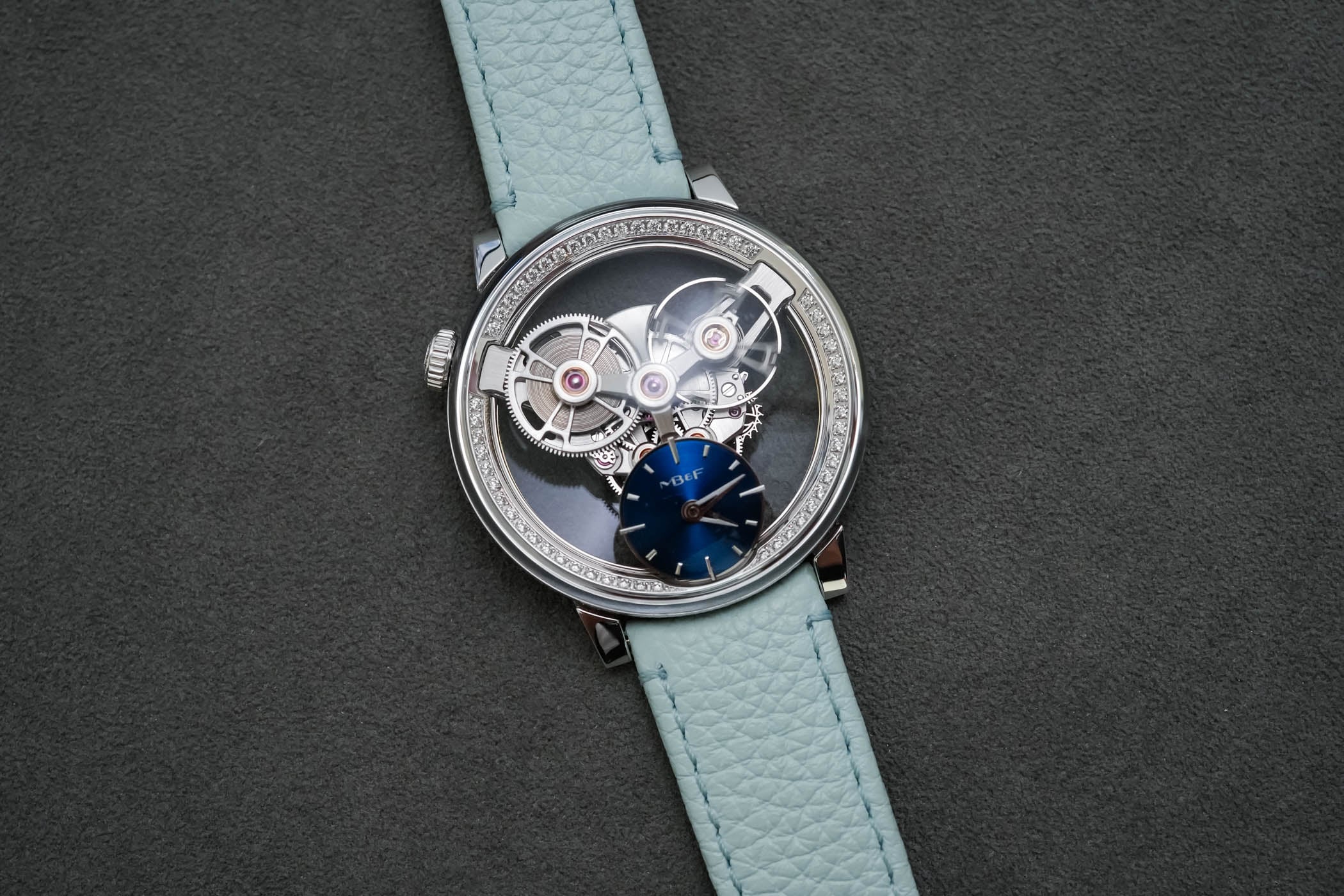
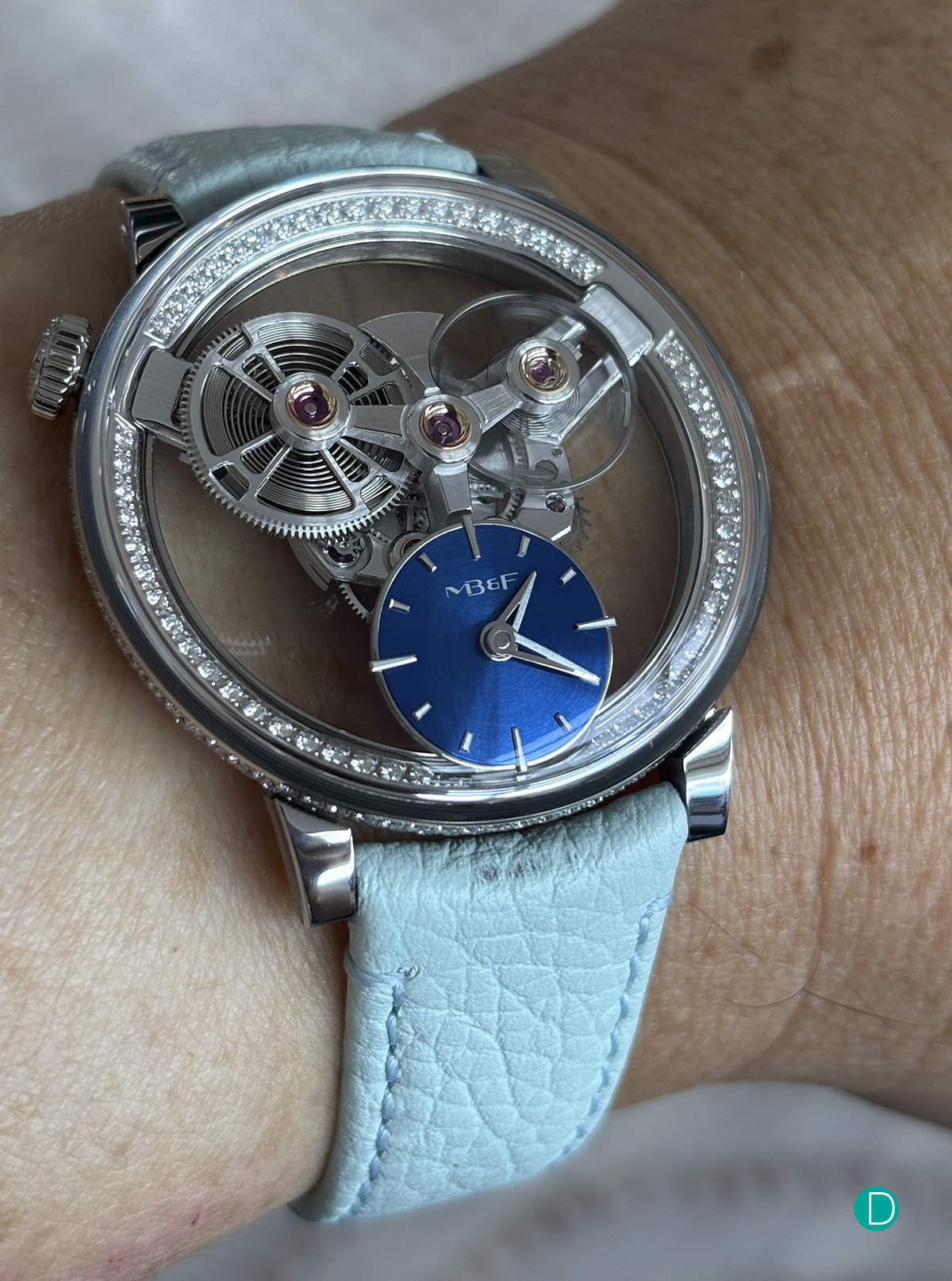
The Legacy Machine series (LM1 launched 2011) is MB&F's classical line: round cases, balanced dials, traditional aesthetic, but with single-bridge floating balance wheels and architectural movement design. The LM Perpetual, LM101, LM Sequential Evo, and LM Thunderdome are the canonical references. Retail CHF 60,000-200,000 across the catalogue. MB&F has won multiple GPHG awards and is the most-cited reference for modern avant-garde watchmaking. Büsser remains creative director and majority shareholder.





Comments 2