
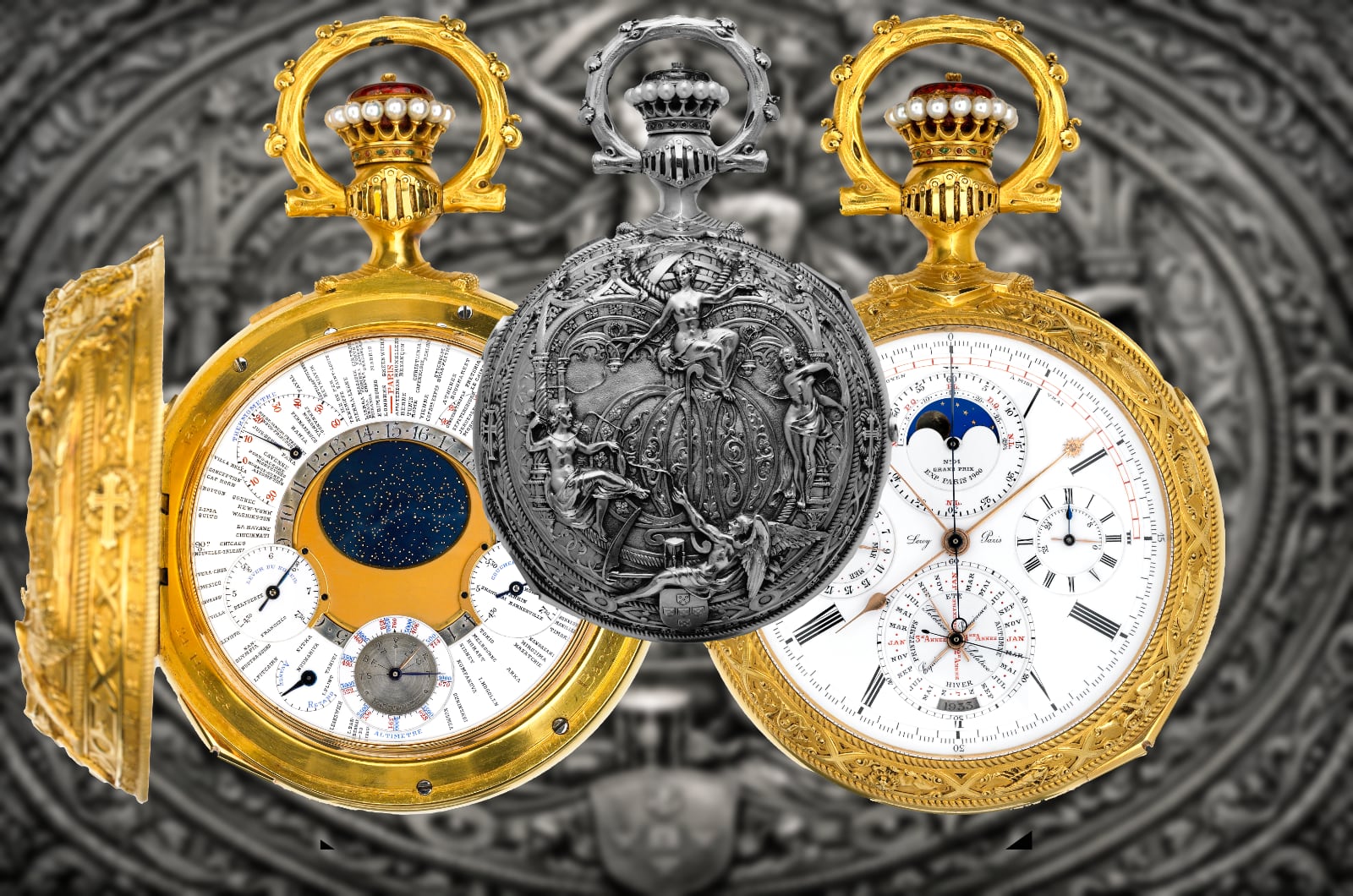
The Patek Philippe Calibre 89 was conceived as the capstone showcase complication for Patek's 150th anniversary in 1989. The brief: build the most complicated mechanical watch ever made, exceeding the previous record-holder Henry Graves Supercomplication (Patek pocket watch built 1925-33 for American banker Henry Graves Jr.; 24 complications). The new watch needed to advance the state of the art beyond the 1933 Graves; the engineering target was 33 complications.
Development ran from 1980 to 1989: 3 years of design (architectural drawings, complication mechanism interactions, layer-stacking strategy), 5 years of construction (component machining, assembly testing, individual mechanism validation), 1 year of final-watch testing (rate stability, complication coordination across calendar cycles, thermal stability). The lead watchmakers were Vahe Vartanian and Andre Beyner; the team grew to several dozen specialists at peak development.
"Henry Graves wanted the most complicated watch in the world. We built one with 9 more. The next maker beat us by 24. The race continues."- Patek Philippe historian on grand-complication competition
The 33 complications include: perpetual calendar with 4-year and 400-year cycles, tourbillon, minute repeater, grande and petite sonnerie (chimes the hours and quarters automatically), moonphase, star chart (rotating sky map for the wearer's latitude), equation of time, sunrise / sunset times, solar / sidereal time, thermometer, century / decade / year indicators, chronograph + split-seconds rattrapante, second time zone, and many more. The complications interact: the perpetual calendar drives the moonphase, sunrise/sunset, and star chart; the chronograph integrates with the rattrapante; the sonnerie chimes are coupled to the time mechanism.
The watch contains 1,728 components in a movement ~88mm diameter, designed for pocket-watch wear (a wristwatch case at this complexity was not feasible). Two layers: the top layer contains the time / chronograph / repeater mechanisms; the bottom layer contains the calendar / astronomical / chime mechanisms. Four examples were produced over the 1989-1991 period: one each in yellow gold, white gold, rose gold, and platinum. Initial retail price: approximately USD 2.7 million per example.
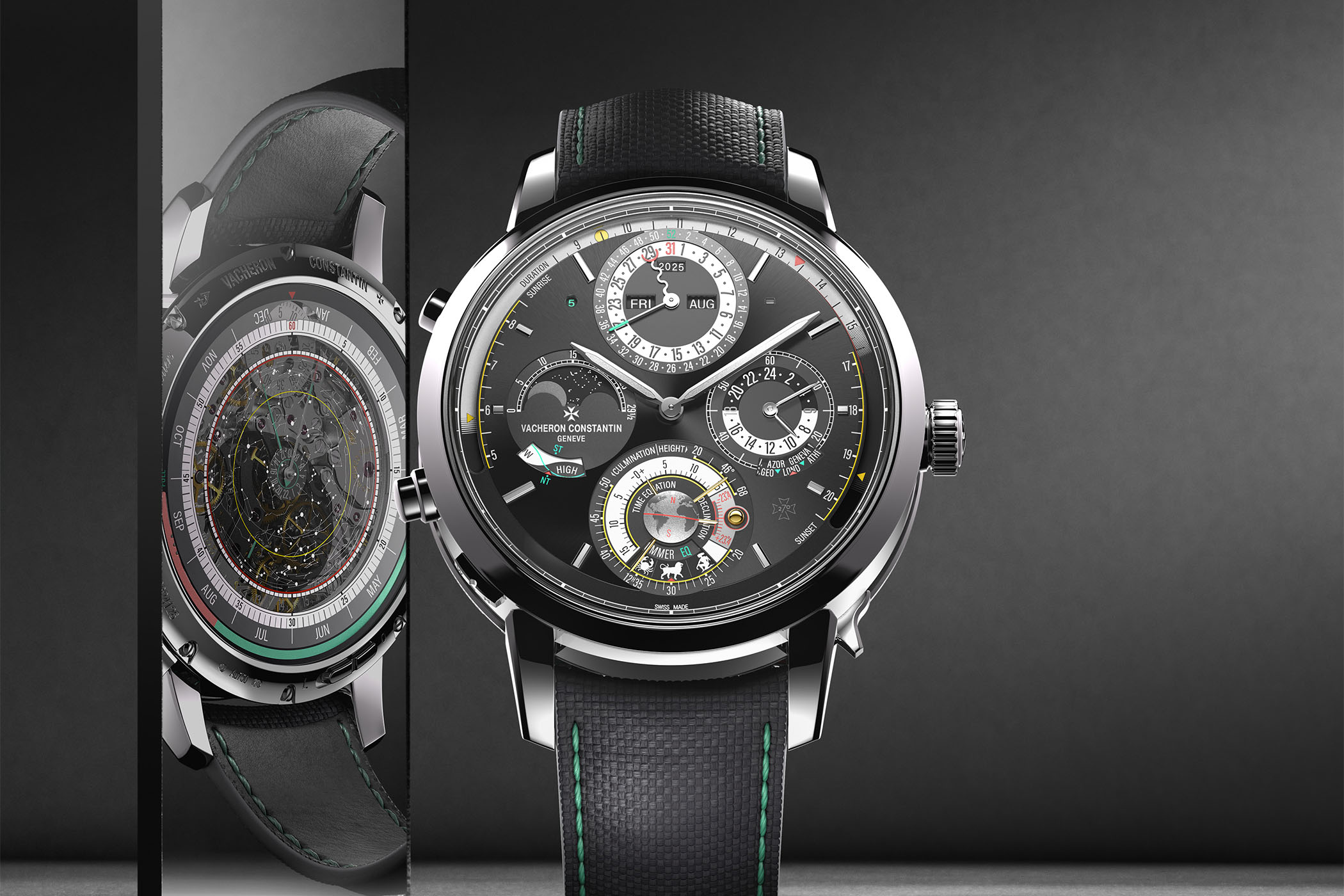
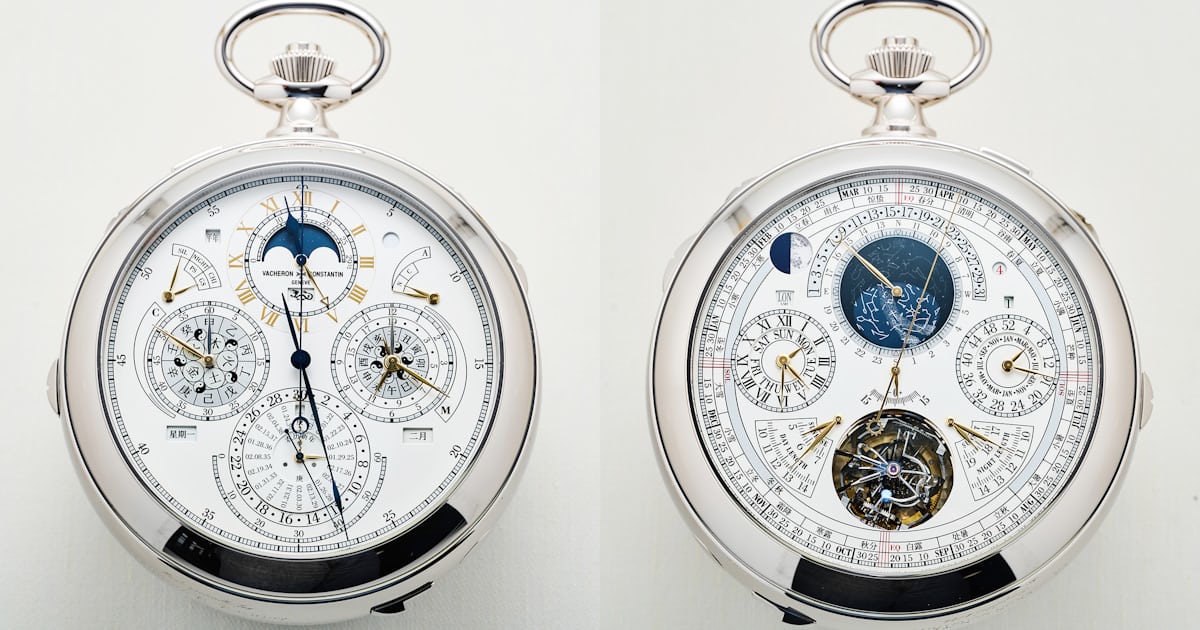
The 2009 Antiquorum auction in Geneva sold the platinum example for CHF 6.5 million, then a record price for any Patek Philippe at auction (later exceeded by the Tiffany Nautilus 5711 in 2021 at USD 6.5M and various Henry Graves and modern Grandmaster Chime references). The Calibre 89 held the title "most complicated mechanical watch ever made" until 2015, when Vacheron Constantin unveiled the Reference 57260 with 57 complications; Patek subsequently produced the Grandmaster Chime ref. 6300A-010 (2014, 20 complications, USD 31M auction in 2019). The Calibre 89 remains the canonical 20th-century engineering peak in mechanical watchmaking.




Comments 1