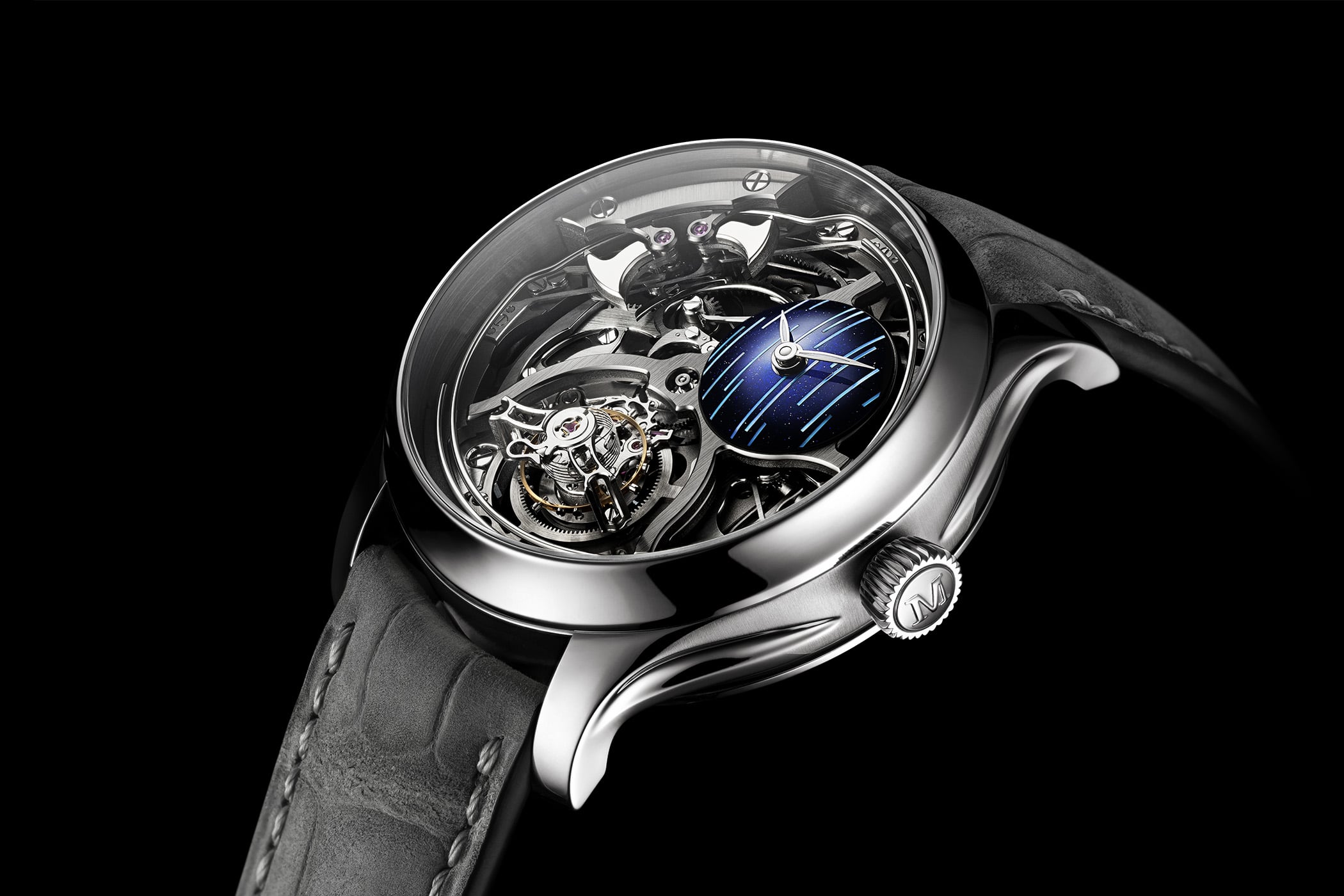
The repeating watch was invented in England in the 1670s by Reverend Edward Barlow (or possibly Daniel Quare, the historical record is contested) as a solution to a specific pre-electric-light problem: how to read a pocket watch in the dark without striking a match. Early repeaters struck the hours only, then the quarter repeater refined the idea by adding a high-note strike for each quarter hour. The minute repeater, adding a third strike for each minute after the quarter, was finalised by Abraham-Louis Breguet around 1783 and became the benchmark chiming complication of the 19th century.
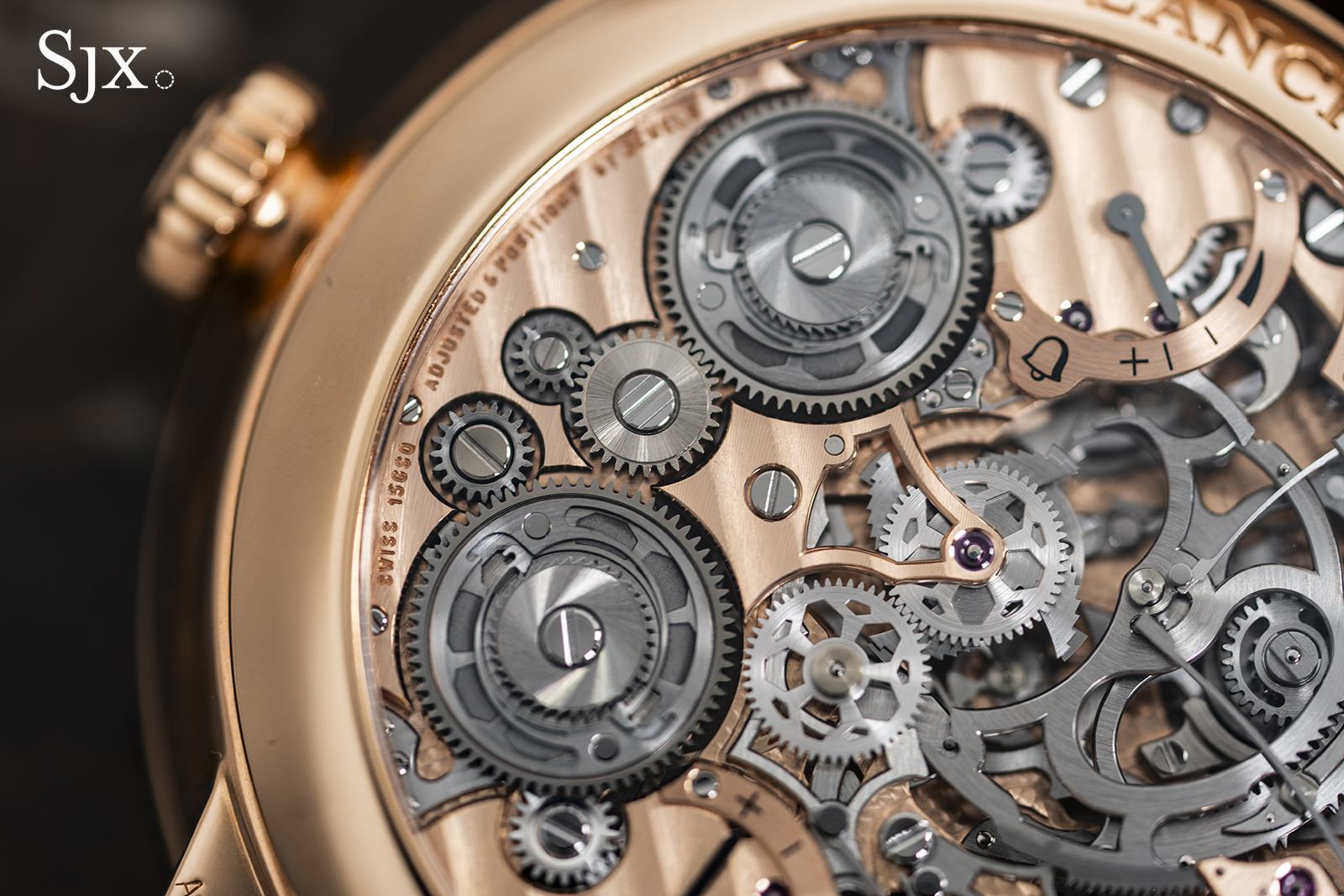
The mechanism is built around a series of snail cams: shaped discs whose stepped profiles encode the hours (12 steps), the quarters (4 steps of increasing size), and the minutes (14 teeth). When the slide is pushed, the energy stored in a small internal mainspring drives a rack that reads each cam profile in turn and releases hammer strikes accordingly. At noon the watch strikes 12 low notes (hours), falls silent for quarters (noon has zero quarters past), and silent for minutes. At 11:59 it strikes 11 low (hours), then 3 x ding-dong (three quarters past), then 14 high (14 minutes past the quarter), a total of 40 strikes.
"I listen to every single minute repeater movement before it leaves the factory. If the chime is not right, nothing else matters."- Thierry Stern, President of Patek Philippe
The tone of a repeater is the defining quality. Gong material (steel versus glucydur versus gold), gong length, hammer weight, case material, case thickness, caseback architecture, the number of gongs (two classical, three for "cathedral" gongs with an octave apart), and the relative pitch all matter. Patek Philippe has its repeater movements signed off by the current Stern-family president personally, listening to each movement; the legend is that Thierry Stern rejects roughly one in ten. Audemars Piguet's Supersonnerie project (2015) added a soundboard mechanically coupled to the gongs, amplifying the chime without distortion.
The wristwatch minute repeater was first produced by Audemars Piguet in 1892, built on a Louis-Elisee Piguet movement. The complication was then effectively dormant from 1920 to 1989, killed by the quartz crisis and by the difficulty of engineering a repeater into a wristwatch-sized case without losing acoustic quality. Patek Philippe Cal. R27 (1989, introduced in the ref 3979) was the first modern wrist repeater to reach full series production. Audemars Piguet Cal. 2953, Vacheron Constantin Cal. 1755, and Jaeger-LeCoultre Cal. 947 followed through the 1990s.
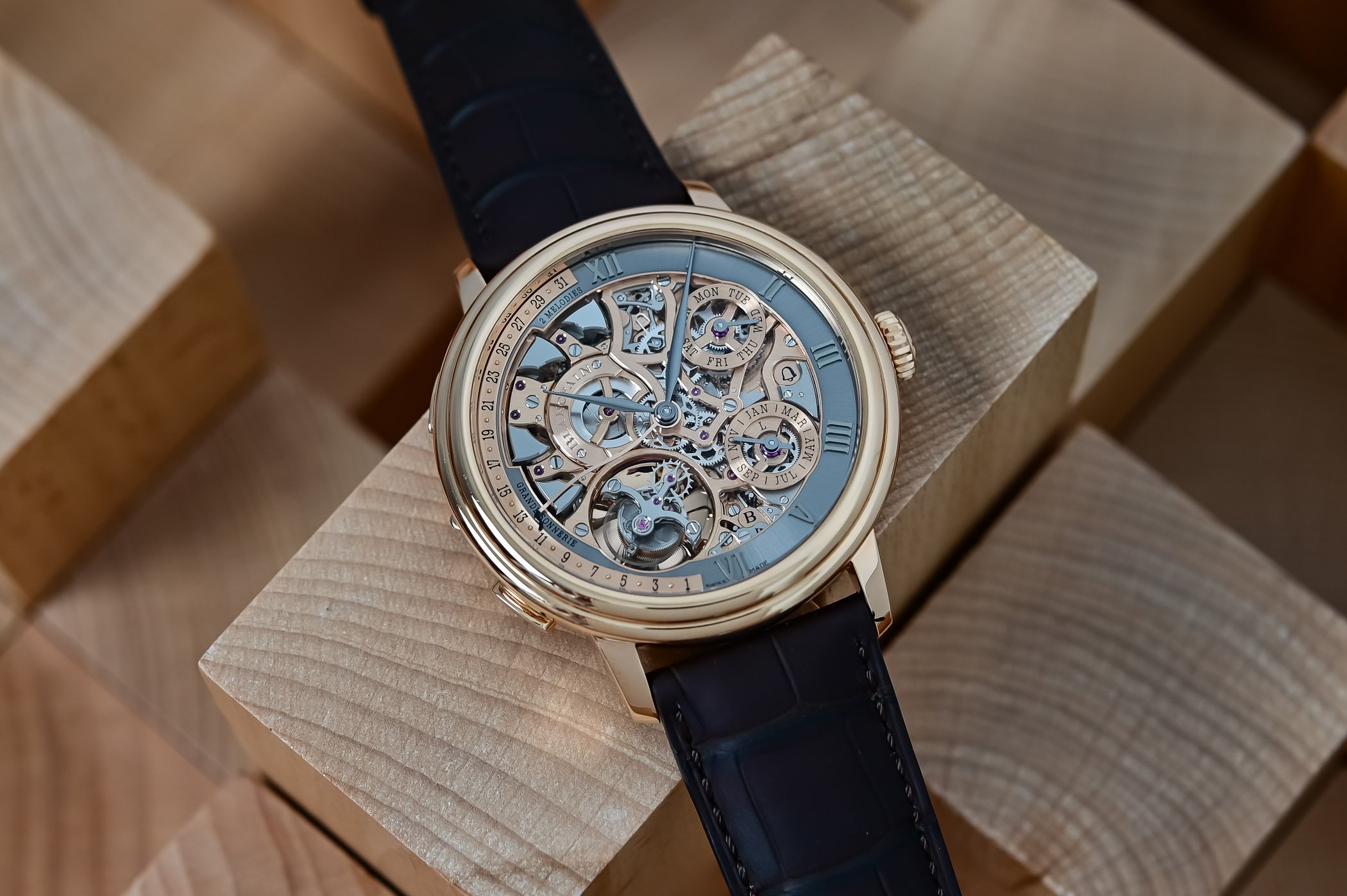
Today a minute repeater occupies the top of every brand's range, priced from roughly €200,000 for a series piece in gold to over €1 million for a unique or grande-complication example. Notable modern examples include the Patek 5074 (perpetual calendar with minute repeater, c. €600k new), the AP Royal Oak Concept Supersonnerie (c. €600k), the Jaeger-LeCoultre Master Grande Tradition Gyrotourbillon Westminster Perpetual (c. €1M+, combining a Westminster chime with a tourbillon and a perpetual calendar), and the Vacheron Constantin Les Cabinotiers Celestia (23 complications, unique piece, price not disclosed).




Comments 2