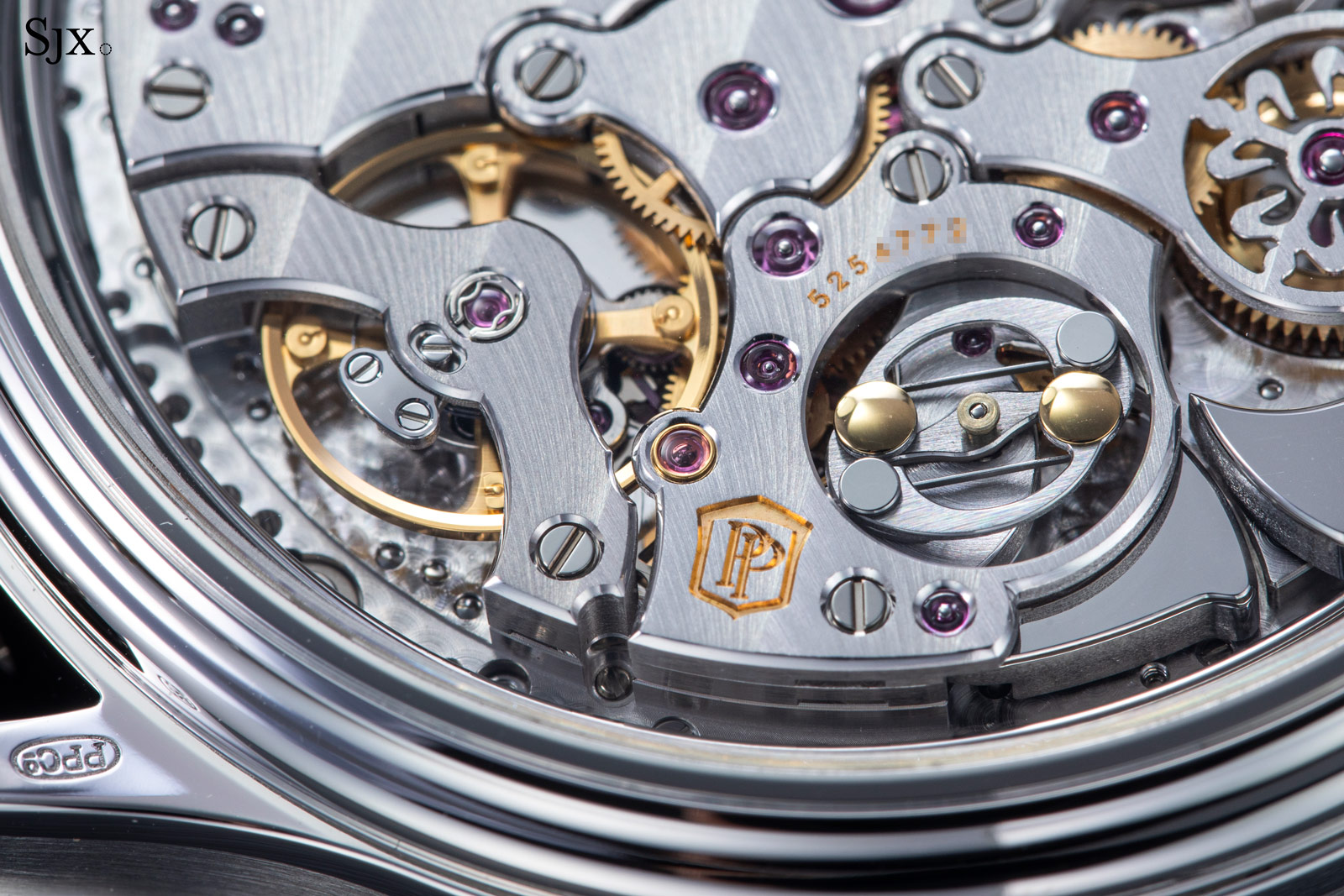
The Patek Philippe Seal is the in-house finishing-and-performance certification that Patek Philippe introduced on 1 July 2009 to replace its century-long use of the Genevan state hallmark, the Poinçon de Genève (Geneva Seal). The motivation was strategic. From 1891 to 2009, Patek had carried the Geneva Seal on the majority of its movements; the seal was the public mark of the brand's top-tier finishing. But the historic Geneva Seal applied only to movement finishing, with no requirement for case finishing, no rate test, and no quality coverage of the dial, hands, or service. Patek's engineers and managers felt this no longer reflected the way modern Patek watches were judged.
The Patek Philippe Seal was designed to be broader and stricter than the original 1886 Geneva criteria. The Seal covers the entire watch: movement finishing, case finishing, dial finishing, hand finishing, chronometry, water resistance, and customer service. The criteria explicitly incorporate and exceed the historic Geneva Seal movement-finishing requirements (chamfered bridges, polished steel, jewelled bearings, free-sprung balance with Breguet overcoil) and add new ones: case lugs and crowns hand-polished to a defined standard, dial finishing inspected at the magnification level used for movement finishing, hand finishing including beveled edges on the inner perimeter of every applied marker, and a chronometry test of -3/+2 seconds per day on calibers of 20 mm or larger (tighter than COSC's -4/+6).
"The Patek Philippe Seal goes further than any previous label, both because it sets new requirements for chronometry, finishing and customer service, and because it commits us, as the maker, to honour the watch for as long as it exists."- Thierry Stern, President of Patek Philippe, on the launch of the Seal in 2009
The most significant addition is the service commitment. The Patek Philippe Seal includes a lifetime maintenance guarantee: any Patek watch ever made, dating back to the brand's 1839 founding, can be returned to the manufacture for service, and Patek commits to keep all parts and tooling for any reference made under the Seal in perpetuity. This makes the Seal the only Swiss watchmaking certification that explicitly covers post-sale service horizon, a meaningful commitment for a brand that produces calibers in series of perhaps 1,000 over a decade and a half. Other Swiss certifications (Geneva Seal, METAS, COSC) cover production but say nothing about service.
The Geneva Seal's authorising body, the Genevan canton, was not pleased with Patek's departure. The two parties had administered the Seal jointly for 118 years; Patek represented the largest single submitter (the Geneva Seal at peak was applied to ~5,000 Patek movements per year, roughly half of total Geneva Seal submissions). Patek's 2009 withdrawal forced the Genevan state to overhaul the historic Geneva Seal: the Poinçon de Genève 2011 reform expanded the historic movement-finishing criteria to a full-watch standard explicitly modelled on the Patek Philippe Seal. Both certifications today cover similar ground; the differences are in who certifies (Patek internally vs Geneva via Timelab), in the service commitment (only the Patek Seal includes it), and in the visible marks (the Patek "cross and stars" logo vs the Geneva eagle-and-key).
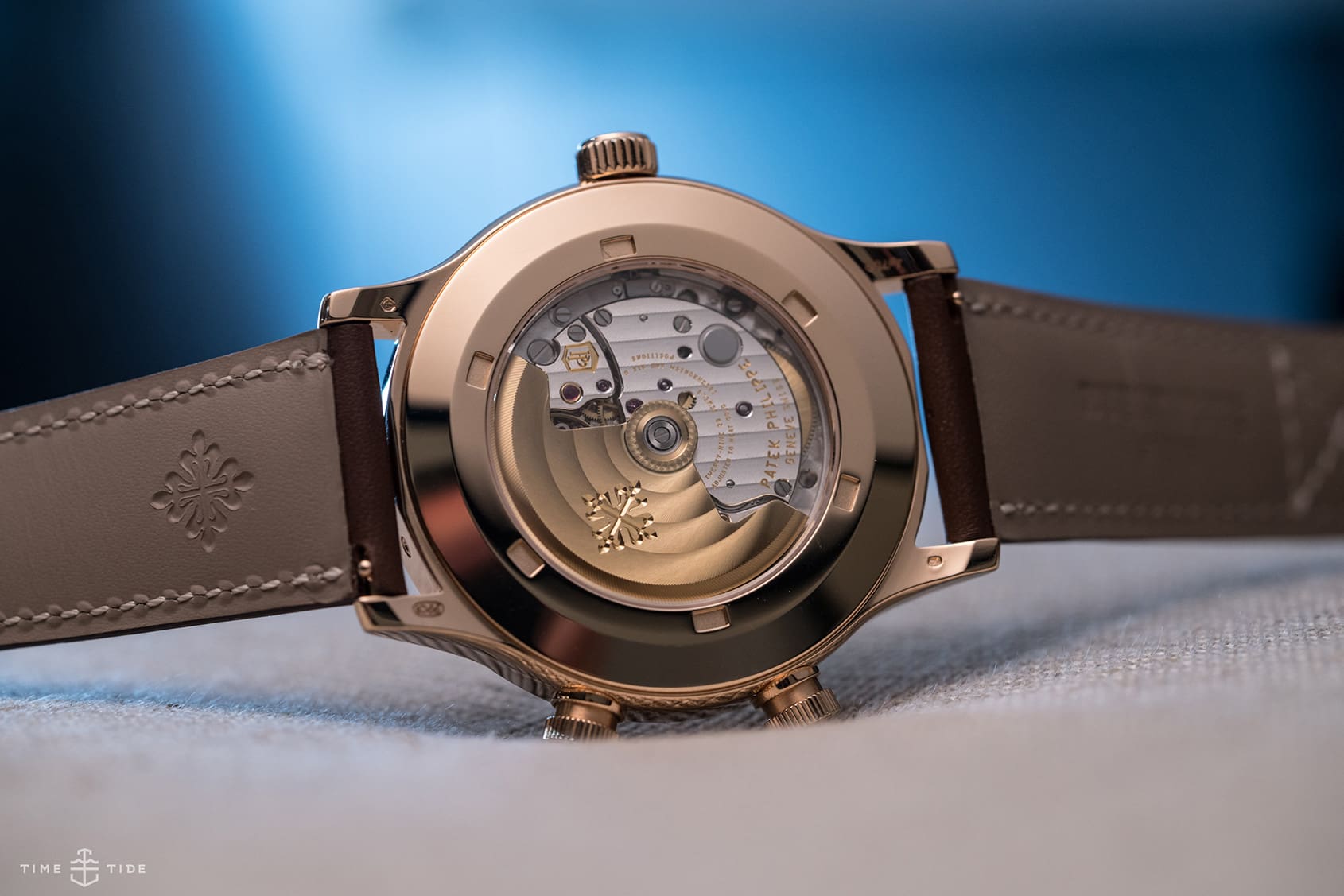
In current production the Patek Philippe Seal is applied to every watch leaving the manufacture, approximately 70,000 watches per year across the entire Patek catalogue. The visible mark is the stylised "PP" cross and stars logo on the movement bridge (visible through the sapphire caseback on most modern references); on movements without exhibition backs, the mark is engraved internally. By 2024 over 1 million watches have been certified under the Patek Seal since its 2009 introduction. The Seal applies equally to a Calatrava three-hand dress watch, an Aquanaut sports watch, and a Grandmaster Chime grand-complication piece.
For collectors, the practical effect of the Patek Seal is that all post-2009 Patek watches carry a single, internally-defined certification covering the entire watch, with the lifetime service guarantee. Pre-2009 Patek watches with Geneva Seal bridges remain under that certification (the Geneva Seal does not retroactively transfer); the visible bridge stamp is the dating clue. A 2007 Patek Calatrava Cal. 215 has the Geneva Seal mark; a 2020 Patek Calatrava Cal. 215 has the Patek Philippe Seal mark; the watches are functionally similar but reflect the certification transition. Among collectors, the brief 2009-2011 window when Patek had its own Seal but the Geneva Seal had not yet been reformed is sometimes flagged as a "transition period" reference, though the practical difference is minor.

Comments 1