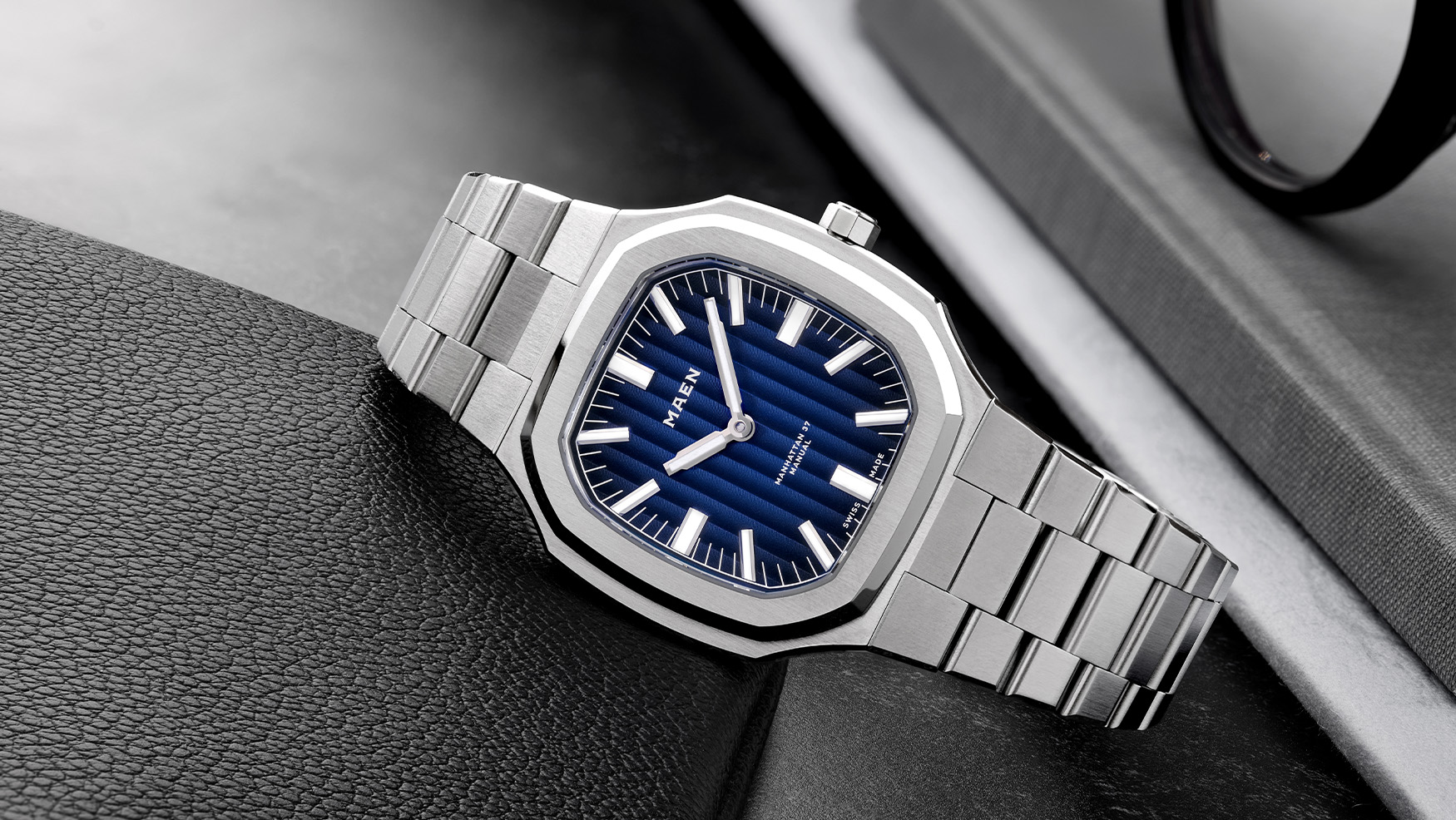
Côtes de Genève (Geneva ribs or Geneva waves) is a parallel-striped decorative finish applied to the visible surfaces of bridges, plates, and rotors of quality mechanical movements. It is purely decorative, no functional purpose whatsoever, but its presence is a near-universal shorthand for "serious" Swiss movement. Applied with a rotating abrasive wheel, typically made of wood or resin charged with abrasive paste, brushed in parallel passes across the surface being decorated.
The pattern is nominally traced to 19th-century Geneva watchmaking, hence the name. Swiss brands apply the stripes horizontally across the movement; Glashütte-based German brands (A. Lange & Söhne, Glashütte Original, Moritz Grossmann) apply them vertically, a visual marker of German watchmaking origin. Some brands use proprietary variants: Rolex applies "Côtes Rolex" on its rotors, a denser variant with narrower stripes; Audemars Piguet uses "Côtes AP" on certain movements.
The execution quality of Côtes de Genève varies enormously. On an industrial movement (ETA 2824 Elaboré or Top grade), the stripes are applied by a computer-controlled machine, often to a single face of the rotor only; the bridges and mainplate are left plain. On haute-horlogerie movements, every visible bridge surface receives striping, the stripes meet cleanly at bridge junctions, and anglage surrounds them with a hand-polished bevel. On Dufour-grade pieces, the stripes are so evenly cut that they look almost holographic under shifting light.
Côtes de Genève is almost always combined with other finishing techniques in the same movement: anglage at the edges of each striped surface, perlage (circular pearl pattern) on hidden surfaces such as the mainplate interior, and sometimes guilloché on visible dial sides. The combination is what produces the "alive" look of a high-end movement under a loupe: the eye moves between finishes, each one catching light differently.









Comments 1