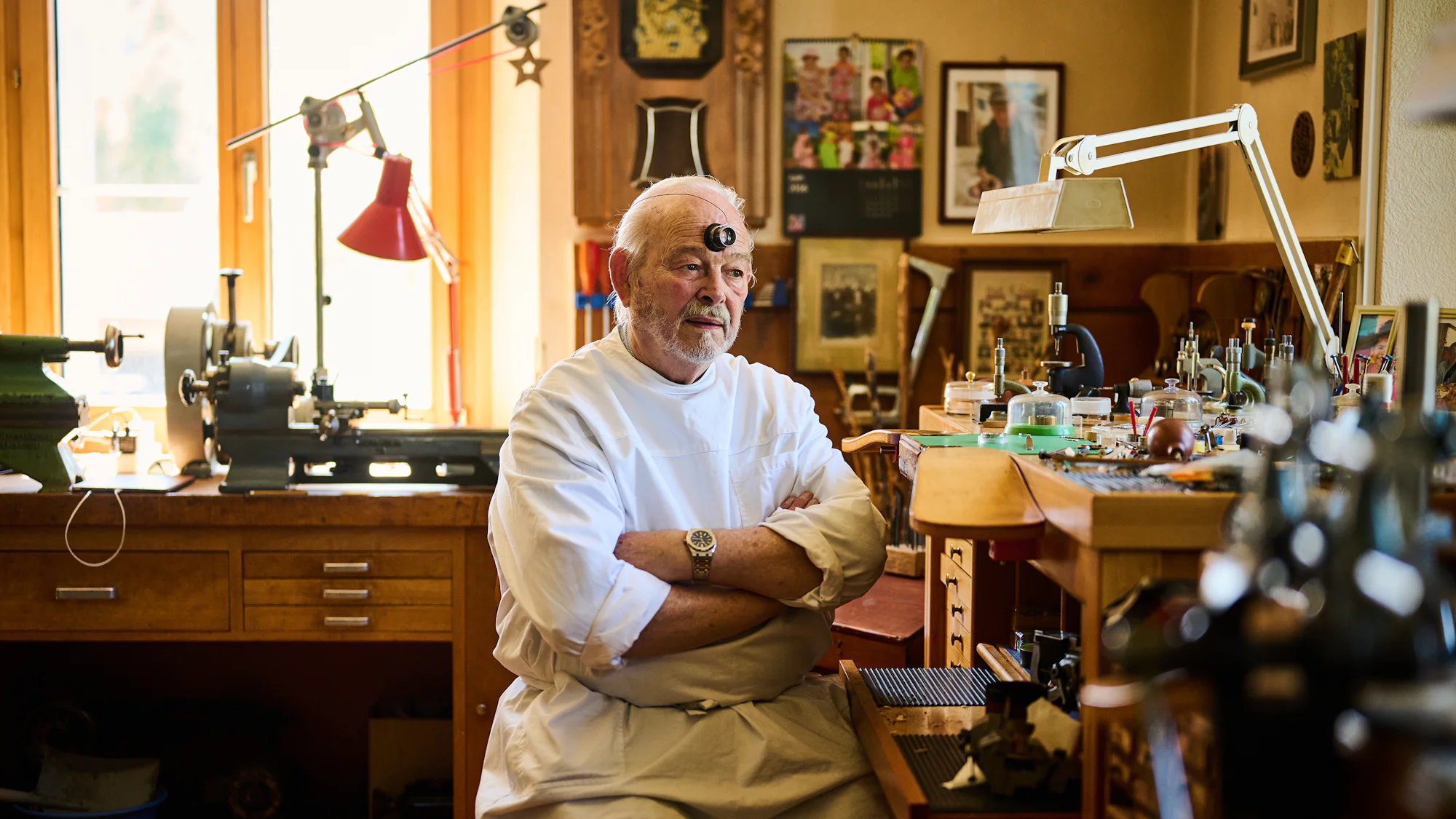
Philippe Dufour was born 1948 in Le Sentier, the village at the heart of the Vallée de Joux. He trained at the Vallée de Joux Watchmaking School, then worked through the 1970s-80s for Audemars Piguet, Jaeger-LeCoultre, and Gerald Genta on complications and finishing. By 1992 he was independent, working under his own name from a small workshop in Le Solliat.
His 1992 Grande et Petite Sonnerie wristwatch was the first modern wristwatch grande sonnerie (chiming the hour and quarter automatically en passant). The piece is roughly 41mm and combines minute repeater, grande sonnerie, and petite sonnerie in a single hand-finished movement. Production: ~12 pieces over a decade. The piece established Dufour's technical reputation; combined with his finishing standards, it positioned him at the top of the modern independent watchmaking tier.
"There is no shortcut to good finishing. You polish until the surface tells you it's done. The surface tells you. Not the foreman, not the customer, not the calendar."- Philippe Dufour on the principle of haute-horlogerie finishing
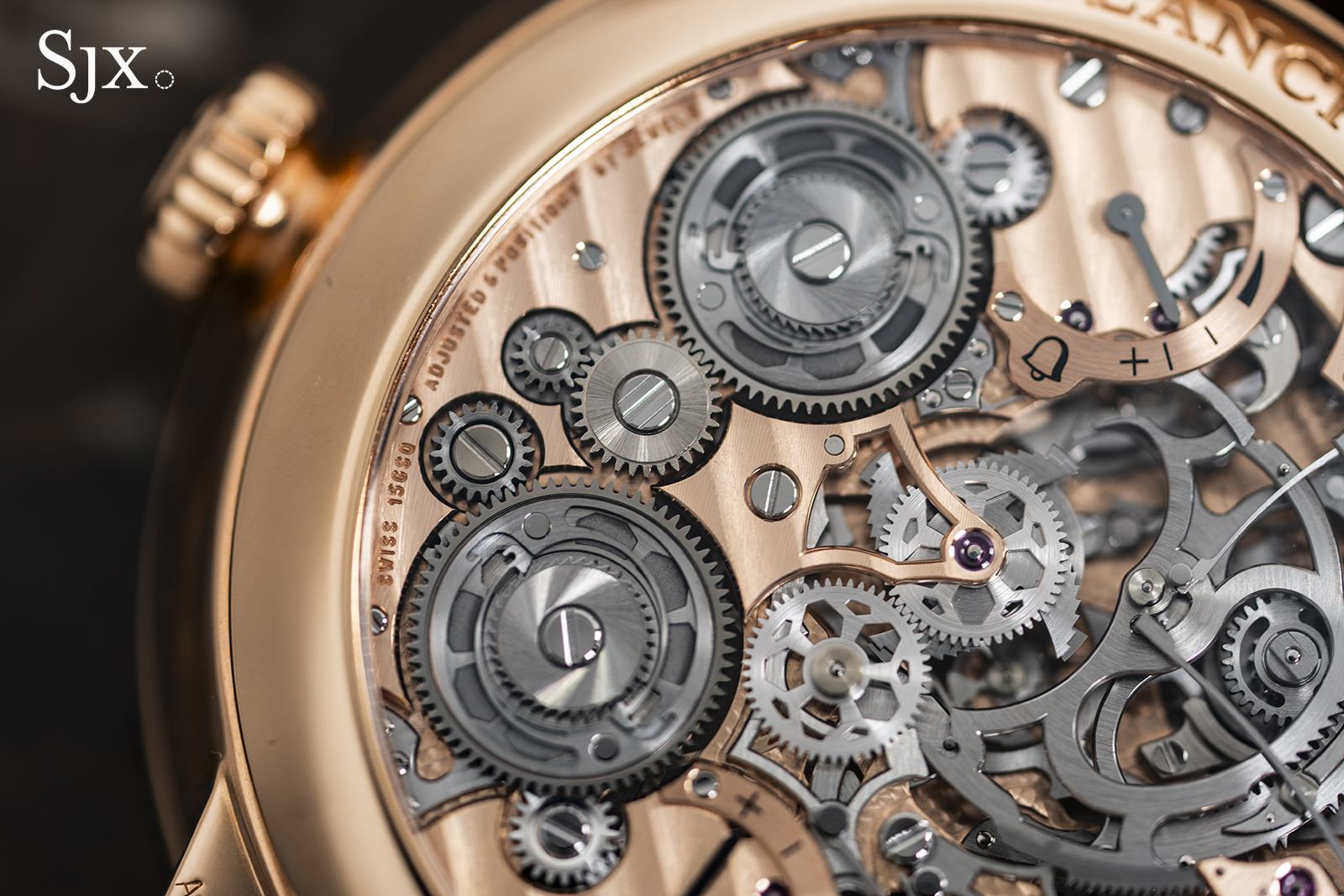
The Simplicity (2000) is what most collectors associate with Dufour. A simple 3-hand or hours/minutes/seconds dress watch (no complications), 34-37mm cases, hand-engraved balance cocks, mirror-polished bevels, sharp inside angles, jewel-perfect countersinks. Originally announced as a 200-piece series; production has continued at ~5-8 pieces per year and the series is not yet complete in 2026. New Simplicity wait-list is closed; collectors typically buy on the secondary market at CHF 1-3 million.
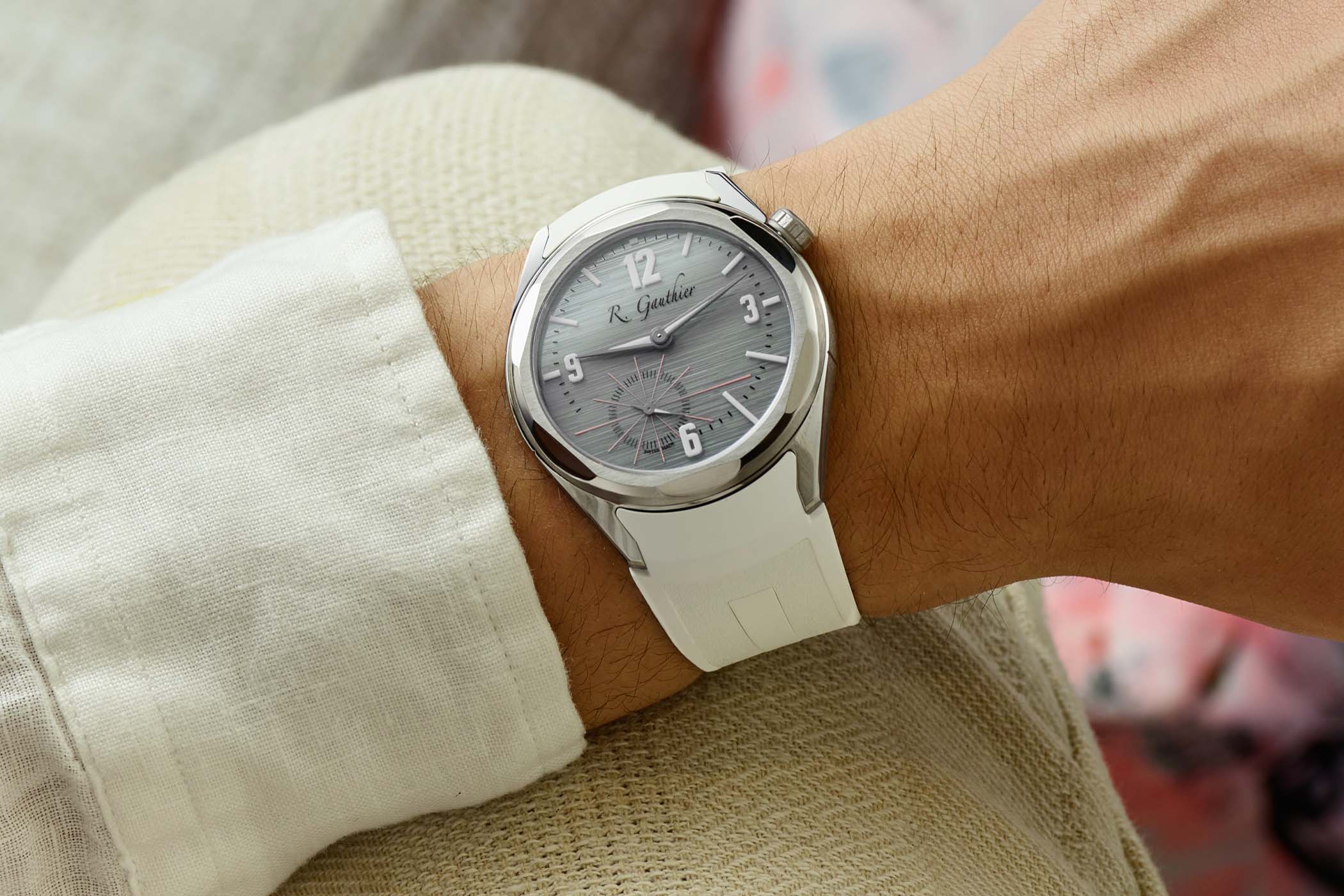
Dufour's broader influence extends through generations of independent watchmakers - Kari Voutilainen trained nearby; modern independents (Rexhep Rexhepi, Romain Gauthier, Andreas Strehler) cite Dufour as the finishing benchmark. He has refused multiple acquisition offers; the workshop remains independent. Quoted in the press exactly as you'd expect: 'I make watches the way they should be made. There is no other way.'







Comments 1