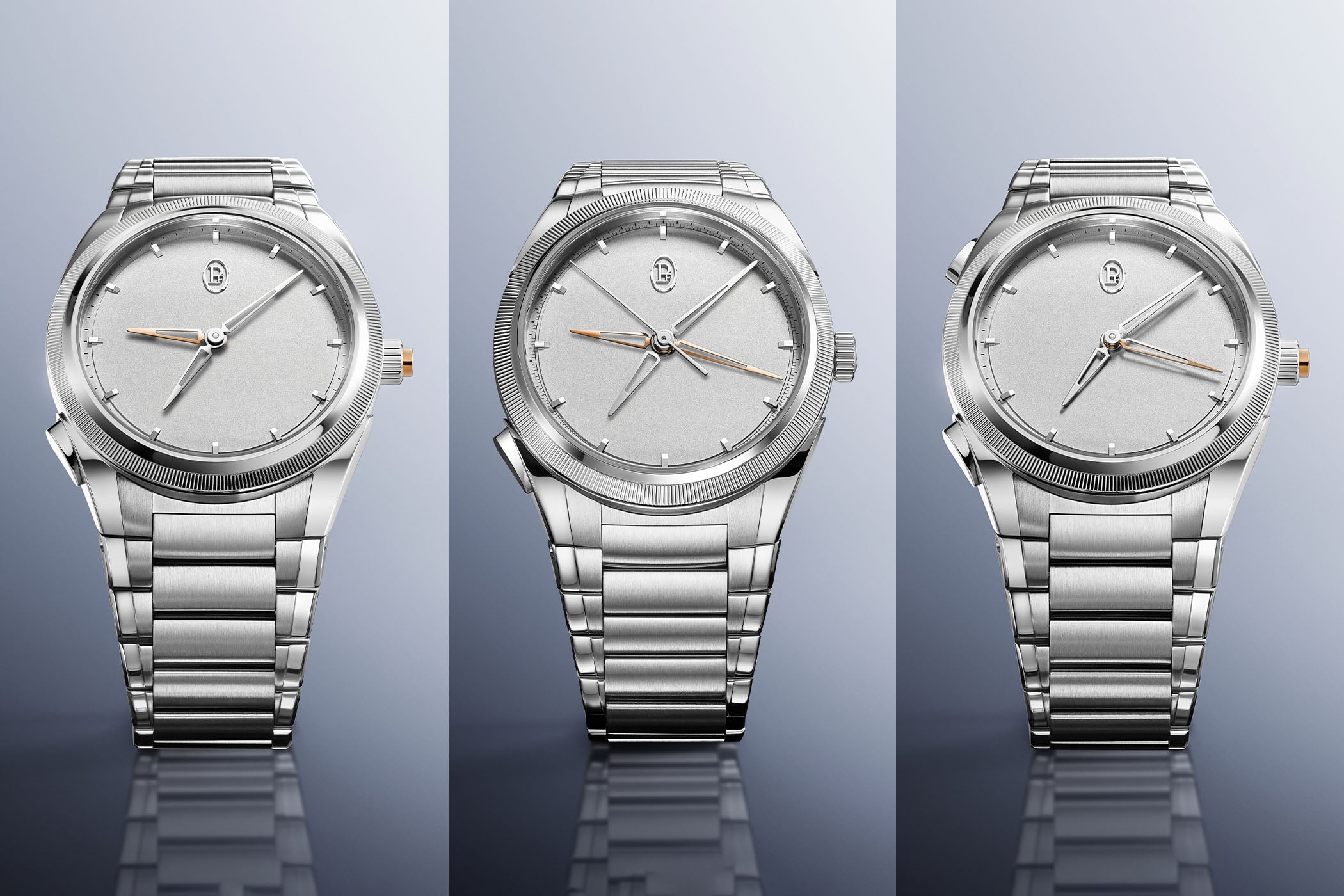
A rattrapante, French for "catch-up" (also split-seconds chronograph in English, Doppelchronograph in German), is a chronograph complication with two seconds hands stacked one above the other. Both start together when the chronograph is engaged. A second pusher then stops the upper "split" hand while the lower "main" hand continues running; reading the split hand gives an interim time. Pressing the split pusher again "catches up" the split hand instantly to the still-running main hand, ready for the next interim. Pressing the main stop pusher and reset returns both hands to zero.
The mechanical mechanism is significantly more complex than a standard chronograph. A rattrapante adds a second column-wheel or cam that controls the split hand independently, plus a small spring-loaded "isolator clutch" on the split-hand axis that allows it to be held stationary while the main wheel keeps turning, plus a heart-piece reset that brings the split hand back to alignment when released. The result is a movement with roughly 30-50% more parts than a comparable standard chronograph and tolerances tight enough that few manufacturers can build one in serial production.
"A standard chronograph times one event. A rattrapante times two. The mechanical step from one to the other doubles the parts count and quadruples the price."- Watchmaking commentary on the rattrapante mechanism
The earliest serial rattrapantes were pocket watches from around 1830. The Austrian watchmaker Joseph-Thaddée Winnerl patented an early design in 1831 for a "compteur double-second"; the Swiss watchmaker Adolphe Nicole patented a refined version in 1844 in London. By the 1880s rattrapante pocket watches were standard equipment for horse-race timing and scientific applications, including astronomy and physiology. The first wristwatch rattrapante is generally credited to Patek Philippe's ref. 130 (around 1923), although unique pieces from earlier years exist.
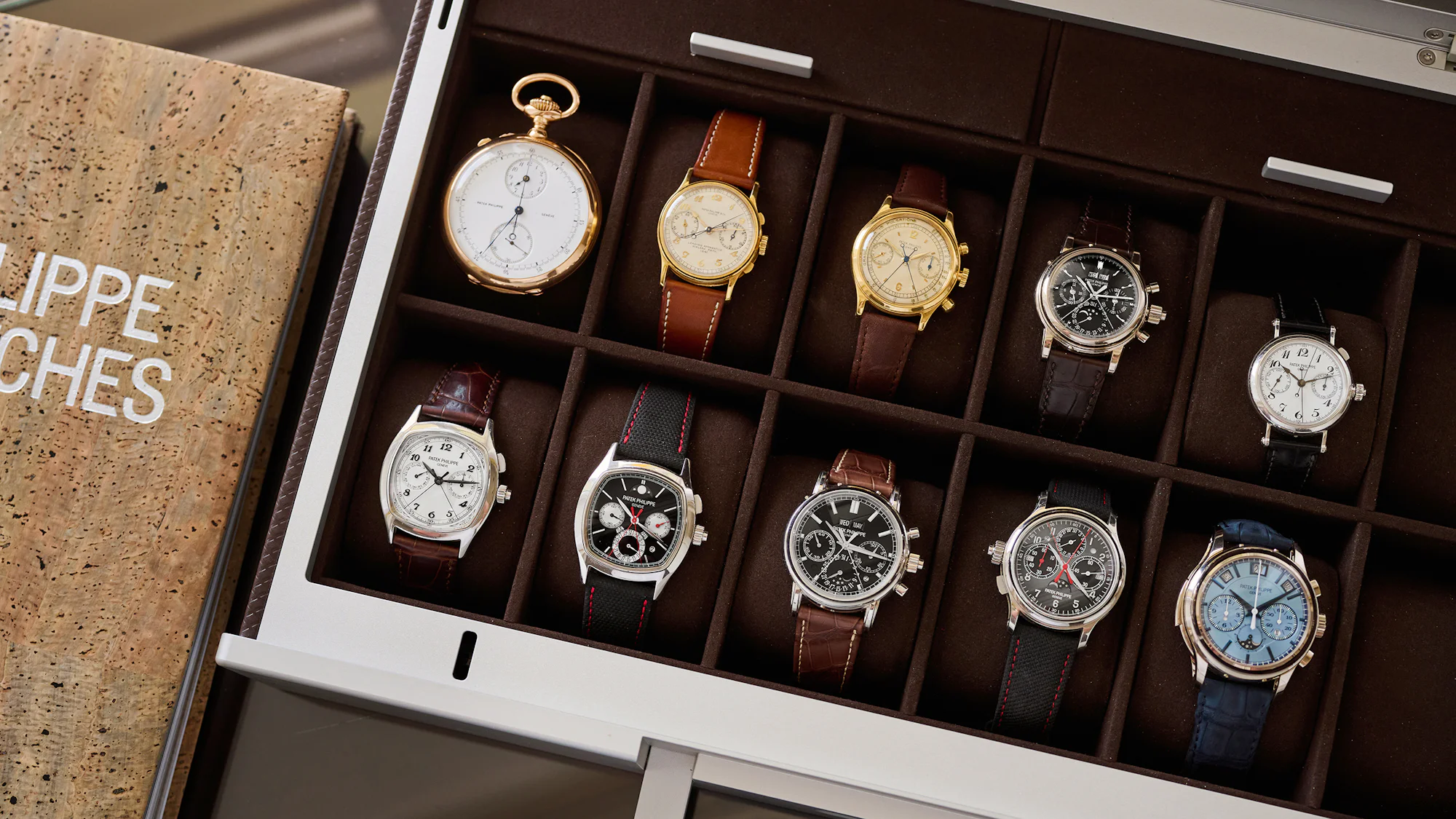
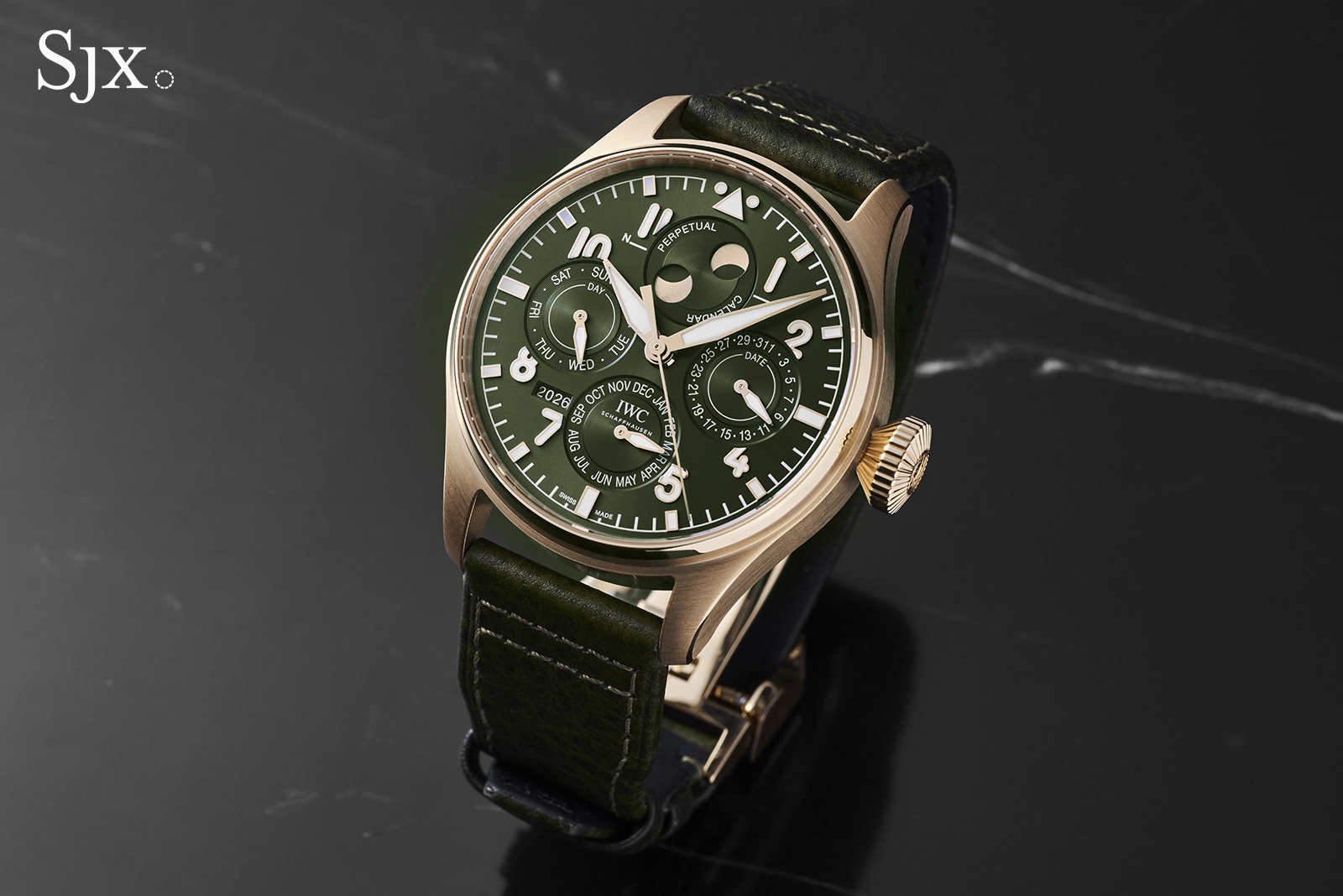
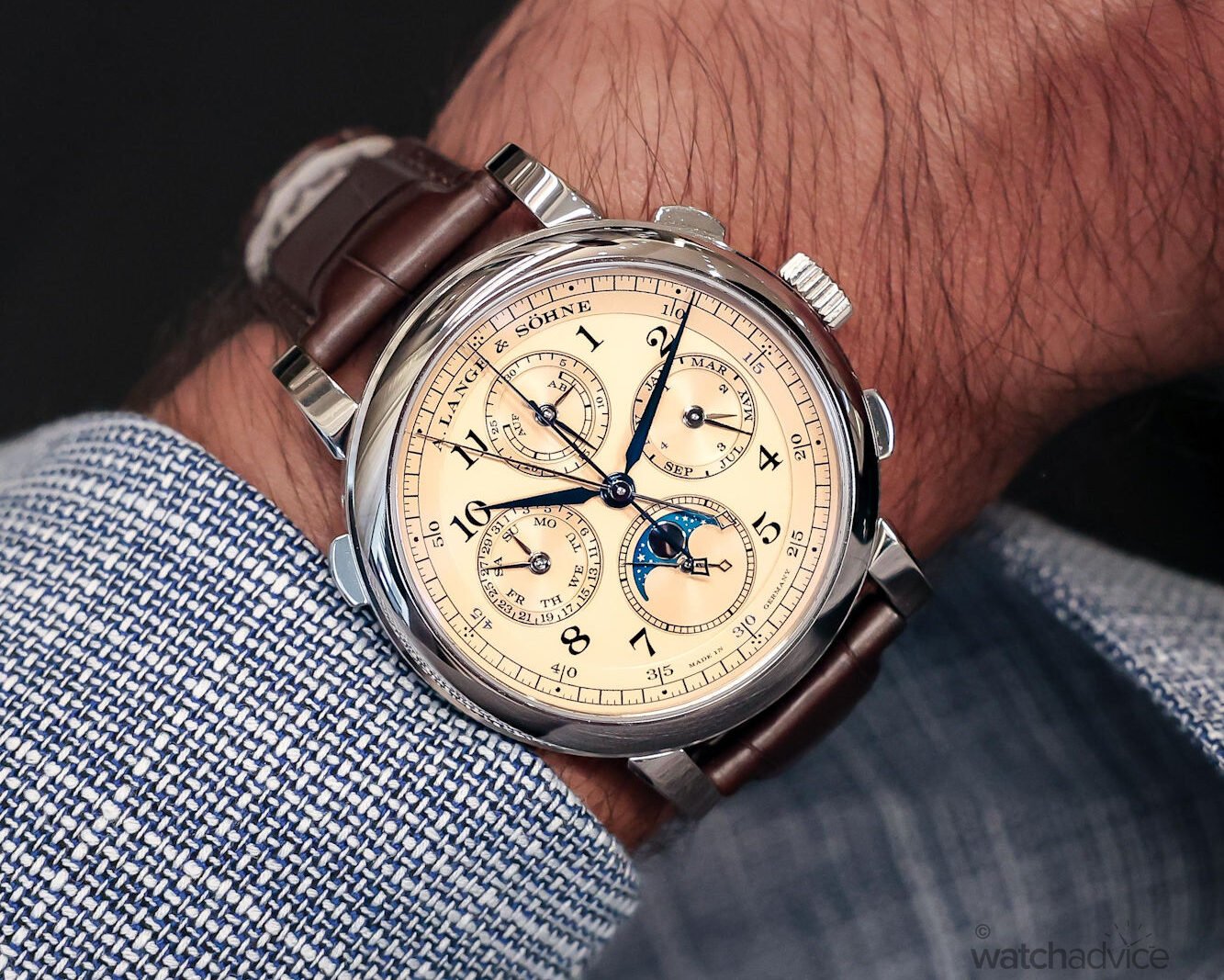
In modern serial production the rattrapante is one of the rarer complications. Patek Philippe's ref. 5370P (2015, platinum) and the older ref. 5004T (2014 Only Watch unique, steel) are the brand's flagship rattrapantes. A. Lange & Söhne's Double Split (2004) and Triple Split (2018) are the most technically ambitious modern variants: the Triple Split offers a rattrapante on the seconds, minute, AND hour hands, allowing two-event timing for up to 12 hours. IWC's Pilot's Watch Doppelchronograph (1992-present, based on the modified Valjoux 7750) is the volume rattrapante reference. Audemars Piguet launched the Code 11.59 Split-Seconds in 2024 as the brand's flagship modern chronograph piece.
Practical use of a rattrapante remains the same as in the 19th century: it allows back-to-back interim times from a single start point. A racing official can time the leader of a horse race while continuing to time the field; a doctor can time individual patient pulse rates while keeping a master clock running; an engineer can compare two staggered events. In modern wear the rattrapante is almost entirely display-cabinet horology: smartphones and stopwatches handle every practical use case. The complication's value today is mechanical (the difficulty of building one) and aesthetic (the visible second seconds hand at six o'clock).
For collectors, a rattrapante is one of the strongest signals of haute-horlogerie chronograph capability. The Patek 5370P is roughly CHF 250,000+ at retail; the Lange Double Split is CHF 130,000+; a vintage steel Patek ref. 1436 rattrapante from the 1940s sells at auction for CHF 1-3 million. The complication ranks immediately below perpetual calendar and tourbillon in modern haute-horlogerie pricing hierarchies; the perpetual + rattrapante combination (Patek ref. 5004 / 5950) is one of the most expensive non-grand-complication wristwatches available.





Comments 1